Placerville
El Dorado County, California. County seat.
Placerville, seat of El Dorado County, began in spring 1848 as a mining camp on Hangtown Creek and took the name Hangtown after three hangings in 1849.1,2,3
Details
- Name
- The camp was called Hangtown after its hangings, which the walking tour dates to 1849, and the name Placerville became official when the post office opened in 1854.3
- County seat
- Placerville is the seat of El Dorado County, and the county courthouse on Main Street was completed in 1912.1,3
- Last checked
- October 6, 2026.
Point at a dot to see the place.Tap a dot to see the place. Road map of Placerville.
In Placerville
- Boeger WineryPlacerville · Breweries/wineries/wine tastingA family winery and farm on Carson Road in Placerville, the first post-Prohibition winery in the El Dorado AVA, with an 1872 stone cellar open to sit in.
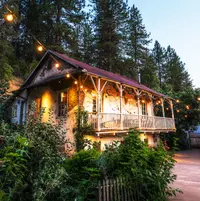
- El Dorado County Farm TrailsPlacerville · The el dorado county farm trails is comprised of over 120 local farmsThe El Dorado County Farm Trails, a Placerville association of over 120 farms, orchards and businesses, whose maps lead to u-pick fields, cideries and quilt squares painted on barns.

- Gold Bug Park / MinePlacerville · Historic mine and parkA city-owned hard rock gold mine on Big Canyon Creek in Placerville, California, where visitors walk a lit 352-foot drift dug mostly in the 1920s and 1930s.
The Calendar
History
Old Dry Diggin’s on Hangtown Creek
In 1939 the Federal Writers’ Project guide counted 2,322 people in Placerville, seat of El Dorado County, and traced its Main Street along the rock-lined banks of Hangtown Creek, where the first comers settled.1 The state landmark dates the mining camp on those banks to the spring of 1848, the year James Marshall found gold at Coloma, eight miles away.2,3 In July 1848 Gov. Richard B. Mason reported to Washington that William Daylor and Perry McCoon, ranchers from the Sacramento Valley, and their Indian retainers had taken $17,000 from one small ravine at “Old Dry Diggin’s” in a week.1 A marker at Gold Bug Park tells it as three men taking $17,000 in one week in the summer of 1848, when gold was valued at $16 to $19 an ounce.4 Soon thousands were working the gulches of what became known as the Ravine City, and by 1850 it had grown into a town of 2,000 people.1 In 1850 Lucy Ann Wakefield, from Connecticut, bought a log building on Main Street and sold mince pies to the miners at $2.00 plain.3
How the Camp Became Hangtown
The Federal Writers’ Project guide tells of three outlaws who held up a Frenchman named Cailloux at knifepoint and stole 50 ounces of gold dust, and who were caught the next morning, tried, and hanged from a great oak at Main and Coloma streets.1 The street became the alcalde’s courtroom, and the crowd the jury, for such men as “Irish Dick” Crone and Bill Brown, who were summarily hanged, and the camp was known as Hangtown, unofficially, ever after.1 The Placerville Historical Society’s walking tour dates the name to 1849 and says the three hanged men, originally six, had robbed a stage to finance the confederacy in California.3 A state marker puts the Hangman’s Tree on the old Hay Yard and says its stump lies under the building that carries the plaque.5 The name Placerville became official when the post office opened in 1854, and the town incorporated on May 13 of that year.3
The Road to Washoe
Placerville stood from the first on the overland trail and the Coloma Road, and by 1854, the 1939 guide says, it contended with San Francisco and Sacramento in wealth and population.1 Mark Hopkins set up shop on the muddy main street with a wagonload of groceries from Sacramento, and Philip D. Armour ran a small butcher shop in the center of town.1 In 1853 blacksmith Hugh L. Hinds hired John M. Studebaker, who made more money building wheelbarrows for miners than digging and went home to South Bend, Indiana, in 1858 with his fortune.3 On April 4, 1860, the first eastbound Pony Express rider, William (Sam) Hamilton, changed horses here, added an express letter to his mochila, and rode off for Sportsman’s Hall.6 Placerville was the western terminus of the Pony Express from July 1, 1861, until the line ended on October 26, 1861.6 When the rush to the Comstock Lode broke, wagons drawn by six-mule teams poured through the town with merchandise and provisions for the Washoe mines.1 From 1856 to 1876 John A. ‘Snowshoe’ Thompson carried 60 to 80 pounds of mail on skis from Placerville over the Sierra in winter, to Carson Valley and Genoa, Nevada.2,3
Fire and Brick on Main Street
Fires swept most of the town three times in 1856 and again in 1864 and 1865, and the walking tour says the town rebuilt in brick.1,3 The stone Soda Works of 1852, where spring water from the hillside was bottled for miners, came through the 1856 fires and now holds the Fountain & Tallman Museum.3 The Methodist Episcopal Church of 1851, which its state marker calls the oldest church building in El Dorado County, first stood at Cedar Ravine and Main Street and was moved to the grounds of the newer church on Thompson Way.3,5 A marker placed in 1993 calls Placerville Hardware the oldest continuously operating hardware store west of the Mississippi River.7 The county courthouse of 1859 burned in 1910 with many of the county’s early records, and its replacement on the same lot was completed in 1912.3 The Ivy House, a three-story brick hotel built in 1864 and once home to the Placerville Academy, was torn down as unsafe in 1964.1,3
Hardrock on Poverty Ridge
By 1852, a Gold Bug Park marker says, all but the hardiest miners had gone, along with the easy pickings along the creek.4 Hardrock mining began in the hillsides in the late 1800s, peaked during the Depression, and lasted until World War II.4 George Cozens built the first stamp mill in the canyon in the 1890s for the Silver Pine Mine, and Horace P. Moulton rebuilt it completely in the mid-1930s.8 Running full, its two sets of 4 stamps could be heard in Placerville, a mile away.9 The Gold Bug mine nearby, once named “Hattie” for the daughter of an original owner, William Craddock, carried its last name from 1924 until it closed for good in 1942 because of the war.10 In 1965 the City of Placerville took the ground from the Bureau of Land Management and made it a park.4
Within 30 Miles
Measured in a straight line from the town, nearest first.
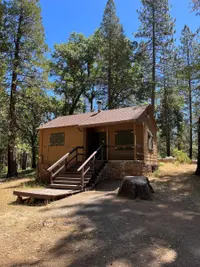
- Sly Guard CabinPollock Pines · Recreation siteThe Sly Guard Cabin is less remote than other cabins on the Eldorado National forest and is a great choice for families with children. The cabin is near Sly Park Reservoir, also called Jenkinson Lake, the tourist area of Apple Hill, a variety of wineries, a number of hiking trails, and the historic mining towns of Coloma and Placerville.
- Founder's DayGeorgetown · Annual celebrationFounder's Day closes Main Street in Georgetown, California, each September for a Rotary-run parade, street booths, and the town's stamp mill set to working.
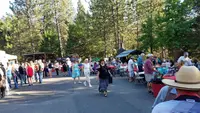
- Sobon EstatePlymouth · Registered historic landmarkAmong the oldest wineries in California; site of the Shenandoah Valley Museum of early agriculture and winemaking.
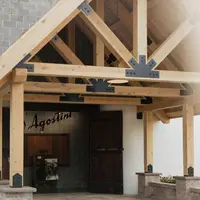
- Fiddletown Fiddlers' JamFiddletown · Performance and event venueAn annual old-time fiddle contest and street jam in Fiddletown, California, held the third Saturday of September beneath a giant fiddle bolted to the community hall roof.
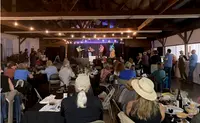
- Amador County FairPlymouth · County fairThe Amador County Fair, which began in 1887 and has been held in Plymouth since 1938, fires hot corndogs from a cannon into the grandstand before every arena event.

- Auburn State Recreation AreaAuburn · CA state parkA state recreation area along forty miles of the North and Middle Forks of the American River near Auburn, California, on land set aside for a dam begun and never finished.
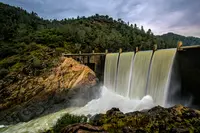
- Folsom Lake State Recreation Area swim areasFolsom · State recreation areaFive named swim beaches on Folsom Lake and Lake Natoma east of Sacramento, one of them facing the dredged-over site of a Gold Rush camp worked by Black miners.
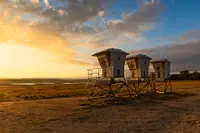
- Folsom Powerhouse State Historic ParkFolsom · State historic parkA state historic park in Folsom, California, keeps the 1895 brick powerhouse whose General Electric generators, still in place, sent 11,000 volts 22 miles to Sacramento.
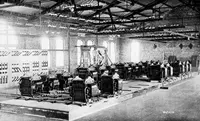
- PlacerGROWN Farm & Barn TourAuburn · Ticket-free & self-guided tour through the farms and ranches of placer countyChoose from 15-20 destinations with family-friendly activities, farm tours, and agricultural demonstrations while shopping local artisanal vendors and enjoying fresh, local foods, drinks, and fall produce.
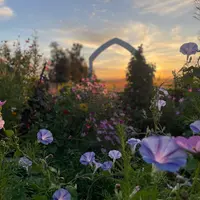
- Italian Picnic and ParadeSutter Creek · Annual picnic and paradeThe Italian Benevolent Society's three-day June picnic in Sutter Creek, California, held since 1882, ending with a Sunday parade down Old Highway 49 and a salami toss.
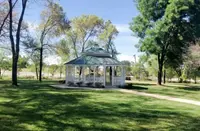
- Roaring Camp Mining Company gold campPine Grove · Operating gold mine and gold panning campRoaring Camp was once a camp for Forty Niners, but since it was so inaccessible, most of the gold still remains. Visitors can see our operating gold mine and can mine their own gold by panning, sluicing, metal detecting, and dry washing.
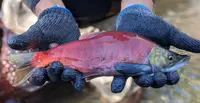
- American River HatcheryGold River · Fish hatcheryA state fish hatchery on the American River below Nimbus Dam in Gold River, California, rearing trout and kokanee on Lake Natoma water that arrives by gravity.
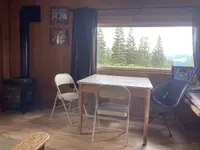
- Robbs HutCabinRobbs Hut offers a peaceful, rustic getaway with phenomenal views of the Sierra Nevada. The cozy, yet minimalistic cabin is open year-round and can be accessed by car in warmer months.
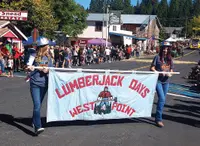
- Lumberjack DayWest Point · Street parade and family dayLumberjack Day fills Main Street in West Point, Calaveras County, every first Saturday in October with a horsemen's parade, a downhill soap box derby, and a logging show paying over $5,000.
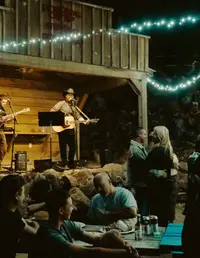
- Colfax Railroad DaysColfax · Celebration of colfax's role in the construction of the transcontinental railroadA free September weekend in downtown Colfax, California, where Union Pacific parks working engines beside the Fruit Shed in the town that supplied the Central Pacific's climb over the Sierra.
5 more within 30 miles on the road map.
Nearby towns: Grass Valley, Nevada City, Murphys, and Gardnerville. All the towns of California. More of California: U-Pick Farms, Factory Tours, and Town Festivals.
Sources
- California: A Guide to the Golden State (1939), p. 484 archive.org/details/californiaguidet00federich/page/484
- OLD DRY DIGGINS-OLD HANGTOWN-PLACERVILLE ohp.parks.ca.gov/ListedResources/Detail/475
- Walking Tour Of Old Placerville (elkgrovehistoricalsociety.com) elkgrovehistoricalsociety.com/walking-tour-of-old-placerville
- Hangtown’s Gold Bug Park (historical marker) hmdb.org/m.asp?m=69861
- California State Parks ohp.parks.ca.gov/?page_id=21417
- PLACERVILLE-OVERLAND PONY EXPRESS ROUTE IN CALIFORNIA ohp.parks.ca.gov/ListedResources/Detail/701
- Placerville Hardware (historical marker) hmdb.org/m.asp?m=13154
- The Stamp Mill (historical marker) hmdb.org/m.asp?m=69864
- Joshua Hendy Stamp Mill (cityofplacerville.org) cityofplacerville.org/joshua-hendy-stamp-mill
- Gold Bug, A Neighborhood Mine (historical marker) hmdb.org/m.asp?m=69863