Folsom Powerhouse State Historic Park
Folsom, Sacramento County, California. State historic park.
Details

- Where
- 9980 Greenback Lane, Folsom, CA 95630. Directions
- When
- Visitor Center: Wed noon-4 pm, Thu-Sun 9 am-6 pm; Main Powerhouse: Wed-Fri noon-4 pm, Sat-Sun 9 am-4 pm.
- Getting there
- Next to the Historic Folsom District; reached via Highway 50 or I-80, off Greenback Lane.
- Fees
- Hourly parking $6.00; vehicle day use $10.00.
- Access
- Visitor center and restrooms accessible; picnic area drinking fountain and tables accessible; call (916) 988-0205 during park hours for staff to open the gate to accessible parking.
- Walk-in or reserve
- Group and school tours by special arrangement; submit the Google Form at least 2 weeks before the desired tour date.
- Phone
- (916) 985-4843
- Website
- parks.ca.gov
- Managed by
- California State Parks (PG&E donated the powerhouse to the state in 1958).
- Established
- 1895.
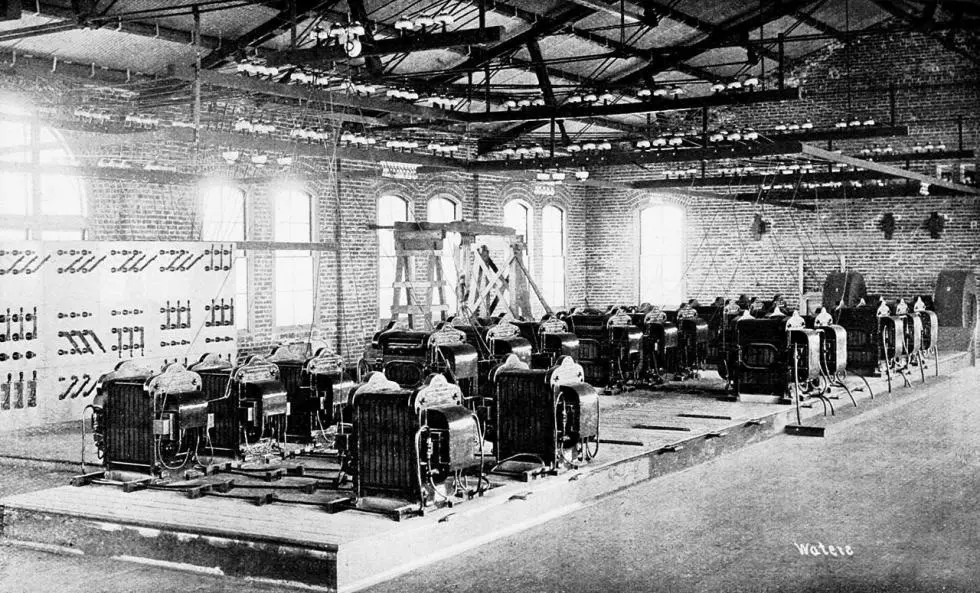
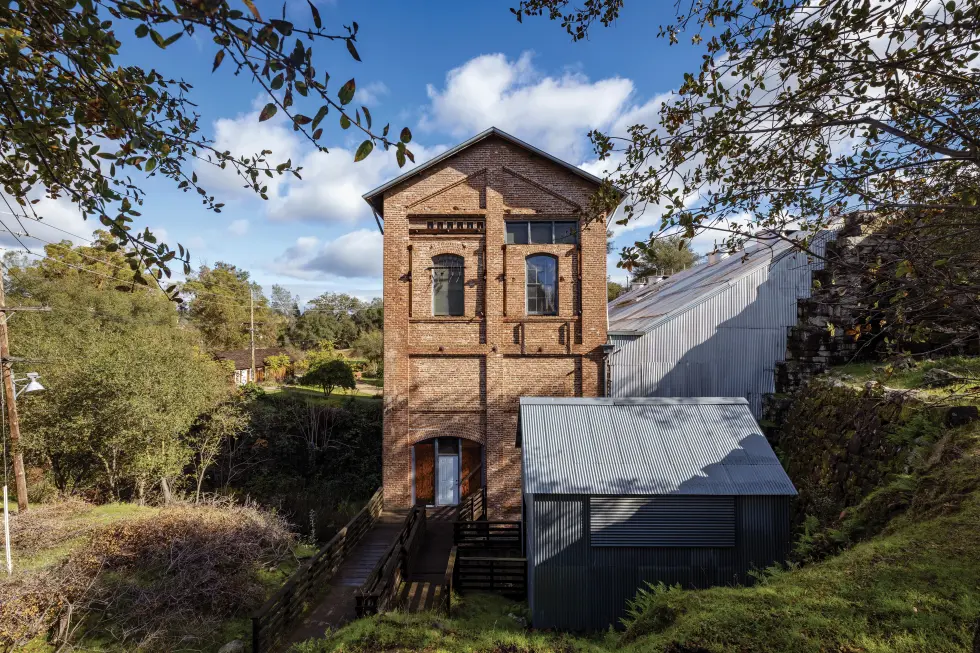
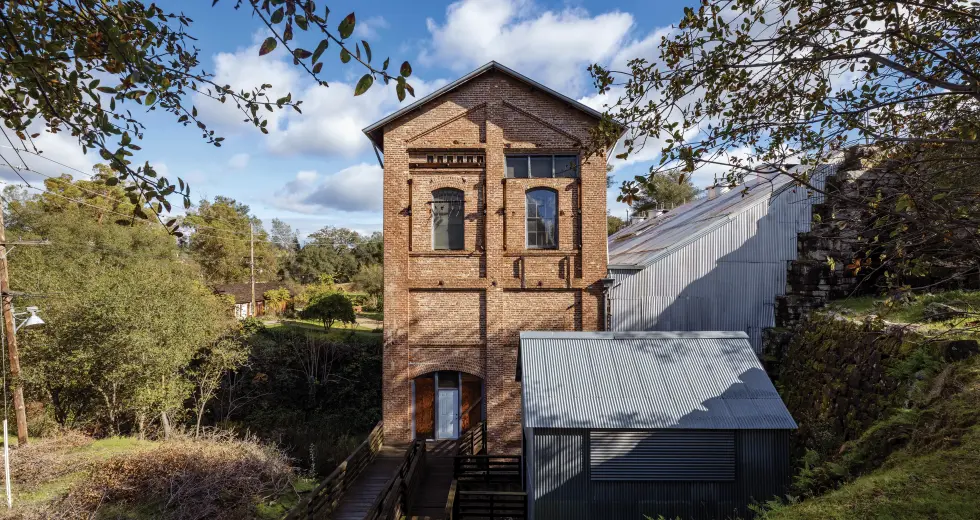
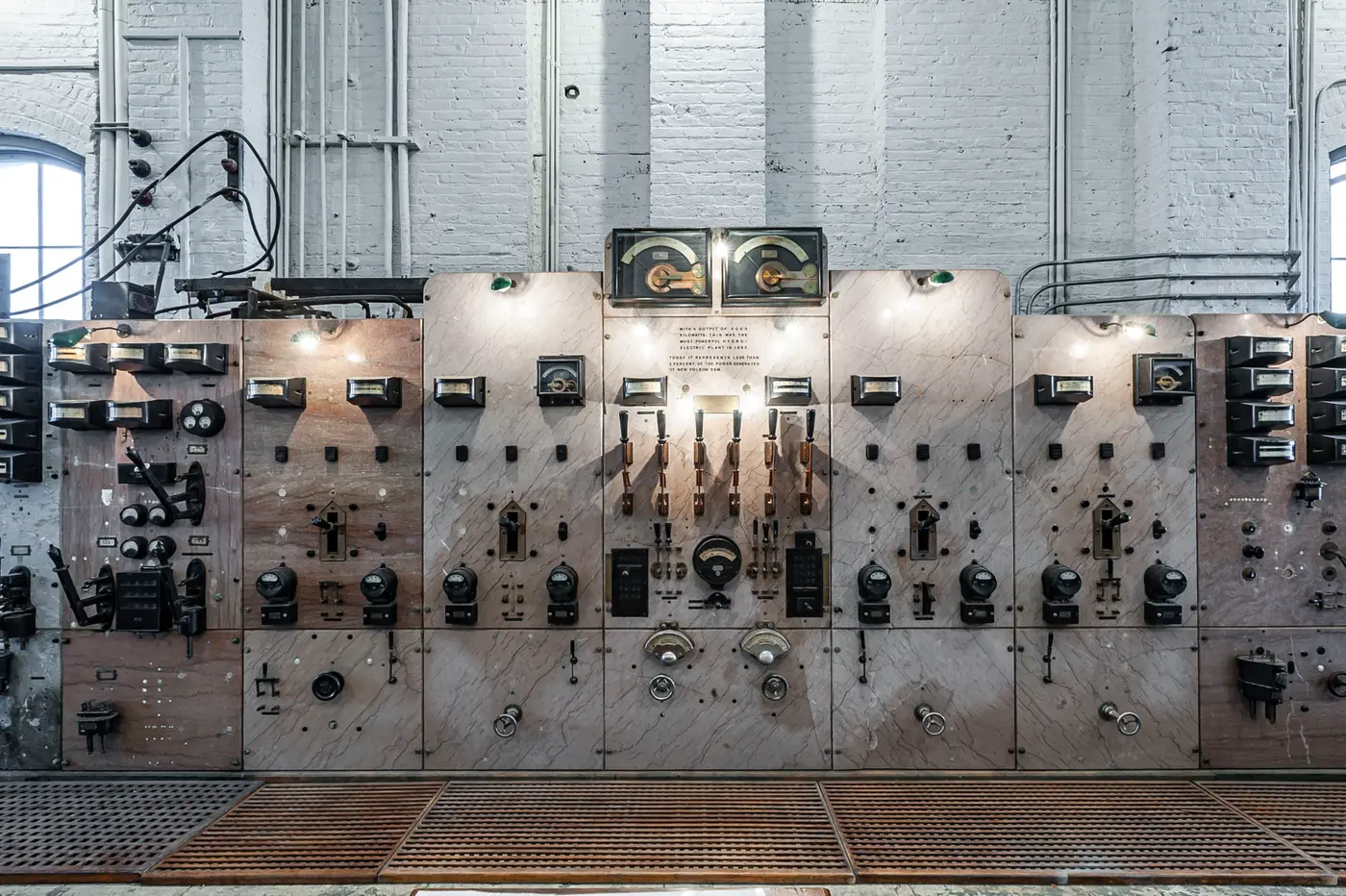
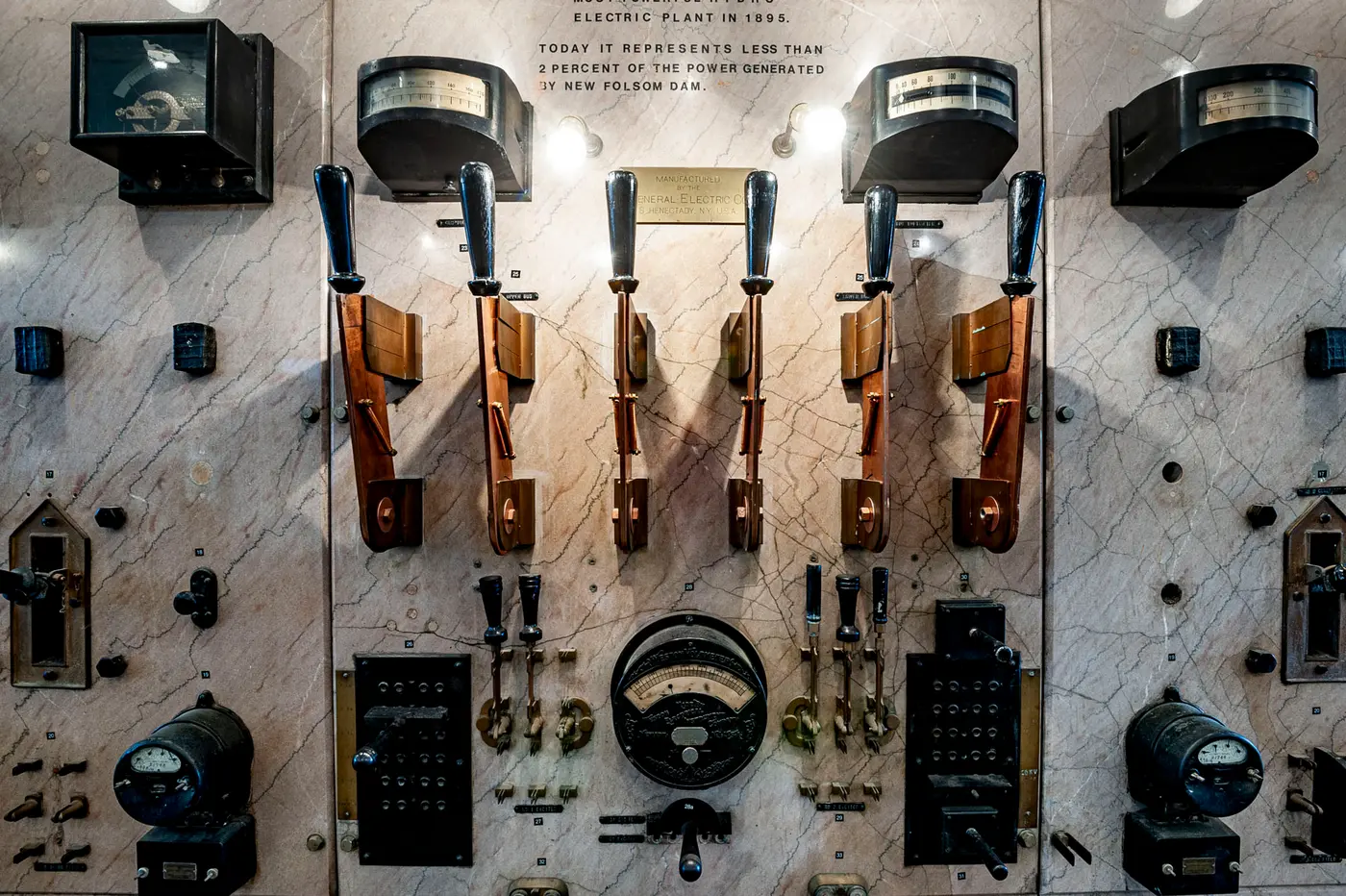
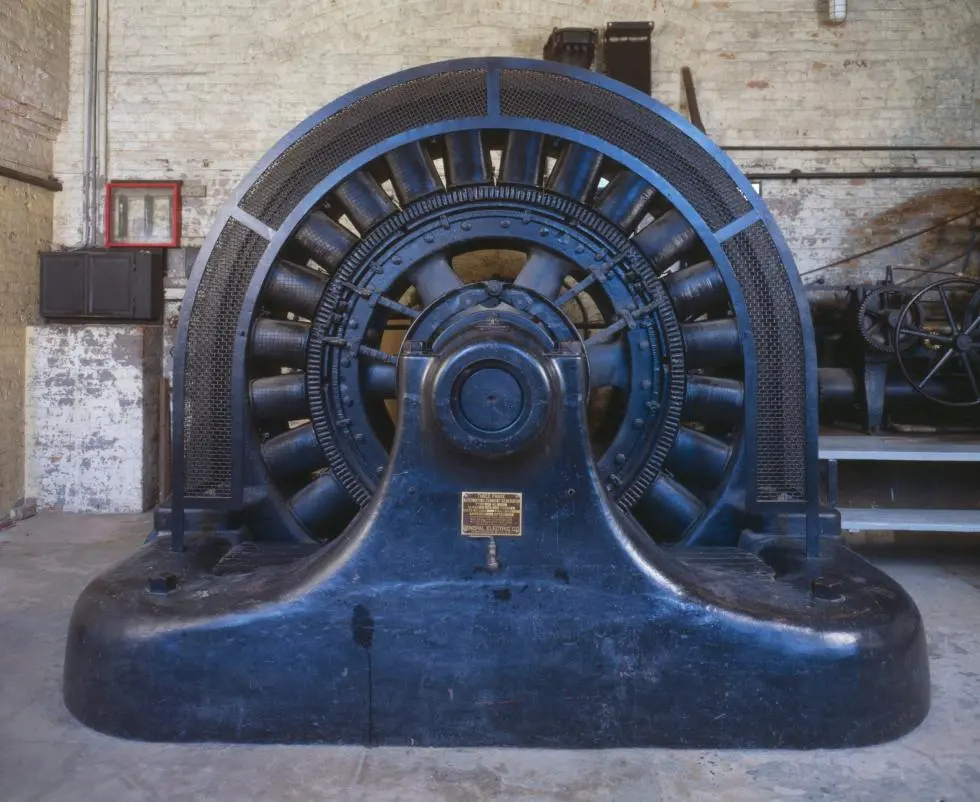
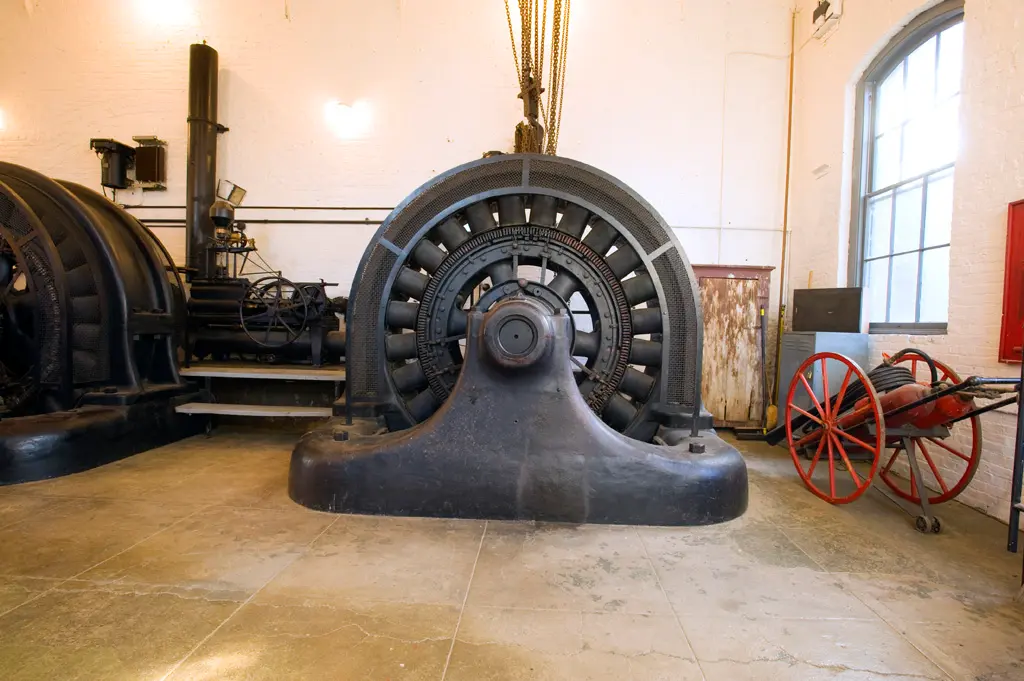
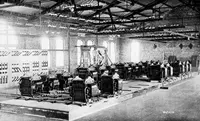
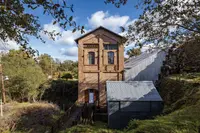
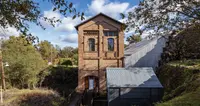
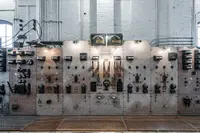
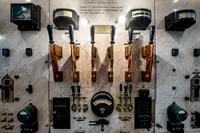
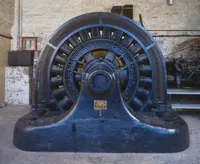
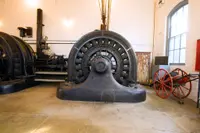
The Folsom Powerhouse stands on a bluff above the west bank of Lake Natoma. It is a two-story building of red brick on a granite foundation, with walls 20 to 30 inches thick under a gable roof of corrugated metal. Inside, four General Electric generators sit where they were set in 1895. The 1978 National Register nomination gives each as 8 feet 8½ inches tall and 57,877 pounds, and says they came to California by ship around Cape Horn. Near them are the wooden flumes and a control switchboard faced with Tennessee marble.
Outside stand the transformers, each able to carry from 800 to 11,000 volts, and the forebay, 150 by 100 by 12 feet. River water once came to rest in the forebay long enough to drop its sand and gravel. Then it fell 55 feet through eight-foot penstocks to the turbines.
Below the powerhouse, at the edge of the lake, is a grinding rock the Maidu used to prepare acorn meal. The park brochure says the Southern Maidu lived here long before Europeans arrived, on a river that gave them fish, birds, deer, roots, fruits and nuts. Placer-mining features in the ground also predate the plant. Daniel A. Bell, the park’s associate state archaeologist, writes that no evidence yet shows whether they reach back to Negro Bar, the mining camp of 1849 to 1854 just downstream. In 1856 the California Central Railroad laid its track along the east side of the site, roughly where Riley and Leidesdorff streets run now.
Guides in the generator room
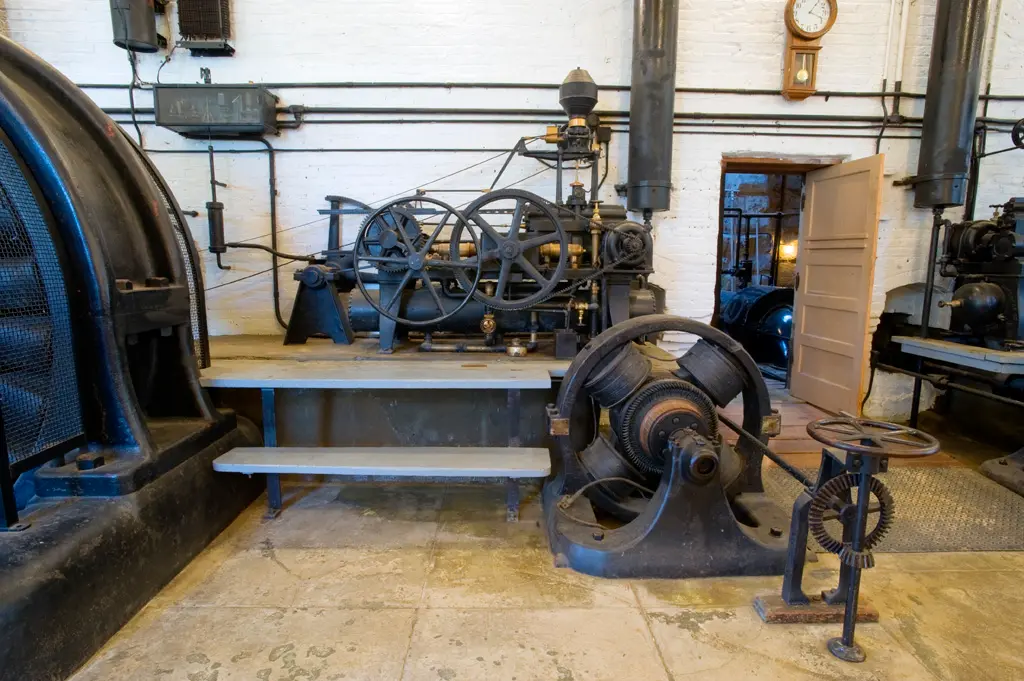
Staff interpreters and volunteer docents lead the tours. Ed Goldman described one Saturday afternoon tour in Comstock’s magazine in December 2025. His guides were Nicole Barden, a State Parks interpreter, and Kevin Sigl, a retired electronic engineer who spent 20 years at Hewlett-Packard. Sigl said that career “doesn’t qualify me for this job.”
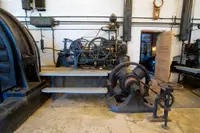
Sigl explained turbines, generators and a rope. The rope is thick, 2,200 feet long, and still coiled on an enormous reel. The guides said it opened and shut the gates that let American River water through the dam into the forebay. “This rope isn’t the original rope,” Barden said. Vandals had cut pieces from the old one some years ago and carried them off. The National Register nomination gives a 2,200-foot rope a different job. It says some 2,200 feet of continuous-strand hemp once linked turbine and generator in the lower powerhouse, a second plant built below the main one in 1897.
The guides are quick to say Folsom was not the country’s first alternating-current station. “There was also a little something called Niagara Falls,” Sigl said. Of the machinery, Barden said, “It would cost a fortune to put any of this back into operation.” The tour passes an enormous switch whose flip could turn the power on or off in Folsom, Sacramento and the communities around them.
The guides also tell of electrocutions. A few were fatal, and one sent a worker flying through the air to land intact. They tell of a severed leg as well. “The supervisors probably came from other power companies,” Sigl said. “But the average day worker was just that: a day worker.” He added, “This wasn’t a popular place to work because of the danger and the strangeness of it. You’d be better off getting a job on a farm or at a store in town.”
Up the slope, an airy visitor center uses words, pictures and historic photographs to show how streetlights were powered and trolleys ran. In 2024 about 30,000 people came to the visitor center, the powerhouse, or both.
The park holds events through the year:
- Biodiversity Week: On September 5, 2026, the park hosted the opening of the California Natural Resources Agency’s Biodiversity Week. Groups walked the grounds logging plants and animals on the iNaturalist app.
- Electricity Fair: The 13th annual fair, put on with the Sacramento Municipal Utility District, is set for October 17, 2026, from 10 a.m. to 3 p.m. It offers powerhouse tours, solar art, hydropower lessons and hands-on science, with free SacRT rides for those who show the flyer.
- Powerfest Taps & Tunes: The Friends of the Folsom Powerhouse hold this event at the park.
A Lowell on the American River
The plant began with Horatio Gates Livermore, a Maine man who came to California in 1850 looking for gold. According to the National Register nomination, he won a seat in the state senate. On his trips to Sacramento he came to think the American River could serve logging and industry. He dreamed of an industrial city at Folsom like Lowell, Massachusetts, with logs floated down to sawmills and factories driven by the river.
Accounts differ on the timing that followed:
- The nomination: His sons, Horatio Putnam and Charles Edward, joined him in 1856. By the mid-1860s the family controlled the Natoma Water and Mining Company and had added some 9,000 acres of the former Rancho de los Americanos.
- The park brochure and the IEEE milestone record: Father and sons held the company by 1861.
The Natoma company’s dams, ditches and reservoirs fed the gold mines along the river.
Livermore’s plan needed a dam at Stony Bar Gorge to hold the logs. Work began in 1867, and the company spent some $119,000 on a two-mile railroad to the dam site and on the dam’s foundation. Then the state went looking for a prison site. The nomination says the Livermores agreed to give 350 acres beside the dam for a prison in exchange for $15,000 worth of convict labor on the dam and a power canal.
Convicts started on the dam in July 1882, a year after Natoma became the Folsom Water Power Company. Work went fairly smoothly under the engineer H. T. Knight until about 1888. That year the company decided it was owed more labor and stopped. The state sued. The compromise gave the company more labor, later valued at over $200,000, and gave the prison more water rights. The nomination form, as quoted by the American Society of Civil Engineers, says “the work progressed slowly during the dry season by disinterested convict labor using hand tools since the use of machinery was forbidden.”
The finished dam was granite masonry, 650 feet long and 87 feet high, built of 78,500 cubic yards of stone set in mortar from 20,000 barrels of cement. The sources disagree on when it was done:
- The nomination: Dam and canal were completed in 1892, the year the elder Livermore died.
- The park brochure: He died in 1879, and Horatio Putnam finished the dam and canal in 1893.
The park’s own history gives 1893 for the canal. That year Folsom State Prison became the first to use the dam, starting a hydroelectric plant of its own.
Eleven thousand volts down the line
The sawmill venture lost money, the brochure says. The nomination says reports of European experiments convinced the sons to send electric power the 22 miles to Sacramento instead. In 1892 they joined with Albert Gallatin, president of Huntington, Hopkins Hardware, to form the Sacramento Electric Power and Light Company to sell the power.
Horatio Putnam Livermore took designs from both Westinghouse and General Electric. The sources give different reasons for choosing GE:
- The brochure: GE was willing to fund construction bonds.
- The IEEE record: GE made better use of three-phase current.
- The nomination: Gallatin persuaded GE to invest.
The IEEE says Elihu Thomson, Charles Steinmetz and Louis Bell built the four three-phase, 60-cycle generators at Schenectady, and that Bell designed the line to Sacramento. The brochure says Thomson reworked four Edison direct-current machines into the new generators. In September 1895 the Journal of Electricity called them “without doubt the largest three-phase dynamos yet constructed.”
On July 13, 1895, with only two generators running, current went over uninsulated copper wire to Station A, a substation at Sixth and H streets in Sacramento. The San Francisco Chronicle reported: “It was 4 a.m. in Sacramento when a 100 gun salute shattered the quiet. People not planning on getting up early that morning never forgot it.” The park says a detachment of soldiers near the substation fired the salute. The sources rank the achievement differently:
- The IEEE: Folsom was the first plant to use three-phase, 60-hertz current, which became the national standard.
- The ASCE: Folsom was the second American system of its kind, after Mill Creek No. 1 near Redlands, finished two years earlier.
Sacramento set its “Grand Electric Carnival” for September 9, Admission Day. The brochure counts 30,000 visitors from San Francisco alone; Comstock’s gives an estimated 30,000 in all. Lights outlined the Capitol and the ribs of its dome, where a cluster of arc lights could be seen for nearly fifty miles. Floats lit with bulbs or carrying machinery moved behind electric trolley cars. Comstock’s adds that a Disneyland employee, willing to talk on background, may say the carnival inspired the later spectacles at the Disney parks in Anaheim and Florida.
The power ran the Central Pacific Shops, the Phoenix Gristmill, the Buffalo Brewery and the Capitol. Streetcar lines grew from four miles to forty, and the breweries gained refrigeration. Homes used little of it.
Fifty-seven years and a new dam
Trouble came early:
- 1896: The Livermore companies were merged into the Sacramento Electric, Gas and Railway Company.
- 1896 to 1898: Dry years left the river too low to meet the city’s needs.
- 1897: The lower powerhouse went in at the tailrace mouth, with one 750-kilowatt generator turned by a rope drive. The nomination and the ASCE give it a 26-foot drop; the park history says 25.
- 1901: A generator ran away and shattered its armature. River sediment wore down the turbine blades on a regular basis.
When the river failed, the Livermores bought power from the Colgate plant on the Yuba River. In 1903 they and Gallatin sold out to California Gas and Electric, owned by Eugene de Sabla and John Martin; the park history dates the acquisition 1902–1903. The company was reorganized as Pacific Gas and Electric in 1906 and kept the plant from then on.
PG&E kept updating the plant:
- 1906: New governors went in, with new transformers on the second floor.
- 1916: Sacramento County built a concrete bridge over the mouth of the forebay. Iron railings and lights around the forebay probably followed.
- 1918, or just after: Four large transformers and three oil switches were set north of the powerhouse, and an office and machine shop went up on the hill.
The lower plant’s end is told two ways. The ASCE says it went off-line in 1920. The park history says it got a new generator in 1923, ran only briefly, and shut down for good in 1924.
The main plant ran until November 1952. That year the old dam came down for the new Folsom Dam. In 1958 PG&E gave the powerhouse and about half a mile of canal to the state. A landmark plaque, California No. 633, was placed on August 22, 1958, and the California Historical Society dedicated the site on September 9, 1958.
History panels went into the shop building’s garage in the late 1960s or early 1970s. Around 1980, staff began repairing damage from vandalism and neglect, and three preservation projects were finished between 1987 and 1990. Engineering societies named the plant a civil engineering landmark in 1975 and a mechanical engineering landmark in 1976. It was listed as a National Historic Landmark and on the National Register in 1981.
On July 13, 2021, the IEEE dedicated its bronze milestone plaque, No. 218, on a granite boulder near the powerhouse. The 1958 state plaque is mounted on a shorter boulder to its right.
Notable Events
- 1860sHoratio Gates Livermore gained control of the Natoma Water and Mining Company, whose waterworks supplied American River gold mines. parks.ca.gov
- 1860sLivermore began a dam intended to hold logs floated down from the foothills. parks.ca.gov
- 1867Work began; Natoma subsequently built a railroad to the dam site and laid the dam foundation. npgallery.nps.gov
- 1880sState officials agreed to provide prisoners for dam construction after a settlement. parks.ca.gov
- 1882Convict labor began on the dam, a year after Natoma was converted into Folsom Water Power Company. npgallery.nps.gov
- 1888Construction apparently proceeded fairly smoothly under H. T. Knight until the company claimed entitlement to more convict labor and stopped work. npgallery.nps.gov
- 1892The Livermore brothers partnered with Albert Gallatin of Huntington-Hopkins Hardware to create the Sacramento Electric Light and Power Company, which sold Folsom Powerhouse electricity in Sacramento. ethw.org
- 1892Construction resumed and the dam and canal were completed in the year Horatio Gates Livermore died. npgallery.nps.gov
- 1893After their father died, the Livermore brothers completed the dam and canal project in 1893. ethw.org
- 1893The dam, bulkhead, headgates and canal were finished; the source describes a canal supplying the generators. parks.ca.gov
- 1895The parade drew an estimated 30,000 visitors, with illuminated floats celebrating electricity's arrival in Sacramento. comstocksmag.com
- 1895General Electric generators began transmitting electricity 22 miles to Sacramento at 11000 volts, powering businesses, streetcars, and California's capitol. ethw.org
- 1895The Folsom Powerhouse was completed by Horatio P. Livermore in 1895. hmdb.org
- 1895Sacramento celebrated the breakthrough with electric lights along downtown streets and thousands of bulbs on the Capitol. parks.ca.gov
- 1896Extremely dry years left American River flow too low to meet all Sacramento power needs. npgallery.nps.gov
- 1896All Livermore companies were consolidated into Sacramento Electric, Gas and Railway Company. npgallery.nps.gov
- 1897The Livermores and Gallatins built a second plant to use an additional 26-foot drop in returning water. npgallery.nps.gov
- 1897A smaller powerhouse was built at the tailrace mouth to use the 25-foot elevation difference and meet growing demand. parks.ca.gov
- 1901A generator ran out of control and shattered its armature; river sediment also regularly damaged turbine blades. parks.ca.gov
- 1902California Gas and Electric acquired the Folsom Powerhouse along with other foothill plants. parks.ca.gov
- 1903The Livermores and Gallatin sold the company and powerhouse complex to California Gas and Electric Corporation, owned by Eugene de Sabla and John Martin. npgallery.nps.gov
- 1906The company installed new governors and second-floor transformers. parks.ca.gov
- 1906The company was reorganized as Pacific Gas and Electric, which thereafter controlled the powerhouse. parks.ca.gov
- 1916Sacramento County built a bridge over the forebay mouth for the Leidsdorff Street connection to Greenback Lane and Orangevale. parks.ca.gov
- 1918PG&E drawings indicate substantial changes in this period, including new transformers and oil switches north of the main powerhouse. parks.ca.gov
- 1920ASCE dates lower-powerhouse closure to this year, while the main plant operated until 1952. asce.org
- 1923A new generator replaced the original dynamo, but the lower plant operated only a short time after restart. parks.ca.gov
- 1924Despite investment, the lower plant was shut down and never reactivated. parks.ca.gov
- 1952The nomination dates the end of operation to November, with the old dam destroyed and a new dam erected farther upstream. npgallery.nps.gov
- 1952The basic original equipment remained in place and operated until the plant closed. parks.ca.gov
- 1958The Pacific Gas and Electric Company presented the Folsom Powerhouse to the California State Park Commission in 1958, and the California Historical Society dedicated it on September 9, 1958. hmdb.org
- 1958The Department of Parks and Recreation acquired the project area and about half a mile of canal as a PG&E donation. parks.ca.gov
- 1960sHistory panels and displays were installed in the office/shop building's garage. parks.ca.gov
- 1973OHP's Folsom Powerhouse listed-resource entry gives this registration date. ohp.parks.ca.gov
- 1975Designated a National Historic Civil Engineering Landmark. parks.ca.gov
- 1980District and unit staff repaired damage from vandalism and years without proper maintenance. parks.ca.gov
- 1981The Folsom Powerhouse was designated a National Historic Landmark by the National Park Service, United States Department of the Interior, in 1981. hmdb.org
- 1981The essay dates National Register listing to this year, for national engineering and industry significance. parks.ca.gov
- 1987Preservation projects were completed on the lower powerhouse, main powerhouse and office/shop building. parks.ca.gov
- 2021The milestone entry dates dedication to this day and identifies dedication number 218. ethw.org
People
- Kevin Sigl, Powerhouse docent and retired electronic engineer.
- Nicole Barden, State Parks interpreter and powerhouse tour guide.
- Albert Gallatin, President and general manager of Huntington and Hopkins Hardware and president of Sacramento Electric; persuaded GE to invest and install the electrical system.
- Charles Livermore, brother who partnered in creating the Sacramento Electric Light and Power Company.
- Charles Steinmetz, GE engineer who helped create the powerhouse's AC generators in Schenectady.
- Dr. Louis Bell, Designed the powerline system transmitting electricity from the powerhouse to Sacramento.
- Elihu Thomson, GE engineer who helped create the powerhouse's AC generators in Schenectady.
- Horatio Gates Livermore, California State senator who began trying to harness the American River; father of the sons who changed the scheme to hydroelectric power (1850's).
- Horatio Putnam Livermore, son who completed the dam and canal project and chose General Electric's three-phase design for the powerhouse.
- Henry T. Knight, Chief Engineer, Folsom Water Power Company, named on the ASME landmark plaque (1895).
- Charles Edward Livermore, Son of Horatio Gates Livermore who continued the river-development effort and helped change it from waterpower to hydroelectric generation.
- Eugene de Sabla, Co-owner of California Gas and Electric Corporation, buyer of the company and powerhouse complex (1903).
- Horatio Putnam, Son of Horatio Gates Livermore who continued the river-development effort and helped change it from waterpower to hydroelectric generation.
- John Martin, Co-owner of California Gas and Electric Corporation, buyer of the company and powerhouse complex (1903).
Sources
- parks.ca.gov/?page_id=501
- parks.ca.gov/pages/501/files/FolsomPowerhouse.pdf
- comstocksmag.com/article/folsom-powerhouse-state-park-celebrates-130-years
- smud.org/ElectricityFair
- folsompowerhouse.org/wp-content/uploads/2026/08/2026-electricity-fair.pdf
- folsompowerhouse.org
- facebook.com/Folsom-Powerhouse-State-Historic-Park-580404082039827
- parks.ca.gov/?page_id=1335
- parks.ca.gov/?page_id=22909
- parks.ca.gov/?page_id=1349
- parks.ca.gov/?page_id=1339
- ohp.parks.ca.gov/ListedResources/Detail/633
- ohp.parks.ca.gov/listedresources/Detail/N258
- hmdb.org/m.asp?m=706
- folsomtimes.com/folsoms-powerhouse-state-park-celebrates-130-years-saturday
- asce.org/about-civil-engineering/history-and-heritage/historic-landmarks/folsom-hydroelectric-power-system
- ethw.org/Milestones:Folsom_Powerhouse,_1895
- npgallery.nps.gov/GetAsset/a1918585-a9bf-4575-a0b6-a830ed8b4a32