Murphys
Calaveras County, California. County seat.
Murphys is a gold camp in Calaveras County, California, that began as the Murphy brothers’ trading post, where Miwok Indians mined gravel and were paid in merchandise.1,2
Details
Point at a dot to see the place.Tap a dot to see the place. Road map of Murphys.
In Murphys
The Calendar

History
The Murphy Brothers’ Camp
A state marker at the intersection of Main and Jones streets calls Murphys one of the principal mining communities in Calaveras County and says it was named for the man who discovered gold on the flat in 1849.2 A marker erected by E Clampus Vitus names John Murphy, 1824 to 1892, as the founder of Murphys and dates the founding to 1848.1 He and his brother Daniel set up a trading post and hired Miwok Indians to mine gravel, paying them in merchandise.1 The camp was first known as Murphys Diggings, then Murphys Camp, and later Murphys.1 The 1939 guide says John and Daniel Murphy were the first to discover gold at Murphys, while the state marker for Vallecito says the Murphy brothers found gold there in 1849 and that Vallecito was first called ‘Murphy’s old diggings.’3,4 According to the marker, John Murphy left camp in December 1849 with $1,500,000 in gold, returned to San Jose, married Virginia Reed of the Donner Party, and served as mayor of San Jose and sheriff of Santa Clara.1
Twenty Million Dollars from Murphys Flat
Many immigrants crossing the Sierras by Ebbetts Pass made Murphys their objective, and the state marker credits Murphys Flat and the surrounding mines with 20,000,000 dollars in gold.2 Early regulations limited a claim to 8 feet square.2 The miners carried water across Murphys Creek on a suspension flume and cut a drainage race to drain the flat.2 The town has its own Joaquin Murrieta legend: he is said to have dealt three-card monte here in 1851 and to have begun his bloody career after his brother, unjustly accused of horse stealing, was hanged and he himself was flogged.4 The Calaveras Light Guards organized in Murphys on May 4, 1861, to recruit for the Civil War.2
After the Fire of August 20, 1859
Fire destroyed the business part of town on August 20, 1859.2 Peter L. Traver’s building of 1856, which the state marker calls the oldest stone building in Murphys, came through the fires of 1859, 1874, and 1893 because of its iron shutters and the sand on its roof, and it served as a general store, a Wells Fargo office, and later a garage.3 In 1862 the tinsmith Louis Robinson put up a brick and stone building to replace the frame store he lost in the fire, and from 1869 it served for 40 years as a bakery and store.5 Adam Magers baked there until he died in 1874, John Heinsdorff took over soon afterward, and Isabelle Bishop Dibble bought the run-down building and restored it in the 1950s.5 After the 1859 fire, Freeman Dunbar and Company built the Union Saloon and Bowling Alley, which later became Frank W. Fisk’s general store and held the post office from 1902 to 1939, with Fisk as postmaster.6 A marker names the house that Charles A. and Catherine Caswell Curtis built in July 1853 as Murphys’ oldest wooden home and says it survived the fire that destroyed much of the town in the late 1800s.7
The Sperry Hotel on Main Street
The state marker says James L. Sperry and John Perry opened the Sperry and Perry Hotel on August 20, 1856, while the 1939 guide says John L. Sperry built it in 1856, when Murphys became the gateway to the Calaveras Big Tree Grove.3,4 The hotel was renamed the Mitchler Hotel in 1882, and the McKimins family renamed it the Murphys Hotel in 1945; a College of the Pacific group bought it in 1963.3 In 1939 the Federal Writers’ Project guide recorded a town of 600 people at 2,200 feet, with its store, saloons, and business houses spread along the main street in the shade of elms and Chinese heaven trees.4 The guide also saw men in blue jeans and broad felt hats lolling in front of those buildings in the evenings, their chairs tilted back against the walls.4 The guide noted bullet marks in the hotel doorway from the time a stranger shot the town’s current bad man, and an iron safe behind the bar holding ledgers signed by Charles E. Bolton (Black Bart), Ulysses S. Grant, and Will Rogers, who made a movie here in 1934.4
The Schoolhouse, the Pokey, and Buena Vista
The Murphys Grammar School, a wooden building, has been used as a school since it was built in 1860.8 Its National Register nomination calls it the oldest continuously used school building in California and records that the slate chalkboards and pine floors are original.8 According to the nomination, Albert A. Michelson, the first American to win the Nobel Prize for Physics, received all of his elementary education there and later measured the speed of light.8 Around 1915, Tom Burrow, Frank Kaler, Price Williams, Frank Segale, and Frank Forrester built the town jail of hand-mixed concrete, and it is said that one of the builders got drunk and rowdy celebrating its completion and became its first inmate.9 At Buena Vista Cemetery, which its marker calls the earliest official burial place in Murphys, the oldest grave marker belongs to a six-year-old boy who died on June 26, 1855.10
Within 30 Miles
Measured in a straight line from the town, nearest first.
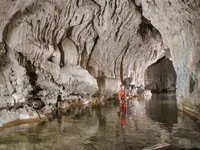
- Natural Bridges Day Use Area TrailheadVallecito · Day use onlyModerate 0.7-mile trail leads to a unique series of limestone caves with Coyote Creek running through them, an outstanding but sensitive geologic resource at New Melones Lake; pets not permitted on the trail; vault toilets at the parking area, no drinking water.
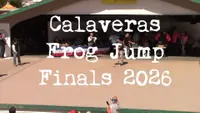
- Calaveras County Fair & Jumping Frog JubileeAngels Camp · County fairThe Calaveras County Fair and Jumping Frog Jubilee runs the third weekend of May outside Angels Camp, California, where bullfrogs still chase a 1986 record of 21 feet 5¾ inches.
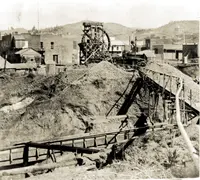
- Columbia State Historic ParkColumbia · State historic parkColumbia State Historic Park, three miles north of Sonora, California, keeps a gold-rush town in daily use, where the City Hotel's cherrywood bar came around the Horn in 1856.
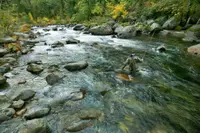
- Ebbetts Pass Scenic BywayArnold · National scenic bywayThe Ebbetts Pass Scenic Byway runs 61 miles over the Sierra Nevada from Arnold to Markleeville, narrowing near its 8,700-foot crest to a road with no center line.
- Mother Lode FairSonora · County fairgrounds and year-round event centerThe Tuolumne County fair in Sonora, California, held on its Southgate Drive grounds since 1938, where a junior livestock auction and a destruction derby share one July weekend.

- Railtown 1897 State Historic Park (Sierra Railway)Jamestown · State parkA working steam-era railroad from California's past with historic trains, maintenance shops, roundhouse, and stories that span industry, communities, and film history.
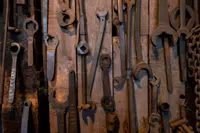
- California Gold PanningJamestown · Guide or outfitterA family-run gold claim on Woods Creek outside Jamestown, California, where three generations of Prebalicks teach visitors to shovel, sluice and pan the creek where Tuolumne County's gold rush began.
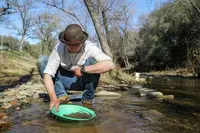
- Tuolumne Lumber JubileeTuolumne · Community driven eventThree-day community event with logging competitions, parade, queen contest, carnival, vendors and tug-of-war.
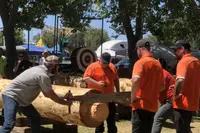
- Moke Hill Fourth of July ParadeMokelumne Hill · Annual 4th of july independence day celebrationThe Fourth of July on Main Street in Mokelumne Hill, a Calaveras County Gold Rush town, where pancakes at the Town Hall precede an eleven o'clock parade past rhyolite buildings.
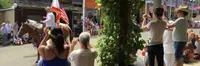
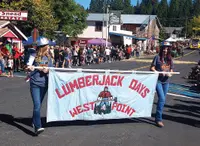
- Lumberjack DayWest Point · Street parade and family dayLumberjack Day fills Main Street in West Point, Calaveras County, every first Saturday in October with a horsemen's parade, a downhill soap box derby, and a logging show paying over $5,000.
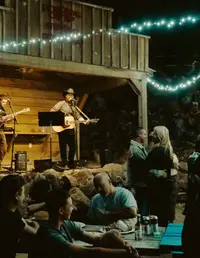
- Roaring Camp Mining Company gold campPine Grove · Operating gold mine and gold panning campRoaring Camp was once a camp for Forty Niners, but since it was so inaccessible, most of the gold still remains. Visitors can see our operating gold mine and can mine their own gold by panning, sluicing, metal detecting, and dry washing.
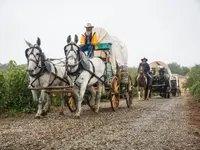
- Days of 49 Celebration and Wagon TrainJackson · Annual wagon trainA horse-drawn covered-wagon train of the Kit Carson Mountain Men spends days crossing Amador County's back roads each April before rolling down Main Street in Jackson.
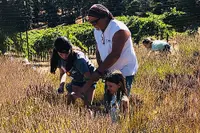
- Farms of Amador Annual Farm TourJackson · Annual fundraising tour and dinnerFarms of Amador's annual tour of Amador County farms, which change every year, ending in a farm-to-fork dinner; in 2026 it was served at the Kennedy Gold Mine in Jackson.
- Italian Picnic and ParadeSutter Creek · Annual picnic and paradeThe Italian Benevolent Society's three-day June picnic in Sutter Creek, California, held since 1882, ending with a Sunday parade down Old Highway 49 and a salami toss.
Nearby towns: Placerville. All the towns of California. More of California: Town Festivals.
Sources
- John Murphy (historical marker) hmdb.org/m.asp?m=34335
- California State Parks ohp.parks.ca.gov/ListedResources/Detail/275
- California State Parks ohp.parks.ca.gov/?page_id=21392
- California: A Guide to the Golden State (1939), p. 492 archive.org/details/californiaguidet00federich/page/492
- The Heinsdorff Bakery (historical marker) hmdb.org/m.asp?m=16016
- The Old Fisk Building (historical marker) hmdb.org/m.asp?m=32814
- Murphys’ Oldest Wooden Home (historical marker) hmdb.org/m.asp?m=218940
- National Register nomination, Murphys Grammar School npgallery.nps.gov/GetAsset/382da7e2-d2bc-45f3-8868-8ef3e3c6d1a5
- The Murphys Pokey (historical marker) hmdb.org/m.asp?m=229243
- Buena Vista Cemetery (historical marker) hmdb.org/m.asp?m=66122