Snoqualmie
King County, Washington.
Snoqualmie is an eastern King County town, platted in 1889 as Snoqualmie Falls, where an underground power plant at the falls opened in 1899.1
Details
- Founded
- Snoqualmie began as “Snoqualmie Falls,” platted in August 1889 by Charles H. Baker, an engineer with the Seattle, Lake Shore & Eastern Railway.1
- Name
- Platted as Snoqualmie Falls and later shortened to Snoqualmie, the town shares its name with the Snoqualmie River, which was named for a tribe of Indians; the historian Edmond S. Meany traced the word to sdob-dwahlbbluh, meaning moon.1,2
- Last checked
- October 6, 2026.
Point at a dot to see the place.Tap a dot to see the place. Road map of Snoqualmie.
In Snoqualmie
The Calendar
History
Moon’s Weir and the Upper Snoqualmie
Snoqualmie stands about 30 miles east of Seattle on the Snoqualmie River, just above Snoqualmie Falls.3 Accounts of the falls’ height differ, from 268 feet in the National Register nomination to 276 feet in an encyclopedia entry.4,5 In the Snoqualmie story, Moon the Transformer came to the place where the falls now are, found a fish weir of wood that kept the salmon from going upstream, and turned it into a waterfall.6 When the Point Elliott Treaty was signed in 1855, the Upper Snoqualmie band lived in multi-family houses on the prairies above the falls.4 Chief Patkanim signed that treaty, ceding all of the tribe’s land to the United States, but the tribe was never repaid and never given a reservation.3
Borst, the Kelloggs, and the Hop Ranch
Accounts of the first settlers differ: the 1950 state guide names the Kellogg brothers, who settled on the prairie above the falls in 1858, while a later encyclopedia account says the Kelloggs stayed only a few years.2,3 Jeremiah Borst, considered the first permanent settler, arrived in 1858 and lived at first in the ruins of Fort Alden, a crude wooden fort built by Washington Territorial Volunteers during the 1855-1856 Indian Wars.1 Watson Allen opened Snoqualmie’s first mill about 1872 at the mouth of Tokul Creek, just downstream from the falls.1 In 1882 the Hop Grower’s Association of Seattle brought a hop ranch of 1,500 acres to the valley near the present town, and a settler named Taylor made 20,083 cedar hop poles for it at two cents each.7 Many of the pickers were Native Americans who came from all over the Northwest, and around 1900 the ranch failed because of aphid infestations and low hop prices.3,7
Platting Snoqualmie Falls
The Seattle, Lake Shore & Eastern Railway arrived in 1889, and in August of that year Charles H. Baker, an engineer with the railway, filed the plat of “Snoqualmie Falls.”1 The first lots are said to have been bought by Edmund and Louisa Kinsey, parents of Darius and Clark Kinsey, who photographed the region’s lumber industry between the mid-1890s and 1940.1 Four miles away, Will and Mary Taylor had filed a plat on February 16, 1889, naming their townsite Snoqualmie; the railroad asked Taylor to change the name because of the nearby town of Snoqualmie Falls, and his town was finally named North Bend.7 The community of Snoqualmie Falls later shortened its own name to Snoqualmie.1 By 1900 Snoqualmie had 429 residents, and in May 1903 they voted 49 to 20 to incorporate.1,3 The papers were filed on June 9, 1903, with James Strouf as first mayor, in a town where lots had been priced at $300 since 1889 and many residents had simply built in the rights-of-way of the streets.1
The Plant in the Rock
Charles H. Baker, out of work after the Panic of 1893, persuaded his father to finance a power generator deep in the rock beneath the falls, and work began in 1898.5 Workers cut the cavity with dynamite and pneumatic drills while others hauled the debris up the shaft and sent it by gravity tramway to a rock crusher.8 On July 31, 1899, at a public ceremony, Baker’s 18-month-old daughter Dorothy pulled the switch.5 The federal engineering record of the plant calls it the first power plant successfully constructed completely underground, and it found all of the original turbines still in use.8 In September 1903, while workers were enclosing the transformers in fireproof containers, the oil of an unprotected transformer caught fire; newspaper accounts say the fire destroyed the transformer house and seven of the ten transformers, yet the plant resumed limited operation within twenty-four hours.8
Mill Town to Snoqualmie Ridge
In 1917 an all-electric lumber mill opened in the company town of Snoqualmie Falls, just across the river, and it became known as the Weyerhaeuser Mill.1,7 In 1950 the state guide counted 775 people in a town born in the lumbering boom, with lumbering in the district still employing about 1,800 men, though the logged-over country now sent out more cattle than lumber.2 The population grew from 279 in 1910 to 1,216 in 1960 and drifted up to 1,631 by 2000, and some who stayed found work in a Weyerhaeuser plywood plant.1 Highway 10, built in the 1940s, bypassed Snoqualmie and cost it tourists, and the rail line was abandoned in 1974.3 In 1990 and 1991 the television mystery series Twin Peaks was filmed at locations in Snoqualmie.1 Later in the 1990s the city annexed 1,300 acres to the west for the planned community of Snoqualmie Ridge, the population grew from 1,631 to 10,670 between 2000 and 2010, and by 2010 more than 80 percent of residents lived on the ridge.1 Of the company town across the river, the sycamore trees on both sides of Reinig Road are among the last vestiges.9
Within 30 Miles
Measured in a straight line from the town, nearest first.
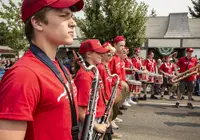
- Fall City DayFall City · Family community festivalFall City Day, a volunteer-run June festival in unincorporated Fall City, Washington, where a parade has followed the Snoqualmie River road since the early 1950s.
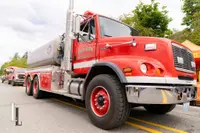
- Festival at Mt. SiNorth Bend · Annual summer festivalA free three-day August festival at Si View Park in North Bend, Washington, held under four names since 1947 and run by volunteers to fund a scholarship.
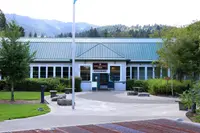
- Issaquah Salmon HatcheryIssaquah · Salmon hatcheryA Works Progress Administration salmon hatchery in downtown Issaquah, Washington, where returning Chinook and coho climb a glassed-in fish ladder past underwater viewing windows.
- Duvall DaysDuvall · FestivalDuvall Days, the free first-weekend-of-June festival in Duvall, Washington, closes Main Street for a parade and ends in fireworks over McCormick Park, and it counts two anniversaries at once.
- Black Diamond Labor DaysBlack Diamond · FestivalA Labor Day weekend festival in the coal town of Black Diamond, Washington, restarted in 1947 when five men each threw $10 into a pot.
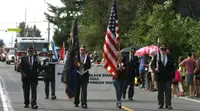
- Harvest FestivalKirkland · FestivalA free one-day fall festival on the north side of Kirkland's Juanita Beach Park, where pie eating, corn shucking, and pony rides share the grounds with a food-donation tent.
- Kent International FestivalKent · FestivalAn annual free festival of the greater Kent community's heritages at the accesso ShoWare Center in Kent, Washington, where visitors collect stamps at ten cultural passport booths.
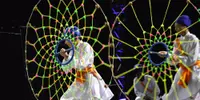
- Kent Cornucopia DaysKent · Annual festivalThe festival happens on Meeker Street in downtown Kent; the car show is at 4th & Meeker Street, spread over 3 blocks and additional side parking lots.
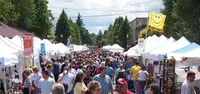
- Hat 'n' BootsSeattle · Public sculptureA 44-foot cowboy hat and a pair of mismatched boots, built as a Highway 99 gas station and its restrooms, stand in Oxbow Park in Seattle's Georgetown neighborhood.
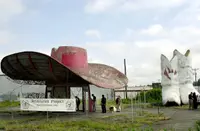
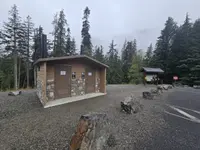
- Franklin Falls TrailheadSnoqualmie Pass · TrailheadA trailhead off I-90 Exit 47 near Snoqualmie Pass, where a one-mile path reaches a 70-foot falls and a loop follows the last mile of the 1860s wagon road.
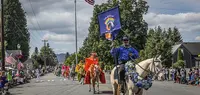
- Fair Days ParadeMonroe · ParadeMonroe, Washington's annual Fair Days Parade on West Main Street, run alongside the Evergreen State Fair, where dancing horses share the street with Evergreen Speedway drift cars.
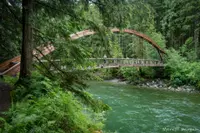
- Mountains to Sound GreenwaySeattle · National scenic bywayA picturesque section of Interstate 90 spanning the Mountains to Sound Greenway National Heritage Area from Seattle to Thorp.
- The Fremont TrollSeattleConcrete sculpture of the troll under the Aurora Bridge underpass in Seattle, with its Volkswagen Beetle detail; a free outdoor park.
- Willard Smith PlanetariumSeattle · PlanetariumLive, immersive planetarium show at Pacific Science Center with topics on the universe, planets of our solar system, current astronomy news, and recent discoveries. Each show is live and presenters can modify the program based on interest.
- Evergreen State FairMonroe · County fairThe Evergreen State Fair, an eleven-day county fair at Monroe, Washington, traces itself to an 1874 display in a former Snohomish saloon and sells a blackberry float found nowhere else.
17 more within 30 miles on the road map.
Nearby towns: Enumclaw, Puyallup, Bremerton, Cle Elum, and Port Townsend. All the towns of Washington. More of Washington: Train Rides and Town Festivals.
Sources
- Snoqualmie incorporates on June 9, 1903. historylink.org/File/20666
- Washington: A Guide to the Evergreen State (1950), p. 320 babel.hathitrust.org/cgi/pt?id=mdp.39015010545013&seq=406
- Snoqualmie -- Thumbnail History historylink.org/file/292
- National Register nomination, o Fall npgallery.nps.gov/GetAsset/88f12c2b-db08-4c31-9c59-36acf64e305e
- Snoqualmie Falls historylink.org/File/281
- Moon the Transformer (Snoqualmie) historylink.org/File/2586
- North Bend -- Thumbnail History historylink.org/File/10750
- SNOQUALMIE FALLS HYDROELECTRIC PROJECT, ... tile.loc.gov/storage-services/master/pnp/habshaer/wa/wa0800/wa0819/data/wa0819data.pdf
- Library Search Results historylink.org/Search/Results?AllResultsPage=2&FilterTopic=on&PageSize=12&ResultsPage=7&SortBy=Title&TopicId=31