Northwest Railway Museum (Snoqualmie Valley Railroad)
Snoqualmie, King County, Washington. Museum.
Details

- Where
- 9320 Stone Quarry Road, Snoqualmie, WA 98065. Directions
- When
- November 1, 2026 Halloween Train: Snoqualmie departures 11:00am, 1:00pm, & 3:00pm; North Bend departures 10:30am, 12:30pm, & 2:30pm.
- Season
- Winter Schedule Saturdays February-March; Summer Schedule Saturdays and Sundays April through September; Fall Schedule Halloween Train last three Saturdays and Sundays in October, Saturdays in November, Santa Trains last weekend in November.
- Getting there
- Excursions begin at Historic Snoqualmie Depot, 38625 SE King Street, Snoqualmie, WA 98065, and North Bend Depot, 205 E McClellan Street, North Bend, WA 98045.
- Fees
- Train Shed Exhibit Hall admission $0.00 through $10.00.
- Hours
- The Snoqualmie Depot is open from 10:00am to 5:00pm every day except New Year's Day, Thanksgiving, and Christmas Day; the Train Shed Exhibit Hall is open from 11:00am to 4:00pm but operation days vary seasonally and the Train Shed is always closed on Tuesdays.
- Access
- Timed ticketing and limited attendance at the Train Shed Exhibit Hall; indoor displays with restrooms in the adjacent building, picnic tables on site.
- Walk-in or reserve
- Everyone age 2 and up needs a ticket; time indicates the arrival window, ticket valid only for the date and time listed, all sales final with no refunds or exchanges.
- Phone
- (425) 888.3030
- Website
- trainmuseum.org
- Managed by
- the city of North Bend owns and operates the North Bend Depot as a community space.
- Established
- 1890.
The Snoqualmie Depot stands at 38625 SE King Street with a turret above its ticket office, two curved eyebrow dormers in the roof, and cedar shingles laid to a pattern copied from period photographs. It is free to enter and open every day but Thanksgiving, Christmas Day, and New Year’s Day. Railroad history exhibits fill the former gentlemen’s waiting room and the freight room. The former ladies’ waiting room holds the Depot Bookstore. A ramp along the rear of the building climbs to the upper boardwalk, which is being replaced, and some boards may wobble until the work is done. The lawn of the depot yard is uneven, and the museum warns visitors to watch for tree roots.
The building is listed in the National Register of Historic Places and is a City of Snoqualmie and King County landmark. The museum calls it the longest continuously operating train depot in Washington. Train cars from the outdoor collection stand in the yard, and the Centennial Trail runs alongside more of them. The trail is always open and free, and leashed pets are allowed on it. In September 2026 the depot’s octagonal turret windows were the subject of a wooden window workshop. Participants were to reglaze them and make minor wood repairs under Sarah Steen, the King County Historic Landmarks Coordinator.
Five and a half miles to the falls
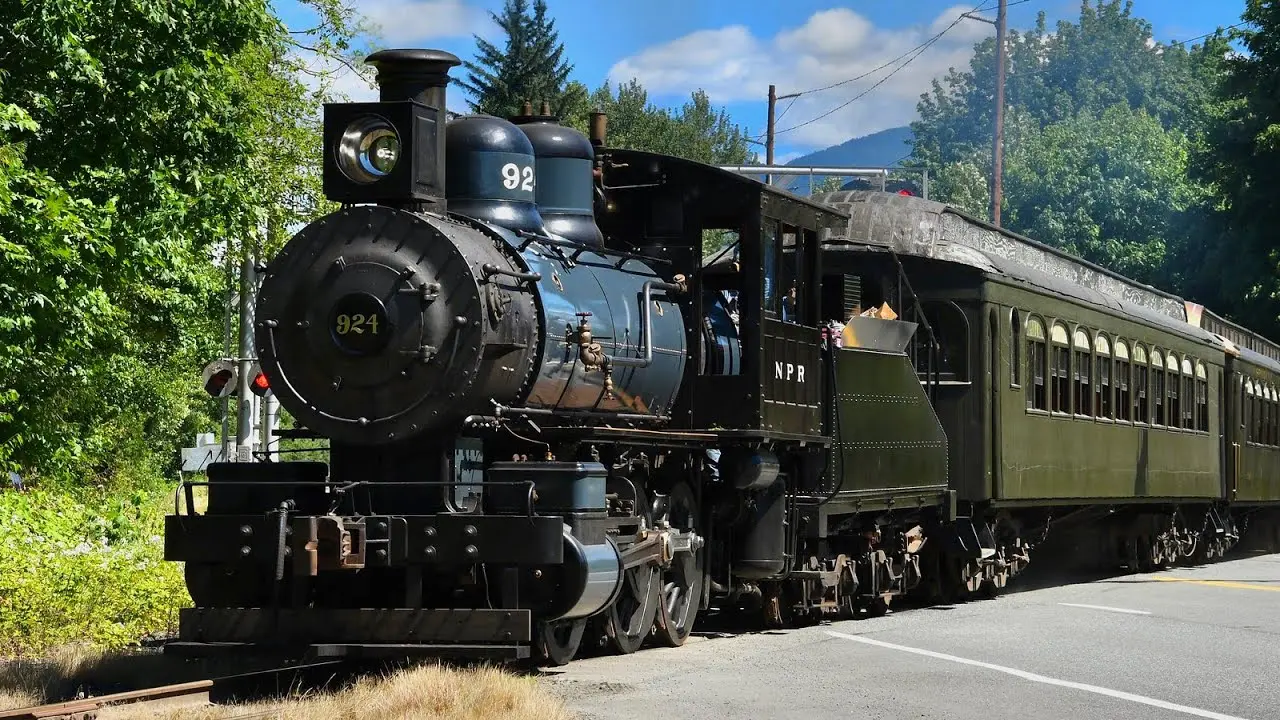
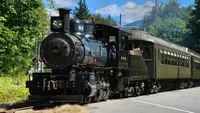
The Snoqualmie Valley Railroad runs historic coaches over 5.5 miles of the original 1880s Seattle, Lake Shore and Eastern Railway line. On regular weekends trains leave Snoqualmie at 11:00, 1:00, and 3:00. They leave half an hour earlier from the North Bend Depot, which the city of North Bend owns and runs as a community space. The round trip takes just under two hours. The train runs west to the top of Snoqualmie Falls, a sacred site of the Snoqualmie People, for a view down the Snoqualmie River Valley. It then turns back through town for a 30-minute stop at the Railway History Campus before returning to its starting depot. The museum states that it is built on the traditional lands of the Snoqualmie Tribe and other Coast Salish Peoples, and that its railway runs through land and features sacred to them since time immemorial.
Every coach is more than 100 years old. Doors and aisles are narrow, some doorways step down three inches, and there are no restrooms aboard. Food and drink are not allowed in the cars, though water in a capped bottle is encouraged. “Trains are loud!” the museum’s visitor pages say, and earplugs are free at every location. When a passenger needs the wheelchair lift at Snoqualmie, the train pulls ahead and stops with the accessible coach in the middle of King Street.
Locomotives 4024 and 4012 marked 25 years on the line in 2026. On June 28, 2001, locomotive 201 pulled 4024 on its first movements over Snoqualmie Valley Railroad rails to Snoqualmie. The museum’s restored steam locomotive did not run in 2026. The museum decided to forgo steam that season and enhance its 2027 steam offerings instead.
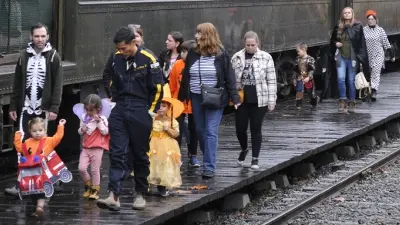
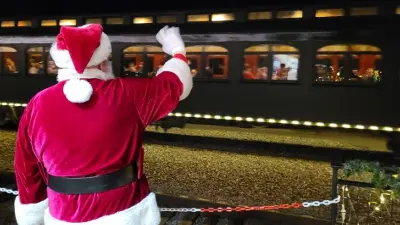
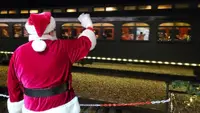
In autumn the schedule turns over to the holidays. The 2026 Halloween Train runs October 10–11, 17–18, 24–25, 31, and November 1. It offers hot cider, cider press demonstrations, hands-on apple coring, historic games, and live music, including a performance by Eric Ode, and costumes are encouraged at every age. A Halloween Wine Train for those 21 and over leaves Snoqualmie on the evening of October 30 with local wines, small bites, and a costume contest. Plain excursions follow on November 7, 14, and 21, and then Santa boards. The Yuletide Express runs 40 minutes from Snoqualmie to the top of the falls and back on Fridays, December 4, 11, and 18, with Santa visiting each family aboard and a peppermint treat for every passenger at the end. The North Pole Limited leaves North Bend on the weekends of November 28–29 and December 5–6, 12–13, and 19–20. It stops for an hour of cookies, hot chocolate, and crafts at the campus, where Santa receives children in Chapel Car 5.
The shed on Stone Quarry Road
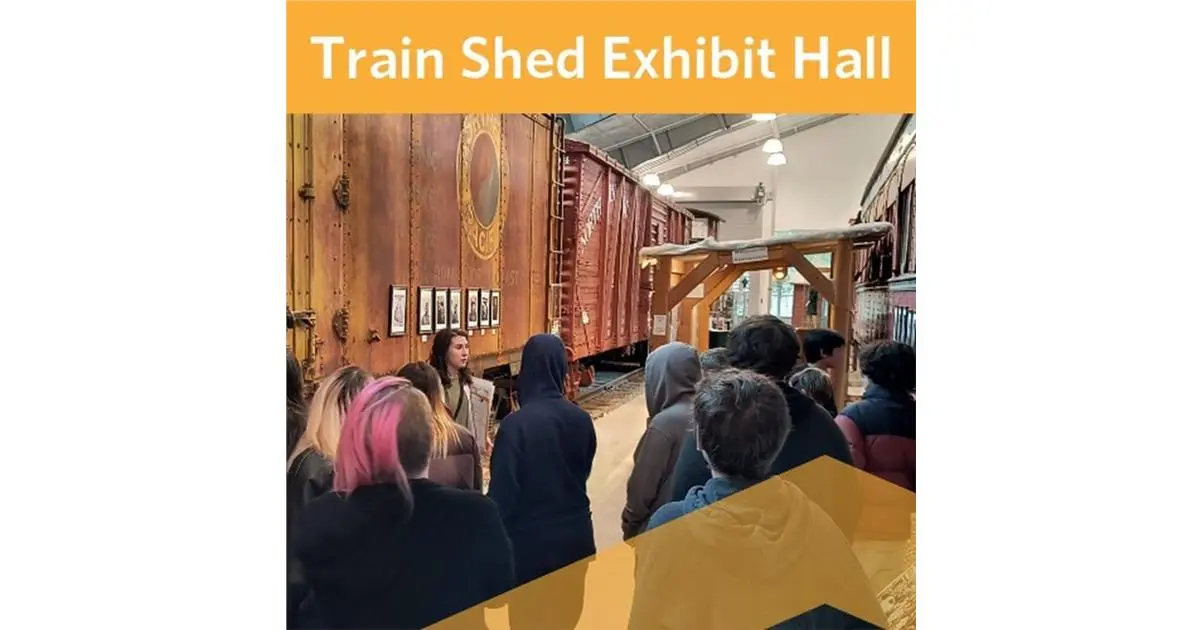
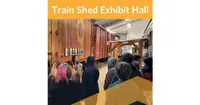
The Railway History Campus stands at 9320 Stone Quarry Road. Its Train Shed Exhibit Hall covers 25,000 square feet, and a one-way path inside leads past locomotives, passenger cars, freight cars, and maintenance-of-way cars. Chapel Car #5, the Messenger of Peace, is viewed from a platform reached by stairs. Visitors can walk through White River Lumber Co. Caboose 001. Great Northern Caboose X-101 came to the museum in 2010 from Christina Blackwell after her father’s death. In September 2026 she returned and was photographed in front of it with Executive Director Richard Anderson. The exhibits include “The Railroad Built the Pacific Northwest” and the award-winning “Wellington Remembered.” Signs or stairs mark the pieces visitors may walk on or into. Many static pieces have not been restored and may have soft spots or loose handrails.
The Train Shed sells bottled water and a rotating selection of small snacks, and picnic tables stand outside. The parking lot is laid with interlocking paving stones. Weekday afternoons from 2 to 4 are usually quiet, though volunteers sometimes use those hours for exhibit work, and power tools may be running. Admission is free every Wednesday through December 16, 2026. On the first, third, and fifth Wednesdays at 11:00, Story Time brings children in to hear stories read aloud, do a hands-on activity, and tour the shed. The September 2026 sessions covered STEM, community and Hispanic heritage, and fall.
The Conservation and Restoration Workshop next door is a working shop where staff and volunteers care for the collection. It is closed to drop-in visitors, tours are by advance reservation, and photographs are not allowed inside. The museum’s blog has followed one project there: a Talgo Series VI bistro car from Amtrak Cascades, whose coach end was cut away in what Anderson titled “Bistro car surgery.” The Railway Education Center holds the archival vault, the library, and classrooms, and its reading room opens by appointment.
A resort town platted on paper
In April 1885 a group of Seattle businessmen formed the Seattle, Lake Shore and Eastern Railway after talks with the Northern Pacific over a Seattle–Tacoma line went poorly. Judge Thomas Burke and Daniel Gilman were among the incorporators. The line took four years to build. It reached Fall City in 1888 and Snoqualmie and North Bend in 1889. That same year many of the railway’s stakeholders platted the town of Snoqualmie as a resort, with broad parks, vast hotels, and easy access to hunting and fishing in the Cascades.
The depot went up in 1890, unusually elaborate for so modest a town. Cristy Lake, the museum’s registrar and volunteer coordinator, writes that the simple answer to why it is so fancy is that it was a marketing ploy. The building was meant to draw investment for the next phase of the line, toward Walla Walla. Visitors did come. John Muir arrived on the train and wrote of the valley’s attributes. The 1970 National Register nomination, prepared by David M. Hansen of the Washington State Parks & Recreation Commission, says the station’s architecture reflected the holiday spirit of vacationers. Many came from Seattle for hunting, fishing, and Sunday excursions to the falls.
The sources disagree on who built the depot. The museum credits the Seattle, Lake Shore and Eastern and dates the building to 1890. The nomination form names the Northern Pacific as builder and gives 1889–90. Another account names the firm of Anderson and Scott, building for the Seattle, Lake Shore and Eastern.
The Panic of 1893 bankrupted the railway and ended its plans to cross Snoqualmie Pass. Six years after the depot was built, the line was reorganized as the Seattle International Railway, and by 1901 the Northern Pacific had absorbed it. Passenger service ended by 1925 by one account and in the mid-1920s by the nomination. After it ended, the waiting room was cut into smaller rooms to house the station agent. In 1948 the turret and the eyebrow dormers were removed.
Volunteers and a donated line
The museum began in 1957 as the Puget Sound Railway Historical Association, a group of volunteers who wanted to maintain and operate a train. One account also records the name Puget Sound and Snoqualmie Valley Railway. Its first passenger train ran on May 28, 1967, with Bill Petitjean as fireman. He went on to serve as a longtime volunteer. The depot entered the National Register on July 24, 1974. In 1975 the Burlington Northern abandoned the line and gave the depot and several miles of track to the museum. Rehabilitation ran from 1979 to 1981 and returned the building to its 1890s appearance, with the turret and dormers put back. The city named the depot a landmark on October 26, 1995, and the patterned shingle roof was renewed in 1996.
At an anniversary celebration recorded in the dossier, volunteers Dennis Snook and Hugh and Sally Hansen decorated the Railway Education Center. North Bend Mayor Ken Hearing and King County Councilwoman Kathy Lambert spoke, Snoqualmie City Councilman Bob Jeans attended, and Nataly Morales read a letter of congratulations from Senator Patty Murray. Snoqualmie Mayor Matt Larson is credited with a part in creating the history campus. In 2024 the museum launched a campaign called Tracks to the Future, and its private fundraising phase began in 2025.
Notable Events
- 1888The Seattle, Lake Shore and Eastern Railway reached Fall City in 1888, and Snoqualmie and North Bend in 1889. livingsnoqualmie.com
- 1889It took four years to build the line from Seattle to Snoqualmie, but in 1889 it reached the upper Snoqualmie Valley. mtsgreenway.org
- 1889Many of the stakeholders in the SLSE platted the town of Snoqualmie in 1889 with the concept that it would be a resort town with broad parks, vast hotels, and easy access to hunting and fishing in the Cascade Mountains. mtsgreenway.org
- 1890When the Snoqualmie Depot was built in 1890 it was unusually elaborate for the modest town; the purpose was to attract investment for the next phase of the line to Walla Walla. mtsgreenway.org
- 1893A national economic crisis caused by the Panic of 1893 eventually bankrupted the Seattle Lake Shore and Eastern Railway and ended its plans to continue over Snoqualmie Pass. mtsgreenway.org
- 1901Six years after the depot was built the railway was reorganized as the Seattle International Railway, and by 1901 the railway and the depot were absorbed into the Northern Pacific Railway. trainmuseum.org
- 1920sWhen passenger service was discontinued in the mid-1920's, the waiting room was broken up into several smaller rooms and converted into living quarters for the station agent. npgallery.nps.gov
- 1925Rail passenger service to Snoqualmie was discontinued by 1925. cdn.kingcounty.gov
- 1967Bill Petitjean served as fireman on the very first passenger train the museum operated. valleyrecord.com
- 1974Snoqualmie Railroad Depot was listed in the National Register. cdn.kingcounty.gov
- 1975In 1975 the Burlington Northern officially abandoned the line and donated the depot building and several miles of track to the Northwest Railway Museum. trainmuseum.org
- 1979The structure was extensively rehabilitated and restored between 1979 and 1981. trainmuseum.blogspot.com
- 1995Snoqualmie Railroad Depot was designated a City of Snoqualmie Landmark. cdn.kingcounty.gov
- 1996The elaborately patterned wood shingle roof was restored. cdn.kingcounty.gov
- 2024Tracks to the Future launched; its private fundraising phase began in 2025. trainmuseum.org
People
- Cristy Lake, Registrar and Volunteer Coordinator for the Northwest Railway Museum.
- John Muir, tourist attracted to the Valley who arrived on the train and wrote of its wonderful attributes.
- David M. Hansen, prepared the National Register nomination, Washington State Parks & Recreation Commission (1970).
- Daniel Gilman, incorporator of the Seattle, Lakeshore and Eastern Railway (SLS&E).
- Thomas Burke, Judge; incorporator of the Seattle, Lakeshore and Eastern Railway (SLS&E).
- Erin McCallum, Contact for the Tracks to the Future campaign.
- Richard Anderson, Contact for the Tracks to the Future campaign.
- Bill Petitjean, Fireman on the museum's first passenger train and longtime museum volunteer (May 28, 1967).
- Bob Jeans, Snoqualmie city councilman attending the museum anniversary celebration.
- Dennis Snook, Museum volunteer who decorated the Railway Education Center for its anniversary celebration.
- Hugh Hansen, Museum volunteer who decorated the Railway Education Center for its anniversary celebration.
- Kathy Lambert, King County councilwoman who spoke at the museum anniversary celebration.
- Ken Hearing, North Bend mayor who spoke at the museum anniversary celebration.
- Matt Larson, Snoqualmie mayor involved in creating the museum history campus.
- Nataly Morales, Read Senator Patty Murray's letter of congratulations at the museum celebration.
- Patty Murray, Senator who sent a letter of congratulations to the museum celebration.
- Sally Hansen, Museum volunteer who decorated the Railway Education Center for its anniversary celebration.
Sources
- trainmuseum.org/visit/ride-the-train
- trainmuseum.org/visit/know-before-you-go
- trainmuseum.org/visit/railway-history-campus
- trainmuseum.org/upcoming-events/steam-train-rides
- livingsnoqualmie.com/all-aboard-for-a-summer-of-events-at-the-northwest-railway-museum
- trainmuseum.org/visit/calendar/?calendar_month=nov&calendar_yr=2026
- trainmuseum.org/visit/calendar/?calendar_month=dec&calendar_yr=2026
- trainmuseum.org
- trainmuseum.org/about/history
- trainmuseum.org/about/contact
- facebook.com/trainmuseum
- instagram.com/trainmuseum
- trainmuseum.org/artifacts/historic-snoqualmie-depot
- npgallery.nps.gov/GetAsset/fa53adc6-2e32-4628-b2c6-ba37d142b223
- trainmuseum.blogspot.com/2018/02/back-to-snoqualmie-depot.html
- mtsgreenway.org/blog/why-is-the-depot-so-fancy