Issaquah Salmon Hatchery
Issaquah, King County, Washington. Salmon hatchery.
Details

- Where
- 125 W. Sunset Way, Issaquah, WA 98027. Directions
- When
- Hub of Issaquah Salmon Days the first weekend in October, annually since 1970.
- Season
- Open year-round, every day from dawn to dusk.
- Getting there
- From I-90 East: take the Front Street exit, right onto Front Street (move to the center lane), about 0.6 miles to West Sunset Way, right onto Sunset Way; the hatchery is on the left. Parking via the two entrances on Sunset Way or the parking structure across the street next to the library.
- Fees
- Admission to the hatchery is free.
- Hours
- Grounds daily dawn to dusk; viewing windows, fish ladder, raceways, aquarium room, theater and restrooms open daily 8:30am-4:00pm.
- Access
- Grounds entirely ADA accessible for wheelchairs; ADA parking at the hatchery parking lot on Sunset Way.
- Walk-in or reserve
- Open to walk-in visitors; public guided tours must be booked a minimum of 3 days in advance.
- Phone
- 425-392-1118
- Website
- issaquahfish.org
- Managed by
- Washington Department of Fish & Wildlife (WDFW) owns and operates the hatchery, assisted by Friends of the Issaquah Salmon Hatchery (FISH) volunteers.
- Established
- 1936.
- Coordinates
- 47.530083, -122.038539.
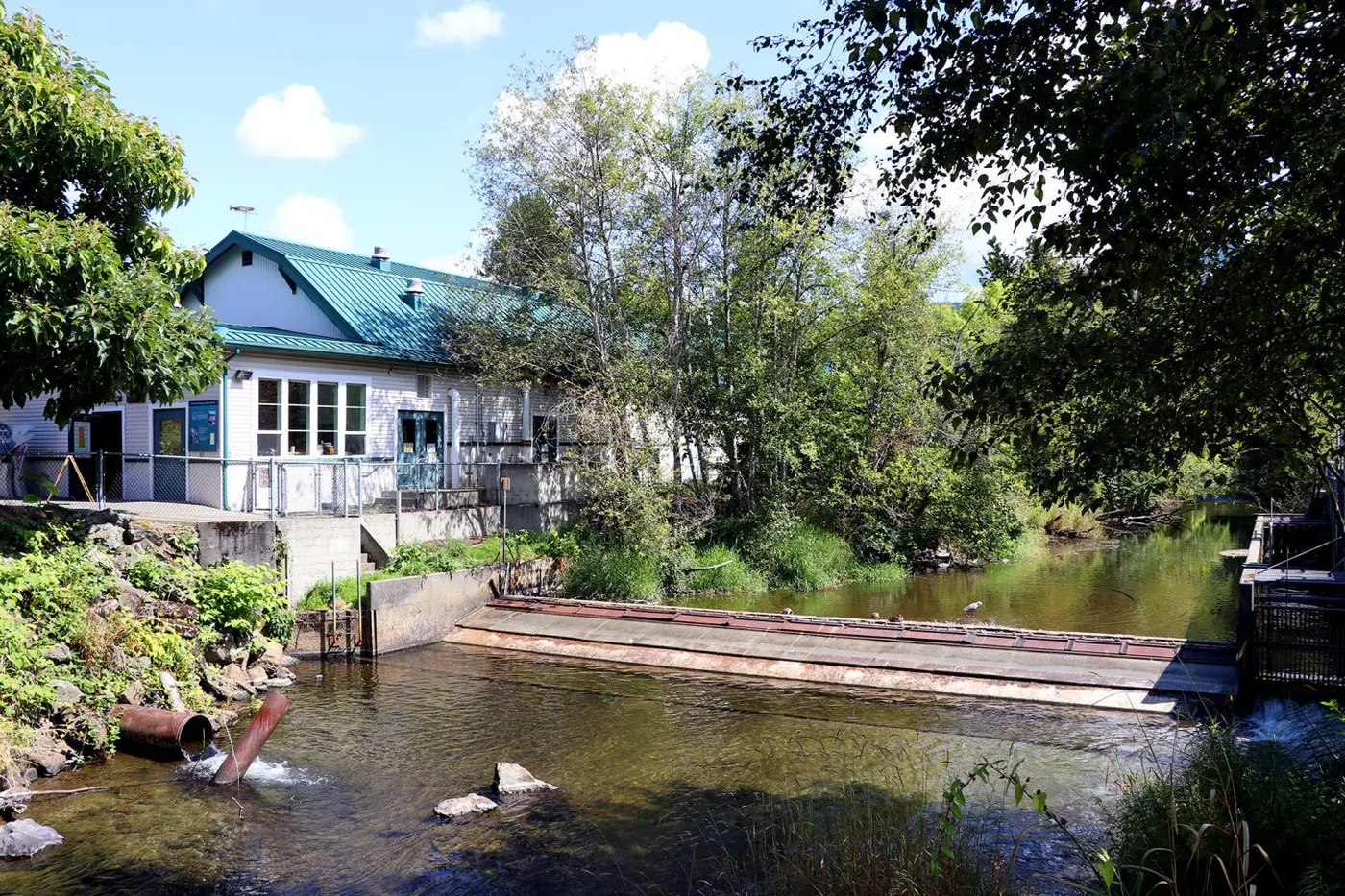
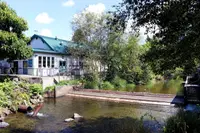
Adult salmon reach the Issaquah Salmon Hatchery in late August. The Chinook come first and meet a weir stretched across Issaquah Creek, and they jump against it. The weir blocks them and turns them toward gates and a fish ladder. According to the Friends of the Issaquah Salmon Hatchery (FISH), the volunteer group that works the grounds alongside state staff, it carries air bladders so the fish are not hurt. The ladder is glassed in. At its underwater windows and at the adult holding ponds, a visitor stands nose-to-nose with fish that left this creek as smolts and came back years later to spawn.
Inside, each fish is counted. Fish that began life in the hatchery are spawned, and fish born in the creek are released upstream. The two are told apart by the adipose fin, which is clipped on hatchery fish. FISH says all 3.2 million fish the hatchery releases are clipped. In 2026 the ladder was open by September 9. In the first week of spawning, staff spawned 347 Chinook, took 691,000 eggs and passed 31 natural-origin fish upstream. Coho follow from late September through November. On the morning of October 4, 2026, the Sunday of Salmon Days, FISH reported the hatchery “packed with salmon.”
Raceways, murals and a planted drive
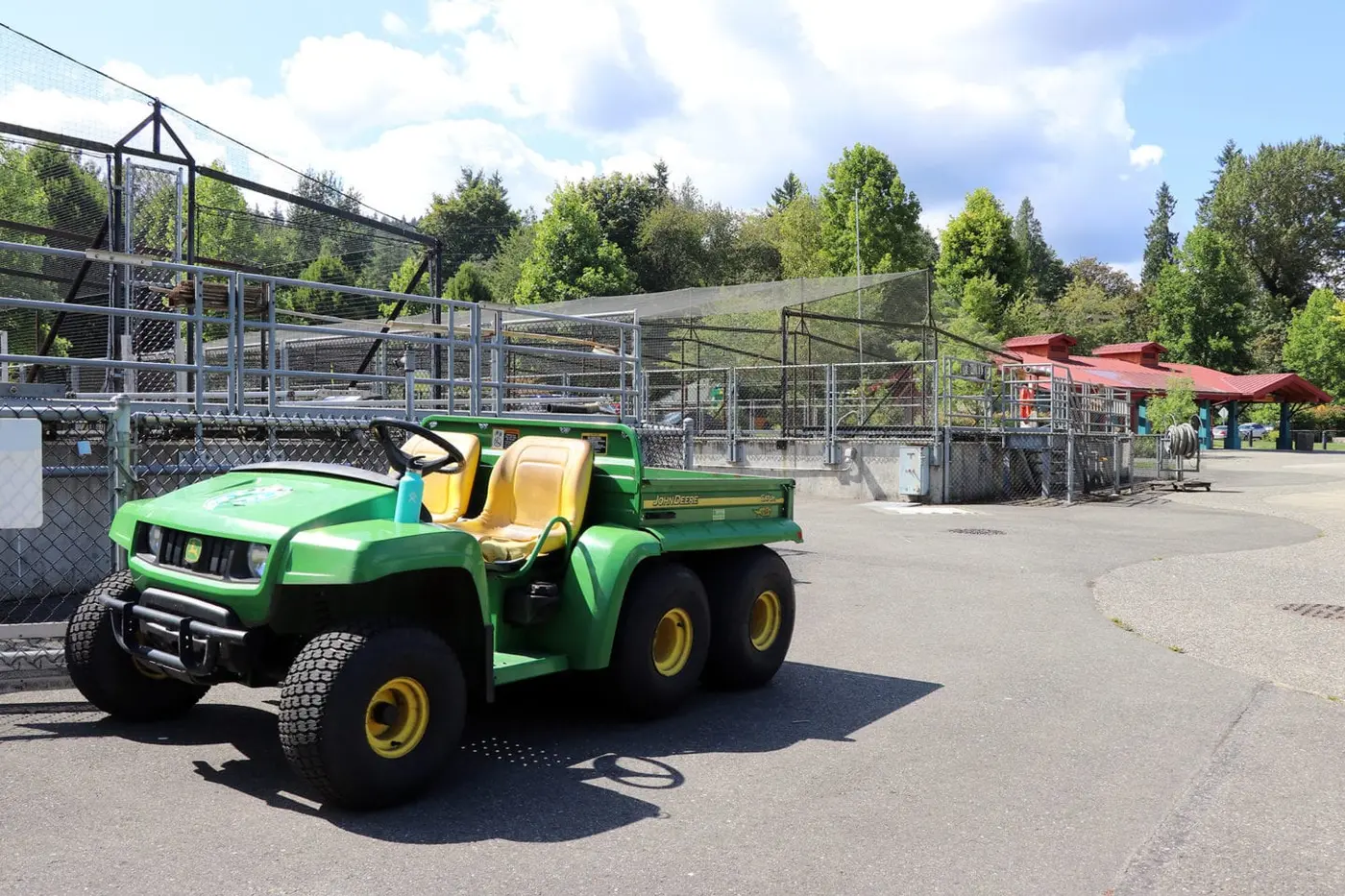
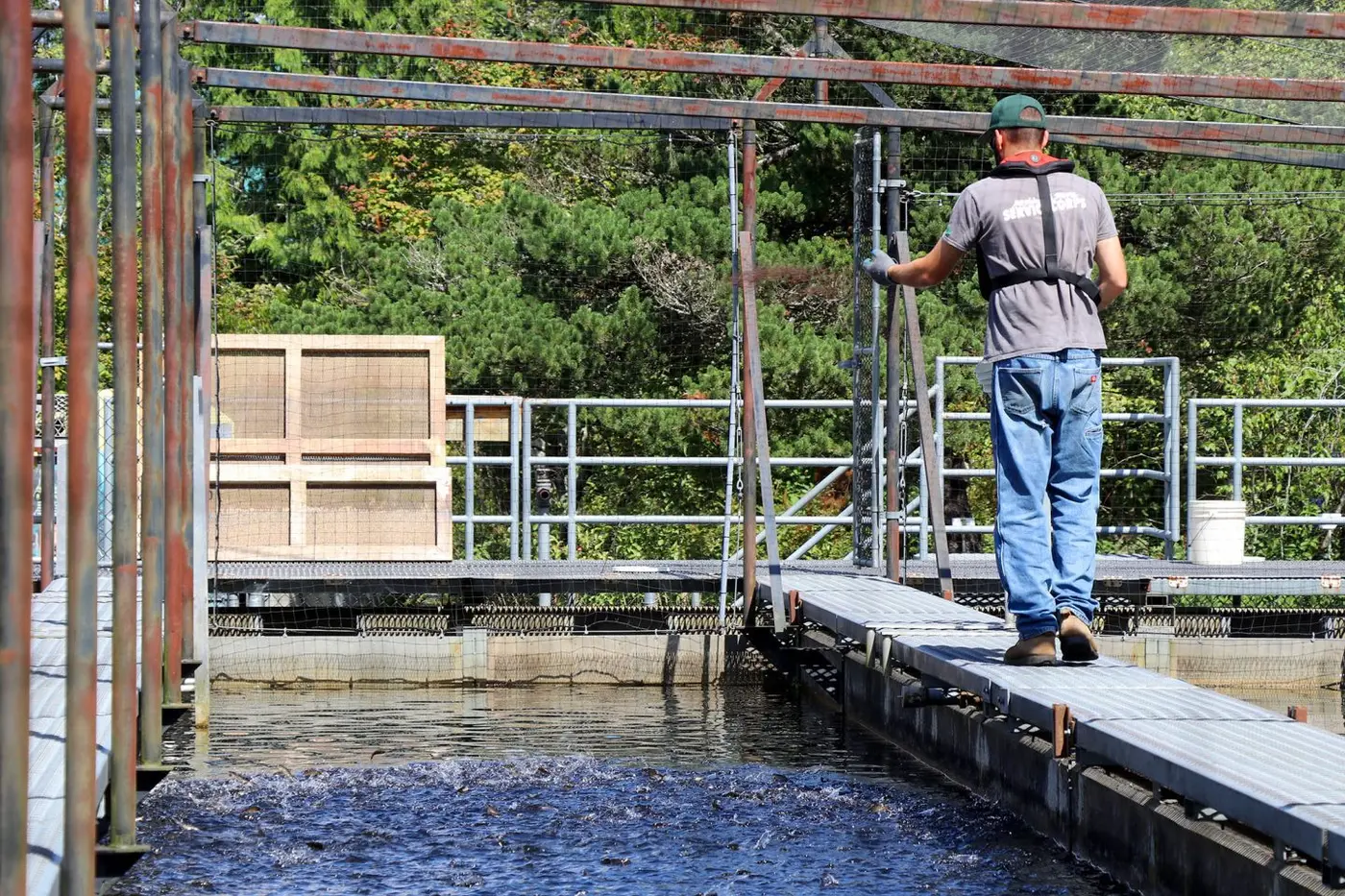
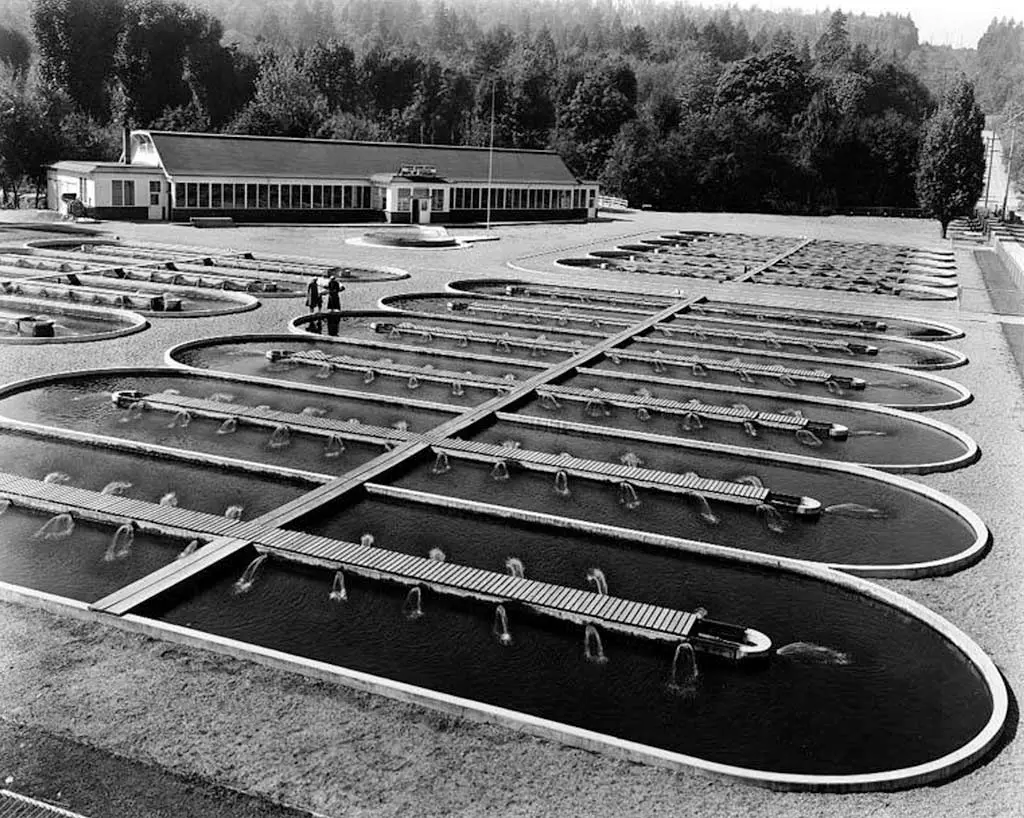
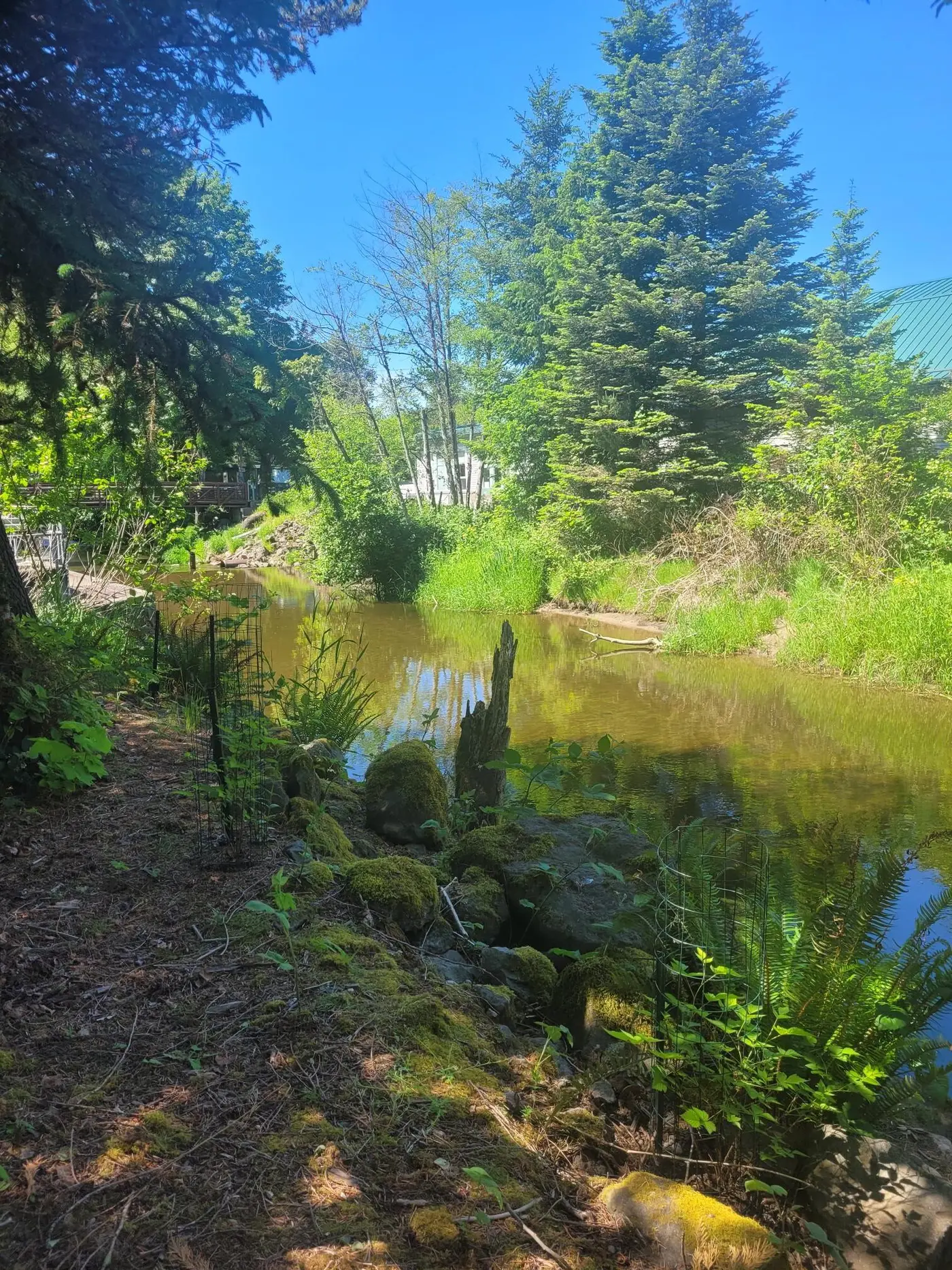
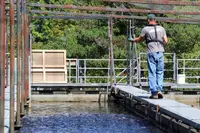
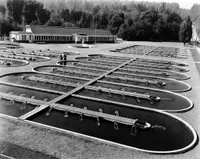
The grounds lie between West Sunset Way and Newport Way, two blocks from the old downtown and 18 miles from Seattle. The public library stands across Sunset Way. A viewing bridge crosses the creek, and in fall hundreds of adult Chinook and coho can be seen from it moving upstream. Eighteen raceway ponds hold young coho, Chinook, kokanee and trout. From March to November a $1 donation buys food for the trout, and FISH warns that feeders may get splashed.
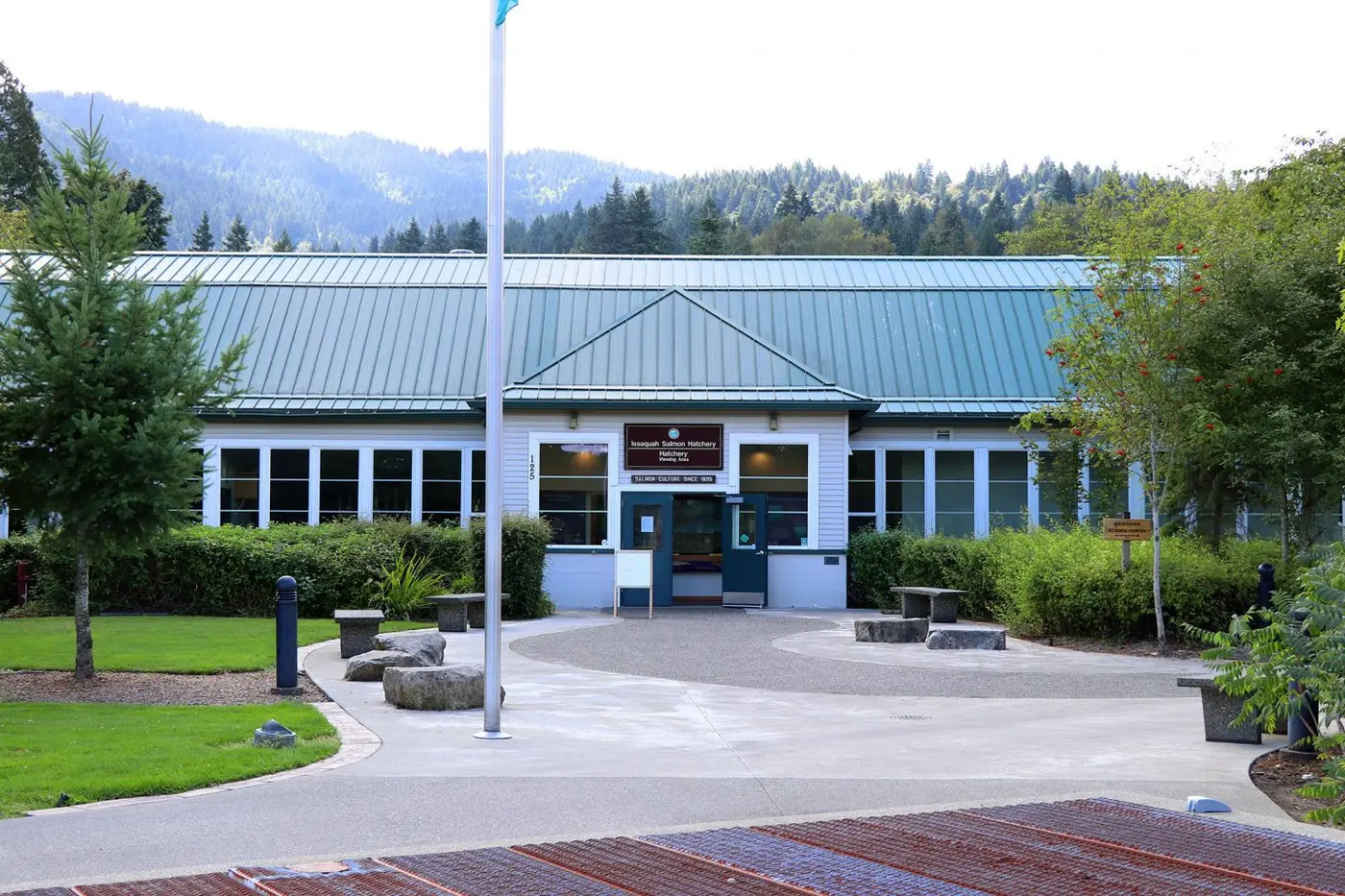
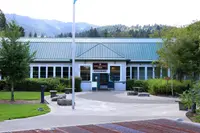
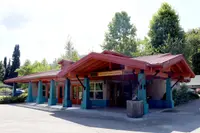
The incubation building has a long row of windows and a high-pitched roof. The curved walls of the water tower carry a mural of salmon predators and spawning by the local muralist Larry Kangas. Kangas also painted the mural in the aquarium room, where live salmon grow from fertilized egg to smolt in a setting modeled on a Northwest stream.
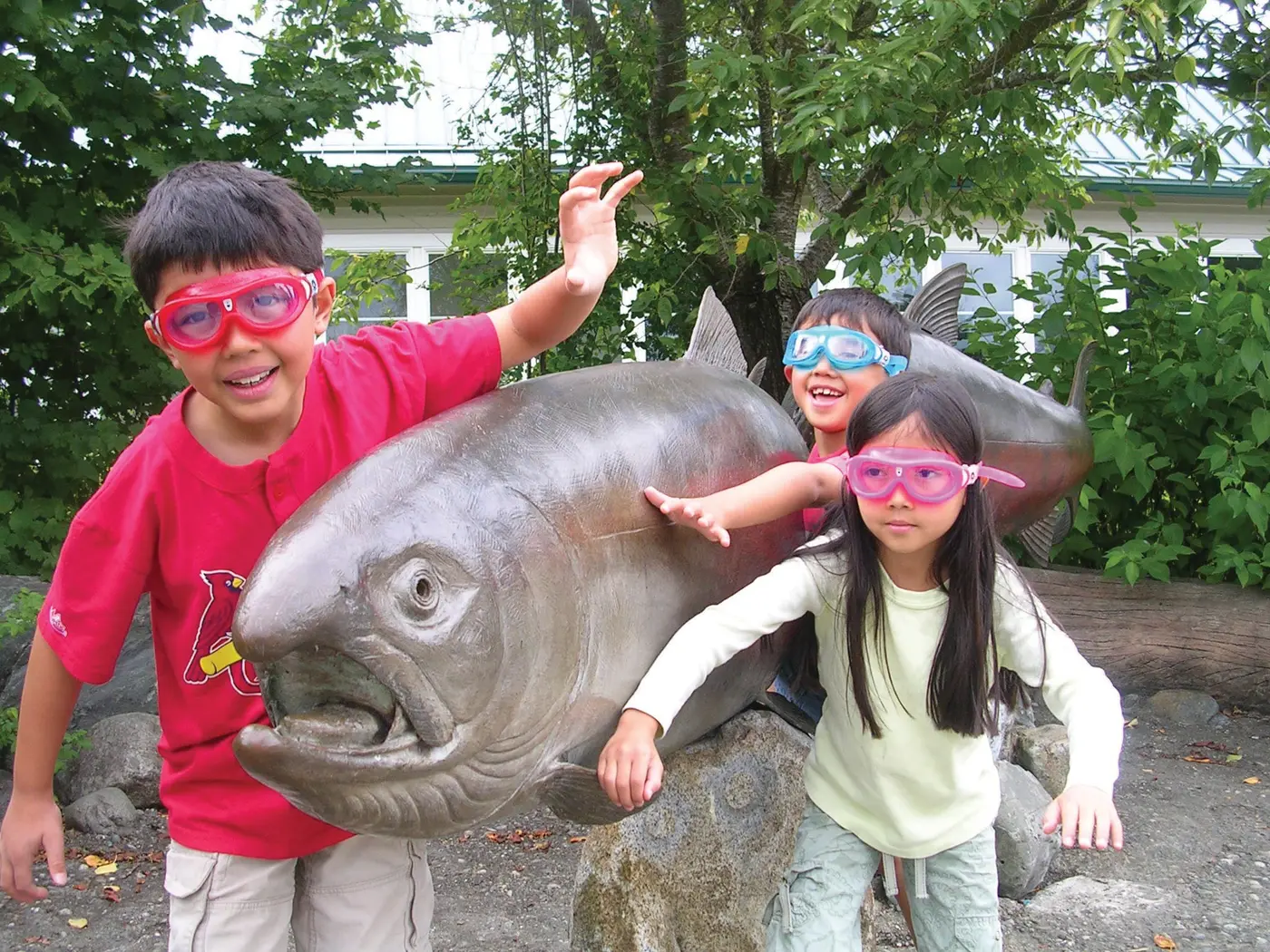
Gilda and Finley, two 8-foot coho by the artist Tom Jay, rest among spawning habitat. Opposite the ladder windows is a stained-glass salmon mosaic made in August 2017 by 87 community members aged 4 to 86, who put more than 600 hours into it. The Coast Salish plant garden labels its salmon-friendly natives in English and Lushootseed. In the Steve Bell Theater an eight-minute film, “Salmon, a Miraculous Journey,” runs through the day.
Along the exit drive is a bed about 100 feet long and 2 feet wide. On August 15, 2026, a scout named Ran directed his troop in clearing the weeds and filling the bed with 86 kinnikinnick, 23 western yarrow and 22 nodding onion, all donated by two nurseries.
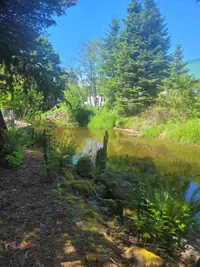
The creek has other callers. FISH has recorded a beaver climbing under a ladder to get past the weir, a beaver and a heron side by side, a raccoon fishing in the early morning, and a mink.
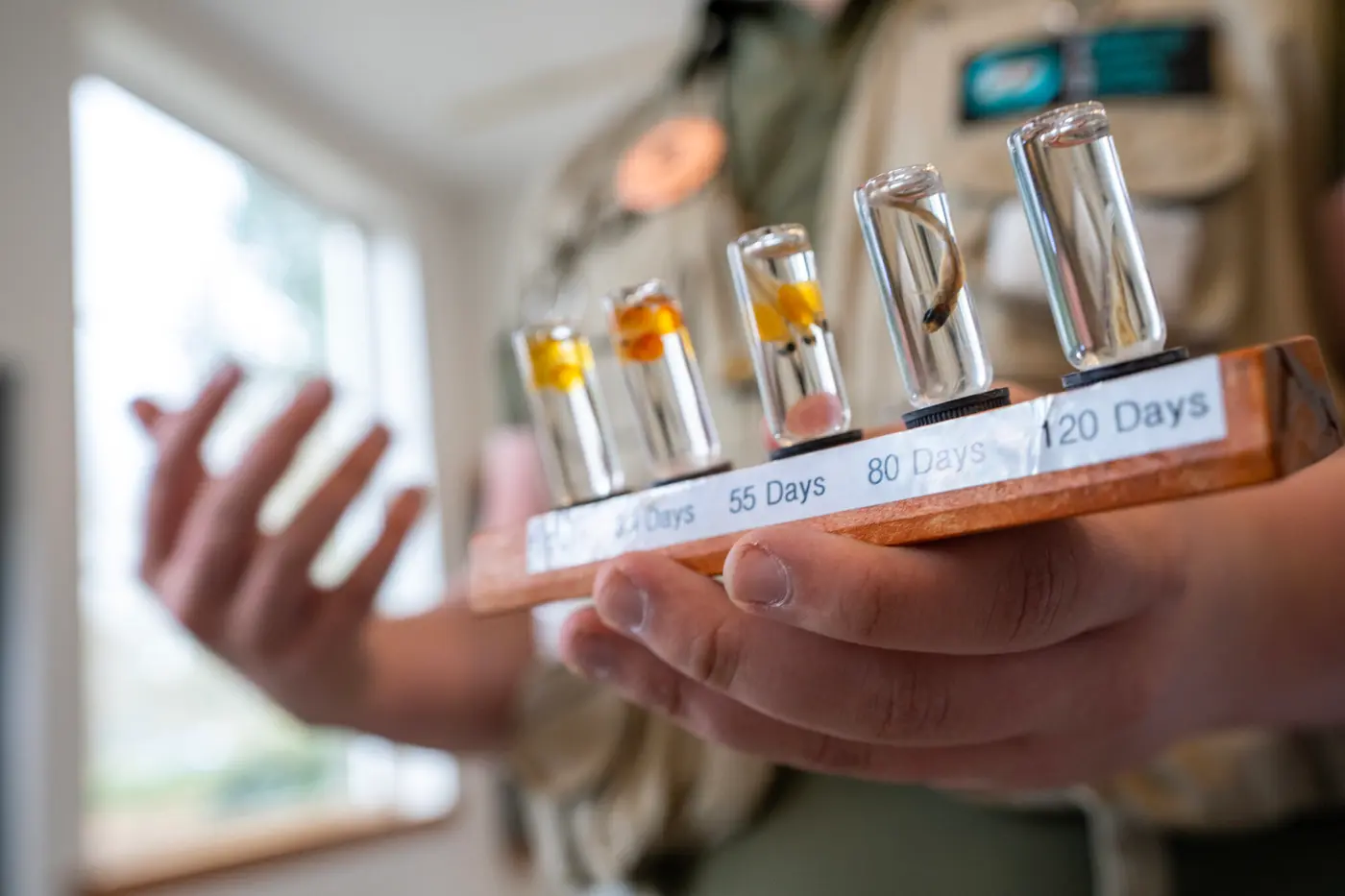
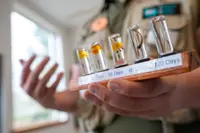
The Washington Department of Fish and Wildlife owns and runs the hatchery. In 2022 two of its employees lived on the grounds with their families. FISH has more than 100 volunteers. They lead tours, keep the FISHop, which stocks more than 350 items including work by local and native artists, and join hatchery staff on Tuesdays from late September to take eggs. Spawning can be watched on Tuesday mornings in October. Docents wear khaki fishing vests and meet tour groups at the flagpole in front of the main hatchery building.
The work turns with the year. Chinook spawn through mid-October. In winter, staff and volunteers sort infertile eggs out of the incubation trays. After hatching, the fry go outdoors to the raceways, Chinook in front of the building and coho across the creek. In spring about 3 million juvenile Chinook and half a million yearling coho, at the smolt stage, are let into Issaquah Creek. They follow the current through lakes and rivers to Puget Sound at the Ballard Locks. In summer the emptied Chinook ponds hold rainbow trout.
Rubber ducks in the raceways
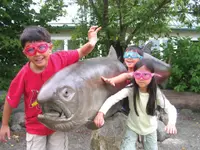
FISH launched Salmon on Sunset, a free one-day welcome for the returning fish, in 2022. The fifth, on September 12, 2026, drew about 8,000 people by FISH’s count. Rubber ducks raced down the salmon raceways every hour from 11 a.m. to 5 p.m., with 400 duck racers taking part. About 2,970 people made fish hats at an arts station, and visitors fed the trout 986 times. The Lake Washington Symphony Orchestra played selected pieces, Clown Garage put on street circle shows, and three bands filled six hours. There were food trucks, a beer garden, fly-casting demonstrations and the painting of a salmon shed.
Three weeks later the whole town takes part. Since 1970 the hatchery has been the hub of Issaquah Salmon Days, which the Issaquah Chamber of Commerce presents on the first weekend of October to honor the salmon’s return. The Mountains to Sound Greenway Trust put attendance at 150,000 a year before the pandemic. Brodie Antipa, a former hatchery manager, remembered a festival that hosted up to 200,000. Steve Bell, FISH’s founder, said “the city was a little crazy about salmon,” and recalled the Chamber’s Salmonchanted Evening dance and its information volunteers, called Salmbassadors.
A WPA hatchery on City Park
The ground was once part of City Park. It had a bandstand and a speaking platform for large holiday celebrations, and in the 1920s it drew local events. Townspeople picnicked beside the creek, once known as Squak Creek.
FISH writes that kokanee, a landlocked sockeye, filled Issaquah Creek for centuries and gave native peoples food and a trading resource. Logging, coal mining and other work in the basin wrecked the runs. The federal Works Progress Administration built the hatchery to restore them. FISH and the Greenway Trust date the work to 1936, and HistoryLink to 1936 and 1937.
FISH describes the goal as restoring the kokanee runs. HistoryLink says the salmon runs were so depleted that the hatchery’s earliest stocks came from the Green River. FISH records coho from the Green River and sockeye from the Baker River. Steelhead were raised for years and dropped in the early 2000s. In recent years the hatchery has spawned Lake Sammamish kokanee to support the Kokanee Working Group’s effort to save that critically endangered native fish.
In 1990, flood water overwhelmed the rearing ponds and washed nearly a million coho fry downstream.
A press release from Olympia
In 1992 the state listed the hatchery for closure to cut its budget. The editor Andrew McKean found the news in a state budget-cut press release. Bell called it “like the evil lightning bolt with the stench of sulfur that came from Olympia.” City and county officials, business leaders, teachers and students wrote letters until the hatchery won a reprieve and a year’s funding.
FISH was incorporated in the summer of 1993. By Suzanne Suther’s account, she and founding member Fred Kempe signed the certificate on August 16. Mayor Rowan Hinds is credited with suggesting the name and its acronym. The city committed up to $500,000 in matching funds, which Bell noted was a lot of money for a town of 10,000.
Bell, a former library board member and city councilman, became FISH’s first executive director. He was given a fertilizer storage room in the hatchery garage, unheated and the size of a walk-in closet, with a desk, a phone and a portable space heater. On the footbridge one day he met Mike Mahovlich, a Muckleshoot Tribe fish biologist who was watching the returning adults, and the two found they shared an interest in saving the hatchery. Hundreds of letters went to the governor. Bell judged the students’ letters and drawings the most convincing.
The state eventually put $6.5 million into three phases of rebuilding. Sen. Dino Rossi shepherded the last phase with a $3 million budget. Antipa arrived in 1995, at 25, to manage the hatchery. “It was kind of dark and dreary,” he said.
The rebuilding changed most of the grounds:
- A longer ladder with underwater windows replaced the underground fish ladder.
- Deeper ponds with automated crowders replaced the shallow holding ponds, where volunteers had waded in with big nets to corral fish for eggs.
- A crane dropped a pedestrian bridge twice as wide into place over the creek.
- The incubation building got a new roof and new equipment and kept its original appearance. “You almost feel a spirit within the building,” Antipa said.
Antipa also worked with the city on a waterline from the Darigold plant a few blocks away. It carries pure well water the plant used to chill butter, which the hatchery mixes with creek water to incubate eggs. In 2002, in the final phase, seven granite boulders were set in a semicircle, etched with Phil Hamilton’s drawings and the text of a Salmon People story. In the story, Raven and Mouse visit the Salmon People and bring salmon back to their village, and the bones of the first fish are returned to the river so the fish will come again.
Upstream stood the intake dam of 1937, “a state-of-the-art design in 1937,” as the Issaquah Reporter wrote. Its ladder was built like a staircase with water running down it, and its steps were 12 inches high. In 2012 Jane Kuechle, then FISH’s director, pointed out the 10-foot buttress where coho that missed the jump lay stranded. Of the $4 million system of rock weirs that would replace the dam, she said, “The idea behind it is to make the stream more of a stream.” The Reporter wrote in 2012 that the Legislature had approved the money that year, and its 2014 story gave 2013.
Weather and groundwater delayed the work. On Monday, March 3, 2014, the valves opened, and creek water ran from the new upper intake into the ponds and incubation trays. The new weirs rise 9 inches at a step, with pools between for resting. “It’s critical — they don’t have much life left in them when they get to this point,” said Darin Combs of the Department of Fish and Wildlife.
The FISHop opened in 2012. In 2013 a new aquarium full of salmon fry debuted, and the volunteer David Waggoner called it the first place in the state to show the whole lifecycle with live fish.
The pandemic closed the grounds in 2020. Robin Kelley, once the Salmon Days director and by then FISH’s executive director, asked Antipa about small masked tours. “This is going to be a hard sell,” he told her. He got state permission, and, he said, “Issaquah was then the only place in the state giving tours, and that was because of FISH.” The hatchery reopened to the public on March 21, 2022.
In 2023 Jake Magill joined the FISH board as a third-generation salmon advocate, drawn by family stories of a rescue that happened before he was born.
Notable Events
- 1920sThe site along Issaquah Creek was once part of a city park and a popular venue for local events and large holiday celebrations. historylink.tours
- 1936The Works Progress Administration built the hatchery as a Great Depression public works project. historylink.tours
- 1936The dam had an inefficient fish ladder and concrete apron that stranded migrating salmon. issaquahfish.org
- 1936The hatchery was constructed to restore historic kokanee runs depleted by logging, coal mining and other basin activities. issaquahfish.org
- 1937The old dam later replaced by the new intake dated back to this year. issaquahreporter.com
- 1970Issaquah's Salmon Days, a family-oriented celebration held in downtown Issaquah every first weekend in October since 1970, reflects the hatchery's place in the town's history and identity. historylink.tours
- 1990sThe Department of Fish and Wildlife announced plans to close the hatchery; public outcry stopped it, and the hatchery subsequently underwent major renovations and upgrades later in the '90s. historylink.tours
- 1990Nearly a million coho fry were washed downstream when flood waters overwhelmed the rearing ponds. issaquahfish.org
- 1990sThe state eventually dedicated $6.5 million to three redevelopment phases, despite difficulty justifying it during the economic downturn. issaquahfish.org
- 1992The threatened closure brought partnerships that developed into Friends of the Issaquah Salmon Hatchery. issaquahfish.org
- 1993Suther's account says she and founding member Fred Kempe signed the incorporation certificate. issaquahfish.org
- 1993The committee recruited a lawyer and drew up incorporation papers for Friends of the Issaquah Salmon Hatchery. issaquahfish.org
- 1995Brodie Antipa first arrived at the hatchery. issaquahfish.org
- 2000sSteelhead trout was raised for years but discontinued in the early 2000s; the hatchery raises chinook and coho salmon. historylink.tours
- 2000Antipa was promoted to Lake Washington drainage-area complex management and later served as a hatchery reform coordinator. issaquahfish.org
- 2002Bell moved to Portland and new challenges after the hatchery remodel was completed. issaquahfish.org
- 2002Drawings and story text were etched on seven granite boulders and installed in a semicircle in the third and final redevelopment phase. issaquahfish.org
- 2012The FISHop first opened, thanks in large part to the volunteer couple's efforts. issaquahfish.org
- 2013After years of planning, the dam was removed and replaced by low river-rock weirs allowing better fish passage. issaquahfish.org
- 2013The new aquarium full of salmon fry debuted; Waggoner called it the first place in the state to show the whole lifecycle with live fish. issaquahfish.org
- 2013The $4 million project was approved by the Legislature. issaquahreporter.com
- 2017The mosaic was created by 87 community members ages 4 to 86 and took over 600 hours. issaquahfish.org
- 2020The pandemic shut public access; Kelley contacted Antipa in her capacity as FISH executive director. issaquahfish.org
- 2022A locally attended family event at the hatchery was launched. issaquahfish.org
- 2023He followed the family tradition based on stories of the hatchery's rescue before he was born. issaquahfish.org
- Public outcry prevented closure, and major renovations and upgrades followed. historylink.tours
- The project had been on Fish & Wildlife's wishlist, but the Legislature did not approve funding until this year. issaquahreporter.com
- Valves opened and creek water again flowed into hatchery ponds and incubation trays from the upper intake. issaquahreporter.com
- After two years closed to the public, the hatchery reopened. issaquahreporter.com
- FISH lost its workspace, important materials and home after an afternoon fire. issaquahreporter.com
People
- Andrew McKean, Editor who discovered the proposed hatchery closure in a state budget-cut press release (1992).
- Ava Frisinger, FISH board president and docent; Issaquah mayor and councilmember.
- Bev Lee, FISH volunteer coordinator involved in reviewing tours and needed improvements (2012 spawning season).
- Bill Conley, FISH board member who negotiated approval for the salmon-transplant experiment.
- Bill Stewart, Superintendent consulted about hatchery-based science education.
- Brian Ebersole, House Speaker; Thomas remembers bringing up the hatchery topic with him.
- Brian Thomas, Driving force promoting the hatchery in Olympia (early 1993).
- Brodie Antipa, Former Issaquah Hatchery manager (2000).
- Bruce Davis, Docent and spawning volunteer (1927-2003).
- Charles “Stan” Staniforth, Docent and DFW volunteer, named State of Washington Volunteer of the Year (1929-2014).
- Clyde Ballard, Veteran lawmaker who helped Thomas navigate the political process.
- Darrell Wells, FISH board member who proposed tracking hatchery visitors (1995).
- David Waggoner, FISH volunteer (2002).
- Debbie Berto, FISH volunteer and board member (1993; 10 years on the board).
- Dino Rossi, Senator who shepherded the final remodeling phase with a $3 million budget.
- Don McWhirter, Spawning volunteer known as the 'whack king'; brought donuts to weekly spawning sessions (1931-2020).
- Doug Emery, Board president, docent and Issaquah School District teacher.
- Eileen Barber, Board member, docent, business owner and Issaquah city councilmember.
- Fred Kempe, Founding FISH member who signed the incorporation certificate (Aug. 16, 1993).
- Grace Reamer, Longtime volunteer who compiled historical accounts of FISH's founders.
- Harris Atkins, Councilmember described by Bell as a hatchery champion.
- Jake Magill, Third-generation salmon advocate recruited to the FISH board (2023).
- Janet, Guided her legally blind husband as he gave tours and answered questions.
- Kathleen Drew, Senator who pushed matching-funds commitments for the hatchery.
- Kathy O’Neill, Attended training and volunteered to greet visitors and answer questions alongside Wells.
- Kelli Richardson, Volunteer docent and board member who advocated intake-dam replacement (2010).
- Kevin Boze, FISH board member and volunteer of the year (2004).
- Kim Stanley, Shared updates with hatchery visitors (1995).
- Larry Kangas, Local muralist who designed and painted the hatchery water-tower mural.
- Leon Kos, City administrator who crafted the matching-funds proposal, according to Hinds.
- Mary Scott, Board member consulted about hatchery-based science education.
- Mike Lewis, Hatchery manager preceding Antipa.
- Mike Lowry, Governor; Thomas remembers chatting with him and bringing up the hatchery proposal.
- Mike Mahovlich, FISH board member and hatchery-promotion advocate.
- Norb Zeigler, FISH volunteer following retirement (2008).
- Norman “Crash” Nash, Board member and docent (1935-2017).
- Phil Dyer, Representative during the hatchery funding effort (1990s).
- Phil Hamilton, Illustrated the Salmon People story with intricate line drawings.
- Randy Harrison, Enlisted Boeing support to outfit the new FISH theater (1995).
- Richard “Doc” Andersen, Docent and spawning volunteer.
- Robin Kelley, FISH executive director; described about 100 community members making the mural over three work parties.
- Rod Henderson, Hatchery manager who explained bird-deterrence practices to Stanley.
- Skip Rowley, Supported FISH with grants and donations for exhibits and establishment of the gift shop.
- Steve Bell, FISH founder and first executive director; lobbied for grants and funding and coordinated exhibits and educational programming.
- Suzanne Suther, FISH incorporation-certificate signer (Aug. 16, 1993).
- Tim Sheldon, Veteran lawmaker who helped Thomas navigate the political process.
- Tom Norton, Volunteered with Berto to enhance the hatchery visually.
- Will Ashcraft, Fisheries manager who started his career at the Issaquah hatchery.
- Tom Jay, Artist who created the coho statues Gilda and Finley.
- Jane Kuechle, FISH director who welcomed dam replacement.
- Darin Combs, State Department of Fish and Wildlife representative explaining upper-intake construction problems.
- Cheryl Smith, Sammamish glass artist who supplied recycled stained glass and fish templates for the community mural.
- Mark Clemens, FISH executive director reporting the volunteer-office fire investigation.
Sources
- issaquahfish.org/plan-your-visit
- issaquahfish.org/guided-tours
- issaquahfish.org/our-history
- issaquahfish.org/sons-thankyou
- facebook.com/FriendsoftheIssaquahSalmonHatchery
- instagram.com/issaquahsalmonhatchery
- issaquahreporter.com/2025/04/29/fire-decimates-volunteer-office-at-issaquah-salmon-hatchery
- issaquahfish.org/30-years
- issaquahhistorymuseums.com/self-guided-walking-tour
- historylink.tours/stop/issaquah-salmon-hatchery
- issaquahreporter.com/2012/09/06/dam-impressive-issaquah-hatchery-prepares-for-75th-anniversary-celebration
- issaquahreporter.com/2014/04/16/hatchery-goes-high-tech
- issaquahreporter.com/2017/08/24/a-gift-to-everyone-community-made-mural-brings-rainbow-to-issaquah-salmon-hatchery
- issaquahreporter.com/2022/03/28/after-a-two-year-pandemic-closure-the-issaquah-salmon-hatchery-reopens
- mtsgreenway.org/location/issaquah-salmon-hatchery
- theclio.com/entry/100546