Prineville
Crook County, Oregon. County seat.
Prineville, the seat of Crook County in central Oregon, built its own railroad after the Oregon Trunk Railway passed it by in 1911.1,2,3
Details
- County seat
- Prineville has been the seat of Crook County since the county was formed in 1882.5
- Last checked
- October 6, 2026.
Point at a dot to see the place.Tap a dot to see the place. Road map of Prineville.
In Prineville
- Eagle Rock Agate SitePrineville · Rockhound collection siteA 150-acre BLM rockhounding site on a juniper-covered tuff formation shaped like a perched eagle, 16 miles southeast of Prineville, Oregon, where plume agate lies in the cliff face.
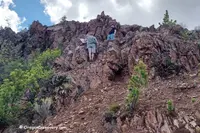
- Lower Crooked River Back Country BywayPrineville · Back country bywayAn Oregon state highway located in Deschutes County and Crook County. OR 27 traverses the Crooked River Highway No. 14 of the Oregon state highway system. Known as the Lower Crooked River Back Country Byway, OR 27 has the distinction of being one of the only state highways in Oregon which is partially paved.
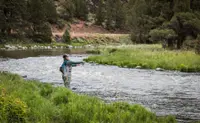
- North Ochoco Reservoir Collecting SitePrineville · Rockhound collection siteShores of Ochoco Reservoir is a rockhounding site in Oregon. Collectors have recorded ochoco jasper.
- Whistler Springs Thunderegg SitePrineville · Rockhound collection siteAlthough this site has been worked by rockhounds for many years, quality thundereggs can still be found by determined rockhounds.
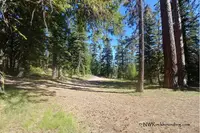
- White Fir Springs Thunderegg BedPrineville · Public rockhound collection areaThundereggs filled with colorful jasper in shades of red, yellow, tan and creamy white; they can be difficult to remove from the hard rhyolite matrix, so bring hand tools adequate for breaking rock.
The Calendar

History
The Basalt Bank at Third and Main
At the corner of Third and Main Streets, the A.R. Bowman Memorial Museum of the Crook County Historical Society occupies a two-story building of locally quarried volcanic basalt.6 Prineville, the county seat of Crook County, stands on the Crooked River at the mouth of Ochoco Creek, on ceded land once belonging to members of the Confederated Tribes of Warm Springs, displaced by the Treaty of 1855.7 The Oregon Encyclopedia calls it the only incorporated community in Crook County and counted 10,736 people there in 2020.7 Agriculture and forestry are its dominant industries, and Facebook and Apple have built server farms in the city, drawn by tax breaks and cheap power.7
Barney Prine’s Willow-Log Store
An early resident quoted in the 1940 Writers’ Project guide said that in the summer of 1868 Barney Prine built a dwelling house, store, blacksmith shop, hotel and saloon, all in one day.4,7 They stood under one roof, built of willow logs 10 by 14 feet; his first goods cost $80, his liquor was a case of Hostetter’s Bitters, and the iron for the shop came from an old emigrant wagon left up on Crooked River.4 The town bears his name: one account calls him its first settler, the Oregon Encyclopedia calls Frances Barney Prine the town’s first merchant, and a regional history credits Barney and Elizabeth Prine with founding it in 1868.3,4,7 The state guide has Monroe Hedges laying out the townsite two years after Prine came, while the Oregon Encyclopedia has Monroe Hodges founding the town in 1870 on a section of his land claim.4,7 Hodges, a native of Ohio who had crossed the plains in 1847, came from Corvallis in 1871 and built the first hotel late that year.8 The first post office, named Prine, opened on April 13, 1871, under postmaster William Heisler, and became Prineville on December 23, 1872; the state guide put its founding at about 1873.4,7 The Pioneer Memorial dedicated on August 7, 1938, gives a different date, stating that Prineville was first settled in 1871.9
Vigilantes and Sheep-Shooters
Prineville was incorporated in 1880 with about 400 people, and when Crook County was cut from Wasco County in October 1882 the legislature named it county seat, a choice voters confirmed in 1884.5,7 Ranchers drove stock over the Cascade Mountains to the bunchgrass of the High Desert, and in the 1880s Prineville served the ranches of the Crooked River Valley as a cow-town.3,7 In March 1882 a rancher named Lucius Langdon shot A.H. Crooks and Stephen Jory, who were fencing land near Grizzly Butte that he considered his.10 A posse lodged him in a Prineville hotel, where masked men calling themselves the Vigilantes shot him that night, then dragged his hired man, W.H. Harrison, through town and hung his body from a bridge.10 The shootings and lynchings that followed left nine men dead, and Til Glaze’s saloon in Prineville was the center of vigilante activity.3 In the spring of 1884 rancher Jim Blakely led several dozen armed men onto Prineville’s main street to call the Vigilantes out, none of them answered, and Blakely was elected sheriff shortly after.3,10 Sheepherders crowding the range in the 1890s brought a new war, which peaked around Prineville in 1904 when cattlemen killed as many as ten thousand sheep and murdered several sheepherders.7 The sheepmen called the cattlemen “The Crook County Sheep-Shooters’ Association,” and the fighting ended in 1907, when the federal government granted stockmen grazing allotments.4,7
Native Stone Downtown
In 1900 the Columbia Southern Railway reached Shaniko, sixty miles north, bringing parts for a small power plant that electrified the business center, and by 1910 the town had 1,042 people.2,7 The First National Bank of Prineville, organized in 1887, put up a single-story bank of quarry-faced native basalt at Third and Main in 1905.11 The Crook County Courthouse, built of stone from a quarry west of Prineville and completed in 1909 at a cost of $48,590, is still in use.8 The Crook County Bank went up in the same native basalt, in 1910 by the National Register nomination and in 1911 by the Oregon Encyclopedia’s entry on the museum; it ceased operations in 1921 and was sold to the newly formed Bank of Prineville.6,11 A.R. Bowman, a lawyer who had come to town in 1910, bought the building in 1935 for Central Oregon Title and Loan, and it opened as his memorial museum in 1972.6
The City Railroad and the Ochoco Mills
In 1911 the Oregon Trunk Railway was built along the Deschutes River with no line to Prineville, and soon afterward Bend took over as the major town of central Oregon.2,7 In 1916 voters approved $322,000 in municipal bonds, and in 1918 the city’s line to the Oregon Trunk began running four trains a day with passengers and freight, mostly livestock.2,12 One account calls the line a financial disaster that ran down before it ever paid for itself, until lumber companies interested in Ochoco timber in the 1930s lent the town money to refurbish the rails.2 Pine Products began cutting lumber in 1935, the Alexander-Yawkey Lumber Company built a mill near Prineville in 1937, and John Shelk built one for the Ochoco Lumber Company in 1938.3 During World War II high prices for wood products made the ranching town an industrial community tied to timber markets, and by 1950 five major sawmills were operating.2,5 In 1952 former newspaperman Les Schwab bought his first tire store in Prineville.7 The city railroad did well with the sawmills until, many years later, the mills began to close.12
Within 30 Miles
Measured in a straight line from the town, nearest first.
- Crook County FairPrineville, OR · County fairThe Crook County Fair, four free August days on Prineville's south-end fairgrounds, began in 1904 as a horse race and small exhibits beside a track that remains.

- Prideville FestivalPrineville, Oregon · Pride festJoin Prideville to show our "Small Town, Big Pride" at this year's 6th annual Pride fest in downtown Prineville.

- South Fork John Day River Back Country BywayDayville · Back country bywayThis gravelled Back Country Byway parallels the Wild and Scenic South Fork John Day River through its incised canyon for a distance of 50 miles from its northern terminus at Dayville to the northern border of Malheur National Forest to the south.

- Deschutes County Fair & RodeoRedmond · County fair and rodeoCentral Oregon's five-day county fair and NPRA rodeo on Redmond's Airport Way grounds, which began in 1906 as a show for the Deschutes Netted Gem potato.

- Steelhead Falls Trail (BLM), Deschutes River, Crook County, ORTerrebonne · TrailA 20-foot cascade tumbles over a rocky stretch in the Deschutes River.
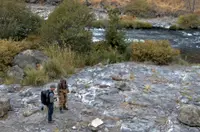
- Fischer Canyon Collecting SiteBrothers · Public rock collecting areaA free BLM rock-collecting ground of 640 acres in the Crook County high desert south of Prineville, where white calcite glows pink under ultraviolet light.
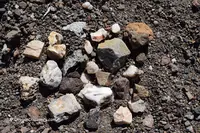
- Petersen Rock GardenRedmond · Rock gardenThe 91-year-old Petersen Rock Garden outside Redmond was bustling Saturday afternoon as the historic attraction reopened after an extensive renovation.

- Culver Crawdad FestivalCulver · Community festival and paradeAn August Saturday parade and crawdad boil in Culver, Oregon, cooked from crawdads pulled out of Lake Billy Chinook, as they have been since Jess Smith's farm party.

- Jefferson County FairMadras · County fair and rodeoJefferson County's free fair and NPRA rodeo in Madras, Oregon, held in late July since 1931, which in 2026 lost its carnival one month before opening.
- The Last BlockbusterBend · Roadside oddityThe world's last Blockbuster video store, in a Bend, Oregon, strip mall at U.S. 20 and Revere Avenue, still rents discs and displays Russell Crowe's Robin Hood hood.

- Bear Creek Petrified Wood SiteBrothers · Recreational rockhounding areaA BLM petrified-wood collecting area in Crook County, Oregon, 13 miles north of Brothers, where the better wood lies a few feet down in soft soil.
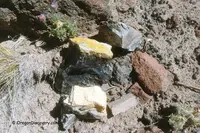
- Cascade Lakes Scenic BywayBend · Scenic bywayThe Cascade Lakes Scenic Byway runs 66 miles from Bend past Mount Bachelor and a chain of volcanic lakes to Oregon 58, through lava fields where Apollo astronauts trained.
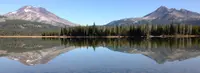
Nearby towns: Bend. All the towns of Oregon. More of Oregon: Rockhounding, Scenic Drives, and Town Festivals.
Sources
- Historic Prineville Roads (1870s–1930s) oregonencyclopedia.org/articles/historic-prineville-roads
- Bird’s-eye View of Prineville, c. 1915 oregonhistoryproject.org/articles/historical-records/birdrsquos-eye-view-of-prineville-c-1915
- Pre-Industrial Communities oregonhistoryproject.org/narratives/central-oregon-adaptation-and-compromise-in-an-arid-landscape/pre-industrial-period-1870-1910/pre-industrial-communities
- Oregon: End of the Trail (1940), p. 452 archive.org/details/oregonendoftrail00writrich/page/452
- crookcountyhistorycenter.org page cited for Lower Crooked River Back Country Byway crookcountyhistorycenter.org/wp-content/uploads/2018/08/August-2018-Newslette-small.pdf
- A. R. Bowman Memorial Museum oregonencyclopedia.org/articles/a._r._bowman_museum
- The Oregon Encyclopedia oregonencyclopedia.org/articles/prineville
- National Register nomination, Prineville, OR npgallery.nps.gov/GetAsset/b04a28a6-3138-4d08-a4e4-6a7a95b1c4ab
- Prineville Pioneer Memorial (historical marker) hmdb.org/m.asp?m=114268
- News Article, Crook County’s Reign of Terror oregonhistoryproject.org/articles/historical-records/news-article-crook-county39s-reign-of-terror
- A6909cd0 301b 4e4f 93b1 0aefbc042b9a (npgallery.nps.gov) npgallery.nps.gov/GetAsset/a6909cd0-301b-4e4f-93b1-0aefbc042b9a
- Working on the railroad nuggetnews.com/story/2017/07/03/news/working-on-the-railroad/27440.html