Idaho City
Boise County, Idaho. County seat.
Idaho City, seat of Boise County in Idaho’s Boise Basin, began as a gold camp in October 1862 and counted 6,275 people by the next summer.1,2
Details
- Founded
- Captain Jeff Standifer set up the camp in 1862, and the state marker dates the founding to early October of that year.1,2
- Name
- First called Bannock or West Bannock, the town was renamed Idaho City to avoid confusion with another Bannock, in December 1863 by the National Register’s account or in 1864 by the county’s.2,3
- County seat
- Idaho City has been the seat of Boise County since commissioners were told to establish it there in 1863.2,4
- Last checked
- October 6, 2026.
Point at a dot to see the place.Tap a dot to see the place. Road map of Idaho City.
In Idaho City
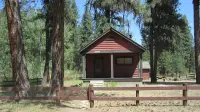
- Barber Flat Cabin (Boise National Forest, ID)Idaho City · Cabin nonelectricA Forest Service rental cabin on the North Fork Boise River, about 27 miles of road from Idaho City, built by the Civilian Conservation Corps in 1935 and still without electricity.
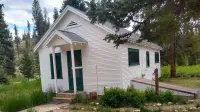
- Beaver Creek Cabin (ID)Idaho City · Cabin nonelectricA 1930s Civilian Conservation Corps guard station on Beaver Creek, northeast of Idaho City, rented by the night and reached in winter only on skis or snowshoes.
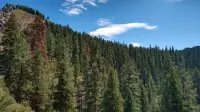
- Deer Park CabinIdaho City · Forest service cabin rentalA Civilian Conservation Corps guard-station cabin from the 1930s, in a ponderosa meadow above the North Fork Boise River in Idaho's Boise National Forest, rented by the night.
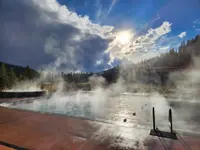
- The SpringsIdaho CityThe Springs offers a relaxing mountain getaway that's perfect for a daytime soak, an evening visit, or live music. Open year round.
The Calendar
History
Bannock on Elk Creek, 1862
A gulch near the end of Idaho City’s Main Street still carries the name Bear Run, after prospectors who found richer gold on Elk Creek and kept it secret with a tale of being chased by huge bears.2 The National Register nomination says Moses Splawn discovered gold in the Boise Basin on August 2, 1862.3 Later that year Captain Bledsoe took a party into Placerville, and a few days after that Captain Jeff Standifer set up a camp at Idaho City.2 The state historical marker dates the founding to early October 1862, about ten weeks after the discovery.1
The camp was first called Bannock or West Bannock, and the county’s account says the Idaho legislature renamed it Idaho City in 1864 because a town in Montana was also called Bannock.2 The National Register nomination dates the change to December 1863, made to avoid confusion with another new Bannock City.3
Six Thousand on the Placers
By the next summer the marker counts 6,275 people, 5,691 of them men, and calls Idaho City the largest city in the Northwest.1 The county’s history gives 6,267 by the middle of September 1863, including 360 women and 224 children, and says Boise City had nearly 1,000.2 Other figures run higher: the Idaho City Historical Foundation puts the town at about 7,000 with some 25,000 living nearby, and the county page says as many as 20,000 miners came.2,5 Mining was done right in town, Montgomery Street panned at $16.00 a pan, and lawsuits multiplied as undermined houses began to collapse.2
The Governor of Washington named William Noble, Frank More, and John C. Smith commissioners of Boise County in 1863 and told them to set the county seat at Idaho City, with Sumner Pinkham as sheriff.2 In September 1863 the printers Joseph and Thomas Butler founded the Boise News, which became the Idaho World in 1864.3,6 The toll road from Boise was built and stage service began in 1864, a nine-hour ride down and an hour longer back uphill.2,7 In the winter of 1865 seven feet of snow shut out the pack trains, flour went to fifty cents a pound with none to be had, and the first train arrived in April.2
The 1937 Federal Writers’ Project guide tells of Ferd Patterson, a gambler who killed the sheriff of Idaho City, and of vigilantes who met in the graveyard and went to Boise for a cannon.4 The deputy, who had got Patterson safely into the jail, got a cannon too, cut portholes in the jail wall, and won the standoff, and Patterson went to trial and was freed.4
Fire, Chinese Miners, and the Dredges
On the night of May 18, 1865, fire swept the town; the county’s history says it lasted about three hours in one account and destroyed 80% of the town in two hours in another.2 The merchant Mr. Craft, who held citizens’ gold bags for safekeeping, sent George Dwight out of town with them, and Dwight carried the hundred pounds of gold to a hill and sat down to watch the fire.2 Fire came again in 1867, 1868 and 1871, though in 1867 residents were ready and saved more buildings.2
The height of the boom ran from 1863 to 1866, and by 1867 many claims had been sold to Chinese miners; the 1870 census counted Idaho City’s Chinese population at 1,751, more than 45% of the total.2 The 1937 guide recalls their Fan-tan Hall, where a lantern was hung at the door each sunset and an attendant called out in Chinese that the game was open.4 When the easily worked streams were panned out, miners turned to hydraulics that carved away hillsides, and quartz mining with stamp mills prospered in the 1870s.2 Dredging began in 1898 and ran until 1952 except for a wartime shutdown from 1942 to 1946, and the marker says the town stayed a mining center until the war stopped gold production.1,3 The Historical Foundation traces the decline from 7,000 residents in 1864 to 500 in 1900 and 104 in 1920.5 In 1937 the Federal Writers’ Project guide found two hundred people, held together chiefly by the county seat.4
Brick Fronts and a Church on the Hill
The National Register of Historic Places lists Idaho City as a historic district bounded by its city limits.8 The county’s history says Father A. Z. Poulin built the first Catholic church in Idaho proper here in 1863, that men with wet sacks saved it from the 1865 fire, and that it burned in 1867 and was rebuilt shortly after.2 The present white church, St. Joseph’s, sits high on a hill.3 James Pinney built the Masonic Temple, home of Lodge No. 1, in 1865 after fire destroyed the first building, and its marker calls it the oldest Masonic Temple in Idaho.9 A mercantile rebuilt as three buildings after the 1867 fire got a brick facade, iron doors and windows, and dirt packed into the attic, and the county page calls it the oldest mercantile in Idaho.2 In the drawer of the courtroom desk Judge George H. Stewart wrote in pencil that he sentenced Herman St. Clair to be hung there on November 20, 1897, and St. Clair was hanged on June 24, 1898.2 The town has buried its dead in the same cemetery since 1863, where only 28 of the first 200 graves held people who died of natural causes, and an estimated 2,000 graves lie scattered through forty timbered acres.2
Within 30 Miles
Measured in a straight line from the town, nearest first.
- Pine Flats Hot Springs (Pine Flats Campground)Lowman, Idaho
- Deadwood Lookout Rec CabinEmmett · Forest service fire lookoutA Civilian Conservation Corps fire lookout atop Deadwood Mountain in the Boise National Forest, rented by the night as one fourteen-foot-square room with a wood stove and a catwalk.
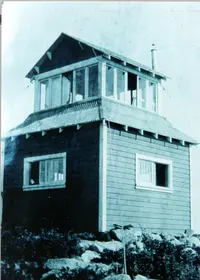
- Kirkham Hot Springs TrailheadLowman · Hot springsDay-use hot springs on the South Fork Payette River with soaking pools and small steaming waterfalls; managed by the Lowman Ranger District, Boise National Forest.
- Once and Future BooksBoise · Used bookstoreAll-used bookstore in Boise's Linen District, sister store to Rediscovered Books; community members bring in books and receive store credit.
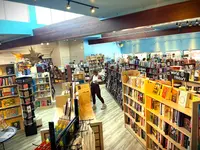
- Capital City Public MarketBoise · Farmers marketThe Capital City Public Market is dedicated to fostering a thriving community of artists, makers, and independent small businesses. By showcasing high-quality, locally made art, crafts, and handmade goods, the Market provides a vibrant space where creators can connect with shoppers, grow their businesses, and share their passion.
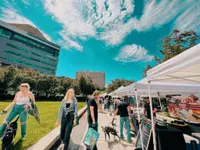
- Big Trinity CabinFeatherville · CabinA Forest Service rental cabin at 7,900 feet among four subalpine lakes north of Featherville, Idaho, below the highest drivable point in the state.
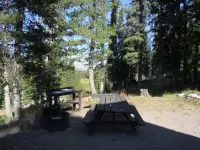
- The FlicksBoiseFour-screen independent movie theater in downtown Boise since 1984 showing independent, foreign, and art films and the best Hollywood movies; accepts Downtown Boise Association gift cards.
- The Boise FleaBoise · Flea marketThe Boise Flea, a vintage, antique and handmade market on Sundays from April through October, fills Boise State's East Stadium Lot with more than 150 vendors beside Albertsons Stadium.

- Boise Farmers MarketBoise, ID · Farmers' marketThe Boise Farmers Market supports a regenerative, healthy food and agricultural system by operating a vibrant marketplace featuring locally grown and crafted products.
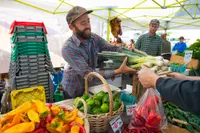
- Western Idaho Fiddle ContestBoise · Fiddle contestThe Western Idaho Fiddle Contest is a celebration of fiddle music, bringing together talented musicians and enthusiastic audiences from across the region. Our contest provides a platform for musicians to showcase their skills and passion for fiddling, creating an unforgettable experience for all attendees.
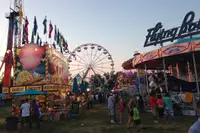
- Western Idaho FairBoise · FairgroundThe Western Idaho Fair, held each August at Expo Idaho in Boise since 1897, where cows are milked live and an early Ferris wheel was said to be the first west of the Mississippi.
- Treasure Valley Flea MarketGarden City · Flea marketAn indoor flea market of hundreds of booths in the South Expo Building at the Expo Idaho fairgrounds in Garden City, Idaho, held on weekends from October through March.
- Eagle Fun DaysEagleEagle Fun Days is the City of Eagle's two-day summer celebration in downtown Eagle, Idaho, where the Saturday parade ends in a water fight between floats and the crowd.
- Hillfort FarmBoise · Farm standHillfort Farm is a queer-owned urban farm on South Cotterell Drive in Boise, Idaho, where goats, chickens, ducks, and bees share the lot with a farm stand and seasonal dinners.
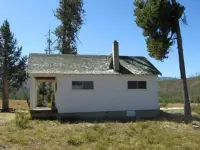
- Graham CabinIdaho City · Former forest service guard stationGraham Cabin, a 1934 Forest Service guard station on Idaho's North Fork Boise River, rented by the night to guests who ford the river or land on the airstrip opposite.
All the towns of Idaho. More of Idaho: Lookouts & Cabins and Town Festivals.
Sources
- Idaho City (historical marker) hmdb.org/m.asp?m=273124
- Visit Boise County boisecounty.us/visit-boise-county
- National Register nomination, Idaho City npgallery.nps.gov/NRHP/GetAsset/NRHP/75000626_text
- Idaho: A Guide in Word and Picture (1937), p. 385 archive.org/details/idahoguideinword00federich/page/385
- Idaho City – Idaho City Historical Foundation idahocityhistoricalfoundation.org/?page_id=147
- The Idaho World (historical marker) hmdb.org/m.asp?m=109942
- The Old Toll Road (historical marker) hmdb.org/m.asp?m=22599
- National Register record, Idaho City npgallery.nps.gov/AssetDetail/NRIS/75000626
- Masonic Temple (historical marker) hmdb.org/m.asp?m=119064