
Deadwood Lookout Rec Cabin
Emmett, Boise County, Idaho. Forest Service fire lookout.
Details

- Where
- EMMETT RANGER DISTRICT OFFICE 1857 HIGHWAY 16, SUITE A, Emmett, ID 83617. Directions
- When
- Check-in Time is 2:00pm and Check-out time is 12:00pm.
- Season
- The peak season is late June through mid-October.
- Getting there
- From Boise, Idaho, travel State Highway 55 north about 35 miles to Banks, Idaho. Turn right (east) on (Banks-Lowman Road) State Highway 17 and proceed 25 miles to the junction with Forest Service (FS) Road 555. Turn left (north) on FS Road 555 and proceed 9 miles to the junction of FS Roads 555 and 555EC.
- Fees
- Overnight Use: $80 per night, Additional $20 per weekend.
- Access
- Guests can drive to the cabin, but high clearance vehicles are recommended for the dirt access road because it is narrow, steep and winding.
- Walk-in or reserve
- Reservation required; lock combination comes on the reservation confirmation letter.
- Phone
- (541) 351-1182
- Website
- recreation.gov
- Managed by
- Boise National Forest.
- Established
- 1934.
- Coordinates
- 44.125376, -115.704071.
Forest Road 555EC ends at the lookout. The last three miles are dirt, narrow, steep, and winding, and the Forest Service recommends a high-clearance vehicle for them. The way in runs north from Boise on Highway 55 about 35 miles to Banks, then east 25 miles on the Banks-Lowman Road, then north 9 miles on Forest Road 555, then right onto 555EC to the top of Deadwood Mountain. The Forest Service gives the summit elevation as 8,200 feet. Recreation.gov, which takes the reservations, gives 7,482.
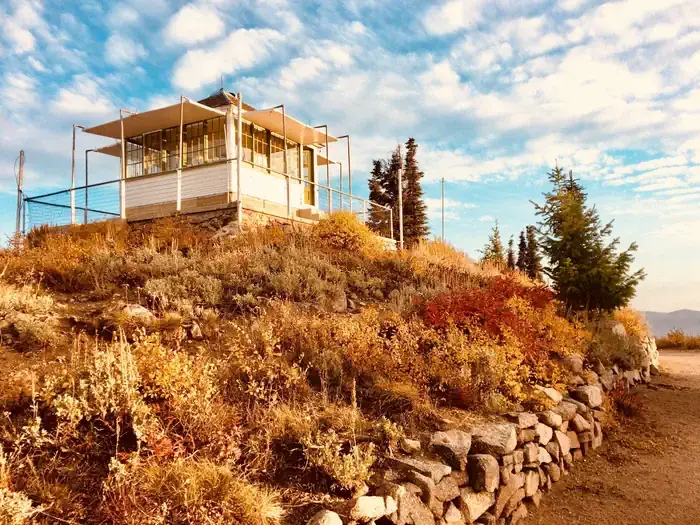
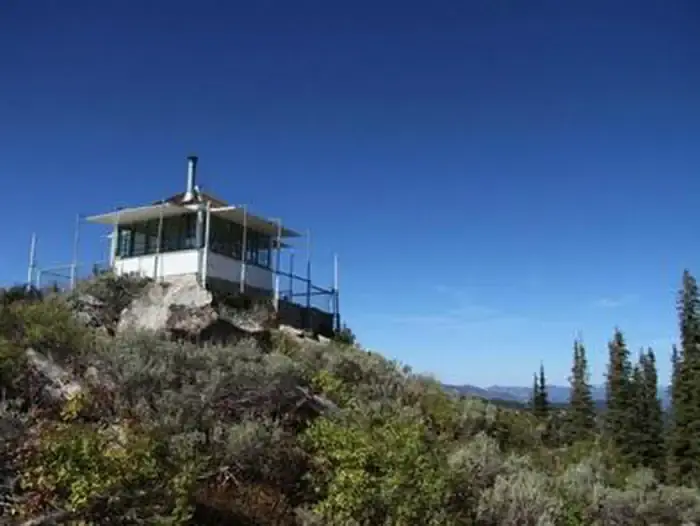
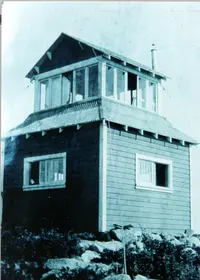
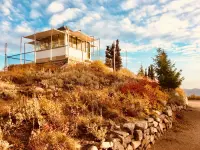
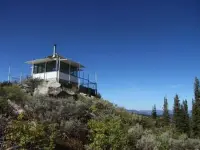
The building on top is a former fire lookout of the Boise National Forest, now rented for overnight stays. The door is locked, and the combination comes with the reservation confirmation letter.
Fourteen feet square
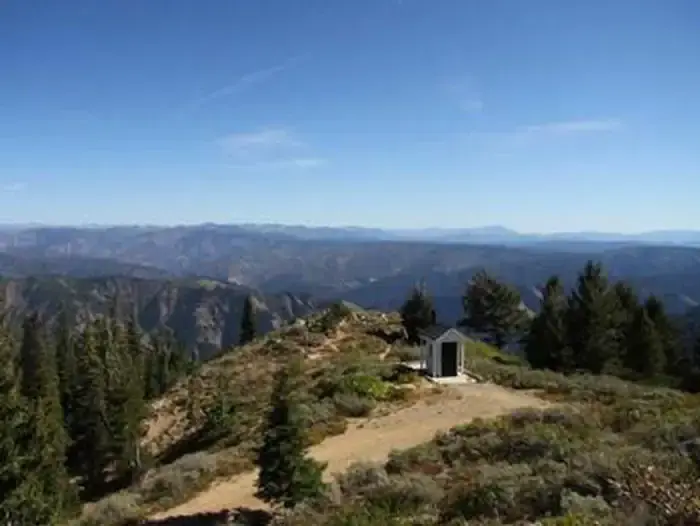
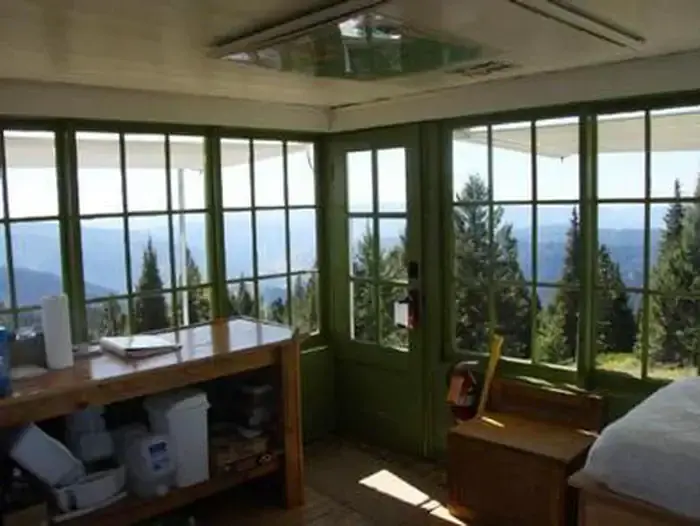
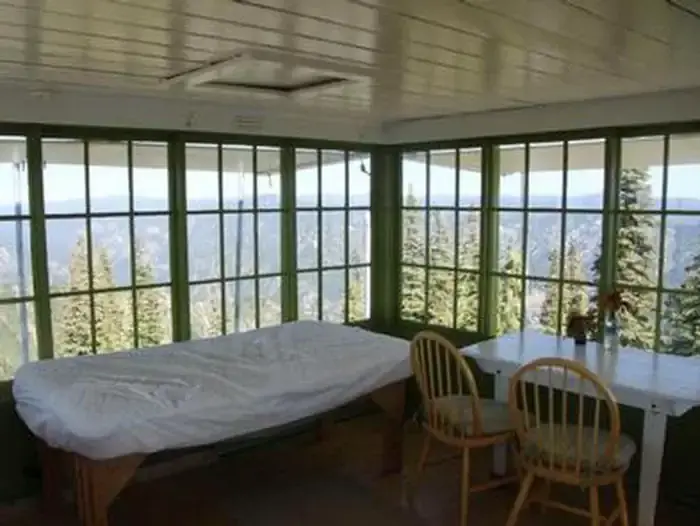
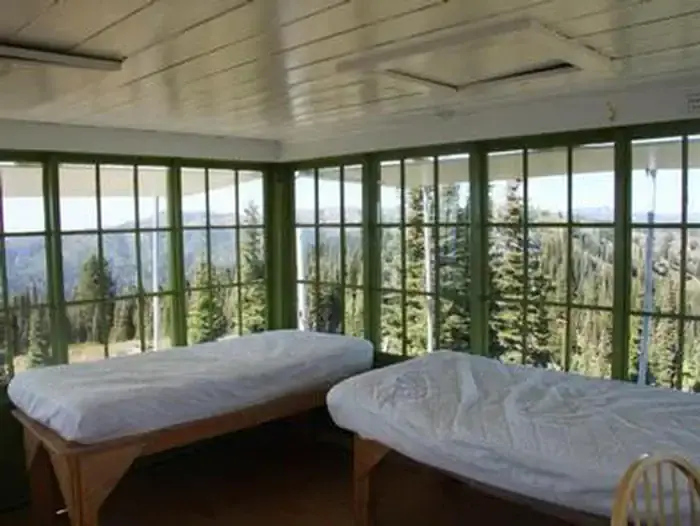
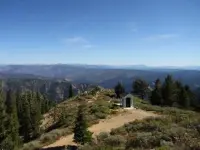
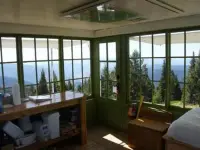
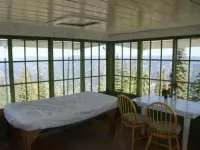
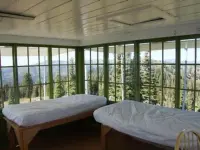
Inside is a single room, 14 by 14 feet. It holds two single beds with mattresses, which can be fastened together. A wood stove serves for both heat and cooking. A wood counter with a shelf and a table with two chairs complete the furnishings. A catwalk runs around the outside of the cabin. Below the lookout stands a vault toilet, and the Recreation.gov listing adds a picnic table and a campfire ring.
There is no water on the mountain or near it, and there is no electricity or firewood. Guests haul their own water and bring their own bedding, pillows, cookware, utensils, and tableware. They carry their garbage back down. A broom and a dustpan are kept for sweeping out before leaving. Saddle, pack, and draft animals are not allowed at the site.
The cabin is open generally from June to October, and the peak season runs from late June through mid-October. Snow may hold the road shut past its planned opening or close it early. The Forest Service calls the lookout one of the most popular rental cabins in Idaho. Its page for the cabin, last updated September 30, 2026, listed the site as closed.
Swallows and rattlesnakes
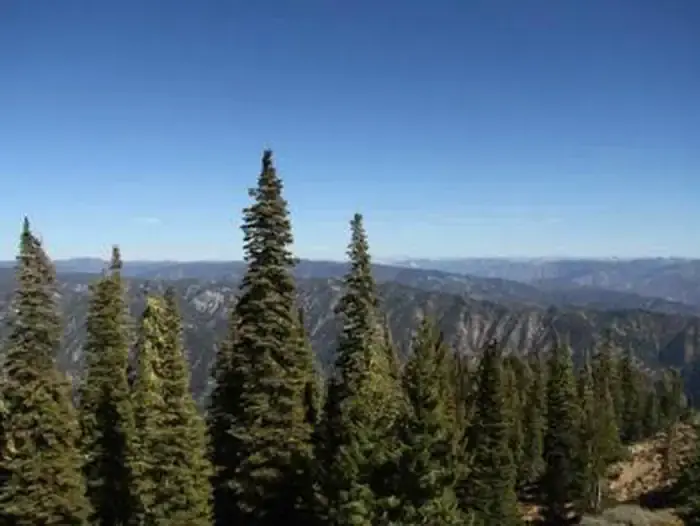
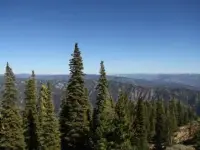
In summer, wildflowers bloom around the base of the cabin, and stands of conifers dot the slopes. The lookout takes the sunrise unobstructed in the morning and the sunset in the evening, then the stars. Swallows and other birds nest just outside the lookout. Elk, deer, and bear range the surrounding country, and bull moose have occasionally been seen along nearby trails. Recreation.gov also lists the snakes: gopher, garter, racer, bull, and rattlesnakes, most often when the temperature reaches 70 to 82 degrees Fahrenheit.
Three nearby trails serve hikers and mountain bikers: Scott Mountain, Julie Creek, and Nellie’s Basin. The Deadwood Ridge Trail draws equestrians, hikers, mountain bikers, and off-road vehicle riders. In August 2024, KIVI-TV reported the lookout under threat from the Nellie Fire.
Booths, tents, and the CCC
The Boise National Forest established its first two fire lookouts in 1908. One stood on Bald Mountain, southeast of Idaho City, and the other on Pilot Peak, northeast of it. According to Elizabeth M. Smith’s “History of the Boise National Forest 1905-1976,” they were eight feet square, “more like booths than buildings,” and occupied only in daylight. The lookouts cooked and slept down near the water supply, often half a mile below the summit. Before telephone lines were in place, some stations signaled one another by heliograph, flashing Morse code off a mounted mirror. Through the 1920s, Smith writes, most lookouts had tents but no cabins.
After the disastrous season of 1931, Civilian Conservation Corps labor became available in 1933. In 1933 and 1934, CCC crews built roads to the Scott Mountain, Deadwood, Bear Valley Mountain, Whitehawk, and Gold Fork lookouts. Virginia Clifton, a historian and archaeologist with the Boise National Forest, told KIVI-TV: “Behind California Idaho was the most densely populated with CCC folks and CCC camps. With that came a lot of construction of lookouts.” She credits the land itself: “Our terrain is so steep and so rugged that it makes communications with fire managers outside of lookouts a lot more challenging.”
A cupola, then the present lookout
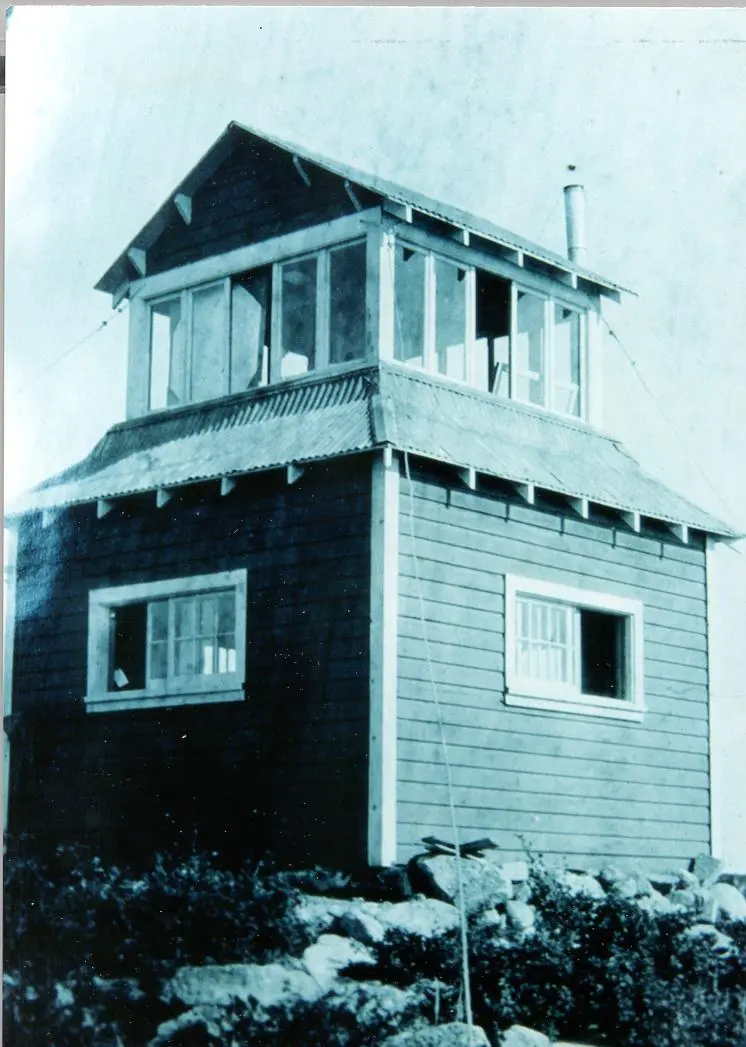
The Forest Service says at least two lookouts stood on Deadwood Mountain before the present one. The National Historic Lookout Register names the one it replaced, a cupola lookout built in 1924. The sources give different dates for the replacement. The Forest Service says the Civilian Conservation Corps built the current lookout in 1934. The Register says it went into service in 1936. The University of Idaho’s catalogue of surviving CCC structures also lists it under 1936, credits it to Camp Deep Creek, F-45, and gives Lowman as the nearest town.
The Forest Service used the lookout for fire observation until 1972. The Register now describes it as on standby status. The lookout is listed on the National Register of Historic Places. In 2003, Preservation Idaho gave the Deadwood Lookout Restoration an Orchid award for Contribution to Historic Preservation. The Register reports that after a ten-year restoration effort, Deadwood Lookout “looks much as it did the day it went into service in 1936.”
Notable Events
- 1924A cupola lookout was built in 1924; the present lookout replaced it. yellowpinetimes.wordpress.com
- 1933Roads were built in 1933 and 1934 by the CCC to Scott Mountain, Deadwood, Bear Valley Mountain, Whitehawk, and Gold Fork lookouts. yellowpinetimes.wordpress.com
- 1936Deadwood Lookout went into service in 1936, replacing the 1924 cupola lookout. yellowpinetimes.wordpress.com
- 1972The lookout was actively used for fire observation until 1972. fs.usda.gov
- 2003Deadwood Lookout Restoration on Boise National Forest was recognized for Contribution to Historic Preservation. preservationidaho.org