Deer Park Cabin
Idaho City, Boise County, Idaho. Forest Service cabin rental; End of May - End of September.
Details

- Where
- Idaho City, Boise County, ID. No street address stated. Directions
- When
- Same as season.
- Getting there
- From Idaho City, Idaho, travel State Highway 21 for 18 miles to (Crooked River/Little Owl Road) Forest Service (FS) Road 384. Turn right onto FS Road 384 and proceed 13.5 miles to (North Fork Boise River Road) FS Road 327.
- Fees
- Overnight Use: $35 per night (6 people max).
- Access
- The unpaved roads are graded and generally in good, but somewhat rough condition; they can be traveled in good weather by two wheel drive passenger cars or trucks. Tents, RVs and motor homes are not allowed at this site. Parking is limited. Livestock, such as saddle, pack or draft animals, are not allowed at this site.
- Walk-in or reserve
- Please call the Idaho City Ranger District at 208-392-6681, about 24 - 48 hours prior to your arrival to confirm the lock combination for the cabin.
- Phone
- 208-392-6681
- Managed by
- Boise National Forest, Idaho City Ranger District.
- Established
- 1917.
- Coordinates
- 43.91552, -115.40228.
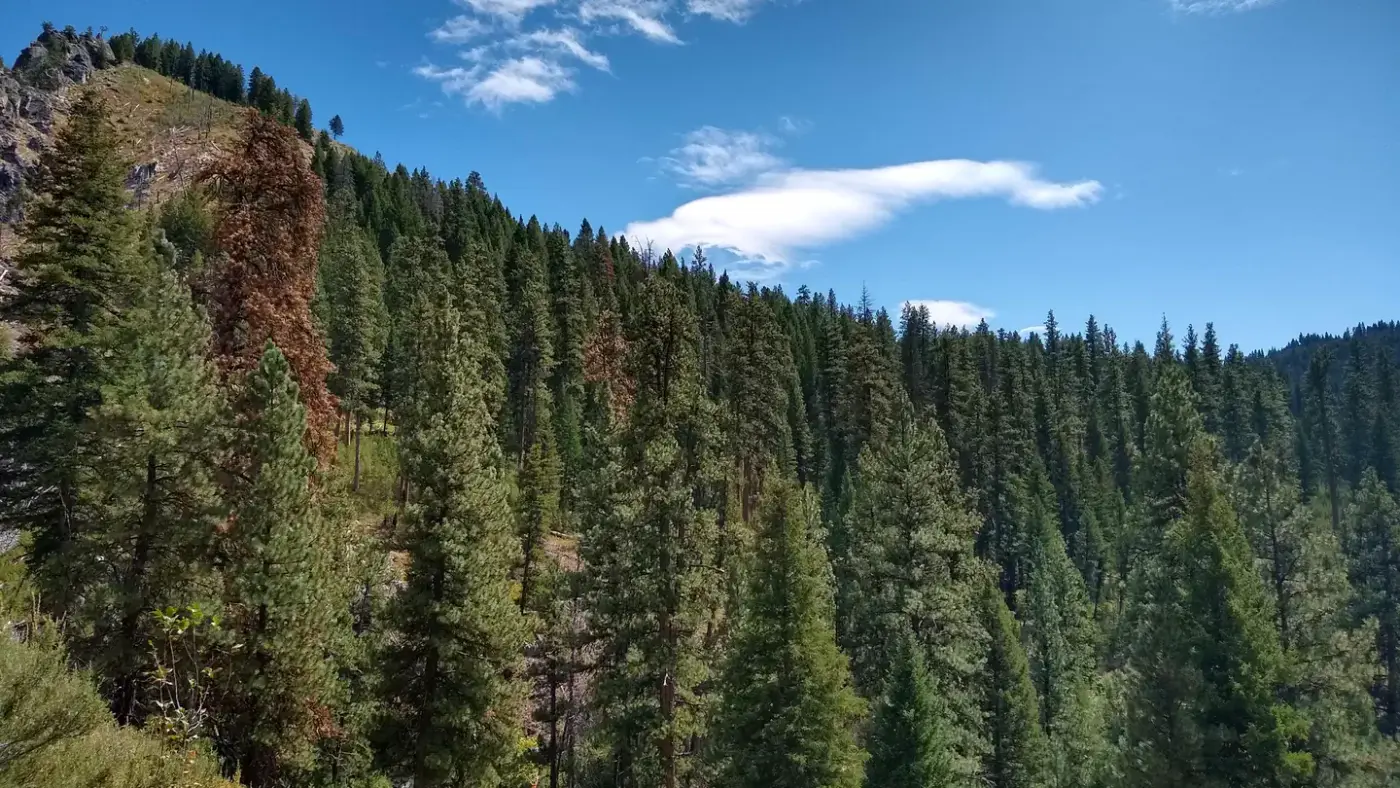
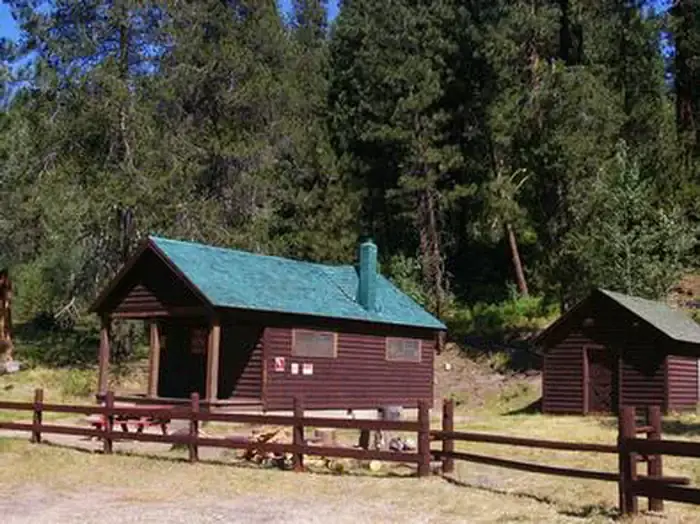
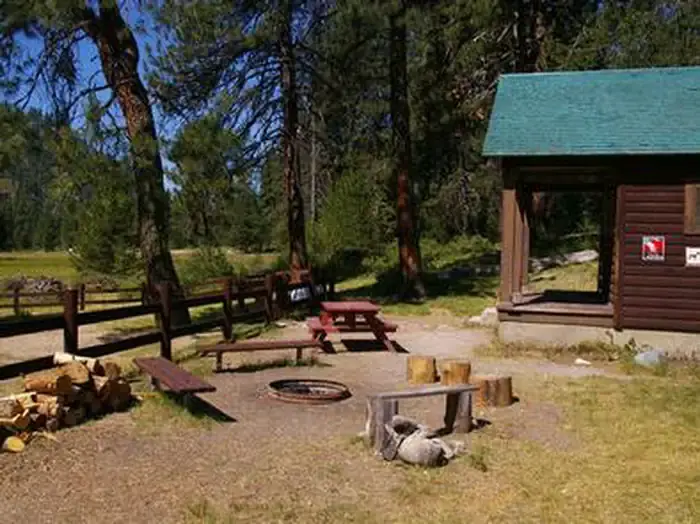
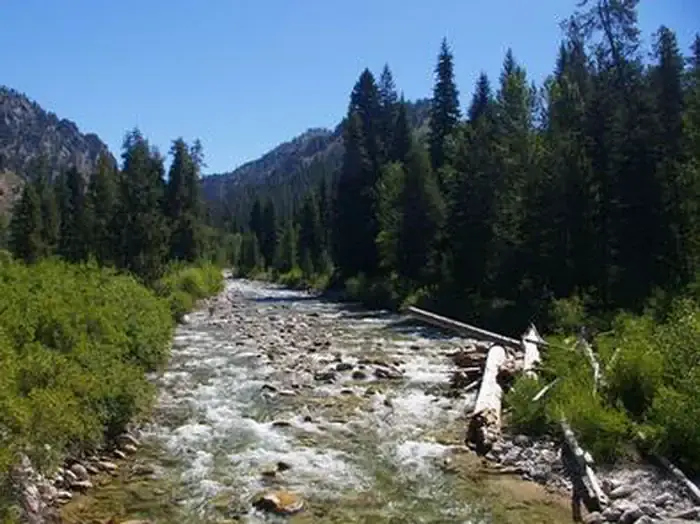
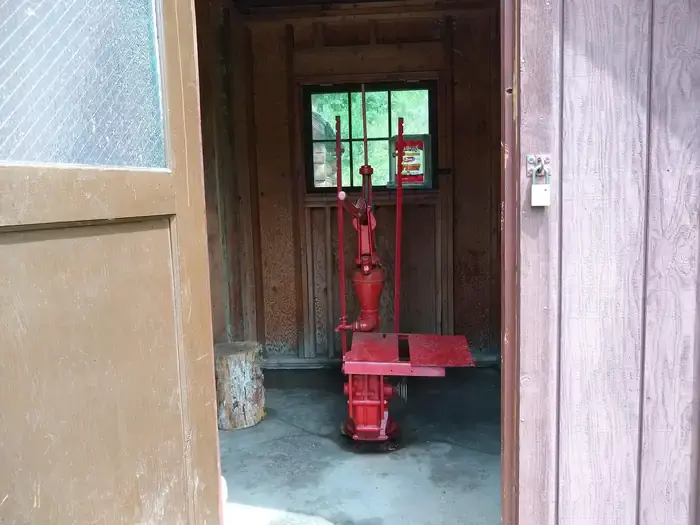
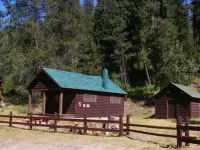
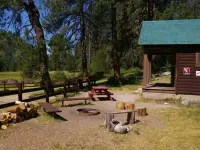
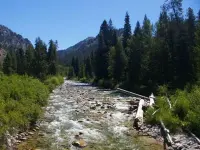
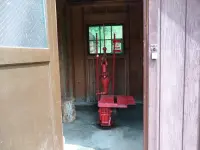
The cabin stands in an open meadow lined with mature ponderosa pines, at about 4,400 feet. Across the road, the North Fork Boise River runs over rocks between jagged granite walls studded with pine. Out front are a picnic table and a campfire ring. A vault-toilet outhouse stands just outside, and a shed to the right of the cabin houses a hand pump. The Forest Service and Recreation.gov both write that the building looks much the same today as it did in the 1930s, when the Civilian Conservation Corps put it up.
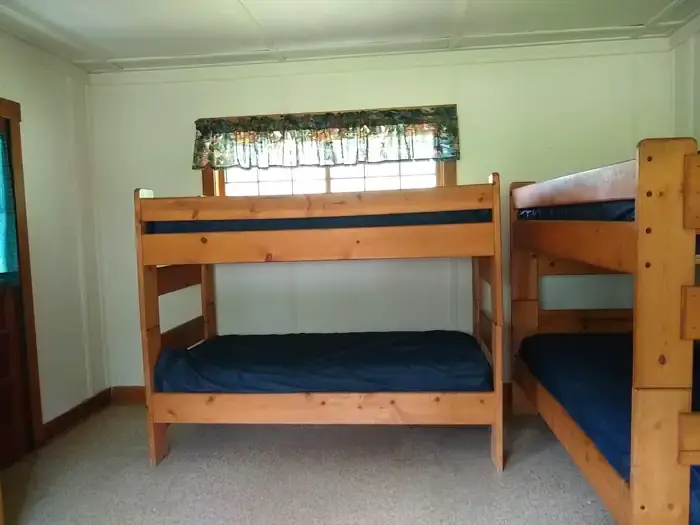
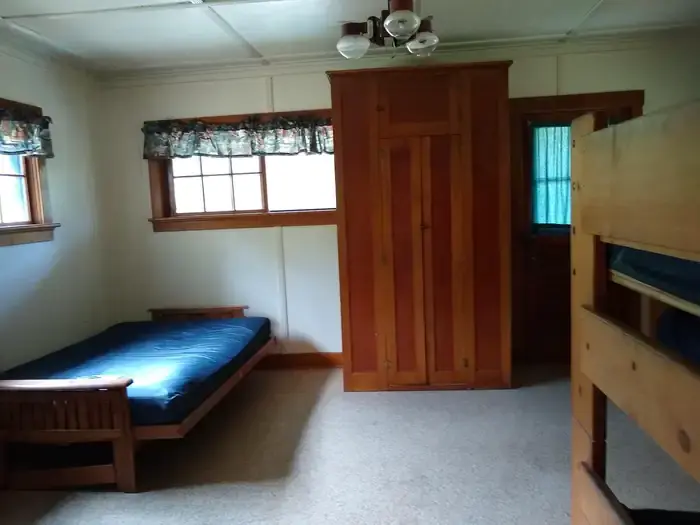
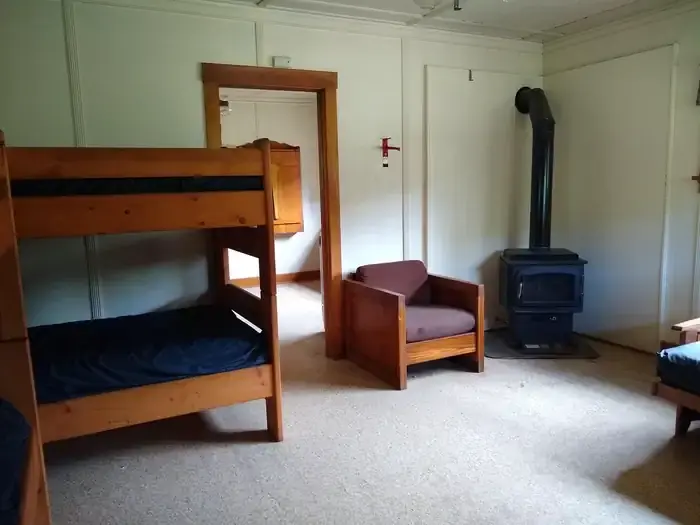
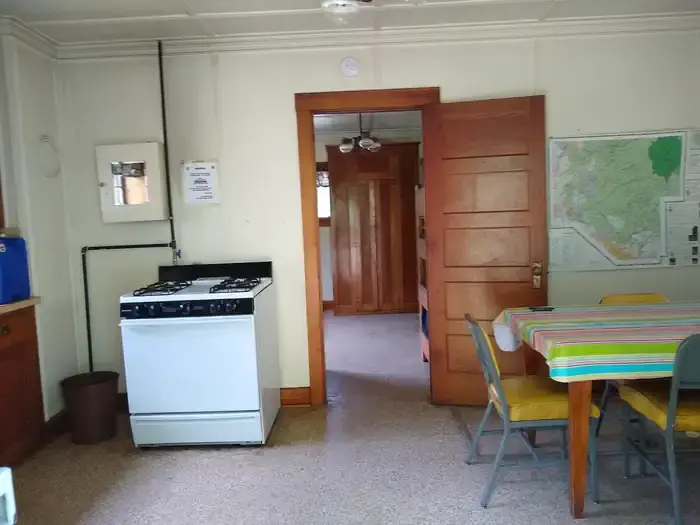
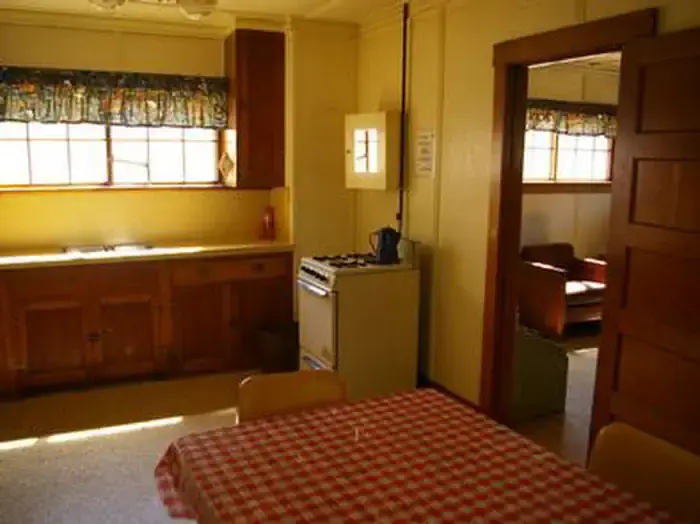
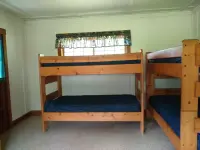
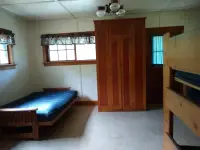
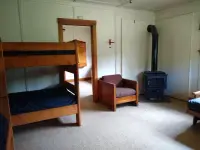
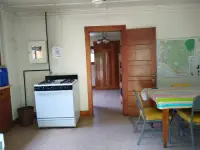
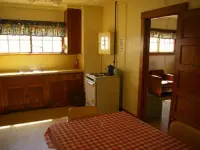
Deer Park Guard Station is now a rental cabin of the Boise National Forest. The Idaho City Ranger District manages it, and no one is stationed on site. It sleeps six on a futon and two sets of bunk beds with mattresses. The kitchen has a table and chairs, a propane stove, a refrigerator, cookware, dishes, utensils, and a dry sink. There is no indoor plumbing and no electricity. Guests bring their own bedding, pillows, and lanterns or flashlights, and Recreation.gov asks that no candles be lit.
The two listings disagree about heat. The Forest Service page describes a wood stove fed with firewood gathered from the surrounding forest, while Recreation.gov describes a propane stove. The pump water is tested monthly and is shut off abruptly when it fails, so visitors are told to carry their own supply. The Forest Service amenity list states that potable water is not available. Food is not to be left behind, because it draws rodents.
The listed season runs from the end of May to the end of September, although the same Forest Service page also says mid-May through late September. When that page was last updated, on September 24, 2026, it marked the site closed.
The road in from Highway 21
From Idaho City, the route runs 18 miles up State Highway 21, then:
- right onto Forest Service Road 384 for 13.5 miles,
- left onto North Fork Boise River Road 327 for 5 miles upstream,
- straight on Hunter Creek Road 348 for a quarter mile, until a meadow opens ahead and a lower-standard road turns off to the right.
The cabin is about 300 yards down that road. The unpaved roads are graded and generally good but somewhat rough, and two-wheel-drive cars and trucks can travel them in good weather. Parking is limited. Tents, RVs, motor homes, and saddle, pack, or draft animals are not allowed at the site.
Up the North Fork trail
The North Fork Boise River Trail begins directly behind the cabin and leads upstream for 5 miles. The Forest Service says it passes through “some of the roughest, most scenic canyon walls in Idaho” before dipping to the river’s edge beside a rock bluff.
A second trail connects with the Swanholm and Warrior trails. The Forest Service calls it Horse Heaven and puts its start about a mile from the cabin. Recreation.gov calls it Horse Haven and says it begins a few miles away. All of these trails are open to hikers, horseback riders, mountain bikers, dirt bikers, and motorcyclists, though some sections may be particularly difficult for motorcycles.
The river gives good rainbow trout fishing after about July 1, and big game hunting is common in the area. Wildlife watchers may see deer and elk, and Recreation.gov adds moose. Bears are occasional visitors. Waterfowl come to the river, along with bald eagles and osprey.
A guard at Deer Park
The Forest Service dates the guard station to 1913 and its first cabin to 1917. Elmer C. Ross ran the Idaho City district from March 1914 to August 1918. He wrote in his own historical information that he located and named Deer Park, and during his years cabins were built at Graham and at Deer Park.
Those same years tied the meadow to the rest of the district:
- 1914 telephone line: a line ran from Graham Ranger Station to Deer Park and Swanholm, with a connection to the Atlanta line near the Boise King mine.
- New trail: a trail was built from Pike’s Fork to the Middle Fork by way of Deer Park and Swanholm, with a spur to Graham Ranger Station and to the head of the North Fork.
The telephone mattered. Elizabeth M. Smith’s History of the Boise National Forest 1905-1976 records that the early lookouts at Bald Mountain, Trinity, and Swanholm signaled by heliograph, flashing Morse code with sunlight off a mounted mirror. The method had limits:
- It failed on cloudy days.
- Messages went west to east only in the mornings and east to west only in the afternoons.
- It depended on men who knew Morse code, and they were hard to find.
In 1914, the Idaho City ranger had one guard at Hayfork, one lookout, and another guard at Graham, the last completely out of communication. Firefighters picked up along the way were often fed from the guard’s own supplies.
By 1917, Smith writes, the protection movement was gaining momentum. The heliograph was eased out of use, and a guard was stationed at Deer Park. Around the same time, alforjas, or saddle bags, were fitted with hand pumps so mules could pack water to fires.
The CCC cabin
Civilian Conservation Corps labor became available in 1933. Smith records that it went largely to improving the buildings and trails needed for fire control. In the 1930s the Corps replaced the 1917 cabin at Deer Park, along with many others in the Boise National Forest. That cabin, upgraded in 2018, is the one that now rents for $35 a night, and guests are asked to clean it before they leave.
Notable Events
- 1913The site was originally established as Deer Park Ranger Guard Station in 1913. fs.usda.gov
- 1914During Ross's years in charge of the Idaho City district, cabins were built at Graham and at Deer Park. yellowpinetimes.wordpress.com
- 1917As fire protection gained momentum on the Boise National Forest, the heliograph was eased out of use and a guard was stationed at Deer Park. yellowpinetimes.wordpress.com
- 1930sThis cabin, along with many others in Boise National Forest, was replaced in the 1930s by the Civilian Conservation Corps. fs.usda.gov
- 2018The cabin received an upgrade in 2018. fs.usda.gov
People
- Elmer C. Ross, Forest Ranger; District Ranger on the Idaho City district, who located and named Deer Park and had a cabin built there (Idaho City district from March of 1914 to August of 1918).