

Beaver Creek Cabin (ID)
Idaho City, Boise County, Idaho. Cabin Nonelectric; Open year-round.
Details

- Where
- Idaho City, Boise County, ID. No street address stated. Directions
- Getting there
- In summer: From Idaho City, Idaho, travel 20 miles northeast on State Highway 21. Turn right on Forest Service Road 362 and travel 1/2 mile to the cabin. In winter: From Idaho City, Idaho, travel approximately 18 miles northeast on State Highway 21 to the Whoop-Um-Up Parking Area. Ski or snowshoe 1.5 miles to the cabin on the Pilgrim Trail.
- Fees
- $45 per night.
- Access
- Park-N-Ski pass required November 15 - April 30.
- Walk-in or reserve
- Cabin code sent via email; contact the Idaho City Ranger District at (208) 392-6681 24-48 hours in advance.
- Phone
- 208-392-6681
- Managed by
- Boise National Forest, Idaho City Ranger District.
- Established
- 1912.
- Coordinates
- 43.96686, -115.6086.
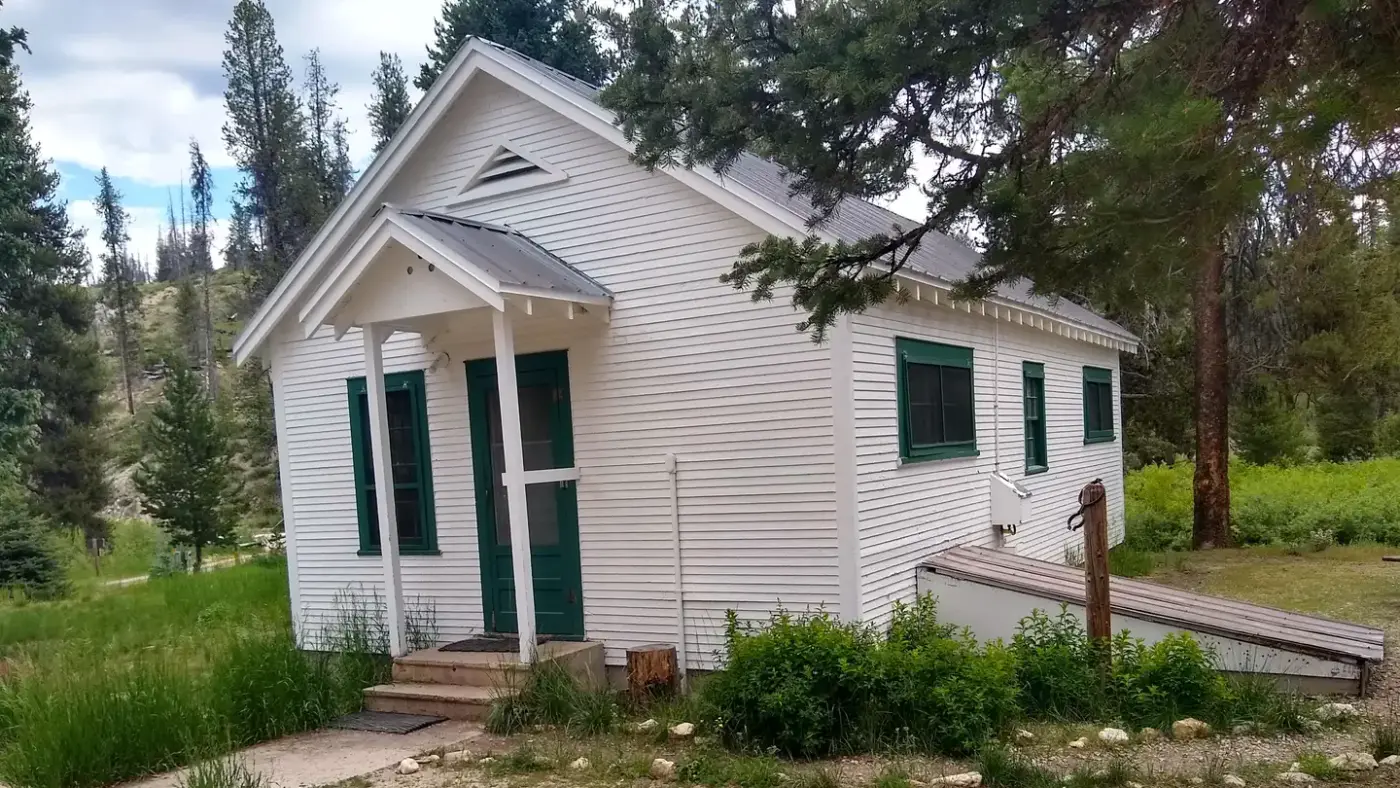
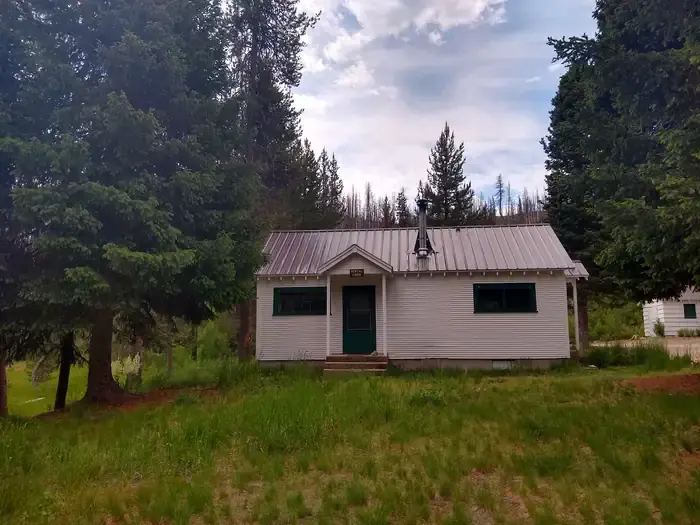
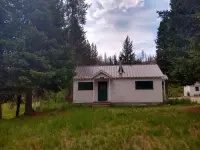
The Beaver Creek Cabin stands half a mile off State Highway 21 on Forest Road 362, about 20 miles northeast of Idaho City. It sits at 5,100 feet in the Boise Mountains, in mixed pine forest that gives it partial shade. Beaver Creek runs close by. Beaver ponds lie near enough that the Boise National Forest calls beavers a common sight. The Forest Service’s list of other wildlife names mule deer, Rocky Mountain elk, chukars, wild turkeys, eagles, and now and then a black bear or a wolf. The Idaho City Ranger District rents the cabin year-round for $45 a night to as many as four people and sends the door combination by email once a reservation is made.
Stove, cistern, and outhouse
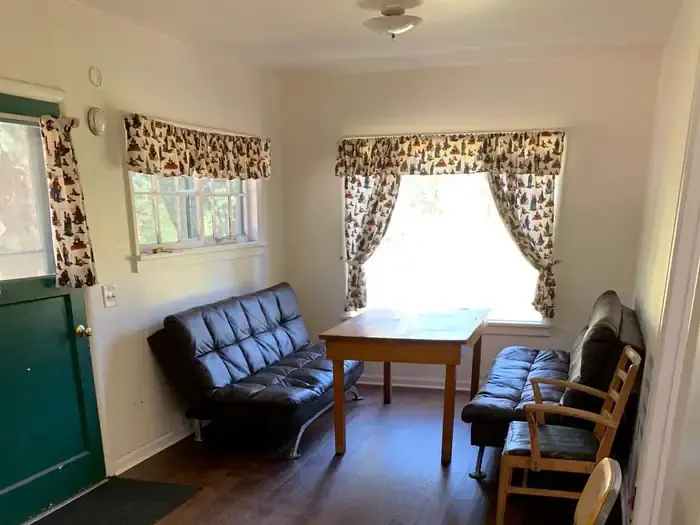
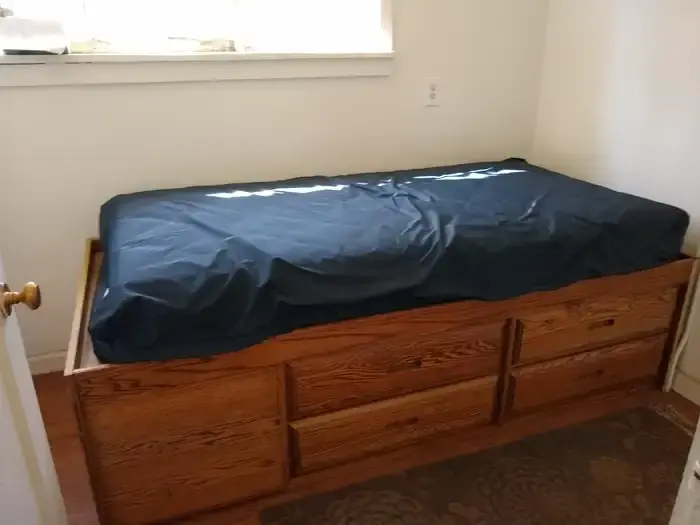
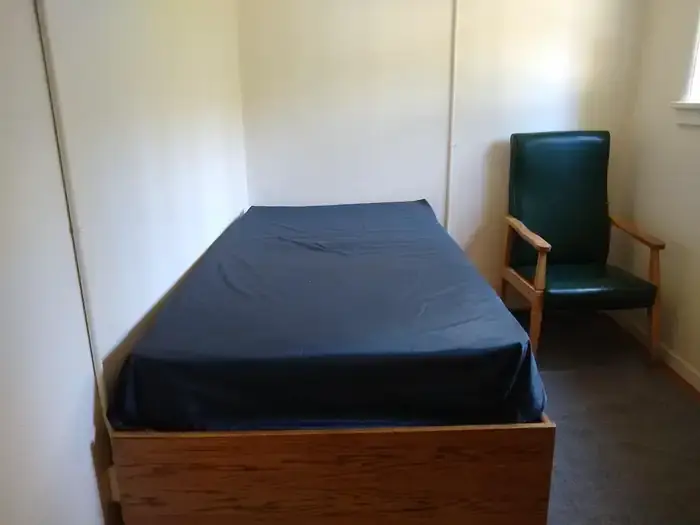
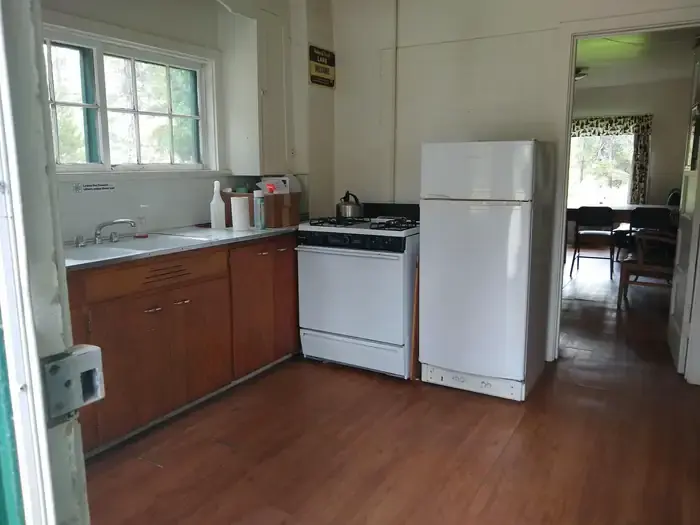
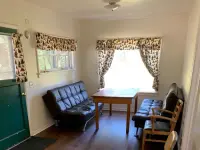
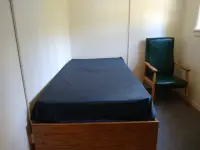
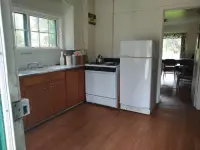
A February 2015 account describes two bedrooms, a kitchen, and a living room. The two agency listings disagree on the beds. The Forest Service page gives a double bed, a set of bunks, and a futon. Recreation.gov gives two twin beds and a futon in the living room. Neither supplies bedding, towels, or pillows. There is no electricity, so light comes from whatever lamps, batteries, and propane a guest carries in. The kitchen has a sink, table and chairs, a propane stove, and a propane refrigerator that runs only in summer. According to the Forest Service, pots, pans, and utensils are stocked only in winter.
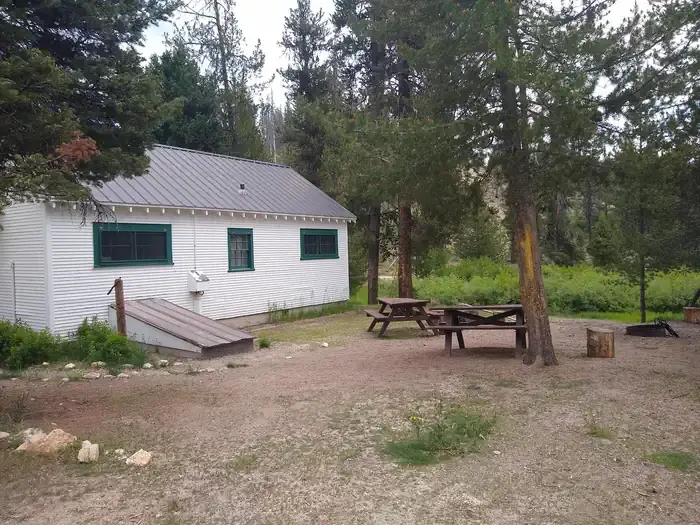
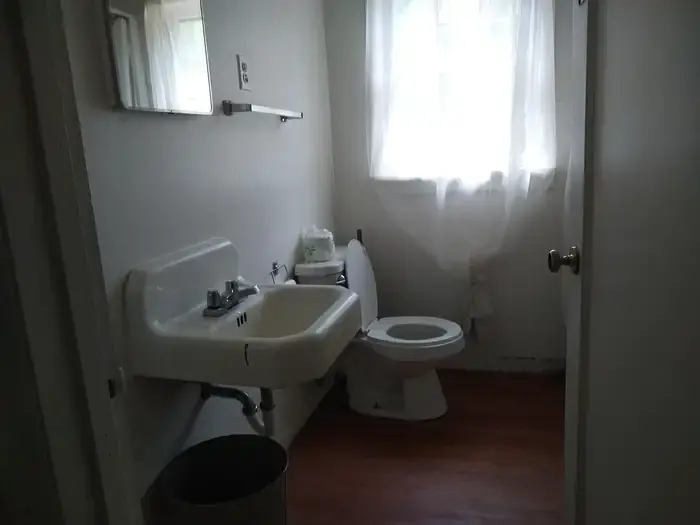
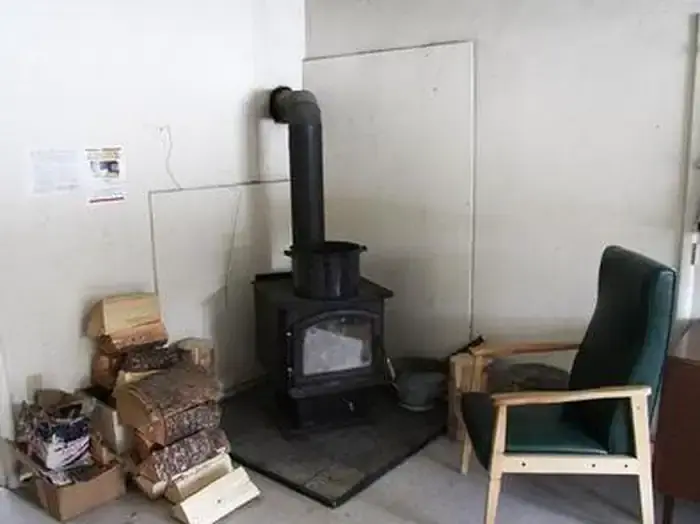
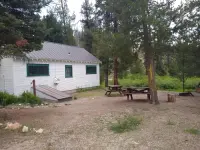
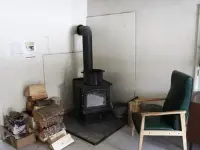
A wood stove heats the cabin. In summer guests gather firewood from the surrounding forest. From November through April the wood is in the woodshed, and Recreation.gov advises guests to be ready to split it. Water runs from May 20 until about the first of October: October 1st by the Forest Service page, “early October” by Recreation.gov. While the water runs, the indoor bathroom with its sink, flush toilet, and shower is open. Once a week Forest Service personnel come out for two to four hours to run a generator and fill the cistern. The water is tested monthly and shut off if it fails. In winter the bathroom is locked and guests use an outhouse with a vault toilet. Outside are a picnic table and a fire ring, with bear-proof trash bins behind the cabin in summer only. Bears are occasionally seen.
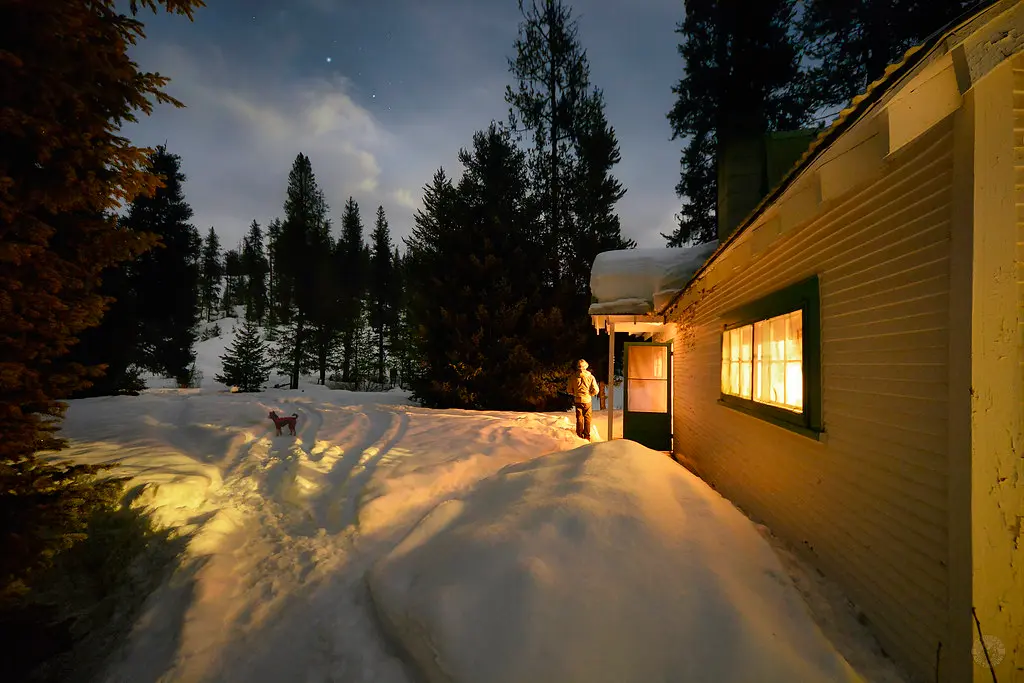
The writer of a Flickr album credited to Musgrove and the Pumi spent four nights here with Woody in February 2015 and posted 55 photographs. He found peeling paint, broken windows and furniture, loose vinyl flooring, and “ages of grime and soot.” He noted that summer entries in the cabin log book called the bathroom “gross” and “disgusting.” The cabin was still booked solid that winter. Of the stove he wrote that it “worked like a charm, warming the place up fast and efficiently,” and the district had left firewood and an axe.
The forest road and the Pilgrim Trail
This stretch of Highway 21 is the Ponderosa Pine Scenic Byway, which runs 131 miles from Boise through the Boise, Salmon-Challis, and Sawtooth national forests. In autumn, Recreation.gov directs drivers to the southern entrance of Forest Road 362, about a mile past Edna Creek Campground, because a seasonal gate may close the northern entrance. Stopping at the junction of the forest road and the highway to load or unload is no longer allowed and can bring a citation, because of the hazard from cars parked on the highway.
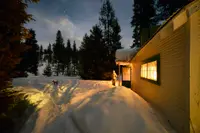
In winter, guests leave their cars at the Whoop-Um-Up Park N’ Ski Area, about 18 miles from Idaho City. An Idaho Park-N-Ski pass is required there from November 15 to April 30. From the lot, guests cover the last 1.5 miles on the Pilgrim Trail on skis or snowshoes, a route the Forest Service rates moderately difficult in normal conditions. In 2015 Musgrove found signs and maps along the way and no snowmobiles, which are not allowed on these trails. He also found a warning ticket on his windshield: his regular Idaho Sno-Park permit was the wrong one for that lot. In winter, miles of ski and snowshoe trail lead out from the cabin’s front door.
In summer, the 1-mile Beaver Creek Trail leads to the Crooked River and several small swimming holes. The river, the creek, and the beaver ponds hold rainbow, brook, and cutthroat trout. In fall the country is hunted.
A site from 1912
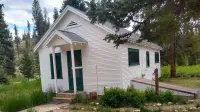
The Forest Service established the Beaver Creek site for administrative use in 1912. The present building came in the following decades. The Forest Service dates it to the 1930s and says the Civilian Conservation Corps built it from standard blueprints of the period. Musgrove’s account gives the year as 1933. He says it served first as a Forest Service guard station, built to the same design as many other CCC guard stations across the Pacific Northwest. Recreation.gov lists it today as Site 1, Loop Beaver Creek Cabin, type Cabin Nonelectric.
Notable Events
- 1912The Beaver Creek cabin site was established for administrative use. fs.usda.gov
- 1930sThe Civilian Conservation Corps built the current dwelling from standard blueprints of the period. fs.usda.gov
- 1933The current Beaver Creek Cabin dwelling was built in 1933 by the Civilian Conservation Corps, in a design shared by many other CCC guard stations spread out through the Pacific Northwest, and was originally used as a forest service guard station. flickr.com