Cheyenne
Laramie County, Wyoming.
Cheyenne, Wyoming, the Laramie County seat, began in tents along Crow Creek in the summer of 1867 and spent six months as an end-of-tracks town.1,2
Details
Point at a dot to see the place.Tap a dot to see the place. Road map of Cheyenne.
In Cheyenne
- Avenues Antiques & CollectiblesCheyenne · Antique storeA family-run antique store on East Lincolnway in Cheyenne, established 1994, whose glass showcase holds vintage Navajo, Zuni, and Hopi jewelry among the oak cabinets and oddities.
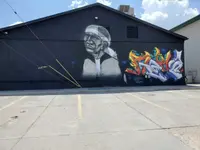
- Bart's Flea MarketCheyenne · Indoor market10,000 square feet with almost 100 booths for your shopping pleasure. It is an indoor market with lots of vendors that sell retail items, vintage items, and more! It is also the oldest and largest in Cheyenne.
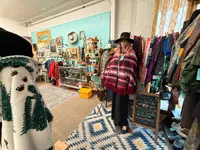
- Frontier Flea MarketCheyenne · Antique storeAn antiques shop in a 1909 brick double storefront on Carey Avenue in downtown Cheyenne, whose best-known front sign reads "Specializing in Guns for the Ladies."
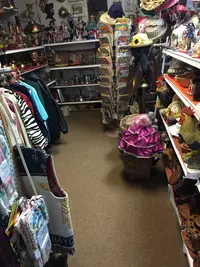
- Our PlaceCheyenneOur Place specializes in vintage, primitive, shabby chic, farmhouse, and cottage furniture, as well as western saddles, home décor, and antiques, railroad collectibles, signage, and more.
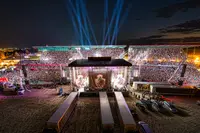
The Calendar
History
The Townsite at Crow Creek
Union Pacific locomotives still pass through Cheyenne, as they first did after the tracks reached the town on Nov. 13, 1867.2 Census estimates put the population at 64,019 on July 1, 2016, and state figures show that government has dominated the city’s prosperity since it became the territorial capital in 1869.2
Gen. Grenville Dodge established the first Union Pacific townsite in the area at Crow Creek on July 4, 1867, and three married couples and three men arrived on July 9.1,2 The place was first called Crow Creek Crossing, the name Iron City was reportedly considered, and Dodge and some of his friends are said to have renamed it Cheyenne for the Great Plains Indian tribe.2 The townsite was four miles square and lay in what was still Dakota Territory, and on July 25, 1867, the first frame house went up at the corner of Ferguson and Sixteenth streets.2 The State Historic Preservation Office dates the opening of James R. Whitehead’s Union Pacific Land Office to July 9, 1867, while WyoHistory.org says only that an office to sell lots had opened by July 22.2,4 A marker that the Capitol Avenue Bronze Commission put up in 2022 names Major General Grenville Dodge as the Founder of Cheyenne.5
Six Months at End of Track
Wyoming historian T.A. Larson noted that Cheyenne spent six months as an end-of-tracks town, longer than any other Wyoming town, while its merchants supplied railroad camps on Sherman Hill and Colorado towns along the Kansas Pacific’s line toward Denver.2 The first train rolled into Cheyenne on Nov. 13, 1867, with railroad equipment, workers, and adventurers of both genders from Julesburg, Colo., the previous end of track, and Cheyenne, like Julesburg before it, was dubbed Hell on Wheels.1 The Cheyenne Leader reported 200 businesses in town by November 1867 and, by July 1868, a population of not less than 5,000.2 On Jan. 3, 1868, the Dakota Legislature moved the Laramie County seat from Fort Sanders to Cheyenne, and on Jan. 23 Luke Murrin defeated attorney W.W. Corlett to become the town’s first mayor.1,2 In May 1869 Territorial Governor John Campbell named Cheyenne the temporary capital, and the Wyoming Capitol, whose cornerstone was laid May 18, 1887, was completed in the spring of 1890.2
Cattle, Coaches, and the Cheyenne Club
In July 1870 Hiram “Hi” Kelly shipped the first cattle out of Wyoming, loading stock onto railroad cars at the Cheyenne depot, and the Durbin Brothers brought sheep to the area that same year.2 By 1871 an estimated 60,000 to 80,000 head of cattle grazed within a 100-mile radius of Cheyenne, and in 1880 Alexander Swan brought the first Hereford cattle into Laramie County.1,2 Stages ran between Cheyenne and Deadwood from 1876 to 1887, until on February 19, 1887, the last Black Hills coach pulled out from the Inter-Ocean Hotel for the final regular trip north.6
Wealthy stockmen organized the Cheyenne Club, first known as the Cactus Club, in 1880, and its rules forbade profanity, drunkenness, blows, cheating at cards, pipes, tipping, betting, and games on Sunday.7 The club incorporated on Sept. 22, 1880, at the corner of 17th Street and Warren Avenue, and a second marker says its building went up on the site in 1882.1,8 Falling beef prices and the winter of 1886-1887 brought a bust to the cattle business, and the clubhouse became the Industrial Club in 1909, passed to the Cheyenne Chamber of Commerce in 1927, and was torn down in 1936.2,7 Col. E.A. Slack, editor of the Cheyenne Daily Sun Leader, wanted a western show to rival Greeley’s Potato Day, and the first Cheyenne Frontier Days took place in the fall of 1897.2
From Fort D.A. Russell to the Missile Fields
Construction of Fort D.A. Russell, a post built to protect the railroad, began a couple of weeks after the first frame house went up, and on Sept. 8, 1867, the fort was named for a Union brigadier general killed at Opequon, Va., in 1864.1,2 WyoHistory.org calls the Army’s Camp Carlin freight depot at the fort the second-largest military supply depot in the United States, and it closed after a Union Pacific subsidiary laid track from Cheyenne north to Fort Laramie in 1890 and the mule-train hauls ended.1 Troops trained at the fort for the Spanish American War and World War I, and it was renamed in honor of Warren, the state’s first governor, in 1929 by one WyoHistory.org account and in 1930 by another.1,2 In 1942 United Airlines moved its pilot training school to Cheyenne and installed new guns and instruments on B-17s and B-24s, modifying more than 5,000 aircraft with a workforce of 1,600 that was half women.2 The post became Francis E. Warren Air Force Base in 1947 and an Intercontinental Ballistic Missile headquarters under the Strategic Air Command in 1958, and by the summer of 1963 it had 200 missiles in silos within 100 miles across Wyoming, Colorado and Nebraska.1,2
The Depot, Downtown, and the Heron
The Union Pacific Depot was built in 1886 to a design by Henry van Brunt and given to the community in April 1993, and the National Park Service’s 2006 landmark plaque calls it the last of the grand nineteenth century depots on the Transcontinental Railroad.9 The downtown commercial buildings date from 1872 to the late 1920s, and the district was added to the National Register of Historic Places in 1974 and later resurveyed to a total of ninety-six buildings, sixty-seven of them contributing.4,10,11 A storm on the evening of August 1, 1985, killed twelve people, and at Ridge Road and Dell Range Boulevard a bronze heron stands next to a plaque bearing their twelve names.12,13
Within 30 Miles
Measured in a straight line from the town, nearest first.
- Burns DayBurns · Full day community eventBurns Day fills Main Street in Burns, Wyoming, every second Saturday of June, from a 7 a.m. pancake breakfast to a goat roping, revived in 2021 by a new Lions Club.
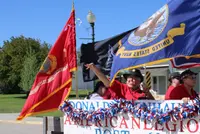
- Nunn DaysNunn · Fall festivalNunn Days, the Town of Nunn's one-day fall festival in Veterans Park, opens with a parade, and at two o'clock its program sets aside time to plant a tree for Arbor Day.
Nearby towns: Laramie and Loveland. All the towns of Wyoming. More of Wyoming: Fairs & Rodeos.
Sources
- Laramie County, Wyoming wyohistory.org/encyclopedia/laramie-county-wyoming
- Cheyenne, Magic City of the Plains wyohistory.org/encyclopedia/cheyenne-magic-city-plains
- Cheyenne South Side Historic District (wyoshpo.wyo.gov) wyoshpo.wyo.gov/index.php/programs/national-register/wyoming-listings/view-full-list/630-cheyenne-south-side-historic-district
- Downtown Cheyenne Historic District (wyoshpo.wyo.gov) wyoshpo.wyo.gov/index.php/programs/national-register/wyoming-listings/view-full-list/637-downtown-cheyenne-historic-district
- Major General Grenville Dodge, Founder of Cheyenne (historical marker) hmdb.org/m.asp?m=249896
- Cheyenne Black Hills Stage Route Historic District 2 (wyoshpo.wyo.gov) wyoshpo.wyo.gov/index.php/programs/national-register/wyoming-listings/view-full-list/720-cheyenne-black-hills-stage-route-historic-district-2
- The Cheyenne Club (historical marker) hmdb.org/m.asp?m=95188
- The Cheyenne Club (historical marker) hmdb.org/m.asp?m=95187
- Union Pacific Railroad Depot (historical marker) hmdb.org/m.asp?m=47157
- 1974 Downtown National Historic District (historical marker) hmdb.org/m.asp?m=47184
- Downtown Cheyenne Historic District Expansions (wyoshpo.wyo.gov) wyoshpo.wyo.gov/index.php/programs/national-register/wyoming-listings/view-full-list/638-downtown-cheyenne-historic-district-expansions
- Voices from the Flood: When Cheyenne’s “Impossible” ... wyohistory.org/blog/voices-flood-when-cheyennes-impossible-disaster-struck
- The Great Cheyenne Flood of 1985: A Devastating Storm That Changed Wyoming’s Capitol wyohistory.org/encyclopedia/great-cheyenne-flood-1985-devastating-storm-changed-wyomings-capitol