Laramie
Albany County, Wyoming.
Laramie is a Union Pacific town on the southeastern corner of the high Laramie Plains, where six women sat on a jury in March 1870.1,2
Details
- Founded
- Laramie was founded in 1868 on the arrival of the Union Pacific Railroad, at a site Chief Engineer Grenville Dodge chose in July 1867.1,3
- Name
- A historical marker says Laramie was named after the fur trader Jacques LaRamie, while WyoHistory.org says the town was apparently named for the river.1,3
- Last checked
- October 6, 2026.
Point at a dot to see the place.Tap a dot to see the place. Road map of Laramie.
In Laramie
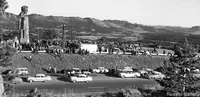
- Giant Head of Abraham LincolnLaramie · Monumental bronze sculptureA 12½-foot bronze head of Abraham Lincoln on a granite pedestal at Sherman Summit Rest Area on I-80 east of Laramie, cast in Mexico City and shipped north under armed guard.
- Harry C. Vaughan PlanetariumLaramie · PlanetariumUniversity of Wyoming's 9 meter diameter dome planetarium seating 64, operated by the Department of Physics and Astronomy, with cutting-edge laser projectors, surround audio, and simulation software for public astronomy, science, and music shows.

- The Great UntamedLaramie · Country wineMead, cider, and country wine made in Laramie, Wyoming

- Turtle Rock TrailheadLaramie · TrailheadA very popular trail within the Vedauwoo Day Use Area. The easy trail winds around Turtle Rock, an icon Sherman Granite outcropping. Hikers will enjoy a 2.8 mile loop winding around the boulders, slabs and cliffs of the Vedauwoo rock formation, as well as beaver ponds.
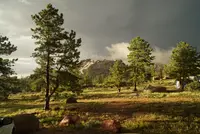
- Vee Bar Guest RanchLaramie · Guest and dude ranchFamily-friendly guest ranch in a gorgeous valley at the base of the Snowy Range Mountains.
The Calendar
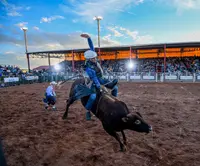
- Laramie Jubilee Days RodeoFestivalJuly 3-11, 2027.
- Albany County FairCounty fairLast held July 22–August 1, 2026; next year’s date not yet stated.
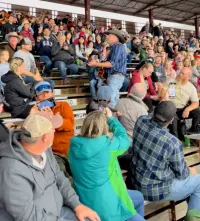
- Quadra Dangle Square Dance Club at Gray's GablesOld-time and folk musicRecurring Fall, Winter, and Spring sessions of Thursday lessons 6:30-8:30; first 2 lessons free.
History
Over the Tracks at Garfield Street
A footbridge built in 1929 carries Garfield Street over the Union Pacific tracks; it once took workers to the roundhouse and repair shops, and pedestrians and cyclists now use it to cross between downtown Laramie and the West Side.4 Laramie, a town of about 30,800 in Albany County, sits on the southeastern corner of the high Laramie Plains.1,3 As railroad jobs fell away from the mid-1950s on, the University of Wyoming became what WyoHistory.org calls the largest employer in the city, with nearly 3,000 employees.1
End of Track, 1868
A French-Canadian trapper, Jacques La Ramee, sometimes spelled La Ramie, came into the area about 1817; a historical marker says the town was named for him, while WyoHistory.org says it was apparently named for the river.1,3 Euro-American settlement began with Ben Holladay’s Overland Stage line in 1862, and Fort Sanders went up in 1866.1 In July 1867 Union Pacific Chief Engineer Grenville Dodge picked the town site just north of the fort, near the Laramie River.1 Railroad surveyors laid out the streets and lots in February 1868, and the sale of city lots began on April 20, 1868.1 Thomas Durant, the railroad’s vice president, surprised Cheyenne by naming Laramie the first location of a major repair depot with machine shops, a large roundhouse and a power plant.1 WyoHistory.org says men working for the Casement brothers laid track into town on May 4, 1868; the National Register nomination dates the railroad’s arrival to May 10, 1868.1,5 Billy Owen was eight when his family arrived on June 14, 1868, and his mother soon opened a restaurant and store in a hotel facing the tracks on what is now First Street.6 One account puts the town at 1,000 people, most of them living in tents; WyoHistory.org cites contemporary accounts of more than 3,000 “residents,” many only transient.1,6 Attorney Melville C. Brown was elected mayor of a provisional government on May 2, 1868, but it collapsed on June 12, and rowdies held the town until mid-October.1 In October 1868 N.K. Boswell led a vigilante committee into the Bucket of Blood Saloon; three men were lynched on October 18 and another the next morning.1,4 On May 1, 1875, Hayford of the Sentinel told his readers he kept on his desk the “monstrous, grinning skull” of Ed “Big Ned” Beeston, one of the four hanged.7 When the construction crews moved on, the town shrank to 800 residents.1
Jurors, Rails, and Cattle, 1870–1886
In March 1870 six Laramie women became, as the city’s timeline marker has it, the first in the world to sit on a civil jury, hearing cases in a shack at Garfield and First Street.1,4 On Sept. 6, 1870, Louisa Swain, 70, put on a clean apron and became, by WyoHistory.org’s account, the first woman in Wyoming to vote in a general election, one of 93 Laramie women who voted that day.1,4 In 1873 the Wyoming Territorial Prison opened with N.K. Boswell, the county’s first sheriff, as warden, and the marker says Butch Cassidy served his only prison sentence there.4 Laramie was incorporated on Jan. 13, 1874, and that year the Union Pacific began a rolling mill on the north side of town that turned worn iron rails into new ones and eventually employed 300 men.1 Ranches started by Philip Mandel, Thomas Alsop, the Bath brothers and others brought stockyards for shipping cattle and sheep, but ranching peaked in the 1880s and the cattle market collapsed in 1886.1 Men searched the mountains east and west of town for precious metals, and attorneys Melville Brown and Stephen Downey were nearly impoverished by their failures.1
The University and the Railroad Century
In 1886 Downey, then in the Territorial Legislative Assembly, was largely responsible for putting the University of Wyoming in Laramie, under a deal that gave Cheyenne the capital.1 WyoHistory.org says the university opened to 40 students in September 1887; the timeline marker counts five faculty members and 42 students, with its building still under construction.1,4 The West Side was first settled by European immigrants drawn by jobs with the Union Pacific, Irish, German, Scandinavian, British and Scottish families among them, and from the 1920s Hispanic railroad employees, many recently from Mexico, settled there too.8 In the fall of 1913, 50 freshmen laid a W 50 feet high and 80 feet wide in broken white limestone on a hill in the north part of town.9 In October 1917 a spark from a passing train burned the original railroad hotel and depot; the marker dates the replacement depot, now a museum, to 1924, while the National Register nomination says it was erected in 1925 at Custer and First Street.4,5 In April 1948 a fire the marker calls the largest in Laramie history started in the Holliday Building and destroyed or damaged 7 buildings and 29 businesses before the wind changed direction.4
Brick on the Railroad Plat
The Laramie Downtown Historic District covers ten and one half blocks of the original Union Pacific plat, mostly two story brick commercial buildings from about 1870 to 1938, and the state preservation office notes that those nearest the depot are oldest.2 Contractor C.B. Jensen built the Albany County Courthouse at 505 Grand Avenue in 1931-32 on the site of the original courthouse.5 The stones of the W on the hill have not been whitewashed in many years, and trees and housing now make it hard to see.9
Within 30 Miles
Measured in a straight line from the town, nearest first.
- Cherokee Park RanchLivermore · All-inclusive colorado dude ranchFamily-owned, all-inclusive Colorado dude ranch located in Livermore, Colorado, just north of Fort Collins and two hours from Denver’s airport, in the Rocky Mountains, with horseback riding, outdoor adventures, and authentic Western getaways.
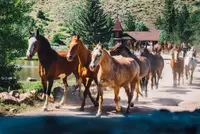
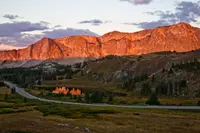
- Snowy Range Scenic BywayCentennial · Scenic bywayDesignated the Second National Forest Scenic Byway in the United States; the route along Highway 130 from Laramie to the Upper Platte River Valley, begun in 1920 and completed in 6 years.
Nearby towns: Cheyenne. All the towns of Wyoming. More of Wyoming: Fairs & Rodeos and Wineries.
Sources
- A Brief History of Laramie, Wyoming wyohistory.org/encyclopedia/brief-history-laramie-wyoming
- Laramie Downtown Historic District (wyoshpo.wyo.gov) wyoshpo.wyo.gov/index.php/programs/national-register/wyoming-listings/view-full-list/377-laramie-downtown-historic-district
- Laramie (historical marker) hmdb.org/m.asp?m=67993
- Laramie Timeline (historical marker) hmdb.org/m.asp?m=76849
- National Register nomination, Laramie, WY npgallery.nps.gov/GetAsset/2b3720bf-5441-49dc-b545-e8381532913b
- A Kid in Hell on Wheels: Laramie as the Railroad Arrived wyohistory.org/encyclopedia/kid-hell-wheels-laramie-railroad-arrived
- James Hayford of the Laramie Sentinel wyohistory.org/encyclopedia/james-hayford-laramie-sentinel
- Laramie West Side Historic District (wyoshpo.wyo.gov) wyoshpo.wyo.gov/index.php/programs/national-register/wyoming-listings/view-full-list/1016-laramie-west-side-historic-district
- The W on Laramie’s W Hill wyohistory.org/encyclopedia/w-laramies-w-hill