Heber City
Wasatch County, Utah. County seat.
Heber City, the seat of Wasatch County, Utah, was settled in 1859 by Latter-day Saint converts from Great Britain, who named their townsite London.1,2
Details
- Founded
- Cattlemen and surveyors came up from Provo in 1858, and a party made up mostly of LDS converts from Great Britain arrived on May 2, 1859, to settle the townsite.1,3
- Name
- The town is named for Heber C. Kimball, the mission leader of its British settlers.1
- County seat
- Heber City has been the seat of Wasatch County since the legislature created the county in 1862.2
- Last checked
- October 6, 2026.
Point at a dot to see the place.Tap a dot to see the place. Road map of Heber City.
In Heber City
- Heber Valley RailroadHeber City · Historic railroadHeber City, Utah's tourist railroad runs vintage coaches over the 1899 Rio Grande branch once called the Heber Creeper, whose station shipped more sheep than any other in the country.

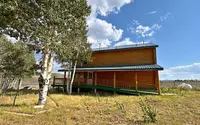
- Soldier Creek Vacation CabinHeber City · Large vacation cabinVacation house sleeps 16; one queen bedroom, one with two singles, four bunk rooms; ADA bathroom on main floor, community-style bathroom and shower on top floor; gathering area with sofas and chairs, TV and DVD player.
History
The London Townsite
Heber City stands in Heber Valley in the Wasatch Mountains, forty miles southeast of Salt Lake City and twenty-eight miles northeast of Provo.2 The city’s history says that on a summer morning in 1857, workers from a sawmill in Big Cottonwood Canyon climbed to the summit of the Wasatch Range and looked down on a high valley reputed to be a “paradise land.”1 In the spring of 1858, cattlemen from Provo drove their herds up Provo Canyon to set up ranches in the south end of the valley, and that October a road up the canyon was finished at Brigham Young’s request.1 A marker that the Daughters of Utah Pioneers put up in 1959 says that men from Provo surveyed the valley into 20-acre plots in 1858 and chose the town site.3 A party made up mostly of LDS converts from Great Britain arrived on May 2, 1859, camped about one mile north of the present town, and named the townsite London.1
According to the city, when the territorial legislature created Wasatch County in 1862, London was renamed Heber City because the British settlers loved their mission leader, Heber C. Kimball.1 John Crook, the area’s first historian, gave another version: most of the first settlers came from England, Kimball had converted them, and they named both the valley and the first settlement after him.2 The city’s history calls Heber City the largest settlement in the area at the time and says that is why it became the county seat.1
Fort Heber and Chief Tabby
In July 1859 the settlers built their houses close together to form Fort Heber, and the Old Fort marker says these cottonwood-log homes made up the fort’s outer wall around a schoolhouse 20 by 40 feet with two fireplaces and a stage.1,3 In 1860 the fort was enlarged to hold forty-four families, and that spring John Murray Murdoch, a Scot who had herded sheep since the age of 11, made his home inside it with his wife, Ann Steele.3,4 In 1865–68, while followers of Black Hawk raided the settlers, the Wasatch Militia moved early to make peace with Tabby’s Utes. According to militia member Joseph S. McDonald, Captain Wall and 24 men from Heber City took three wagon loads of supplies and 100 head of cattle, a gift from Brigham Young, to the reservation, where Tabby and Wall negotiated for three hours.5 John Crook recorded that in August 1867 Tabby and his whole band came to Heber City for a peace feast, with tables set up in the bowery and an ox roasted barbecue style.5 Tabby’s son Tom died in a hunting accident during the war and is buried among the Murdock family graves in the Heber City cemetery, under a sandstone marker bearing the initials T. T.5 Joseph Stacy Murdock conducted a Christian burial service, and afterward the Utes laid cedar logs on the grave, killed the boy’s favorite pony there, and set the funeral pyre alight.5
Red Sandstone and the Provo Canyon Branch
Homes and community buildings were going up in native red sandstone by 1864 and 1865, and the locally quarried stone was also shipped out for buildings elsewhere in the state.1,2 Heber City was incorporated as a town in 1889, the same year The Wasatch Wave, owned by William H. Buys, published its first edition on March 23, and it became a city in 1901.1,2 David Fisher, an outside foreman at the Ontario Mine in Park City, used his earnings to buy a four-acre lot in Heber City, where he and his wife, Mary Ann McDonald, built a Queen Anne-style brick home finished in 1893, which its marker calls the first in Heber City with a furnace.6 On September 29, 1899, the Rio Grande Western Railroad finished its line from Provo to Heber City, with seven stations, and ran mixed trains of passengers and freight over the Provo Canyon Branch.1,7 The town lived on agriculture, livestock, and dairying, and in 1915 the D&RGW reported that Heber shipped 360 cars of sheep, 280 cars of hay, 40 cars of cattle, and 60 cars of sugar beets each year.2 In 1904 Abram Hatch, a Lehi businessman whom Brigham Young had called as bishop in 1867, built the Bank of Heber City out of red sandstone from Lake Creek, and it was the county’s main lender until it failed in the Great Depression.2,8
Five Saloons on Main Street
Heber had two saloons in 1888 and five by 1906, and in 1909 the city passed an ordinance banning the sale of alcoholic beverages.9 Parley Murdock bought the Wasatch Saloon from his brother James S. Murdock in 1901, ran it as a pool hall during prohibition, and kept a business there until about 1950.9 Around 1950 Willis “Tink” Clyde, who had worked seventeen years in the Park City mines, bought the bar and pool hall “to try something different.”9 The building’s National Register nomination calls it one of only two intact frame buildings on Main Street, and it has a neon sign reading “Clyde’s Billiards - Beer on Tap.”9
The Bank Block and the Heber Creeper
A fire on January 13, 1937, destroyed the Heber Mercantile Store, and the Works Progress Administration paid for a new Wasatch County Library to replace the losses; the city’s timeline also records a fire that winter that badly damaged the Bank Building at Main and Center.1,10 During a renovation of the Bank Block in 2000, builders found old bank records hidden in the walls, and the original vault door is still on display inside.8 In the 1990s Heber City was an agricultural center, a place for tourists to visit, and a bedroom community for the Salt Lake and Utah valleys, and in 2005 CNN/Money listed it as a fast-growing micropolis with 15.1% growth.1,2 In the early 1970s the old Provo Canyon line became the Heber Creeper, a tourist passenger train that runs seasonally.7
Within 30 Miles
Measured in a straight line from the town, nearest first.
- Heber Valley Artisan CheeseMidway · Family-owned, farm-to-table creameryA fourth-generation Kohler dairy in Midway, Utah, that began turning its own herd's milk into cheese in 2011 and now ages some wheels for up to ten years.
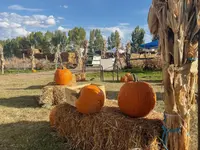
- Swiss DaysMidway · Small town heritage festivalMidway Swiss Days, a two-day Labor Day weekend festival on the Midway, Utah, town square since 1947, where beef smokes two days over Payson tart cherry wood.
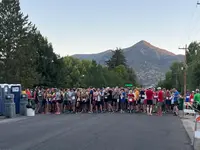
- Homestead CraterMidway · Natural geothermal springA warm spring inside a 55-foot limestone dome at Homestead in Midway, Utah, reached by a tunnel blasted in 1996, where divers go 65 feet down in 90-degree water.

- Dolly's BookstorePark City · Independent staple of the historic park city main street communityAn independent staple of the Historic Park City Main Street community connecting customers with books and gifts, open 7 days a week.
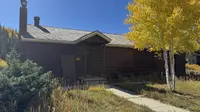
- Mill Hollow Guard StationKamas · Cabin siteA drive-in, nonelectric cabin site for overnight use, with two bedrooms and beds for up to 8 people.
- Miner's DayPark City · Annual celebrationPark City's Labor Day, called Miners Day, falls on the first Monday in September, when 15,000 golf balls race down Main Street and hard-rock miners drill a donated stone in City Park.

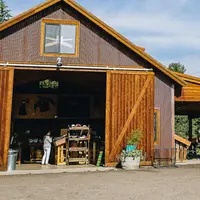
- Copper Moose FarmPark City · Small-scale vegetable and cut-flower farmA three-acre vegetable and cut-flower farm at 7,000 feet in Park City, Utah, whose farm stand sits beside the McLeod Creek Trail and whose greenhouse keeps growing through winter.
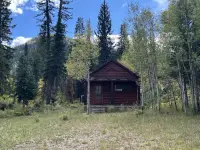
- Ledgefork Guard StationKamas · Historic forest service cabinLedgefork Guard Station is located just above Smith and Morehouse Reservoir on the western edge of the Uinta Mountains in northeastern Utah. Visitors enjoy fishing, canoeing and exploring the Smith and Morehouse Trail.
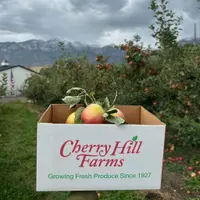
- Cherry Hill FarmsAlpine · Fruit farm with u-pick and farm toursBurgess Orchards, a peach and apple orchard on Bateman Lane in Alpine, Utah, sells its fruit from a farm stand whose peach sundae is served only while fresh peaches last.
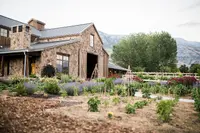
- Snuck FarmPleasant Grove · Year-round hydroponic family farm with a farmshop and cafeHydroponic greens plus eggs and honey; farmshop, annual plant sale, cooking classes, workshops, and farm-to-table dinners.
- Utah County chapter old-time jamsOrem · Jam sessionThe public is invited at no cost or obligation; any "fiddle compatible" instrument is welcome (guitar, banjo, harmonica, mandolin, dulcimer, etc); the public may join in or just sit and enjoy.
- Beck FarmsAmerican Fork · Seasonal flower farm offering u-pick experiencesA seasonal flower farm in American Fork, Utah, where visitors wander the rows, cut flowers with friends, and learn the quiet art of growing beauty with their own hands.

- The Printed GardenSandyTraditional brick and mortar bookstore in Sandy's Historic Union Square shopping plaza with coffee for guests and a combination of new, rare, signed, and gently used secondhand books.
- Pioneer BookProvoWith 45 years in the book business, we understand your book-browsing needs. It's our mission to provide a magical browsing experience. Our booksellers are passionate about books!
- This Is The Place Heritage ParkSalt Lake City · Living-history state parkA 450-acre living-history state park at the base of Emigration Canyon in Salt Lake City, built around the 60-foot monument marking where Brigham Young is said to have stopped.
5 more within 30 miles on the road map.
Nearby towns: Spanish Fork. All the towns of Utah.
Sources
- Heber City, UT heberut.gov/229/History
- History to Go historytogo.utah.gov/post/heber-city
- The Old Fort (historical marker) hmdb.org/m.asp?m=276050
- John Murray Murdoch & Ann Steele Home (historical marker) hmdb.org/m.asp?m=276784
- Tabby-To-Kwanah, Man of Peace historytogo.utah.gov/post/tabby-to-kwanah
- David IV & Mary Ann McDonald Fisher House (historical marker) hmdb.org/m.asp?m=276776
- Heber Valley Railroad (historical marker) hmdb.org/m.asp?m=275947
- Heber Bank Block Building (historical marker) hmdb.org/m.asp?m=275982
- National Register nomination, Wasatch Saloon npgallery.nps.gov/GetAsset/0c953d07-8dd7-4ad5-81b1-fa3492597821
- Wasatch Library (historical marker) hmdb.org/m.asp?m=276048