Spanish Fork
Utah County, Utah.
Spanish Fork, a Utah County town, began as two pioneer settlements in 1850-51 and built an adobe fort between them in 1854.1
Details
Point at a dot to see the place.Tap a dot to see the place. Road map of Spanish Fork.
In Spanish Fork
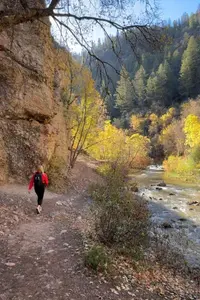
- Fifth Water Hot Springs (Diamond Fork)Spanish Fork · Geothermal hot springs with soaking pools and waterfallsA tranquil trail to geothermal hot springs and scenic waterfalls, located just outside the town of Spanish Fork in the Uinta-Wasatch-Cache National Forest; a 4.5-mile round-trip trek around the Diamond Fork River to a double waterfall and vibrant spring pools.
- Three Forks Trailhead (Fifth Water Hot Springs)Spanish Fork · TrailheadThe most heavily used trail to the Fifth Water Hot Springs.
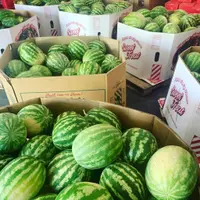
- Wall Brothers OrchardsSpanish Fork · Farm fresh fruitFamily fruit farm growing peaches, apples, and cherries in the Utah Valley for over fifty years; the Barn in Spanish Fork sells fresh fruit, pantry goods, ice cream, shakes, and slushies.
History
Upper Settlement, Palmyra, and the Adobe Fort
The Spanish Fork River cuts a meandering path through the River Bottoms of Spanish Fork, in Utah County, where the town’s upper settlement began in 1850-51.1,3 According to the Utah History Encyclopedia, the first white men to view the Wasatch, Fathers Francisco Atanasio Dominguez and Silvestre Velez de Escalante, left the range near present-day Spanish Fork in 1776.4 A second settlement started at Palmyra in 1851, and in 1854, fearful of Indian trouble, settlers built an adobe fort between the two with walls two feet thick and twenty feet high.1 Homes stood inside the fort with portholes in each compartment, a well in the center gave water, and the only entrance was a gate four feet thick and sixteen feet high.1
A 2009 Daughters of Utah Pioneers marker says the first settlers arrived in 1850 and lived in wagon boxes, tents, and dugouts along the river bank, facing hunger, grasshoppers, and crop failure.5 The grist mill marker gives a different date, saying Spanish Fork was settled in 1857.2 Spanish Fork City was chartered and then surveyed in 1855 by Stake President James Chauncey Snow under the direction of George A. Smith, joining the “upper” and “lower” settlements.5
The Indian Farm and the Black Hawk Veterans
In 1854 Brigham Young, Utah superintendent of U.S. Indian Affairs, set apart the Spanish Fork Indian Farm Reservation, 20 square miles reaching from the Spanish Fork River to Utah Lake.6 Dr. Garland Hurt succeeded him in 1855 and built a trading post on the farm.6 In 1865 Col. O. H. Irish made a treaty there with 15 Indian chiefs, who surrendered their title and in 1867 moved to the Uintah Basin.6 In 1941 the state guide reported that veterans of the Ute Black Hawk War held their annual encampment each fall at Spanish Fork.7
Grist Mills, Cattle, and the Leland Cannery
Archibald Gardner built the first flour mill in 1858-59 of rough lumber, running on Spanish Fork River water and grinding wheat between granite burrs about four feet in diameter.2 Gardner sold it to the Spanish Fork Co-op in 1874, and the larger two-story mill that replaced it made flour until April 15, 1888, when it burned, probably from spontaneous combustion.2 A four-story brick mill with steel rollers followed at a cost of $40,000, burned in December 1927, and was never rebuilt.2
Spanish Fork stock raisers grazed cattle on Forest Reserve land in the nearby canyon, and a National Register nomination credits the cattle ranching era with making many settlers prosperous.3 Samuel Thompson was the first of his family to own land in the River Bottoms, and on the Thompson farm, which produced hay and sugar beets, a stone house went up between 1899 and 1901.3
In 1925 the Utah Packing Company began building a cannery south of the Spanish Fork River near Leland, later acquired by the California Packing Corporation (Del Monte).8 With irrigation from the Strawberry Valley Project, farmers grew peas, green lima beans, and sweet corn for it, and some delivered peas to the viner at midnight.8 In 1941 the state guide counted 4,270 people and found a canning factory, a beet sugar factory, a foundry, and lumber yards, with factories on three sides of the town.7 The Spanish Fork plant shut down after 1968, and with it the growing of canning crops in the Leland area.8
Koyle’s Dream Mine
John H. Koyle, born at Spanish Fork on August 14, 1864, dreamed in August 1894 that a figure from another world carried him into a mountain east of his house and showed him an ancient “Nephite” mine.9 The Koyle Mining Company was formed in 1909 with 114,000 shares at $1.00 each, and by 1910 Koyle was bishop of the Leland Ward in Spanish Fork.9 Apostle James E. Talmage, a geologist, found no evidence of precious metals, the church released Koyle from the bishopric, and he was excommunicated on 18 April 1948.9 The 1941 guide reported that the Dream Mine, at the end of a zigzag road, had yielded small quantities of gold, silver, platinum, and lead, none worth processing.7
The Old Academy and the River Bottoms
In 1872 a debating society under Geo. H. Brimhall put up a log building for $675.00, and school opened there on February 3, 1873, with Wm. Beesley as instructor.10 The Old Academy served for meetings, schools, socials, and a library, and was moved to the park on February 22, 1932.10 Between 1970 and 2020 Spanish Fork grew from 7,284 to 43,870 people, while the River Bottoms kept its family farms and open fields by resisting annexation into the city.3 Diane Garcia, the Thompson farm’s trustee, says her great-great-grandfather Samuel Thompson was the first to stumble upon the fireflies of the spring-fed River Bottoms while irrigating.3
Within 30 Miles
Measured in a straight line from the town, nearest first.
- Pioneer DaysMapleton · Event schedule2026 Event Schedule with Pickleball Tournaments and Pioneer Festival.
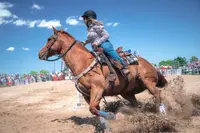
- Golden Onion DaysPayson · Annual celebrationPayson, Utah's five-day Labor Day celebration, begun in 1929 as the Onion Harvest and Homecoming, where a flower show in a 1901 schoolhouse still looks for the biggest onion.
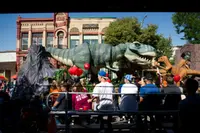
- Rocky Top Fruit FarmPayson · Produce marketSituated in Payson, this 32-acre farm specializes in u-pick fruits like sweet cherries, peaches, apples, and berries.
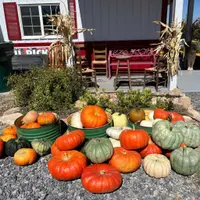
- Pioneer BookProvoWith 45 years in the book business, we understand your book-browsing needs. It's our mission to provide a magical browsing experience. Our booksellers are passionate about books!
- Chateau Monette Flower FarmPayson · Fresh cut flower farm and event & wedding venueA cut-flower farm on the DeHart family's West Mountain land near Payson, Utah, begun with a few hundred lavender plants and now known for its u-pick evenings.
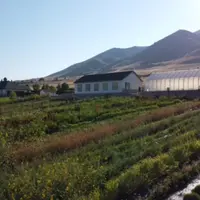
- Rowley's Red BarnSantaquin · On-the-farm, farm marketRowley's Red Barn is a family fruit farm's store and fall grounds beside Interstate 15 in Santaquin, Utah, where the dried tart cherries come from a family that helped invent the drying.
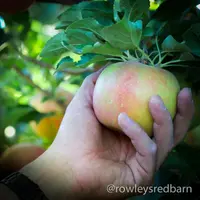
- Fred Openshaw FarmsSantaquin · Fruit orchardA family fruit orchard in Santaquin, Utah, now trading as Openshaw Acres, that began when the town doctor planted trees so patients could work off their bills.
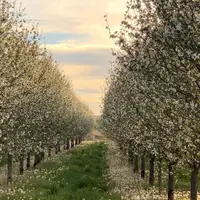
- Payson Lakes Guard StationPayson · Guard stationCabin offered for advance reservation so visitors can enjoy an experience similar to that of early Forest Rangers and their families.
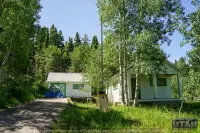
- Utah County chapter old-time jamsOrem · Jam sessionThe public is invited at no cost or obligation; any "fiddle compatible" instrument is welcome (guitar, banjo, harmonica, mandolin, dulcimer, etc); the public may join in or just sit and enjoy.
- Snuck FarmPleasant Grove · Year-round hydroponic family farm with a farmshop and cafeHydroponic greens plus eggs and honey; farmshop, annual plant sale, cooking classes, workshops, and farm-to-table dinners.
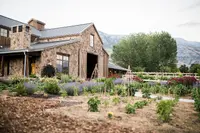
- Beck FarmsAmerican Fork · Seasonal flower farm offering u-pick experiencesA seasonal flower farm in American Fork, Utah, where visitors wander the rows, cut flowers with friends, and learn the quiet art of growing beauty with their own hands.

- Saratoga Hot Springs (Inlet Park)Saratoga Springs · Hot springNatural hot springs on the edge of Utah Lake, accessed via the Inlet Park trailhead.
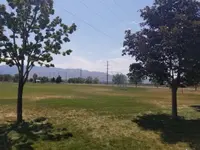
- Holdman StudiosLehi · Glass studioA stained, painted, and blown art glass studio on the Thanksgiving Point campus in Lehi, Utah, begun in a family garage by an artist with a severe stutter.
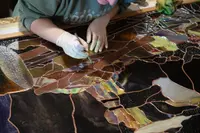
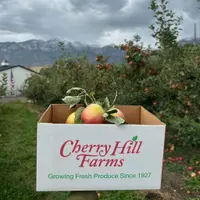
- Cherry Hill FarmsAlpine · Fruit farm with u-pick and farm toursBurgess Orchards, a peach and apple orchard on Bateman Lane in Alpine, Utah, sells its fruit from a farm stand whose peach sundae is served only while fresh peaches last.
- Tintic Silver JubileeEureka · Long-standing traditionWe need volunteers to help out at various Tintic Silver Jubilee events.
3 more within 30 miles on the road map.
Nearby towns: Heber City. All the towns of Utah.
Sources
- Old Fort (historical marker) hmdb.org/m.asp?m=148740
- Spanish Fork Grist Mills (historical marker) hmdb.org/m.asp?m=148763
- NPS Form 10-900 OMB No. 10024-0018 United States Department of the Interior ushpo.utah.gov/wp-content/uploads/2023/11/UT_Utah-County_Thompson-Family-Farm_form_compressed-compressed.pdf
- Wasatch Mountains historytogo.utah.gov/post/wasatch-mountains
- Spanish Fork Heritage Cemetery (historical marker) hmdb.org/m.asp?m=148620
- The Spanish Fork Indian Farm Reservation (historical marker) hmdb.org/m.asp?m=148765
- Utah: A Guide to the State (1941), p. 291 babel.hathitrust.org/cgi/pt?id=uc1.$b339&seq=363
- Growing Crops for the Cannery historytogo.utah.gov/post/growing-crops-cannery
- History to Go historytogo.utah.gov/post/dream-mine
- Old Academy (historical marker) hmdb.org/m.asp?m=148727