
Copper Moose Farm
Park City, Summit County, Utah. Small-scale vegetable and cut-flower farm.
Details

- Where
- 1285 Old Ranch Road, Park City, UT 84098. Directions
- When
- Thursday 12-6 pm & Saturday 9-4 pm.
- Season
- May through Early October (weather dependent).
- Getting there
- across the street from Willow Creek park, and nestled alongside the McLeod Creek Trail that connects Kimball Junction to Downtown Park City.
- Access
- only a few Saturdays left to enjoy.
- Website
- coppermoosefarm.com
- Managed by
- Copper Moose Farm Team.
- Established
- 2007.
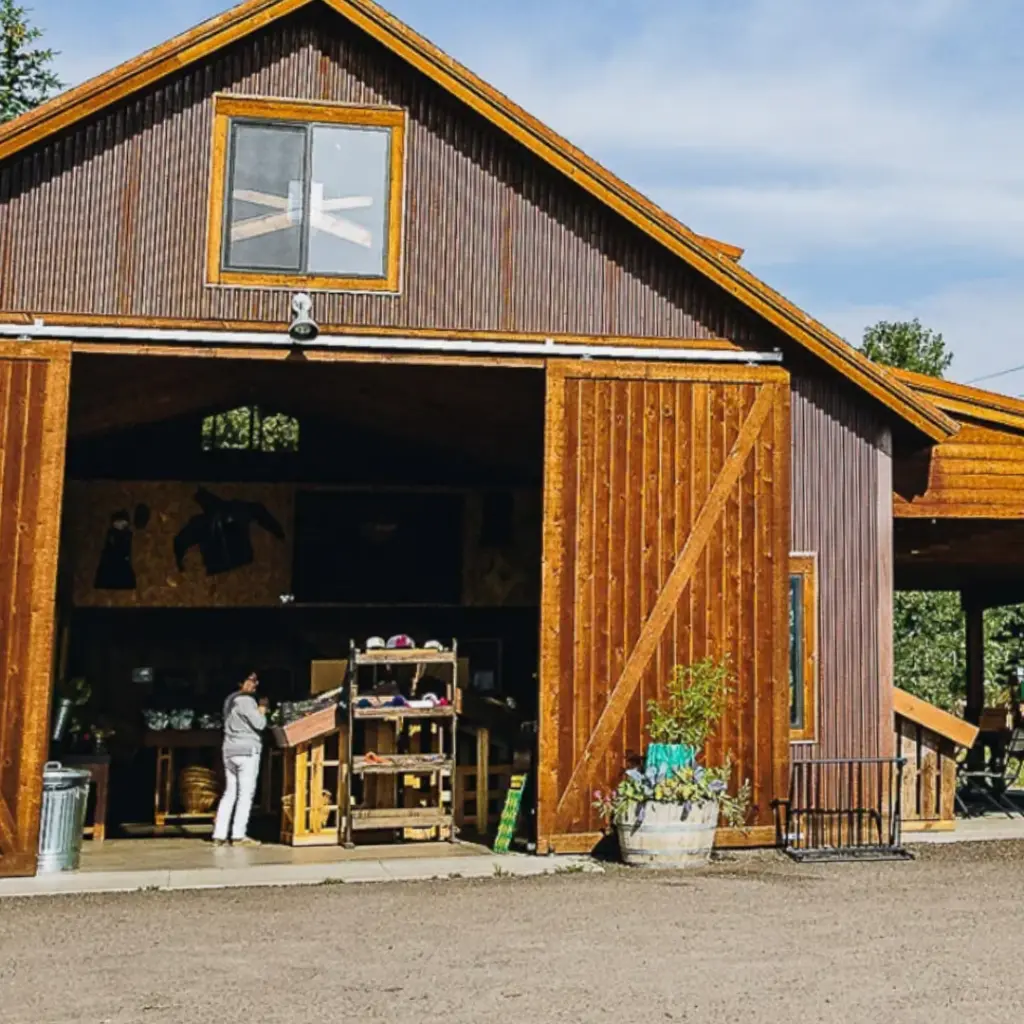
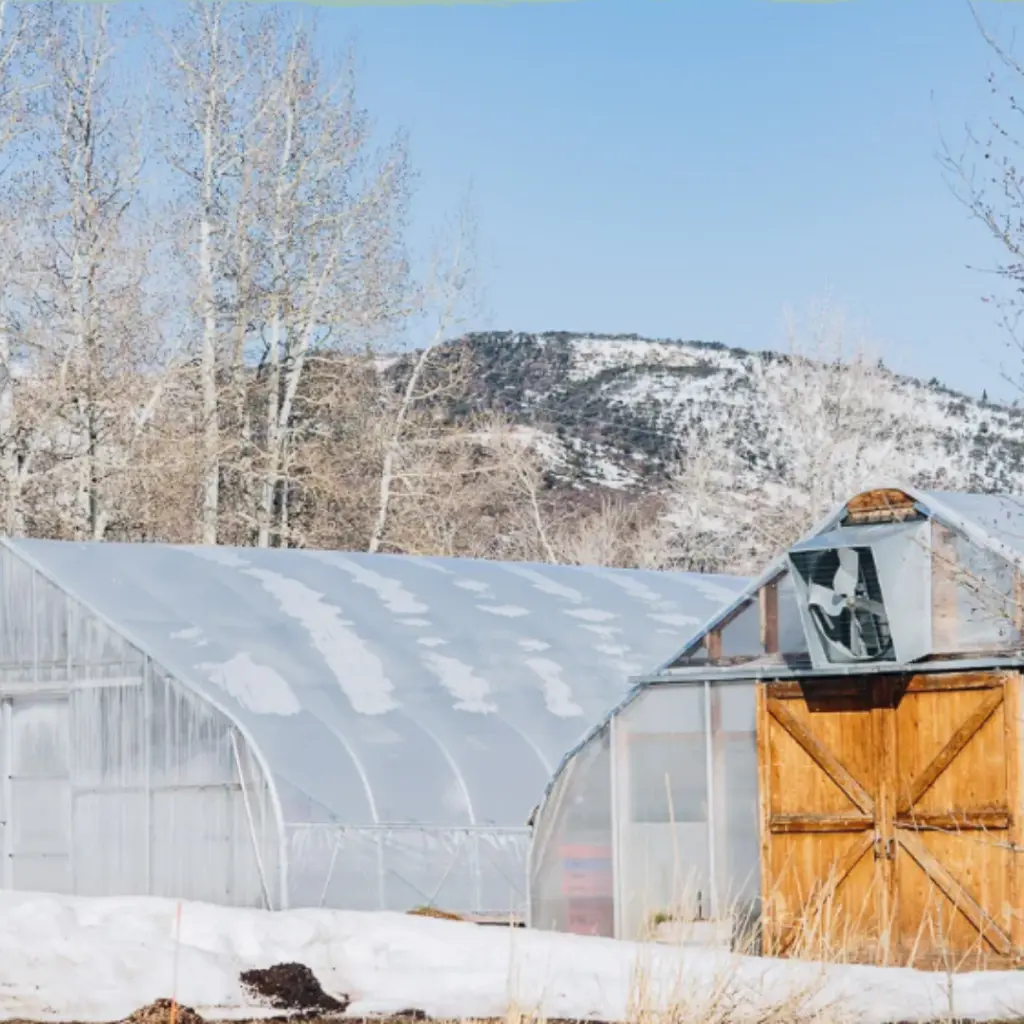
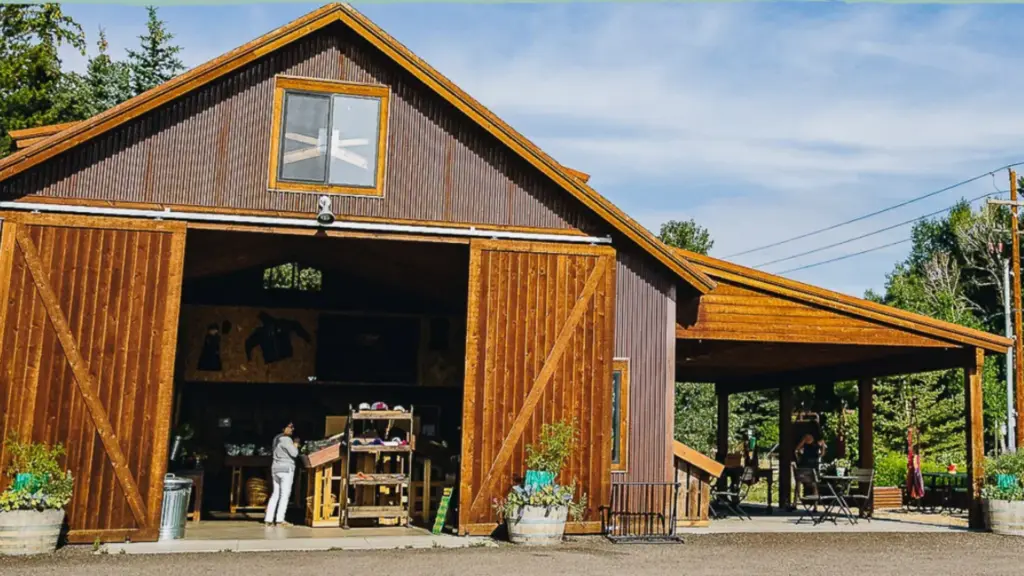
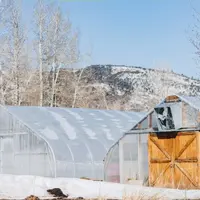
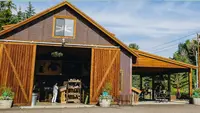
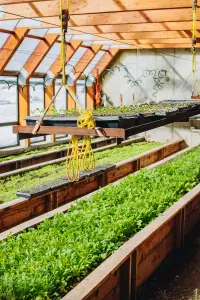
The farm stand at 1285 Old Ranch Road is a 1,500-square-foot building across the street from Willow Creek Park. It sits beside the McLeod Creek Trail, which connects Kimball Junction to downtown Park City, and the farm describes it as a place to stop along a bike ride or a walk. Behind it lie about three acres of vegetable, flower, and herb fields and a 2,400-square-foot greenhouse, all at 7,000 feet. The stand opens in late May and closes in early October, as the weather allows. In 2026 it opened on Thursday, May 28. On September 25, 2026, the coffee vendor Lococo posted that there were “only a few Saturdays left.”
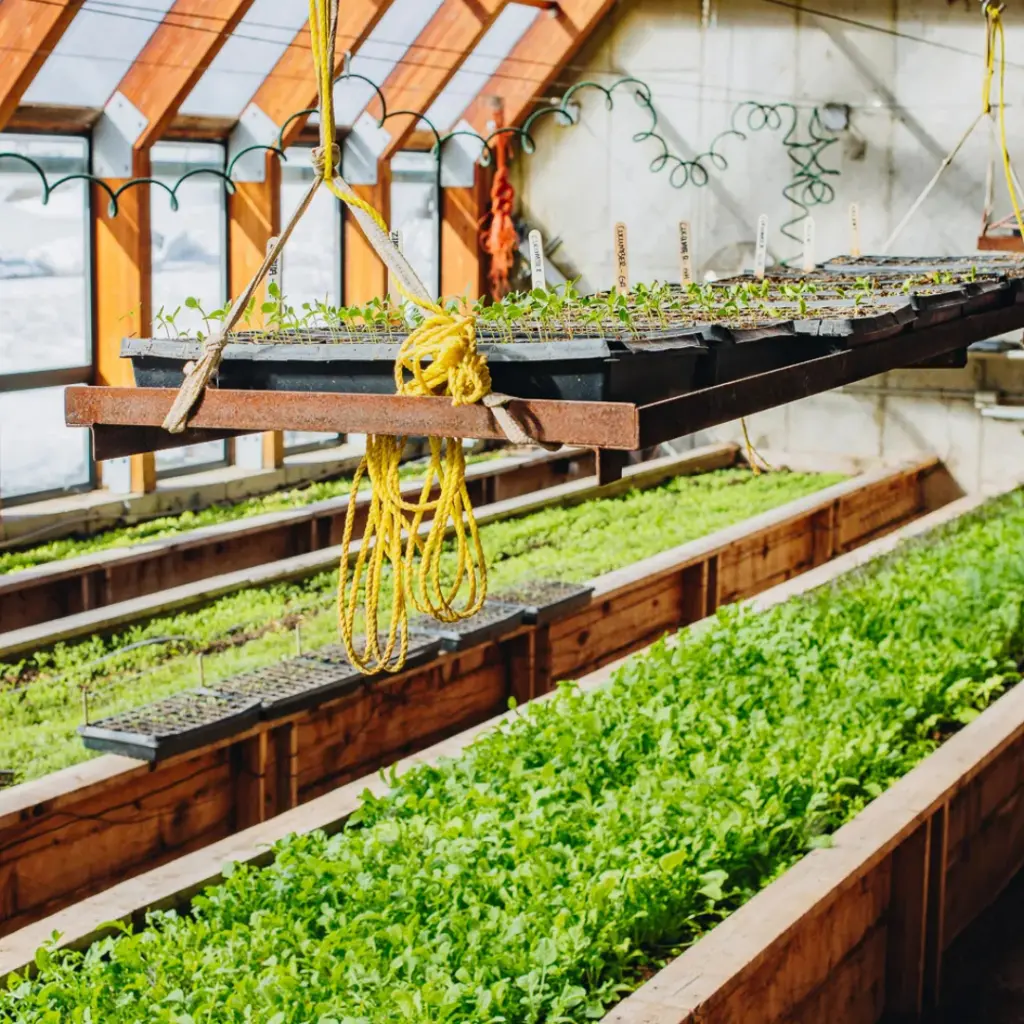
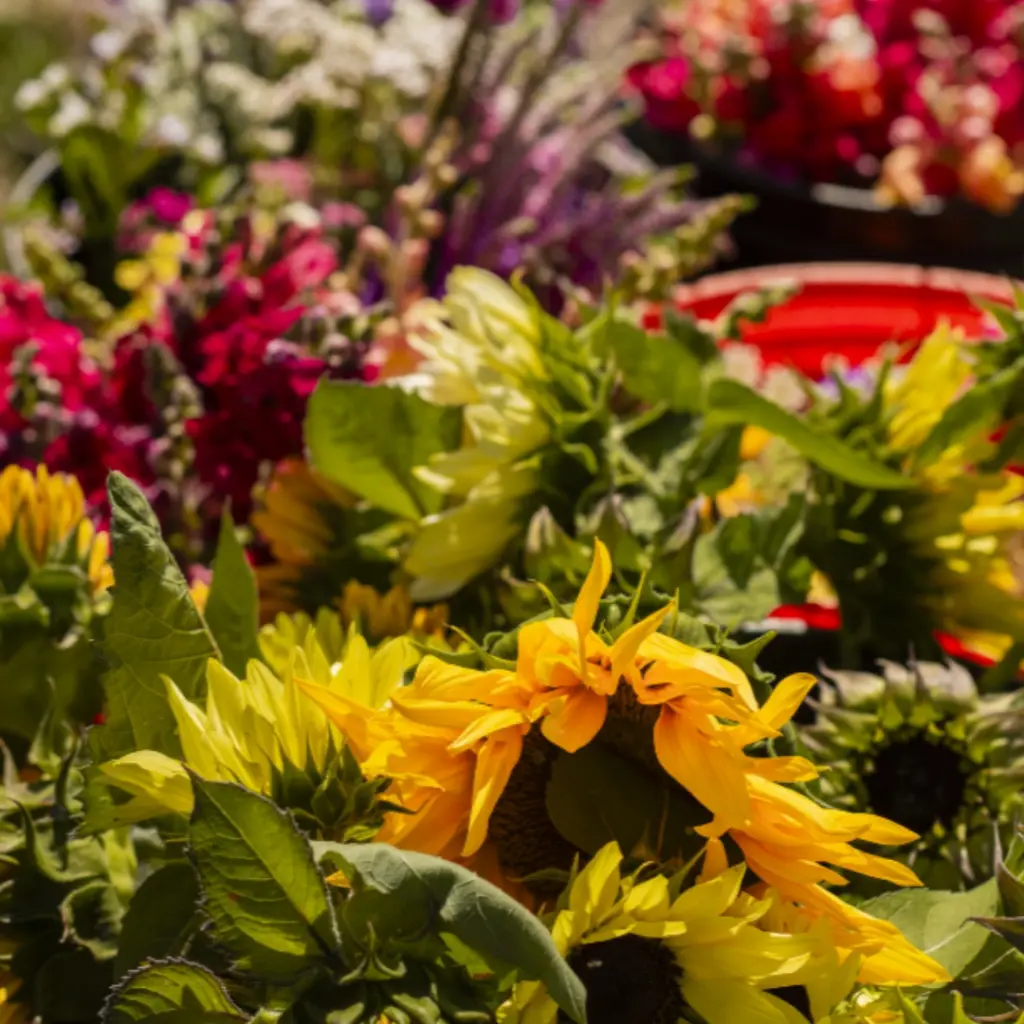
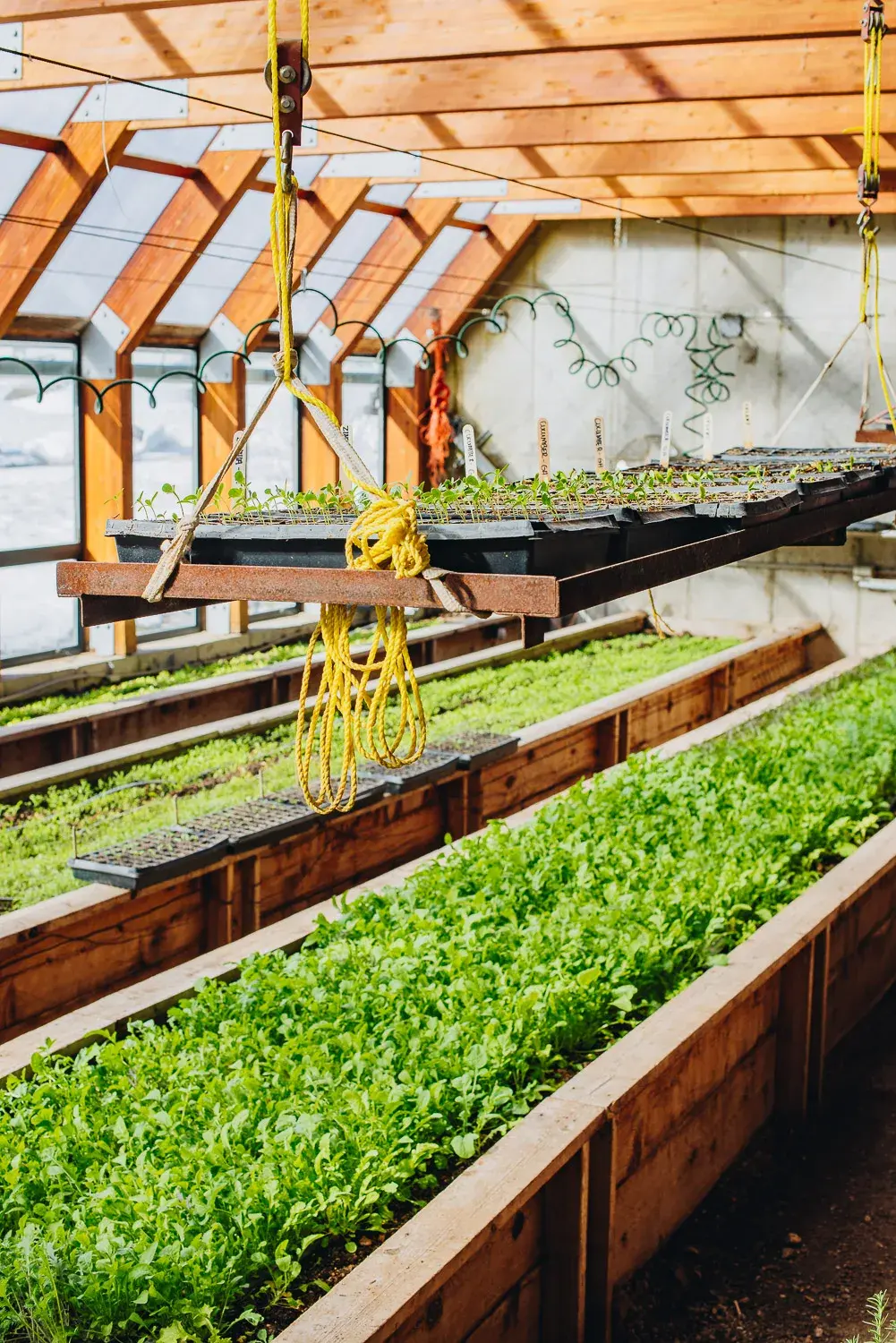
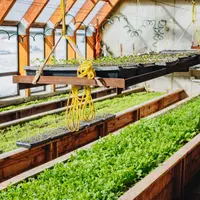
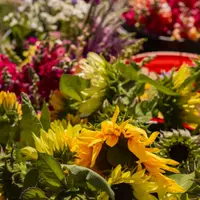
Vegetables at the stand are cut the day before or the morning of sale. Spring garlic, garlic scapes, and kohlrabi come first, followed by radishes and turnips. By midsummer there are beets, carrots, parsnips, new potatoes, summer squash, and zucchini. Leeks, pearl onions, and cured garlic arrive late in the season, and pumpkins and winter squash close it out. Salad mix, arugula, spinach, and pea shoots are sold all summer, and the farm says its greens are so popular “that we grow as much as we can.” The greenhouse grows what the bioregion otherwise would not support: heirloom and cherry tomatoes, peppers, cucumbers, celery, snap peas, and green beans. The flower fields supply hand-cut bouquets of sunflowers, snapdragons, zinnias, dahlias, asters, peonies, and cosmos. When there are extras, the farm sells single stems.
Other producers fill the rest of the shelves. Old Home Place delivers free-range eggs once a week, and the farm notes that “locals know” they sell out fast. Beehive Cheese supplies Promontory, Red Butte Hatch Chile, Queen Bee Porcini, Teahive, and Seahive. Red Bicycle Breadworks, which began by delivering 16 loaves to Park City’s Sunday Silly Market on a red bicycle with a trailer, sends bread. Auntie Em’s of Park City sends pies and cookies. Slide Ridge, a family operation with about 3,000 hives in northern Utah, makes honey wine vinegar. Ioulia’s olive oil comes from the family’s 3,000 Koroneiki trees in the Peloponnesus. Kombucha from Han’s and Mamachari of Salt Lake City is poured from taps into growlers. Lococo returned in 2026 for its fifth year at the stand, selling a “Coffee Moose” and inviting customers to “make it a MO-COCO.”
Ben, Smudge, and the crew
Ben Smaha manages the property. He grew up in Cape Elizabeth, Maine, and worked as a guide and ski patroller in Alaska before moving to Park City in 2004. While working for the trails department on the adjacent McLeod Creek Trail, he learned of the farm. He volunteered first, then farmed for six years, and now handles the tractor and irrigation. The owners’ dog, Smudge, follows him from task to task. His sons, Zach and Nolan, favor the carrot bunches.
Roni, the farm manager, came most recently from Crested Butte, Colorado, after a decade in sustainable agriculture around the country. Annika, the lead farmer, grew up on a Vermont dairy farm and is in her third season. Sophia manages the stand and teaches at Deer Valley Ski School in winter. Hope came from Maine in 2019, loves alliums, and names a midsummer BLT with plenty of mayonnaise as her favorite farmer’s lunch. Caleb, in his first year of farm work, lists bindweed as his favorite plant to grow.
The crew starts every crop from seed, either sown directly or in trays filled with the farm’s own mix of utelite, peat moss, and compost. All weeding is done by hand. Insects are handled through integrated pest management, and the farm dogs and cats keep down the voles and pocket gophers. Solar panels supply part of the farm’s power. Surplus vegetables are gleaned and donated through Park City Community Gardens and EATS, and whatever is left is composted or mowed back into the soil.
In winter the stand closes and all growing moves into the greenhouses. The farm sells salad mix, arugula, microgreens, scallions, bok choi, head lettuce, and herbs through an online store when there is enough to sell. In 2011, then-manager Daisy Fair said of the passive-solar greenhouse that “the building is so well designed that the temps stay between the upper 40’s and the upper 70’s throughout the winter.”
Shares and dinners under string lights
Most of the farm’s regulars belong to its CSA. Members pay before the season and collect a weekly share at the stand for at least 18 weeks. A full share runs six to nine items and a half share five to seven. A flower share starts in mid-June. In 2025 the farm added a weekly sourdough loaf from Park City Bake Shop, and members can also take egg, cheese, and kombucha shares.
Each summer the farm holds farm-to-table dinners for 30 guests. A local chef cooks a multi-course meal in the farm stand from the day’s harvest. Guests take a farm tour first, then eat at a farm table under string lights with live music. The 2026 dinners sold out. Chefs on the dinner schedule have included John Courtney, butcher at Chop Shop, who cooked in Las Vegas kitchens before coming to the mountains; Seth Adams of Riverhorse on Main; and Shon Foster, a native of Kanab, who left Amangiri to open Sego Restaurant in his hometown.
From a quarter acre to a shed with chalkboards
The farm belongs to Kristi and John Cumming. Todd Coleman, a born-and-raised Parkite who managed the farm in 2021 and had been with it since 2006, described its beginning this way: “The Cumming family actually started out just wanting to grow healthy food, then expanded pretty quickly into a community farm.”
Sources give different starting years. The farm and most accounts say 2007. The Park Record reported in 2012 that the farm “got its start supplying organic produce to local restaurants” in 2006 and started its CSA in 2007. Park City Magazine wrote in 2015 that the farm began on “a quarter-acre piece of Park City suburbia” with a limited number of CSA shares. By 2015 it grew more than 40 food crops and 30 flower varieties on three acres.
In 2008 the Park Record counted Copper Moose as one of only two CSA farms in Summit County. The other was Ranui Gardens. Copper Moose supplied about 40 families, and a vegetable share cost about $800. That August 16, Slow Food Utah held a dinner at the farm to raise money for micro-grants for small farmers. “It brought a sense of community to the idea of sustainability,” said Christi Paulsen of Slow Food Utah.
By 2012 the farm was supplying High West Distillery, The Farm, Montage Deer Valley, and Promontory, and had added quail eggs, chicken eggs, and honey to its restaurant sales. A Park Record reporter that July described a dirt road leading through a wall of trees to ordered rows of crops, and “the odd rooster call” that “fails to signal the correct time of day.” CSA members collected their shares from a large rustic shed with its doors propped open. Chalkboards inside listed the week’s pickup, barrels along the walls held the morning’s harvest, and staff set out samples and recipes for anyone unsure what to do with kale or turnips. “I grow food and get to see the people it goes to,” Fair said.
Until 2014 the farm sold only to restaurants and CSA members, and Fair spent years turning other people away. “I felt for years like there were a lot of ‘no’s,’” she told the Park Record. The farm planned a public stand over the winter of 2014, built a building for it that spring, and opened in July, three days a week. Fair pointed out one customer to the reporter: “We fed her through her pregnancy, and now we’re feeding her kids.” Of the season’s crop she said, “I planted a seed back in April, and now here are these gorgeous carrots. It’s one of those things where I’m seeing it from seed to Joe right there, who’s buying it.”
In the stand’s second season, in 2015, Fair added Tasty Tuesday talks on the last Tuesday of each month, recipe contests for the “favorite turnip dish,” and an August Harvest Dinner with five local chefs. Her stated aim was a “Park City community food hub.” By 2021 about 80 families held shares, and Coleman said the farm grew a vegetable for every letter from asparagus to zucchini. He reported that the stand did brisk business during the pandemic summer of 2020. “More and more, people want to feed their kids really good food,” he said.
A permit for the long term
For its first decade the stand ran on temporary permits that had to be renewed every year. In 2024 the farm started amendments to the Summit County code that would allow permanent farm stands in several zoning districts. A county staff report supported the change: “Because of the urbanization and increase in property values in the Basin, it is necessary to provide farmers and ranchers with agricultural tourism type uses and opportunities to supplement the traditional agricultural business model.” The County Council approved the ordinance in March 2025.
In June 2025 the Snyderville Basin Planning Commission voted 5–0 to give the stand a permanent conditional-use permit. Principal planner Ray Miliner told the commission, “This is not a new use in this location — it’s been around for at least 10 years.” Under the permit, at least half of what the stand sells must be grown or produced on site. Hot food, food trucks, and weddings each require a separate special-event permit. Debi Scoggan, a former commissioner, urged the board to hold to those limits: “We cannot afford to have any of that – serving hot food, having food trucks.” Commissioner Heather Peteroy, who gets her CSA share from the stand, voted in favor.
With the permit in hand, the farm could rebuild its hoop houses without the risk of a rule change closing the stand. “Having been in operation for almost 20 years, I feel like we’re a really important part of our community on Old Ranch Road,” Kristi Cumming told the commissioners. “I believe that in this area, on Old Ranch Road, it is the right location for a farm stand, and it is the right location for agriculture.”
Notable Events
- 2006Copper Moose Farm got its start supplying organic produce to local restaurants. parkrecord.com
- 2007Copper Moose Farm was established with the aim to provide the highest quality produce to the Park City community. coppermoosefarm.com
- 2007The CSA program started and quickly became an important part of the business. parkrecord.com
- 2014A building to house the stand was built in the spring. parkrecord.com
- 2014Plans for the stand began in earnest in the winter. parkrecord.com
- 2014The stand opened in July and had already developed a devout group of regulars, Fair said. parkrecord.com
- 2024The county was considering code amendments initiated by Copper Moose Farm after its operations expanded beyond annual temporary permits. If approved, the changes would allow permanent farm stands in several zoning districts. townlift.com
- 2025Planner Jason Boal said the county and commissioners vetted the new farm-stand ordinance last fall and the County Council approved it in March. townlift.com
- 2025The Snyderville Basin Planning Commission unanimously approved a conditional-use permit allowing the Old Ranch Road farm stand to remain open year-round without annual temporary-permit applications. townlift.com
- The Copper Moose Farm Stand was added to the farm's public offerings so non-CSA members could buy its produce and flowers and other local products. parkcitymag.com
People
- Annika, Lead Farmer (third season at Copper Moose Farm).
- Ben Smaha, Property manager; began volunteering, then worked as a farmer before managing the property (6 years as a farmer).
- Caleb, Farm Crew.
- Hope, Farm Crew.
- Nolan, Son of property manager Ben; his favorite Copper Moose Farm vegetables are the carrot bunches.
- Roni, Farm Manager.
- Sophia, Farm Stand Manager.
- Zach, Son of property manager Ben; his favorite Copper Moose Farm vegetables are the carrot bunches.
- John Cumming, Co-owner with Kristi Cumming.
- Kristi Cumming, Copper Moose owner who welcomed the permanent permit's certainty.
- Todd Coleman, Farm manager (since 2006).
- Daisy Fair, Farm manager who advocated opening produce sales to the public.
- Christi Paulsen, Slow Food Utah representative discussing her organization's fundraising dinner at Copper Moose for small-farmer micro-grants.
- Debi Scoggan, Former Snyderville Basin planning commissioner who urged adherence to the new farm-stand conditions to prevent mission creep.
- Heather Peteroy, Commissioner and farm-stand CSA customer who praised the model and joined the unanimous permit vote.
- Jason Boal, Planner representing Cumming in the farm-stand permit discussion.
- Ray Miliner, Principal planner who explained replacing the farm stand's annual temporary use with permanent permission.
Sources
- agritourism.utah.gov/farm-directory/listing/copper-moose-farm
- coppermoosefarm.com
- instagram.com/coppermoosefarm_
- parkrecord.com/2012/07/27/getting-in-touch-with-your-food
- parkcitymag.com/eat-and-drink/2015/06/farm-stand
- park-citystyle.com/park-city-farm-offers-organically-grown-chemical-free-vegetables
- townlift.com/2025/06/summit-county-grants-permanent-status-to-copper-moose-farm-stand