Manitou Springs
El Paso County, Colorado.
A resort town in El Paso County, Colorado, at the foot of Pikes Peak, built around mineral springs that Cheyenne, Arapahoes, and Utes held sacred.1,2,3
Details
- Founded
- William Jackson Palmer and William Bell began developing the resort in 1871 and their Colorado Springs Company platted it in 1876, while the 1941 guide gives 1872 as the founding year.2,4,5
- Name
- The town takes its name from its mineral springs, with Manitou glossed in the 1941 guide as an Indian word for Great Spirit; the earlier proposed name was Villa la Font.2,6
- Last checked
- October 6, 2026.
Point at a dot to see the place.Tap a dot to see the place. Road map of Manitou Springs.
In Manitou Springs
- Manitou Mineral SpringsManitou Springs · Mineral springsEach spring has its own distinctive flavor and effervescence. Centuries ago the great tribes of the plains and the Mountain Utes drank these same medicinal waters. Beginning in 1871, developers created the resort of Manitou Springs to provide the popular water therapies. Springs restored and kept running by the Mineral Springs Foundation.
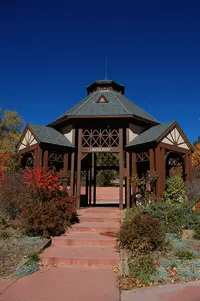
- Manitou WineryManitou Springs · WineryLocally owned & operated winery. Tastings, batches/ labels, patio seating, private events, wine club, dog friendly, etc..
The Calendar

History
Soda Spring and the Ute Pass Trail
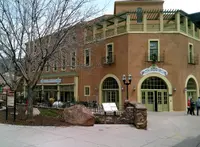
A three-story Spanish Colonial Revival building, built in 1920, stands over Soda Spring on the north bank of Fountain Creek in downtown Manitou Springs.4 The Cheyenne, Arapahoes, Utes, and others regarded the springs as sacred places inhabited by the Great Spirit, and the Ute Pass hunting trail ended there.3 The 1941 Writers’ Program guide adds that the Indians marked off the ground around the springs as a sanctuary, and that the neutral ground is said never to have been violated.2 According to the same guide, Frémont stopped at the springs in 1843 and analyzed the waters, which for a time were known as Fremont Soda Springs.2 In 1858 Julia Archibald Holmes camped near the springs with her husband and brother as members of the Lawrence Party, and she wrote that they “drank deeply from these Saratogas of the wilderness.”7
From Villa la Font to Manitou
In 1871 William Jackson Palmer and William Bell began developing the area as a health resort, and their Colorado Springs Company hired the Chicago landscape architect John Blair to design the town.4 The town’s first hotel, the Manitou House, opened in 1872, the same year a rustic log pavilion went up near Soda Spring.4 The 1941 guide says Dr. William A. Bell and General William Palmer founded the town in 1872, while the National Register nomination dates its founding to 1876, when the Colorado Springs Company platted it.2,5,8 The guide says the name was changed to Manitou when a resort hotel was opened, then to Manitou Springs in 1912, when, in the guide’s words, the town enjoyed its greatest popularity.2 The guide also notes that three of the developed springs each claimed to be the original Manitou Spring for which the community was named.2
Hotels, Panics, and the Cog Road
Bell and Palmer built the Mansions Hotel in 1874 as the town’s third hotel, and after an 1875 renovation it offered Brussels carpets, mahogany furniture, and hot and cold running water on each floor.1 Its guests included General William Tecumseh Sherman and Buffalo Bill Cody.1 The Colorado Encyclopedia says the Panic of 1873 slowed development, while the National Register nomination names the panic of 1874, compounded by three seasons of grasshoppers that had devastated local agriculture.4,8 A railroad spur from Colorado Springs then brought new visitors and investors, in 1880 by the encyclopedia’s date and in 1881 by the nomination’s, which credits the D & R G.4,8 Hordes of health seekers suffering from tuberculosis and other maladies followed, among them Emma, ill since age seven, who moved from Massachusetts with her mother around 1889 in the hope that the springs and mountain air might cure an illness presumed to be tuberculosis.4,6 Jerome B. Wheeler built the town’s first bank in 1888-1889, a three-story block with Wheeler Hall, the town’s first true opera house, on the third floor.9 In 1889 the Manitou Mineral Water Company, with Wheeler as its president, built a three-story bottling plant downtown that produced up to 20,000 bottles a day.10 The Manitou and Pike’s Peak Railway was completed in August 1891, and a marker presented to the city in 1940 gives its roadway as 9 miles long, with grades up to 25%, reaching 14109 feet.11 During the 1893 Silver Panic the Wheeler Banking Company defaulted, and after 1900 its building became a small hotel.9
The Last Bathhouse
In the early twentieth century health tourism began to decline; the town faced competition from Colorado Springs, which became the area’s main center for tuberculosis treatment, and the use of mineral springs for health faded as drugs, vitamins, and minerals began to take hold.4 In 1920 the old pavilion at Soda Spring was torn down for the Spa Building, fitted out under the bathhouse expert John Fordyce with shops on the first floor, baths on the second, and rooms on the third.3 The Colorado Encyclopedia calls it the town’s last attempt to market mineral baths as a commercial venture.4 After two fires the Mansions Hotel was torn down in 1925, and during the Great Depression the Civilian Conservation Corps set up headquarters in its old spring pavilion, now City Hall.1 The post office, dedicated in 1940, was the last building in town built of Manitou greenstone, which was quarried locally from about 1890 to 1940.12 In 1941 the Writers’ Program guide counted 1,205 people and found that the town hibernated from October to June, when most hotels and shops were closed.2 At mid-century the automobile brought motels to the town’s eastern edge, and most of the large old resorts downtown were demolished.4
The District on Fountain Creek
The Manitou Springs Historic District, on the National Register since 1983, covers almost the entire city, and 752 of its approximately 1001 buildings count as contributing.1,13 Its buildings date from 1876 to the 1930s, among them Miramont Castle, built in 1895 by the Gillis Brothers, contractors.5 The Spa Building was vacated in 1999, sold to development partners in 2005, and now houses shops and restaurants on the ground floor and condominiums above.4 Most of the town’s springs, long neglected, have been restored by the Mineral Springs Foundation, an all-volunteer non-profit.14 Manitou Soda Spring still sits at the center of the Spa Building’s first-floor rotunda.3
Within 30 Miles
Measured in a straight line from the town, nearest first.
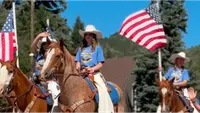
- Bronc DayGreen Mountain Falls · Annual western heritage celebrationA free western heritage festival held the last Saturday in July in Green Mountain Falls since 1939, whose parade once counted 149 horses.
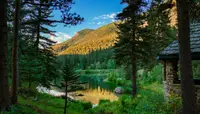
- The Ranch at Emerald ValleyColorado Springs · Wilderness retreat (all-inclusive)Booking engine for the Broadmoor wilderness properties; ranch room types are Cabin King, One Bedroom Suite, and Standalone Cabin.
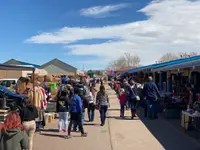
- Colorado Springs Flea MarketColorado Springs · Flea marketA weekend flea market on East Platte Avenue in Colorado Springs, with indoor shops and outdoor garage-sale rows, that began in the parking lot of a greyhound track.
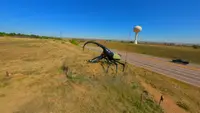
- Herkimer, World's Largest BeetleColorado Springs · StatueHerkimer, a male Hercules beetle built 48 times life size, marks the turn from Colorado 115 to the May family's tropical insect museum south of Colorado Springs.
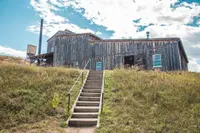
- Western Museum of Mining & IndustryColorado Springs · Interactive museum of mining and industryWorking machinery, a model mining drift and gold panning stations in the 12,200 square foot exhibit hall, plus historic buildings and machinery on a 27 acre campus.
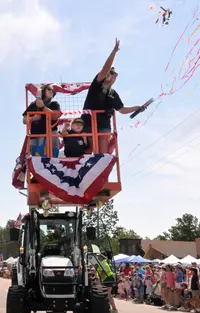
- Black Forest FestivalColorado Springs · FestivalA one-day August festival at the Black Forest Community Center north of Colorado Springs, with pancakes at dawn, a parade up Black Forest Road, and outhouse races after it.
- Black Rose Acoustic Society jamsColorado Springs · Music jams in a variety of different genresOpen acoustic jams of the Black Rose Acoustic Society, held most weeks around Colorado Springs and, in summer, before Friday concerts in a 1929 log hall in Black Forest.
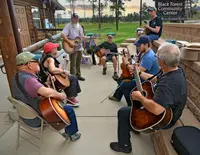
- Victor Gold Rush DaysVictor · CommunityAnnual Victor Gold Rush Days festival: live mining demonstrations, colorful parades, live music, and guided tours celebrating Victor's mining heritage.
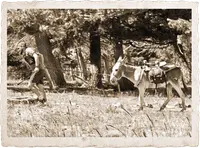
- Donkey Derby DaysCripple Creek · Annual three-day festivalDonkey Derby Days is a free three-day June festival on Bennett Avenue in Cripple Creek, Colorado, that pays for the town's donkey herd, which is believed descended from gold-camp stock.
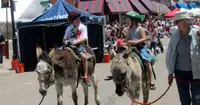
- Gold Camp Country ChristmasCripple Creek · Christmas paradeCripple Creek's December Saturday of cider, a noon parade up Bennett Avenue, and Santa at the Aspen Mine Center, with most proceeds going to the town's Community of Caring.
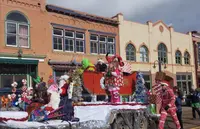
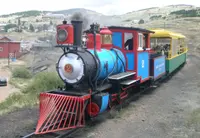
- Cripple Creek & Victor Narrow Gauge RailroadCripple Creek · Heritage narrow-gauge railwayA two-foot-gauge, coal-fired steam railroad at Cripple Creek, Colorado, running a four-mile round trip over the old Midland Terminal roadbed from an 1894 depot.
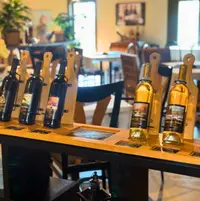
- Fountain Creek Winery & EateryFountain · Winery & eateryA family-run winery and eatery on the bank of Fountain Creek in Fountain, Colorado, where a self-taught winemaker blends and labels the house wines from barrels bought on the Western Slope.
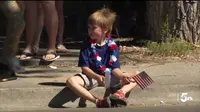
- Fountain Valley Fall FestivalFountain · Fall festivalFountain, Colorado's Labor Day festival, now past its fiftieth year, where the Chamber of Commerce raffles a handmade quilt and children sell what they have made.
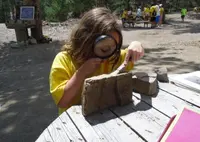
- Florissant Fossil QuarryFlorissant · Private fossil quarryA family-run fossil quarry off Teller County Road 1 in Florissant, Colorado, where visitors split late Eocene lake-bottom shale by hand and keep the fossils they find.
- Guffey Gorge / Paradise CoveGuffey · Swimming siteA Bureau of Land Management day-use swimming hole in southern Park County, Colorado, where West Fourmile Creek drops through granite into a pool once known to a few hundred people a year.
2 more within 30 miles on the road map.
Nearby towns: Cripple Creek and Cañon City. All the towns of Colorado. More of Colorado: Town Festivals and Wineries.
Sources
- Mansions Hotel (historical marker) hmdb.org/m.asp?m=250954
- Colorado: A Guide to the Highest State (1941), p. 228 archive.org/details/coloradoguidetoh00writ_0/page/228
- Spa Building (historical marker) hmdb.org/m.asp?m=250672
- Manitou Springs Spa Building coloradoencyclopedia.org/article/manitou-springs-spa-building
- National Register nomination, Manitou Springs Historic District npgallery.nps.gov/GetAsset/e97f90de-7683-49f2-bc56-c23df3266085
- Manitou Springs Heritage Museum manitouspringsheritagecenter.org/who-was-emma-crawford
- An Early Adventurer in Manitou (historical marker) hmdb.org/m.asp?m=250618
- National Register nomination, Manitou Springs, CO npgallery.nps.gov/GetAsset/95392b92-20e5-4295-a1bc-ed3b7b5d52fc
- Wheeler Bank (historical marker) hmdb.org/m.asp?m=250932
- A Town Built on Mineral Water Resources (historical marker) hmdb.org/m.asp?m=250671
- Pike’s Peak (historical marker) hmdb.org/m.asp?m=288471
- Manitou Springs Post Office (historical marker) hmdb.org/m.asp?m=250731
- Manitou Springs Historic District historycolorado.org/location/manitou-springs-historic-district
- Manitou Mineral Springs (visitcos.com) visitcos.com/areas/manitou-springs/manitou-mineral-springs