Florissant Fossil Quarry
Florissant, Teller County, Colorado. Private fossil quarry.
Details

- Where
- 18117 Teller County Rd 1, Florissant, CO 18117. Directions
- When
- The hours are 10:00 am to 5:00 pm, Monday – Saturday, including holidays. As of our 2023 season, we are CLOSED ON SUNDAYS.
- Season
- Our regular summer season starts Memorial Day weekend and runs through Labor Day.
- Getting there
- From Colorado Springs: Take US-24 West for 40 miles to Florissant, CO.
- Fees
- The entrance fee is $20 per collector per hour. Kids under 5 are free. At this time, we are accepting CASH ONLY.
- Access
- However, our hours are weather dependent.
- Walk-in or reserve
- Reservations are not required for individuals, families, and groups of less than 10.
- Phone
- (719) 748-3275
- Website
- florissantfossilquarry.com
- Managed by
- Clare family (Toni Clare and the late Gene Clare).
- Established
- Clare Quarry Site opened to the public in the 1970s.
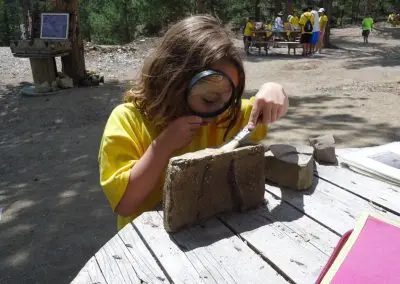
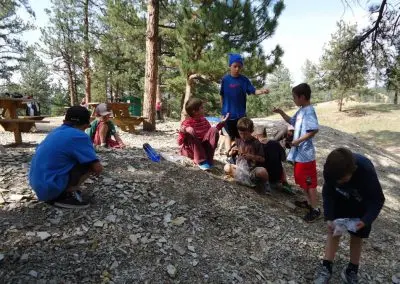
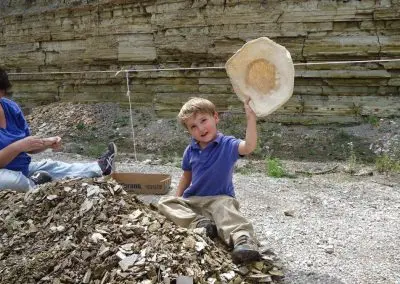
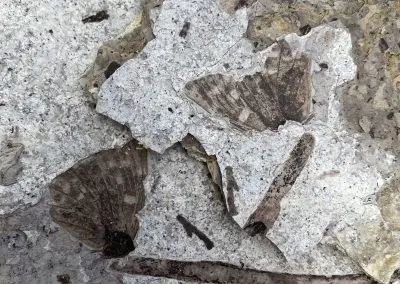
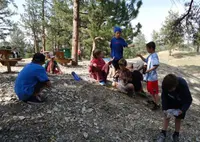
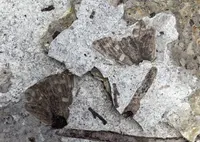
A quarter mile south of the junction of U.S. 24 and Teller County Road 1, on the road toward Cripple Creek, a sign marks the second turn on the right. A dirt road runs to a parking area, and a dirt path climbs a small hill to the digging ground of the Florissant Fossil Quarry. There the Clare family keeps piles of shale they have dug from the quarry and dried. Visitors take rock from the piles and part it layer by layer, looking for leaves, insects and the occasional animal pressed between.
The quarry is privately owned. The Gazette described it as a 50-acre property. The quarry gives its altitude as 8,400 feet on one page and 8,500 on another, and calls itself “essentially a large shale bed.” It lies a mile north of Florissant Fossil Beds National Monument by the quarry’s About page, and less than two miles from it on the same county road by its Visit page. The monument allows no digging or collecting. The quarry advises out-of-town visitors to stop first at the monument’s visitor center, where a short film explains how the Florissant Formation was laid down.
Splitting the shale on the hill
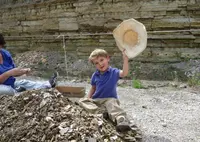
Each collecting group gets one hour at the piles, with ten minutes more for setting up and cleaning up. The fee is $20 per collector, in cash, and children under five dig free. Staff show how to choose a good rock and how to split it, and they help identify what turns up. The work is delicate. No chisel is used and nothing heavy is lifted, because the shale comes apart along its layers with little force. Eye protection is on hand for anyone who wants it.
The quarry guarantees fossils and lets the finder keep them, packed in a box with wrapping and written directions for preserving them. Specimens of scientific significance stay at the site and go to the scientific community for study. Finds from the quarry are on display at the Denver Museum of Nature and Science and at the national monument.
At that height the quarry asks visitors to come ready for nearly any weather, with a light jacket, rain gear, a sun hat, sunscreen and water. When rain is forecast the hours may change. There is a portable toilet and no picnic ground. The regular season runs from Memorial Day weekend through Labor Day, and the quarry has been closed on Sundays since the 2023 season. After the season it opens by appointment. The 2026 season has ended, and the quarry’s pages name spring 2027 for the next opening.
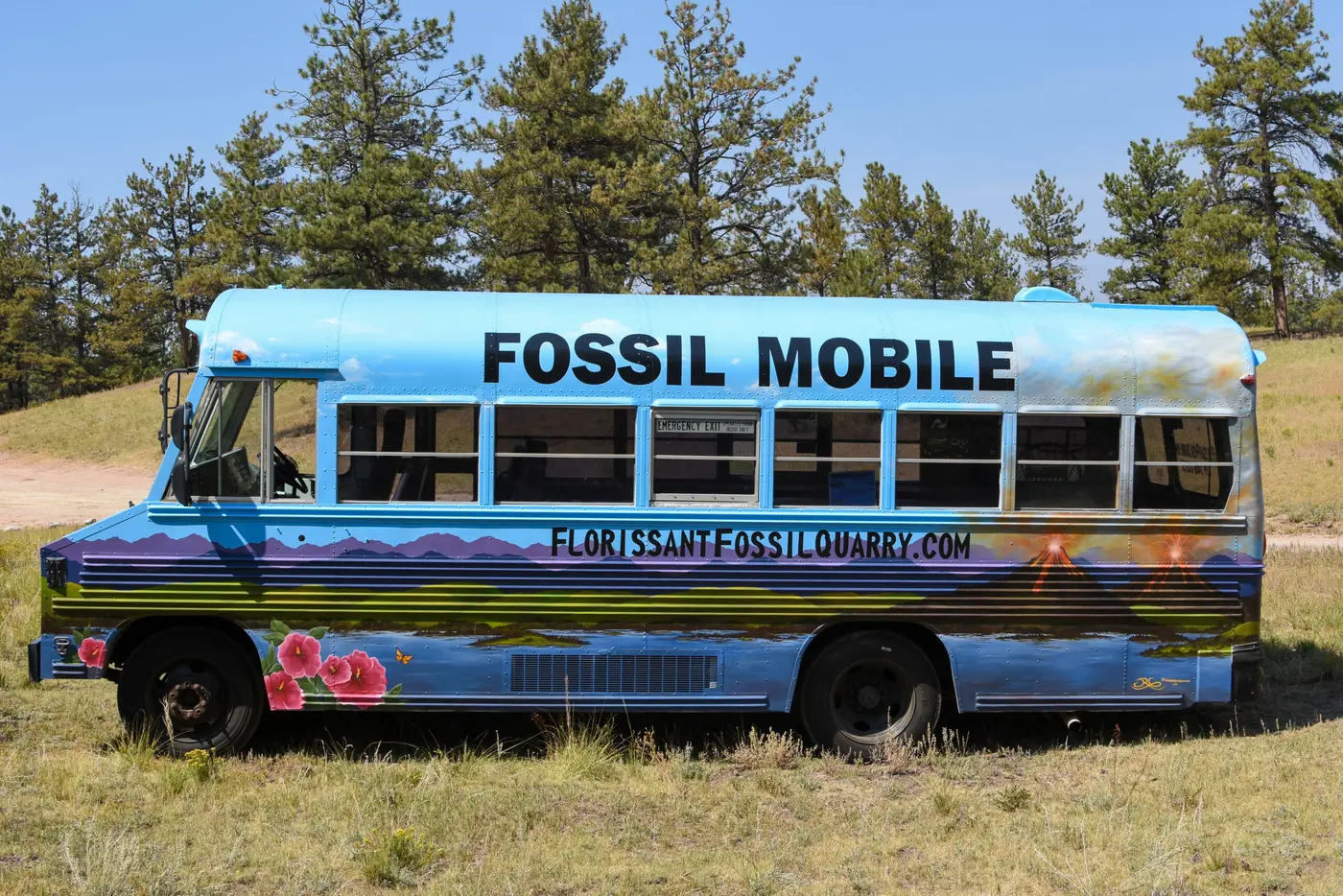
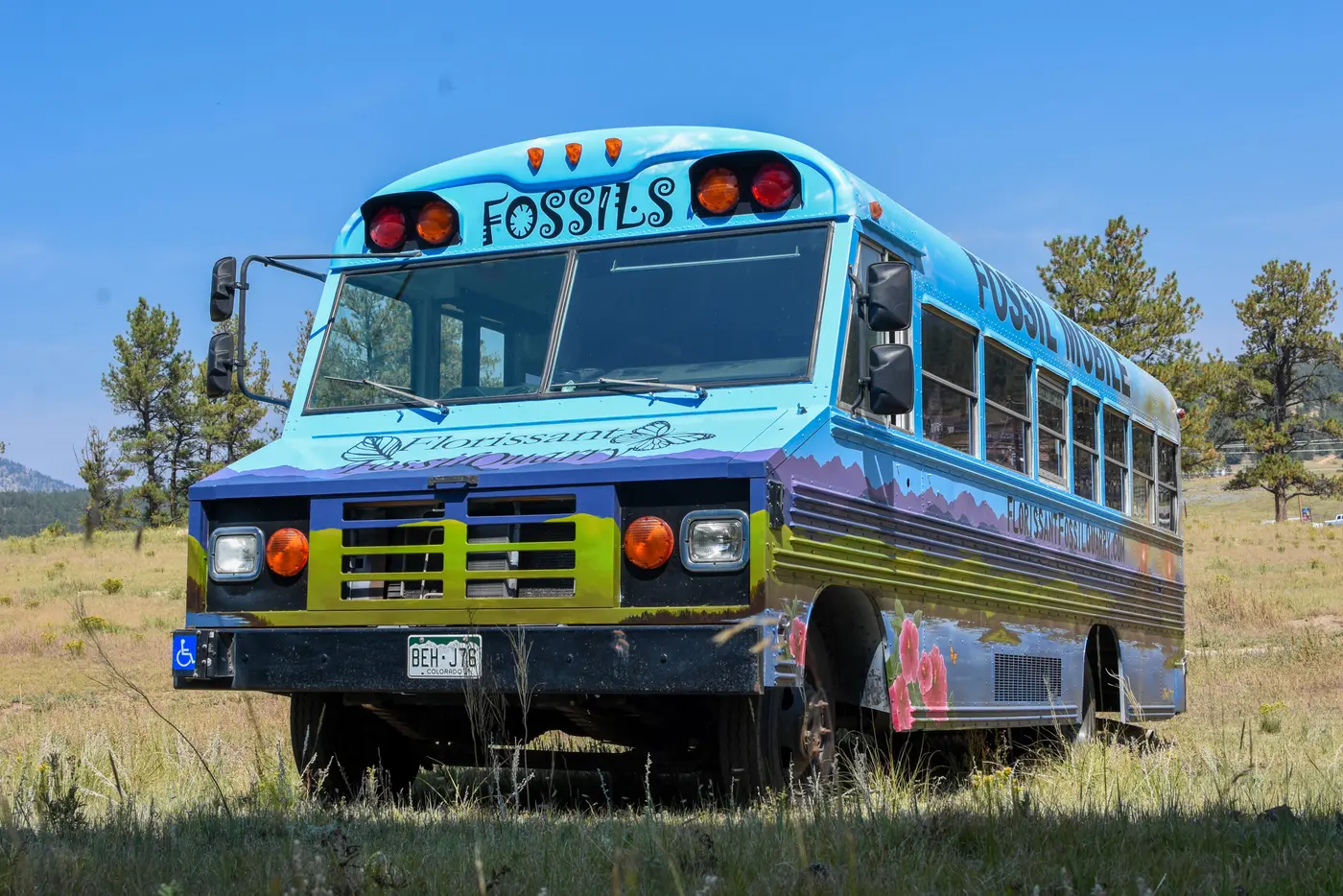
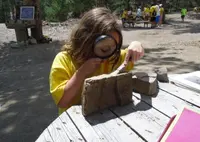
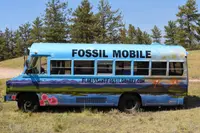
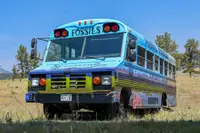
The shale also travels. An Eocene Adventure Bag holds three pounds of it with instructions. The Eocene Experience Kit adds a brush, a splitting tool, a magnifying glass and a book of illustrations, all in a wooden box. The quarry’s pages list the shale in the kit as four pounds in one place and three and a half in another. The Fossil Mobile, a school bus fitted out as a self-contained fossil lab, goes to schools and events. “’Shale’ we see you soon?” its notice reads.
A lake below the Guffey volcanoes
The shale was once the bottom of a lake. By the quarry’s account, the Florissant valley in the late Eocene held a lake ringed by redwoods. Volcanoes in the Guffey area buried the forest in mud and ash again and again. Each eruption dropped dust and ash on the water and carried small animals, fish, insects and plants to the bottom, and each layer of shale, the quarry says, stands for one eruption.
The quarry dates its fossils to 34 million years, and on one page to 35. The Gazette in 2022 gave the quarry’s plants and insects as 35 to 38 million years old. Nancy Clare Anderson told the paper: “There was a series of volcanoes that rained ash over Florissant Lake until eventually the lake was filled in with the mud and debris.”
The National Park Service gives a fuller account. About 34 to 35 million years ago, lahars, fast-moving volcanic mudflows from the Guffey Volcanic Center, ran into the valley. One of them dammed a stream and formed the first lake, where the lower shale unit settled. A later lahar made a second dam and lake, which laid down the middle shale seen at the monument. Most of the shale around the town of Florissant, the Park Service says, is the lower unit.
On the lake floor, ash fed blooms of microscopic algae called diatoms. When the colonies died, their cell walls sank and formed a fine layer over the clay. These paired layers of clay and ash entombed organisms in what is called paper shale.
The quarry appears by name in that science. Dr. Mary Ellen Benson, writing with J. P. Kociolek in 2012, studied the freshwater diatoms of the “Clare’s Quarry site.” Her research named five new species, among them Aulacoseira clarensis. That species, along with Diatoma tenuis and Synedra, is among the most common diatoms at Clare’s Quarry. The Pikes Peak Historical Society holds that the fossil valley was likely preserved from erosion because it sits in a down-dropped fault block, a graben.
The Clares on Teller One
Florissant is French for “flowering.” By the quarry’s account, an early settler named the town for his hometown in Missouri. Scientists had dug in the valley since Dr. A. C. Peale of the Hayden Survey came in 1874. Tourists arrived on the Midland excursion train in the late 1800s and later visited the commercial Colorado and Pike Petrified Forests, whose grounds now lie inside the monument.
Accounts of when the Clares began digging differ:
- Colorado Public Radio visited Nancy Clare Anderson in 2010 at what it called the only private fossil quarry in the Florissant area. It said the family had been harvesting fossils on their land for the past century.
- A 2011 oral-history report for the monument, by Nichelle Frank of Colorado State University, says Toni Clare and her husband owned much of the land in town beginning in the 1950s. They helped build businesses and owned many of them, among them the Thunderbird Inn and the fossil quarry on the west side of Teller One.
- The quarry’s own history says the Clare Quarry Site opened to the public in the 1970s.
The monument was established in 1969 after a legal fight. When Frank interviewed Toni Clare, she remembered working at the quarry but had only vague recollections of the legal battle. She said she and her husband were glad to have the monument because it brought in more business. The quarry describes the family philosophy, Toni Clare’s and the late Gene Clare’s, as sharing the experience of being a “real paleontologist.” The family, it says, works to keep the dig as hands-on as visitors may have known it some 30 years ago.
The find the quarry still cites came in 1997. Dr. Herbert Meyer, quoted in the book The Fossils of Florissant, wrote: “Many of the most exciting discoveries in recent years have come from the Clare site, and in 1997, Nancy Clare Anderson uncovered the complete, well preserved remains of a new species of shorebird.”
Notable Events
- 1950sToni and Gene Clare ran a fossil quarry outside Florissant. npshistory.com
- 1970sThe Clare Quarry Site, now Florissant Fossil Quarry, opened to the public. florissantfossilquarry.com
- 1997Nancy Clare Anderson uncovered the complete, well preserved remains of a new species of shorebird, one of the exciting recent discoveries from the Clare site per Dr Herbert Meyer in the book The Fossils of Florissant. florissantfossilquarry.com
People
- Dr Herbert Meyer, Quoted in The Fossils of Florissant about exciting discoveries from the Clare site and Nancy Clare Anderson's shorebird discovery.
- Gene Clare, Florissant land and business owner who ran the fossil quarry with his wife Toni (1950s).
- Nancy Clare Anderson, Explains the volcanic ash, mud and debris that filled Florissant Lake in the newspaper's quarry account.
- Toni Clare, Florissant land and business owner who ran the fossil quarry with her husband Gene (1950s).
Sources
- florissantfossilquarry.com/visit
- florissantfossilquarry.com
- florissantfossilquarry.com/about
- nps.gov/flfo/learn/nature/geologic-history-of-florissant.htm
- npshistory.com/publications/flfo/oral-history-p1.pdf
- cpr.org/2010/04/05/florissant-fossil-quarry
- nps.gov/flfo/learn/nature/diatoms-of-the-florissant-formation.htm