Long Beach
Pacific County, Washington. County seat.
Long Beach, on Pacific County’s peninsula between Willapa Bay and the ocean, was platted as Tinkerville in 1881 and renamed a month after the railroad arrived in 1888.1,2,3
Details
- Founded
- In 1881 Henry and Nancy Tinker bought nearly a square mile of land on the peninsula and platted a town called Tinkerville.2
- Name
- The town was renamed Long Beach a month after July 19, 1888, when the railroad’s first five miles reached the Tinkers’ hotel.3
- County seat
- Long Beach is not the county seat; Pacific County’s seat was at Oysterville from 1855 to 1892, and South Bend won it in 1892.4,5
- Last checked
- October 6, 2026.
Point at a dot to see the place.Tap a dot to see the place. Road map of Long Beach.
In Long Beach
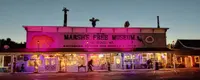
- Marsh's Free MuseumLong Beach · Curios museumA roadside curio hall on Pacific Avenue in Long Beach, Washington, run by the Marsh family since the 1920s, where Jake the Alligator Man sits mummified in a glass case.
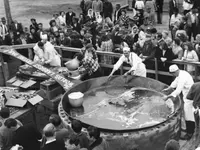
- World's Largest Frying PanLong Beach · Roadside oddityThis roadside attraction is free to visit and photograph at any time of day.
The Calendar
History
Clark’s Tree and Tinkerville
Along the Discovery Trail in Long Beach stands Clark’s Tree, a bronze pine-tree snag by Utah artist Stanley Wanlass, placed in 2003 near where Captain William Clark marked a tree on November 19, 1805.6 The town fronts 28 miles of open beach in Pacific County, on a peninsula between Willapa Bay and the Pacific Ocean just north of the Columbia River.1 Clark’s party walked a route that Indians had long used, along the hard, wet sand between the Columbia River and Willapa Bay.6 Farmers began claiming homesteads in the 1860s, and from 1870 Jonathan Stout ran a stage between Ilwaco and Oysterville, which was then the county seat.1
In 1881 Henry and Nancy Tinker bought nearly a square mile of land and platted a town called Tinkerville, and Portland residents bought many of the lots for summer cottages or tents.2 In 1883 the Tinkers opened their first hotel, a two-story wooden building with a tower, known briefly as Tinker’s Hotel and then as the Long Beach Hotel.2 A writer in the Oregonian, in an article titled “Do You Remember,” recalled the days when many East Portlanders lived in tents during the vacation season, and Mr. Tinker, “with his beautiful chin alfalfa,” met the boats at Ilwaco and “carried us up the beach in a lumber wagon.”2
The Clamshell Railroad
On July 19, 1888, the Ilwaco Steam Navigation Company’s railroad ran its first five miles from Ilwaco to the Tinkers’ hotel at Tinkerville, which was renamed Long Beach a month later.3 Another account calls the place Tinkertown and says the new name referred to the stretch of sandy beach, the length of the peninsula, that the town faced.1 Within a few months land values rose from about $8 an acre to about $200, and the town grew from 100 cottages in 1892 to almost 400 in 1894.3 The tide at Ilwaco set the train schedule, and the local historian Lucile McDonald wrote that the train would stop to shovel drifting sand or “to shoot a bear spied in a field.”3 Each week the line carried about a thousand 80-pound sacks of oysters to Ilwaco, along with logs, lumber, clams, and cranberries.3
The Long Beach Hotel burned in December 1895, and the next year the Tinkers built a larger one with 40 rooms, bowling alleys, and “hot sea baths.”2 From the 1880s until about 1910, wealthier Portland families filled the hotels and cottages, and the fathers came out each weekend by boat and rail, riding a Saturday boat known as the “husband’s special.”1
Speedway and Pacific Avenue
After about 1915, wealthier Portland families began going to the Oregon resorts at Seaside and Gearhart instead, and in Long Beach the Portland hotel closed after a fire in 1914 and the Breakers closed in 1920.1 Motorcycles began racing on the beach in 1913, and in 1922 a bridge over Bear Creek opened, giving visitors from inside Washington a better road to the town.1 The railroad tracks ran down the center of Pacific Avenue, the main street, and in November 1921 the Chinook Observer said that street was as hard to get through as the streets of Jerusalem.7 All 500 voters approved incorporation on December 17, 1921, and when the town incorporated on January 18, 1922, Gilbert Tinker, son of the first settlers, became its first mayor.7 One of the council’s first actions was to widen Pacific Avenue, which meant moving 27 buildings back 25 feet.7 The railroad’s last day came on September 9, 1930, and its route has since been widened and paved as State Highway 103.3
The state guide counted 620 people at Long Beach and placed the town on what it said was claimed to be the longest hard beach in the world, with no speed limits and auto racing a favorite sport.5 The same guide described a Lewis and Clark Monument made of varicolored stones sent by communities along the route of the Lewis and Clark Expedition.5
Clams, Kites, and the Frying Pan
In 1940 Long Beach held its first Clam Festival, and the chef Wellington W. Marsh made a fritter from 200 pounds of razor clams in a frying pan lent by Chehalis.1,8 The next year the town had its own pan forged, two feet larger than the Chehalis pan, and used it until 1948, when it went on display downtown.8 In 1946 diggers took six million pounds of clams at Copalis, Grayland, and Long Beach, and the state’s Director of Fisheries warned that the razor clam beds could not withstand that level of harvest.1 Faced with declining clam and salmon populations and a troubled economy, residents began to develop new attractions, and in 1981 they held a kite festival that grew into the Washington State International Kite Festival, held each August.1 The rebuilt Long Beach Hotel lasted until November 1963, when it was torn down and stores were built on the site.2 In 1995 the city renovated its downtown with vintage lighting and underground power lines, and that work led to design review standards that require an “early seashore architectural theme.”1
Within 30 Miles
Measured in a straight line from the town, nearest first.
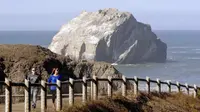
- Pacific Coast Scenic BywayAstoria · All-american roadStarting in Astoria and traveling south to Brookings, the byway winds past estuarine marshes, clings to seaside cliffs, passes through agricultural valleys, and brushes against wind-sculpted dunes; charming small towns, museums, state parks, overlooks, historic bridges, and lighthouses ensure a delightful journey.
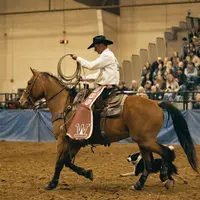
- Clatsop County FairAstoria · Annual county fairAstoria's county fair, held since 1905, now fills 109 acres above the Walluski River after nine decades in a theater, a courthouse basement and on waterfront docks.
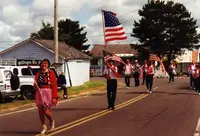
- Old Fashioned Tokeland 4th of July Parade & PicnicTokeland · Parade and family picnicAn Independence Day parade and lawn picnic in Tokeland, Washington, on Willapa Bay, held since 1976, whose parade leaves the marina and loops past the 1885 Tokeland Hotel.
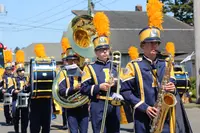
- Come and Play on Labor DaySouth Bend · FestivalSince 1962, South Bend, Washington, has closed out summer with a Labor Day weekend whose rubber-duck race on the Willapa River pays for fireworks that cost $1,000 a minute.
- Klaskanine HatcheryAstoria · Salmon and steelhead fish hatcheryA state salmon hatchery on the North Fork Klaskanine River near Olney, Oregon, operating since 1911, where fall Chinook return each autumn below a concrete dam the state plans to remove.
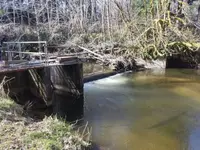
- Pacific County FairMenlo, WA · County fairPacific County's fair, held each August at the Menlo fairgrounds east of Raymond since 1921, whose first edition in 1896 showed a starfish and an 1,860-pound horse.
- Tides & Timbers Brew Fest (Willapa Harbor Festival)Raymond · Brew festThe former Willapa Harbor Festival, reimagined as a coastal craft-beverage and music festival
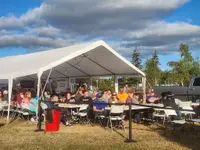
- Big Creek HatcheryKnappa · Fish hatcheryWorking Mitchell Act hatchery on Big Creek where fish rearing and pond viewing are available daily, with seasonal viewing of egg incubation, adult salmon, salmon spawning, and steelhead spawning.
- Wahkiakum County FairSkamokawa Valley · FairThe Wahkiakum County Fair, held each August on the Skamokawa fairgrounds, where quilts, canning and homemade wine still go in at a T-Building raised in 1918 for $3,200.
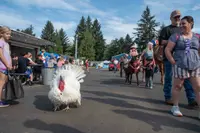
Nearby towns: Longview. All the towns of Washington. More of Washington: Town Festivals.
Sources
- Long Beach -- Thumbnail History historylink.org/file/9596
- The Long Beach Hotel burns on December 10, 1895. historylink.org/File/9810
- The Ilwaco Steam Navigation Company’s railroad makes its first run from Ilwaco to Long Beach on July 19, 1888. historylink.org/File/9813
- Pacific County -- Thumbnail History historylink.org/file/7914
- Washington: A Guide to the Evergreen State (1950), p. 565 babel.hathitrust.org/cgi/pt?id=mdp.39015010545013&seq=679
- Captain William Clark of the Lewis and Clark Expedition visits the future site of Long Beach on November 19, 1805. historylink.org/File/9814
- Long Beach incorporates on January 18, 1922. historylink.org/File/9812
- Record-breaking 7,200-egg omelet is cooked in a record-breaking frying pan in Chehalis on July 24, 1931. historylink.org/File/10370