Boulder
Boulder County, Colorado. County seat.
Boulder, seat of Boulder County, was platted in 1859 to serve the mining camps and named seat of the University of Colorado in 1861.1,2
Details
- Founded
- On February 10, 1859, Tom Aikins, A. A. Brookfield, and fifty-three other men formed the Boulder City Town Company.1
- Name
- The town was named Boulder City for the many large stones in the vicinity, and the “City” was later dropped as “a ludicrous superfluity.”2
- County seat
- Boulder is the seat of Boulder County.1
- Last checked
- October 6, 2026.
Point at a dot to see the place.Tap a dot to see the place. Road map of Boulder.
In Boulder
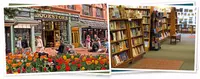
- Boulder BookstoreBoulder · Independent bookstoreBoulder Bookstore buys used books from customers for cash or store credit and offers an out-of-print book search service; historic Upstairs Ballroom available for meetings and special events.
- Fiske PlanetariumBoulder · 360-degree fulldome theater seating 200
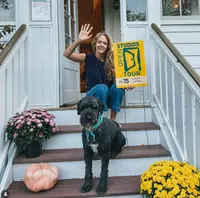
- Open StudiosBoulder · Free self-guided tour of artists' working studiosUpwards of 8,000 art lovers attend the Studio Tour each year, visiting more than 120 local visual artists to learn about artistic inspiration, mediums, techniques, and to purchase one-of-a-kind works of art.
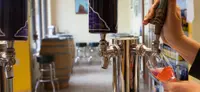
- Redstone MeaderyBoulder · MeaderyTasting room open for tastings, meads by the glass, and purchases of bottles, cans and kegs.
- The BookWormBoulder · Used bookstoreBoulder's largest used bookstore, with over 5,000 sq feet of used books, dvds, cds, books on cd, Leanin Tree greeting cards, and post cards.
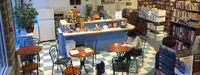
- Trident Booksellers & CafeBoulder · Independent bookstore and cafesmall independent, employee-owned bookstore and café in the heart of downtown Boulder, Colorado, with specialty coffee, fine teas, new and used books, and community events
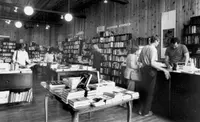
History
The Courthouse on Pearl Street
The Boulder County Courthouse on Pearl Street was designed by local architect Glenn Huntington and built of stone taken from the approaches of an abandoned railway bridge west of Boulder; the state guide dates it to 1934, a later register history to 1933.2,3 Boulder is the seat of Boulder County and home of the University of Colorado, twenty-five miles northwest of Denver, and the Colorado Encyclopedia gives its population as 97,385.1
Aikins, Left Hand, and Boulder City
In the fall of 1858 Captain Thomas Aikens, as the state guide spells him, climbed the wall of old Fort St. Vrain and then led a small party from the main emigrant train to settle on the site of Boulder; the Colorado Encyclopedia spells him Thomas Aikins.1,2 Niwot, or Left Hand, the Arapaho leader, told the party in English to leave, then let them stay the winter on their promise to go in the spring.1,4 The state guide relates, so it is said, that Left Hand pointed to Donati’s comet and told the settlers its tail pointed back to when the stars fell, “as thick as the tears of our women shall fall when you come to drive us away.”2 On January 16, 1859, Aikins’s son James and several others found placer gold on a fork of Boulder Creek and set up a mining camp called Gold Hill.1 On February 10, 1859, Aikins, A. A. Brookfield, and fifty-three other men formed the Boulder City Town Company to serve the mining camps from the mouth of the canyon.1 The town was named Boulder City for the many large stones in the vicinity, and G. W. Grege and T. W. Fisher were hired to plat it.2 The Wellman brothers, Henry, Luther, and Sylvanus, began plowing the day after they arrived in August 1859 and sowed an acre of turnips; grasshoppers struck the end of their cabin and fell a foot deep, and the turnips were “suddenly devoured,” the first crop planted in Boulder County.2 According to a local historian quoted in the state guide, the 70 log houses along Pearl Street had splint roofs and dirt floors, and Bill Barney’s hall, the first with a whip-sawed board floor, was dedicated by a dance attended by 200 men and the 17 ladies of the town.2
The Slump, Caribou Silver, and the University
The Horsfal mine carried Boulder and Gold Hill for several years until what the Colorado Encyclopedia says is known as “the slump of 1863,” and the state guide calls the 1860s lean years for Boulder City.1,2 In 1861 Boulder County became one of the original seventeen counties of Colorado Territory and the Treaty of Fort Wise removed the Arapaho from the Front Range; in 1864 Niwot was shot down at Sand Creek as he held up his hands and called out in English for Chivington’s troops to stop.1,4 The legislature created the University of Colorado on November 7, 1861, and designated Boulder as its seat.2 Silver found in 1869 at Caribou, near present-day Nederland, sent mine revenue down a new road through Boulder Canyon, and by November 1871 the town was incorporated.1 The Colorado Central and the Denver & Boulder Valley railroads arrived in 1873, and brick and stone buildings began to replace the frame businesses on Pearl Street.1 In 1874 the legislature put up $15,000 for the university on condition that residents match it, and Captain David Nichols rode all night from Denver with the news; the money was subscribed at once.1,2 The cornerstone of Old Main was laid September 20, 1875, five tons of iron bolts and anchors kept the building from collapsing of its own weight, and the first freshman class, of twelve, enrolled in 1878.2
The Flood of May 1894
On Memorial Day, May 30, 1894, rain fell through the day and into the night, and by daybreak Boulder Creek was pouring out of the canyon narrows onto the flats.5 Harvey Poole and a friend were standing on the Sixth Street Bridge when it broke in half, and both men leaped to the north bank.5 The creek, normally thirty feet wide, spread several hundred feet across, and around noon a crowd watched the water hammer at the foundation of Jacob Faus’s house until it floated off.5 By day’s end every road, railroad, and bridge was gone, yet the flood did not kill a single resident of Boulder.5
Chautauqua, the Pearl Street Mall, and the Courthouse Licenses
In April 1898 voters approved buying the 75-acre Bachelder Ranch for the Chautauqua, where a marker says the city’s mountain parks began; the state guide credits a group of Texas vacationists with founding it.2,6 When the state guide counted about 4,000 university students in 1939-40, Boulder had 11,223 people and “Room to Let” signs in many windows.2 A pedestrian mall built in 1976 and 1977 closed Pearl Street to traffic between Eleventh and Fifteenth streets.1 The Downtown Boulder Historic District, registered in 1980, holds Queen Anne, Italianate, Romanesque, Classical Revival, and Art Deco buildings.3,7 The White-Davis Mercantile Building held a dry goods store without a break from 1874 until Brooks-Fauber closed in 1986.8 The state guide recorded a gray granite monument at 15th and Walnut on the site of a one-room clapboard schoolhouse of 1860, which it calls Colorado’s first, where Abner R. Brown taught some 40 children.2 On March 26, 1975, County Clerk Clela Rorex issued a marriage license to a same-sex couple at the courthouse, and her clerks crossed out man and woman on the forms and wrote in person.3
Within 30 Miles
Measured in a straight line from the town, nearest first.
- Louisville Labor Day Parade and Fall FestivalLouisville · Annual labor day celebrationLouisville's Labor Day Parade and Fall Festival, the only Labor Day parade in Boulder County, Colorado, came down Main Street for the ninetieth time in 2026, in a former coal town.
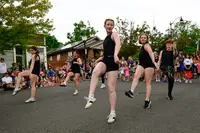
- Louisville Old Time Fiddle ContestLouisville · Fiddle contestA free old-time fiddle contest held on Colorado Day at Louisville's Steinbaugh Pavilion, inside the Saturday farmers market, where first prize is an antique violin restored by a local luthier.
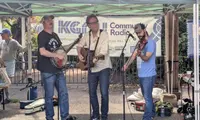
- The Read Queen Bookstore & CafeLafayetteAn independent, women-owned, new and used bookstore and cafe with a strong focus on building community and bringing people together, in Old Town Lafayette.

- The Lafayette FleaLafayette · Vintage thriftLafayette's Original Antique Store
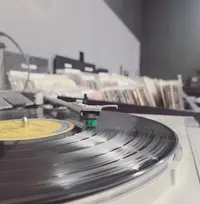
- Erie Town FairErie · Annual town fairA one-day May street fair in Old Town Erie, Colorado, with more than 280 booths on the downtown streets and the Garage Rats car show in Coal Creek Park's lot.
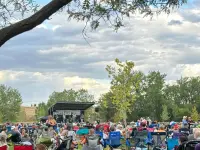
- Broomfield DaysBroomfield · Annual community festivalBroomfield Days is the City and County of Broomfield's one-day September festival at Midway Park, where a children's clown contest follows the parade and dogs compete off a diving dock.
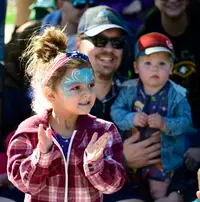
- Barbed Wire BooksLongmontLongmont's largest book store, a wide array of local and Colorado interest books, new and used, with a Western Americana section.
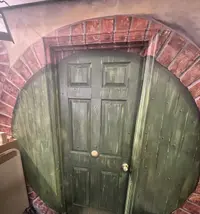
- Miners DayFrederick · Premier community eventFrom gold panning to burro racing, Miners Day is a celebration of Frederick's community and history. Miners Day is the biggest annual event for Frederick, a town that also holds a hot air balloon festival and chainsaw carving contest every year.
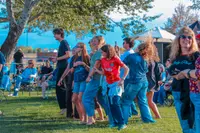
- Arvada Harvest FestivalArvada · Annual festivalHeld in Arvada since 1925, the harvest festival retreated in 2026 to its Olde Town meeting hall, where entry cost a food donation and chickens were judged in costume.
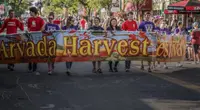
- Buffalo Bill DaysGolden · Golden's largest summer eventGolden's three-day July festival in Parfet Park and on Washington Avenue, begun in 1946 for Buffalo Bill's 100th birthday; the honoree is buried on Lookout Mountain above town.
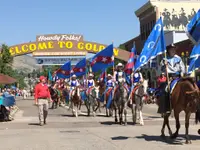
- Clear Creek tube run and whitewater parkGolden · Whitewater parkA free whitewater course on Clear Creek in downtown Golden, Colorado, which designer Gary Lacy pitched to a reluctant city council in 1996 as "a nice little amenity."
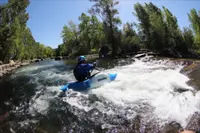
- Wheat Ridge Carnation FestivalWheat Ridge · Community celebrationA free three-day August festival at Anderson Park in Wheat Ridge, Colorado, begun in 1969 for a city that once sent carnations to the White House every Monday.

- Mead Community DayMead · Annual celebrationMead Community Day is the Northern Colorado town's largest annual celebration, a free evening in Mead Town Park that ends with fireworks over the park.
- Horseshoe MarketDenver · Craft & flea marketHorseshoe Market, a Denver craft and flea market begun in 2010, now fills two floors of the Highlands Masonic Center and hides envelopes of Horseshoe Bucks nearby.
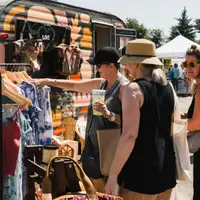
- Colorado Moto Expo Swap MeetDenver · Swap meetLargest indoor moto swap meet in the country, a Denver tradition since 1978.
22 more within 30 miles on the road map.
Nearby towns: Loveland and Georgetown. All the towns of Colorado. More of Colorado: Factory Tours and Wineries.
Sources
- Colorado Encyclopedia coloradoencyclopedia.org/article/boulder
- Colorado: A Guide to the Highest State (1941), p. 98 archive.org/details/coloradoguidetoh00writ_0/page/98
- Why Boulder County Courthouse is recognized for its role in LGBTQ history historycolorado.org/story/colorado-voices/2018/10/24/why-boulder-county-courthouse-recognized-its-role-lgbtq-history
- Boulder County (coloradoencyclopedia.org) coloradoencyclopedia.org/article/boulder-county
- Boulder Flood of 1894 coloradoencyclopedia.org/article/boulder-flood-1894
- At the Foot of The Slabs (historical marker) hmdb.org/m.asp?m=88253
- Boulder Downtown Historic District historycolorado.org/location/boulder-downtown-historic-district
- White-Davis Mercantile Building (historical marker) hmdb.org/m.asp?m=87716