Louisville Labor Day Parade and Fall Festival
Louisville, Boulder County, Colorado. Annual Labor Day celebration.
Details

- Where
- Memory Square Park, Spruce Street and Jefferson Avenue, Louisville, CO 80027. Directions
- When
- Last held September 7, 2026; next year’s date not yet stated.
- Getting there
- Parade from E. Lafayette and Main St. to Rex St. and Main St.
- Access
- Roads around Downtown Louisville, Louisville Middle School and Memory Square Park closed 7 a.m.-3 p.m. September 7.
- Walk-in or reserve
- Spectators are welcome to cheer from the sidelines.
- Phone
- (303) 335-4581
- Website
- louisvilleco.gov
- Managed by
- City of Louisville's Cultural Services Department.
Ninety years down Main Street
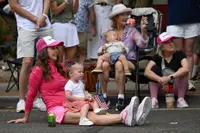
On Monday, September 7, 2026, seven-year-old Noa Flaccavento found herself in the jaws of a T. rex on Main Street in Louisville, Colorado, and could not stop laughing. It was her first Labor Day Parade. It was the town’s ninetieth. Her mother, Sarah Flaccavento, had just moved the family from New York City. “I was told this was one of the most important things about being part of Louisville,” she told the Denver Gazette. “This is a community experience.”
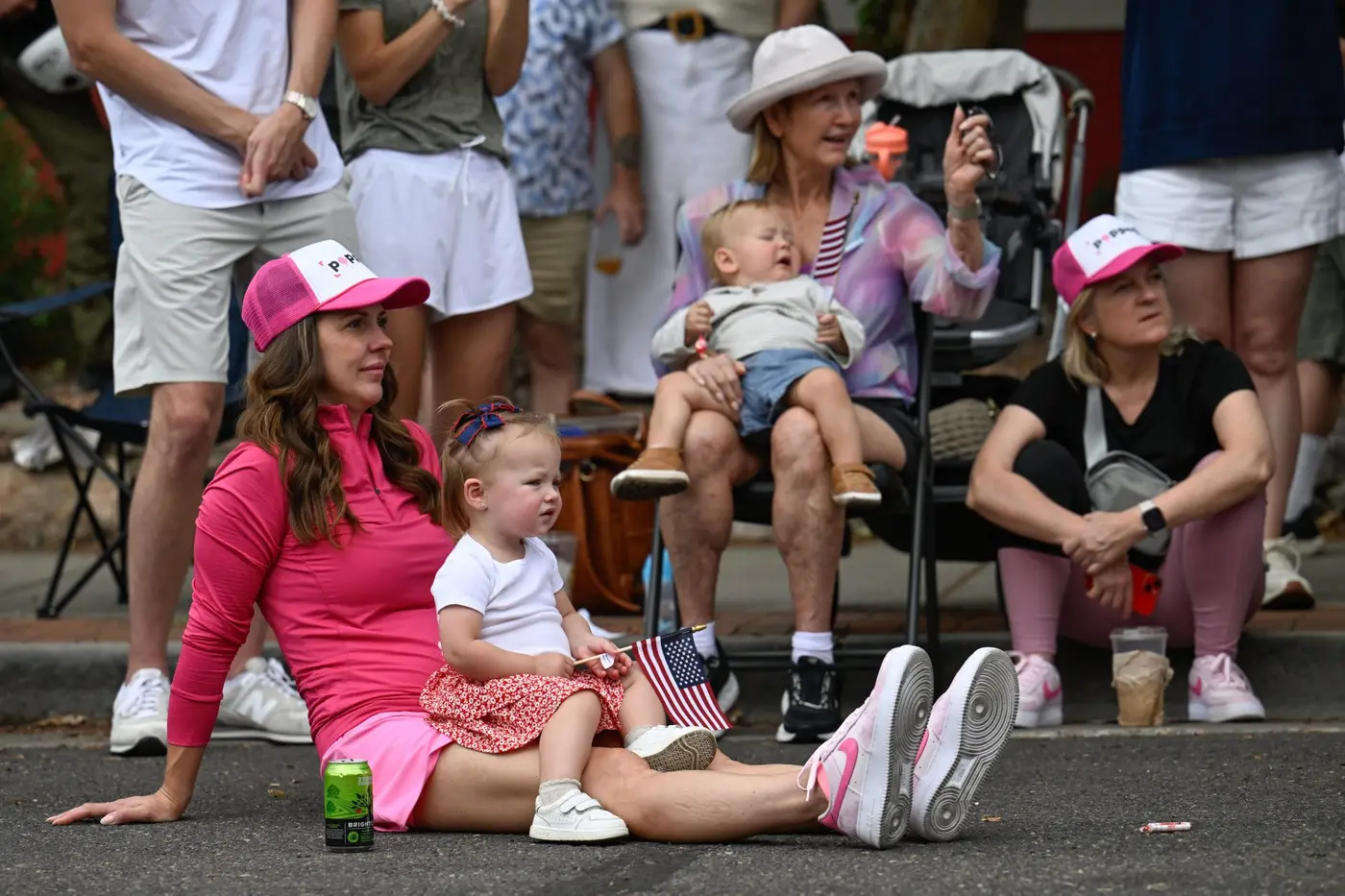
The parade starts at the corner of East Lafayette and Main Street and ends at Rex Street. The City of Louisville’s Cultural Services Department calls it the town’s biggest event of the year and the only Labor Day parade in Boulder County. Brandi Cummings, the city’s director of cultural services, said about 15,000 people attended in 2025, which she said made it the largest Labor Day parade in Colorado. The city’s page promises marching bands, dance troupes, local labor unions, and equestrians. To make room, the city closes the roads around downtown, Louisville Middle School, and Memory Square Park from 7 a.m. to 3 p.m. Main Street is shut from Griffith Street to Rex.
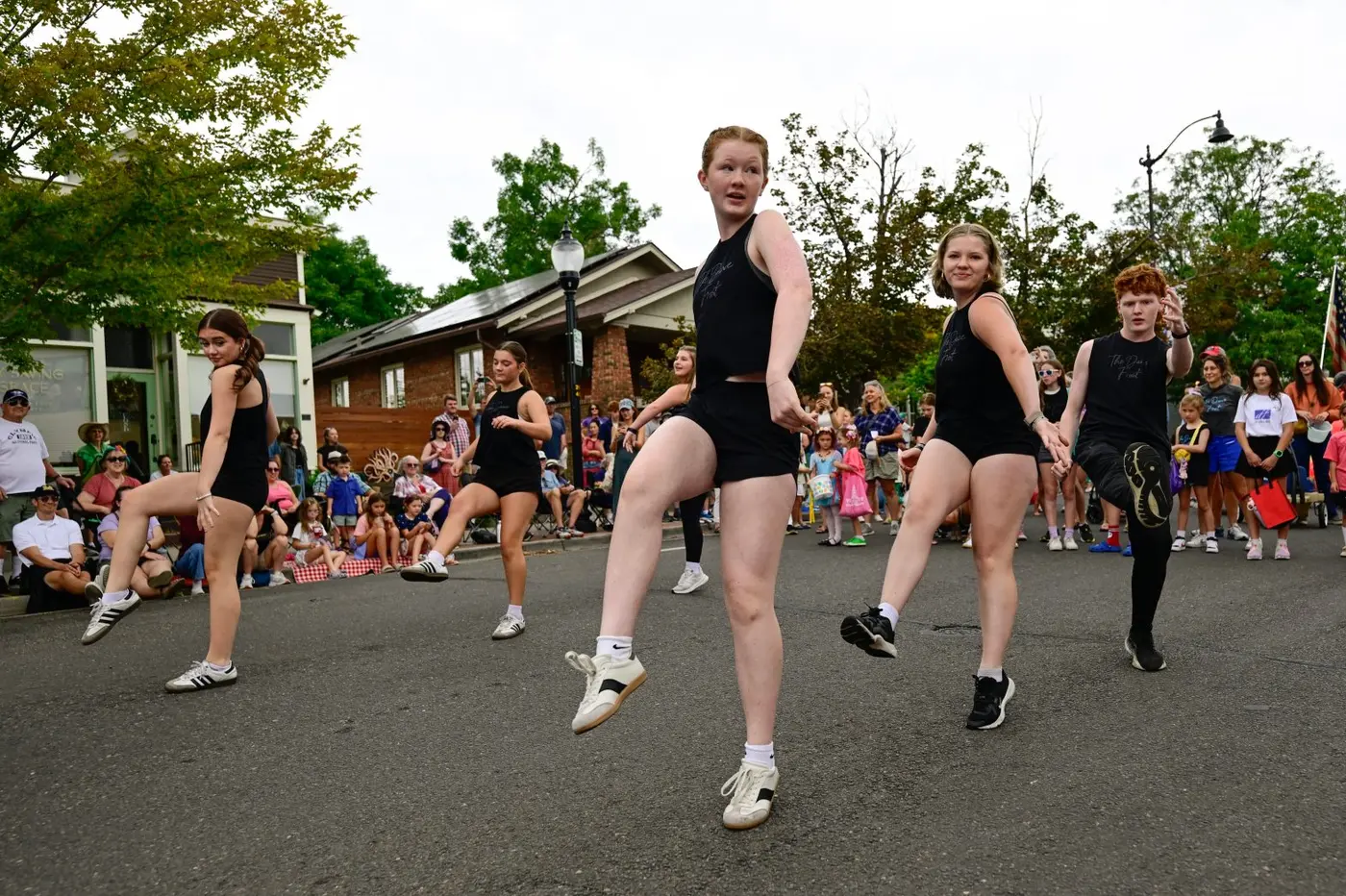
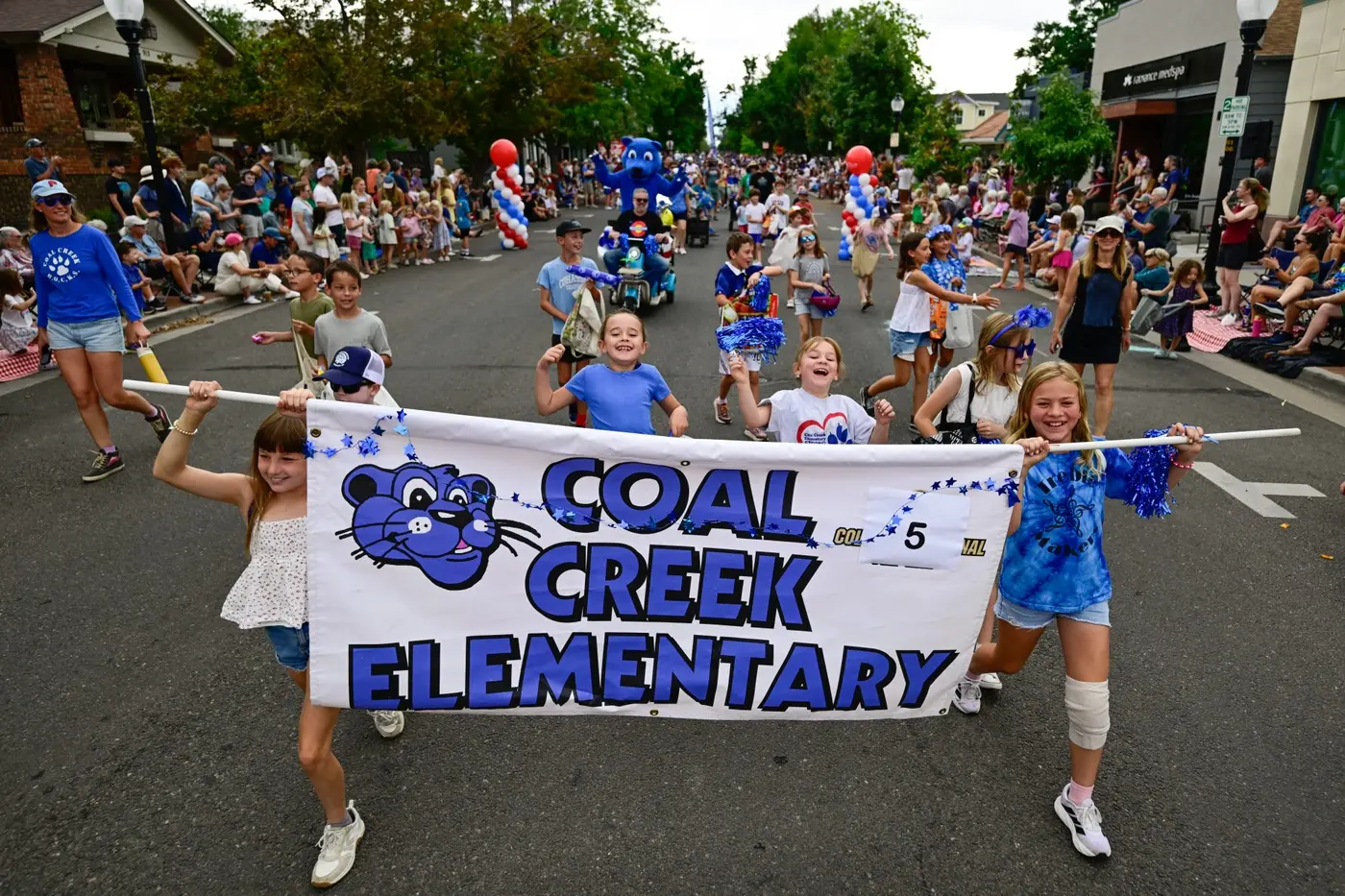
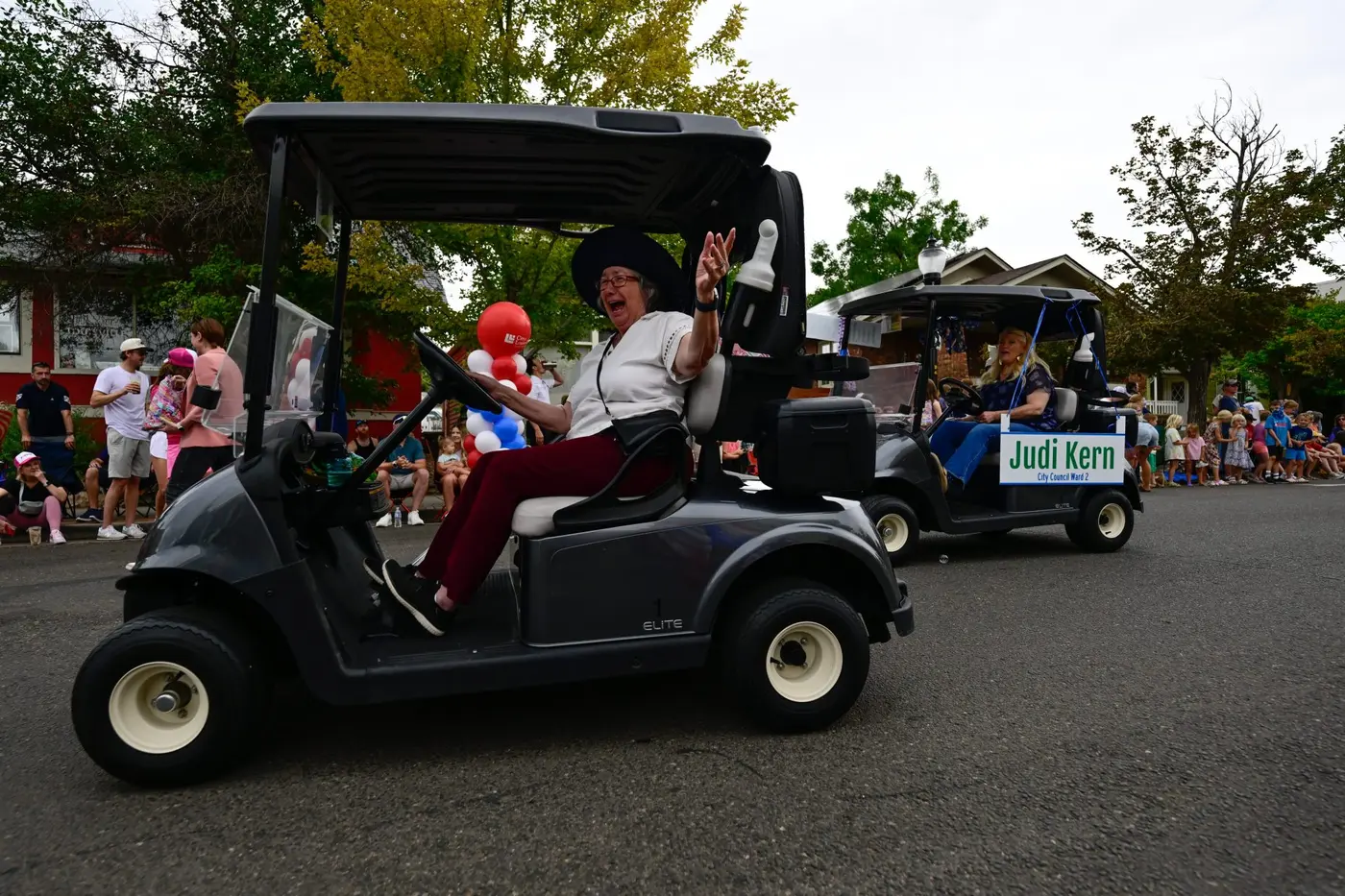
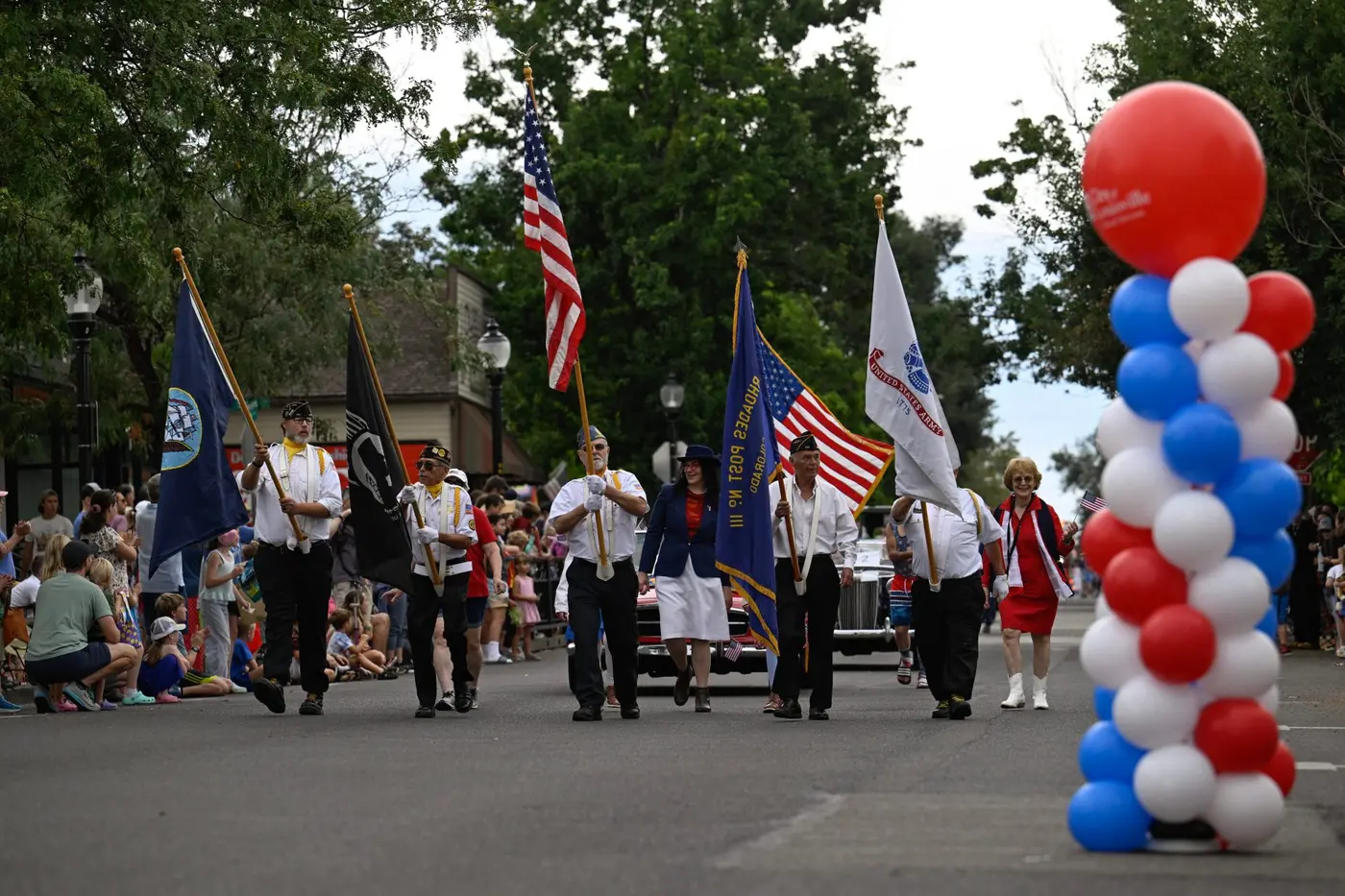
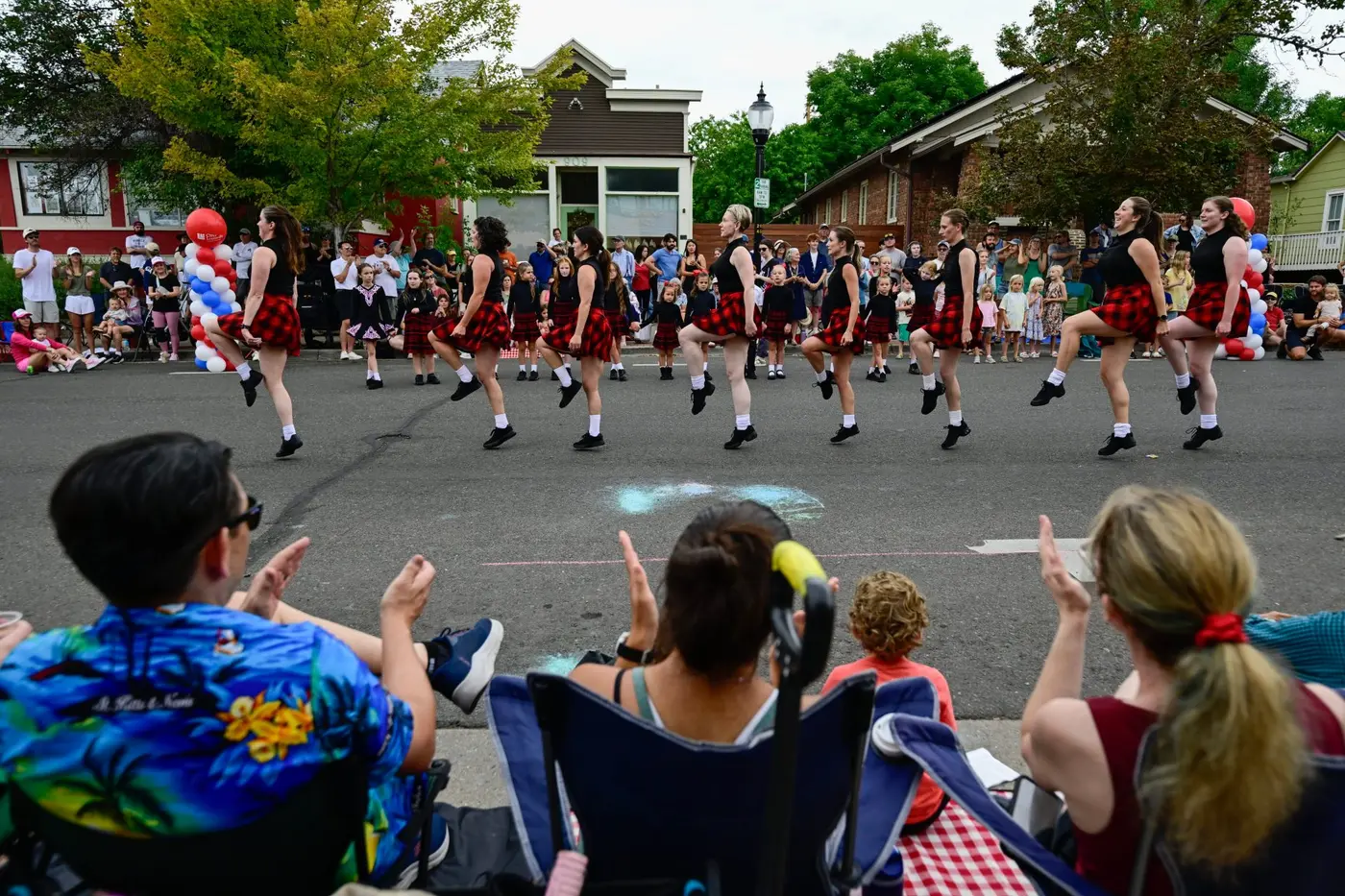
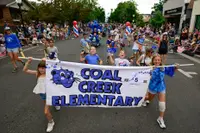
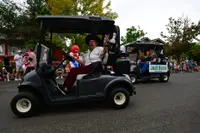
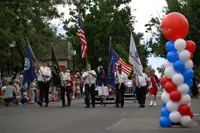
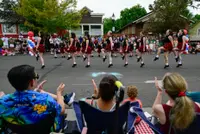
The 2026 parade brought dinosaurs, dancers, and a figure called Goldie the Chicken. Drivers from the Model A Ford Club of Colorado came through, and Mark Bailey waved from his Model T with the Mile High Model T Club. A man drove a miniature military-style Jeep with Tigger in tow. The Monarch High School Varsity Dance Team, The Dance Front, and the McTeggart Irish Dancers performed along the route. Members of the Walter Rhoades American Legion Post No. 111 marched. So did students, teachers, and parents from Coal Creek Elementary School. Two City Council members for Ward II, Deborah Fahey and Judi Kern, drove golf carts. Louisville Fire Protection District vehicles rolled past, along with a float for the Thanksgiving Day Turkey Trot 5K, which benefits Community Food Share.
Candy came off the floats steadily, and some children met it with paper grocery sacks. Others held out their hats. The only guns on Main Street fired bubbles into the crowd. Trevor Thiele, manager of B.O.B.S. Diner, estimated his business was up about 30 percent that day.
A llama, a pumpkin, and the pie table
An hour before the main parade, the Children’s Pet Parade goes south on Main Street from South Street to Spruce Street, just south of City Hall. It is open to children 12 and younger. “Brush your dog, bathe your cat, and polish your pet rock,” the city’s notice reads. Over the years the line has included stuffed animals, dogs, cats, and farm animals, a llama among them. Caged pets with fins, scales, or feathers may ride in a wagon. At the end, every child receives a prize from the city and a popsicle from the American Legion Auxiliary. In 2026, twelve-year-old Vivian Ramsey adjusted a pumpkin costume on seven-year-old Pearl, who had once marched as a bumblebee. According to the Gazette, Pearl is not much for costumes, and Ramsey came with a bag of cheese to encourage her.
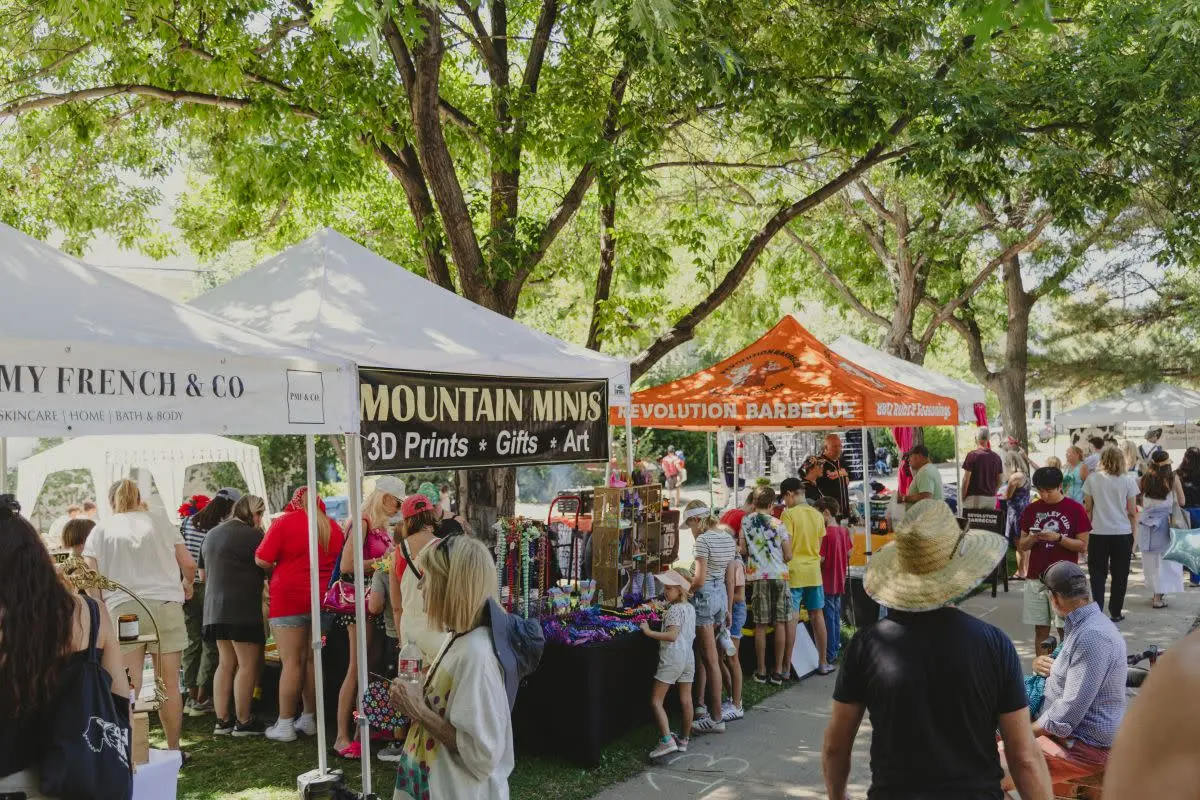
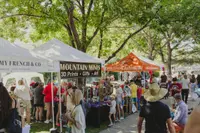
After the parade the crowd moves to Memory Square Park, at Spruce Street and Jefferson Avenue, for the Fall Festival, which ran from 10 a.m. to 3 p.m. in 2026. Colorado vendors sell crafts, produce, and baked goods. The Louisville Chamber of Commerce runs a beer garden, and the band Many Mountains played. The fine-arts show belongs to the Louisville Art Association, not the city. The 2026 food trucks were these:
- Mile High Tikka Express
- Wheels on Fire
- Rang Tang Barbecue
- Freshly Laid
- Repicci’s Real Italian Ice & Gelato of Denver
- The Rush Coffee Boulder
- It’s All Greek to Me
- Sweet Cow
Among the booths were Bauer’s Premium Jerky, 47 Bakery, Longmont Dairy, Old Soul Henna, Sparkles Face Painting, and the Two by Two Petting Zoo.
The festival also holds the town’s annual Pie Contest. The city invites anyone who does not bake to “come by to enjoy the fruits of other people’s labor.” In 2026 Emily Pancoast took the grand prize with a Raspberry Peach Rosé pie and first place in apple with a Caramel Apple. Owen de Bruyn Kops placed second in apple with a Dutch Apple Boterkoek. Don Jarvis won the fruit-or-nut category with the Jarvis Pecan Pie. Carol Hughes won cream with a Sweet Tart Cherry Lime. Reese Chappellet’s Orange Dream Machine placed third in cream.
The Monday closes a long weekend. On Friday the city holds a Senior Dinner at Steinbaugh Pavilion, with a chicken dinner, live music, and door prizes. It is free but open only to Louisville residents 60 and older. On Saturday morning there is a bocce tournament at Memory Square Park and a farmers market at the pavilion. The Daily Camera sponsors the weekend. “It’s as ‘Gilmore Girls’ as you can get,” Cummings said.
Union floats on West Pine Street
The 2020 parade was canceled because of the coronavirus pandemic. When it returned on September 6, 2021, for its 85th running, it followed West Pine Street from Via Appia Way to Hoover Avenue. More than 50 entrants took part under the theme “Friends and Neighbors.” American Legion Post 111 led the parade, and a T. rex skeleton puppet called “Mr. Bones” stopped to visit six-year-old Oliver Dow.
Before the start, Richard Meisinger Jr., business manager of International Brotherhood of Electrical Workers Local 111, drilled a nail into a plank to finish his union’s float. It carried plastic grass, beach balls, barbecues, and pools, with electrical poles and stop lights worked into the design. “People fought and unfortunately had to die for something as simple as the eight-hour work day,” Meisinger said. “All of these working conditions we enjoy today are because of things people sacrificed in the past.”
Ann Morrill had been watching from near West Pine Street for about six years. “I was taking a walk this morning and thinking about how we are so disassociated when we do the parade from the actual event,” she said. “There were strikes here in Louisville and they were violent.” Brenda Osborne, of the Teamster Horsemen motorcycle association, said the day “acknowledges all the people that fought for our wages, fought for our vacation (time), so that people don’t forget.”
Cummings has said the city may not know exactly why the parade began. She does know why Louisville keeps it going: it represents the “spirit and grit” of a community that began as a town of workers.
Searchlights over the Hecla Mine
That town dates to the Welch Mine, opened in 1877 as the first coal mine in the Northern Coalfield of Boulder and Weld counties. Louis Nawatny, a local landowner, platted his land and named it for himself. Louisville incorporated in 1882. Some 30 mines eventually worked within the present city limits, though not all at once. At peak production, from 1907 to 1909, twelve were running. They included the Acme Mine, whose two million tons of coal came from directly beneath the center of town. Because many independent companies operated, Louisville never became a company town.
The coal was low-grade and was mined mostly in winter, when people needed it for heat. In summer the miners played in local baseball leagues on a home field called Miners Field. According to the Louisville Historical Museum, the Acme Mine employed hundreds of workers from 1888 to 1928. Many were English and brought “strong pro-labor views,” and hundreds of Acme workers struck in the 1890s over working conditions.
In April 1910, according to a 2014 Daily Camera account cited by the Gazette, about 3,000 northern Colorado coal miners walked out after the owners refused higher wages. The strike lasted four years and eight months, the longest in state history. Wikipedia describes it as a strike by the United Mine Workers against the Rocky Mountain Fuel Company over conditions, pay, and hours. The owners brought in replacement workers and put up searchlights and machine guns on towers. At one point the replacement workers’ children went to school under armed guard. At the Hecla Mine, northeast of town, the company hired the Baldwin–Felts Detective Agency. When strikers fired at the compound, the detectives fired back at random into the town. Stories persist of tunnels running between saloons, but Wikipedia calls them unfounded. Residents instead sheltered in dirt basements from stray bullets.
The fight came to a head at the Hecla in April 1914, after the Ludlow Massacre. Wikipedia records it as the northernmost engagement of the Colorado Coalfield War. Colorado Hometown Weekly dates the battle to April 27 and describes 14 hours of continuous gunfire. The Gazette counts thousands of shots in a nightlong battle that left one person dead. The museum marked the hundredth anniversary in 2014 with a driving tour. The mines lasted until the last of them closed in the 1950s. When the U.S. Cavalry came by train to restore order in 1914, a brass band and nearly the whole town met it at the station.
Notable Events
- 1877The town of Louisville dates back to the start of the Welch Mine in 1877, the first coal mine in an area of Boulder and Weld counties known as the Northern Coalfield. en.wikipedia.org
- 1882Incorporation came several years later in 1882. en.wikipedia.org
- 1910From 1910 to 1914, the Northern Colorado Coalfields were in the midst of a strike by the United Mine Workers and the Rocky Mountain Fuel Company based on working conditions, pay, and working hours. en.wikipedia.org
- 1914By April 1914, the fight for worker rights had turned into a shooting war. denvergazette.com
- 1950sEventually, the coal remaining in the Northern Coalfield became increasingly uneconomical to mine, and the last coal mines operating in Louisville closed in the 1950s. en.wikipedia.org
- 2021Last year's event was canceled due to the coronavirus pandemic. Director of Library and Museum Services Sharon Nemechek told the Camera that Louisville was glad to welcome the tradition back this year. coloradohometownweekly.com
- 2026It was Noa's first parade. It was Louisville's ninetieth. lindseyharshman.com
People
- Richard Meisinger Jr., Business manager of the International Brotherhood of Electrical Workers Local (2021).
- Sharon Nemechek, Director of Library and Museum Services (2021).
- Brandi Cummings, Louisville's director of cultural services (2026).
- Louis Nawatny, Local landowner who platted his land and named the town for himself (1877).
Sources
- louisvilleco.gov/departments/events/labor-day-weekend
- dailycamera.com/2026/09/07/louisville-labor-day-parade-2026
- business.louisvillechamber.com/communitycalendar/Details/labor-day-fall-festival-1750570?sourceTypeId=Website
- louisvilleco.gov/departments/transportation/parking-in-downtown-louisville
- facebook.com/LouisvilleCO
- instagram.com/citylouisvilleco