Saratoga
Carbon County, Wyoming. County seat.
Saratoga, a Carbon County town on the North Platte River, began as Warm Springs, a log bathhouse beside hot springs that Indian tribes held as neutral ground.1,2,3
Details
- Founded
- William Cadwell built a cottonwood log structure and bathhouse at the springs for soldiers from Fort Steele, and a post office named Warm Springs opened there Oct. 4, 1878.2,3
- Name
- Fenimore Chatterton renamed Warm Springs for Saratoga Springs, N.Y., in 1884, a name said to come from the Iroquois Sarachtoue, “place of miraculous water in the rock.”1,2
- County seat
- Saratoga is one of Carbon County’s incorporated towns; Rawlins is the county seat.1
- Last checked
- October 6, 2026.
Point at a dot to see the place.Tap a dot to see the place. Road map of Saratoga.
In Saratoga
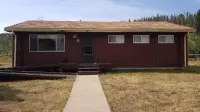
- Bow River Ranger StationSaratoga · Ranger station cabinA 1960s ranger house on the Medicine Bow-Routt forest boundary in Carbon County, Wyoming, rented as a ten-person cabin with the Upper Medicine Bow River flowing past its back yard.
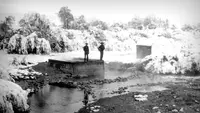
- Hobo PoolSaratoga · Natural hot springsThe hot pool averages around 106° F from its coolest part to 119° F to its warmest part of the pool.
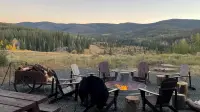
- Jack Creek Crew QuartersSaratoga · Forest service crew quarters rentalA two-story log crew house at 8,500 feet in Wyoming's Sierra Madre, rented to parties of up to fifteen, where solar panels run the lights and the well pump.
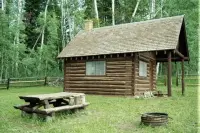
- Jack Creek Guard StationSaratoga · Guard stationA one-room log ranger cabin from 1934, set at 8,500 feet southwest of Saratoga, Wyoming, rented to four at a time, with its builder's ashes buried twenty yards north.
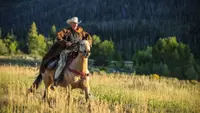
- Medicine Bow Lodge & Adventure Guest RanchSaratogaAll-inclusive guest dude ranch in the Medicine Bow National Forest.
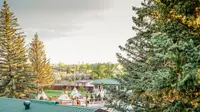
- Saratoga Hot Springs ResortSaratoga · Mineral hot springs and spa destinationSoak away your cares in the healing waters of Saratoga's natural mineral hot springs teepee-covered pools and 70-foot pool.
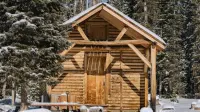
- Snow Survey CabinSaratoga · CabinThe Snow Survey Cabin provides visitors with a rustic accommodation on the Snowy Range, located just off the Snowy Range Scenic Byway at nearly 10,000 feet elevation, available for rent year round, suitable for warm summer evenings to winter snowmachining or cross-country skiing.
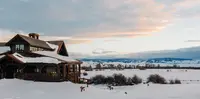
- The Lodge & Spa at Brush Creek RanchSaratoga · All-inclusive luxury ranch resortA collection of all-inclusive guest ranches in Saratoga, Wyoming, set on 30,000 secluded acres of private wilderness at the Sierra Madre and Medicine Bow National Forest.
The Calendar

History
Warm Springs on the North Platte
Saratoga lies in south central Wyoming between the Sierra Madres and the Snowy Range, at hot springs the tribes held as neutral territory, and it calls itself the place “where the trout leap in Main Street.”2 Dick Perue, a former owner of the Saratoga Sun, credits Irving S. Cobb with one version of the line, but “Gee-String” Jack Fulkerson, an Encampment freighter tired of waiting for help unloading at a saloon, probably contributed to it by throwing lighted dynamite off the bridge into the North Platte River.2
The Union Pacific Railroad, laid about 20 miles to the north, and Fort Fred Steele, established in June 1868 to guard it, brought soldiers and officers who hunted the country and soaked in the springs.1,2 Taylor Pennock, a Civil War veteran who came to Fort Steele in 1872, recalled that during the smallpox outbreak of 1874 the Indians raised a tall pole with a sling to dunk the sick first in the hot water and then in the cold river, and many died.2 William Cadwell, a Civil War veteran from Elmira, N.Y., built a cottonwood log structure and a bathhouse near the springs, and a post office named Warm Springs was established there Oct. 4, 1878.2 Perue counts the log Hugus & Chatterton building, put up on the east side of the river in the late 1870s, as the first structure in what became Saratoga; it served as post office, general store, saloon and gambling hall until it was burned in 1949 to make room for the Saratoga Inn bar.2
Renamed for Saratoga Springs
In 1884 Fenimore Chatterton, clerk and bookkeeper for Fort Steele post trader J. W. Hugus, had the town renamed Saratoga, remembering the mineral water he drank as a child in Saratoga Springs, N.Y.1 The name is said to come from the Iroquois word Sarachtoue, “place of miraculous water in the rock,” and by one account the town hoped visitors would link it with the New York resort.2,3 That same year Cadwell opened the Hot Springs Hotel, built for $24,000, with a black walnut staircase and bedrooms for 50 guests.3 One account has Chatterton platting the east side in 1885 and the west side, where downtown now stands, in 1888; a National Register nomination dates the eastern section to 1886.2,4
Englishman Henry Seton-Karr, later a member of Parliament, organized the Sand Creek Land and Cattle Company in 1883 and with Frank Earnest of Warm Springs bought 2,000 head that spring; Earnest’s pick-and-bar brand named the Pick Ranch.1,2
Stores, Presses and the Hotel Wolf
By the summer of 1889 Saratoga had two general stores, a stable and livery, a blacksmith shop, two hotels, two saloons and two newspapers, the Platte Valley Lyre and the Saratoga Sun.2 The Lyre, founded in 1888 by George R. Caldwell, was bought in the mid-1890s by Laura and Gertrude Huntington, whom a photo caption calls Wyoming’s first women newspaper owners, and they sold it to the owner of the Sun in 1904.2 In 1893 German-born Frederick Wolf built the three-story Hotel Wolf of bricks made in Saratoga, as a stop for stages running from Walcott on the Union Pacific up the North Platte River to Encampment.1,2 Hugus put up the store now known as Shively Hardware, in 1888 by one passage of its National Register nomination and 1889 by another, to house a general merchandise store, post office, saloon and the Saratoga State Bank.4
Saratoga served as a supply point for the Grand Encampment mining boom of the 1890s, and when it was incorporated in 1900 the town was reached mainly by the Scribner Stage.4 The Hot Springs Hotel burned to the ground in April 1902, and residents organized a fire brigade in its wake.3
The Slow and Easy and the Sawmill
In July 1907 the first locomotive of the new Saratoga and Encampment Railroad came the 20 miles from Walcott, and its engineer greeted the crowd with “prolonged tooting of the engine whistle.”2,5 The town held its celebration in late August, after the ranchers finished haying, and the newspaper estimated 3,500 trout and more than 1,000 loaves of bread were served; the county history puts the catch at 3,100 trout.1,5 The first passenger train reached Encampment on July 18, 1908, but by then the copper boom was over, and instead of ore the trains hauled lumber, cattle and agricultural products.1,5
In 1934 R.R. Crow and Company started a sawmill near the present mill at 507 Bridge Ave.2 In 1976 the Union Pacific began abandonment proceedings over local protests and removed the tracks from Encampment north to Saratoga.5 The Louisiana-Pacific sawmill, which the county history calls formerly the community’s largest employer with 100 employees, shut down in January 2003, taking the revenue from the remaining line to Walcott, and the last train left Saratoga in 2007.1,5
Hobo Pools, Mill and Grade
In June 1929 work began on the east-side springs, the flow rose to one million gallons a day, and after consulting a Denver architect, workmen dynamited the springs.3 In 1936 the CCC set stones around the west-side springs to make larger pools, and legend has it that hobos of the Great Depression jumped off the train to bathe there, so the springs became the Hobo Pools.3 Saratoga Forest Management bought the mill and began running it in 2013, though its products now leave by truck.5 By one account all that remains of the “Slow & Easy” is its two depots, and Saratoga’s houses the Saratoga Museum.5 Mike Glode of Shively Hardware, who rode the caboose from Saratoga to Encampment as a boy, says the grade is visible all the way between the two towns “if you know where to look.”5
Within 30 Miles
Measured in a straight line from the town, nearest first.
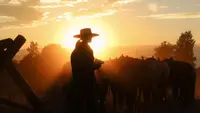
- A Bar A RanchEncampment · Guest ranchUnforgettable horseback riding, fly fishing, hiking, and other outdoor activities for the entire family.
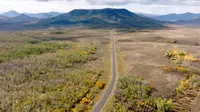
- Battle Pass Scenic BywayEncampment · Scenic bywayWyoming Highway 70 over the Sierra Madre from Encampment to Baggs, crossing the Continental Divide at Battle Pass, named for an 1841 fight in which trapper Henry Fraeb died.
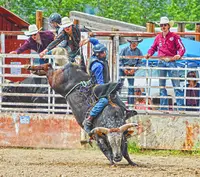
- Woodchoppers Jamboree & RodeoEncampment · Annual timber and ranching heritage weekend with lumbering competition events and traditional western rodeoSince 1961 the Lions Club in Encampment, Wyoming, has spent Father's Day weekend on loggers' contests in the morning and a rodeo in the same arena after lunch.
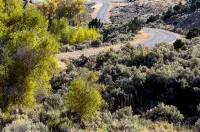
- Seminoe-Alcova Scenic BackwaySinclair · Back country bywayThe 64-mile Seminoe-Alcova Back Country Byway lies in south central Wyoming. As you travel, you'll pass pronghorn-grazed prairie, stark desert, and you'll climb the rugged Seminoe Mountains.
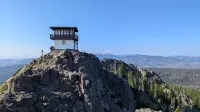
- Blackhall LookoutLookout towerA 1963 fire lookout atop Blackhall Mountain in Wyoming's Sierra Madre, still a working fire tower, rented by the night at the end of one of the state's highest roads.
Sources
- Carbon County, Wyoming wyohistory.org/encyclopedia/carbon-county-wyoming
- Saratoga, Wyoming: “Where the Trout Leap in Main Street” wyohistory.org/encyclopedia/saratoga-wyoming
- Come On In, The Water’s Warm: Saratoga’s Hobo Hot Springs wyohistory.org/blog/come-waters-warm-saratogas-hobo-hot-springs
- National Register of Historic Places Inventory Nomination ... wyoshpo.wyo.gov/index.php/files/741/Carbon%20County%20NR%20forms/378/Hugus%20Hardware%20National%20Register%20form.pdf
- The Saratoga and Encampment Valley Railroad wyohistory.org/encyclopedia/saratoga-and-encampment-valley-railroad