Cody
Park County, Wyoming. County seat.
Cody, the Park County seat on Wyoming’s Shoshone River, was founded in 1896 and named for Buffalo Bill, one of its seven founders.1,2
Details
- Founded
- A group of investors headed by William F. “Buffalo Bill” Cody founded the town in 1896, when George Beck and surveyor Charles Hayden laid out the present site in May, after a first Cody City had been surveyed on October 5, 1895.1,3,4
- Name
- The town is named for Col. William F. “Buffalo Bill” Cody, one of the seven founders of the Shoshone Land and Irrigation Company.2
- County seat
- Cody became the seat of Park County when the legislature created the county in 1909, though the State Historic Preservation Office gives the year as 1910.3,5
- Last checked
- October 6, 2026.
Point at a dot to see the place.Tap a dot to see the place. Road map of Cody.
In Cody
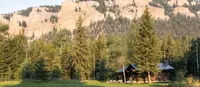
- 7D RanchCody · Family guest ranchTen rustic cabins tucked into the scenic and remote Sunlight Basin, 50 miles northwest of Cody, in the heart of the Absaroka Mountains.
- Buffalo Bill Cody Scenic BywayCody · Scenic bywayA 27.5-mile scenic byway on US 14-16-20 up the North Fork of the Shoshone from Cody to Yellowstone's East Entrance, where early travelers forded rivers twenty-nine times.
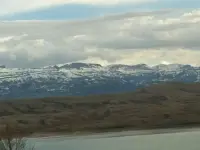
- Chief Joseph Scenic BywayCody · State bywayWyoming Highway 296, a 47-mile byway from north of Cody to the Beartooth Highway, crosses Dead Indian Pass, where Chief Joseph led the Nez Perce in 1877.

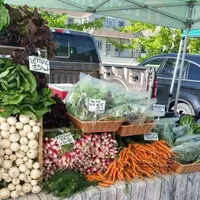
- Cody Farmers MarketCody · Farmers marketSaturday market in downtown Cody with fresh, locally grown produce and hand-made goods.
- Legends BookstoreCody · Full-service book storeWe are a full-service book store located in Cody, Wyoming -- a gateway town to Yellowstone National Park. We have new Books (fiction and non-fiction), Newspapers, Hiking and Outdoor Guides, Maps, Children's Books, Unique Gifts, Jewelry, Made-In-Wyoming Gifts, Cards, Local Authors, Toys & Games and a Coffee Bar. Legends is a favorite downtown destination for book lovers of all ages, and the only full-service book store in Park County, Wyoming. We pride ourselves on our customer service, friendliness, and the quality of products offered in the store.
- Rimrock Dude RanchCody · Dude ranchFamily-owned Wyoming dude ranch; second-generation; bought 1955 by Gary's parents Glenn and Alice Fales; Gary and Dede Fales continue the operation. Ranch built 1926 on the banks of Canyon Creek, with views of the Wapiti Valley.
The Calendar
History
On the Stinking Water
Cody stands on the Shoshone River in the Bighorn Basin of northwest Wyoming, on a river the Crow first called the “Stinking Water.”3 WyoHistory’s Park County entry traces the old name to the sulfurous smell of hot springs that flow into the river near Cody.2 Sheridan Avenue, the main street, runs east to west toward Yellowstone National Park, about 53 miles by WyoHistory’s count and 52 miles to the east entrance by the city’s.2,6 The city counts a population of over 10,000 and serves as the Park County seat, while WyoHistory’s town entry gives 9,500 year-round residents.3,6 By WyoHistory’s account, tourism and oil and gas remain its mainstays.7
Cody City and Beck’s Townsite
Treaties of 1868 closed the Bighorn Basin to white settlement, and the restrictions were lifted ten years later.3 A marker in Cody credits the trail driver Pete McCulloch with bringing the first herd of cattle into the region in 1879, to stock a ranch for Judge William Carter.8 In 1894, while Buffalo Bill was visiting Sheridan, his son-in-law Horace Boal took him to the top of the Bighorn Mountains to look west over the basin.3 In 1895 Cody, George T. Beck, Nate Salsbury, Harry Gerrans, Bronson Rumsey, Horace Alger, and George Bleistein founded the Shoshone Land and Irrigation Company, and the town took its name from one of the seven, Buffalo Bill.2,3 A marker put up by the Park County Historical Society gives a different date, saying Buffalo Bill and his partners established the Shoshone Irrigation Co. in 1894.4 Work on the Cody Canal, which would carry water from the south fork of the Shoshone River to the town, began in the fall of 1895.3 A first town, Cody City, was surveyed near DeMaris Hot Springs on October 5, 1895, with its streets named for Civil War generals and a park named for Buffalo Bill’s daughter, Irma.3,4 H.P. Arnold opened a general store there, a blacksmith shop went up, and before winter had passed a dozen businesses were open, two of them saloons.4 Beck disliked the site and found much of the land owned by Charles DeMaris, who would not sell, so in May 1896 Beck and the surveyor Charles Hayden laid out the present town.3 A marker says Buffalo Bill laid out the original townsite in 1895 on the ground that is now Old Trail Town, where the Western historian Bob Edgar and friends reassembled historic buildings moved from Wyoming and Montana.9
The Canal, the Burlington, and the Irma
Violent storms wrecked the canal in the summer of 1898, and the directors tried to sell out for $150,000, but no buyers came forward.10 In 1899 Buffalo Bill started the Cody Enterprise; he also owned the livery stable and the blacksmith shop, and as many as half of the 500 or so people in town depended on him.2,10 To make sure the CB&Q built its line all the way to Cody, the company sold the majority of the town lots to the railroad, and the line opened on Nov. 11, 1901, the year the town incorporated.3,5 The Irma Hotel, named for his daughter, opened with a grand reception on November 18, 1902; it was a stone building in a town of wooden ones and probably cost him $80,000.3,10 As he fell into debt mining for gold in Arizona, he mortgaged the hotel and his home ranch, and he later deeded them to his wife, Louisa, to keep them from his creditors.10
The Dam, the Courthouse, and Oregon Basin Oil
In early 1904 Buffalo Bill gave up his water right to the Reclamation Service, and the federal government appropriated $2,250,000 to build the Shoshone Project.10 WyoHistory says the dam in the canyon west of Cody was then the highest concrete arch dam in the world, and in 1946 the dam and its lake were renamed for Buffalo Bill.10 In 1909 the Wyoming Legislature created Park County from Big Horn County and made Cody the county seat, though the State Historic Preservation Office dates Cody’s establishment as the seat to 1910.3,5 After a bond issue passed in 1912, the county built a three-story courthouse and sheriff’s residence, and WyoHistory reports that the tower clock given by William Robertson Coe was still running when it wrote.2 Oil was found in Oregon Basin southeast of town in 1912; the preservation office dates the discovery at Elk Basin to 1915, and WyoHistory’s county entry gives 1916.2,3,5 In 1938 Glenn Nielson brought Husky Oil to a refinery near the depot north of town; WyoHistory’s town entry says he built it and its county entry says he bought it as the Park Refinery, and after it closed in the mid-1980s Marathon became the main oil company in town.2,3
The East Entrance Road, the Stampede, and Sheridan Avenue
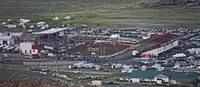
In 1915 a road was built between the town and Yellowstone’s east entrance.5 Buffalo Bill died on Jan. 10, 1917, and within six weeks five citizens had formed the Buffalo Bill Memorial Association; Mary Jester Allen and Caroline Lockhart engaged the New York sculptor Gertrude Vanderbilt Whitney to create a statue, which was dedicated on July 4, 1924.3 The Cody Stampede, a rodeo held each year over the Fourth of July weekend, began in 1920 with the novelist Caroline Lockhart as its first president.3,11 The Downtown Cody Historic District covers a few blocks along Sheridan Avenue; most of its buildings date from 1900 to the 1930s, and some are built of locally quarried sandstone.5 Downtown street signs still carry the names of the founders Beck, Alger, Rumsey, Bleistein, and Salsbury.6 Remnants of wagon trails from Cody City are still visible on the prairie, and one of them is Lee Street, named for Confederate General Robert E. Lee.12
Within 30 Miles
Measured in a straight line from the town, nearest first.
- Homesteader Days FestivalPowell · FestivalA free September harvest festival in the streets around Powell, Wyoming's log Homesteader Museum, with tractors, a car show, and a pie auction that raised $11,505 in 2025.
- Vali Twin CinemaPowellTwo-screen downtown movie theater in Powell, Wyoming, run as a beloved local house showing first-run films.
- Park County FairPowell · FairgroundThe Park County Fair, held the last full week of July on the fairgrounds in Powell, Wyoming, marked a century in 2026 on ground Congress patented for it in 1926.
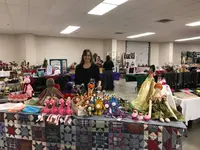
- Powell Farmers MarketPowell · Farmers marketA weekly farmers' market in Powell, Wyoming, part of the Big Horn Basin Farmers Market network. Vendors offer locally grown fresh fruits and vegetables, baked goods, meats, eggs, crafts, and an assortment of other products from locally based vendors.
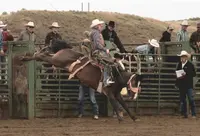
- Meeteetse Labor Day CelebrationMeeteetse · Labor day weekend celebrationMeeteetse, Wyoming has held a Labor Day weekend celebration since 1912, and its Monday rodeo has also been the Big Horn Rodeo Circuit Finals since 2015.
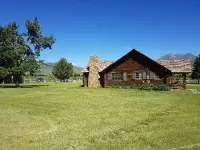
- Sunlight Rangers CabinCody · Cabin rentalScenic cabin that sleeps eight in the Sunlight Valley: a three-bedroom, one-bath log cabin with a fully equipped kitchen and fireplace.
Nearby towns: Red Lodge. All the towns of Wyoming. More of Wyoming: Scenic Drives and Fairs & Rodeos.
Sources
- Cody Heritage Museum codyheritagemuseum.org/cody-history
- Park County, Wyoming wyohistory.org/encyclopedia/park-county-wyoming
- wyohistory.org/encyclopedia/cody-wyoming
- Old Cody City & Buffalo Bill Cody’s Town in the Rockies (historical marker) hmdb.org/m.asp?m=87556
- Downtown Cody Historic District (wyoshpo.wyo.gov) wyoshpo.wyo.gov/index.php/programs/national-register/wyoming-listings/view-full-list/731-downtown-cody-historic-district
- About Cody codywy.gov/225/About-Cody
- w. f. cody wyohistory.org/tags/w-f-cody
- The Panoramic View (historical marker) hmdb.org/m.asp?m=87565
- Old Trail Town (historical marker) hmdb.org/m.asp?m=91011
- Town Founder and Irrigation Tycoon: The Buffalo Bill Nobody Knows wyohistory.org/encyclopedia/town-founder-and-irrigation-tycoon-buffalo-bill-nobody-knows
- The Old West’s Female Champion: Caroline Lockhart and Wyoming’s Cowboy Heritage wyohistory.org/encyclopedia/old-wests-female-champion-caroline-lockhart-and-wyomings-cowboy-heritage
- Trail to Old Cody City (historical marker) hmdb.org/m.asp?m=87586