Livingston
Park County, Montana. County seat.
Livingston, in Park County, Montana, at a bend of the Yellowstone, began in 1882 as a Northern Pacific surveyors’ camp called Clark City.1,2,3
Details
- Founded
- Livingston began on July 14, 1882, when railroad surveyors camped on the site and called it Clark City, and by 1883 Northern Pacific surveyors had platted the townsite for their division headquarters.1,2
- Name
- The town is named for Crawford Livingston of St. Paul, a director of the Northern Pacific.1
- County seat
- The territorial legislature created Park County with Livingston as county seat in 1887.4
- Last checked
- October 6, 2026.
Point at a dot to see the place.Tap a dot to see the place. Road map of Livingston.
In Livingston
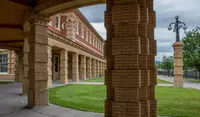
- Livingston Depot CenterLivingston · Art museumThe Livingston Depot Center is a lively intersection of past and present in the heart of downtown Livingston. The Depot is home to a seasonal museum from May - September and serves as an incredible community and event center throughout the rest of the year.
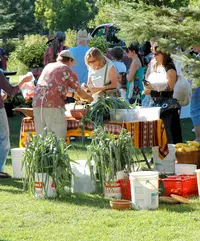
- Livingston Farmers MarketLivingston · Farmers' marketGrowing Our Local Food Community & Economy, with farm and ranch vendors, prepared food, craft beer, baked goods, flowers, and arts and crafts on the banks of the Yellowstone River.
The Calendar
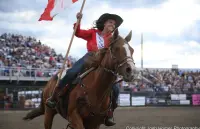
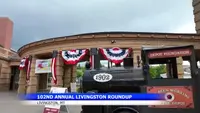
- Livingston RoundupPRCA rodeoJuly 2026.
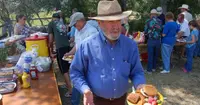
- Montana Old-Time Fiddler's PicnicAn annual event put on by musicians for musiciansAnnual the last weekend in July or first weekend in August; the most recent confirmed edition was Friday-Sunday August 1-3.
- Livingston Fourth of July RoundupAnnual paradeJuly 2, 2027 3:00 PM - 5:00 PM.
- Park County FairAgricultural fairFair week kicks off Wednesday July 22 at 5:00 PM: $5 BBQ dinner, 6:00 PM FFA Sundown Showdown, 7:00 PM 4-H Youth Rodeo.
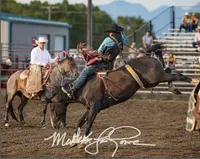
- Calamity's Classic RodeoHometown rodeoAUGUST 14TH FRIDAY.
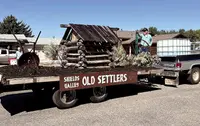
- Shields Valley Old Settlers DaysAnnual event50th Old Settlers, August 29–30th.
History
Clark City at the Bend of the Yellowstone
Livingston stands near the point where the Yellowstone, flowing northward from Wyoming, makes a great bend eastward, and it has been the Park County seat since 1887.1,4 Lieutenant Clark and his men came down Billman Creek and reached the Yellowstone just south of the present town on July 15, 1806.1 The first settlement in the vicinity, Benson’s Landing, came into being about 1873 at a ferry crossing 4 miles north.1
As the Northern Pacific pushed its tracks west in 1882, company representatives pitched a tent at the bend of the river and stocked it with 140,000 pounds of goods hauled by ox-drawn wagons.2 Railroad surveyors camped on the site on July 14, 1882, and called it Clark City for William Clark, and Northern Pacific rails reached it late that year.1 By 1883 Northern Pacific surveyors had platted a townsite nearby for their division headquarters, and the tents of Clark City moved to the new town of Livingston.2 The new name honored a Northern Pacific director, Crawford Livingston of St. Paul.1
Fire and Brick on Main Street
Early Main Street was a muddy track bordered by wooden sidewalks, where false-fronted wooden stores, offices, and many saloons did a lucrative business.2 Henry Frank, a tailor and Jewish immigrant from Poland, followed the railroad to Livingston with his wife Barbara, and in 1883 they built the city’s first brick business block on East Park.2 Fires in 1885-86 destroyed much of downtown, and owners rebuilt in more substantial brick.2 On one lot, J. A. Danforth replaced a burned wood-frame cigar factory and shooting gallery with brick after the 1886 fire, then four years later added a second story so heavy it damaged the first floor.2 Local cigar factories, mills, brickyards, and breweries further assured the town’s survival.2
Fire kept coming: after the opera house burned in January 1896, a $10,000 bond issue paid for a city hall and fire station, and city officials moved in before the end of that year.4 The Montana Historical Society marker says fire driver M. J. McGinnis, hired in 1894, was the town’s only paid fireman until 1906.3
The 1894 Strike, the Bucket of Blood, and B Street
During the railroad strike of June and July 1894, service stopped for two weeks and Federal troops were brought in to protect railroad property.1 A drunken captain stabbed a townsman with a sword, President Cleveland declared martial law, and the strike failed.1 Madame Bulldog’s Bucket of Blood Saloon, at 113 Park St., served a rowdy and transient clientele that included Martha “Calamity Jane” Cannary.1,2 Legend has it, the 1939 state guide says, that the two women fell out and Madame Bulldog tossed Calamity into the street.1
B Street’s establishments, part of the town’s red-light district, prospered from the 1890s to the 1920s on the trade of ranch hands, sheepherders, itinerant railroad workers, and local residents, and they closed in the late 1940s.5 Four small one-story houses, built as duplexes between 1896 and 1907, are what the marker calls the only remnants of the district.5
The Depot, the Shops, and the Two Sides of Town
By the 1890s the town had become the departure point for tourists bound for Yellowstone Park.2 In 1901 the Northern Pacific expanded its repair shops.2 The company hired Reed and Stem to design a passenger depot, built in 1901-02, which the National Register nomination calls an architectural work of national significance.2,6
Blue-collar workers and their families settled on the Eastside near the shops, and in 1902 an underground walkway beneath the tracks gave them a safe crossing.7 Carpenters and speculators put up three-fourths of the district’s small wood-frame houses before 1907, Scandinavian and Italian families moved in, and the Norwegian Lutheran Church went up in 1905.7 On the Westside, Charles Garnier, whose “Montana Sport” cigar factory had a Livingston payroll second only to the Northern Pacific’s by the register’s account, built a residence in 1902.8
Stock Trucks, the Murray, and the Museum School
The Elite Hotel, built about 1904 when Livingston was a busy tourist hub, was expanded to four stories in 1922 by the family of Senator James E. Murray of Butte, which foreclosed on owner Josephine Kline in 1925 and renamed it.9 In 1939 the Federal Writers’ Project guide found a railroad and trade center in a farming and stockraising county, its streets full of trucks and trailers loaded with pigs, sheep, calves, or horses.1 The marker ties the Murray’s decline in the 1960s to the demise of rail travel.9 The North Side School, built in 1907, closed in 1971, and since 1976 the building has been home to the Park County Museum.10
Within 30 Miles
Measured in a straight line from the town, nearest first.
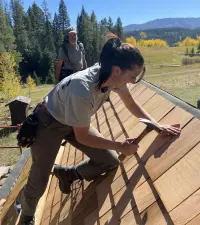
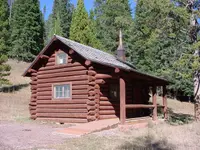
- Trail Creek CabinBozeman · CabinTrail Creek Cabin, built in 1924, was the original ranger station for the Bozeman Ranger District. It is available year round, offering guests the chance to enjoy summer or winter recreation.
- Natural Bridge Falls TrailheadBig Timber · Picnic areaA day-use picnic area and paved trail on Montana's Boulder River south of Big Timber, where the river leaps a limestone falls at runoff and runs underground the rest of the year.
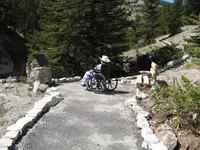
- Gallatin Valley Botanical at Rocky Creek FarmBozeman · Certified organic farmA certified organic farm on Rocky Creek east of Bozeman, Montana, where a cider press in the blue barn still presses the apples visitors bring from their own yards.

- Mountain Sky Guest RanchEmigrant · Upscale dude ranch resortUpscale guest ranch resort opened as a dude ranch in 1929 in Paradise Valley, with fine food, amenities, and a luxury environment.
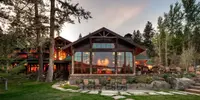
- Wilsall RodeoWilsall · Small town, 2 night NRA rodeoThe Wilsall Rodeo is a two-night amateur rodeo held each June in Montana's Shields Valley, on grounds that ranchers built in 1953 from poles cut in the mountains.
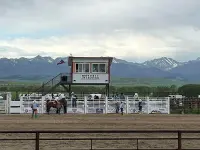
- Bozeman Farmers' MarketBozemanBozeman Farmers' Market—your go-to destination for farm-fresh produce and handcrafted treasures
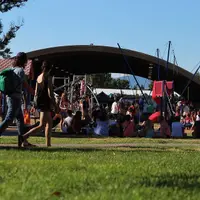
- Valhalla MeaderyBozeman · BreweryValhalla Meadery is a domestic craft winery in Bozeman, Montana specializing in mead.
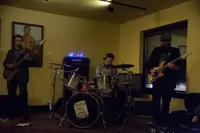
- Palisade Falls TrailheadBozeman · TrailheadPopular 1/2 mile nature trail, fully accessible and paved, providing views to Palisade Falls.
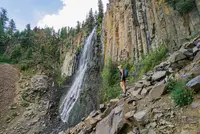
- Big Sky Country State FairBozeman · The state fairA five-day July fair at the Gallatin County Fairgrounds in Bozeman, Montana, held since 1903 on ground that passed through a fugitive financier's bankrupt estate.
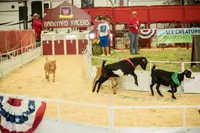
- Bozeman Winter Farmers' MarketBozemanThe Winter Market is almost every Saturday until the end of May! Come visit us, at the fairgrounds from 9am to noon!
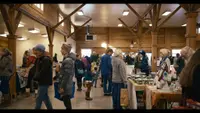
- Valley View RodeoBozeman · Sports & recreationA weekly summer rodeo at the Gallatin County Fairgrounds in Bozeman, Montana, founded in 2023 and run open, so beginners and professionals compete on the same Thursday nights.
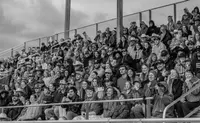
- Taylor PlanetariumBozeman · PlanetariumWith a 40-foot dome and 110 reclining seats, the Taylor Planetarium offers immersive shows that change with the seasons. Guided by staff, volunteers, and MSU students, our shows bring a new perspective to astronomy, planetary exploration, and other exciting topics.
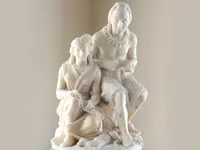
- Chico Hot Springs Resort & Day SpaPray · Hot springs resortA historic Montana hot springs resort and day spa fed by natural geothermal waters and surrounded by the mountains of Paradise Valley, with two natural pools, lodging, dining, a day spa, and a wedding venue.
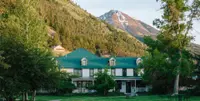
- Ibex CabinWilsall · CabinA 1939 Forest Service ranger shelter at 6,600 feet in the Crazy Mountain foothills near Wilsall, Montana, reached in winter only by a 5.5-mile ski, snowshoe, or snowmobile trip.
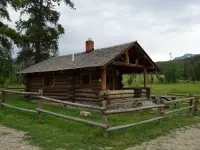
- Window Rock CabinBozeman · CabinA recreation rental cabin on the Bozeman District on the Custer Gallatin National Forest.
6 more within 30 miles on the road map.
All the towns of Montana. More of Montana: Fairs & Rodeos and Town Festivals.
Sources
- Montana: A State Guide Book (1939), p. 199 archive.org/details/montanastateguid00federich/page/199
- Livingston Commercial Historic District historicmt.org/tours/show/57
- Livingston City Hall and Fire Station (historical marker) hmdb.org/m.asp?m=191391
- Livingston City Hall and Fire Station: Livingston Commercial Historic District historicmt.org/items/show/1678
- Livingston B Street Historic District (historical marker) hmdb.org/m.asp?m=191661
- National Register nomination, Commercial District npgallery.nps.gov/GetAsset/96e50ee5-0e9d-426d-bf11-1abcc627232f
- Livingston Eastside Residential Historic District historicmt.org/items/show/1684
- Livingston Westside Residential Historic District historicmt.org/items/show/1685
- Murray Hotel (historical marker) hmdb.org/m.asp?m=191274
- Northside School historicmt.org/items/show/1698