Big Sky Country State Fair
Bozeman, Gallatin County, Montana. The State Fair.
Details

- Where
- 901 N Black Ave, Bozeman, MT 59715. Directions
- When
- Last held July 15–19, 2026; next year’s date not yet stated.
- Getting there
- Please enter from Oak Street at the East Oak entrance by the baseball stadium. Parking is available in the Oak Lot (for B Gate access), or you may continue on to the Tamarack Lot off of Tamarack St. (for A Gate access.) Parking will fill up quickly! ADA parking located in Oak and Tamarack Lots near A and B gates. Parking in either fairgrounds lot is free!
- Fees
- Parking in either fairgrounds lot is free!
- Hours
- Wed - Sat 11am - 11pm Sunday: 10:30 am - 6 pm.
- Access
- Only service dogs are allowed at the Big Sky Country State Fair.
- Walk-in or reserve
- Buy Tickets for 2026!
- Phone
- (406) 582-3270
- Managed by
- Gallatin County Fairgrounds.
- Established
- 1903.
Fair traffic comes in off Oak Street at the East Oak entrance, by the baseball stadium, and parks free in the Oak or Tamarack lot. Beyond the gates lie the Gallatin County Fairgrounds, 26 buildings on 78 acres about ten blocks north of Main Street, at the northern edge of the street grid of Bozeman’s historic core. For five days in July the grounds hold the Big Sky Country State Fair. The event was GallaCo before that, then the Gallatin County Fair. Director Lori Cox announced the present name on January 20, 2016. By her account, the change was meant to draw people from the entire state and not just Bozeman. The 2026 fair ran July 15 through 19: Wednesday through Saturday from 11 in the morning to 11 at night, and a shorter Sunday.
Barns, Food Row, and the Century Wheel
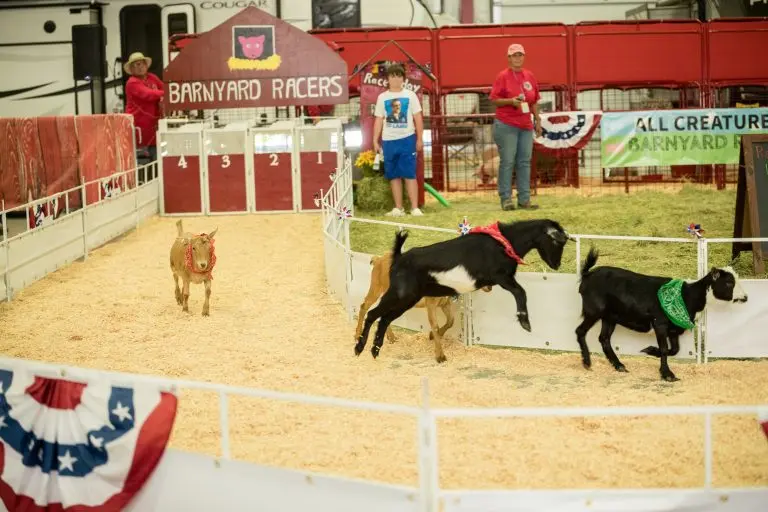
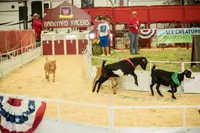
The barns hold sheep, swine, beef and dairy cows, goats, rabbits, and poultry, shown by 4-H members, with animal fun-fact posters put up for visitors. Shows run in the Murdoch’s Show Ring under a tent. The barn entrances close at 9 each night so the animals can rest. The barns stay shut on Sunday because of animal processor transport schedules. The fair asks visitors to respect the animals as youth projects and real livestock, and it sends anyone who wants to pet one to the petting zoo in the Haynes Pavilion. The pavilion is shaded and also houses daily agricultural demonstrations and the Barnyard Races, a show that pulls audience members in to take part.
Just south of Food Row stands the Treasure State Stage, under a shaded tent. The 2026 acts were the Honey Bear Dancers, the magician Aaron Radatz, and Joe Gandelman, a comedy ventriloquist who played at 1:30 and 4:30 on the fair’s last afternoon. On the Friday of that fair, the fair’s own account proposed a day built from an Epic Corn Dog off Food Row, a spin on the midway, and the view from the top of the Century Wheel, which it called the best in Bozeman.
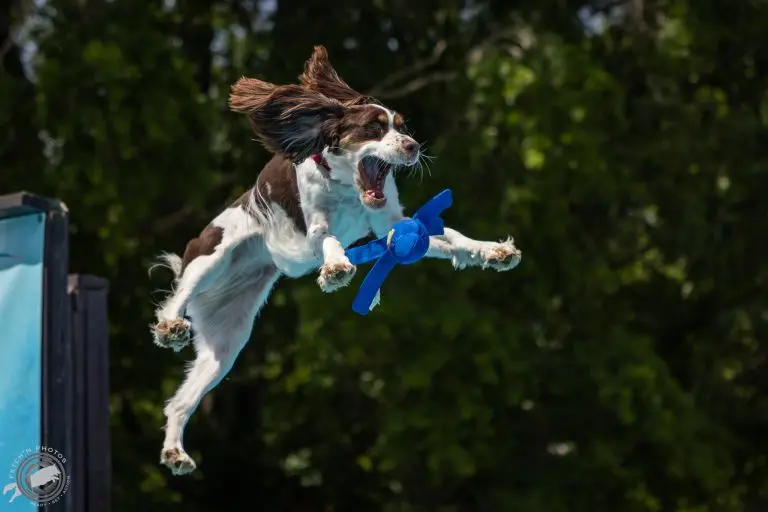
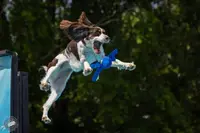
The midway sorts its rides by tickets and by height. The Carousel and the Century Wheel take riders 24 inches tall. The Zipper, the Himalaya, and the Cuckoo House take riders at 42 inches. Sky Fire costs six tickets and wants riders of 52 inches. Just south of the Haynes Pavilion is the Big Sky Plaza, often called the Free Stage. It has hosted lumberjacks and Comedy Cowboy Shootouts in past years. In 2026 it hosted the Dock Dogs, whose dogs launch themselves into the water, and the Flying Royals on the trapeze. Two cooling stations offered seating, misters, and big shade trees.
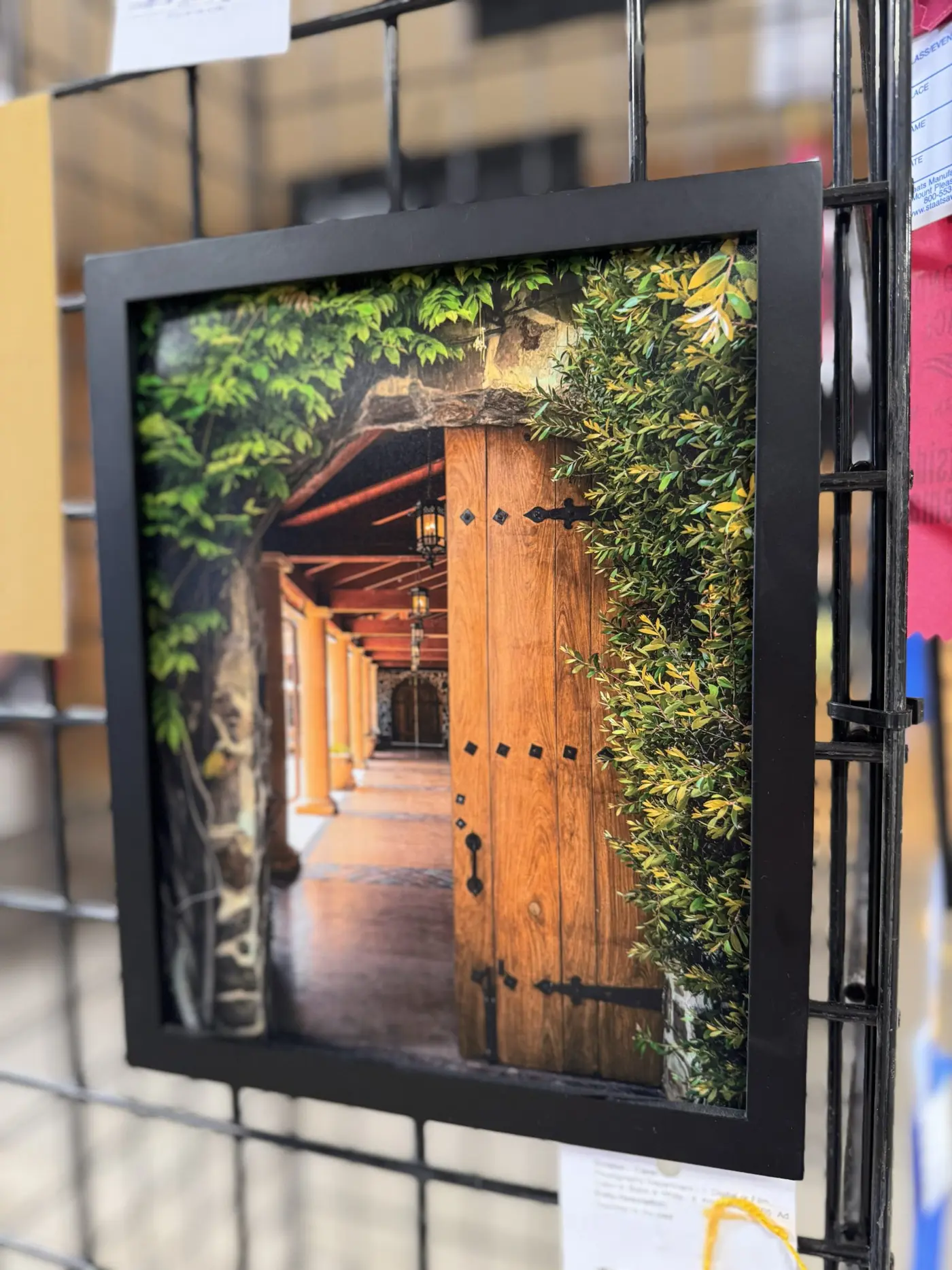
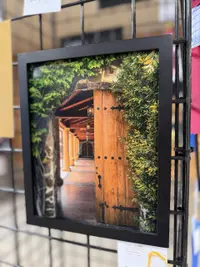
Indoors, entries from six competitive departments stay on display for the whole fair: photography, horticulture, textiles, culinary, creative fine arts, and quilts. The fair calls the quilts one of its largest displays. One account names Alice Siebecker as horticultural superintendent, then ten years with the fair.
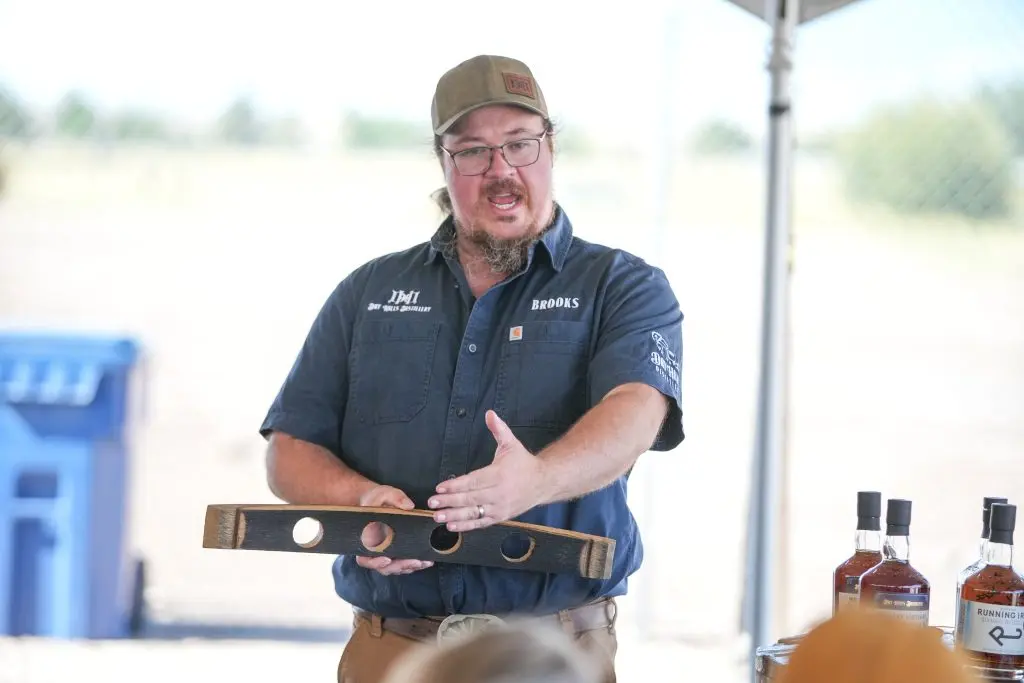
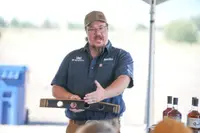
Evenings move to the Biergarten, a tent across from the carnival and next to the fair’s main pub. It has a dance floor, line dancing lessons, yard games, and Minute-to-Win-It games from 2 to 4 each afternoon. On the opening Wednesday of the 2026 fair, Dry Hills Distillery poured a whiskey tasting there at 5. Bands took the tent at 9 each night: Scratchin’ Gravel on Wednesday, Jampoke on Thursday, Dammit Lauren! on Friday, and Little Jane & The Pistol Whips on Saturday. The main stage held the 2026 concerts:
Wednesday: Chase Rice, on a 2026 farewell, with Preston Cooper and DeeRock. Thursday: a ladies’ night, with American Authors opening for Morgan Wade. * Friday: Stone Temple Pilots, with Local H opening. The fair called it its highest-selling show of the summer.
Wild cows, sheep, and mud
Saturday night belongs to the Bozeman Roundup Ranch Rodeo, held in 2026 at Anderson Arena at 7 p.m. The fair dates its tradition to over 100 years. A ranch rodeo is a team sport, with teams of up to five people. Up to seven teams compete for $5,000 added to a 100 percent jackpot across seven events:
team branding team doctoring team sorting trailer loading ranch bronc riding the hide race * wild cow milking
In the wild cow milking, one contestant ropes a cow while teammates wrangle and milk her, and all teams go at once.
On Sunday afternoon comes the Barnyard Brawl, hosted by the Valley View Rodeo and free with fair admission. In 2026 it started at 3 at the Haynes Pavilion with the Calf Scramble. In that event, teams of four teenagers race down the arena, catch a calf, halter it, dress it in a T-shirt, and lead it back across the finish line. Mutton Bustin’ follows: children over 4 years old and under 55 pounds ride sheep as long as they can stay on, judged on time, difficulty, and style. Last is the Chicken Chase, in which the Little Squirts, ages 4 to 7, and the Pee Wees, ages 8 to 10, try to catch a hen. The fair calls the chase “y’all come”: no registration, no entry fee.
Across the grounds at the Freedom Four Wheel Motorsports Arena, drivers in 2026 ran head-to-head Mud Drags through side-by-side pits packed with mud in two Saturday sessions. Sunday brought four hours of Tough Truck and Side by Side racing. The Tough Truck race made its debut at the 2025 fair. “For 40 years, this community has been the driving force behind the motorsports events at the Big Sky Country State Fair,” said Joe Barton, owner of Freedom Four Wheel, the Bozeman off-road shop that hosts them. The final Sunday is also Heroes Day, with free admission for active or retired military and first responders, and a Sensory Morning.
Menage’s lots and Syracuse’s bid
According to the Avant Courier, as reported by the Bozeman Daily Chronicle, the Inter-State Fair Association was founded in 1874 to build fairgrounds in Bozeman, intent on raising $10,000. Its founding board members, the Chronicle wrote, “read like a street map of Bozeman”: L.M. Black, Nelson Story, L.S. Willson, and J.V. Bogart. Courtney Kramer, writing in Bozeman Magazine, names Story, F. L. Benepe, Julius Lehrkind, and Walter Sales among its leaders.
The ground they wanted had a stranger route to them. Louis Menage’s company, Northwestern Guaranty Loan, speculated in real estate between Minneapolis and Seattle in the 1880s and early 1890s. In 1890, through his Bozeman attorney William Imes, Menage annexed and subdivided the West Park, Westside, and Capital Hill Additions to Bozeman. He was betting on a boom if statewide voters chose Bozeman as the capital. Bozeman finished fourth. The Capitol Hill Addition is now home to Montana State University, which Bozeman received as a third runner-up prize.
The panic of 1893 brought down Northwestern Guaranty Loan, and Menage fled his creditors, first to Canada and later to South America. Reports of his murder in Honduras circulated in 1895. He returned to Minneapolis in June 1899 to face charges of stealing nearly $700,000 from his company. In the meantime the Gallatin District Court ordered his Bozeman holdings sold at auction by the county sheriff. In September 1895, for reasons that remain unclear, Syracuse University of New York put in the high bid of $16,682 for the 27 city blocks in the Imes Addition that became the fairgrounds.
The accounts diverge on what came next. The fair’s own history says a group of Bozeman pioneers bought the property from Syracuse in 1898 with the express purpose of creating a regional fairgrounds. The Chronicle says the association bought the 90-acre property from Syracuse that year. It cites the local historian M.G. Burlingame, who explained Syracuse’s ownership by noting that J.H. Durston, a staff member of the college, had bought up a lot of north Bozeman. Kramer describes Syracuse as still the owner when the grounds were developed, in partnership with the association, which sold shares to raise funds. In her account, Gallatin County bought the fairgrounds from Syracuse in 1914 for $9,000, perhaps under a previous agreement.
A grandstand for a thousand, and the Round-Up years
The Butte Inter-Miner reported the fencing contract: “The tract contains 80 acres. There will be a new grandstand erected which will have a seating capacity of 1,000 people. The track will be one of the fastest in the Northwest and an effort will be made to locate the state fairs here instead of at Helena. The expenses are being borne by the local sportsmen.” The fair dates its service to the community to 1902. The first fair on the grounds was held in 1903, and horse races on the old track were the main attraction. It is unclear why five years passed after 1898. The Bozeman Times reported that other counties, vying to host the fair themselves, squabbled with the association.
In January 1904, association secretary B.B. Wells wrote to the editor of the Avant Courier about the first attempt. “Judging from the attendance and the interest manifested, we can safely say that our greatest expectations were realized as the disadvantages under which we labored have been numerous,” he wrote. “We trust the public will be charitable, having done all in our power to give general satisfaction.” The 1904 Sanborn Fire Insurance Map records the improvements. A Women’s Pavilion went up southeast of the grandstand in 1912.
Money stayed short. A 1915 Weekly Courier article called the fair’s continuance uncertain. It conceded that an Agricultural Day in Belgrade, paid for entirely by that town’s business owners and free to enter, had shown exhibits comparable in quality to Bozeman’s, though fewer in number. “The successful attempt of our doughty neighboring city to supply the need for a county agricultural fair should prove an inspiring example for the county as a whole and for Bozeman when the question of a fair arises again,” the author wrote.
Then came the Bozeman Round-Up, held on the grounds from approximately 1919 to 1926. According to fairgrounds manager Sue Shockley, it ranked with Pendleton, Oregon, and Calgary as a major rodeo and horse racing event and drew up to 80,000 people. Photographs from the 1920s, one of them made by R.R. Doubleday at the 1926 Round-Up, show a grandstand around the rodeo grounds and a one-mile racetrack. Shockley claims it was the first of its kind in Montana. The photographs show the grounds filled with cowboys, Native Americans, and finely dressed townspeople.
World War II severely curtailed the fair. By the late 1940s, livestock shows brought the ranchers back. A separate nonprofit, the Winter Fair, held its fairs on the grounds from the mid-1940s until 2002. In 1949 the fair board approached the city about building a football and baseball field on the property. The 1957 Sanborn Map shows new exhibit buildings, and the racetrack gone. Ice hockey, baseball, and the shooting range now draw as much interest as 4-H and rodeo, and the local 4-H still hold their year-end shows here.
The Wild West Winterfest replaced the Winter Fair. At its eleventh edition, marking 110 years since the first fair, the Chronicle put the annual summer fair’s attendance at about 50,000. Visitors who brought fairground memorabilia were admitted free, and volunteers scanned or photographed the ribbons, programs, and photos and recorded the stories behind them. “I hope we get some good stuff,” Shockley said.
Notable Events
- 1874According to the Avant Courier, the association was founded to build fairgrounds in Bozeman, intent on raising $10,000. bozemandailychronicle.com
- 1895For reasons that remain unclear, Syracuse University acquired the property from the trustee of Louis Menage's bankrupt estate for $16,682. bozemanmagazine.com
- 1898A group of Bozeman pioneers bought the property from the University of Syracuse expressly to create a regional fairgrounds. 406statefair.com
- 1902Gallatin County Fairgrounds began serving the community. 406statefair.com
- 1903The first fair was held at the newly erected fairgrounds; the reason for the delay is unclear. bozemandailychronicle.com
- 1912A Women's Pavilion was added southeast of the grandstand. bozemanmagazine.com
- 1914Perhaps under a previous agreement, Gallatin County purchased the Inter-state fairgrounds from Syracuse University for $9,000. bozemanmagazine.com
- 1940World War II severely curtailed fair activities; by the late 1940's livestock shows brought ranchers back. bozemanmagazine.com
- 1949The Fair board approached the city to diversify uses by building a football and baseball field on the property. bozemanmagazine.com
- 1957The Sanborn Map shows new exhibit buildings and removal of the racetrack. bozemanmagazine.com
- 2016The former GallaCo and Gallatin County Fair was rebranded as the Big Sky Country State Fair. kbzk.com
People
- B.B. Wells, Association secretary who wrote to the Avant Courier about its first fair (January 1904).
- Dan Jessen, Fairgrounds marketing coordinator.
- J.H. Durston, Syracuse staff member who had bought up north Bozeman property, cited as an explanation for Syracuse's ownership.
- J.V. Bogart, Fairgrounds founding board member.
- L.M. Black, Fairgrounds founding board member.
- L.S. Willson, Fairgrounds founding board member.
- Nelson Story, Fairgrounds founding board member.
- Sue Shockley, Fairgrounds manager.
- F. L. Benepe, Inter-State Fair Association leader.
- Julius Lehrkind, Inter-State Fair Association leader.
- Louis Menage, His bankrupt estate held the future fairgrounds property before Syracuse acquired it.
- Walter Sales, Inter-State Fair Association leader.
- Alice Siebecker, Horticultural superintendent (10 years with the fair).
- Caitlin Quisenberry, Gallatin County Fairgrounds director who explained the rebranding.
- Lori Cox, Fair director who announced the name change.
Sources
- 406statefair.com
- 406statefair.com/concerts
- 406statefair.com/ranch-rodeo
- 406statefair.com/barnyard-brawl
- 406statefair.com/motor-sports
- 406statefair.com/biergarten
- 406statefair.com/treasure-state
- 406statefair.com/haynes
- 406statefair.com/carnival-rides
- 406statefair.com/food-row
- 406statefair.com/barns-and-4-h
- 406statefair.com/big-sky-plaza
- 406statefair.com/montana-action-paintball
- 406statefair.com/special-fair-days
- 406statefair.com/competitive
- 406statefair.com/ticket-promotions
- 406statefair.com/faqs
- 406statefair.com/history-of-the-fair
- kbzk.com/news/from-horse-races-to-headliners-the-evolution-of-the-big-sky-country-state-fair
- gallatincountyfairgrounds.com/about-us