Bonners Ferry
Boundary County, Idaho. County seat.
Bonners Ferry, a Kootenai River town atop the north Idaho panhandle, where E.L. Bonner established a ferry in 1864.1,2,3
Details
Point at a dot to see the place.Tap a dot to see the place. Road map of Bonners Ferry.
In Bonners Ferry
The Calendar
History
Bonner’s Rope Ferry on the Kootenai
Bonners Ferry stands on the Kootenai River at the top of the north Idaho panhandle and is the county seat of Boundary County.1,2,5 A 2009 historical society marker notes that Burlington Northern Santa Fe and Union Pacific trains still run through the county on century-old roadbeds.6
The Kootenai people have lived for thousands of years in a homeland that spans Idaho, Montana and British Columbia.7 In 1808 David Thompson, a trader for the North West Company, explored the river, and on May 8, somewhere near the present town, his starving party met ten lodges of Indians.8 At first, Indians paddled gold miners rushing to Wild Horse in British Columbia across the river; then E.L. Bonner set up a proper ferry, and with its trading store it served the Wild Horse packtrains for many years.3 The state highway marker dates the rush to Wild Horse to 1863, but the National Register nomination for Fry’s Trading Post dates it to 1864.3,9 On December 22, 1864, Edwin Bonner, together with R. A. Eddy and John Walton, obtained a ferry franchise from the Idaho legislature, and a series of ferrymen ran the business after him.9 Richard Fry, a Wild Horse miner, arrived in 1875, and in 1876 his brother Martin joined him in taking over the ferry and running a trading post on the north side of the river.9 Just before the Great Northern arrived, the outpost was described as “a store, and several wooden buildings, with the usual gang of loafers red and white, and a rope ferry.”9
Lead-Silver and the Great Northern
In 1882 the crossing became an operating base for the discovery of British Columbia’s large lead-silver district, and new Kootenay lead-silver discoveries brought the place back to life.9 Steamers reached the river in the 1880’s, the first of them a tiny boat dragged in overland, and the first post office opened in 1887.3,5 A new townsite went up on the south side in 1888, and Fry’s post, which could not compete with its large new business district, was abandoned four years later.9 The Great Northern Railway arrived in 1892, and the town was incorporated in 1894.3,5 On a June night in 1892, several hundred men gathered on Main Street and gave 48 Chinese men two hours to pack and leave town on a special Great Northern train made up of two boxcars and a caboose.10 The railroad brought new settlers, some of them leaving the logged-out Midwest, who arrived in rented box cars filled with their animals, farming equipment, and household goods.10 D.C. Corbin built the Spokane International Railway to carry British Columbia coal to eastern Washington, and its line from Spokane to Eastport was completed in October 1906.6
Power Plant, Diked Valley, and County Seat
Local traffic kept the ferry running, and it became a public, county-operated enterprise in 1902 before a major highway bridge replaced it.9 In 1902 a local pharmacist, J.F. Cook, installed a turbine on the Moyie River but never finished the project, and in 1905 the Newport Electric Light Company of Myrtle Creek supplied the city’s first electricity.11 By 1917 the plant was over-taxed, and the city bought it and formed the Bonner Water and Light Department.11 Logging, and the discovery that the climate and soil suited fruit growing, made the town a commercial and civic center for the northernmost region of Idaho, and it became the county seat when Boundary County was established in 1915.4 The river valley, once a series of lakes and tiny islands, was not reclaimed until 1922, when the area’s first drainage district was formed, and by the mid-1930s 13 drainage districts covered 35,000 acres.2,5 In 1937 the state guide counted 1,418 people in Bonners Ferry, called it the center of an agricultural and lumbering area, and noted its own municipal power plant.2 The population slipped to 1,345 by 1940, rose to a peak of 2,796 in 1970, and fell to 1,906 in 1980.5 Kootenai people who refused to leave their lands for a reservation took individual allotments around Bonners Ferry, and in 1974 the Kootenai Tribe of Idaho declared war on the United States to obtain a land base.7
The North Side School, the Post Office, and Fry’s Log Post
The brick North Side School opened on January 24, 1914, at a final cost of $15,000, and it was used as a school until June, 1990.4 After the Kootenai Valley Commercial Club spent a year working to secure a federal building, the post office went up between September 1937 and March 1938, and its nomination calls it one of the most imposing buildings in Bonners Ferry.5 The log building from Fry’s post still stands under two successive layers of siding, and its nomination calls it Bonners Ferry’s oldest structure.9
Within 30 Miles
Measured in a straight line from the town, nearest first.
- Cabin View WinerySandpoint · Family-owned wineryA small, appointment-only winery on a one-lane private road north of Sandpoint, Idaho, making wine from Washington grapes in sight of the Cabinet Mountain Range.
- Western Pleasure Guest RanchSandpoint · Guest ranchAll-Inclusive Guest Ranch Adventure Vacation with lodge rooms and log cabins, daily horseback rides, three country gourmet meals daily, evening entertainment; family-owned fifth-generation Idaho dude and guest ranch.
- Yaak Mtn. Lookout RentalTroy · Fire lookout rentalFire observation point since 1958 with outstanding views of the town of Troy, especially on 4th of July, the Kootenai River and surrounding area.
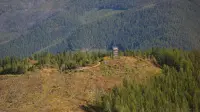
- Mt. Baldy-Buckhorn RidgeTroy · Fire lookoutThe Mount Baldy - Buckhorn Ridge Lookout sits at an elevation of 6,529 feet in the Kootenai National Forest. This location has been used as an observation point for detecting forest fires since 1910. The current lookout tower was built in 1957.
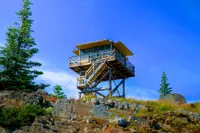
- Priest Lake State ParkCoolin · State parkPriest Lake State Park lies just 30 miles from the Canadian border, nestled deep below the crest of the Selkirk Mountains. Surrounded by the natural beauty of Northern Idaho and mile-high mountains, Priest Lake State Park sits along the eastern shores of Priest Lake, a 19-mile long, 300-foot-deep waterbody.
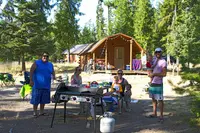
- Troy Old Fashioned 4th of JulyTroy · 4th of july celebrationTroy's Old Fashioned 4th of July, a free, volunteer-run day in Roosevelt Park on the Kootenai River in northwest Montana, draws more than 6,000 people to a town of 950.
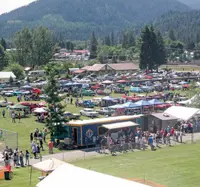
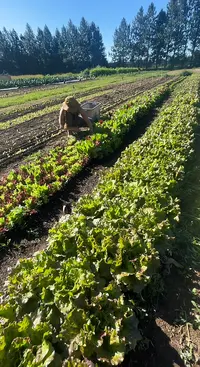
- Red Wheelbarrow ProduceSandpoint · Small farmQuality, Steady Seasonal Produce - Greens, Roots, Strawberries, Tomatoes, Squashes, Storage Crops, Sunflower & Tulip Bunches, + Eggs, Honey, & More
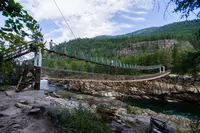
- Kootenai Falls TrailheadTroy · Landmark, watchable wildlifeBuilt by the Forest Service to access forest fires across the Kootenai River, this foot bridge was destroyed by a major flood in 1948. The bridge was rebuilt on concrete piers and is now protected from flooding by Libby Dam. Used for administrative purposes, it also offers a breathtaking view of the Kootenai River gorge directly below Kootenai Falls. It is at an elevation of 2,100 feet.
- Shingle Mill Blueberry FarmSandpoint · U-pick farmA family u-pick blueberry farm on Shingle Mill Road outside Sandpoint, Idaho, where about 5,300 bushes stand in color-marked rows, planted so the Omodts' 25 acres would stay whole.
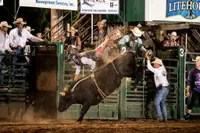
- Bonner County FairSandpoint · FairgroundThe Bonner County Fair, a free August agricultural fair on North Boyer Road in Sandpoint, Idaho, dates itself from 1927, though a forgotten earlier fair began in 1908.
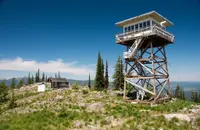
- Garver Mtn. Lookout RentalYaak · Fire lookout rentalA 1960s fire lookout tower for overnight rent atop Garver Mountain in Montana's Yaak country, with the mountain's first lookout, a 1929 log cabin, still standing on the site.
All the towns of Idaho. More of Idaho: Fairs & Rodeos, Lookouts & Cabins, and Town Festivals.
Sources
- National Register of Historic Places Multiple Property ... history.idaho.gov/wp-content/uploads/2018/09/Historic_U.S._Post_Offices_in_Idaho_1900-1941_64500197.pdf
- Idaho: A Guide in Word and Picture (1937), p. 7 archive.org/details/idahoguideinword00federich/page/7
- Bonner’s Ferry (historical marker) hmdb.org/m.asp?m=122203
- National Register nomination, North Side School/ 006259 npgallery.nps.gov/NRHP/GetAsset/NRHP/92000417_text
- Bonners Ferry Main Post Office 89000129 (history.idaho.gov) history.idaho.gov/wp-content/uploads/2018/09/Bonners_Ferry_Main_Post_Office_89000129.pdf
- Spokane International Railway (historical marker) hmdb.org/m.asp?m=122717
- Kootenai Tribe of Idaho (historical marker) hmdb.org/m.asp?m=122202
- David Thompson (historical marker) hmdb.org/m.asp?m=122201
- Frys Trading Post 84001104 (history.idaho.gov) history.idaho.gov/wp-content/uploads/2018/09/Frys_Trading_Post_84001104.pdf
- Great Northern Railway 1892 (historical marker) hmdb.org/m.asp?m=122715
- Electrifying Bonners Ferry (historical marker) hmdb.org/m.asp?m=122658