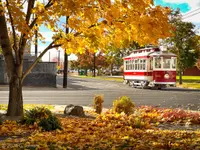
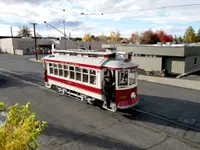
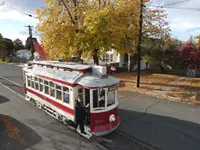
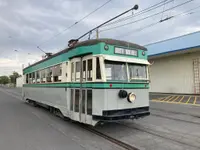
Yakima Valley Trolleys
Yakima, Yakima County, Washington. Interurban electric railroad.
Details

- Where
- 306 W Pine St, Yakima, WA. Directions
- When
- Saturdays, Sundays and Holidays; departures hourly, 10:00 AM - 3:00 PM.
- Season
- 2026 Summer Season: Saturday, May 23 - Sunday, September 27.
- Getting there
- Boarding Location: S. 3rd Avenue and Pine Street, Yakima.
- Fees
- Adults $8; Seniors (65+) $6; Children (12 and under) $6; child on lap (2 and under) Free.
- Access
- We are currently operating on the 6th Avenue Line. Selah Line currently not in service.
- Walk-in or reserve
- Get your tickets at yakimavalleytrolleys.org or arrive at least 15 minutes before your ride to purchase tickets onsite.
- Phone
- (509) 249-5962
- Website
- yakimavalleytrolleys.org
- Managed by
- Yakima Valley Trolleys organization, for the City of Yakima.
- Established
- 1907.
Enjoy regularly scheduled rides all summer, or book a private event year-round!
Notable Events
- 1906Predecessor company Yakima Inter-Valley Traction Company (YI-VT) formed on June 2, and the Yakima City Council granted it a 40-year streetcar franchise on October 15. yakimavalleytrolleys.org
- 1907The first three miles of streetcar lines were opened in 1907 using second-hand and leased cars. npgallery.nps.gov
- 1907Yakima Valley Transportation Company (YVT) formed on July 2, obtaining the YI-VT franchise and assets; ground breaking and first track laying was September 9 at the Redmon place west of town. yakimavalleytrolleys.org
- 1908In 1908 the railroad was bought out by the Oregon Railway and Navigation Company (now Union Pacific). preservewa.org
- 1909In 1909 the YVTC was purchased by a subsidiary of the Union Pacific Railroad, a crucial event that provided capital for expansion and turned its focus from passengers to freight. npgallery.nps.gov
- 1910The YVT built a large stone and timber carbarn/shop facility in 1910; it is still in use today. yakimavalleytrolleys.org
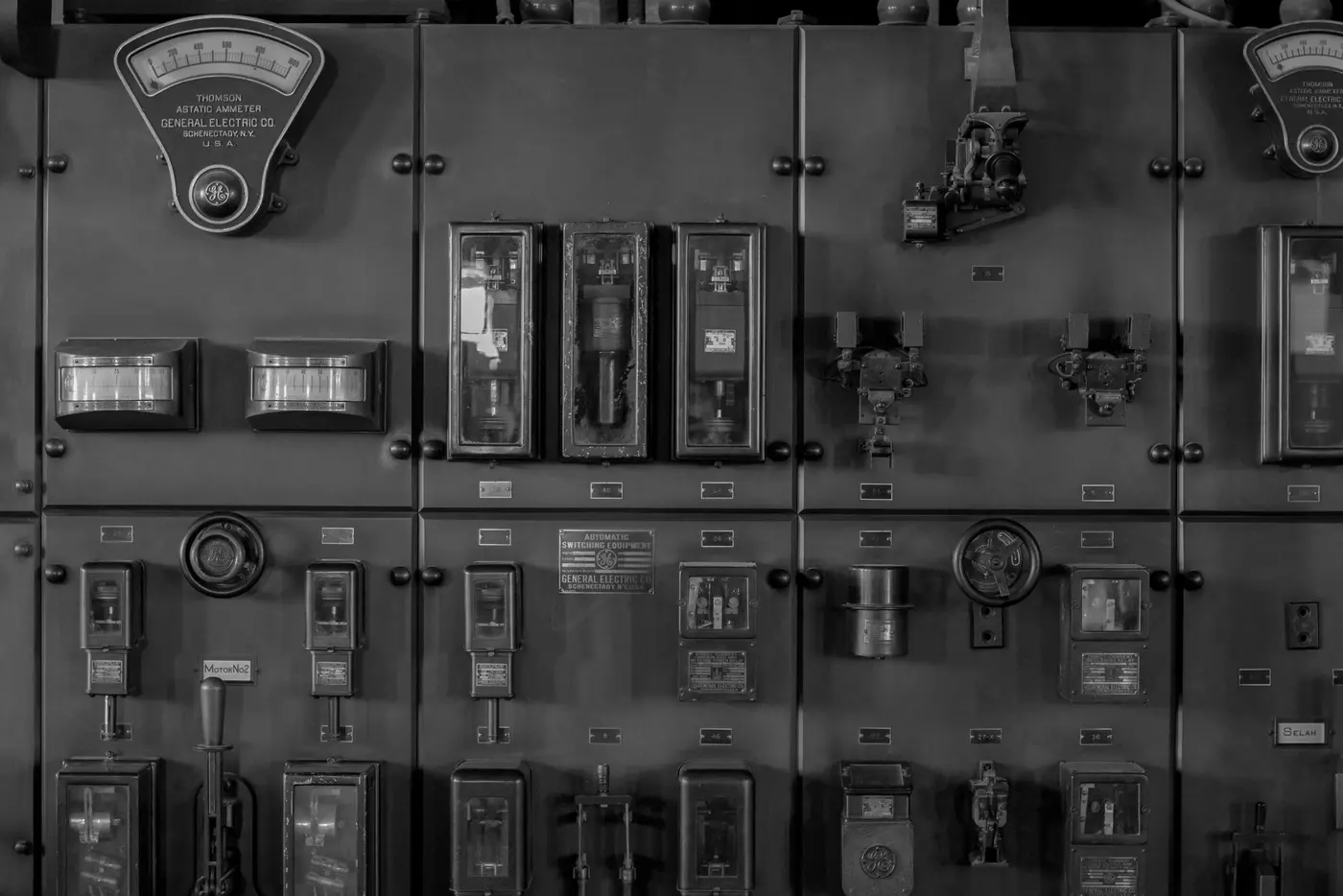
- 1911In 1911 a concrete and masonry powerhouse substation was constructed to provide the DC electricity to operate the trolleys; it is still in use, and the overhead wire catenary is also original. yakimavalleytrolleys.org
- 1920By 1920 the system had reached its maximum length of 48 miles, with its emphasis primarily on freight. npgallery.nps.gov
- 1921The North Fourth Street line was abandoned because of numerous hold-ups by bandits. yakimavalleytrolleys.org
- 1935Interurban passenger service survived until 1935, and passenger service within the city of Yakima lasted until 1947. npgallery.nps.gov
- 1935The final interurban runs were made on May 15. yakimavalleytrolleys.org
- 1947Final streetcar runs were made in the “Parade of Progress” on February 1; rail was removed from Yakima Avenue and the east side lines that summer. yakimavalleytrolleys.org
- 1947In February of 1947 the YVT terminated streetcar service, though the electric freight trains continued to operate. yakimavalleytrolleys.org
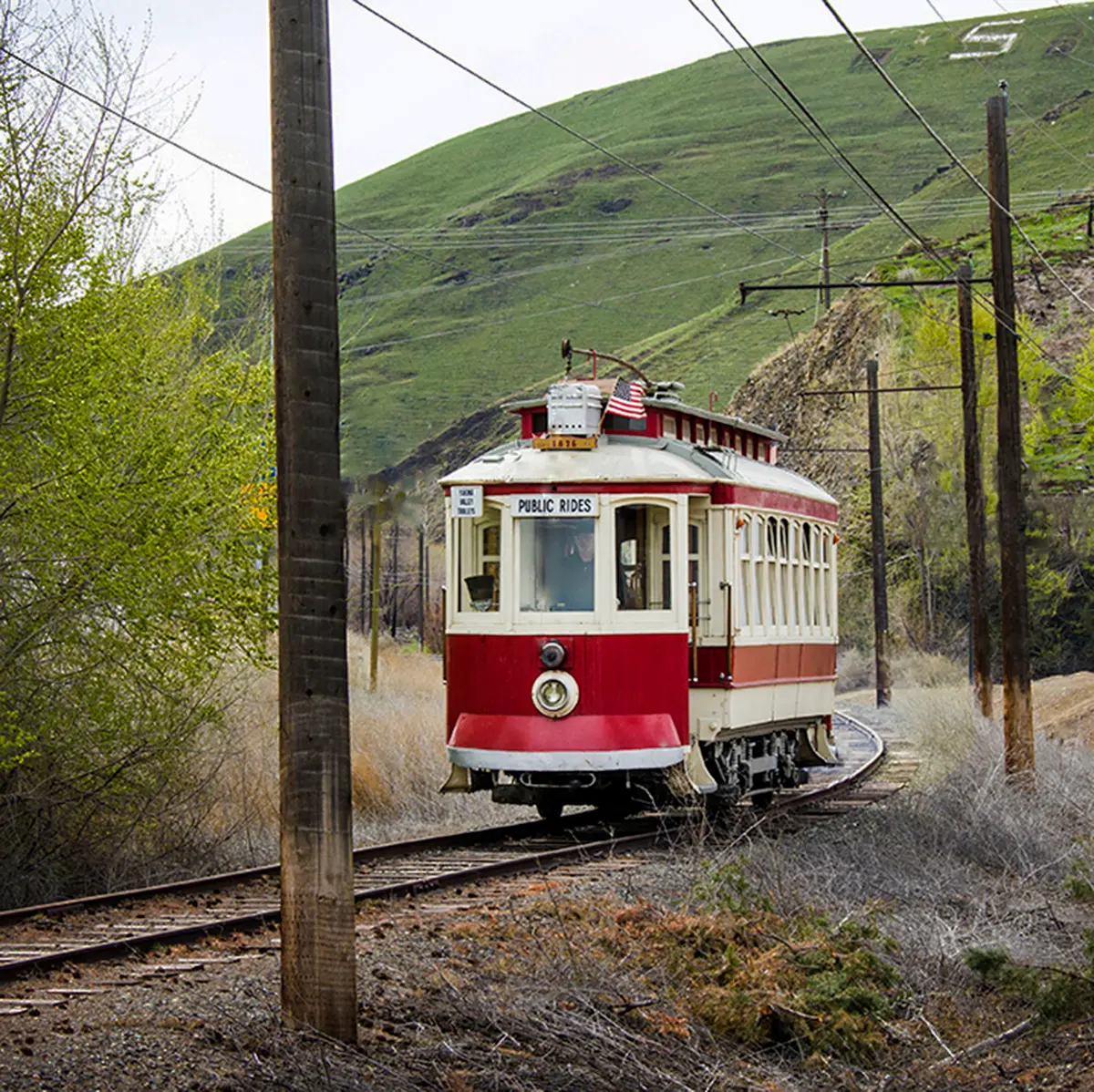
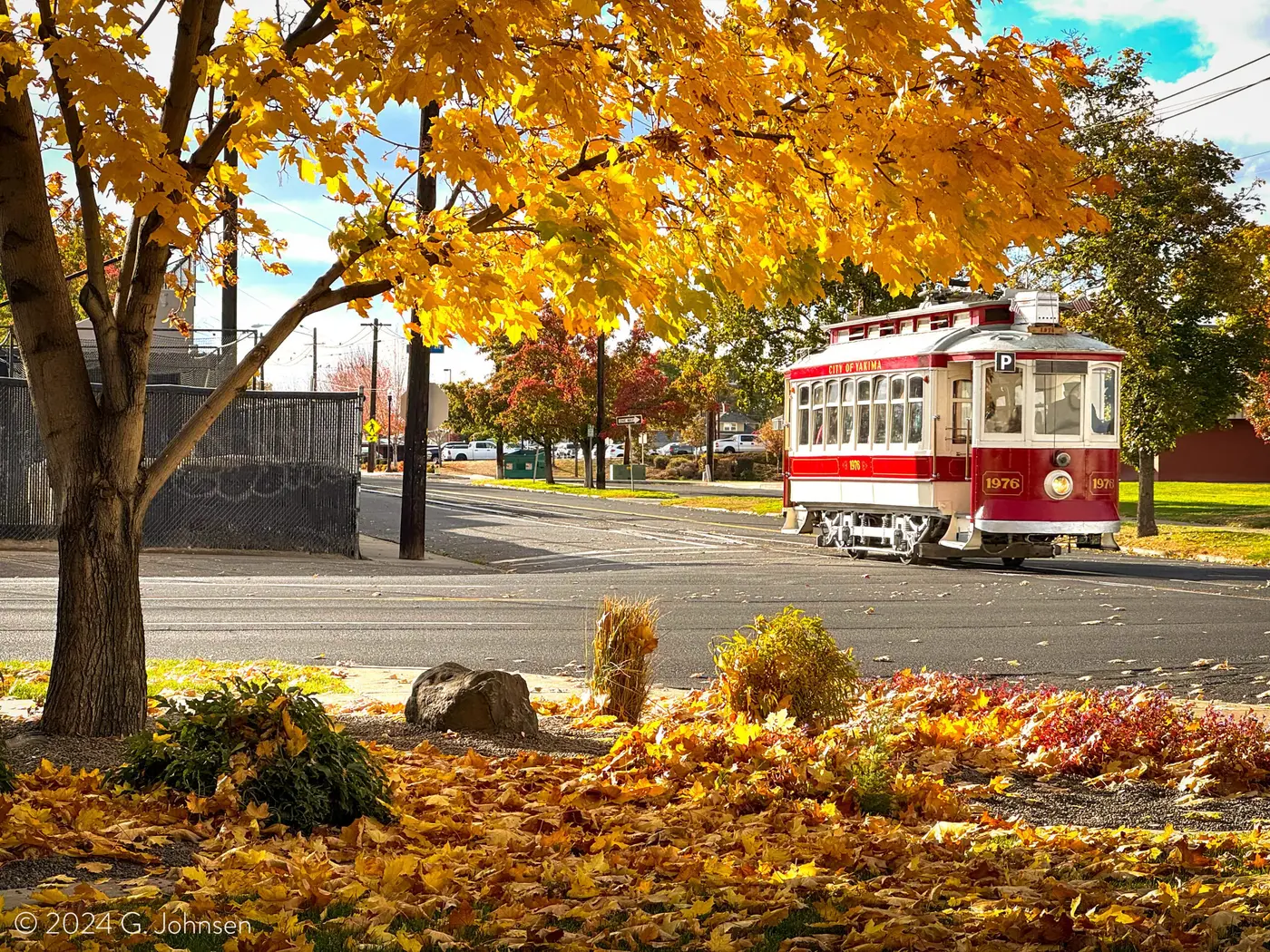
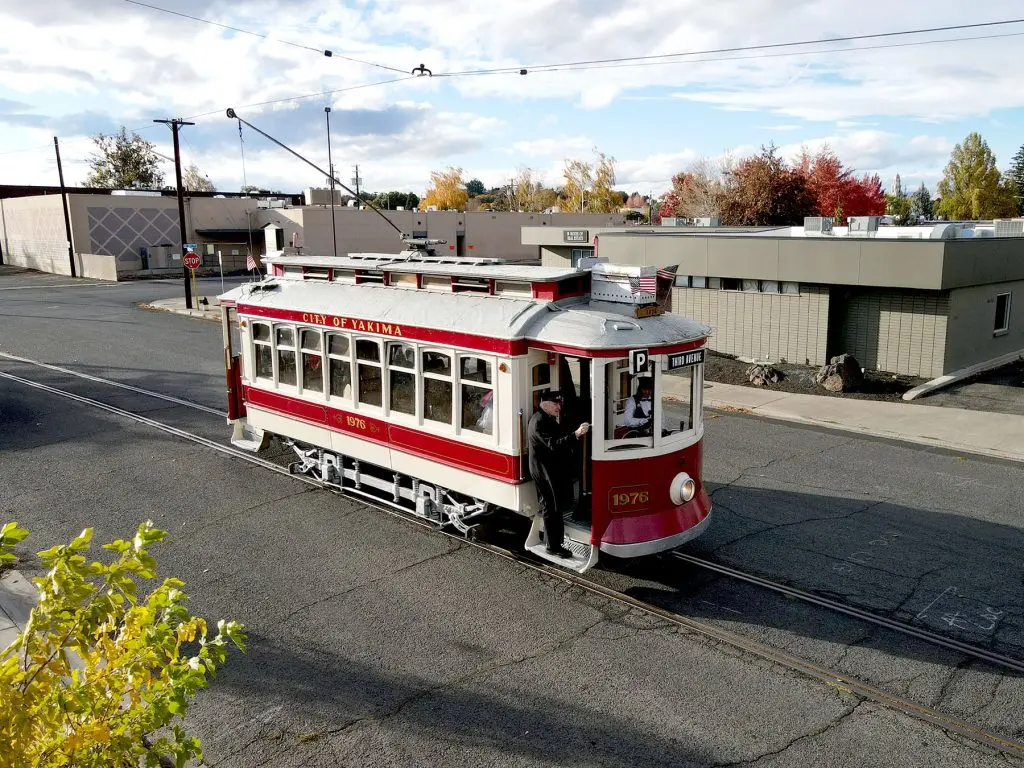
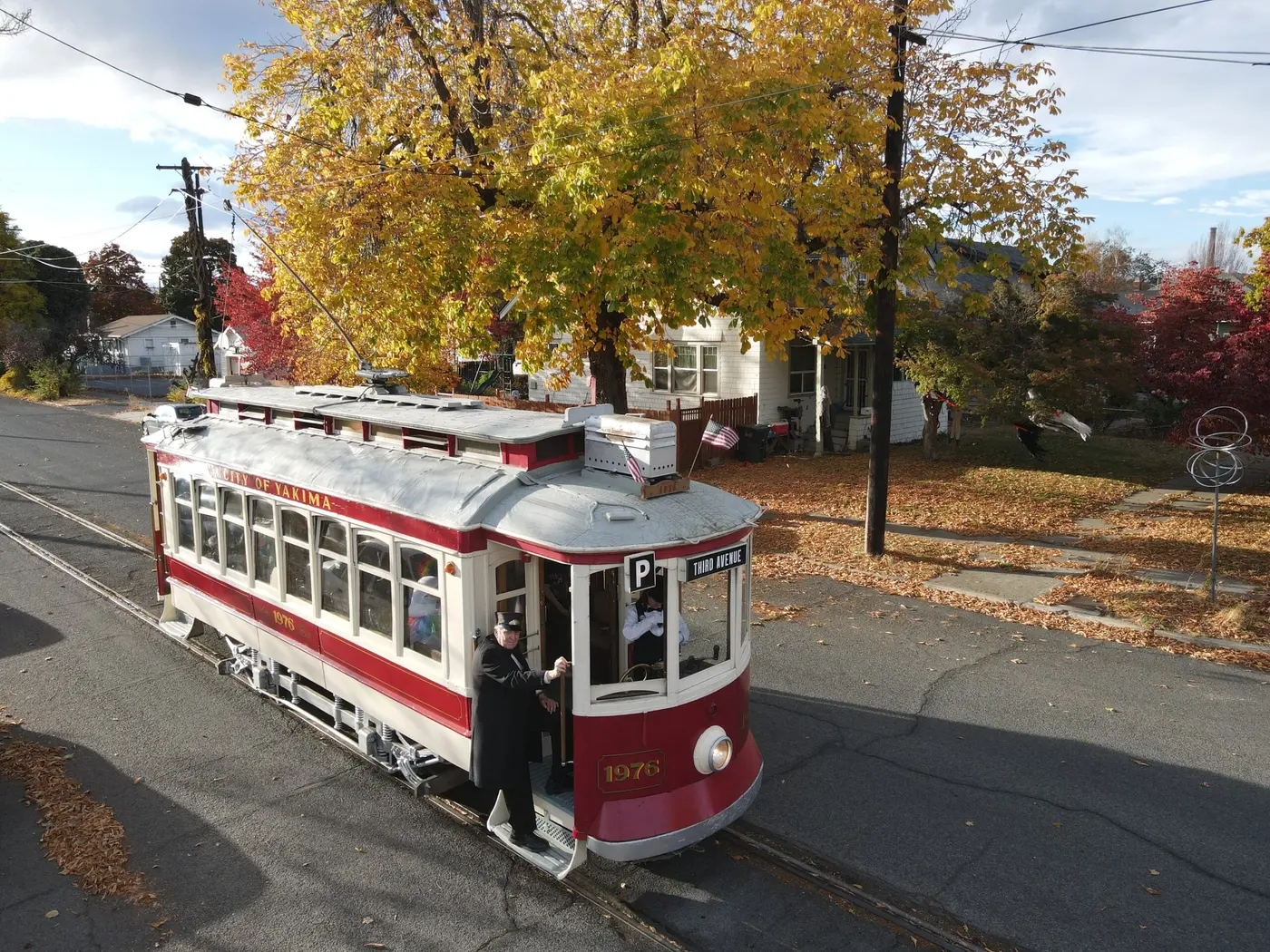
- 1974In 1974 the City of Yakima purchased two streetcars from Portugal to revive passenger service as a tourist operation; the project also served as Yakima's Bicentennial project in 1976. yakimavalleytrolleys.org
- 1974Oporto (Portugal) streetcars #1776 and #1976 arrived in Yakima via Union Pacific on August 28, and streetcar #1776 made the first run of a passenger trolley on the YVT in 27 years on August 29. yakimavalleytrolleys.org
- 1983In May of 1983 the system was replaced with new diesel powered locomotives; the electric system was revived when needed as a substitute. npgallery.nps.gov
- 1985The Union Pacific decided to abandon YVT freight operations in 1985; almost all of the system was donated to the City of Yakima and has been open as a museum since. yakimavalleytrolleys.org
- 1992In 1992 the YVT was listed on the National Register of Historic Places. preservewa.org
- 1994In 1994 the late Les Tonkin, an architect and former Washington Trust board president, devised a total restoration plan for the YVT. preservewa.org
- 2001The Yakima Valley Trolleys organization was incorporated in 2001 to operate the railroad for the City of Yakima. yakimavalleytrolleys.org
- 2024A diamond crossing with the Central Washington Railroad at the north end of Sixth Avenue was removed for maintenance, and a bridge further north was taken out of service, confining the trolley operation mostly to Pine Street. railfan.com
- 2025In May 2025 the Yakima Valley Trolleys were added back to Washington's Most Endangered Places list, after an original listing in 1992, because city plans to rebuild 6th Avenue included possible removal of trolley tracks. preservewa.org
- 2026After the operating agreement between Yakima Valley Trolleys and the City of Yakima expired, the Yakima City Council reinstated it in a 6-1 vote on January 20, 2026. preservewa.org
People
- Kenneth G. Johnsen, co-preparer of the National Register nomination (1983).
- Mark L. Brack, co-preparer of the National Register nomination (1983).
- Les Tonkin, architect retained by the City to devise a total restoration plan for the YVT railroad.
- Jerry Henderson, co-founder of Yakima Valley Trolleys (2001).
- Kenneth Johnsen, co-founder of Yakima Valley Trolleys (2001).
- Paul Edmondson, co-founder of Yakima Valley Trolleys (2001).
- John Kennefick, Union Pacific president who made the inaugural run of Yakima's trolleys.
- Ken Johnsen, proposed the return of passenger trolley service on the YVT to the City Council.
- Nick Richards, YVT general manager (since 1909).
- Paul Class, sent by the City to Portugal to negotiate the purchase of two streetcars.