



Washington County Fair
Hillsboro, Washington County, Oregon. County fair.
Details

- Where
- 801 NE 34th Ave, Hillsboro, OR 97124. Directions
- When
- Friday, July 24 through Sunday, August; opens Friday at 5pm-midnight, Saturdays and Sundays mid-morning to midnight, Mondays-Fridays 5pm-midnight.
- Getting there
- From downtown Portland: Highway 26 west to Exit 61-A, cross over, NW Brookwood Parkway across Cornell Road, right on Veterans Drive.
- Fees
- Free admission every day, all hours, all ages (since 2004).
- Hours
- Open Friday evening and through midnight every night; weekend days open mid-morning. No entry or re-entry into the fair after 10pm every night.
- Access
- Parking $10 per vehicle, $15 for over-sized, cash only; parking free Monday through Thursday. TriMet MAX recommended; the Hillsboro Airport/Fair Complex Station is adjacent to the gates. There is no entry or re-entry into the fair after 10pm every night.
- Walk-in or reserve
- None; free admission for all ages.
- Phone
- 503-648-1416
- Managed by
- Fair Board, president Bill Ganger.
The MAX light-rail line out of Portland stops at the Hillsboro Airport/Fair Complex Station, and from the platform it is a short walk to the gates of the Washington County Fair. No one takes a ticket there. Admission has been free since 2004, every day the fair is open, at every hour, for every age. The fair’s own line is “YOU get to create your own Fair experience.” The grounds lie just south of the Hillsboro Airport along Northeast 34th Avenue and Cornell Road, on public land the county now calls Westside Commons. Until recently it was the Washington County Fair Complex.
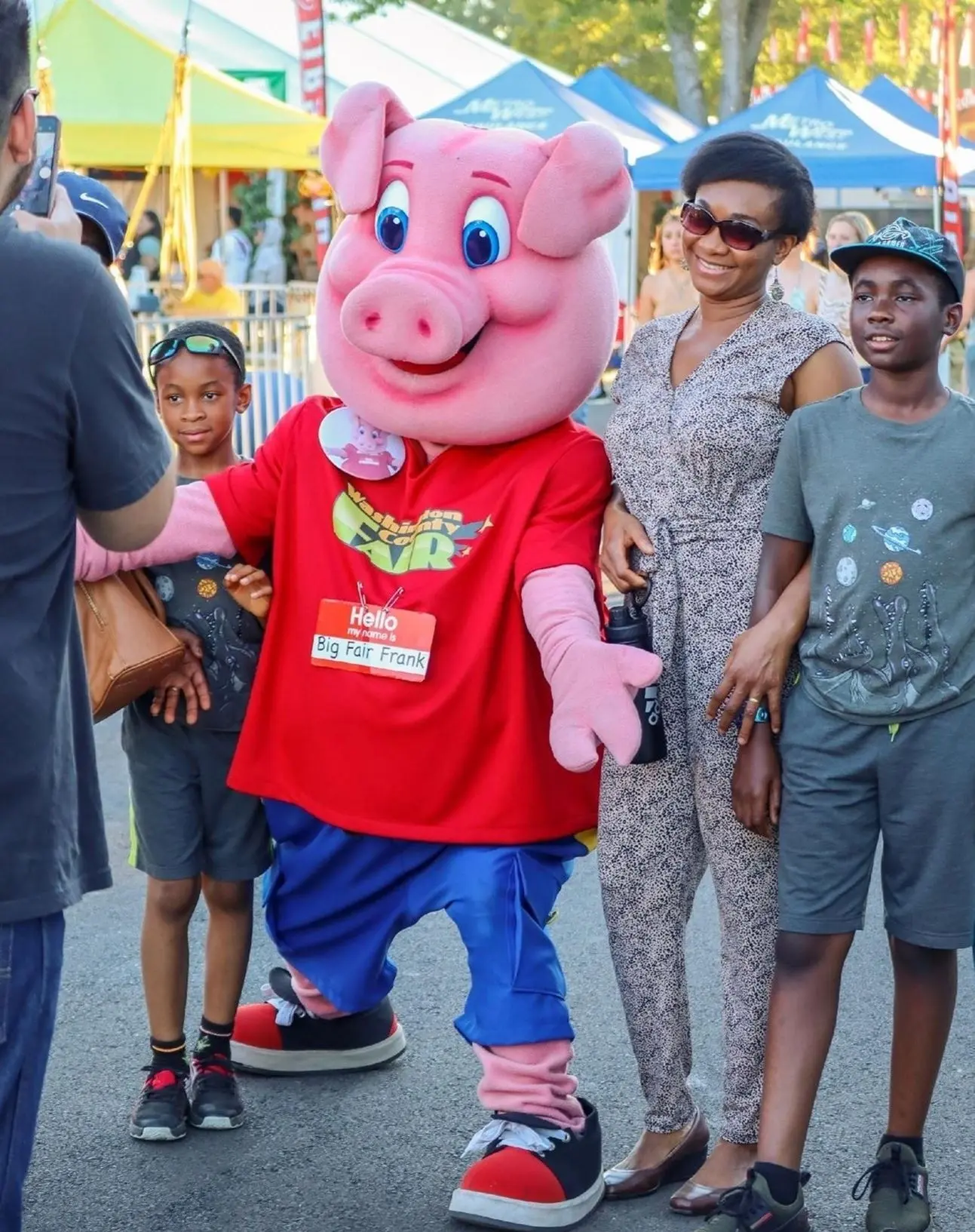
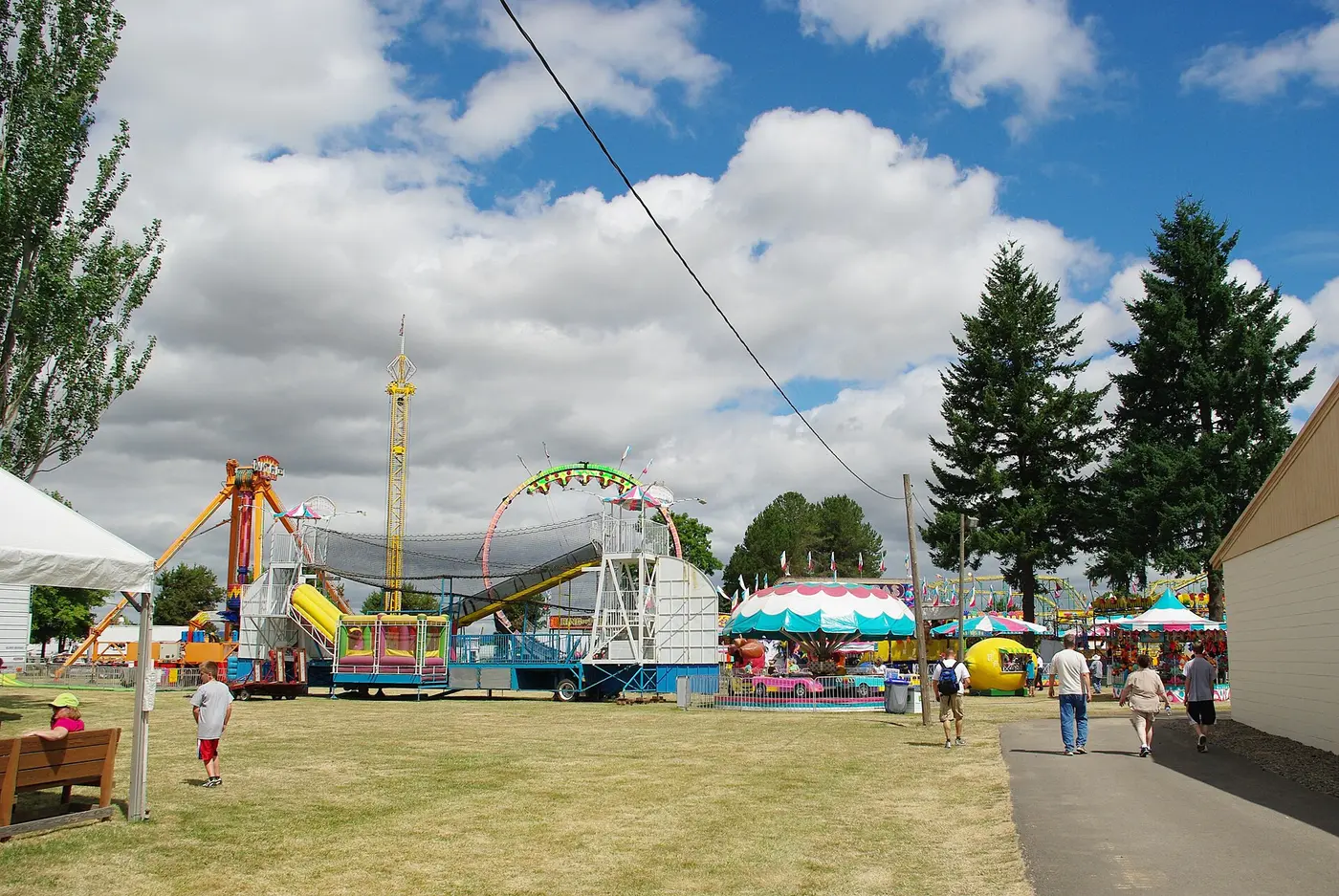
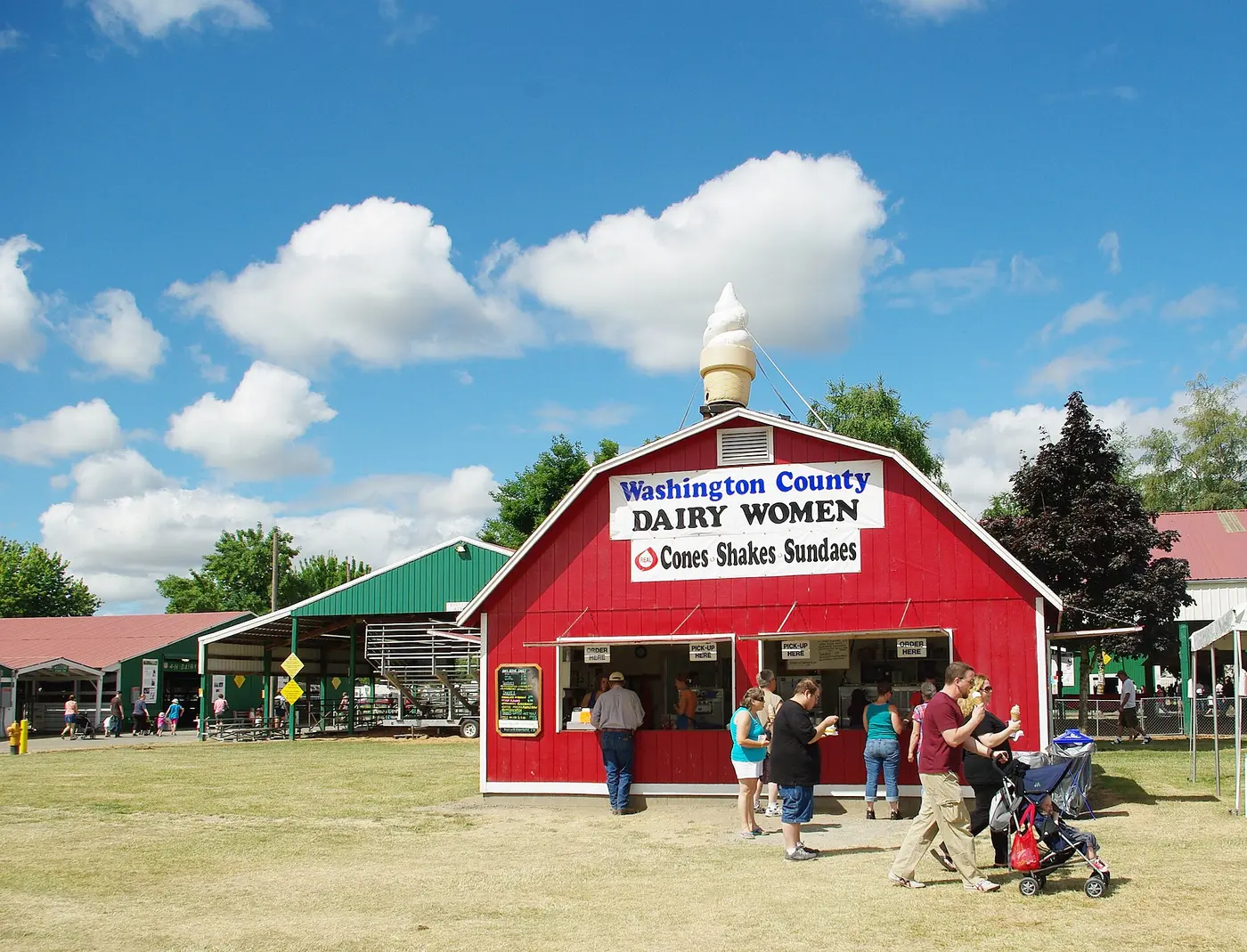
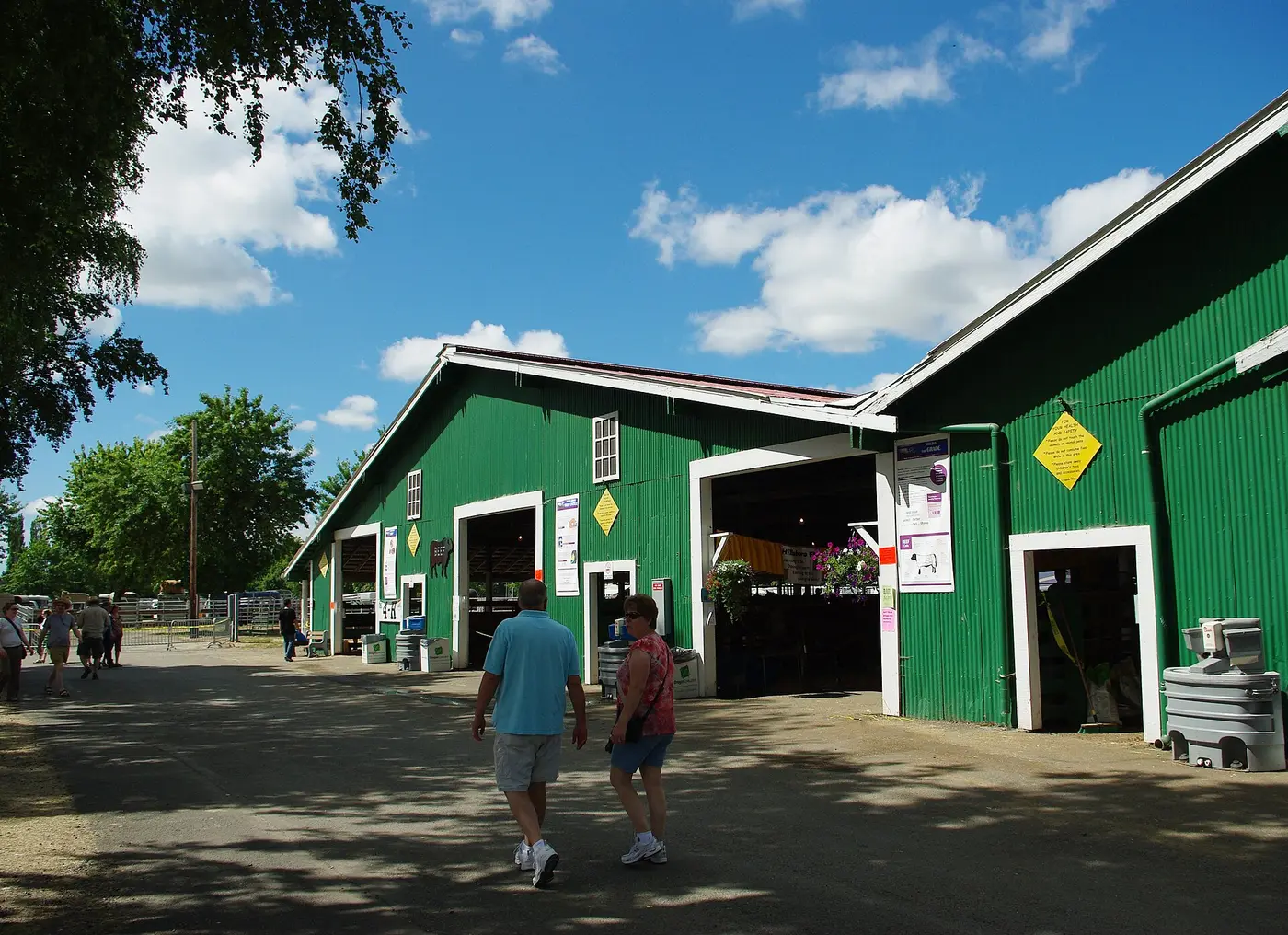
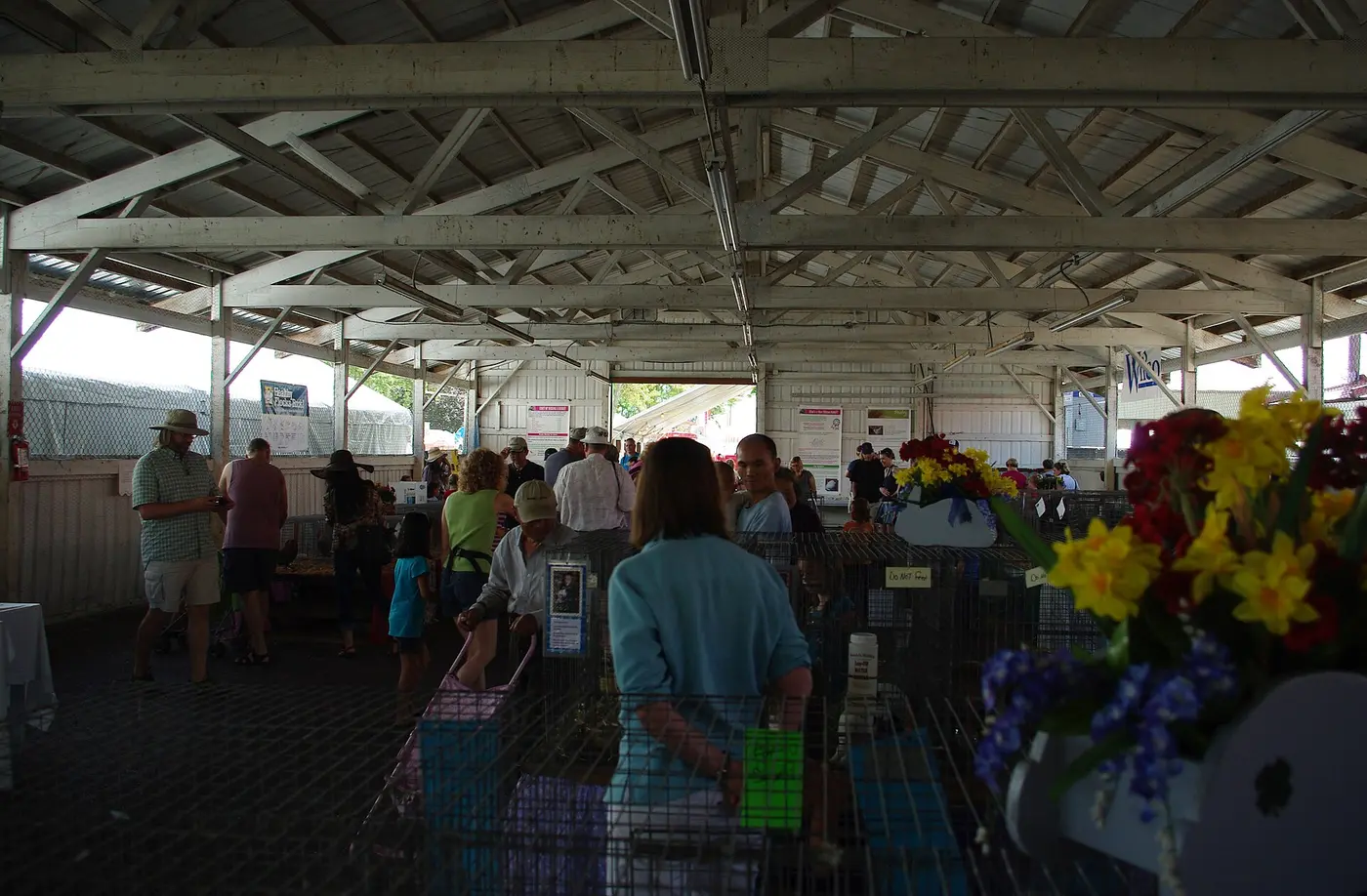
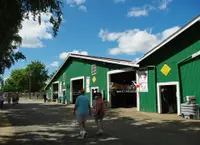
The fair’s posted schedule runs ten days, from a Friday in late July to a Sunday in early August. Weekdays open at 5 p.m. and weekend days at 10 a.m. Every night runs to midnight, but no one is let in or back in after 10. On Saturday and Sunday mornings the food vendors and the carnival may not open until noon. Three stages carry the entertainment: the Main Stage for headline concerts, the Oasis Stage, and the Grove Stage. Beyond the midway are the barns, where 4-H and FFA members show livestock, and the fair posts advice on how to behave safely around the animals. The Hillsboro Argus, in 2012, summed up the fair’s sights and smells as “carnival rides, cotton candy and farm animals.”
A seven-member Fair Board runs the fair. The county commissioners appoint its members to three-year terms. Its president, Bill Ganger, holds the seat for livestock exhibitors, 4-H, and FFA. County Commissioner Jerry Willey sits ex officio. The board meets on the grounds, in the Wingspan Event and Conference Center.
From Forest Grove to Cornell Road
The first Washington County Fair was held in October 1854 by pioneers who had settled the Tualatin Valley, raised families, and farmed. Its site lay in what is now Forest Grove. Over the generations, in county board chair Andy Duyck’s account, county leaders bought and developed a series of public parcels, and each served as the fairgrounds for a time. One was a tract near Shute Park in Hillsboro. Dale and Fred Scheller were deeply involved in moving the fair from Shute Park to the present grounds and in building the main exhibit building there. The Oregonian measured the property along Cornell Road at 101 acres in 2006, and Duyck called it almost 100 in 2018. As early as the late 1960s, Fair Board leaders talked of adding a large “expo center.”
Free at the gate, and losing money
By the early 2000s most of the buildings needed repairs, and many could be used only for showing animals. In 2002 fair supporters, the City of Hillsboro, and the county put a $40 million bond measure before voters to redevelop the complex, and it failed. “Everybody told us this was a great idea,” said Don Hillman, the complex’s executive director. “But they didn’t want to pay for it.”
Attendance was falling until 2004, when Hillman persuaded the board to let people in free at the gate. The fair, then a four-day event, still ran short. Hillman put the 2004 loss at nearly $190,000 and the 2005 loss at about $100,000, in December 2005. The Oregonian gave the 2005 figure as $80,000 the following May. In some years attendance dipped as low as 41,610. The complex kept its budget balanced chiefly with more than $500,000 a year from the county hotel/motel tax, plus rentals. On one December Wednesday in 2005, hundreds of tool buyers streamed through the exhibition hall for the Cummins Tool Sale.
Opus Northwest and the Fair Boosters
On Oct. 8, 2004, the developer Opus Northwest signed a two-year letter of intent to remake the grounds. Opus would build shops on the 60-odd acres west of Northeast 34th Avenue. In exchange, it would put up a new fairgrounds on about 30 acres to the east, with a 100,000-square-foot exhibition hall and an open pavilion. Two studies by Markin Consulting of Maple Grove, Minnesota, released in December 2005, said the new buildings could host more than 82 events a year, against the 40 then held, and clear $774,000 a year. “You can’t do it with old, smelly barns and dark corners anymore,” said Rich Vial, the Fair Board chairman.
The Fair Boosters opposed the plan. They were longtime volunteers who had given many hours to the fair and to upkeep of the grounds, and they considered themselves stewards of the place. Their president, Dave Rohrer, an accountant, called the Markin model a “very aggressive proposal.” The Boosters offered a plan of their own. It would keep the fair where it was, spruce up the old buildings, add a 20,000-square-foot pavilion and a 60,000-square-foot events center, and pay for them from the hotel/motel tax, sponsors, and ballpark rents. It would also lengthen the fair from four days to six and start charging admission again. Lyle Spiesschaert, a farmer who had been part of the fair for 50 years, said: “The people’s property has to stay with the people. Without that you have no space, no vision, no future.” He also said, “trading land for new buildings, I’d rather have the old buildings. Because someday we’ll be able to build up to what we need.”
The quarrel turned personal. Some Boosters called for Hillman’s resignation. One proposed dismissing the complex staff and hiring a retired couple as caretakers, who would open the grounds once a year for the fair. “We’ve been in this spot probably more than half a dozen times in the last 20 years,” Hillman said. Herb Hirst, the Fair Board vice chairman, said: “If we don’t find a way to utilize those grounds better, the whole thing’s going to disappear. You don’t have to be a rocket scientist to figure that out.” In July 2006 the Oregonian set the stakes beside Multnomah County’s fair, which had been reduced to three days that May at Oaks Amusement Park, with a fake cow.
Hillsboro would not consider the zoning change the plan required until the proposal had unified backing. Later in 2006 Opus declined to extend its agreement. John Bartell, an Opus vice president, said the project lacked community consensus. Tom Brian, chairman of the county commissioners, asked the Hillsboro Planning Commission to postpone its zoning hearing and proposed a task force of about 15 people to plan the site’s use and funding.
The Event Center and Westside Commons
The Fairgrounds Revitalization Task Force worked through 2007 and 2008. Its 2008 Master Plan envisioned a 120,000-square-foot exhibit hall. In 2010 the commissioners and the Fair Board adopted a memorandum of understanding that limited the board to planning, preparing, and producing the fair. The same agreement provided for a Fairgrounds Advisory Committee to advise the commissioners on the master plan and capital projects. When the 2012 fair opened, the Argus wrote that it had been “plagued by rivalries” between the Boosters and the two county boards.
The Event Center broke ground in fall 2018. Its plan called for about 40,000 square feet of exposition space and a 14,000-square-foot conference center with a commercial kitchen, and construction was scheduled to finish in spring 2020. Duyck called the groundbreaking “a milestone which will change the course of how we interact with this legacy property.” The builder, Swinerton, noted that some of its crew had grown up going to the fairgrounds and showing in 4-H. The county now describes Westside Commons as a multi-use campus “hosting and producing national-class events on a local scale.” It also stands ready as a shelter for livestock evacuated in an emergency.
A letter from someone who remembers
On July 29, 2025, the Hillsboro Herald ran an unsigned essay titled “The Slow Death of the Washington County Fair.” Within 24 hours of its first posting online, the editor wrote, more than 1,000 people had shared it and signed the accompanying petition. The writer described a different fair from the one the Boosters had defended. In the writer’s account, the stalls are covered with cloth, and the animals sit behind fences. The show rings have moved off the central south lawn to cramped spots between the barns, and livestock shows are scheduled before the public gates open. 4-H and FFA youth are fenced off behind the main grounds, with two access points where boots must be sprayed.
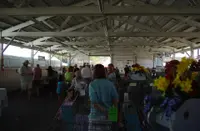
According to the essay, the county demolished the rodeo arena, once home to the tractor pull and the draft horse shows, and built the Wingspan Event Center in its place. The horse barns were removed and never replaced, and the 4-H exhibit buildings and covered stage came down. The writer said the youth projects now sit at the back of the Wingspan building, behind the commercial booths. The Washington County 4-H horse program, the essay says, now holds its fair in McMinnville, in Yamhill County. A reader, Sara Genta, added in the comments that some 4-H events, the Goat Olympics among them, start at 5 p.m., while the public waits at the main gate until 5:20.
Notable Events
- 1854Early Tualatin Valley pioneers held the first fair. cdn.saffire.com
- 1960sFair Board leaders first envisioned adding a large expo center. cdn.saffire.com
- 2002A bond proposed by fair supporters, Hillsboro, and the county to redevelop the fair complex failed. oregonlive.com
- 2004Don Hillman persuaded the board to admit fair visitors free as attendance was falling. oregonlive.com
- 2004Opus signed a two-year letter of intent with the county. oregonlive.com
- 2005Studies requested by the Fair Board projected increased nonfair use of redeveloped fairgrounds. oregonlive.com
- 2006Tom Brian asked the Hillsboro Planning Commission to postpone the fairgrounds zoning hearing because commissioners feared further community division. oregonlive.com
- 2006Brian wanted a task force of about 15 members to plan the site's use and funding, and had talked to potential members. oregonlive.com
- 2007The Fairgrounds Revitalization Task Force produced work and recommendations, with input from several local bodies. cdn.saffire.com
- 2010The Board of County Commissioners and Fair Board adopted an agreement governing coordination and resource sharing. washingtoncountyor.gov
- 2018The long-awaited Event Center broke ground at the Washington County Fair Complex. cdn.saffire.com
- The county asked taxpayers to fund a massive fairgrounds makeover; the proposal was crushed. oregonlive.com
People
- Andy Duyck, County commissioner representing western Washington County and its agricultural interests during the redevelopment dispute.
- Dave Rohrer, Fair Boosters president; the group formed a committee to study the redevelopment reports.
- Dennis Mulvihill, County government affairs officer designated as the board's liaison to the proposed task force.
- Don Hillman, Fair complex executive director who said projected redevelopment profits could support additional fair programs.
- Herb Hirst, Washington County Fair Board vice chairman who argued that the grounds needed better use to survive.
- John Bartell, Opus Northwest vice president who stated that the Fairgrounds project lacked community consensus.
- Lyle Spiesschaert, Fair Boosters spokesman who welcomed discussion after the Opus agreement ended.
- Rich Vial, Fair board chairman who supported redevelopment as a way to serve more county residents.
- Tom Brian, Chairman of the Washington County Board of Commissioners pursuing another attempt to remake the Fair Complex.
- Dale Scheller, Deeply involved in moving the fairgrounds from Shute Park and constructing the main exhibit building.
- Fred Scheller, Deeply involved in moving the fairgrounds from Shute Park and constructing the main exhibit building.
Sources
- bigfairfun.com
- bigfairfun.com/p/information/fair-hours
- bigfairfun.com/p/information/yes-its-is-true--admission-is-free
- bigfairfun.com/p/information/directions-parking
- bigfairfun.com/p/information/fair-board
- bigfairfun.com
- washingtoncountyor.gov/fair
- hillsboroherald.com/the-slow-death-of-the-washington-county-fair
- washingtoncountyor.gov/elections/documents/november-2002-voters-pamphlet/download?inline=
- cdn.saffire.com/files.ashx?f=EC_Newsletter_September18.PDF&rid=WashingtonCountyFair&t=fg
- oregonlive.com/argus/2012/07/traditions_and_tensions_at_the.html