Rifle Falls Fish Hatchery
Rifle, Garfield County, Colorado. Cold water hatchery; Open year-round.
Details

- Where
- 11466 State Highway 325, Rifle, CO 11466. Directions
- When
- Daily, 8 a.m. to 4 p.m.
- Getting there
- Located 14 miles north of Rifle on Hwy. 325; visitor parking in the lot on the west side of the road.
- Fees
- Free.
- Access
- Some handicap accessible facilities, limited car birding.
- Walk-in or reserve
- Self-guided tours year-round; volunteers on-site during the summer offer tours.
- Phone
- 970-625-1865
- Website
- cpw.state.co.us
- Managed by
- Colorado Parks and Wildlife.
- Established
- 1954.
- Coordinates
- 39.69492, -107.70083.
Below the limestone cliffs
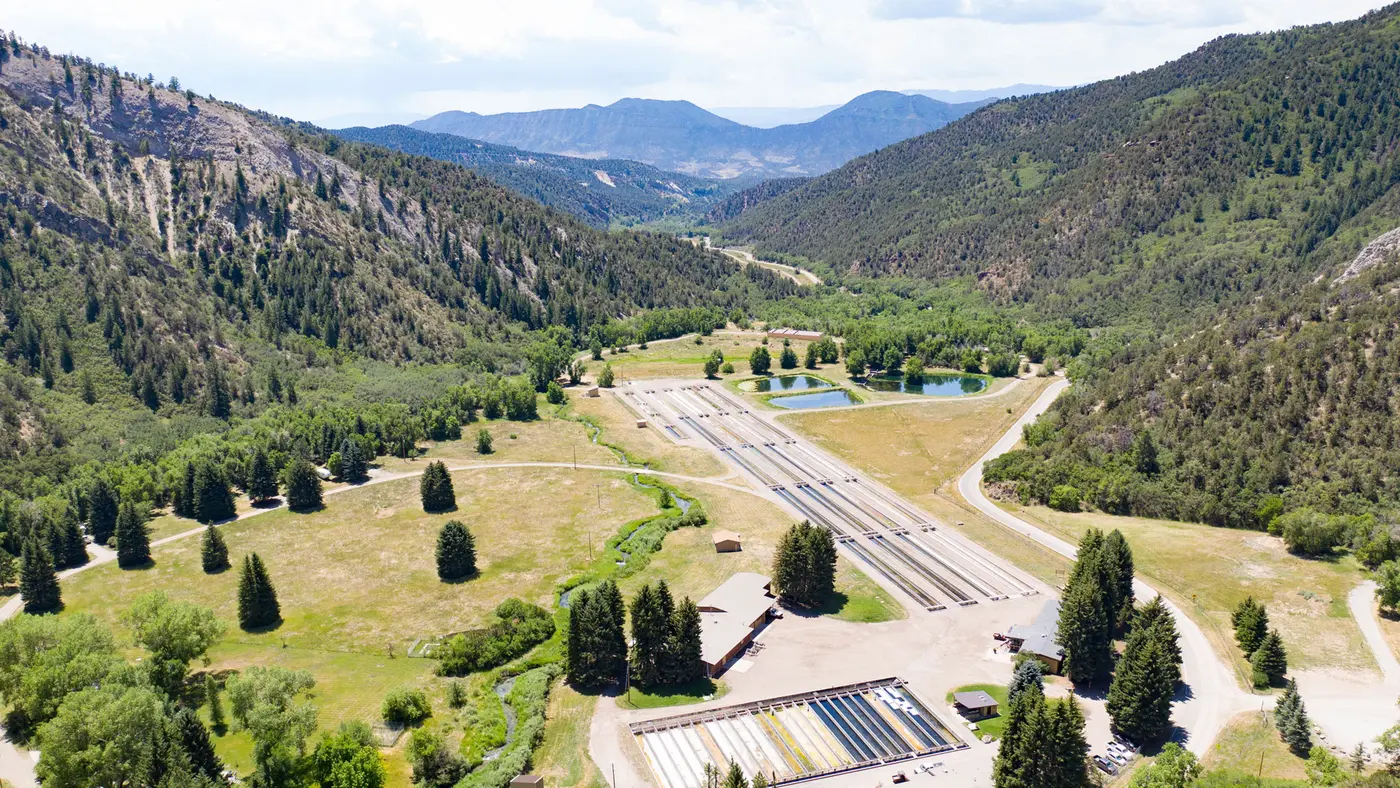
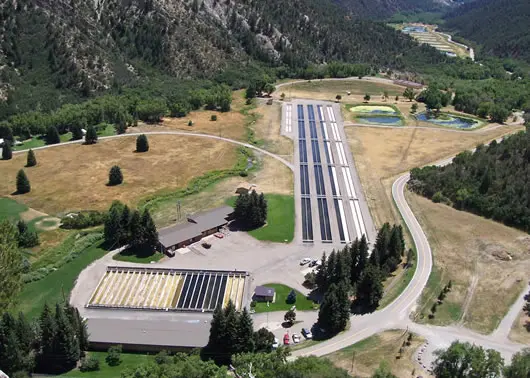
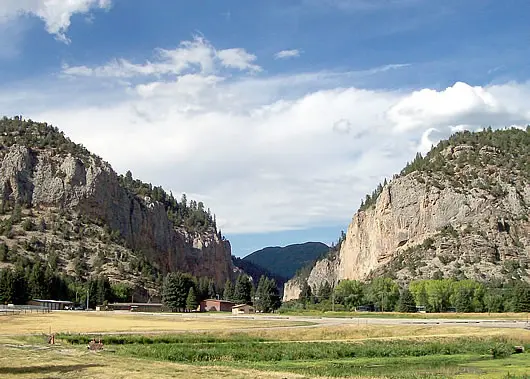
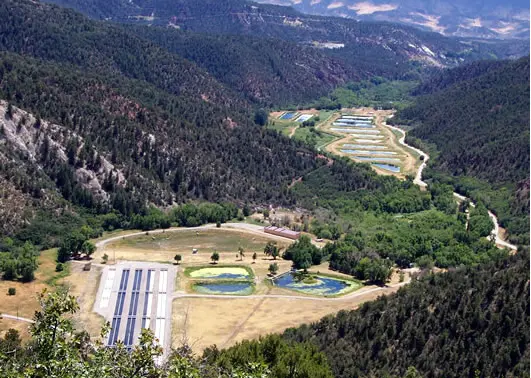
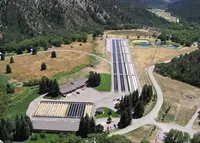
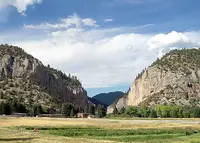
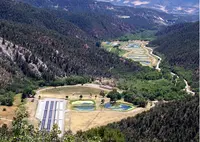
Fourteen miles north of Rifle on Highway 325, a parking lot on the west side of the road serves the Rifle Falls Fish Hatchery. The grounds lie at the foot of limestone cliffs about 300 feet tall, with Rifle Falls State Park to the south and the city of Rifle’s Mountain Park to the north. The hatchery is run by Colorado Parks and Wildlife, and admission is free. Visitor records show at least 10,000 people come each year.
The visitor center has a viewing room and racks of free posters and pamphlets. Outside, the “Feed the Fish” dispensers take quarters. CPW asks visitors to give the trout nothing but the feed from those dispensers and to keep their hands out of the water. Self-guided tours run year-round, and in summer volunteers on site lead tours. There is a fishing pond for children. Two more ponds sit directly above the falls, out of sight of the highway, and are open to public fishing. Pets are not allowed on hatchery grounds.
The cliff behind the hatchery holds a large colony of white-throated swifts, according to the Colorado Birding Trail. Golden eagles and turkey vultures nest in the cliffs across the canyon. The hatchery’s own brochure describes a nesting pair of golden eagles whose nest can be watched from the visitor center through binoculars. Bald eagles come through in winter. Wild turkey, belted kingfisher, American dipper and great blue heron use the grounds, as do mule deer, beaver, muskrat, ermine, pine marten and marmot. A gravel road runs west from the parking area for a mile through Gambel oak. Virginia’s, MacGillivray’s, yellow and yellow-rumped warblers live along it, and northern saw-whet owls have been heard there at night. The Bobcat Trail follows Rifle Creek between the hatchery and the state park. Past the hatchery, drivers with four-wheel-drive, high-clearance vehicles can go on into the White River National Forest and the Flat Tops Wilderness area.
Rainbows by the truckload
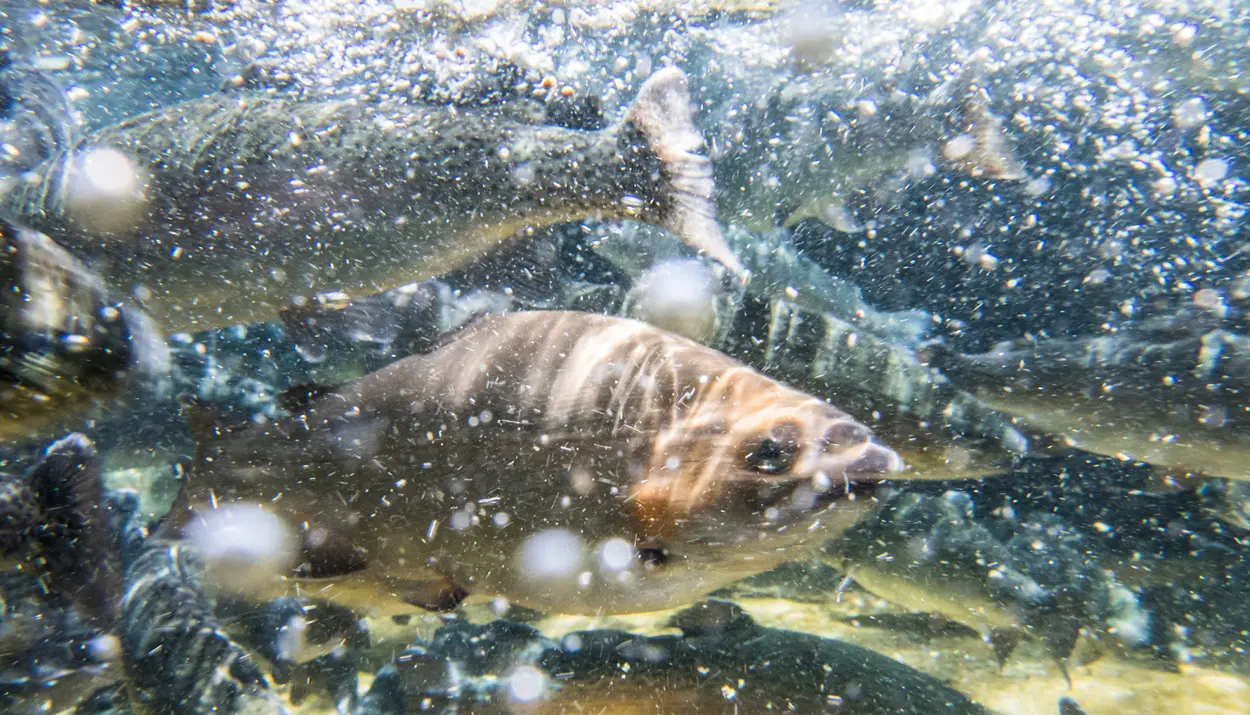
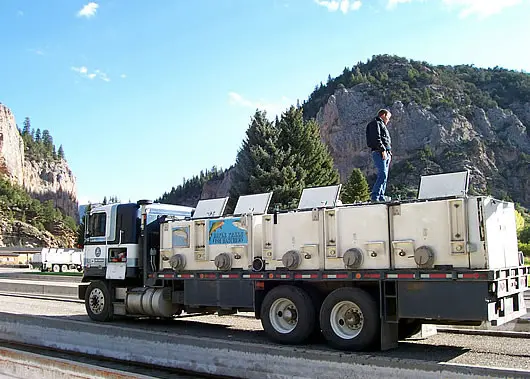
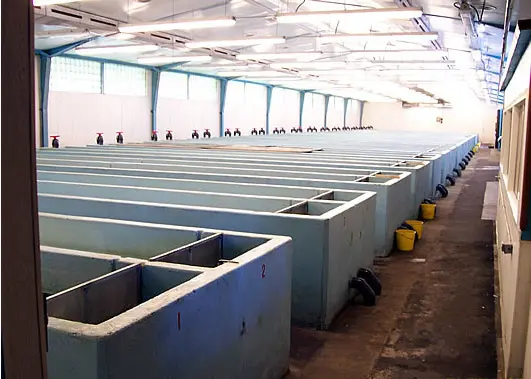
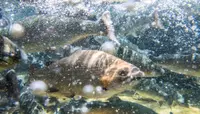
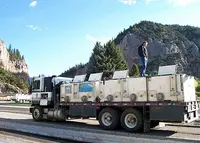
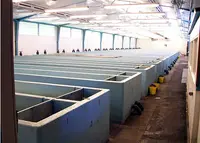
Just past the threshold of the hatchery office, a 2007 Associated Press story reported, a sign reads, “Our mission is your fishin’.” Rifle Falls is the largest state-owned and operated trout production hatchery in Colorado. It raises fingerlings and catchables of rainbow, Snake River cutthroat, brook, brown and cutthroat trout. Each year it stocks more than 800,000 catchable rainbows and close to four million fingerlings. They go to stream sections, lakes and reservoirs in western Colorado, including Granby, Stagecoach, Dillon, Miramonte, Pueblo and Lake John. Whirling-disease-resistant fingerlings go into the Colorado, Gunnison, Yampa, White and Roaring Fork rivers, and catchables go to waters along the Front Range. The brochure puts it plainly: anyone who has caught a rainbow along the I-70 corridor between Utah and Denver has a strong chance of holding a Rifle Falls fish. The full-time technicians drive a fleet of commercial trucks more than 40,000 miles a year.
The water comes from underground collector lines, 11 million gallons of spring water a day. Before it reaches the fish, it is enriched with liquid oxygen and passed through a gas exchange column that strips out excess nitrogen. The brochure gives its temperature as 55 degrees. Dave Capwell, hatchery manager in 2007, called it a constant 59. “If it were in the low 60s it would be even better,” he said. “But this is a good temperature that allows us to raise fish year-round.” Rainbows reach catchable size, ten inches, in about ten months. Brown trout fingerlings are reared through the winter.
In 2007 Capwell had been at Rifle 17 years. As manager he was required to live in onsite housing, and he led a crew of eight full-time Division of Wildlife employees. By 8 a.m. the fish had had the first of four daily feedings. The crew met to set the stocking schedule, then netted catchable rainbows from the raceways into a tanker truck with a 1,200-pound payload. At the water, a valve at the base of the tank opened, and fish and water poured out through a pipe about a foot across and eight feet long. “December and January are really the only months that we aren’t stocking,” Capwell said. “June and July are just hectic for us because everything is thawed out and people are out fishing.” For backcountry lakes, he said, “We’ll pack them up just like gold fish in a plastic sack from Wal-Mart.” When asked whether he liked trout fishing, he answered with a question: “You think a butcher wants to go home and have a steak for dinner?” By his account, three-quarters of the work was catchable rainbows and the rest was species restoration. “Without hatcheries a lot of waters would be barren today,” he said.
A photograph with that story shows Desiree Powell, then a wildlife technician III fish culturist, in the isolation building. She is scooping unhatched eggs and debris from troughs holding five-week-old cutthroat. Powell joined CPW in 1997. By a 2025 profile she had been at Rifle 26 years and was assistant manager. She came to fish sideways: “I wanted to work closely with frogs but there were no real jobs directly associated with frogs. So fish was the next best thing.” Her job now, she said, is the schedule: “I make plans and schedules for hauling fish every week. I make sure the crew has all they need to get the job done. I love it!” She also named one thing the public does not realize: “a big trout will eat smaller trout. … Trout parents will eat their own eggs.”
A hotel, a power plant, a trout farm
The hatchery grounds had other uses before the raceways. The state park’s brochure says the area opened to ranching in 1883, and the falls soon drew tourists and cabins. The Gazette, citing park history, says James Watson established a ranch in the 1880s and charged admission to the falls and caves. In the next decade Allen Zerbe bought the property to build a resort. A hotel opened upstream from the falls in the early 1900s and burned down in 1923. In 1910 the town of Rifle built a hydroelectric plant at the base of the falls. The park brochure says the plant redirected the water into the three falls seen today, and the Gazette says it ran for about 50 years.
The hatchery went up on the grounds of the old hotel, though sources differ on the date. The CPW hatchery brochure says it was completed in 1954 after three years of work, at a cost of $1.1 million covering land, water rights, materials and equipment. It stocked 3.5 million trout in its first year. The 2007 story says it was built during 1953 and began stocking in 1954. A 2022 CPW magazine piece gives 1955. In its early days the place claimed the title World’s Largest Trout Farm. The park brochure says the hatchery was eventually sold to the Colorado Game and Fish Department in 1959. In 1966 land was carved out of hatchery property and dedicated to the Department of Parks and Outdoor Recreation, making Rifle Falls a state park. The park brochure gives the parcel as 42 acres, and the Gazette gives 48.
The water came first from the creek. The brochure names East Rifle Creek. In 2007 Capwell described 40 cubic feet per second from Rifle Creek running through the facility when all 24 nursing ponds were in use. Renovations at the end of the last century switched the hatchery to spring water. The brochure attributes the switch to the arrival of whirling disease, and Capwell described it as a way to keep disease in Rifle Creek’s fish away from the hatchery’s own. The spring supplied about a third of the old flow, 15 cubic feet per second. “We are still producing about the same amount of fish on one-third of the water by double cropping everything,” Capwell said.
Fish from the Gold Mountain Fire
The same renovations added an isolation unit for rearing native cutthroat. Eggs spawned at the Durango and Glenwood Springs units hatch there. Each year between 100,000 and 250,000 two-inch fry are flown to high lakes in the short alpine summer between Independence Day and Labor Day.
In July 2026 the unit took in wild fish. The Gold Mountain Fire had ignited June 27 northeast of Ouray and was burning toward Nate Creek, the only stream known to hold a strain of cutthroat carrying a genetic marker called the “Nate Creek Haplotype.” On the morning of July 15, CPW aquatic biologist Eric Gardunio and a team of ten CPW staff went in under fire escort. They hiked three-quarters of a mile and 400 vertical feet down through smoldering forest to the creek, and they had until 1 p.m. They stunned the fish with electrofishing backpacks and netted 103 cutthroat between three and seven inches long. Fire crews and CPW staff carried the fish out in five-gallon buckets, and the team left at 12:50 p.m. as the wind shifted. Roaring Judy Fish Hatchery manager Seth Firestone loaded the fish into a hatchery truck for a ride of roughly 160 miles to Rifle Falls, which had isolation space when many other units were full of greenback cutthroat evacuated from the Willow Fire.
“The Nate Creek cutthroats arrived in good condition after collection and transport to the Rifle Falls isolation facility,” said hatchery manager Gary George. “The fish were sorted by size prior to bringing them into the facility and placing them into two spring fed circular tanks.”
CPW planned to hold them there until the fire no longer threatened the creek. Then they could be returned to Nate Creek or used to start a population in an isolated lake. “These beautiful fish represent a living part of the history of this place,” Gardunio said.
Notable Events
- 1880sThe park history traces tourism to the 1880s, when James Watson established a ranch and charged admission to the falls and caves. gazette.com
- 1900sA hotel opened upstream from the falls in the early 1900s. gazette.com
- 1923The upstream hotel burned down in 1923. gazette.com
- 1953The hatchery was built during 1953. aspentimes.com
- 1954The hatchery started stocking fish in 1954. aspentimes.com
- 1954Completed in 1954; in its first year of production the Rifle Falls Unit stocked 3.5 million trout. cpw.state.co.us
- 1954Completed after three years for $1.1 million, including land, water rights, materials and equipment. cpw.state.co.us
- 1959The brochure states that the hatchery was eventually sold to the Colorado Game and Fish Department in 1959. cpw.state.co.us
- 196642 acres were carved out of hatchery property and dedicated to the Department of Parks and Outdoor Recreation, officially making Rifle Falls a Colorado State Park. cpw.state.co.us
- 2026Rescued cutthroat trout were loaded by Roaring Judy manager Seth Firestone and took a roughly 160-mile ride to available isolation space at Rifle Falls Fish Hatchery. coloradooutdoorsmag.com
- Renovations at the end of last century switched the hatchery from creek water to spring water and added an isolation unit for rearing native cutthroats. cpw.state.co.us
- 10 CPW employees rescued 103 Uncompahgre cutthroat trout from Nate Creek; the fish were transported about 160 miles to Rifle Falls Fish Hatchery, to remain until the habitat threat passed. durangotelegraph.com
- Allen Zerbe bought the property to build a resort in the decade following the account's 1880s ranch establishment. gazette.com
People
- Dave Capwell, Hatchery manager leading eight full-time Division of Wildlife employees (17 years at the Rifle hatchery).
- Desiree Powell, Assistant Manager at Rifle Falls Fish hatchery; with Colorado Parks and Wildlife since 1997 (26 years at Rifle, self-reported).
- Austin Phillips, CPW member of the Nate Creek rare-trout rescue team, whose fish were brought to Rifle Falls.
- Cameron Brown, CPW member of the Nate Creek rare-trout rescue team, whose fish were brought to Rifle Falls.
- Dan Kowalski, CPW member of the Nate Creek rare-trout rescue team, whose fish were brought to Rifle Falls.
- Gary George, Rifle Falls Hatchery Manager reporting the rescued Nate Creek cutthroats' arrival in good condition.
- Seth Firestone, Roaring Judy Fish Hatchery Manager who loaded rescued cutthroat trout for transport to Rifle Falls isolation space.
- Valerie Thompson, Fish and Aquatic Program Manager with the Grand Mesa, Uncompahgre and Gunnison National Forests, involved in coordinating the Nate Creek rescue.
- Eric Gardunio, CPW aquatic biologist who led the Nate Creek trout rescue effort; the rescued fish were taken to Rifle Falls.
- Allen Zerbe, Buyer of the earlier Falls property intending to build a resort; not identified as a hatchery founder (The next decade after the 1880s).
- James Watson, Earlier Falls-property rancher who charged admission to the falls and caves; not identified as a hatchery founder (1880s).
Sources
- cpw.state.co.us/hatchery/rifle-falls
- cpw.state.co.us/sites/default/files/dam/m9vpubuodt/rifle-falls-state-fish-hatchery.pdf
- cpw.state.co.us/fish-hatchery-tours
- cpw.state.co.us/fish-hatcheries
- visitrifle.com/area/rifle-fish-hatchery
- coloradobirdingtrail.com/site/rifle-falls-fish-hatchery
- coloradooutdoorsmag.com/2025/06/23/hatchery-the-women-of-cpw-fish-hatcheries-desiree-powell
- postindependent.com/news/new-fire-burning-by-rifle-fish-hatchery-evacuations-ordered
- aspentimes.com/news/rifle-hatchery-our-mission-is-your-fishin
- coloradooutdoorsmag.com/2022/08/05/colorado-hatcheries
- cpw.state.co.us/sites/default/files/dam/xrtnpsxayb/rifle-falls-state-park-brochure.pdf
- gazette.com/2024/07/01/exploring-rifle-falls-stunning-triple-waterfall-is-as-close-to-the-tropics-you-can-get-in-colorado
- coloradooutdoorsmag.com/2026/07/24/if-we-give-them-a-chance
- durangotelegraph.com/news/the-pole/trout-911