
.jpg)
Lower Deschutes River Back Country Byway
Maupin, Wasco County, Oregon. E-bike rental outfitter; Year-round.
Details

- Where
- Maupin, Wasco County, OR. No street address stated. Directions
- Getting there
- From Maupin, Oregon: On the east side of the Deschutes River drive either direction on the Deschutes River Access road.
- Fees
- No fee to use the Back Country Byway. All campgrounds charge fees year-round. Boater Passes are required year-round, for both day and overnight use, for anyone using a watercraft or any other floating device as a means of transport on the Lower Deschutes River.
- Access
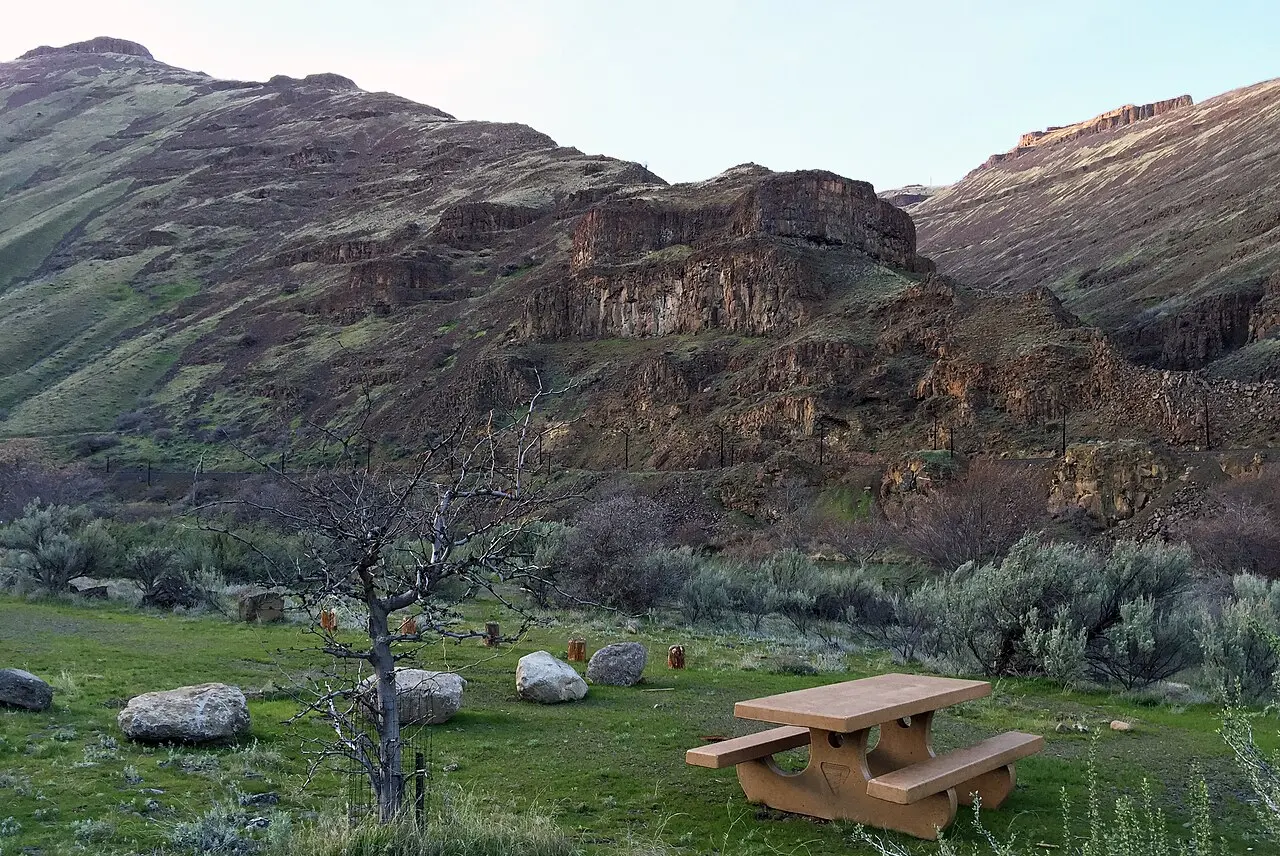
- Less than an hour away at Maupin, you can begin a unique journey along the Deschutes River for an exploration that provides a direct route to solitude on a gentle road that winds for more than forty miles.
- Walk-in or reserve
- Developed recreation sites along the back country byway are available on a first-come, first-served basis.
- Phone
- 541-416-6700
- Website
- blm.gov
- Managed by
- Prineville District Office.
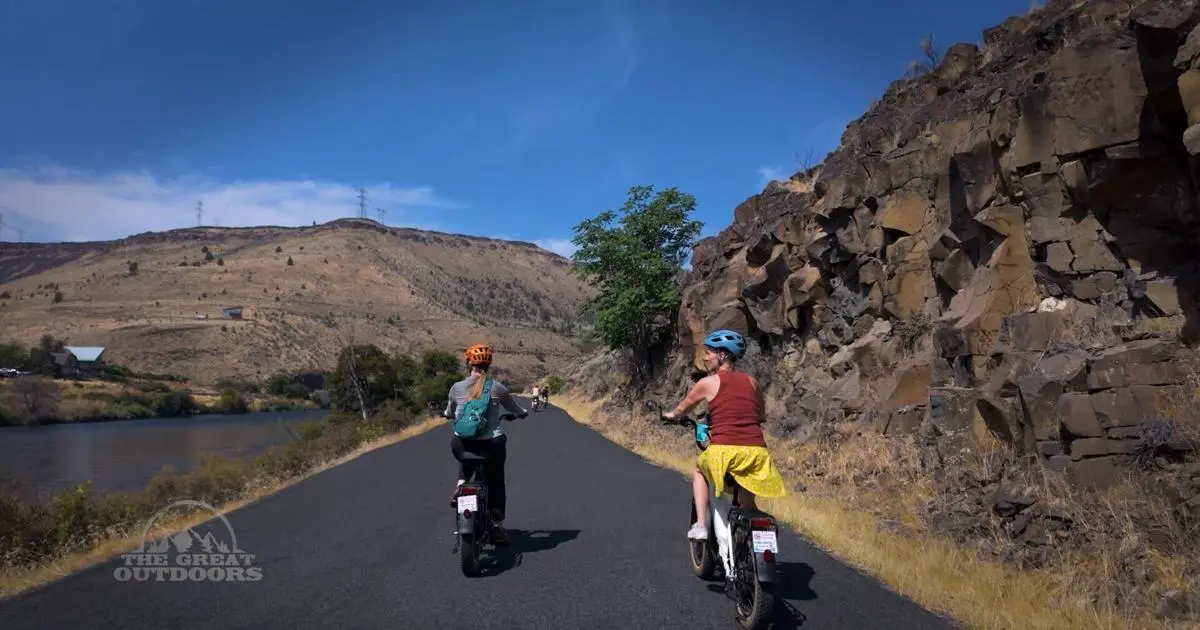
Maupin outfitter offering hourly rentals of full suspension, Class 3 cargo e-bikes for scenic rides along the Wild and Scenic Lower Deschutes River between Maupin and Sherars Falls, with views of rafters at Oak Springs, Mt. Hood, and Sherars Falls.
Notable Events
- 1872Perry Maupin arrived at the present townsite of Maupin in 1872, built a ferry from the west side of the Deschutes to the mouth of Bakeoven Creek, and built the first house in Maupin. maupinoregon.com
- 1910The house that stands beside the byway just south of Maupin was constructed in 1910 by the Des Chutes Railroad Company, a subsidiary of the Union Pacific Railroad. blm.gov
- 1910J.O. Elrod platted the town but turned the property back to Mrs Staats, who filed the plat in Wasco Co records in May 1910. maupinoregon.com
- 1910James J. Hill and Robert S. Lovett, Harriman's successor, worked out an agreement for joint operation by May 1910. oregonhistoryproject.org
- 1911While Harriman did not live to see the Des Chutes Co. line finished, Hill drove the final spike in the Oregon Trunk line on October 5, 1911; after years of conflict both rail companies agreed to use the Oregon Trunk line, as it was believed to be better constructed. blm.gov
- 1911The Oregon Trunk won the race, reaching Madras on Feb. 11, 1911; for their line from the Columbia they had built seven tunnels, 10 steel bridges and 79 wood trestles. madraspioneer.com
- 1911The race between the Oregon Trunk R.R. and Union Pacific R.R. up the Deschutes River ended at Metolius on February 15, 1911. The Oregon Trunk won. nuggetnews.com
- 1921On September 10th 1921 a fire virtually destroyed every business and nearly leveled the whole town; the loss was estimated at $70,000. maupinoregon.com
- 1922The City of Maupin was incorporated on April 15th 1922, the year after the fire that nearly leveled the town. maupinoregon.com
- 1930sThe property went into private ownership when the Des Chutes Railroad was abandoned in the 1930's. blm.gov
- 1935The railroad track along the east side of the river at Maupin was abandoned in 1935, and has now become the Deschutes River Access Road. maupinoregon.com
- 1960sUniversity of Oregon archaeologists excavated a habitation site at Macks Canyon Campground; it is now listed on the National Register of Historic Places. fws.gov
- 1964The historic floods had little effect on channel geomorphology because earlier floods and landslides had left coarse, voluminous valley-bottom deposits. research.fs.usda.gov
- 1968The BLM acquired the property in 1968. blm.gov
- 1988The designated reaches included the lower Deschutes from the Pelton Reregulating Dam to its confluence with the Columbia River. fws.gov
- 1989The BLM Scenic and/or Back Country Byway roster lists OR Lower Deschutes River with a designation date of 09/26/89, BCB Type I, 36 miles. web.archive.org
- 2006It was listed on the National Register of Historic Places on November 29, 2006, based on its association with railroad construction in the early 1900s. blm.gov
- 2010sThe building was restored in the mid 2010s using the original Union Pacific color scheme. blm.gov
- Two railroad owners competed to complete their lines; much of the later byway used one of the former railbeds. blm.gov
- Euro-American exploration and fur trapping began in the Deschutes Canyon. fws.gov
- The Missoula floods backed up the Deschutes from the Columbia and covered the downstreammost 60 km of the valley with bedded silt and clay. research.fs.usda.gov
- A large, possibly meteorologic flood left boulder bars and high sand and silt deposits beside the channel. research.fs.usda.gov
- A large Pleistocene lahar from a Mount Jefferson eruption left bouldery deposits along most of the canyon's valley margins. research.fs.usda.gov
People
- E.H. Harriman, announced his intention to build a railroad in the Deschutes River Canyon, formed the Des Chutes Railroad Company and began to survey the route his rail would take (in the early 1900s).
- James J. Hill, purchased the Oregon Trunk Railroad with people and funding behind the scenes and worked on the opposite side of the river from Harriman, triggering the railroad race to complete the 45-mile line first (during the Deschutes Canyon railroad race).
- Jay Freeman, Sherman County sheriff whose involvement led to arrests during the railroad war, after which local courts ordered access to the river and key water supplies (during the railroad construction race).
- Porter Brothers, contractor for Hill's Oregon Trunk, which started work on the west side of the Deschutes (July 1909).
- Twohy Brothers, contractor for Harriman on the Des Chutes Railroad, which started moving dirt on the east side of the Deschutes that the byway now follows (July 1909).
- Olivia Confer, suggested the name that first postmaster W.H. Staats gave the town of Maupin (at the time the railroads were building up the Deschutes).
- Perry Maupin, arrived at the present townsite of Maupin, built its first ferry and its first house (from 1872).
- W.H. Staats, started the first store in Maupin, was its first postmaster, and named the town (at the time the railroads were building up the Deschutes).
- John F. Stevens, civil engineer assigned by James J. Hill to design a route to Bend (from 1909).
- Robert S. Lovett, Harriman's successor who worked out the joint-operation agreement with James J. Hill (May 1910).
- W.F. Nelson, Seattle railroad builder who incorporated the Oregon Trunk Railway and planned a route up the Deschutes (1906).
Sources
- blm.gov/visit/lower-deschutes-river-back-country-byway
- blm.gov/documents/oregon-washington/public-room/map/oregon-lower-deschutes-river-back-country-byway
- blm.gov/visit/maupin-section-foreman-house-historic-site
- maupinoregon.com/the-train
- maupinoregon.com/maupin-history
- oregonhistoryproject.org/narratives/central-oregon-adaptation-and-compromise-in-an-arid-landscape/industrial-period-1910-1970/railroads-into-central-oregon
- madraspioneer.com/2024/03/31/railroad-race-still-amazes-after-more-than-a-century
- oregonlive.com/travel/2016/12/how_oregons_rivers_got_their_n.html
- fws.gov/rivers/river/deschutes
- research.fs.usda.gov/treesearch/24510