

Leadville National Fish Hatchery
Leadville, Lake County, Colorado. National fish hatchery.
Details

- Where
- 2846 Highway 300, Leadville, CO 80461. Directions
- When
- Annual 5th grade Pathways to Fishing Program; supports the Fish Hatchery 5K running race.
- Fees
- $.25 for a bucket of fish food to feed the fish.
- Hours
- Office hours Mon-Fri 7:00am - 3:30pm.
- Access
- Open to the public; close-up view of the fish production process.
- Walk-in or reserve
- Educational programs/tours by appointment for organized programs and school groups during business hours; dependent on staff availability.
- Phone
- (719) 486-0189
- Website
- fws.gov
- Managed by
- U.S. Fish and Wildlife Service.
- Established
- 1889.
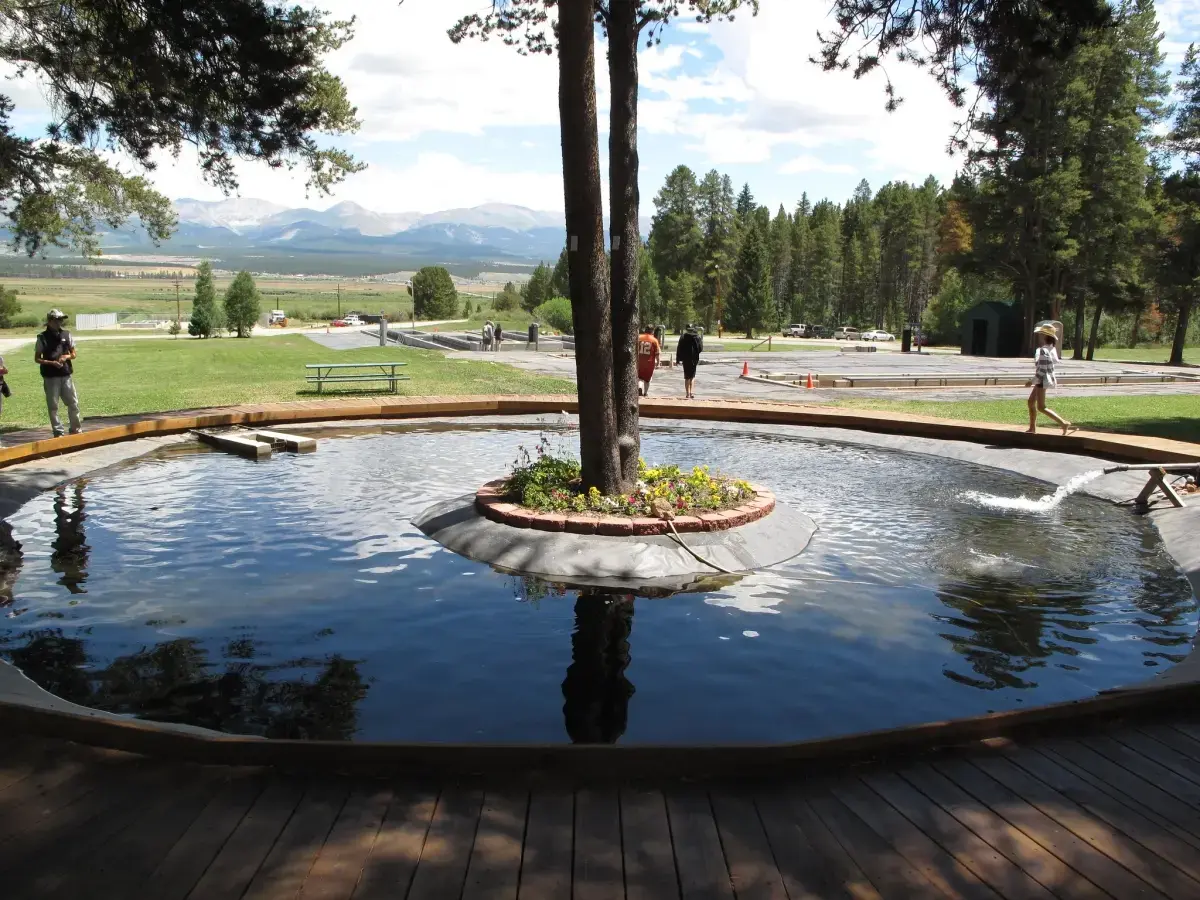
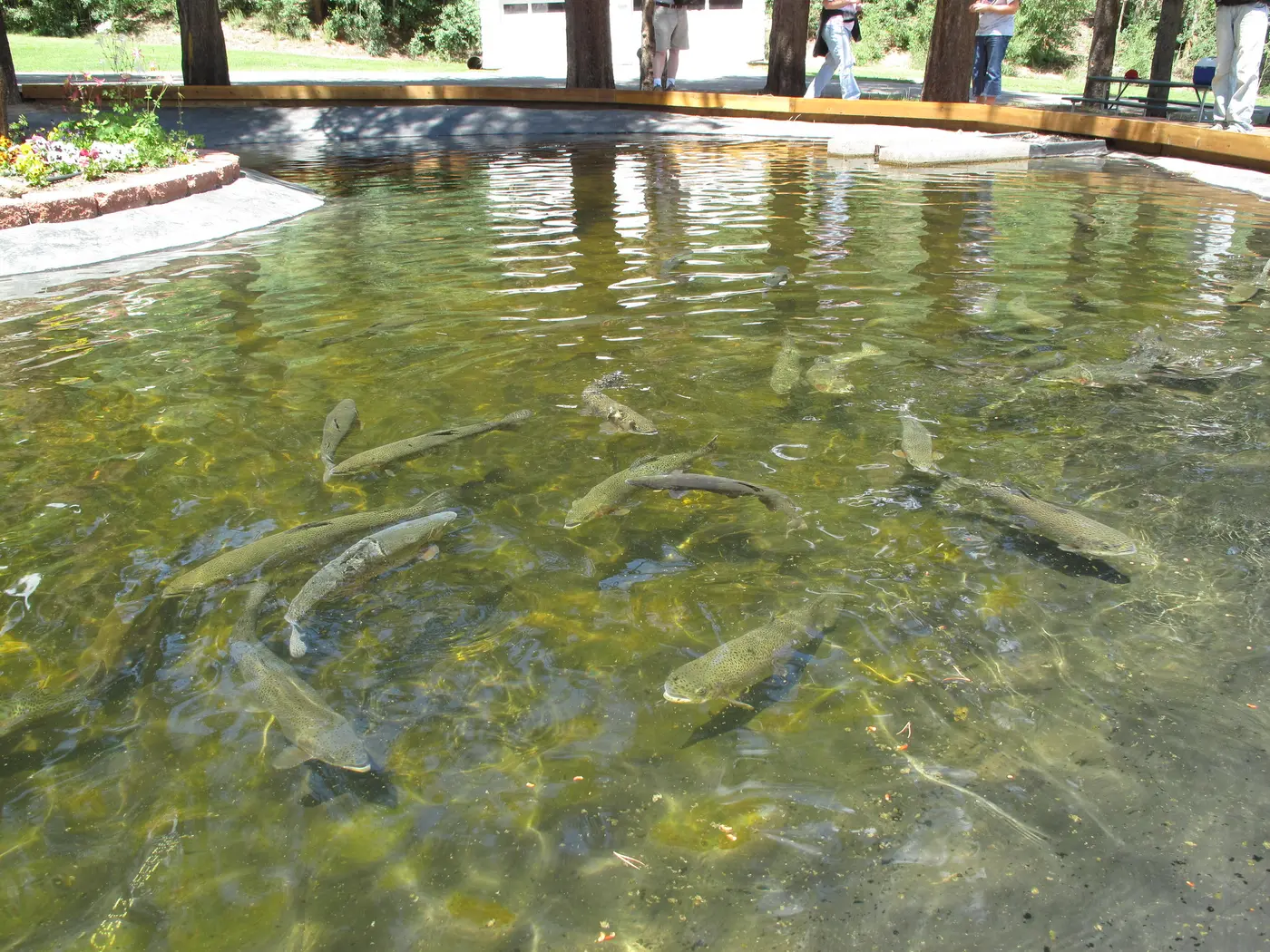
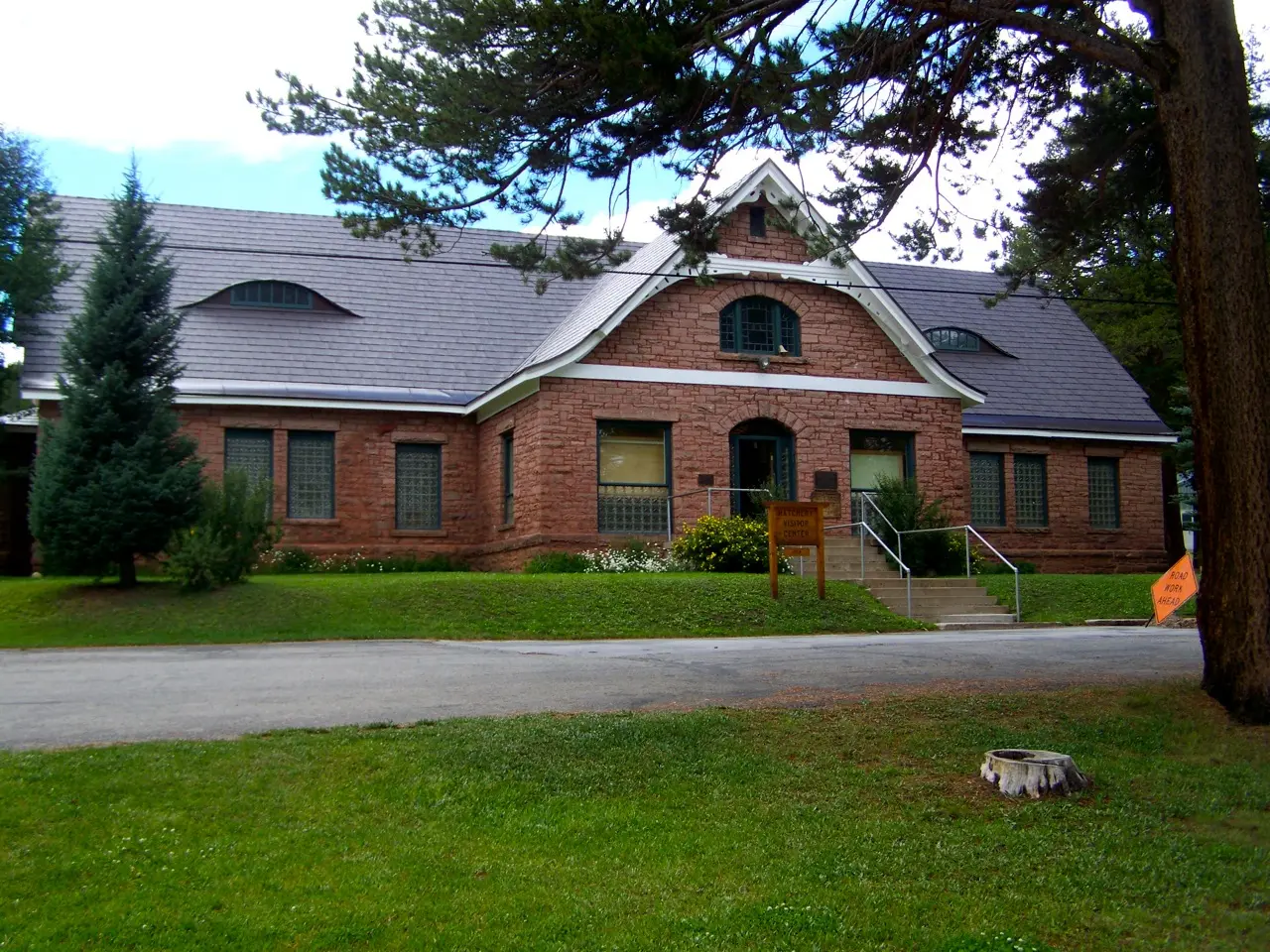
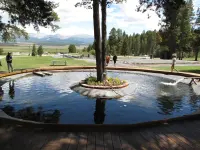
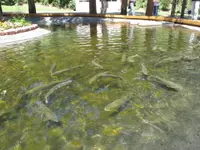
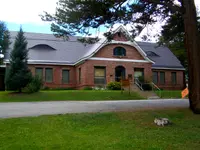
A quarter buys a bucket of fish food at the Leadville National Fish Hatchery. The trout in the display pond, as a Leadville.com writer put it, “jump wildly in large masses at the chance to get a piece.” The pond was rebuilt in the years before 2014 so that children could feed the fish there. It lies in front of a one-story building of rough-faced native red sandstone, finished in 1890 and still in use. The grounds take up 3,072 acres of subalpine forest at about 10,000 feet on the eastern flank of Mount Massive, in Lake County. The architectural historian Thomas J. Noel placed it 6 miles southwest of Leadville on U.S. 24 and Colorado 300. The U.S. Fish & Wildlife Service runs it and calls it the second oldest federally operated fish hatchery still in operation.
The pond, the raceways, and the parquet floor
Inside the stone building, Noel wrote in Buildings of Colorado (1997), “parquet-floored rooms with exhibits front the maze of raceways for tiny trout.” Volunteer hosts staff the visitor center, and visitors can watch fish at every stage, indoors or in the holding tanks outside. The Fish & Wildlife Service counts over 36,000 visitors a year. A 2010 Aspen Times account put the number at nearly 50,000.
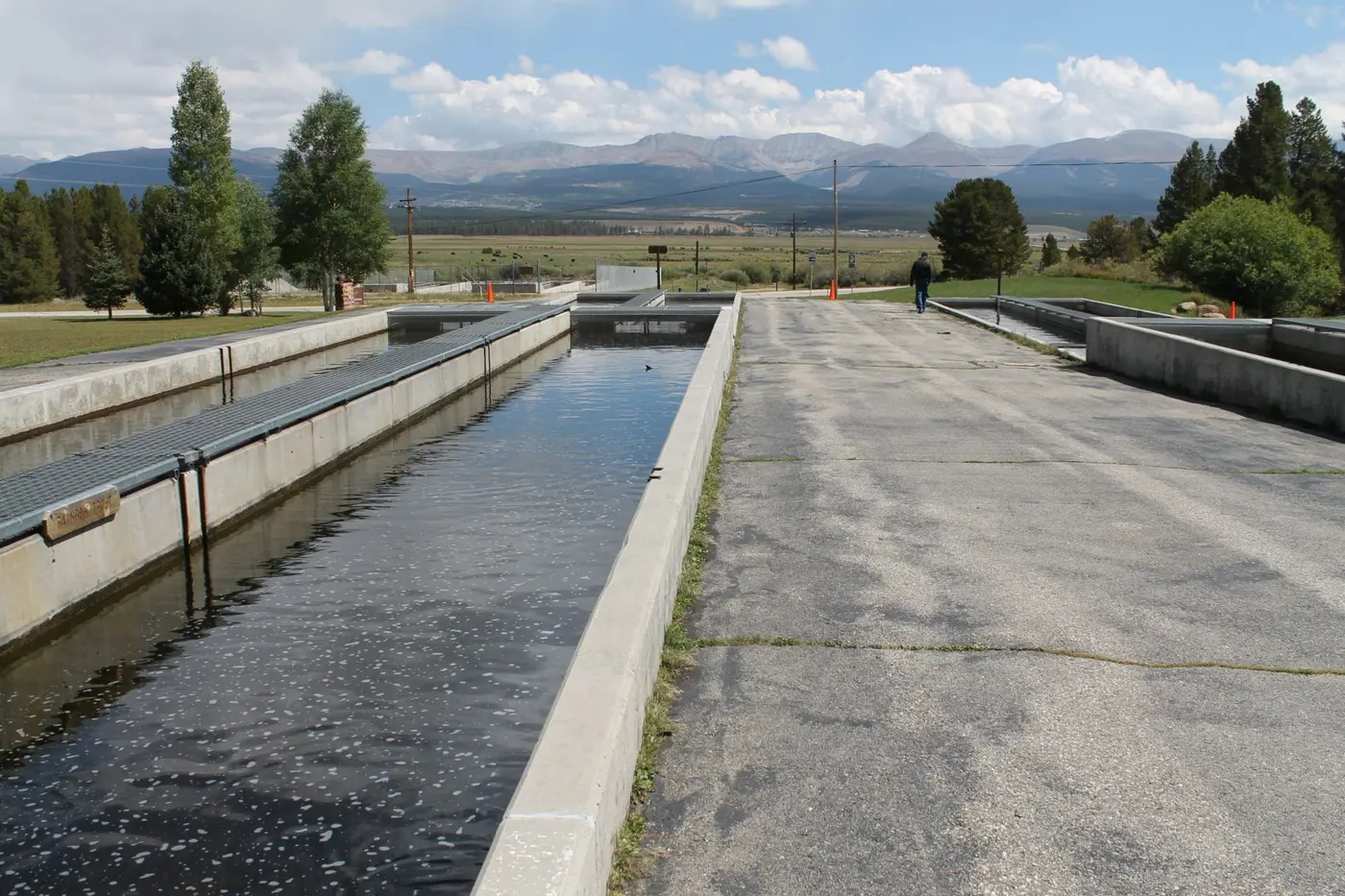
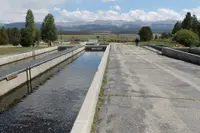
The working plant has 16 raceways and 20 nursery tanks. In them the hatchery rears greenback cutthroat, Hayden Creek cutthroat, and rainbow trout for waters throughout Colorado. The Service gives recent output as 125,000 to 200,000 fish a year for the Fryingpan-Arkansas drainage and the rest of the state. Leadville.com put it at a quarter of a million. The water comes from Rock Creek and from the Fryingpan-Arkansas diversion project, according to Mark Cole, vice president of the Friends of the Leadville National Fish Hatchery in 2014. The outdoor concrete raceways date from the 1950s. Three pairs of Burrow’s raceways built in 1953 were later torn out, and in 2016 the hatchery received the Service’s Environmental Leadership Award because every scrap of the removed material was separated and recycled.
Noel recorded the standing reply the superintendent gives to fishermen who come in to complain about their luck: “No matter how hard we try, we can’t raise fish dumb enough for everybody to catch.”
Trails from the hatchery lot
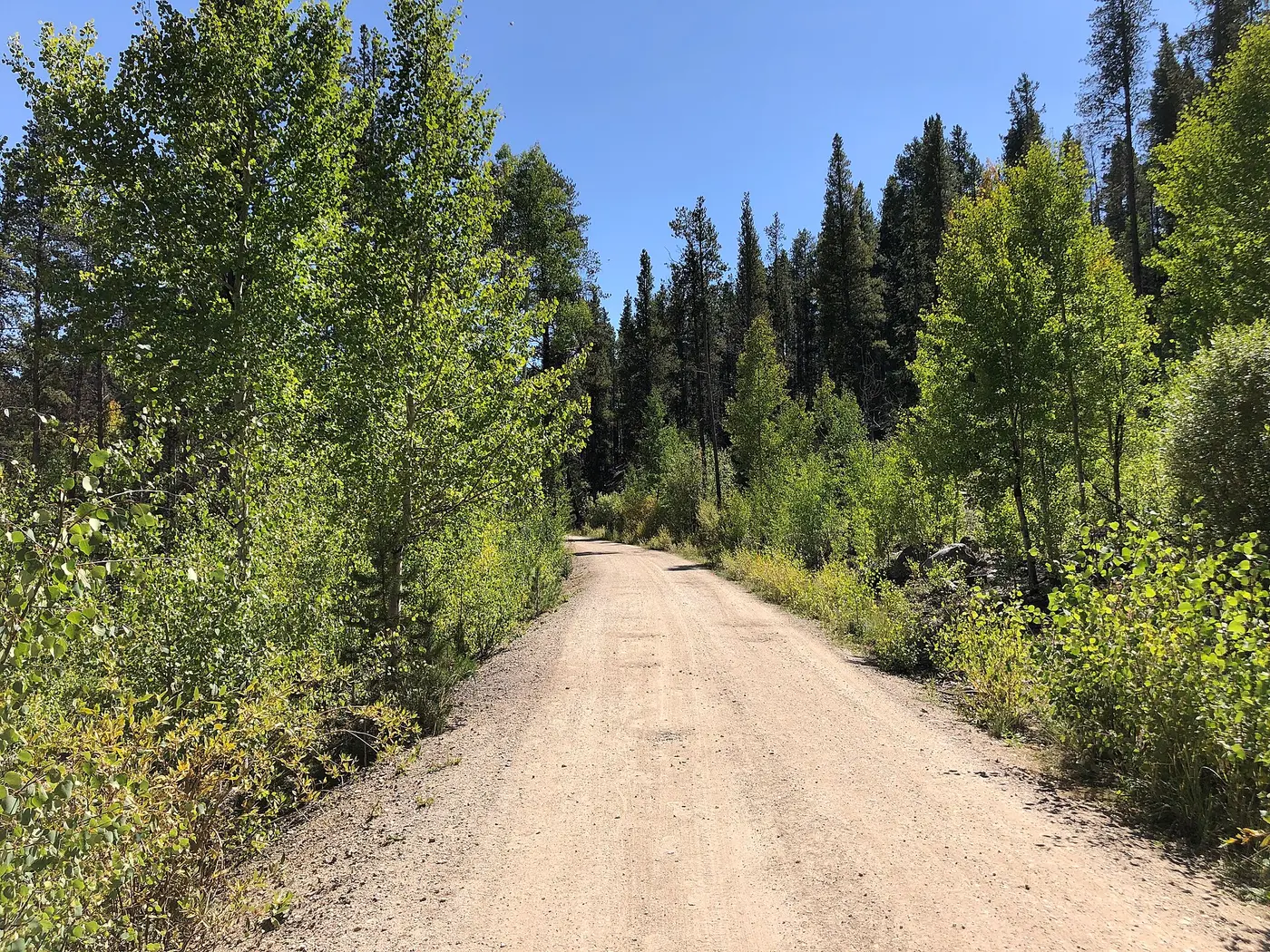
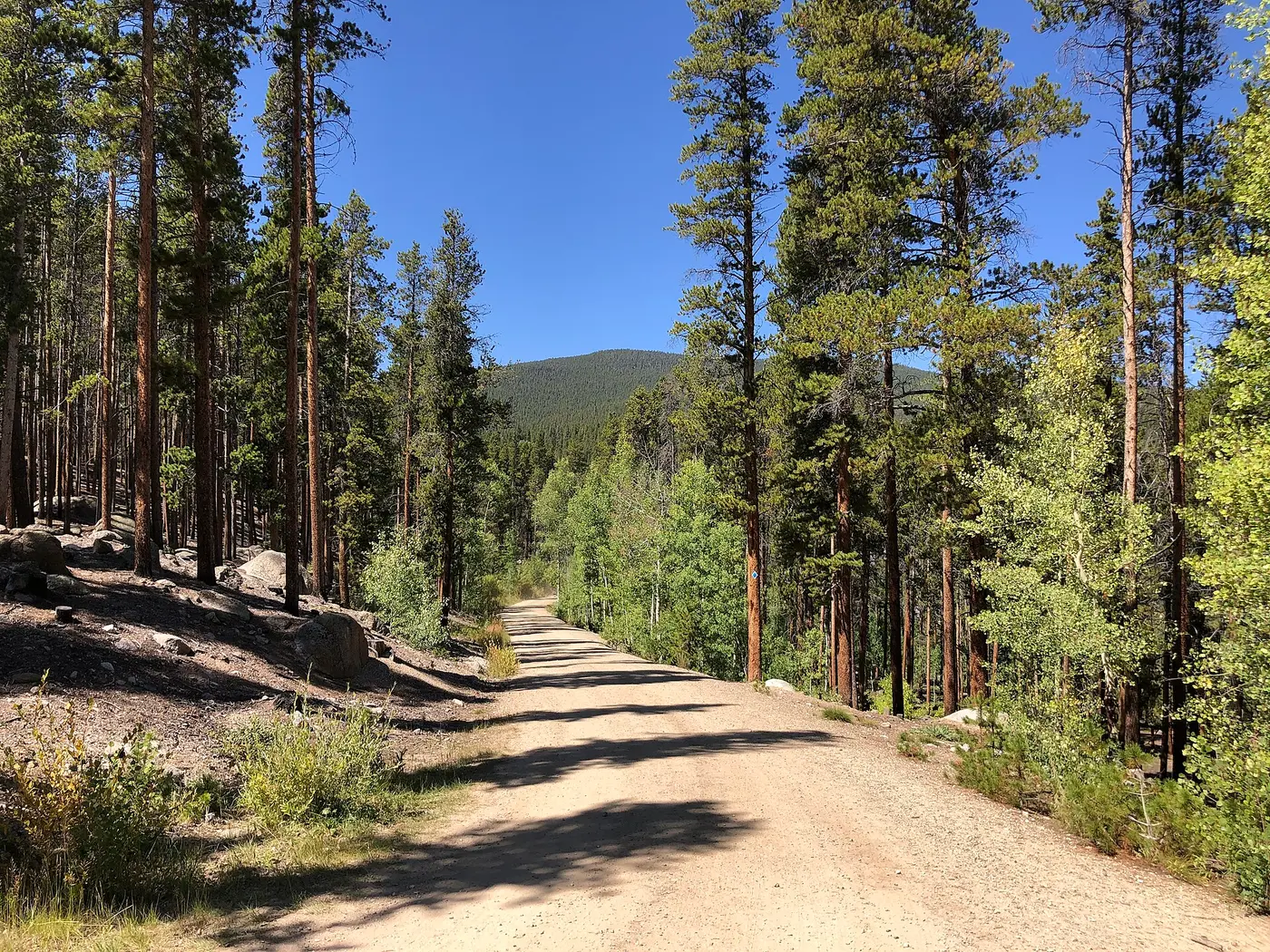
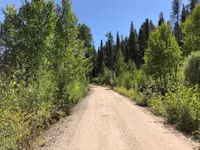
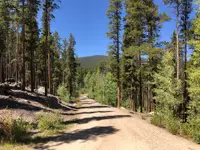
The Evergreen Lakes Nature Trail, a one-mile loop with interpretive signs, starts at the parking lot. On the grounds are the remains of the Evergreen Hotel, an 1880s resort on the Evergreen Lakes that burned down in 1894. The Rock Creek (1.94 miles), Highline (2.10 miles), and Kearney Park (1.65 miles) trails also begin on hatchery land. All three meet the Colorado Trail in the Mount Massive Wilderness, so hikers can make loops that start and end at the hatchery. Fishing is allowed on Rock Creek, about a mile’s walk from the compound.
The Service’s list of wildlife includes mountain bluebirds, juncos, jays, hawks, eagles, waterfowl, elk, deer, porcupines, fox, and pine martens. In late fall and winter the trails are marked with blue diamonds on the trees for skiers and snowshoers. The Friends raised money for a pavilion in the picnic area. The group’s president, Judy Cole, spoke in 2014 of summer, when the irrigation ditches run through the grounds: “You can just swear that elves or fairies are going to jump out.” Local fifth graders come each year for the Pathways to Fishing Program, and the hatchery supports a Fish Hatchery 5K. The Friends’ website has posted a notice, undated, that the hatchery and adjoining trails are closed until further notice because of the Willow Fire.
Trout and champagne, 1889
The hatchery began in Leadville’s mining boom. The Gazette described how tailings leached into the water, hillsides were stripped of trees, and dynamite fishing killed off the fish. “Leadville had 30,000 miners and supporting cast members,” said Ed Stege, the longtime hatchery manager. “Back then, there weren’t a lot of regulations.” In 1888 the U.S. Fish Commissioner began looking for a Rocky Mountain site to raise game fish and restock waters for food. He chose the foot of Mount Massive for its cold, clean water and the native cutthroat trout nearby.
President Benjamin Harrison established the hatchery by Executive Order. The National Register nomination dates the order April 16, 1889, while the Service and the Leadville Herald kept the anniversary on April 19. Congress appropriated $15,000. By the Gazette’s account, the Neosho hatchery in Missouri predated Leadville by six months, and Leadville became the first national fish hatchery in the Rockies. Trout raising began before the main building was finished: in the fall of 1889, eggs taken from trout in several high Colorado lakes were incubated in a temporary building.
In October 1889, a crowd of Leadvillites went out to watch the cornerstone laid. “Arrivals began at 2 o’clock,” the Herald Democrat reported on October 16, “the temporary hatchery attracting much attention and the work of the stone masons – over 30 are engaged – being looked upon with much interest.” The stone came from Hunt’s quarry, 28 miles east of Aspen Junction on the Colorado Midland. The day ended with a luncheon of trout and champagne.
The building opened in November 1890. L.G. Hunt and John Gorham of the U.S. Fish Commission are listed as its builders. One newspaper called it “the most magnificent building in western Colorado.” The main block measures 100 feet by 40 feet 6 inches, and nearly all of it is one hatching room, 11 feet 6 inches high at the side walls and 20 feet at the center. A decorative wood truss with wrought-iron tension members holds up the roof. The front transept held an office and sleeping quarters, with more sleeping quarters in the attic. The office floor is a geometric parquet of ash, oak, and walnut. The Gazette also described redwood barrels for the fish, cedar beams across the vaulted ceiling, and French doors from the manager’s office onto a Victorian wrap-around porch. “They didn’t have a lot of power tools in the 1800s,” Stege said, “so the amount of extra hand-cutting needed to just put in a decorative floor like that, it’s a lot of detail.” Another article of the day promised that visitors would “always be welcomed and every courtesy shown to them.”
Milk cans, mules, and the Mikado
The Service’s history puts the first distribution of fingerlings in 1891, to Colorado, South Dakota, and Nebraska. The 1979 National Register nomination says stocking began in 1890. The Black Hills and parts of Wyoming that had no native trout were first stocked from Leadville, and trout from here helped establish the Spearfish hatchery in South Dakota. Some fish traveled in railcars built for them. Others went out in milk cans by horse and wagon, as an employee reported in 1898: “first (one can) slid off the wagon and a very few (fish) were spilled; then the top flew out when the mule jumped over a log, and we lost possibly a couple of hundred, then the rope came out of the handle and the top flew off again but only a few got out.” The 1989 centennial booklet says fish food was then made by hand from horse by-products, and ice cut from nearby lakes was stored under sawdust in an ice house.
A 1910 newspaper reported that “the usual shipment of brook trout was successfully made to Argentina. Rainbow eggs were forwarded to Germany and to the private preserves of his Imperial Majesty, the Mikado of Japan, while spawn of the native trout has been forwarded to France.”
The faster-growing imports cost the native fish. Brook, brown, and rainbow trout outcompeted the greenback cutthroat and, in some cases, interbred with it. “Early fish hatcheries were the Johnny Appleseeds of the fish world,” Stege said in 2010. “They just moved fish all over the place.” In 2017 he added: “The early hatchery was part of the demise of the native fish.” The greenback was considered extinct by 1937. Two small populations turned up in the South Platte headwaters in 1973, and Colorado named the fish its state fish in 1994.
Whirling disease and the greenback
By the time the building entered the National Register on May 29, 1980, a metal roof had erased its eyebrow dormers, and glass brick had replaced its double-hung windows. In 1989, a centennial plaque recording the hatchery’s rededication was mounted above the original plaque of 1889.
In 1995 the hatchery tested positive for whirling disease while producing 80,000 trout a year. The Leadville Herald wrote that it was shut down and for a while looked closed for good. Another account says new state rules confined it to stocking low-elevation waters that already carried the disease, and that it produced more than 200,000 trout in fiscal 2000. Senator Wayne Allard and Congressmen Joel Hefley and Scott McInnis were credited with a $1.8 million appropriation for a water treatment plant, installed in 2004. By the start of 2007 the disease was gone. Closure was considered again after the 2013 federal budget sequestration and again in 2014. The Friends marked the 125th anniversary on July 26, 2014, with guided tours, a tenkara fly-fishing demonstration at Lake #1, a Victorian costume contest, and music by Leadville Cherokee. The building has since been reshingled with replica eyebrow windows, and in 2021 the Friends replaced the glass block with double-pane windows patterned on the originals of 1890.
Since 2010 the hatchery has held the primary brood stock of the Bear Creek greenback cutthroat. Bear Creek is the one remaining wild population that matches South Platte museum specimens from the late 1800s. In August 2014, offspring of the hatchery’s more than 500 adult greenbacks were released into Zimmerman Lake, north of Rocky Mountain National Park.
The Gazette described the spawning work in 2017. Each early summer, biologists strip eggs and milt by hand and send the fertilized eggs to the Mount Shavano hatchery in Salida. A year later the fish return to Leadville or go into a reclaimed stream. Beginning that year, each greenback carried a PIT tag under its skin, read with a magnetic wand, and a genetic database matched every female with the least related male. On June 27, 2017, a volunteer, Miriam Singer, pulled a male greenback from its tank in the spawning room. “Since there was only one population of these greenbacks left not too long ago, there is very little genetic diversity,” said Chris Kennedy, a Fish and Wildlife Service biologist. Stege retired on December 31, 2020, and Josh Homer is now listed as the hatchery’s project leader.
Notable Events
- 1888The U.S. Fish Commissioner began looking for a site in the Rocky Mountain Region suitable for propagating game fish and replenishing the dwindling number of fish used as a food source; a site at the base of 14,000-foot Mt. Massive was chosen. fws.gov
- 1889The federal government became concerned with population declines in the region's rivers and streams and became determined to revive game fish for human consumption. In 1889, Congress established the Leadville National Fish Hatchery in Lake County on the eastern flank of Mount Massive. aspentimes.com
- 1889The raising of trout began before the main building was finished; eggs collected from trout from several high Colorado lakes were incubated in a temporary building during the fall of 1889. fws.gov
- 1889Run by the U.S. Fish Commission, the hatchery was the second of its kind in the country, predated by the Neosho National Fish Hatchery in Missouri by six months. gazette.com
- 1889The red sandstone for the hatchery building came from Hunt's quarry, 28 miles east of Aspen Junction, on the line of the Colorado Midland. leadvilleherald.com
- 1889Leadvillites went out to the hatchery to witness the laying of the cornerstone; the Herald Democrat of Oct. 16, 1889 reported over 30 stone masons at work, and the day ended with a luncheon of trout and champagne. leadvilleherald.com
- 1889Executive Order of President Benjamin Harrison, dated April 16. 1889, established the hatchery. npgallery.nps.gov
- 1889Constructed in 1889, the hatchery was designed to propagate game fish and replenish the dwindling number of fish used as a food source after mining and agricultural deforestation caused ecological degradation, habitat loss and a serious decline of native fish populations. summitdaily.com
- 1890The main building was constructed of native red sandstone and required over 30 stonemasons; a news article of the day called it the most magnificent building in western Colorado. archive.org
- 1890Construction of the hatchery building lasted only a year and produced a hardwood parquet floor, redwood barrels to store the fish, decorative cedar beams across a vaulted ceiling, and French doors opening from the manager's office onto a Victorian wrap-around porch. gazette.com
- 1890Trout from this hatchery have been used to stock streams and lakes in Colorado and adjoining states of the Rocky Mountain region since 1890. npgallery.nps.gov
- 1890An 1890 one-story hatchery building of native red sandstone with a steeply pitched gabled roof remains on the site. web.archive.org
- 1891In 1891, the first distribution of fingerling fish was made to lakes and streams in Colorado, South Dakota, and Nebraska. archive.org
- 1894On the hatchery grounds are the remains of the Evergreen Hotel (1880s), a resort on the Evergreen Lakes that burned down in 1894. web.archive.org
- 1898An employee reported in 1898 that one milk can slid off the wagon and a very few fish were spilled, then the top flew out when the mule jumped over a log and possibly a couple of hundred fish were lost. archive.org
- 1910A newspaper article from 1910 reported the usual shipment of brook trout successfully made to Argentina, rainbow eggs forwarded to Germany and to the private preserves of the Mikado of Japan, and spawn of the native trout forwarded to France. archive.org
- 1950sOutdoors, larger concrete tanks called raceways, built in the 1950s, hold rainbow trout and other species used for stocking in the state's reservoirs, lakes and rivers to support recreational fishing. aspentimes.com
- 1953Three pairs of Burrow's raceways were originally constructed in 1953 at the hatchery. fws.gov
- 1979Greg Rowlett, Regional Historian, U.S. Fish & Wildlife Service, prepared the nomination dated 11/14/79. npgallery.nps.gov
- 1989A plaque marks the centennial and rededication of the Leadville National Fish Hatchery in 1989, set above a plaque from the hatchery's original establishment in 1889. commons.wikimedia.org
- 1990sThe whirling disease concern, along with budgetary problems, prompted the US Fish and Wildlife Service to consider closing the hatchery in the late 1990s. web.archive.org
- 1995In 1995 the hatchery was found to be whirling-disease positive, when it produced 80,000 trout a year, and was shut down. leadvilleherald.com
- 2000In fiscal year 2000, the hatchery produced more than 200,000 trout and stocked more than twenty areas. web.archive.org
- 2003The hatchery experienced a rebirth after 2003, when Congress appropriated $1.8 million for a new water treatment plant installed in 2004; it also stopped using its old earthen-bottom ponds and added eight new concrete raceways for rearing trout. web.archive.org
- 2007The hatchery completely eliminated whirling disease by the start of 2007, allowing it to resume stocking high-elevation waters where the disease was not present. web.archive.org
- 2010Since 2010 the Leadville National Fish Hatchery has stood between the greenback cutthroat trout and extinction. gazette.com
- 2013As a result of that year's federal budget sequestration the agency considered closing the Leadville hatchery along with other hatcheries; Congress then substantially increased the national fish hatchery budget. web.archive.org
- 2014The Friends of the Leadville National Fish Hatchery celebrated the hatchery's 125th anniversary on Saturday, July 26, with guided hatchery tours, live music, and a Victorian costume contest. leadvilleherald.com
- 2014Offspring from the hatchery's more than 500 adult greenback cutthroat trout were released into Zimmerman Lake, north of Rocky Mountain National Park, in August 2014. web.archive.org
- 2016The hatchery received the U.S. Fish and Wildlife Service's Environmental Leadership Award for a demolition project that removed the three pairs of Burrow's raceways originally constructed in 1953 and separated and recycled 100 percent of the removed materials. fws.gov
- 2017Instead of pairing the males and females randomly, the hatchery selects breeding pairs from a database with the genetic information of every greenback, with a pit tag placed under each fish's skin and read by magnetic wand. gazette.com
- 2021The Friends Group completed a project replacing the hatchery building's glass-block windows with modern double pane windows that mimic the look of the original 1890 windows. friendsoftheleadvillenationalfishhatchery.org
.jpg)
People
- Josh Homer, Project Leader listed as the contact for the Leadville National Fish Hatchery site, reached at the hatchery's own phone number.
- Ed Stege, hatchery manager.
- Benjamin Harrison, President; established the hatchery by Executive Order (1889).
- Chris Kennedy, Biologist with the Fish and Wildlife Service breeding greenback cutthroat trout at the hatchery.
- Leslie Owen, Species lead for the Fish and Wildlife Service greenback cutthroat trout recovery project.
- Miriam Singer, volunteer at the hatchery, shown pulling a male greenback cutthroat trout in the area where the fish is being artificially spawned (June 27, 2017).
- John Gorham, builder/architect, U.S. Fish Commission (1890).
- L.G. Hunt, builder/architect, U.S. Fish Commission (1890).
- Judy Cole, president of the nonprofit Friends of the Leadville National Fish Hatchery.
- Mark Cole, vice president of the nonprofit Friends of the Leadville National Fish Hatchery, quoted on the hatchery's water supply and its threat of closure.
- Greg Rowlett, prepared the National Register of Historic Places Inventory-Nomination Form for the hatchery (November 14, 1979).
- Terry Rosenlund, editor of the hatchery's centennial history, 'Leadville National Fish Hatchery: Centennial, 1889-1989' (1989).
Sources
- fws.gov/fish-hatchery/leadville
- fws.gov/fish-hatchery/leadville/visit-us
- fws.gov/press-release/2016-11/leadville-national-fish-hatchery-receives-award
- archive.org/stream/micro_IA41152607_0733/micro_IA41152607_0733_djvu.txt
- gazette.com/2017/07/08/historic-leadville-hatchery-preserving-future-of-colorados-state-fish-c98cfe14-cb61-547a-90ee-4e7c2af2e4ed
- aspentimes.com/news/leadville-fish-hatchery-a-window-on-colorados-past-and-future
- web.archive.org/web/20250327025531/https://sah-archipedia.org/buildings/CO-01-LK21
- commons.wikimedia.org/wiki/File:Historic_Plaques_at_Leadville_National_Fish_Hatchery_(51282983461).jpg
- web.archive.org/web/20250221081142/https://www.historycolorado.org/location/leadville-national-fish-hatchery
- web.archive.org/web/20240630041009/https://coloradoencyclopedia.org/article/leadville-national-fish-hatchery
- fws.gov/fish-hatchery/leadville/about-us
- npgallery.nps.gov/GetAsset/2cdf9cf0-e1a5-4ca9-a6fd-431c4133bd4a
- leadvilleherald.com/leadville_life/leadville-national-fish-hatchery-marks-125-years/article_624cb60e-1357-11e4-b346-0017a43b2370.html
- summitdaily.com/news/leadville-national-fish-hatchery-celebrates-125-years-with-free-event
- friendsoftheleadvillenationalfishhatchery.org
- cpw.state.co.us/hatchery/leadville
- leadville.com/have-fun-and-learn-something-new-at-leadvilles-national-fish-hatchery