Josephine County Fair
Grants Pass, Josephine County, Oregon. County fair.
Details

- Where
- 1451 Fairgrounds Rd., Grants Pass, OR 97527. Directions
- When
- August 4-8, 2027.
- Hours
- Gates Wednesday-Saturday 11 AM-11 PM, Sunday 12 PM-7 PM.
- Access
- Fairgrounds office open Monday through Friday, 9 am to 5 pm.
- Walk-in or reserve
- Fair concert tickets are sold only through the fairgrounds office and website; no refunds.
- Phone
- (541) 476-3215
- Managed by
- Josephine County Fairgrounds & Event Center.
- Established
- 1914.
Five days in August
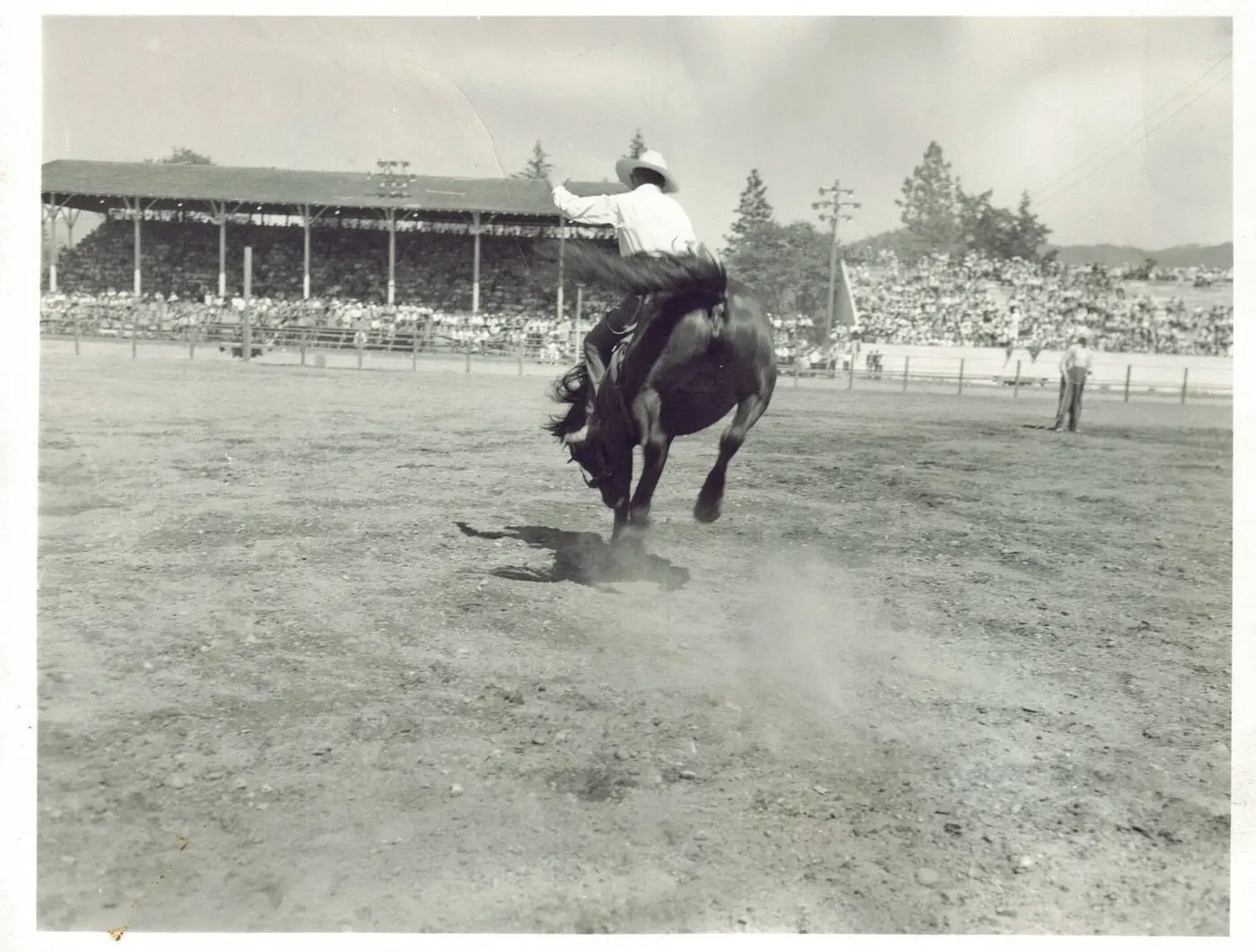
The Josephine County Fair fills more than 50 acres south of Grants Pass, off Redwood Highway, for five days around the first weekend in August. The 2026 fair put a rodeo, the Monster X Tour’s monster trucks, a Clay Walker concert, a circus, carnival rides, Barnyard Races, and livestock shows on the grounds. Gates open at 11 in the morning and close at 11 at night Wednesday through Saturday, and run from noon to 7 on Sunday, when the floral exhibit and the livestock barns stay shut. The 2027 fair is set for August 4 through 8.
Inside the exhibit halls are the entries, which come from all over the county and from the adjoining counties: preserved foods, baked goods, quilts, photographs, arts and crafts, flowers, field and garden crops, grange displays, and the work of 4-H, FFA, and Josephine County Youth & Ag. Superintendents run each department and judges hand out the ribbons. A Josephine County Historical Society photograph from 1959 shows a young 4-H ribbon winner posing with his entry and a judge.
The superintendents also teach outside fair week. Under the name Fair School: Learn from the Superintendents, the Food Preservation Fair Superintendent taught tomatoes and salsa canning on August 22, 2026, held open canning days in September for people who brought their own jars, and on September 12 taught a class on canning and freezing meat at the Community Learning Center. In 2014 the fair historian, Deb West, named gold panning as an attraction that “continues to intrigue young and old.” She said in the same year, “The monster trucks and tractor pulls are some of the most popular events at the fair now.”
The grounds between fairs
The fairgrounds rent their buildings, which hold gatherings of 1 to 2,500 people, and their arena and grandstand spaces, which hold up to 4,000. In September 2026 the Southern Oregon Flea Market brought more than 100 vendors of furniture, tools, jewelry, and handmade crafts at a dollar’s admission. The Caveman Coin Club held its 60th annual coin show, and the Rogue Valley Rabbit Fanciers held their fall show of rabbits and cavies.
The racetrack holds meets under the name Grants Pass Downs. The 2026 fall meet opened on September 13 with Senior Citizen Day and a turn by miniature horses. On September 20 came Rex on the Rogue, in which racers in T-Rex costumes ran the track and two cans of food bought admission for the Josephine County Food Bank. On September 27, Ladies Hat Day paid cash prizes for the best autumn hat, the best racing-theme hat, and the most original hat. Women in hats got in free, with baseball caps excluded.
From Williams to Murphy to the Ball Park
The fair has several possible birth years. The historical society gives 1914 as the year it was officially established. In the 1964 fair program, fair manager Lee Pruitt wrote that the first fair came in 1909, when farmers gathered at the Woodman Hall in Williams to show produce and handiworks. By 1911, Pruitt wrote, the Williams fair “had become so popular that exhibitors came all the way from Kerby and Fruitdale. In fact, it became so popular that Grants Pass took it away from Williams in 1912 and called it the Josephine County Grange Fair.” In town, exhibitors set up in tents along I Street and inside the Calvert-Paddock building.
Deb West places the start earlier still. She is the granddaughter of Percy T. Booth, author of “Grants Pass: The Golden Years,” and served as his research assistant before he died in 1992. Booth traced the fair to the 1907 Grants Pass Irrigation and Industrial Fair, organized by the Grants Pass Commercial Club, later the Chamber of Commerce. He wrote that the name was chosen “purposely, so the event wouldn’t be interpreted as a county sponsored agricultural fair.” The name came from a new dam three miles up the Rogue from Grants Pass. The dam generated hydroelectric power and pumped water up the northern hillside to a ditch that carried it by gravity to the Golden Drift Mine. Surplus power and water went to industry and irrigation in the valley below. The three-day fair offered animal and crop displays, rocks and minerals, hot air balloon rides, auto and livestock parades, and horse races. Booth wrote that an old prospector found gold in the gravel of Sixth Street, which had been partly surfaced with rock from the Golden Drift Dam site.
In 1913 the State of Oregon set up governance for county fair boards, with one fair per county. Pruitt wrote that in 1914 “the fair was moved to Murphy, and for the first time was called the Josephine County Fair.” The fairgrounds’ own history places it at the Murphy Grange Hall. In 1916 it returned to Grants Pass, to the Ball Park, also called City Park and now Riverside Park. It stayed there until 1926, except for a break during World War I. Large tents held the exhibits. In 1923 a horse track was built around the baseball diamond, with one grandstand serving both.
For years the fair was held every other year, or not at all in wartime. When the 2014 fair marked a hundred years, historians noted it was the hundredth anniversary of the name.
Stone towers and a blackberry gully
In 1927 the county approved $25,000 for land, and the fairgrounds were laid out south of town off Redwood Highway. An exhibit building, a pavilion, and livestock sheds were ready for the fair that fall. The fair has been held there since, except from 1942 through 1945. In those years the grounds hosted traveling military troops, local dances, and ball games. In 2014 West said the commercial building still looked much as it had in its early days, except that its windows had been covered and its ceiling lowered to control the temperature.
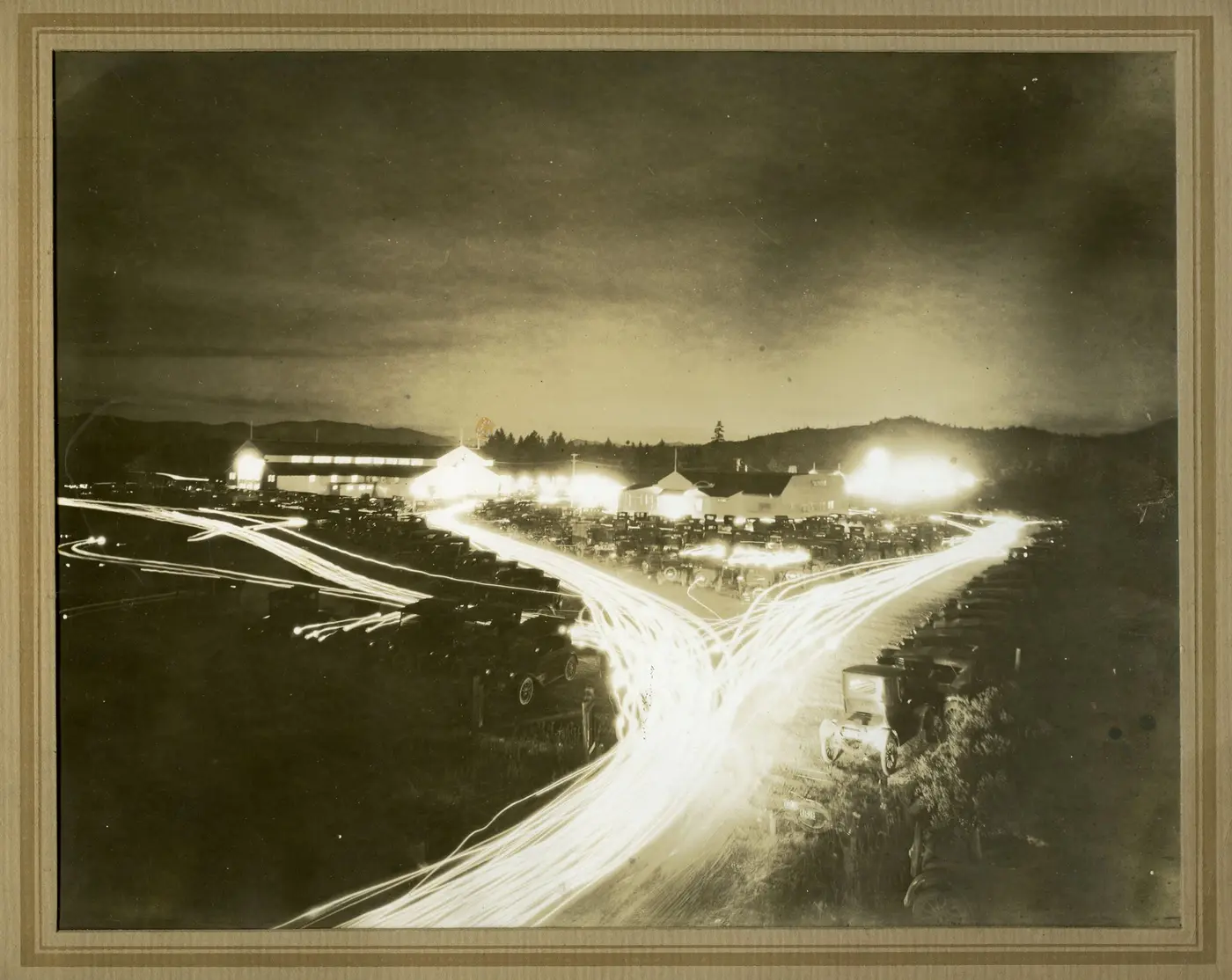
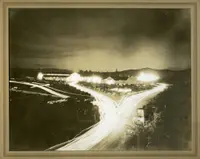
Visitors once entered between stone pillars, in a gate built to resemble a military fort. The Grants Pass Daily Courier dated its removal to the mid-1950s. The historical society calls the pillars two stone towers and says they came down in 1956. Its 1930s photographs show the gate and the grounds at night.
The Josephine County Sheriff’s Mounted Posse, an emergency services auxiliary formed in 1946, pushed for a covered arena. In 1948 a gully overgrown with blackberries was filled in to make room for it. In the 1950s a portable wooden floor was built to lay inside the arena for dances. Part of that floor was still in use at the Midway Stage in 2014.
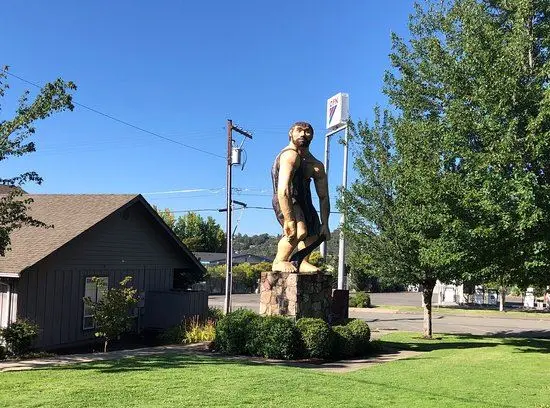
The first racetrack on the grounds ran north to south. In the late 1940s a smaller track was set inside it for midget cars, a kind of racing that started in southern California in the 1930s and spread after the war. A Grants Pass midget racing club formed in 1948. From 1949 into the early 1950s midget races ran on the Caveman Speed Bowl, a one-fifth-mile granite track in front of the main grandstands. Michael Oaks, a Grants Pass historian, watched the 1949 race before enlisting for four years. “It was really something,” he said. Neighbors complained about the noise, and the races ended. Motorcycles raced there from the 1960s through the ‘70s until noise complaints ended that too. The present track, built in the 1970s, runs east to west.
A track, a lease, and a fund
The fairgrounds’ own history says the fair flourished from 1934 to 1975 with horse racing, concerts, 4-H and FFA, and carnival rides. In 1976 the Southern Oregon Horse Racing Association began holding races earlier in the year, separate from the fair. Al Westhoff managed the fairgrounds for more than 20 years through the 1980s and 1990s, and later worked with fairs across the state. He died on September 17, 2026. In the early 1990s, falling federal timber revenues cut county funding to the grounds. In 2006 county general fund support ended, and the fairgrounds have paid their own way since.
The fairgrounds date talk of a sale in county government to 2012. The fair board, volunteers, and the public opposed it and drew up a plan built on year-round rentals, events, and partnerships, and the horse racing association took over funding and running the races. The Courier reported that early in 2014 the county commissioners told the fairgrounds to pay their own way or close. The grounds cost about $625,000 a year to run. By mid-July 2014, officials reported the books in the black through fundraising, grants, and rental fees.
In 2020, during the COVID-19 pandemic, most of the fair was canceled. The grounds hosted childcare for essential workers, drive-through vaccination clinics, outdoor markets, and food trucks. The goat show went on without an audience, and the Youth Livestock Auction was held off-site. In 2021 the Dutch Bros Soccer Complex opened on fairgrounds land under a lease that brings in steady revenue.
Travis Boersma, a co-founder of the Dutch Bros coffee chain who grew up in Grants Pass, took a 99-year lease on the track through his company, TMB Racing. He said he put $50 million into rebuilding it as a professional-grade track called Grants Pass Downs. The Oregon Racing Commission gave initial approval for the racing in March 2019. Next to the track he built the Flying Lark, a 35,000-square-foot building meant as a “gaming, entertainment and dining venue,” with betting machines based on historic horse races. Governor Kate Brown would not make an exception to the state’s rule that casinos operate only on Native American land, and the Flying Lark laid off more than 200 newly hired workers. In a letter dated February 16, 2023, Boersma’s lawyers told the county that TMB Racing “has irrevocably and permanently abandoned the project located at the Josephine County Fairgrounds, including the ‘Flying Lark’ building.” The end of the lease cost the county $313,999 a year. “He had a real vision,” said Wally Hicks, the county’s legal counsel. “It’s a blow to the industry and to the county.”
The county sold the Flying Lark building in 2024. The proceeds founded the Permanent Fair Fund, whose interest is put back into the fairgrounds.
Notable Events
- 1907According to Percy T. Booth, the fair was foreshadowed by the 1907 Grants Pass Irrigation and Industrial Fair, spearheaded by the Grants Pass Commercial Club. dailyastorian.com
- 1909In the 1964 fair program, then-fair manager Lee Pruitt indicated the first fair was held in 1909, when local farmers gathered at the Woodman Hall in Williams to show produce and handiworks. dailyastorian.com
- 1912Grants Pass took the fair away from Williams in 1912 and called it the Josephine County Grange Fair. dailyastorian.com
- 1913The State of Oregon established governance for County Fair Boards, calling for one fair per county; the event was officially named the Josephine County Fair and was held at the Murphy Grange Hall. josephinecountyfairgrounds.com
- 1916The Fair moved closer to town and was held at the Ball Park (now Riverside Park), with interruptions during World War I. josephinecountyfairgrounds.com
- 1923In 1923, a horse racing track was built around the park's baseball diamond, with a grandstand that served both. dailyastorian.com
- 1927The county approved spending $25,000 for property for a permanent home, and the fairgrounds were established south of town off Redwood Highway; an exhibit building, pavilion and livestock sheds were ready for the fair that fall. dailyastorian.com
- 1942The Fair was not held during World War II, when the site was used for war efforts. josephinecountyfairgrounds.com
- 1948In 1948, a gully overgrown with blackberries was filled in to make room for the covered arena. dailyastorian.com
- 1949From 1949 through the early 1950s midget races were part of the county fair, on the Caveman Speed Bowl in front of the main grandstands. dailyastorian.com
- 1950sThe original entrance, which resembled a military fort with stone pillars on each side, was torn down. dailyastorian.com
- 1956According to the historical society, two stone towers once marked the entrance into the fairgrounds but were taken down in 1956. kobi5.com
- 1976Horse racing began operating separately from the annual County Fair when the Southern Oregon Horse Racing Association (SOHRA) started holding races earlier in the year. josephinecountyfairgrounds.com
- 2006County general fund support ended, and the Fairgrounds became self-funded. josephinecountyfairgrounds.com
- 2012Facing serious financial challenges, the Fair Board and community worked together to preserve the Fairgrounds as discussions of sale circulated through County government. josephinecountyfairgrounds.com
- 2020During the COVID-19 pandemic, the Fairgrounds served the community by hosting childcare for essential workers, drive-through vaccination clinics, outdoor markets, and food trucks. josephinecountyfairgrounds.com
- 2021The Dutch Bros Soccer Complex opened, providing youth soccer fields and a stable, long-term revenue source through a lease agreement with the Fairgrounds. josephinecountyfairgrounds.com
- 2023Travis Boersma's company TMB Racing notified Josephine County it was terminating its 99-year lease on the county fairgrounds track, irrevocably abandoning the Grants Pass Downs project and the Flying Lark building after the state refused the adjacent gambling hall. oregonlive.com
- 2024The sale of the Flying Lark building led to the creation of the Permanent Fair Fund, allowing interest earnings to be reinvested into the Fairgrounds for long-term sustainability. josephinecountyfairgrounds.com
People
- Deb West, Josephine County Fair historian.
- Lee Pruitt, fair manager (1964).
- Percy T. Booth, author of "Grants Pass: The Golden Years" (died 1992).
- Al Westhoff, managed the Josephine County Fairgrounds for more than 20 years (through the 1980s and 1990s).
- Travis Boersma, Dutch Bros coffee chain he co-founded (2023).
Sources
- josephinecountyfairgrounds.com/p/fair
- josephinecountyfairgrounds.com/p/about
- josephinecountyfairgrounds.com/p/about/history
- josephinecountyfairgrounds.com/p/tickets
- josephinecountyfairgrounds.com/directions.aspx
- facebook.com/JosephineCountyFairgrounds
- dailyastorian.com/2014/08/09/100-years-of-fun-at-jo-county-fair
- kobi5.com/news/josephine-co-historical-society-shares-glimpse-into-county-fairs-past-312516
- oregonlive.com/business/2023/02/travis-boersma-hands-grants-pass-horse-track-back-to-county-along-with-new-gambling-hall.html