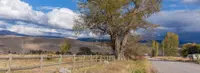
Grande Tour Route
La Grande, Union County, Oregon. Scenic drive; Spring through fall.
Details

- Where
- La Grande, Union County, OR. No street address stated. Directions
- When
- Driving time 2-4 hours.
- Getting there
- Start at the Visitors Center in downtown La Grande and follow Grande Tour Route signs to Birnie Park; the route then heads south along the base of the Blue Mountains toward Ladd Marsh Wildlife Refuge.
- Access
- Paved and well maintained with some gravel sections; closed during bad weather.
- Phone
- 1-800-547-7842
- Website
- traveloregon.com
- Managed by
- Travel Oregon.
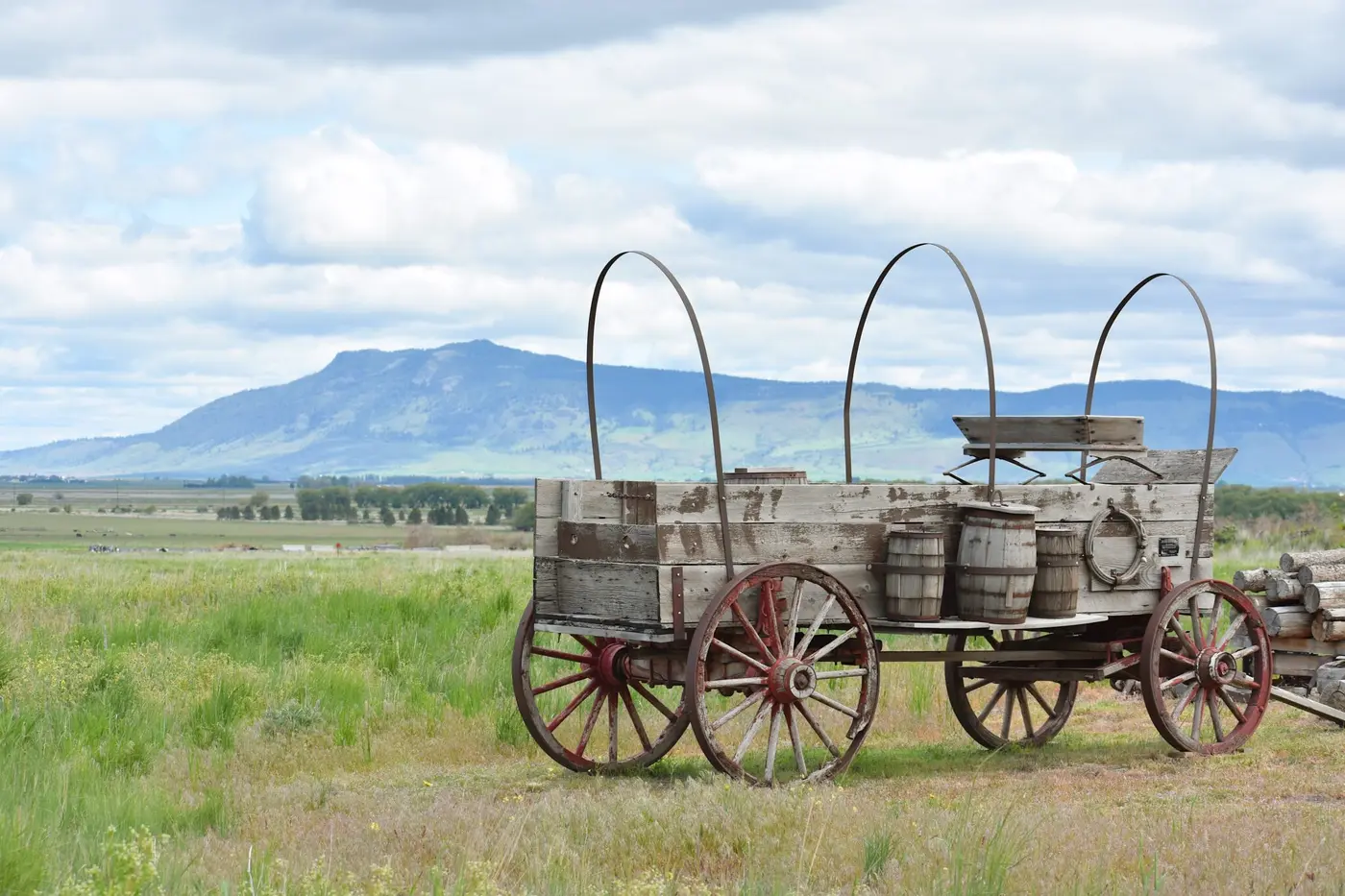
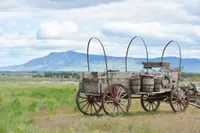
Oregon Trail travelers camped at Birnie Park in La Grande before they crossed the Blue Mountains. The park is the first stop on the Grande Tour Route. From the Visitors Center downtown, Grande Tour Route signs lead to the park, and from there an eighty-mile loop runs out across the Grande Ronde Valley and back. Grande is French for “big.” The Oregon Department of Transportation’s TripCheck service says the word describes “the mountains, farms, and history that define the valley this Route traverses.” The Union County Chamber of Commerce calls the loop “a lazy figure-eight.”
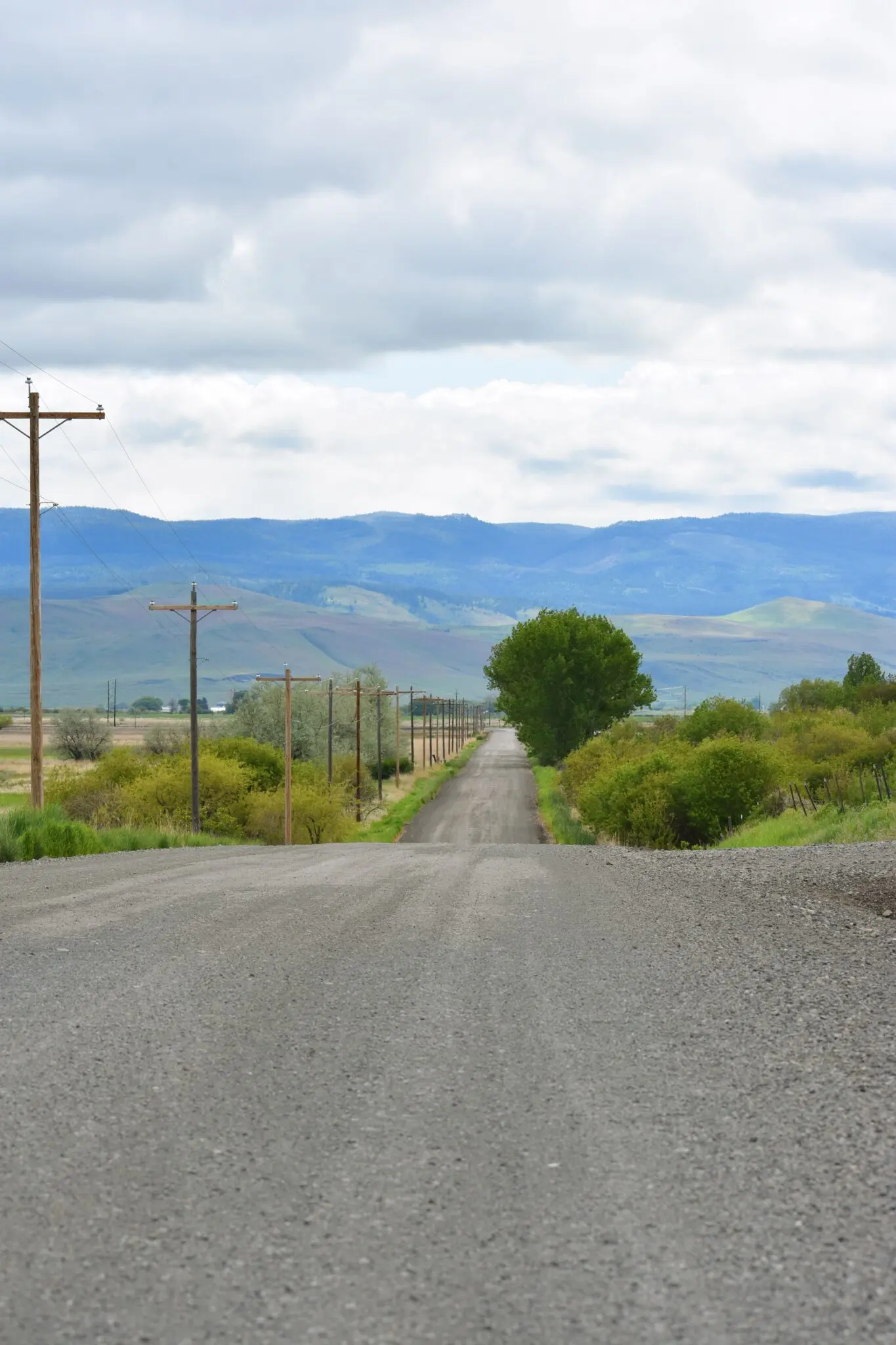
The route uses parts of Oregon Routes 82, 203, and 237 through Union and Baker counties and touches La Grande, Cove, Union, and Medical Springs. It is paved and well maintained, with some gravel sections. TripCheck notes that it closes in bad weather, and both TripCheck and Travel Oregon give spring through fall as the season. The sources differ on how long the drive takes. Travel Oregon puts it at two to four hours, while TripCheck and the Federal Highway Administration’s byways site allow four to five. They also differ on direction. Travel Oregon sends drivers north first on OR 82 toward Imbler and brings them home past Hot Lake and Ladd Marsh. TripCheck starts south along the base of the Blues and returns by the river. The loop sits between the Hells Canyon and Elkhorn byways and shares a stretch of the Hells Canyon Scenic Byway east of La Grande.
Cherry orchards and mint on the Grande Ronde
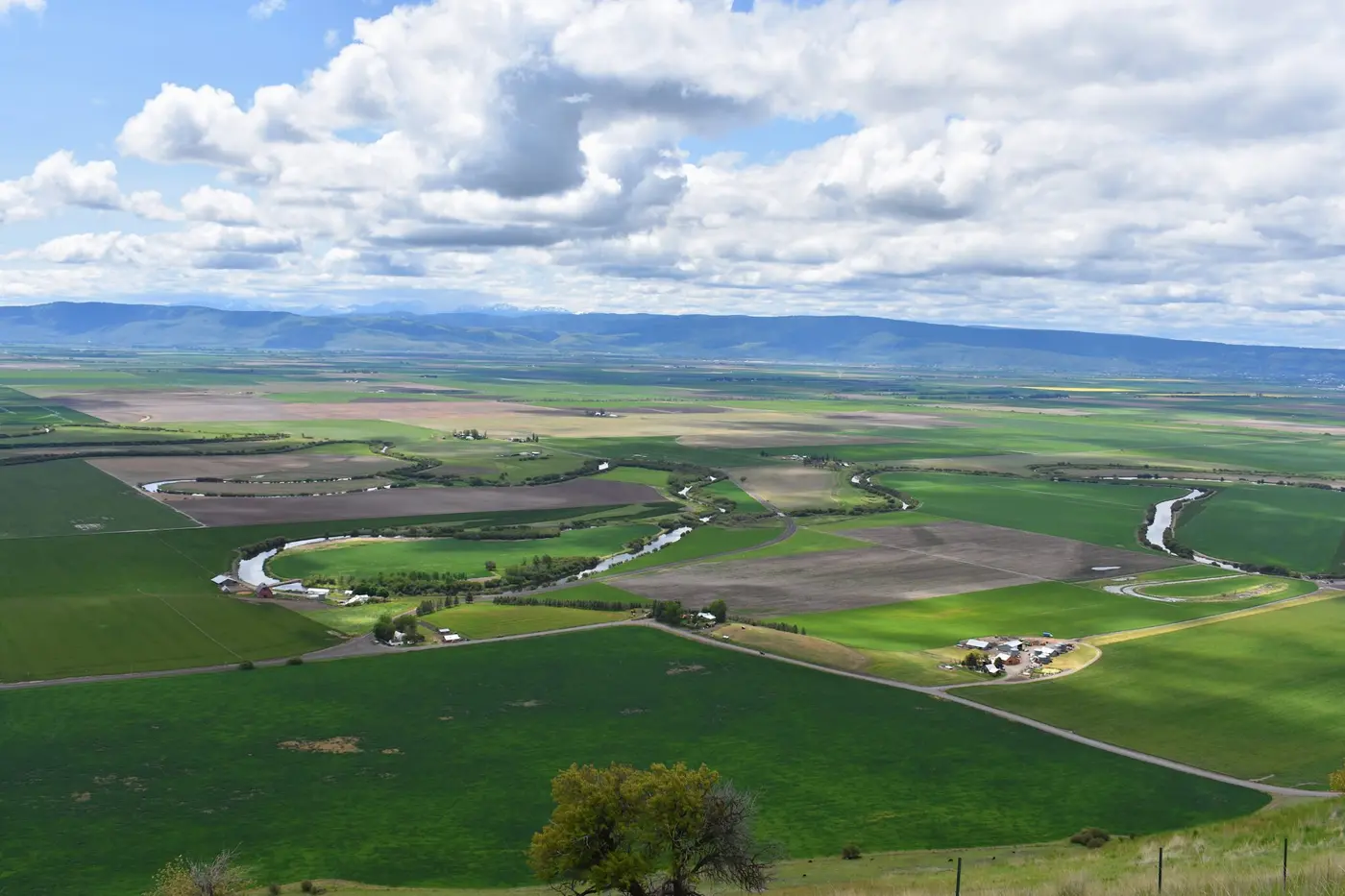
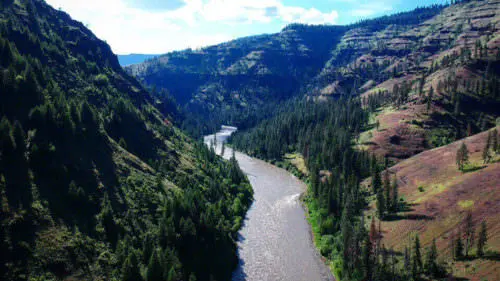
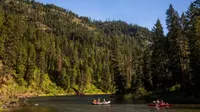
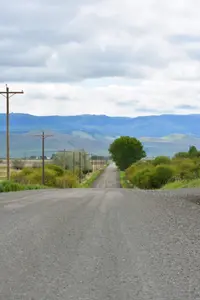
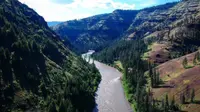
Near Imbler the road meets the Grande Ronde River. Rafters and kayakers use the river, which flows northeast through desert canyons that motor vehicles mostly cannot reach, then joins the Snake River near the Oregon-Washington border. The tour follows its corkscrew course upstream through cherry orchards and crop fields that are, in Travel Oregon’s words, “redolent with the scent of mint.” Oregon leads the nation in peppermint, and the oil goes into gum, tea, and toothpaste. TripCheck runs this leg in the other direction. Its route follows back roads from Cove along the river at the base of the Wallowa Mountains, crosses the valley and OR 82, and finishes on a straight run south down Mt. Glen Road into La Grande.
Cove, Union, and the climb to Catherine Summit
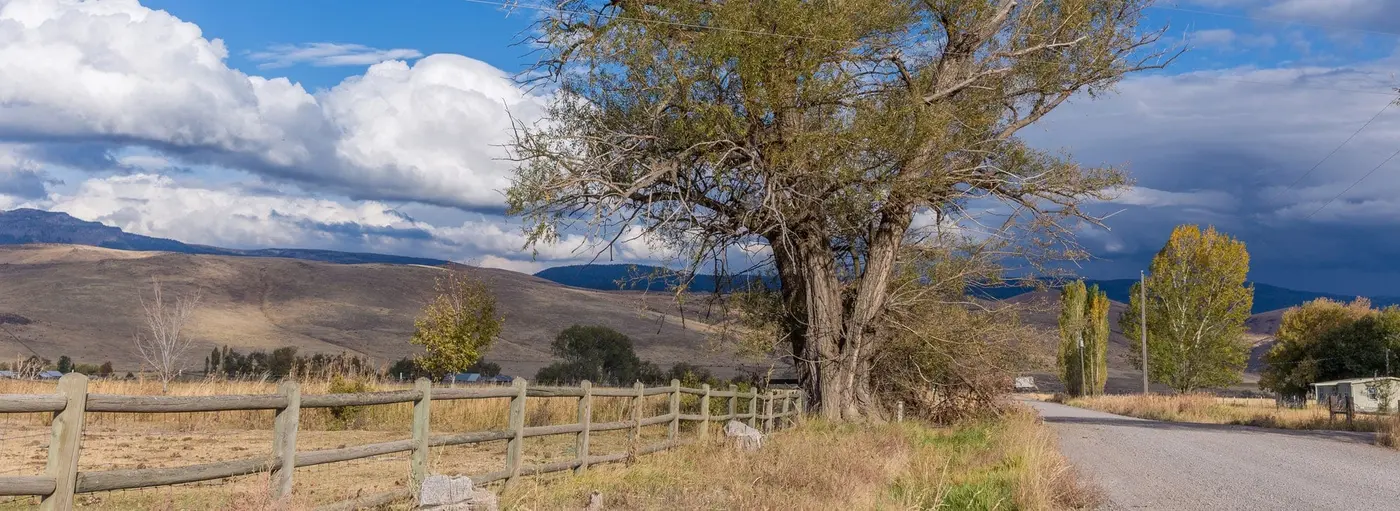
Cove sits at the base of Mt. Fanny. Its Ascension Chapel is an Episcopal church built in 1869, and Travel Oregon records that Desmond Tutu once visited it. The town also has what TripCheck calls an old-fashioned hot springs swimming pool, with picnic grounds in town. The route’s management plan named the chapel one of four places of particular scenic quality on the loop. The others were Ladd Marsh, Thief Valley Reservoir, and Catherine Creek Summit.
At Union the route splits into a smaller loop. The Union County Museum is on Main Street. Between Union and the summit, Oregon Route 203 runs beside Catherine Creek past the state park and climbs through pine and fir forests of the Wallowa-Whitman National Forest. Several ski and snowmobile trails start at Catherine Summit, elevation 4,150 feet. Past the summit the highway descends to Medical Springs. From there the gravel Thief Valley Road runs west to OR 237, which returns to Union. TripCheck counts fifteen miles of gravel and “wide open vistas” on this stretch, and the road gives access to a campground near Thief Valley Reservoir.
A hospital on a hot lake
Between Union and La Grande on Highway 203, Hot Lake Springs Resort stands at the foot of a large bluff. Its brick building dates from 1906 and now holds lodging, geothermal soaking pools, the Thermal Pub & Eatery, and a sixty-seat movie theater. The soaking area is a quiet zone, where guests are asked to talk in a low voice and play no music. Cold mineral water stations stand on site, and the resort warns that it gets windy. Travel Oregon notes a collection of Nez Perce artifacts. The road guides describe the place in different states. TripCheck and the federal byways page speak of the ruins of Hot Lake Resort. Travel Oregon calls it a 1920s mineral-waters spa and hotel, recently reopened after a seven-year restoration.
According to the resort’s history, Native people used the springs for their medicinal benefits long before settlement, and the Nez Perce called the lake Ea-Kesh-Pa. Later it became a stop for Oregon Trail travelers. In 1864 Samuel Fitzgerald Newhart built the first wooden structure there, facing the bluff, with a post office, blacksmith shop, dance hall, barber shop, and bath houses. The resort dates the arrival of the Union Pacific Railroad to 1884. The Oregon Encyclopedia, writing of La Grande, credits the 1884 main line to the Oregon Railway and Navigation Company.
The brick sanatorium was completed around 1906 to 1908 and had more than 105 rooms. The resort attributes its design to the architect John V. Bennes. A National Register of Historic Places nomination for Hot Lake Resort states that the architects of the original building are not known. In 1917 Dr. W. T. Phy acquired it, renamed it the Hot Lake Sanatorium, and made it the health resort known as the “Mayo Clinic of the West.” Its heyday lasted into the mid-1930s. A fire in 1934 destroyed the wooden parts and left the brick standing. Business then fell into a steep decline, made worse by the Great Depression. During the Second World War the building served as a flight school and nurse training center, and by 1953 it was a nursing home. It was abandoned in 1991 and damaged by vandalism and weather. In 2003 David Manuel bought it, and he reopened it for tours in 2005. In 2020 the owners of Grande Hot Springs RV Resort acquired the property and began a new restoration, keeping the entry porch and the spring house.
The National Register nomination was written during an earlier renovation, after the building’s years as a home for the aged. It describes a three-story U of brick and concrete, about 216 feet across the front and 148 feet deep. A glassed veranda runs the length of the facade, and a two-story portico stands on four colossal Tuscan columns. The form repeats an unsubstantiated rumor that the bricks came from a Montana manufacturer to ensure quality. Every room had a radiator holding fresh water heated by hot mineral spring water in a covered basin in front of the hotel. This closed loop ran by convection and cost nothing to operate. The old hospital occupied the third floor of the east wing. Its operating room was tiled in white on floor, walls, and ceiling, had a glass-enclosed viewing room, and looked out over the Grande Ronde Valley. Beside it, an oriel lit the lavatory where, the form says, the surgeon “was said to have prepared and looked over the property prior to each operation.” Under the cornice at each corner, the paired consoles had become nesting sites for swallows that returned to Hot Lake every year.
Brown’s Town and the bowl-shaped valley
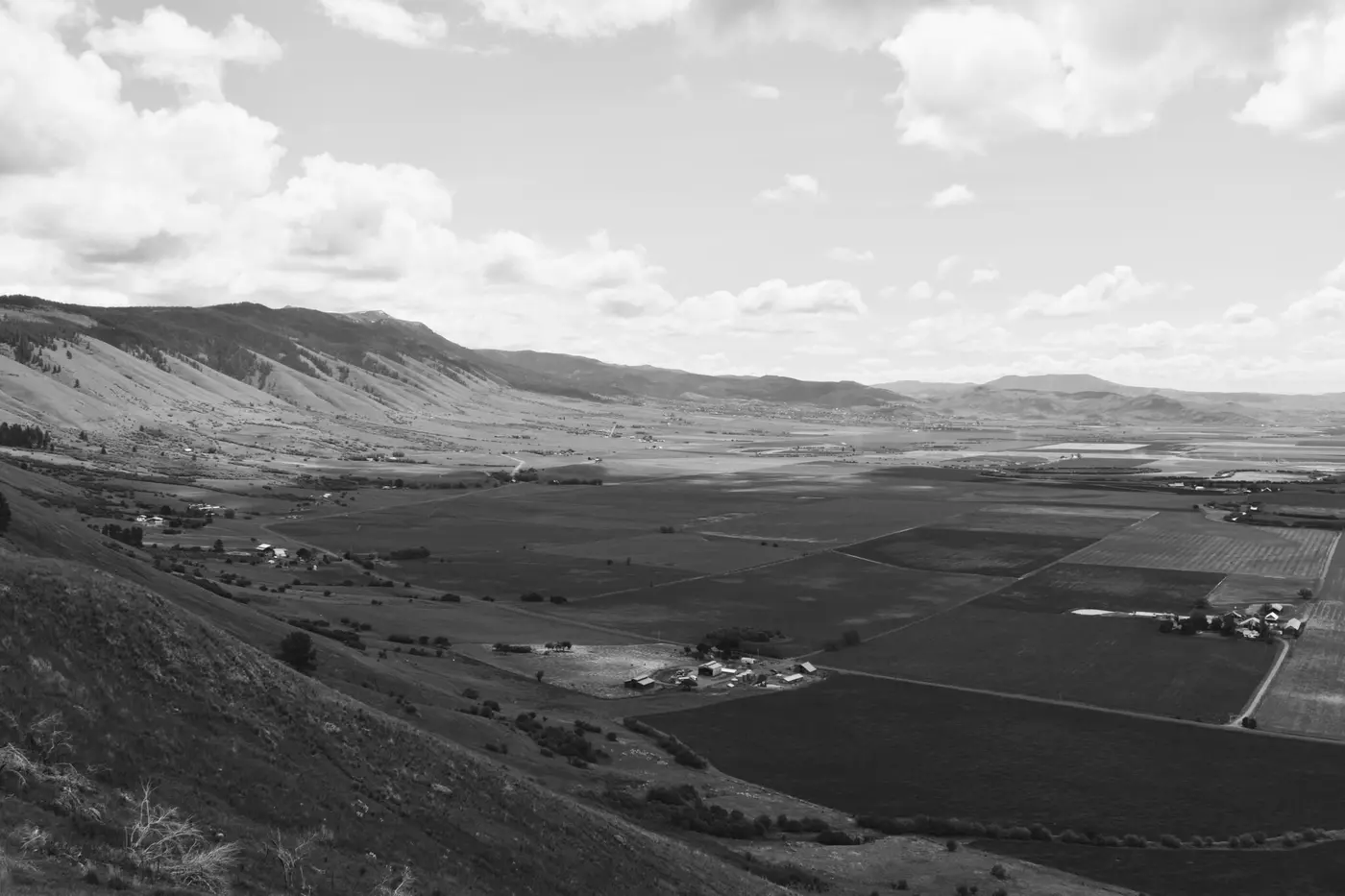
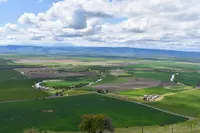
Before white settlement, the Grande Ronde Valley was a summer gathering place for Native people of the southern Columbia Plateau, among them Umatilla, Nez Perce, and Cayuse. They came to harvest camas root and other plants and to hunt, fish, and trade. Travel Oregon calls the valley the ancestral home of the Nez Perce. In 1861 immigrants who had been bound for the Willamette Valley settled here instead. One of them, Benjamin Brown, became a community and business leader in the town, which was first called Brown’s Town or Brownsville. Linn County already had a Brownsville, so the Post Office Department required a new name, and in 1863 a post office opened under the name La Grande. The city was incorporated in 1865.
According to the Oregon Encyclopedia, most sources trace the name to early French Canadian trappers describing the bowl-shaped valley. The same origin is given for Grande Ronde, the name shared by the river and the valley. A possibly apocryphal claim credits a young Frenchman, Charles Dause, who often used the phrase le grand ronde for the sweeping views of the valley from town.
Settlement brought competition for the land and its resources. In 1862 a band of Umatilla challenged the newcomers’ right to claim land in the valley. U.S. soldiers sent to arrest three Umatilla chiefs killed several men before the rest of the group escaped. Through the 1860s and 1870s, miners bound for the gold fields of Idaho and eastern Oregon bought the homesteaders’ crops. When the railroad came through in 1884, businesses moved from the town’s original site on the southwest edge of the valley to the flats near the tracks and depot. Many Chinese residents had come to work in the mines and on the railroads and stayed as small business owners and farm laborers. On September 24, 1893, a mob of about two hundred armed men looted and burned some of their businesses and homes. The mob marched many Chinese residents to the rail depot at Oro Dell and demanded that they leave the country. Over fifty men were arrested and ten were indicted for arson. All were found not guilty.
The Grande Tour is an Oregon Tour Route under the state’s scenic byways program. A state energy filing credits its management plan to the La Grande/Union County Visitors & Conventions Bureau in 1988. The plan set four aims: to strengthen local economies, build a bridge between urban and rural residents, preserve and maintain the area’s history, and provide opportunities for education. It also identified a viewpoint at Ladd Marsh, five miles south of La Grande, where the loop closes. The 6,000-acre wildlife area is the largest hardstem bulrush marsh in northeastern Oregon, and the Oregon Encyclopedia describes it as offering “a glimpse of what the valley was like before agricultural development.” TripCheck notes that the snow-capped Wallowas rise behind it on the far side of the valley.
Notable Events
- 1800sThe Oregon Trail passed right through La Grande; pioneers camped at today's Birnie Park before crossing the Blue Mountains. traveloregon.com
- 1862White settlement created competition for the land and its resources, and in 1862 a band of Umatilla challenged the newcomers' right to claim land in the valley. U.S. soldiers who were sent to arrest three Umatilla chiefs who were involved in the dispute killed several men before the rest of the group could escape. oregonencyclopedia.org
- 1863Because there was already a Brownsville in Linn County, the Post Office Department required a new name, and in 1863 a post office was established under the name La Grande. oregonencyclopedia.org
- 1865The city was incorporated in 1865. oregonencyclopedia.org
- 1869The tour route passes through Cove, a small town known for its Ascension Chapel, an 1869 Episcopal church once visited by Desmond Tutu. traveloregon.com
- 1884The Union Pacific Railroad's arrival in 1884 boosted access. hotlakespringsresort.com
- 1884La Grande's importance as a commercial center grew when, in 1884, the Oregon Railway and Navigation Company (OR&N) completed its main trunk line through the town. oregonencyclopedia.org
- 1893On September 24, 1893, a mob of about two hundred armed men looted and burned some of the city's Chinese businesses and homes and forcibly removed many Chinese residents by marching them to the nearby rail depot at Oro Dell and demanding that they leave the country. oregonencyclopedia.org
- 1906A grand brick sanatorium, designed by architect John V. Bennes, was completed around 1906–1908 with 105+ rooms and innovative geothermal features. hotlakespringsresort.com
- 1917In 1917, Dr. W. T. Phy acquired it, renaming it the “Hot Lake Sanatorium” and elevating it to a celebrated health resort known as the “Mayo Clinic of the West.”. hotlakespringsresort.com
- 1934A devastating fire in 1934 destroyed the wooden parts of the building, leaving only the brick structure intact. hotlakespringsresort.com
- 1998The Grande Tour Management Plan of 1998 is the plan under which the route is designated. oregon.gov
- 2003In 2003, David Manuel purchased the deteriorated structure and began a major restoration effort, reopening for tours in 2005. hotlakespringsresort.com
People
- David Manuel, purchased the deteriorated structure and began a major restoration effort (2003).
- Dr. W. T. Phy, acquired the sanatorium, renaming it the Hot Lake Sanatorium (1917).
- John V. Bennes, architect of the grand brick sanatorium.
- Samuel Fitzgerald Newhart, built the first wooden structure at Hot Lake, facing the bluff (1864).
- Benjamin Brown, One of the founding settlers; community and business leader in the town.
- Desmond Tutu, visited the Ascension Chapel.
Sources
- traveloregon.com/things-to-do/trip-ideas/scenic-drives/the-grande-tour
- tripcheck.com/Pages/Scenic-Byways-Grande
- visitunioncounty.org/grande-tour
- oregon.gov/odot/Programs/TDD%20Documents/Grand-Tour-Route-Management-Plan.pdf
- oregonencyclopedia.org/articles/la_grande
- npgallery.nps.gov/GetAsset/af600470-f189-4fd4-bb1e-ef548a3ccb59
- hotlakespringsresort.com/history
- oregon.gov/energy/facilities/Facilities%20library/2019-03-28-B2H-ASC-Exhibit-R-Errata-Info.pdf