
Giant Springs Trout Hatchery
Great Falls, Cascade County, Montana. Day-use state park; Open all year.
Details

- Where
- 4803 Giant Springs Rd, Great Falls, MT 59405. Directions
- When
- Weekly family-friendly Trivia Night Every Tuesday July through August 25 The popular, family-friendly competition begins at 7 p.m. during July and August.
- Getting there
- Follow Giant Springs road 1.5 miles, just past the Lewis and Clark Interpretive Center and the FWP Region 4 Headquarters adjacent to Giant Springs/Heritage State.
- Fees
- Day use entrance fee with a vehicle: $8.
- Hours
- Visitor center and show ponds are open to the public from 8:00 AM to 4:30 PM daily.
- Access
- Public is restricted to front of the hatchery to State Park. Hatchery parking is in the Giant Springs State Park parking lot only. Pets must be on leash at all times.
- Walk-in or reserve
- Tours may be arranged on week days by contacting Region 4 Headquarters, (406)454-5840.
- Phone
- 406-727-1212
- Website
- fwp.mt.gov
- Managed by
- Montana Fish, Wildlife & Parks.
- Established
- 1928.
- Coordinates
- 47.53496, -111.22817.
The show pond and the raceways
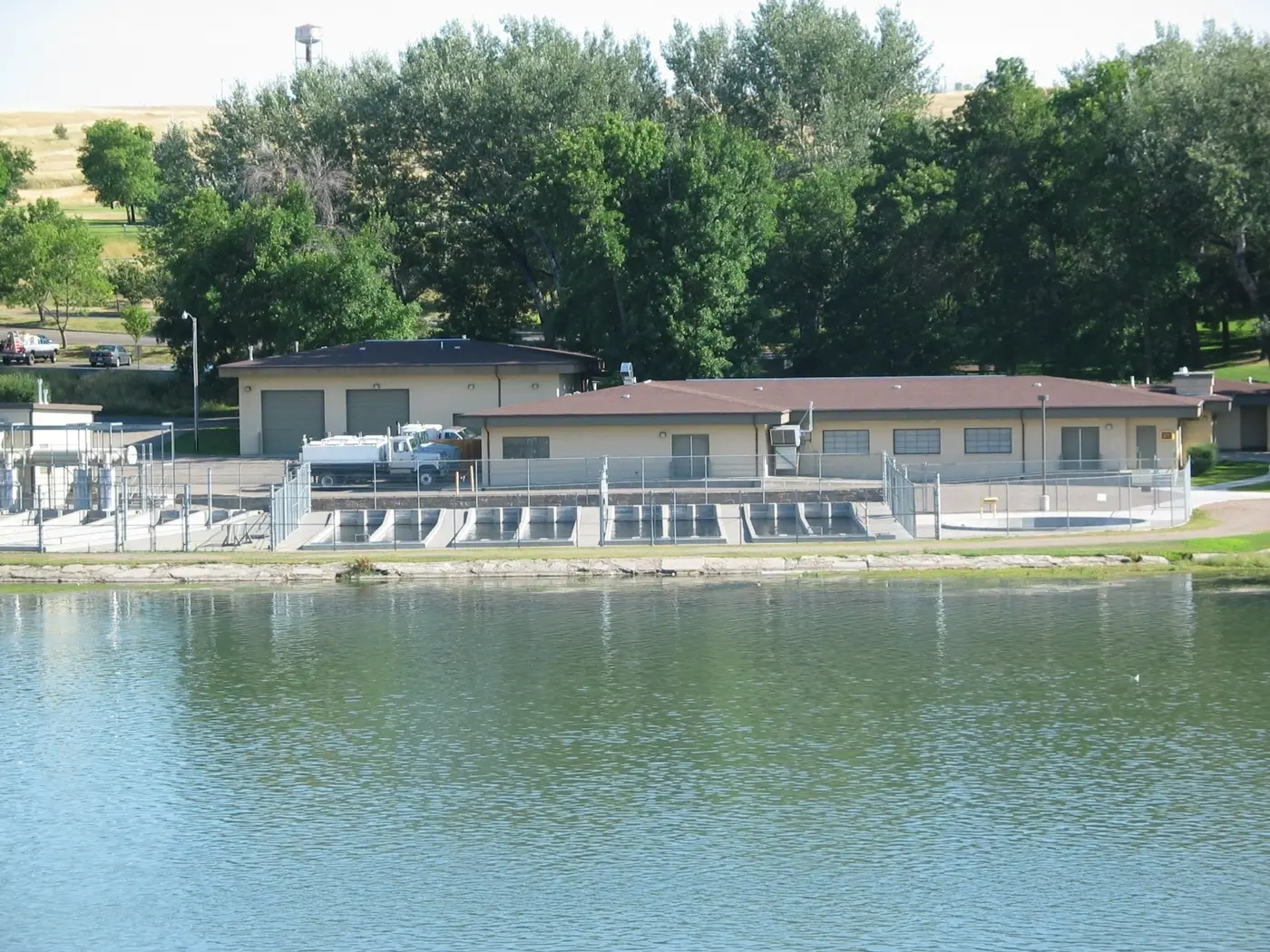
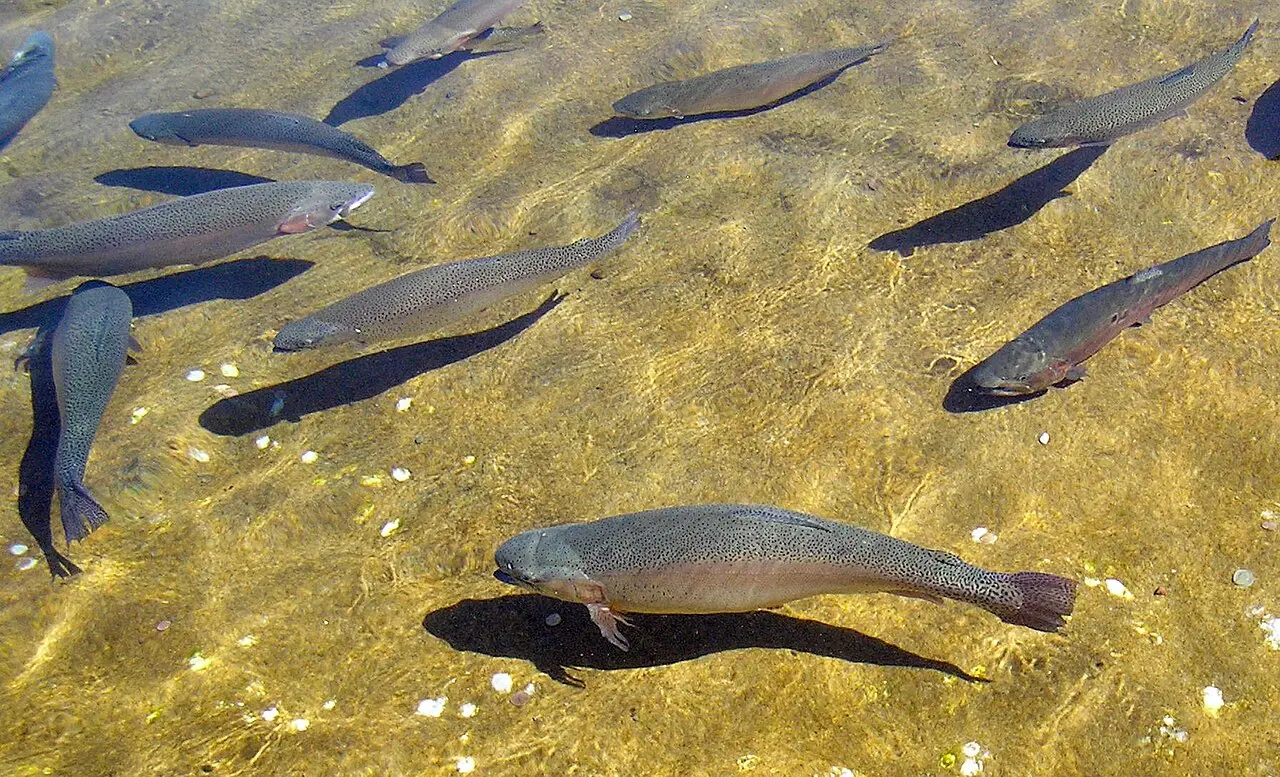
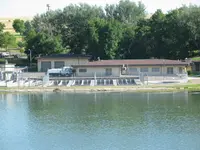
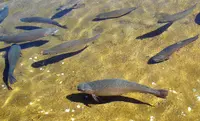
From the visitor center at Giant Springs Trout Hatchery, a window looks onto the egg incubators and 40 interior raceways of a working production facility run by Montana Fish, Wildlife & Parks. Outside are 24 more raceways and a show pond, where visitors feed the fish. The Great Falls tourism office suggests bringing quarters for that. The visitor center and show ponds are open every day and charge no fee. The public keeps to the front of the grounds. Weekday tours are arranged through the department’s Region 4 headquarters, which stands along the same road.
The hatchery covers 7.02 acres at 3,238 feet. It lies 1.5 miles out Giant Springs Road, past the Lewis and Clark Interpretive Center and the Region 4 offices. It adjoins Giant Springs State Park, and its visitors park in the state park lot. All of its water comes from the spring that gives the park its name.
Water from the Little Belt Mountains
The hatchery building draws 650 to 700 gallons of spring water a minute, and the outside raceways take 15,000. The water comes from a very deep aquifer, so it arrives high in nitrogen and low in oxygen. Before it reaches the fish it is pumped through packed columns that reverse the condition.
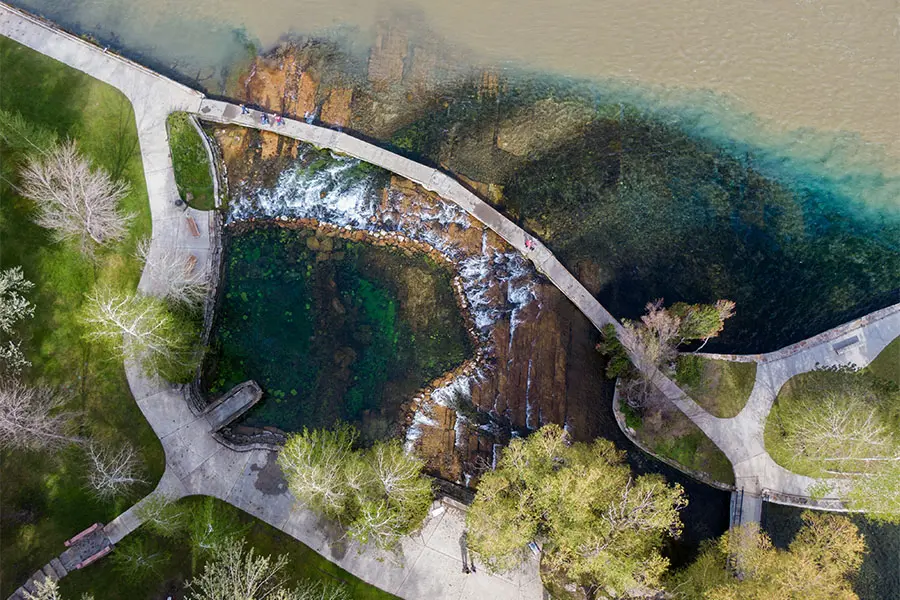
A state parks marker at the spring traces the water back. It seeps into the ground in the Little Belt Mountains southeast of Great Falls, where the Madison Limestone lies exposed at the surface. It then travels through the formation, which sits about 400 feet down at the springs. The weight of the overlying rock forces it upward through cracks in the sandstone, and those cracks can be seen at the spring. The journey from the mountains takes less than 50 years, and the water comes out at 54 degrees in every season. A state water-quality report dated January 25, 2000, adds a hedge: water from the Kootenai Formation may mix with the Madison water near the springs.
The sources disagree on the volume. The state park page puts it at over 156 million gallons a day. The hatchery page and a Lewis and Clark trail marker say over 150 million. The Montana Historical Society’s place-names entry says more than 380 million. The spring feeds the Roe River, which runs 201 feet by the hatchery’s measure and about 200 feet by the National Park Service’s before it enters the Missouri. Guinness once listed the Roe as the world’s shortest river, then dropped the category. A marker states that the water has tested very pure but advises against drinking it straight from the spring, because birds and other animals live in it and use it. In winter, the park page notes, mist rises off the water.
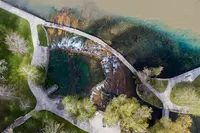
The park around the hatchery takes in nearly 14 miles of Missouri River shoreline. It has silver poplars, blue spruce, and a mown lawn for picnics. Four waterfalls on the Missouri lie within its bounds, five if the buried Colter Falls is counted. More than 30 miles of paved and dirt single-track trail are part of the River’s Edge Trail, which runs nearly 60 miles around Great Falls. The tourism office also points out a working bridge with no railings. On Tuesday evenings in July and August, through August 25 on the 2026 schedule, families bring lawn chairs for a trivia night at 7 p.m. It runs four rounds of ten questions, with prizes for the top three teams.
Clark’s fountain
Long before the hatchery, according to a trail marker, Native American tribes followed the buffalo through this country and camped at the spring. The water’s steady temperature made it a good place for winter camps.
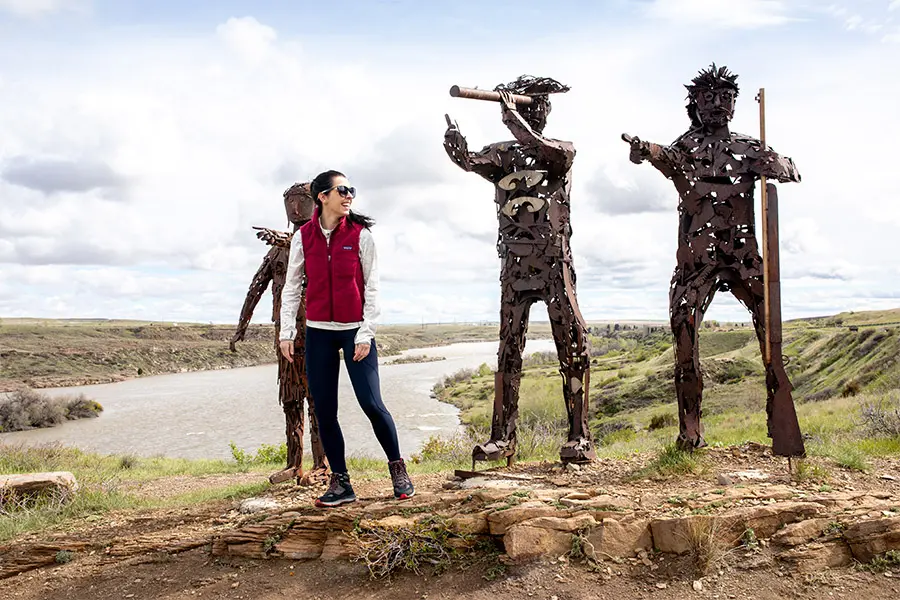
On June 18, 1805, William Clark and five men measured the “second great Cataract” of the Missouri and went a little more than a mile upriver. There Clark found what he called “the largest fountain or Spring I ever Saw, and doubt if it is not the largest in America Known, this water boils up from under th rocks near the edge of the river and falls imediately into the river 8 feet and keeps its Colour for ½ a mile which is emencely Clear and of a bluish Cast.”
On June 29, after hearing that description, Meriwether Lewis and George Drouillard walked six miles from the upper portage camp to see it. Lewis found it “much as Capt. C; had discribed & think it may well be retained on the list of prodegies of this neighbourhood towards which, nature seems to have dealt with a liberal hand.” The expedition reported plentiful beaver here, and trappers and fur traders followed through the 1800s. The spring is now a High Potential Historic Site on the Lewis and Clark National Historic Trail.
Smelter, hatchery, and park
In the 1880s and 1890s the spring went by “Big Spring” and sometimes “Wonderful Spring.” In 1887 a party of eastern tourists steamed thirty miles up the river from Fort Benton to see the falls and the spring. Their reporter wrote: “This tremendous outpouring seems to be rather the mouth of a hidden river than a simple spring.” The party agreed to christen it “The Giant’s Fountain.” The name that stuck came from E. V. Smalley, a publicity man for the Great Northern Railway. He called it Giant Springs during a visit sponsored by Paris Gibson, the founder of Great Falls. The city itself was founded in 1883.
In 1888 the Montana Smelting and Refining Company put the water to work in a large complex for processing silver and lead. It stood just south of what is now Giant Springs Road and gave Great Falls its first major industry. The Historical Society says the smelter closed in 1901, and the trail marker says it ran until 1902. Its ruins stood until 1928, when the city razed them.
The hatchery’s own beginning carries two dates. The Historical Society and the trail marker give 1922. They say the Montana Fish and Game Commission tapped the spring’s cool water for trout that year, and the hatchery became an added attraction at Giant Springs Park, which the City of Great Falls then ran. The state’s archival history of its hatchery system also lists Great Falls among the hatcheries of 1922, along with Lewistown, Big Timber, Red Lodge, and Ovando. The first state hatchery had been built at Anaconda in 1908. The Fish, Wildlife & Parks hatchery page gives 1928 as the year the production facility was built.
The Montana Historical Society in Helena keeps records from the Great Falls Fish Hatchery. They include ledgers from 1937 to 1970, daily logs from 1961 to 1965, and files of daily feed charts, production sheets, and temperature records from 1944 to 1956. There is also a 1956 joint survey of the Great Falls and Lewistown hatcheries by the U.S. Fish and Wildlife Service and the Montana Fish and Game Department.
During the 1930s the Works Project Administration and local agencies built the park’s concrete bridges, viewing platform, stone steps, and early roads. Workers also rebuilt the rock walls and planted many of the large trees that stand in the park now. According to the trail marker, the city transferred the park to the State of Montana in 1970. The Historical Society gives 1972 as the year the state created the 117-acre Giant Springs State Park.
The hatchery was rebuilt in 1984. A new building went up for the incubators and indoor raceways, and the old round ponds outside were replaced by 24 raceways. One round pond was kept, and it is the show pond.
Notable Events
- 1805Capt. William Clark encountered the source spring and called it the largest fountain or Spring he ever saw, doubting whether any known spring in America was larger. mtmemory.org
- 1922The Montana Fish and Game Commission created a trout hatchery using the springs' pure, cool waters. mtmemory.org
- 1928Giant Springs Trout Hatchery was built as a production facility. myfwp.mt.gov
- 1984Old round ponds were replaced by 24 outside raceways except one, now the show pond; the hatchery building was replaced and houses egg incubators and 40 interior raceways. myfwp.mt.gov
- Lewis and Drouillard hiked six miles from their upper portage camp to visit the spring after hearing Clark's description. nps.gov
People
- E. V. Smalley, Great Northern Railway publicity man who named the source spring Giant Springs.
- Paris Gibson, Sponsor of Smalley's visit during which the source spring was named Giant Springs.
- William Clark, Captain who encountered and described the source spring (June 18, 1805).
- Clark, Expedition co-leader who described Giant Springs (1805).
- Drouillard, Hiked to the spring with Lewis.
- Lewis, Expedition co-leader who hiked to the spring with Drouillard after hearing Clark's description.