

Georgetown Loop Railroad
Georgetown, Clear Creek County, Colorado. Georgetown Loop Historic Mining & Railroad Park®.
Details

- Where
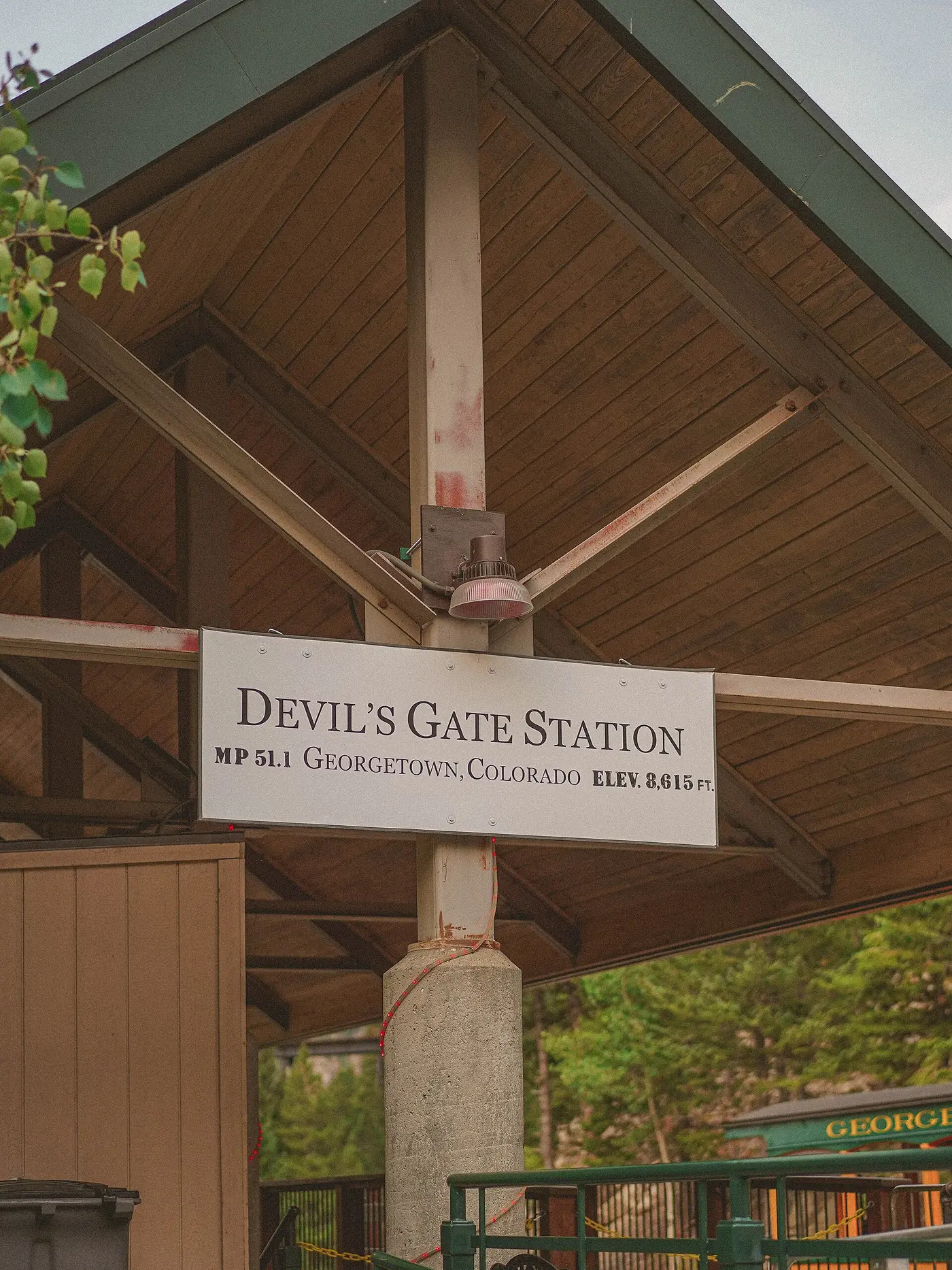
- Devil's Gate station 646 Loop Drive, Silver Plume Depot 825 Railroad Avenue, Silver Plume, Georgetown, CO 80444. Directions
- When
- Train ride about 1 hour 15 minutes in the main season and about 55 minutes from mid-October through early January; train and mine tour together 2 1/2 hours, offered April through September.
- Season
- Steam locomotives Memorial Weekend in May through early October; diesel electric locomotives operate the remainder of the schedule; Silver Plume Station open late May through mid-October.
- Getting there
- Just off I-70, 45 miles west of Denver.
- Fees
- Pricing varies by season; the booking calendar states prices and availability per date.
- Access
- Coach cars wheelchair accessible if the reservation agent is told; mine tours not wheelchair accessible due to steep and rough terrain; pets not allowed, only ADA service animals.
- Walk-in or reserve
- Advance booking recommended; arrive at the depot 30 minutes before departure to pick up printed tickets, which are required to board.
- Phone
- 888-456-6777
- Website
- georgetownlooprr.com
- Managed by
- Partnership of Historic Rail Adventures, LLC & History Colorado.
- Established
- 1884.
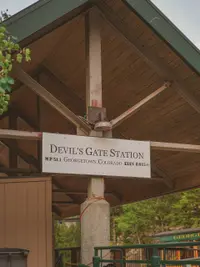
The road from Interstate 70 at Exit 228 follows Argentine Street through Georgetown to a fork, bears right, and ends at the Devil’s Gate Depot on Loop Drive. Three-foot-gauge track leaves from here and climbs Clear Creek valley to Silver Plume, two miles west, then returns. Clear Creek runs beside the line. It gathers from small streams near the Continental Divide, and a marker at the depot says that in June the snowmelt swells it to more than four times its average volume, “the force of the roaring water” knocking boulders together in the streambed.
Two depots and a bridge over Clear Creek
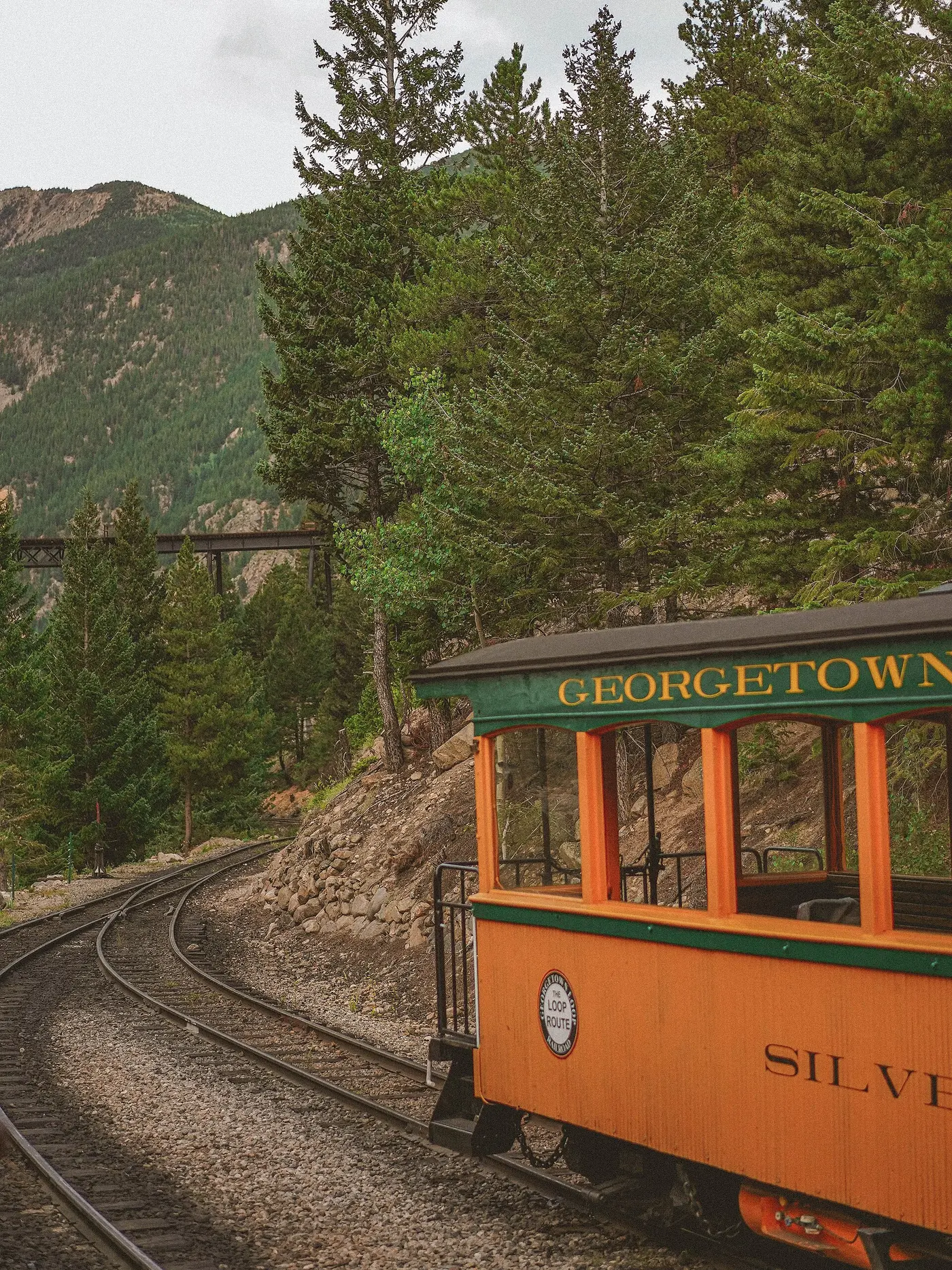
The line has a station at each end: Devil’s Gate in Georgetown and the restored Silver Plume Depot at 825 Railroad Avenue, one interstate exit west. The Silver Plume station opens only from late May through mid-October. A passenger may board at either end, ride the Loop to the other town, and ride back, and the trip is the same from both. Each station has a gift store selling novelties, light snacks, and drinks. The train has no restrooms. It runs rain or shine, with narration on the mining and railroad history of the canyon.
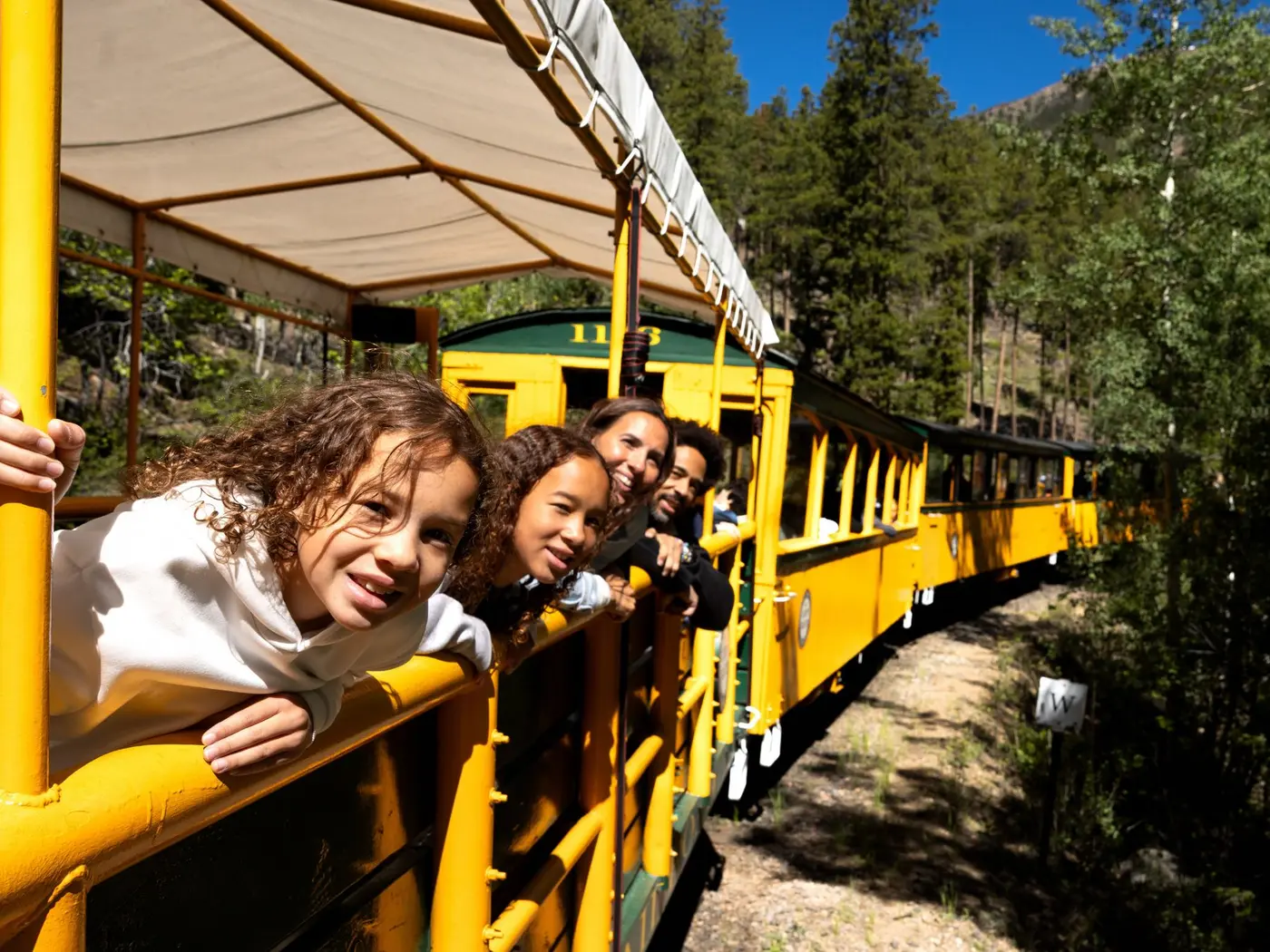
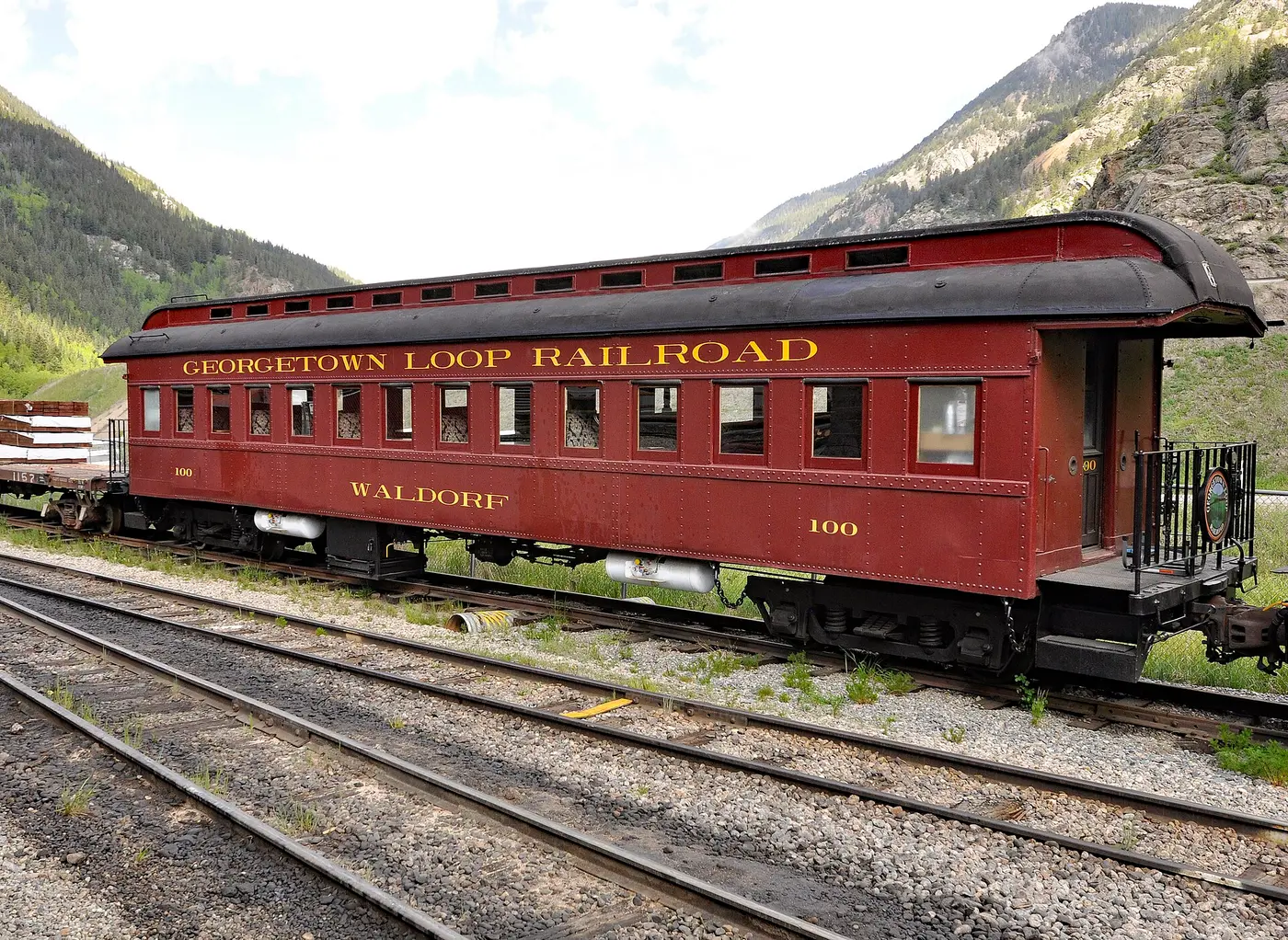
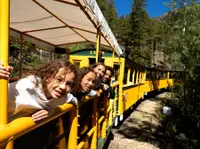
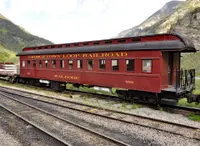
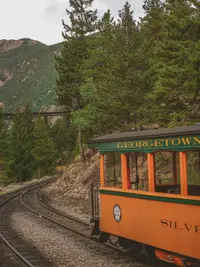
Steam locomotives generally pull the trains from Memorial Weekend in May through early October. The railroad says it cannot promise steam on any given day because it has to preserve the engines. Diesel-electric locomotives run the rest of the schedule. The ride takes about an hour and fifteen minutes in the main season and about fifty-five minutes from mid-October through early January. Summer trains carry open-air cars and enclosed parlor cars. Two older cars, the Waldorf and the Tahoe, have no wheelchair seating because of how they were built.
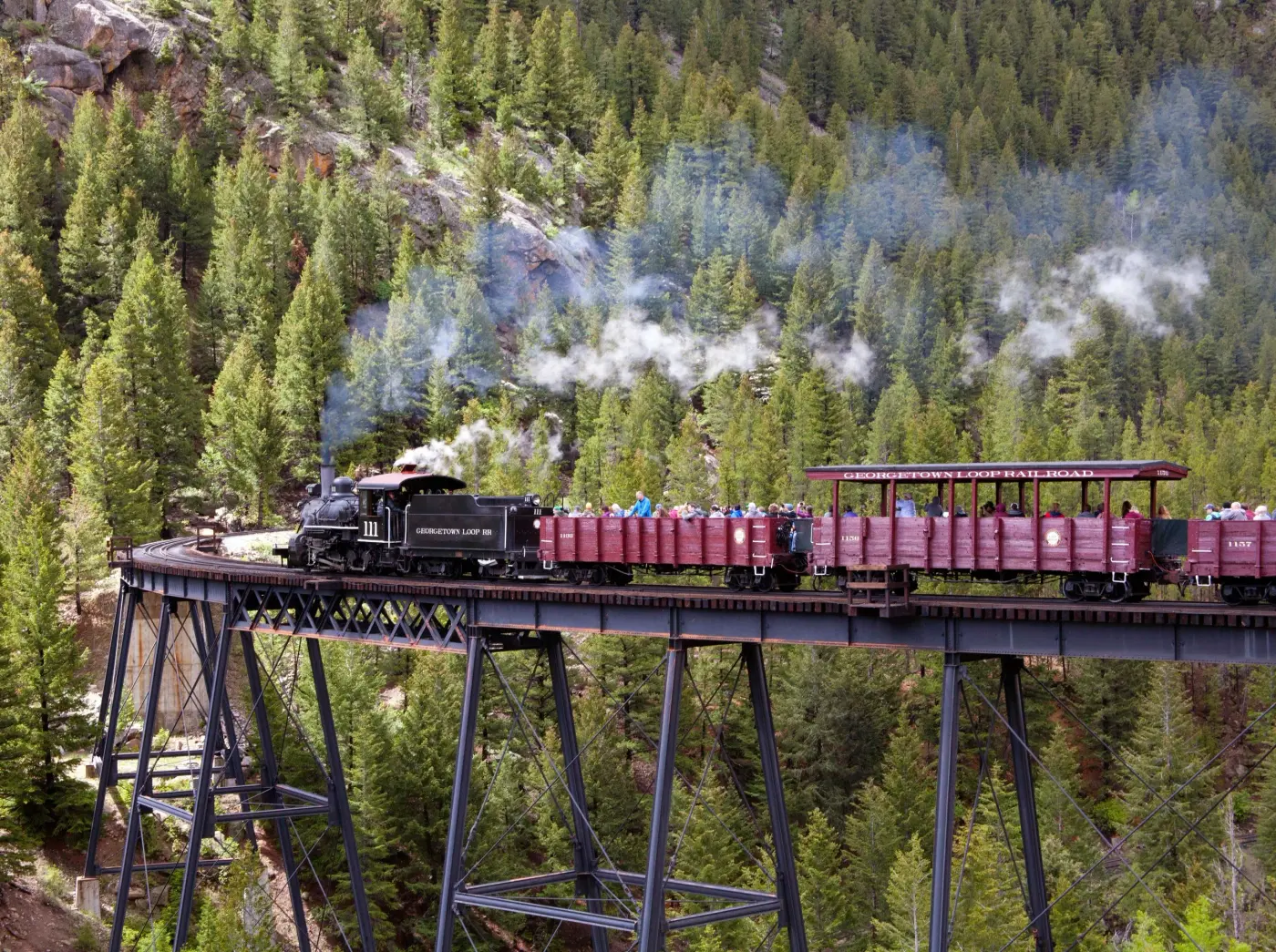
The fixed point of every trip is the Devil’s Gate High Bridge. It carries the track across the canyon, and a National Historic Landmark overview puts it more than 90 feet above Clear Creek. The name “Loop” comes from this crossing, where the line passes over its own track as it climbs.
The calendar follows the seasons. The 2026 events list Pumpkinfest for October 9–11, when every ticketed child takes home a pumpkin. Autumnfest runs October 16–18, with beer samples from Tommyknockers Brewery for riders 21 and older. The Trick or Treat Train runs October 30–31, with candy at the end of the ride and face painting at Devil’s Gate Depot. Each of these events gives one commemorative Faro Chip per reservation. From November 6 to December 24, the evening ride through Santa’s Lighted Forest passes more than 300,000 lights strung on the station, the surrounding ground, and the trees along the track, and Santa rides every departure before Christmas. Daytime holiday trains run on the same dates. A New Year’s Train follows from December 26 to January 1 in heated coaches, and an Encore Train runs January 2–3.
Into the Lebanon tunnel
From April through mid-September, passengers holding mine tickets and wearing a mine wristband get off at the Lebanon mine, halfway along the line. Riders from Georgetown reach it after about thirty minutes to Silver Plume, a fifteen-minute layover there, and a ten-minute ride back down to the mine station. The conductor announces the stop. No road reaches the mine, so the train is the only way in.
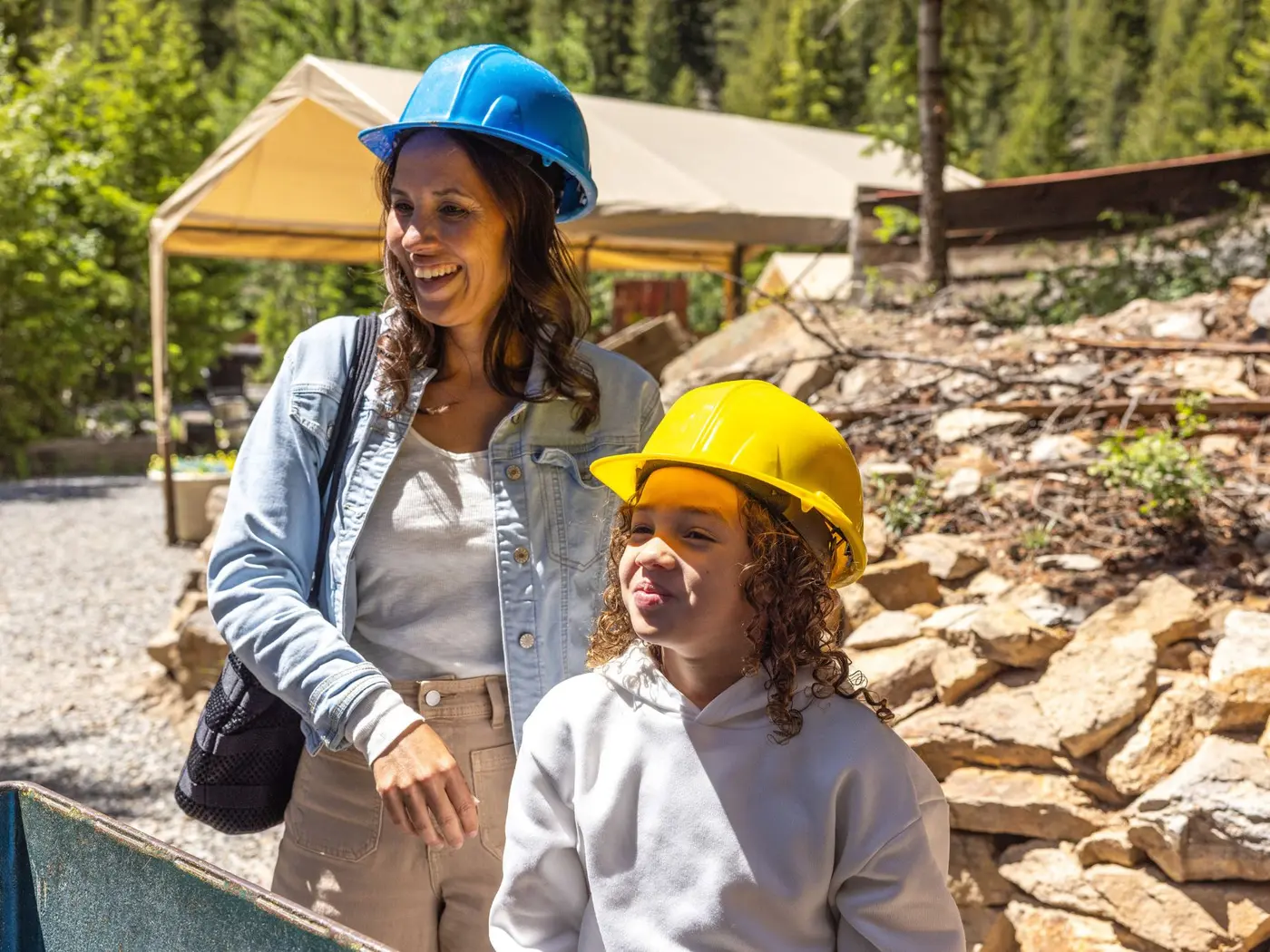
Visitors wear hard hats underground. The railroad’s own pages give the mine’s year-round temperature as 40 degrees in one place and 44 in another. The standard tour goes 500 feet into the Lebanon tunnel, which was bored in the 1870s. The guide points out veins of silver and explains early mining in Georgetown. Afterward, visitors pan for gold and keep what they find. The extended tour goes more than 1,000 feet into Leavenworth Mountain along a section of the Hise Ore, which runs from the silver mines of Silver Plume to the Silver Queen mine in Georgetown. On that tour the guides show naturally formed “silver pearls,” calcified hobnail boot prints, calcite dams, and stalactites more than a hundred years old. The walking adds up to about three-quarters of a mile at roughly 9,000 feet. Children under five stay above ground under state rules. Each month from May to September, one mine-tour guest wins a gold nugget in a drawing.
In the summer of 2026 the railroad opened a weekend gold-panning camp at Devil’s Gate, the Miner’s Camp, for visitors who want to pan before or after the train.
Blickensderfer’s spiral
The first railroad up Clear Creek Canyon reached Black Hawk in December 1872. William A.H. Loveland, a fifty-niner and promoter of the Colorado Central, organized it. With money from Jay Gould, who controlled the Union Pacific, the Colorado Central reached Idaho Springs in June 1877 and Georgetown that August. The marker at Devil’s Gate says the celebrations for its arrival “were short-lived.” Silver strikes at Leadville, forty-five miles southwest, set off a rush in 1879. For a short time that year, the railroad’s history says, Georgetown was the “Silver Queen of Colorado.” Gould wanted the Colorado Central to reach Leadville first. The route was surveyed in 1879, and two years later the Georgetown, Breckenridge and Leadville Railway was incorporated.
The obstacle lay just west of town. The valley narrows there, and the grade ran over 6 percent, too steep for most locomotives. The marker says the valley floor rises almost 640 feet in under two miles. The railroad’s own account says nearly 600 feet, and a 1989 National Park Service study says 600 feet and more. Jacob Blickensderfer, chief engineer of the Union Pacific, designed curves and bridges to ease the climb. The railroad’s history says his plan used three hairpin turns, four bridges, and a 30-degree horseshoe curve, and brought the average grade down to 3 percent. The marker describes it differently. In its account, the track made two hairpin turns at Devil’s Gate, the valley’s narrowest point, and looped over itself above Clear Creek. It then crossed the creek twice more and climbed through a 30-degree horseshoe called the Bill Fill, at a grade of 3½ percent. A diagram on the marker counts one complete spiral and two reverse loops, which add up to 3½ full circles when every curve is included. The speed limit on the high bridge was 4 miles an hour.
The work took three years. The high bridge was finished last, and the first train ran to Silver Plume in March 1884. By then the Denver & Rio Grande had reached Leadville from the south, and the marker says Union Pacific lines had also arrived by an easier southern route. Plans to cross the Divide were dropped, and the line ended a few miles past Silver Plume.
Tourists came anyway. The Union Pacific hired the photographer William Henry Johnson to make promotional views. One well-known photograph shows four trains on the Loop at once, each pointing a different direction of the compass. At the line’s busiest, seven trains a day left Denver, and the round trip cost $3. From Silver Plume, visitors could take the Argentine Central to the top of Mount McClellan or ride the aerial tramway up Sunrise Peak. The automobile cut into excursion revenue in the early 1900s, and the Loop dropped to two trains a day, May through September only. According to the marker, visitors kept coming for about forty years and then fell off after World War I. The railroad’s history dates the last trains from Denver to Silver Plume, and the dismantling of the Loop, to 1938. The marker and the Park Service study give 1939, when the Colorado and Southern closed the road and took up the track. The final miles from Golden to Idaho Springs closed in 1941. During World War II, the need for workers closed Georgetown’s last gold and silver mines.
Sailors, soldiers, and a million-dollar bridge
The valley stayed quiet for about two decades. In 1959, the centennial of the first major Rocky Mountain gold strikes, James Grafton Rogers was chair of the Colorado Historical Society’s board. Under his leadership the Society received almost 100 acres of mining claims and mills as gifts, including the Lebanon and Everett mines, and began acquiring land with the aim of rebuilding the whole Loop. The Society then worked with the Colorado Department of Highways to route Interstate 70 high on Republican Mountain, which left the valley floor and the old railroad grade intact.
In 1969 crews cleared the Lebanon tunnel to its full length and wired it for lights. Digging outside uncovered the sites of four buildings that appear in old photographs: a blacksmith shop, a miners’ change room or “dry,” the mine manager’s office, and a tool shed. These were rebuilt and opened in 1978, and the Lebanon Mill was stabilized.
The railroad’s history says track-laying began in 1973, after the Union Pacific donated rail and ties. A marker beside the depot credits the rebuilding to the military. Naval Reserve construction battalions of the 2nd Naval Construction Regiment, based at Great Lakes, Illinois, and the Army Engineer Battalion 4 from Fort Carson did the work as a construction training exercise. By the marker’s account, work was underway in 1972, ran mostly in the summer construction seasons, and continued through 1974 as weather and training schedules allowed. Captain Robert L. Ferriter of the Civil Engineer Corps directed the project. He had started it as a lieutenant commander, and he was assisted by David Ropchan, a fellow Colorado School of Mines alumnus, and by Lindsay Ashby. The marker calls the result “a ‘win-win project’ for all of the military troops and the State Historical Society.”
Passenger trains began running in 1975 on a short stretch of finished track, and the line lengthened down from Silver Plume to the upper end of Devil’s Gate by 1977. In 1982 the Boettcher Foundation gave $1 million to build the high bridge, in honor of E. Warren Willard, a former Boettcher & Company partner and a board member of the Historical Society. The bridge was built under contract, a replica of the original. On August 1, 1984, in the centennial year of the first line, Governor Richard D. Lamm dedicated it, and the first train crossed the completed grade.
The Morrison Valley Center was dedicated on August 19, 1985, and is now the Devil’s Gate Station. The Silver Plume Depot was restored the same year, and by the 1985 season visitors could ride the entire Loop. An engine house followed in 1986, along with interpretive markers along the route on its history, geology, and natural history. History Colorado, the Historical Society’s present name, owns the railroad as a historic site and runs it in partnership with Historic Rail Adventures. At Silver Plume, a car building now holds rolling stock and railroad exhibits.
Notable Events
- 1877With funds supplied by Jay Gould, the railroad reached Idaho Springs in June and Georgetown in August, opening the Rocky Mountains to tourists. georgetownlooprr.com
- 1879The plan devised by Jacob Blickensderfer includes three hairpin turns, four bridges and a 30-degree horseshoe curve from Georgetown to Silver Plume. georgetownlooprr.com
- 1879Route surveyed; two years later the Georgetown, Breckenridge and Leadville Railway was incorporated. hmdb.org
- 1884The first trains arrive in Silver Plume; with the D&RG completed into Leadville from the south, Gould's interest wanes and the line ends a few miles past Silver Plume. georgetownlooprr.com
- 1900sThe automobile dramatically reduced excursion train revenues. georgetownlooprr.com
- 1938The last trains ran from Denver to Silver Plume; the line from Idaho Springs to Silver Plume was abandoned and the Georgetown Loop dismantled. georgetownlooprr.com
- 1939The automobile signaled the end of the excursion line; Colorado and Southern closed the road and dismantled the track. hmdb.org
- 1941The final miles from Golden to Idaho Springs closed. georgetownlooprr.com
- 1959The Colorado Historical Society purchased the Georgetown-Silver Plume Loop Railroad and Depot. dn790000.ca.archive.org
- 1959Mining claims and land donated to the Colorado Historical Society formed the nucleus of the new park. hmdb.org
- 1969Work began opening the tunnel; it was cleared to full length and wired for lighting. georgetownlooprr.com
- 1972Work was underway, continuing during summer construction seasons as weather and training schedules permitted. hmdb.org
- 1973Construction of the rail line began after the Union Pacific donated the track and ties for the reconstruction. georgetownlooprr.com
- 1975The first operating season of the new Georgetown Loop ran on a small portion of completed track. georgetownlooprr.com
- 1977The lengthening line reached the upper end of Devil's Gate. georgetownlooprr.com
- 1978Historic Lebanon mine buildings were reconstructed and opened; the mill was stabilized and rebuilt. georgetownlooprr.com
- 1982A $1 million Boettcher Foundation grant in honor of E. Warren Willard financed the final segment of the reconstruction, the Devil's Gate High Bridge. georgetownlooprr.com
- 1984The Colorado Historical Society purchased the railway and completed reconstruction of the major portion of the railroad. dn790000.ca.archive.org
- 1984Governor Richard D. Lamm dedicated the replica Devil's Gate High Bridge, completing the reconstruction of the Georgetown Loop in time for the 100th anniversary of its original construction. georgetownlooprr.com
- 1984High Bridge completed by contract; first train traversed the completed grade. hmdb.org
- 1985The historic Silver Plume Depot is restored. georgetownlooprr.com
- 1985Morrison Valley Center, now Devil's Gate Station, was dedicated. georgetownlooprr.com
- 1985Visitors could make the entire Loop trip by the season. hmdb.org
- 1986An engine house was completed to service locomotives; the Historical Society also completed interpretive markers. georgetownlooprr.com
People
- E. Warren Willard, former Boettcher & Company partner and Colorado Historical Society board member honored by the grant that financed the Devil's Gate High Bridge.
- Jacob Blickensderfer, Union Pacific Chief Engineer who devised the plan to reduce the grade.
- James Grafton Rogers, chair of the Colorado Historical Society's board of directors who led the centennial effort that began the Loop's reconstruction.
- Jay Gould, financier who controlled the Union Pacific and supplied the funds to complete the route to Georgetown.
- Richard D. Lamm, Governor who dedicated the Devil's Gate High Bridge.
- William A.H. Loveland, fifty-niner and Colorado Central proponent who organized the first railroad line up Clear Creek Canyon.
- David Ropchan, Colorado School of Mines alumnus assisting Captain Ferriter with vision, direction and leadership.
- Lindsay Ashby, Assisted Captain Ferriter with vision, direction and leadership during restoration.
- Robert L. Ferriter, Captain in the Civil Engineer Corps, U.S. Naval Reserve, directing restoration.
Sources
- georgetownlooprr.com
- georgetownlooprr.com/faqs-directions
- georgetownlooprr.com/contact-us
- georgetownlooprr.com/our-history
- fareharbor.com/embeds/book/georgetownlooprr/items/calendar/?full-items=yes&flow=1464807
- georgetownlooprr.com/why-is-it-called-the-loop
- dn790000.ca.archive.org/0/items/studyofalternati00john/studyofalternati00john.pdf
- visitclearcreek.com/wp-content/uploads/2021/02/Final-Georgetown-Silver-Plume-NHL-Overview.pdf