
Ennis National Fish Hatchery
Ennis, Madison County, Montana. Broodstock hatchery.
Details

- Where
- 180 Fish Hatchery Road, Ennis, MT 59729. Directions
- When
- Daily 7:30am - 5:00pm.
- Getting there
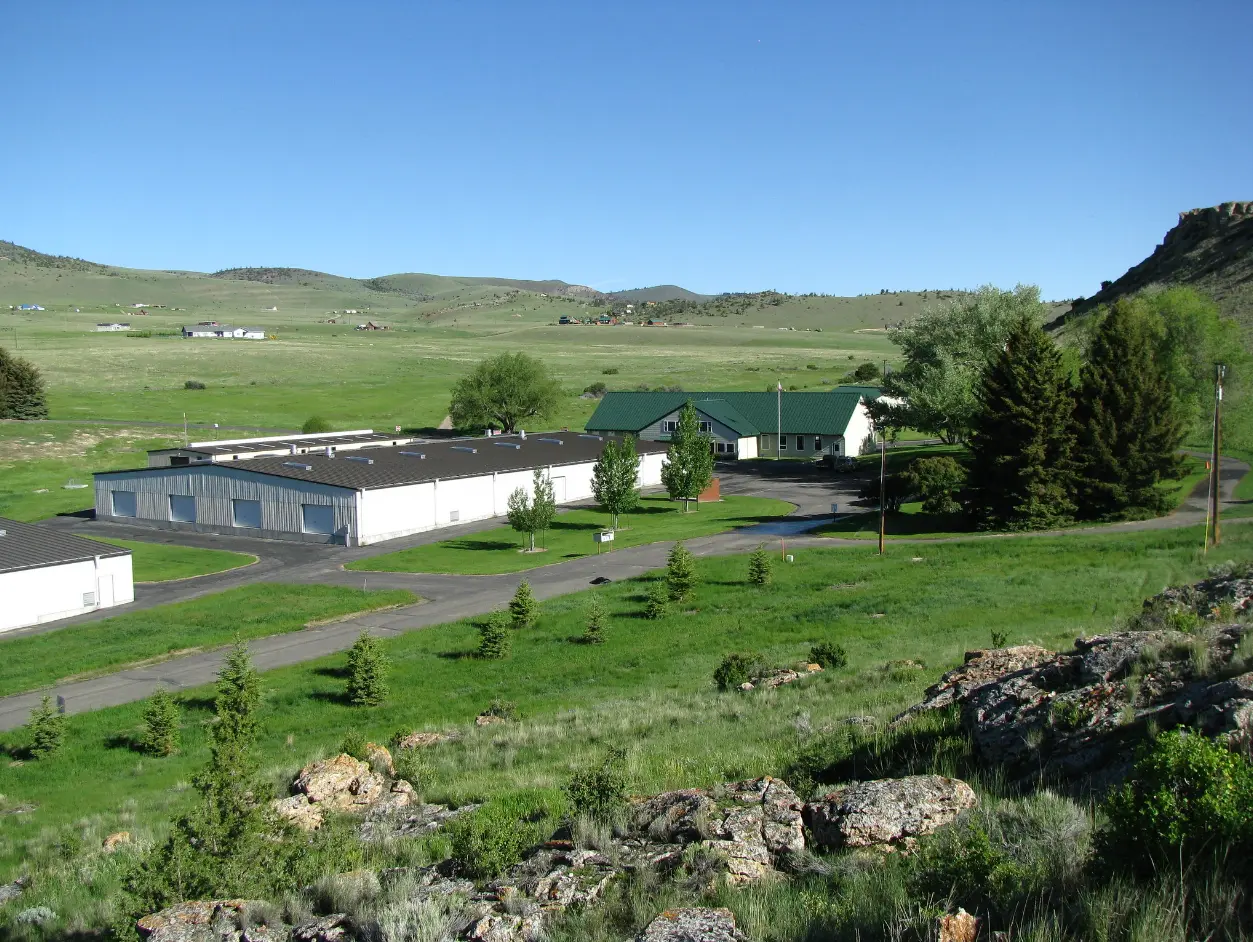
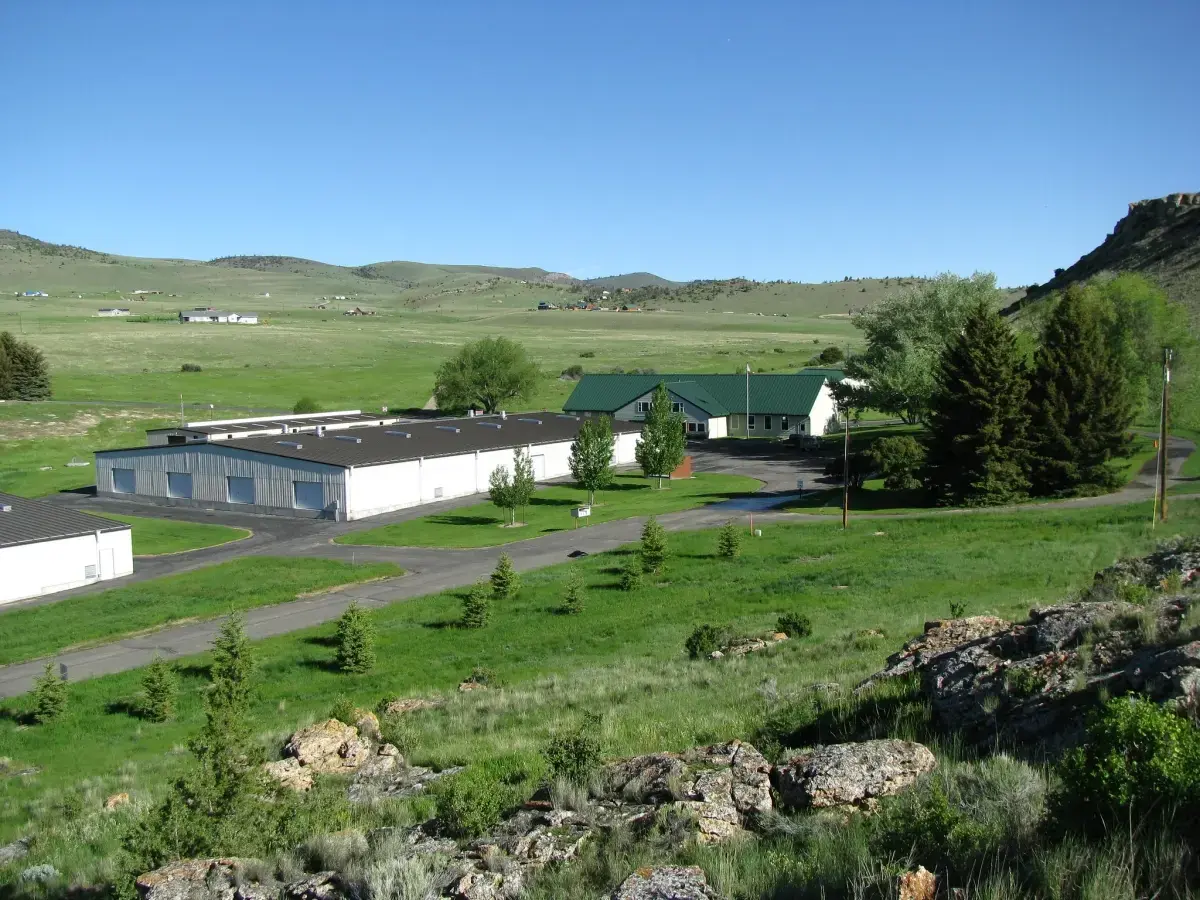
- in Madison County, 12 miles southwest of Ennis, Montana, along the northeastern foothills of the Gravelly Range.
- Access
- Self-guided tours of the visitor center and hatchery building.
- Walk-in or reserve
- Guided tours and education programs for the public and school groups when scheduled in advance.
- Phone
- (406) 682-4847
- Managed by
- U.S. Fish and Wildlife Service.
- Established
- Authorized by Congress in May 1930; fish culture operations began in July 1933.
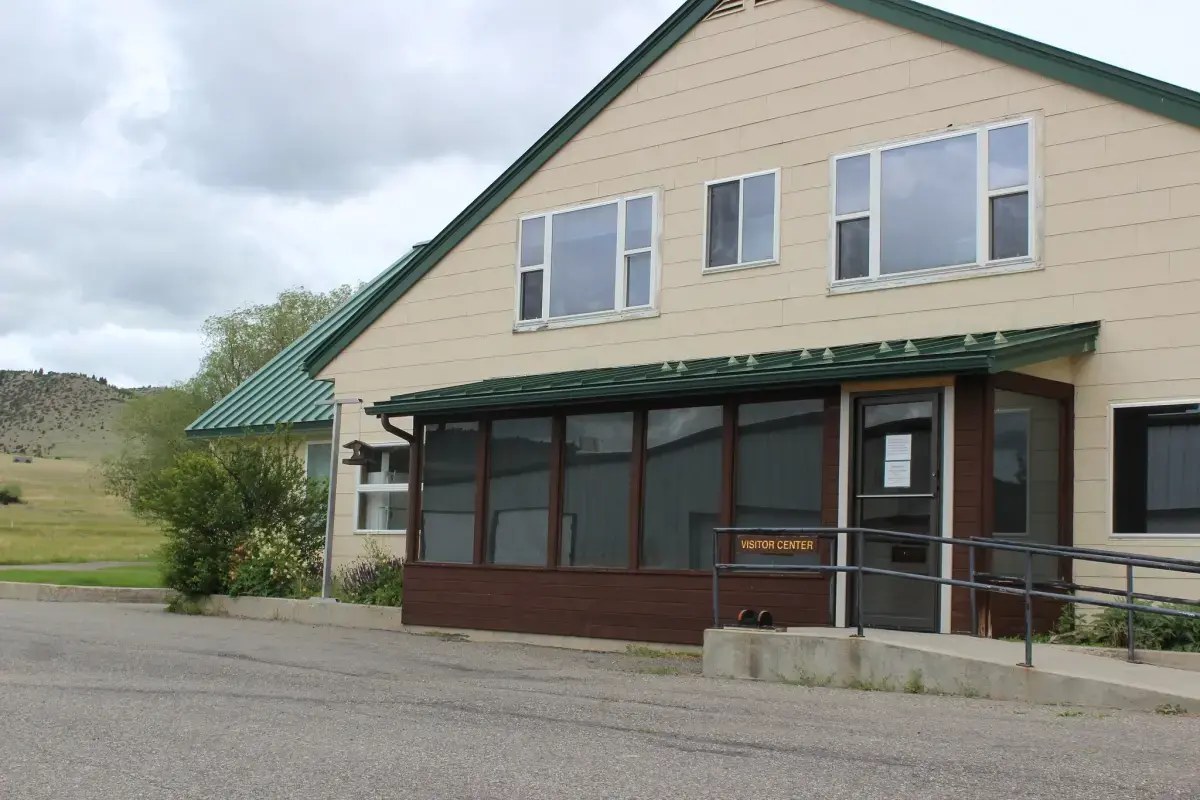
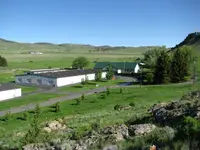
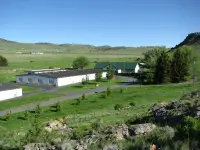
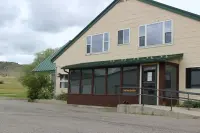
A kiosk in the parking lot holds visitor information and directions for a self-guided tour. The Ennis National Fish Hatchery lies in Madison County, 12 miles southwest of the town whose name it carries, along the northeastern foothills of the Gravelly Range. The route leads through a visitor center and into the hatchery building, where eggs and small fish are reared. Outside is a display raceway holding rainbow, blue, and albino trout that weigh up to 10 pounds. More than 3,000 people come each year, and staff are normally on hand to answer questions. Guided tours and education programs for the public and school groups run when scheduled in advance.
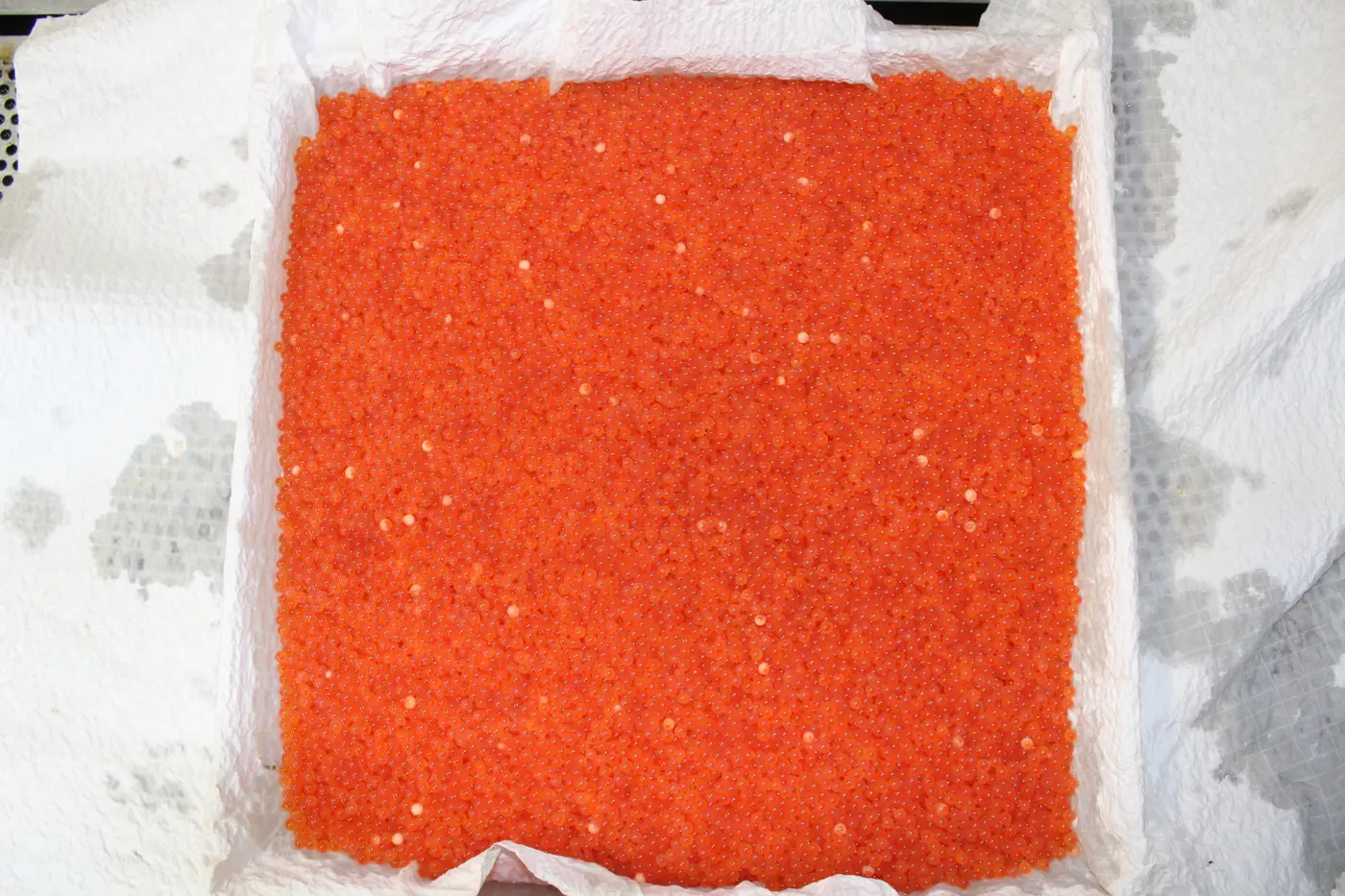
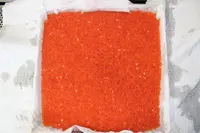
A 2001 Service brochure describes the grounds as they were then. It lists a small visitor center in the building and an outside display pond with rainbow trout over 20 pounds, and it invites visitors to walk the raceways where most of the adult trout are held. It counts 38 hatchery tanks, 48 circular tanks, and 36 raceways. One photograph shows hatchery employees Dave Noble and Jim McFall holding a pair of Shasta strain broodstock. Another shows Eagle Lake strain eggs on a screen just before they were put down in a tank.
Eggs for other hatcheries
The adult fish in those raceways are kept for their eggs. Most hatcheries raise fish of various sizes and stock them in lakes and streams. Ennis operates as a broodstock hatchery. It rears trout to adult size, takes and fertilizes their eggs, and incubates them through the fragile early stages. It then ships them to production hatcheries, where they are hatched and the fish are raised to stockable size. The U.S. Fish and Wildlife Service calls Ennis the largest facility in its National Broodstock Program, which was established in 1970, and one of only two rainbow trout broodstock hatcheries in the federal system. The program as a whole provides about 60 million fish eggs a year.
Ennis itself produces about 20 million rainbow trout eggs annually. They go to research facilities, universities, and federal, state, and tribal hatcheries in 23 states. In fiscal year 2000 the eggs went to 26 states. The brochure from that period put the economic benefit at 5 million angler days and $50 million a year.
Seven strains are raised now, each named for the place it came from:
- McConaughy (Nebraska)
- Eagle Lake and Shasta (California)
- the Erwin/Arlee Cross (Tennessee)
- Fish Lake (Utah)
- Arlee and Harrison Lake (Montana)
The 2001 brochure listed six strains. It had Erwin (Tennessee) by itself in place of the cross and no Harrison Lake.
Not every fish leaves as an egg. The hatchery raises 350,000 fingerling rainbow trout for Montana’s lakes and reservoirs. After three or four years the broodstock are “retired” and stocked into public waters for Montana’s urban and youth programs. In 2001 some retired broodfish also went into Montana and Colorado waters where they would not interfere with endangered fish or wildlife. Others were donated to the Horsebutte Wildlife Rehab Center as food for eagles and ospreys. The hatchery also stocked the Ennis Kids Pond for National Fishing Week.
Spring water at 54 degrees
The site was chosen for its water. A fractured rock outcropping gravity-flows 15,000 gallons a minute of 54°F spring water, which the Service calls the ideal environment for producing trout. The hatchery has stayed free of whirling disease. Covers built over the springs and raceways are meant to keep it so.
From 1930 to the broodstock years
Congress authorized the hatchery in May 1930, and fish culture operations began in July 1933. The 2001 brochure gives 1931 as the year it was established. The Montana Historical Society’s historical note on the state Fisheries Division lists the Ennis fish hatchery among those built in the 1930s, putting it in 1933 alongside the Miles City Pond Culture Station.
The hatchery’s first work was to take trout eggs from wild populations and return fingerlings to public waters to sustain the sport fishery. In the 1970s demand for catchable trout fell while demand for eggs rose. The emphasis shifted to broodstock, and by the mid-1980s production exceeded 20 million eggs.
The name comes from the town. Gold was discovered in Alder Gulch in 1863, and two months later William Ennis homesteaded a site on the Madison River that quickly became the Town of Ennis. A Mr. Jeffers did the same across the river. The Madison Valley History Association credits William and Katherine Ennis with establishing the businesses and services that made the place a permanent town. Ennis was incorporated in 1956.
Big Bill
On a Sunday, October 27, a hatchery employee who lives above the building saw two people recklessly driving a yellow ATV in the parking area. Madison County Sheriff Phil Fortner said employees suspected the vandalism happened between 8:30 and 10 a.m. A junior biologist found it while getting ready to feed the fish. Nearly 30 fish were dead, including the hatchery’s oldest and largest. Project leader Ron Hopper said the vandals used ice-chopping tools and garden hoes. They broke the hoe handles beating and cutting the fish.
One of the dead was Big Bill, a seven-year-old rainbow trout of about 12 pounds that had been on display for the public. “It was my favorite fish and they killed that one,” Hopper said. Deputy Wes Heavrin called the case “definitely out of the blue for our county.” Until then the hatchery had left its doors unlocked after closing, because staff were comfortable with people visiting after hours. Afterward, Hopper said, the doors were locked and video cameras were being added. “You don’t expect this to happen 12 miles outside of a community of 800 people,” he said.
Notable Events
- 1930The Ennis National Fish Hatchery was authorized by Congress. fws.gov
- 1933The Montana Historical Society's historical note for the state Fisheries Division records the Ennis fish hatchery among the hatcheries built in that decade, in 1933. archiveswest.orbiscascade.org
- 1970sDemand for catchable trout decreased while demand for eggs increased; more emphasis went to broodstock, and by the mid-80's production exceeded 20 million eggs. govinfo.gov
- 2000Eyed eggs from 6 strains of rainbow trout were provided to Federal, State, and Tribal hatcheries, fish technology centers, and research facilities in 26 states. govinfo.gov
- Vandals killed nearly 30 fish at the hatchery, including its oldest and largest fish. bozemandailychronicle.com
People
- Ron Hopper, hatchery project leader.
- Katherine Ennis, with William Ennis, established the key businesses and services that turned the site into a permanent town whose name the hatchery carries.
- William Ennis, central role in the founding of what would become Ennis, Montana, whose name the hatchery carries (late 1800s).
Sources
- fws.gov/fish-hatchery/ennis
- fws.gov/fish-hatchery/ennis/visit-us
- fws.gov/fish-hatchery/ennis/visit-us/tours
- archiveswest.orbiscascade.org/ark:80444/xv78323
- digitalcommons.unl.edu/usfwspubs/185
- ennismontana.org/about-ennis
- fws.gov/fish-hatchery/ennis/about-us
- govinfo.gov/content/pkg/GOVPUB-I49-PURL-gpo90904/pdf/GOVPUB-I49-PURL-gpo90904.pdf
- bozemandailychronicle.com/news/crime-and-courts/officials-investigating-fish-slaughter-at-ennis-hatchery/article_75c4bfbf-5caf-5207-95d8-c526c8a6ff03.html