Comstock Gold Mill
Virginia City, Storey County, Nevada. Last fully operational stamp mill in the state; May through October.
Details

- Where
- 435 F Street, Virginia City, NV 89440. Directions
- When
- Thursday thru Monday from 11:00 a.m. to 2:00 p.m.
- Getting there
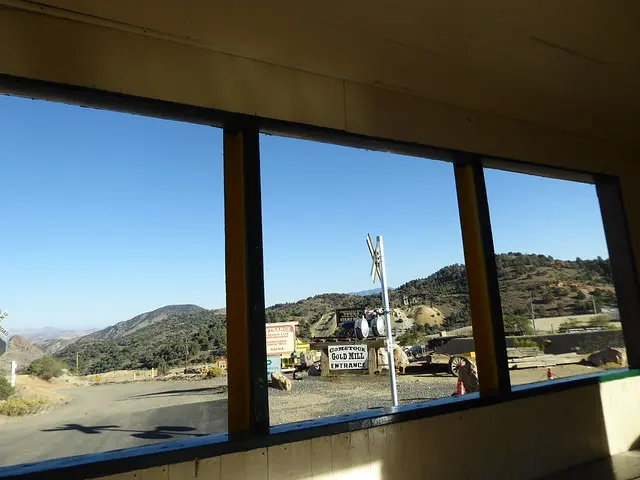
- On F Street near the old amphitheater, where the V&T railroad tracks cross the street.
- Fees
- $10 adults; $5 children ages 12-18; age 12 and under free.
- Hours
- Thursday thru Monday 11:00 a.m. to 2:00 p.m.
- Walk-in or reserve
- Large groups of up to 60 by appointment only.
- Phone
- (775) 847-7500
- Managed by
- Outlaw Dave, caretaker.
- Established
- 1864.
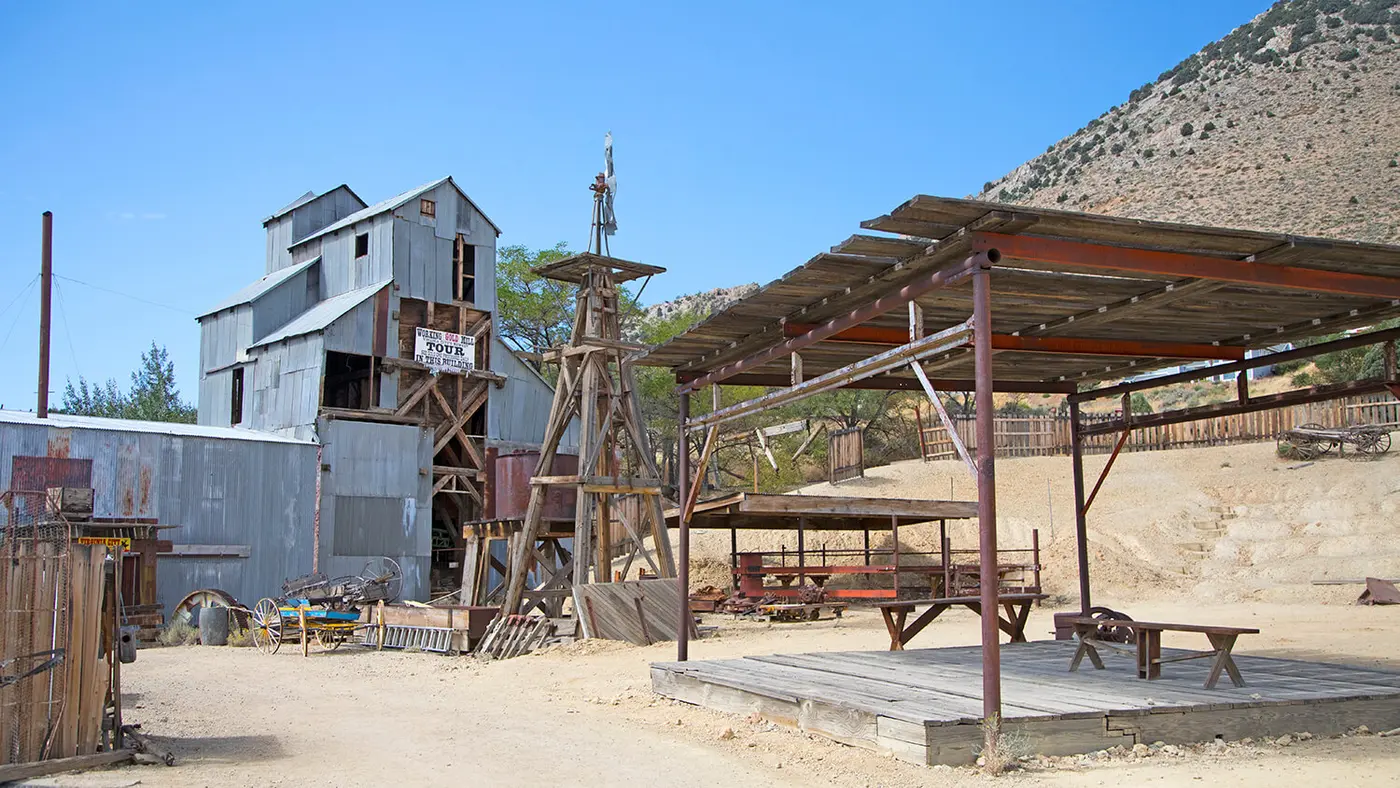
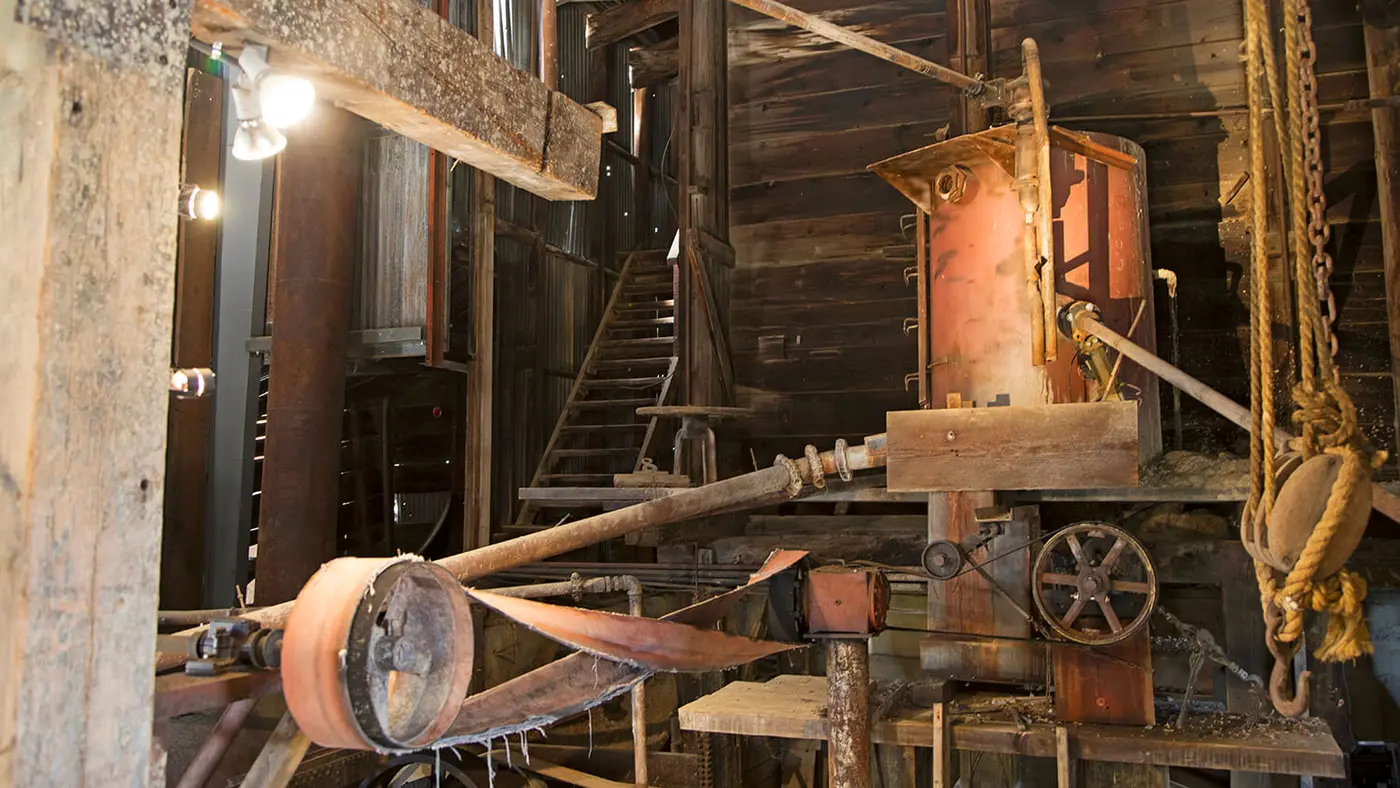
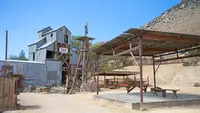
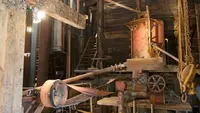
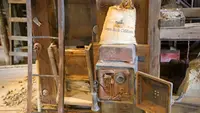
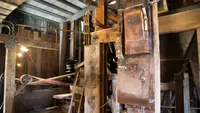
The Comstock Gold Mill stands on F Street in Virginia City, near the old amphitheater, where the Virginia & Truckee railroad tracks cross the street. Inside a building attached to the Arizona-Comstock Mill, two iron stamps rise and drop on ore, driven by a boiler and steam engine that once ran the Arizona-Comstock mill itself. Smoke drifts from the boiler. It is simulated, and the Virginia City audio tour says it is “just there to show the visitor what it was like to work in the mill.” When the mill opened in 2007, co-owner Paul Thompson gave a plainer reason for using a machine in place of real smoke: “We didn’t want the fire department being called in.”
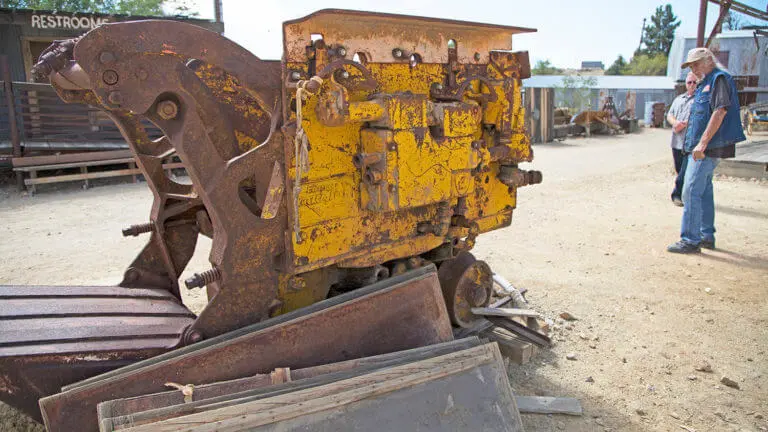
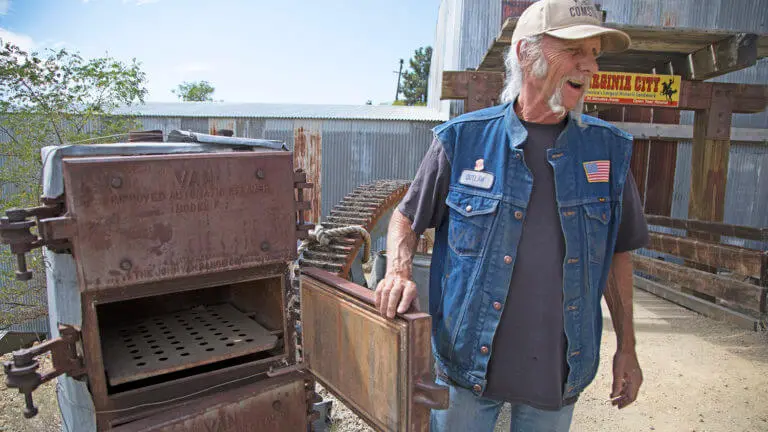
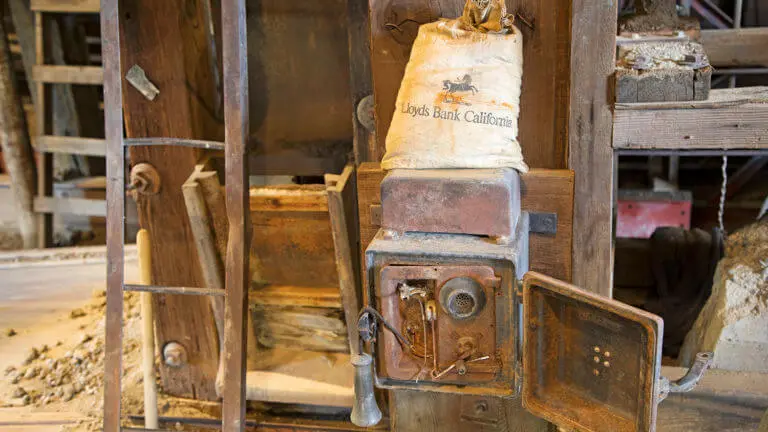
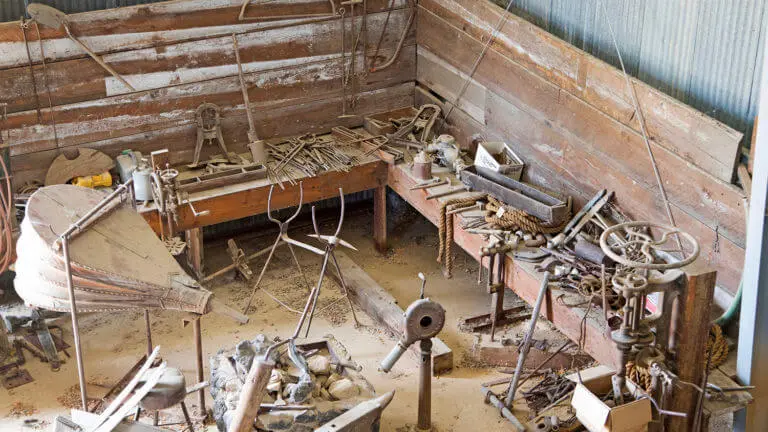
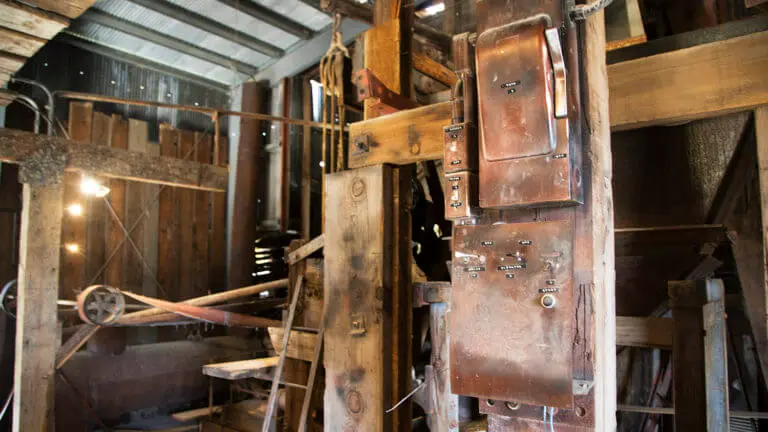
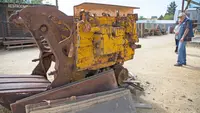
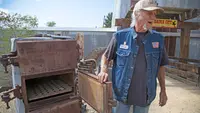
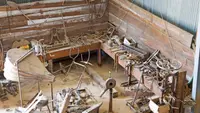
The caretaker is a man known as Outlaw Dave. He leads visitors through Virginia City’s mining history and makes certain they see the mill run before they leave. Around the stamps is a large collection of historical mining equipment, and the narrated tour follows gold through the process from ore to recovery. The mill is open from May through October, Thursday through Monday, from 11 a.m. to 2 p.m. Admission is low, and the operation depends on donations to keep the machinery preserved and to add to the property.
Two stamps from Joshua Hendy’s shop
Joshua Hendy built the mill in San Francisco in 1864, the year Nevada became a state. It is a two-stamp gold mill, made to crush gold- and silver-bearing ore so the metal could be recovered. Sources differ on where it worked before it reached Virginia City. Travel Nevada says it first operated in Marietta, a ghost town near Hawthorne, and that it did process Comstock silver and gold. Thompson told the Nevada Appeal in 2007 that most of the equipment came from the Murrietta Mine near Goldfield, in Esmeralda County, and the audio tour gives the same account.
At the height of the Comstock, by Travel Nevada’s count, 236 mills ran around the clock in and around Virginia City. That source names the Comstock Gold Mill as one of three surviving mills tied to the area’s history, and the only one still working.
Mercury, screens, and the pulsation jig
The work of a stamp mill begins after the ore leaves the ground. “It’s like a walnut,” tour guide “Diamond” Jim Caravallo told the Appeal in 2007. “The walnut has a shell. Well, the rock is the shell.” The ore was crushed several times to break that shell.
In the early decades, Thompson said, crushed ore was washed out of the crusher onto a steel table, and mercury was used to take up the gold. “The mercury would act like a magnet, and attach to the gold, then they would burn the mercury off.” After the late 1880s, with many workers killed by the burning, the Virginia City mills changed methods. The ore was washed through a series of screens and then into a pulsation jig, which caught the larger pieces of gold. The finer material was washed onto a second steel table. Gold is heavier than dirt, so the dirt washed away and the gold stayed behind. Thompson said the mill recirculates its water and probably uses no more than an ordinary household.
Thompson, Jolcover, and a gantry crane
The mill was a private undertaking. Paul Thompson owned the business with Scott Jolcover. Caravallo met Thompson in an old ghost town in California and joined the effort, and Norman Garcia helped assemble the mill. They put it together with a gantry crane, the kind used to swing large pieces of mining equipment into place. “We preserved it and took care of it,” Thompson said. “We want to make it as authentic as possible.”
On July 26, 2007, the Nevada Appeal reported that the mill would open for its first tours at 10 a.m. that Saturday. Thompson said its main purpose was education. “I don’t know of any other place that operates daily, but some operate occasionally,” he said. “This is educational, to show people how it was really done.” Caravallo said he had never seen a stamp mill before and doubted many people had. “People remember Bonanza, but this is what made this town, the mining and the milling.”
Thompson had more plans that year. From the Murrietta Mine he had obtained a complete blacksmith shop, with forge, bellows, and tools, to fill one open area. Another area was to hold a reconstructed mill office with antique furniture. He meant to add a ball mill, where large rolling balls crush the ore. He also hoped to install a Huntingdon Mill and had a wood frame attached to a 1920s Oldsmobile engine that once ran one. He talked of a video on the history of the area, and of opening an old drift that runs on a 6-degree decline under the Historic Fourth Ward School and continues 450 feet under C Street.
“I don’t think I’ll live to see that,” he said. “But we are going to go into the drift and do some timbering.”
Notable Events
- 1864Joshua Hendy built the mill in San Francisco in the same year Nevada became a state. travelnevada.com
- 2007The newspaper announced first tours for Saturday; co-owner Paul Thompson said the main purpose was to educate visitors. nevadaappeal.com
People
- "Diamond" Jim Caravallo, Tour guide who joined the mill effort after meeting Thompson in an old California ghost town.
- Norman Garcia, Helped put the mill together.
- Paul Thompson, Co-owner of the mill business with Scott Jolcover; described education as its main purpose.
- Scott Jolcover, Co-owner of the mill business with Paul Thompson.
- Joshua Hendy, Builder of the mill in San Francisco (1864).
- Outlaw Dave, Caretaker of the Comstock Gold Mill.