Central Washington State Fair
Yakima, Yakima County, Washington. State fair.
Details

- Where
- 1301 South Fair Ave., Yakima, WA 98901. Directions
- When
- Last held September 25–October 4, 2026; next year’s date not yet stated.
- Getting there
- From Seattle or Spokane: I-90 to I-82 South at Ellensburg to Yakima, Exit #33A West; follow signs to the SunDome.
- Fees
- Gate admission: Mon-Thu adults $16.00, youth (6-12) $11.00, seniors (65+) $13.00; Fri-Sun adults $18.00, youth $12.00, seniors $14.00; military and first responders $11.00 all days, their families $12.00; kids 5 & under free.
- Hours
- Friday-Saturday Noon-11pm; Sunday Noon-10pm (first weekend); Monday-Thursday 2pm-10pm; Friday-Saturday Noon-11pm, Sunday Noon-9pm (closing weekend).
- Access
- General parking $12 per vehicle through Gate 15 (Main Lot, Pacific Avenue next to Yakima County Stadium) or Gate 12 (Infield Lot, Pacific Avenue behind Yakima County Stadium); Pacific Avenue borders the north edge of State Fair Park.
- Walk-in or reserve
- Tickets online or in advance at the Box Office or the gate; military and first-responder tickets cannot be purchased online.
- Phone
- 509.248.7160
- Website
- statefairpark.org
- Managed by
- State Fair Park and Event Center (a 501(c)(3) corporation).
- Established
- 1892.
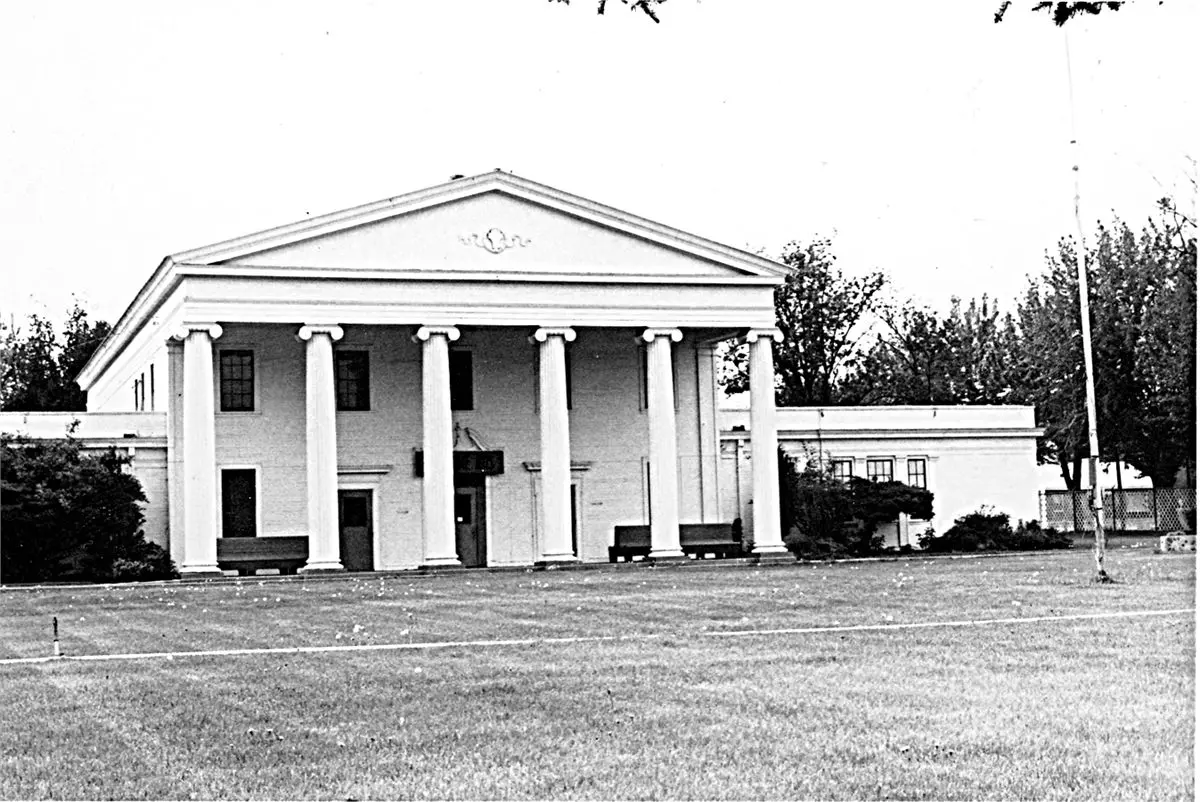
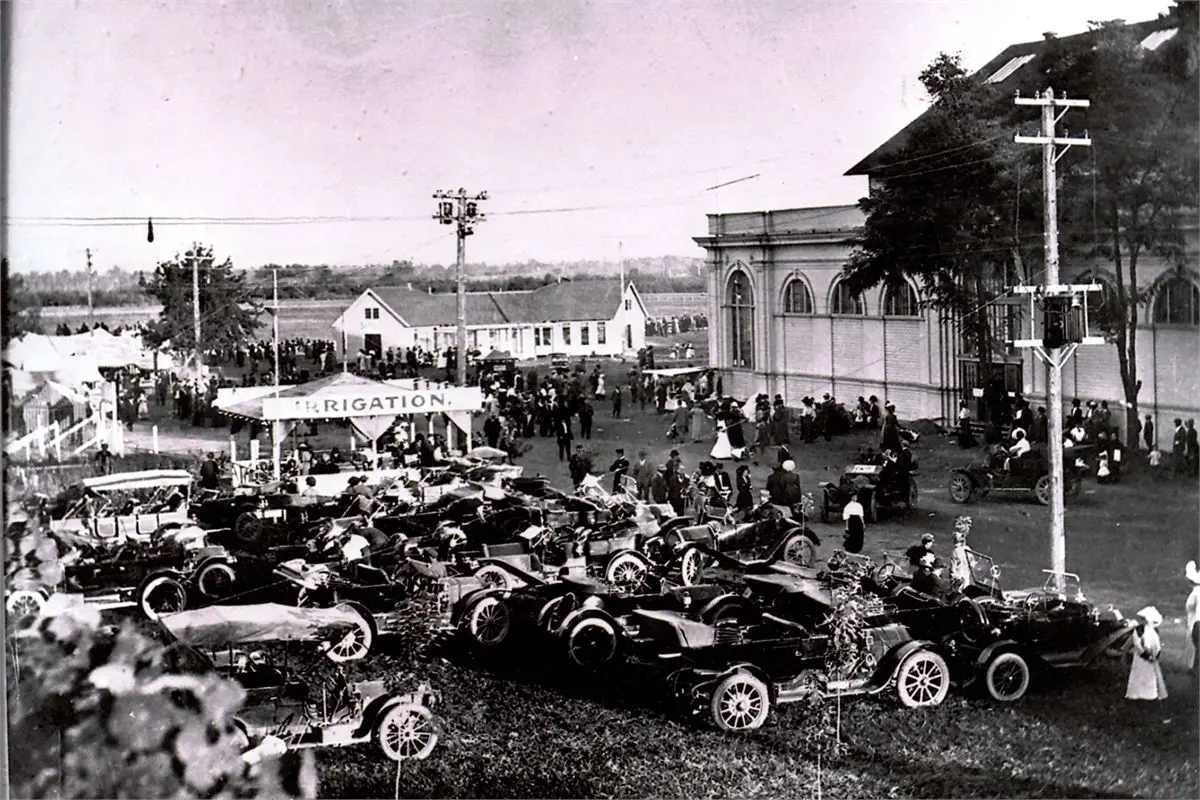
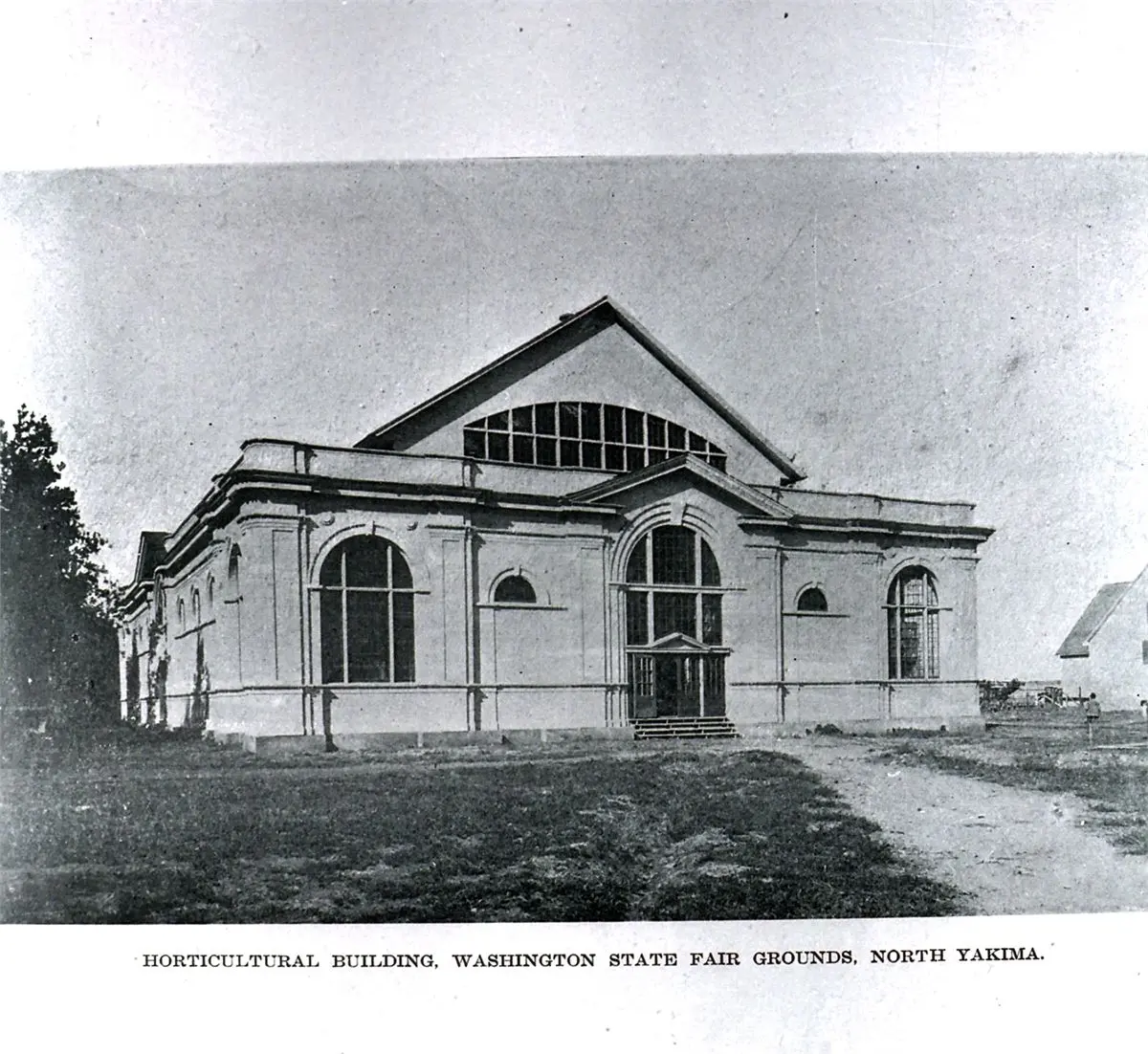
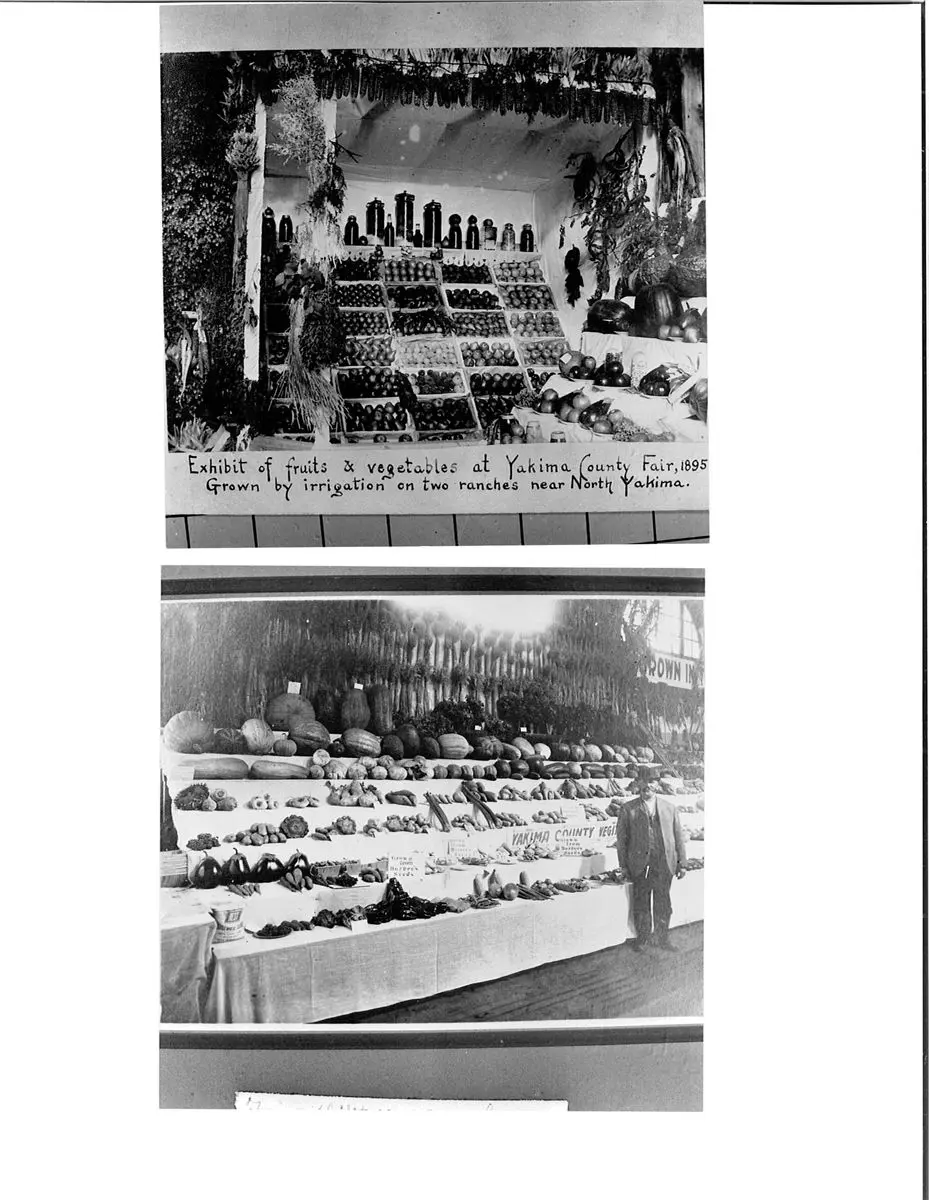
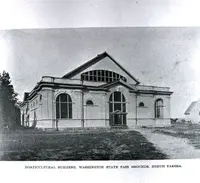
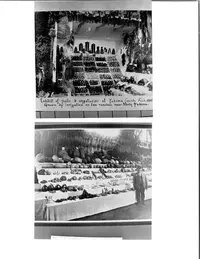
Inside the Agriculture Building at State Fair Park in Yakima, Yakima Valley nonprofits serve lamb burgers, and the Milk Shedd sells ice cream a few steps from the elaborate agricultural displays and the “My Perfect Plate” creations of schoolchildren. A 1907 photograph in the fair’s archive shows the same building under an older name, the Horticultural Building. Seven nonprofits keep stands at the fair, the Young Life booth among them. The fair’s newer food includes garlic parmesan elephant ears, deep-fried bacon-wrapped chicken legs, chicken on a stick, shish kebabs of chicken, beef or lamb, deep-fried cheesecake and deep-fried ice cream.
The Central Washington State Fair fills these grounds for ten days as September turns into October. The 2026 fair opened at noon Friday, Sept. 25, and closes at 9 p.m. Sunday, Oct. 4. Its theme was “Honoring Our Past, Growing Our Future,” which fair officials tied to the nation’s 250th birthday and to the Yakima Valley’s future. The grounds are run by State Fair Park and Event Center, a 501(c)(3) corporation. Between fairs it books concerts, car shows, Quinceañeras, motorized racing and state high school playoffs. Kathy Kramer is its chief executive officer and president. During setup in mid-September the old State Fair Park sign stood propped against a fence, to be replaced by an electronic reader board.
Funville, the barns and the gazebo
The Harvest Plaza Stage, just south of the Agriculture Building, was new in 2026. Kramer offered it as a place to settle down during or after fair food. Immediately south of the small animal barn lies Funville, where every activity is free. It holds a Yakama Nation teepee, bounce houses, the Embrace Healing Petting Zoo, gold panning for children, and wildlife and endangered-species shows. “Moments That Made US,” a new exhibit, covers milestones in the nation’s history at the heart of the Declaration of Independence. At the Ikonic Glass workshop, anyone 10 or older can step up to the torch and shape molten glass in 20 minutes. Off Axis High Dive puts on 20- to 25-minute shows of acrobatics, stunts and comedy, with dives from extreme heights into a pool. “It’s always about the balance of education and having fun,” Kramer said.
Near the Purple Gate, on the South Lawn behind the Modern Living Building, the Barnyard Races run several times a day. Racing pigs go with turkeys, geese, goats, sheep, ducks and chickens, and some races pit different animals against one another. Brad’s World Reptiles occupies Pioneer Hall. The Modern Living Building holds creative arts and daily demonstrations, and the livestock stands in the barns. The fair sorts its competitions under three slogans:
- “You Grow It, We Show It” covers produce, flowers and gardens.
- “You Make It, We Take It” covers handcraft, art, sewing and baking.
- “You Raise It, We Praise It” covers livestock.
The Olson Brothers Band and Cale Moon trade sets several times a day at the Yakima Theatres Gazebo. In 2026 the Pacific Power Community Stage carried:
- the Yakima Valley Big Band on Tuesday
- the Fat Bottomed Band, a Queen tribute, on Saturday
- Banda La Autentica del Valle on Sunday
- Los Bailadores Del Sol on Sunday, who also strolled the grounds
Violin on Fire, Spoon Man, and Lady Liberty and Uncle Sam wander the grounds as well. At the 21-and-over Cantina, Grupo Super Escandalo played Oct. 3 and El Compa Valdo plays at 6 p.m. Oct. 4. Twice nightly on the Community Stage, Michael Mezmer’s comedy hypnosis show takes its cast from the audience, who ride imaginary Harley-Davidsons and dance the Riverdance.
The midway belongs to Butler Amusements, the fair’s carnival since the early 1990s. It runs cashless on smart cards and wristbands, with a Kiddie Land and the SunDola Sky Ride.
The Farmer’s Garden and the grandstand
Across from Wilco Arena, a plot about 65 feet square opened in 2026 as the Farmer’s Garden. It is a permanent exhibit of Yakima Valley crops and was two years in the making. Sophia Smart, the fair’s director of agriculture, education and exhibits, built it with:
- the Yakima County Master Gardeners
- Valley Granges
- the Yakima Area Arboretum
- the Native Plant Society
- 4-H
- the Central Washington Beekeepers
Children dig in its soil. The beds hold tomatoes, including Black Prince cherry tomatoes, along with two lavenders, marigolds and zinnias, and King Tut grass. They also hold the Yakima Marblehead, a squash that was common decades ago and is now so rare it is considered endangered. Kramer said it has orange flesh and can grow to 30 pounds. About 2,400 children from underserved Yakima County schools were bused to the 2026 fair, and their visits included the garden. “We were able to give out $1,200 in scholarships for schools that haven’t come before,” Smart said.
Sandra Lee spent Sept. 26 at the fair. She is a Daytime Emmy Award-winning television chef, known for “Semi-Homemade Cooking with Sandra Lee.” Her day ran:
- 2 p.m.: a talk on the Ag Ed Shed stage connecting home cooking to Valley crops
- 3 p.m.: judging the Apple Pie Baking Contest finals on the Pacific Power Community Stage, where first prize for adults was $500
- 4 p.m.: interviews with women farmers honored for the International Year of the Woman Farmer, among them Karen Sheehan of J & K Dairy and Barb Bailey of W Diamond Ranch
- 5 p.m.: the ribbon cutting for the garden
Tuesday, Sept. 29, was the fair’s 250th celebration. Veterans and first responders got in for $5, and there was free birthday cake from 3 to 5 p.m.
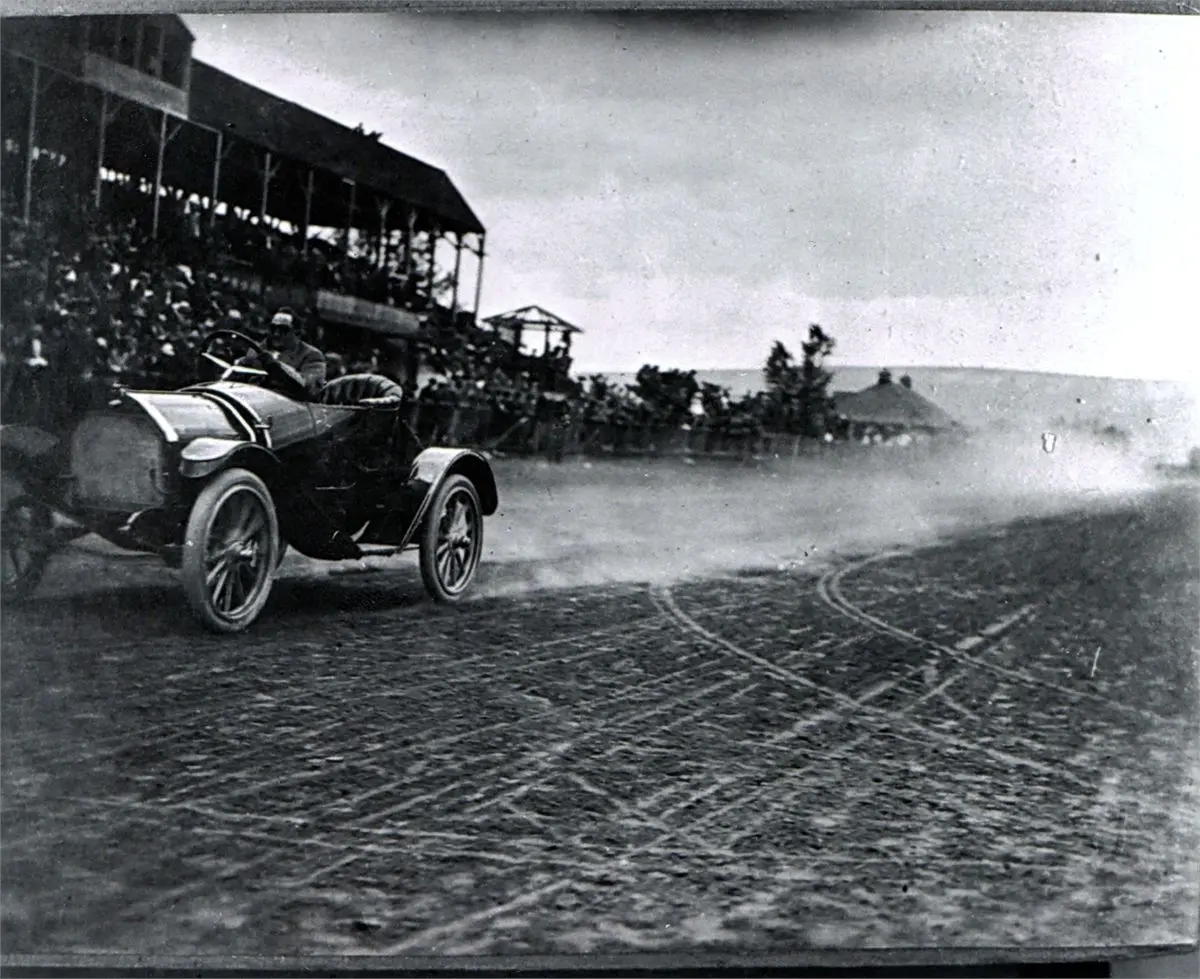
The Coca-Cola Grandstand holds the ticketed spectacles. On Sept. 26 and 27 the Aces Wild Rough Stock Round-Up ran bareback riding, ranch bronc riding, saddle bronc riding and bull riding at 5:30 p.m. Rodeo clown Tate Rhoads and announcer Steve Kenyon worked both days. Each rodeo was preceded by mutton busting for children 4 to 6. Oct. 4 is derby day. Gates open at 4 p.m. for a look at the cars in the pits, and the demolition derby starts at 5. It includes full-size cars and recreational vehicles, plus a Power Wheels Derby for young children. Captain USA also appears, the monster truck first known as Captain America, created and raced by Yakima native Jeff Bainter. Inside the SunDome, the new Farmhouse Finds Market sells handcrafted and homegrown goods. “It’s a curated market with vendors and artisans from all over the PNW,” Kramer said.
A capital lost and a fair won
In February 1885 an advertisement in The Washington Farmer proclaimed “Yakima! The most promising place in the new Northwest!” It named the town as a fit site for the state capital, a college and the state fairgrounds.
Accounts of the capital contest differ:
- HistoryLink says Ellensburg, North Yakima and Olympia vied for the capital in the election of September 4, 1890, and Olympia won.
- A 2014 Yakima Herald-Republic article has the capital going to Olympia at statehood in 1889, and the college to Ellensburg a year later.
- State Fair Park’s history says the whole state had been “in an uproar” for two years over the capital. It says the Legislature settled the matter on February 16, 1892: Olympia kept the capital and Yakima got the state fair.
HistoryLink calls the fair both a recognition of the valley’s booming agriculture and a consolation prize. Legend has it the town’s forefathers passed up what became Central Washington University in order to take the fair. Yakima Valley Museum director John Baule told the Herald in 2014 that no documentation supports that oft-told claim. “These schools were not provided a lot of money at the time,” he said. “Fairs were almost like going to a continuing education seminar.”
The sources also disagree on when the fair began. State Fair Park counts from 1892, when a group of businessmen put on a fair in a downtown building. Ellen Allmendinger, writing in the Herald in 2026, places that first 1892 fair at the fairgrounds. HistoryLink and the 2014 Herald article date the first state fair to 1894.
Republican Rep. Alfred B. Weed and Democratic Sen. J.T. Eshelman introduced State Bill 147 to create the fair. It met resistance. The Yakima Herald of Feb. 16, 1893, reported that “King, Spokane and Thurston counties are not satisfied with the public institutions that have been located within each, but greedily want the state fair as well.” The act passed with a $10,000 appropriation. State Fair Park dates its passage to March 2, 1893, and HistoryLink to March 15. It called for a five-day fair each year beginning the last Monday in September.
Over the summer and fall of 1893, Yakima County raised $10,000, bought 120 acres and deeded them to the state that November. Residents cleared sagebrush and graded the ground. Through the summer of 1894 they built:
- a racetrack
- a 2,000-seat grandstand
- an exhibition hall
- 100 horse stalls
- a judges’ stand three stories high
They added some $4,000 in cash, material and labor. The fair is still held on those 120 acres.
The first annual Washington State Agricultural Fair opened September 24, 1894. North Yakima draped its streets with flags and bunting. Governor John H. McGraw presided, and U.S. Representative James Hamilton Lewis gave an oration. The Seattle Post-Intelligencer announced a procession from the city to the grove on the grounds. The second regiment band of Dayton led it, followed by the governor and staff, cavalry and infantry, mounted Indians, and carriages of citizens. The paper counted “over 1000 Indians” present.
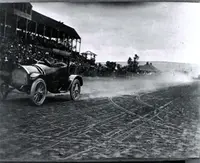
Horse racing was the main feature. The Post-Intelligencer called the mile track “the finest in the Northwestern circuit.” It reported over 100 entries, many from owners who expected a poorly advertised first fair. They believed, the paper said, that “they will be able to slip away with the purses without much contest.” Exhibits included a one-ton block of coal from the Renton fields. The commissioners’ first report admitted the livestock showing was small, because stockmen had too little notice to get their animals in condition. The 2014 Herald article says the first fair was generally considered a failure and laid the low turnout to the Panic of 1893. No fair was held in 1895. It resumed in 1896.
Curios, a log and a two-legged colt
In 1899 Peter J. Heckman showed part of his curio collection in the fairgrounds pavilion. It included an oyster shell found on a mountain in Wyoming, part of a mastodon’s tooth, gems and fossils. Newspapers that year advertised balloon ascensions, parachute jumps, trapeze and tightrope, and “an Aquatic Exhibition by Prof. Beach, the wonderful ‘Man Fish.’”
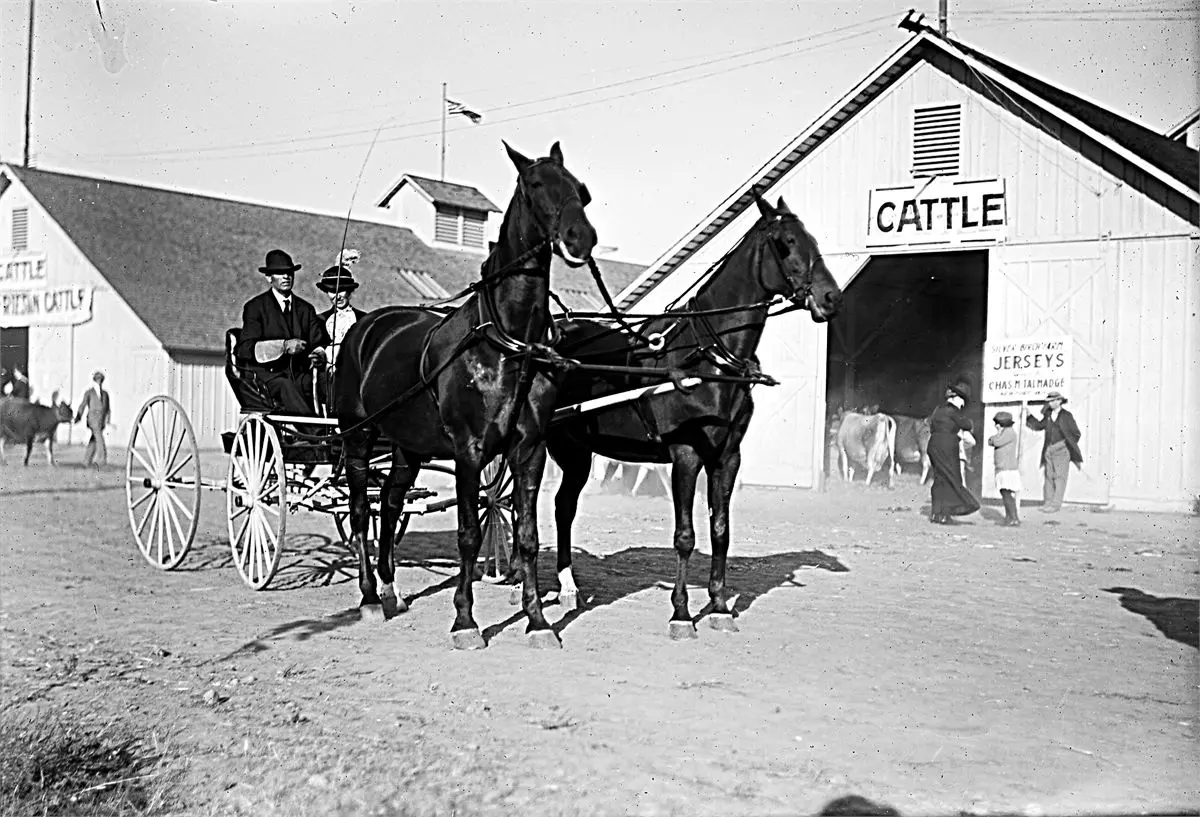
In 1903 a reported 30 train carloads of stock and racehorses came to town. That year’s Grand Army Day honored Civil War veterans, most of them from North Yakima’s Meade Post No. 9, and ended with an evening campfire. The Hepfinger log arrived from Grays Harbor to advertise its lumber. It measured 10 feet, 9 inches in diameter and needed a special sidetrack to reach the grounds. H.M. Purnel brought jars of unknown preserved fish. George Schaefer’s two-legged colt, born on a ranch east of Bickleton, was among the most popular exhibits. Schaefer took it on to the Inter-State Fair in Spokane, where it died of poisoning. He reportedly had it mounted for the World’s Fair, but it is unknown whether it went.
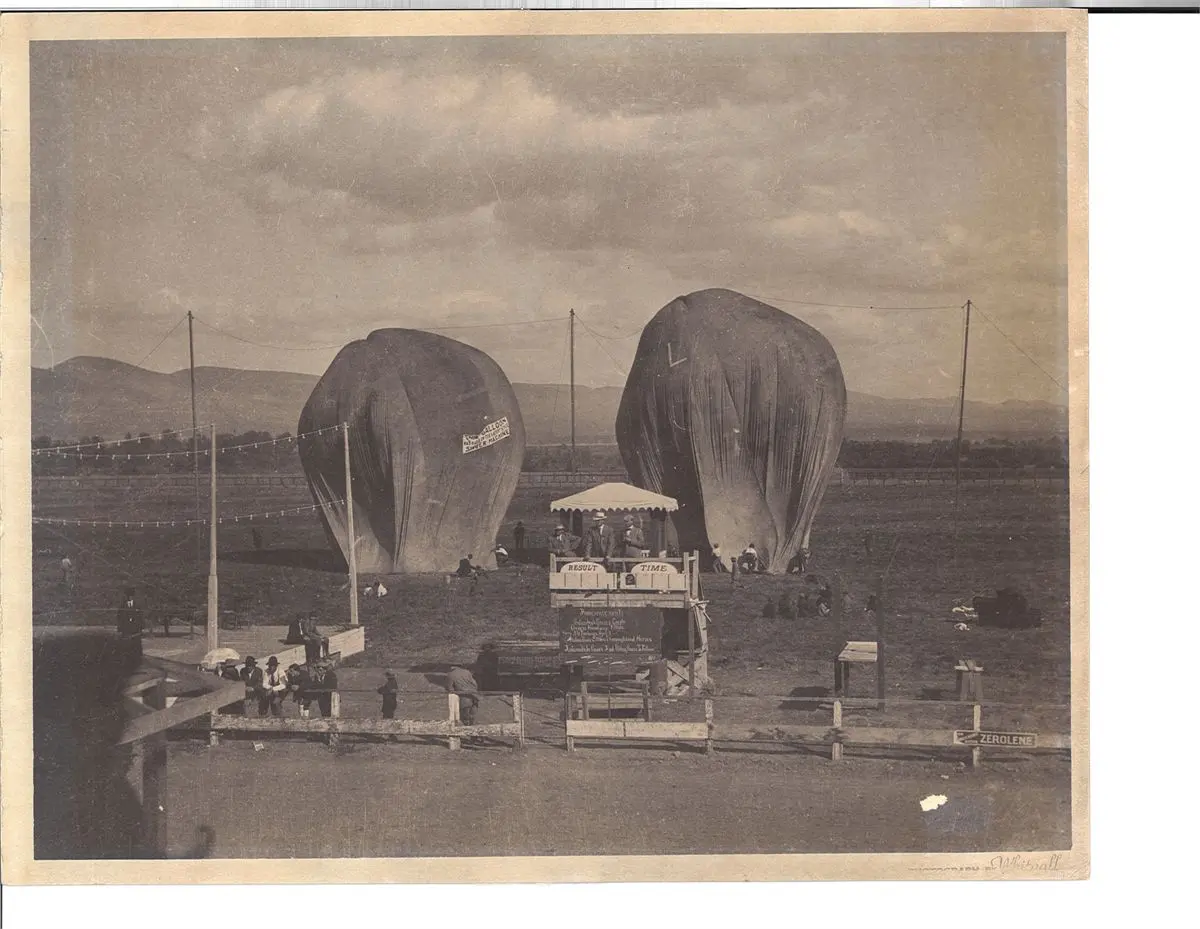
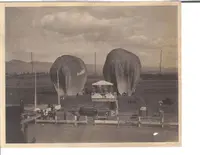
In 1904 the Alpine Family troupe brought aerialists, gymnasts and a contortionist. Among them was LaMondue, formerly with Ringling Brothers, whose act was a tramp on a clothesline. The Williams-McClelland balloonists of Sturgis, Michigan, planned to fire a dynamite bomb in midair, though it is unknown whether they did. The Yakima Artificial Ice Company poured ice water for fairgoers and displayed fruit, nuts, plants and fish frozen in blocks of clear ice. Coffee and a sandwich cost 10¢, and a cup of soup 5¢.
Truck frames under the grandstand
A foot-and-mouth disease scare cancelled the 1924 fair. In 1936 the state withdrew its sponsorship for lack of funds. In 1939 influential residents put up the money, and the Central Washington State Fair Association revived the fair under its present name.
In early spring 1941, Governor Arthur Langlie appointed Arch Creighton superintendent of what was then the Washington State Fairgrounds. Creighton moved his family off their apple ranch in Terrace Heights. His son Paul, eleven at the time, later wrote the memoir State Fair Park publishes as “Three Young Boys & a Fairgrounds.” The family lived in an apartment in the northeast corner of the Modern Living Building, then the 4-H Building. Paul remembered:
- Captain Eddy the high diver
- Charlie Ziegler, owner of the carnival, with “his raspy voice and his wooden leg” and rolls of free ride tickets for the boys
- a small zoo with a black bear and a cougar, which his father eventually sent to Woodland Zoo in Seattle
- a lily pond the boys turned into a swimming pool, until one dive showed it was about two and a half feet deep and Dr. Skinner patched Paul up
Then the war came to the grounds. Boeing needed Kenworth’s plant on Marginal Way in Seattle, and the Yakima firm of Redmond-Fairchild moved the whole truck company to the fairgrounds. Under the grandstand, steel became truck frames, and “the noise of the riveting went on day and night.” Clearing that space turned up an old streetcar, left at the end of a line that once ran into the grounds, around which the grandstand had been built. It also turned up a false ceiling packed with years of dropped peanut shells. At full operation Kenworth built nine trucks a day. Six of them were Army trucks for the Burma Road. In the Women’s Building, now Pioneer Hall, spare parts were soaked in cosmoline. “It stunk up the whole place,” Paul Creighton wrote.
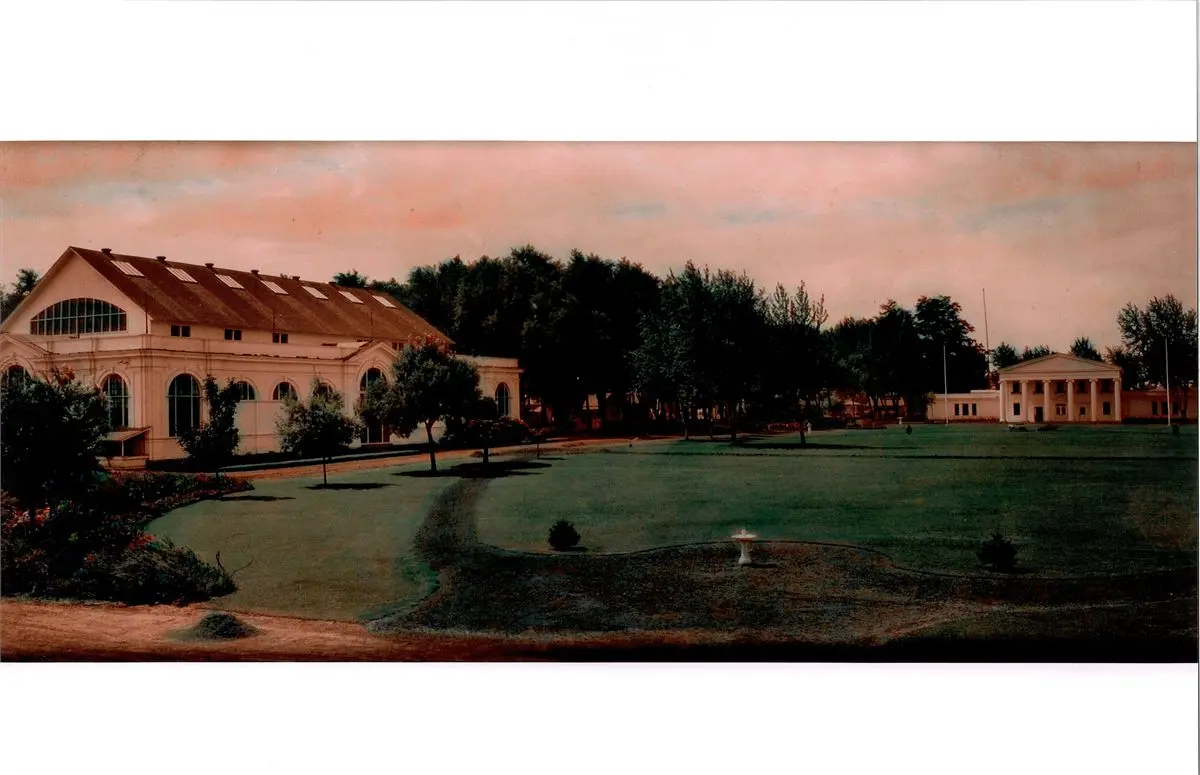
Navy V-5 cadets learning to solo in Piper Cubs bunked upstairs in the Modern Living Building and marched on the lawn by the Agriculture Building. Army convoys of a hundred trucks or more filled the north lot on their way from Ft. Lewis to Pendleton. Creighton’s memoir names Clark Gable, Spencer Tracy, George Burns and Virginia Mayo at war-bond rallies on the grounds. The boys fed about ten pigs on the Navy mess’s leftovers, until the pigs kept escaping into the neighborhood. “The pigs are out, the pigs are out” became the alarm.
Creighton recalls no fair from 1942 through 1944. The 2014 Herald account gives the gap as 1942 to 1945. Kenworth went back to Seattle at the end of the war with Germany. In Creighton’s words, restoring the grounds for the 1945 fair was “a close call,” “but it worked out and the fair was back in business.” Hugh King managed the fair from 1941 until his retirement, and Greg Stewart followed him.
In January 2014, the Puyallup Fair took the name Washington State Fair, and it holds the trademark. That year it drew more than 1 million visitors a year, against 269,000 at Yakima’s fair the year before. Three legislators pressed a bill to restore Yakima’s official state designation. Stewart, then president and general manager, said Yakima had considered taking the name itself but “thought that might be a little presumptuous.” “It’s just a sense of pride,” Stewart said. “This is the original state fair of Washington.”
Notable Events
- 1892The Legislature made its decision: Yakima received the nod for the State Fair, and Olympia retained the title of Capitol City. statefairpark.org
- 1893The State Fair Act was approved with a state appropriation. historylink.org
- 1894The first annual fair opened in Yakima. historylink.org
- 1894One hundred and twenty acres were purchased, and by September 24, 1894 a grandstand seating 2,000 people, a racetrack, a mile track, an exhibit hall, 100 horse stalls, and a three-story judges stand had been erected. statefairpark.org
- 1896The fair resumed operation after its interruption. historylink.org
- 1936Yakima's fairgrounds lost its state sponsorship in 1936. yakimaherald.com
- 1939A group of influential residents pitched in funding to get the fair going again in 1939 under its current label, the Central Washington State Fair. yakimaherald.com
- 1941From the end of the 1941 fair until the 1945 fair, the fairgrounds was highly involved in the war effort. statefairpark.org
- 1941Redmond-Fairchild was contracted to move the entire Kenworth Truck Company to the fairgrounds during wartime. statefairpark.org
- 1945It was a close call getting the grounds restored for the 1945 fair, but it worked out and the fair was back in business. statefairpark.org
- 1945The Navy V-5 unit, Army Air Force and Kenworth began moving out at the end of the war with Germany; Kenworth returned to Seattle. statefairpark.org
People
- A. W. Engle, Appointed State Fair commissioner.
- Fred Parker, Appointed State Fair commissioner (1861-1930).
- J. R. Patton, Appointed State Fair commissioner.
- James Hamilton Lewis, U.S. Representative at large who delivered an opening oration (1863-1939).
- John H. McGraw, Governor who presided at the fair's opening ceremonies (1850-1910).
- John R. Reavis, Appointed State Fair commissioner.
- John Reed, Appointed State Fair commissioner (1858-1903).
- Adolf Menjou, Appeared at fairgrounds war-bond rallies.
- Alan, One of the Creighton children living on the fairgrounds.
- Andy Anderson, Bought and renamed the carnival Rainier Shows, combining with Meeker Shows for the Yakima fair.
- Ann, One of the Creighton children living on the fairgrounds (Born in 1941).
- Arch Creighton, Superintendent of the Washington State Fairgrounds, appointed by Governor Arthur Langlie (1941).
- Arthur Cox, State Agriculture director overseeing the fairgrounds.
- Arthur Langlie, Governor who appointed Arch Creighton superintendent of the fairgrounds.
- Brown, Race promoter.
- Captain Eddy, High-diving entertainer remembered at the fair.
- Charles McCallister, Taught Navy cadets who were housed in the fairgrounds Modern Living Building.
- Charlie Ziegler, Carnival owner whose show played the fair and wintered on the grounds.
- Clark Gable, Appeared at fairgrounds war-bond rallies.
- Damon Canfield, Fair association board member.
- David, One of the Creighton children living on the fairgrounds.
- Dr. Skinner, Treated the memoirist after a dive into the shallow fairgrounds pool.
- Frank Creighton, Supervised the prizewinning Fruitvale Grange exhibit.
- Frank Fairchild, Co-owner of the trucking firm contracted to move Kenworth to the fairgrounds.
- Fred Redmond, Co-owner of the trucking firm contracted to move Kenworth to the fairgrounds.
- George Burns, Appeared at fairgrounds war-bond rallies.
- George Hislop, Bought Ziegler's carnival, later sold to Andy Anderson.
- Harold, Owned Morgan horses kept at the fairgrounds with his wife Inez Walters.
- Hugh King, manager of the Central Washington State Fair from 1941 until his retirement; succeeded by Greg Stewart (1941).
- Inez Walters, Kept Morgan horses in fairgrounds barns with her husband Harold.
- J.C. Penny, Fair association board member.
- John Hall, Actor among Army Air Force personnel based at the fairgrounds.
- John Payne, Actor among Army Air Force personnel based at the fairgrounds.
- Miss Anthon, Horse keeper at the fairgrounds who rode with Ann and wrote about the Creighton boys' wartime work.
- Paul Creighton, Memoirist who lived on the fairgrounds as a boy.
- Perry Woodall, Fair association board member.
- Roscoe Claire, Transported cadets from the fairgrounds.
- Spencer Tracy, Appeared at fairgrounds war-bond rallies.
- Vic Meyers, Bandleader at Saturday ballroom dances in the Industrial Building; former Secretary of State.
- Virginia Mayo, Appeared at fairgrounds war-bond rallies.
- George Schaefer, Owner of the two-legged colt displayed at the fair.
- H.M. Purnel, Exhibited preserved unknown fish in jars at the fairgrounds.
- LaMondue, Alpine Family entertainer, formerly with Ringling Brothers, performing a tramp-on-a-clothesline act.
- Peter J. Heckman, Collector whose large curio collection was an early fair exhibit.
- Alfred B. Weed, Republican state representative who introduced State Bill 147 to create the State Fair in Yakima (1893).
- Greg Stewart, president and general manager of the Central Washington State Fair.
- J.T. Eshelman, Democratic state senator who introduced State Bill 147 to create the State Fair in Yakima (1893).
Sources
- statefairpark.org
- statefairpark.org/p/the-fair/tickets--deals/gate-admission
- statefairpark.org/p/the-fair/plan-your-visit/parking--directions
- statefairpark.org/p/the-fair/grounds-entertainment
- statefairpark.org/p/the-fair/tickets--deals/carnival-rides--midway
- yakimaherald.com/news/local/central-washington-state-fair-begins-friday-in-yakima-heres-what-you-need-to-know/article_3b033356-05af-4fad-8a04-cebe3019d102.html
- statefairpark.org/p/connect-with-us/history1
- statefairpark.org/p/connect-with-us/history1/world-war-ii--three-young-boys--a-fairgrounds
- yakimaherald.com/news/local/whats-in-a-name-for-yakimas-state-fair-history-and-pride/article_7487a9f2-384a-592b-b0fd-d95e95d56405.html