Carbon County Fair
Red Lodge, Carbon County, Montana. Fair; every year in July.
Details

- Where
- 101 Rodeo Dr, Red Lodge, MT 59068. Directions
- When
- Last held July 20–25, 2026; next year’s date not yet stated.
- Fees
- Admission to the fair is free.
- Phone
- 406-962-3522
- Managed by
- Sterling Murphy.
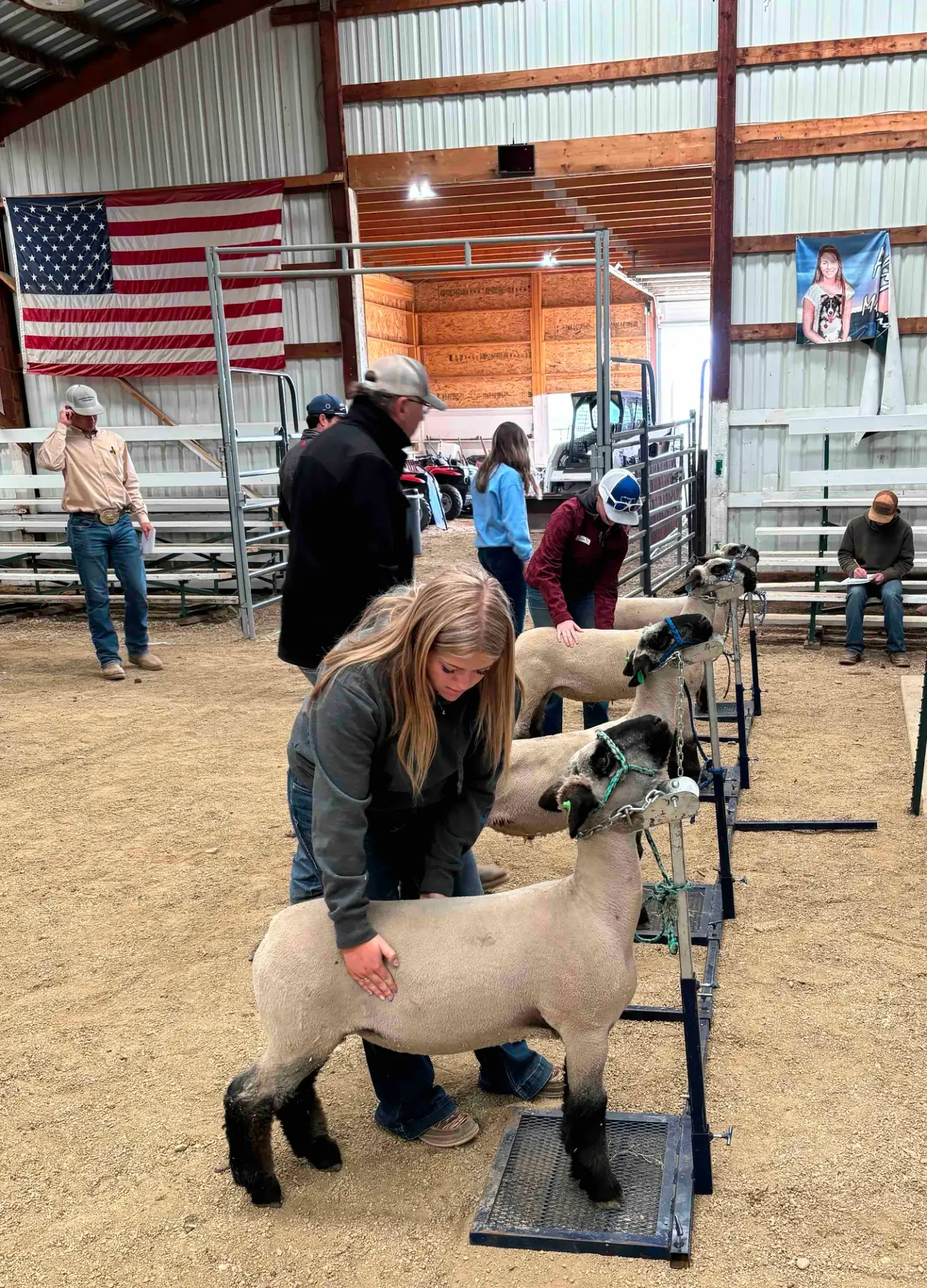
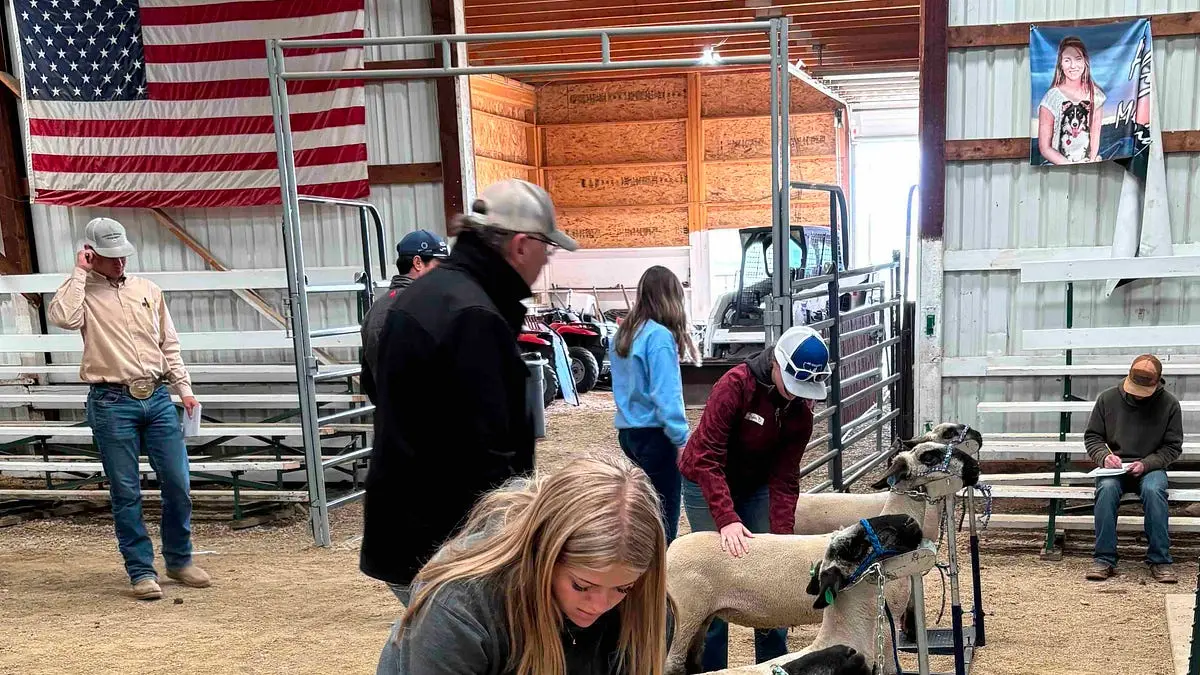
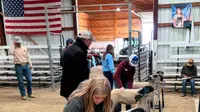
For a week each July the barns at the Carbon County Fairgrounds on Rodeo Drive in Red Lodge stand open, and in them the county’s 4-H and FFA members stand beside the animals they have raised. Admission is free. Exhibitors show in black pants and a solid white long-sleeved shirt buttoned to the top. FFA members wear the official jacket zipped to the top, and riders in the western classes add a western hat and cowboy boots. Exhibitor families camp in trailers and tents along the creek. Quiet hours run from 10 p.m. to 6 a.m., though members getting animals ready for a show are exempt. Writing in the Montana Independent during the 2026 fair, Denise Rivette set out the simplest way for an outsider to take part: “walk through the barns this week, find a kid standing next to an animal, ask them about their experience and tell them their work shows.”
The 2026 fair book and the MSU Extension office in Joliet gave the dates as July 20–25, 2026. The county calendar carried the fair from July 18 to July 26, the Rocky Mountain Association of Fairs listed July 20 to 26, and a Visit Montana listing gave 21 June. The county’s fairgrounds page names Jeremy Tobel as fairgrounds manager. The association’s listing names Sterling Murphy.
Six days in the Show Barn
The fair book carries cover art by Charlee Hall of the Rock Creek Ranchers. It sets the show order as senior, junior, novice, FFA, and it warns: “All times are tentative. Be paying attention and ready to go!!” Novices are 8 to 10 years old, juniors 11 to 13, seniors 14 and up.
Monday of the 2026 fair opened at 9 a.m. in the Edgar Gruel Building, where indoor projects and the cloverbuds’ work were judged by interview until 2 p.m. The indoor departments run from welding, robotics, and small engines to leathercraft, quilting, cake decorating, food preservation, range science, weed science, and cowboy poetry. The cat show followed at 9:30 in the Show Barn, the pocket pet show at 10:30, and a hippology contest at 11:30 in the fair office. Poultry was shown at 4:30. Tuesday belonged to the dogs from 8 a.m. to 4 p.m., in agility, showmanship, conformation, obedience, and rally, with rabbits shown at 4:30.
On Wednesday the horses took the arena at 8 a.m. for showmanship, bareback and western equitation, western horsemanship levels, trail, and working ranch horse. That evening the livestock came in. Thursday ran from market swine at 8 a.m. through goats and sheep, with ultrasound of the market animals between classes. The English, driving, colt-to-maturity, and green horse classes went in the arena at 4, and dairy cattle and beef were shown at 6. Friday was given to showmanship species by species, and from 8 to 11 that night the 4-H Council and clubs held a dance in the Edgar Gruel Building.
Judges award blue, red, or white ribbons under the Danish system, and the fair book notes that a judge is not required to award a prize to an unworthy exhibit. The fair’s own page posted the 2026 week day by day, from “Day 1 - Cat Show” to “Day 6 - Cloverbud Parade.”
The heat and the scale
Rivette wrote that the 2026 animals were raised through one of the hardest stretches of weather the region had recorded. Earlier in July the county had been under an extreme heat warning, with overnight lows in the low 70s, and by mid-July nearly all of Montana was in abnormally dry to extreme drought conditions. Scott Blain, a county commissioner, former fair kid, and fair dad, told her, “It’s kind of tough to put weight on an animal.” Pigs had it worst. “Pigs don’t sweat, so you’ve got to keep them cool, and that’s pretty tough to do,” he said. Keeping them cool meant misters, fans, shade, water hauled and rehauled, and someone checking the barn after dark, usually a kid. “My two kids, their pigs are barely gonna make it,” Blain said the morning of the weigh-in.
The official weigh-in came Wednesday evening. An animal under minimum weight can still be shown but cannot be sold, a rule the Fair Board enforces so that buyers can count on a finished, market-ready animal. Blain had expected about 90 percent of exhibitors to make weight. According to him, only a few animals fell short. He holds that the rule should stand: “You probably didn’t succeed as a producer if you didn’t get your animal to make weight, so you probably shouldn’t be financially rewarded for it. That’s tough, but that’s life.” Those who came up light still showed, since showmanship is judged on the handler. “The fair is the best week of the year, and it’s the worst week of the year,” Blain said.
Tri-tip at eleven, the ring at one
Saturday began with the large animal sweepstakes in the arena at 8 a.m. and the small animal sweepstakes in the Show Barn at 9:30. At 11 the buyers lunch was served in the Edgar Gruel Building. Tom Manuel has cooked it for about 20 years: tri-tip from Oswald Farms in Joliet, butchered in Columbus, with corn on the cob, potato salad, and the fixings. “It’s the best buyers lunch in the state, as far as I’m concerned,” Blain said. There is no charge and no registration, and in Rivette’s words, “You don’t have to bid to eat.” Bidders pick up a buyer’s number at the desk outside the fair office, which Bank of Bridger staffs. The cloverbud animal showcase followed at noon, flag presentations at 12:45, and the sale at 1.
Exhibitors lead their own animals through the ring while the bidding runs. The sale takes market beef, lambs, and hogs, along with poultry and rabbits. Blain put hogs at about $3 a pound to $10 or more, which can mean roughly $2,500 for a single pig. A steer can bring $4,000 to $5,000, and chickens and rabbits have sold for up to $500. A buyer may resell the animal at market and let the difference stand as a gift, have it processed for the freezer, or hand it back to the child. That last is common with chickens and rabbits and rarer with steers. Animals can also go to Special K Ranch in Columbus, a community for adults with developmental disabilities. Others give cash add-ons. “A lot of people will just give a kid 50 bucks, or whatever, any amount,” Blain said. For some exhibitors the ring is the last few minutes with an animal handled every day since spring. “It’s pretty sad for some of them,” he said. “It’s hard. But it is just part of the experience.”
Fromberg, Bridger, and the court house
A Carbon County Fair was held at Red Lodge on September 5, 6, and 7, 1905. The railroad agent advertised round-trip excursion tickets at one and one-third fare, on sale those three days and good until September 8. Another account, its year not given in the record, has Red Lodge business men meeting to complete the financing of a fair set for October 11, 12, and 13, and raising enough that evening to make it a success.
In 1929 the Carbon County Agricultural Fair was set for Fromberg on Saturday, August 31, and called the first county-wide fair. Premium catalogues were mailed to every farmer in the county, and the citizens of Fromberg asked the county’s towns and farm people to help put it over. The Carbon County News of September 5, 1929, reported that field work kept many farmers home, yet Fromberg was packed with visitors through the day and the late afternoon and into the dance that evening. Corn stalks were shown 13 feet high, along with melons and black walnuts. W. J. Weber of Joliet took first in horticulture, Charles Selander of Fromberg second, and Leo Smith of the J. M. Smith ranch third, and the Smith ranch took sweepstakes in canning. Tom Merriott won first and second in barley. C. W. Conger of Red Lodge, the Smith-Hughes worker in charge, packed the first- and second-prize samples that Saturday night for shipment to Billings, confident of taking top place.
In 1931 the fair went to Bridger. It opened Friday, September 4, with a street parade, on a program drafted by the committee under Frank McDonough, chairman. The judges of agricultural and domestic art exhibits were reported to have had a difficult task, so uniformly high was the quality of the products from county homes and fields.
By 1941 the fair had lapsed. That year the Red Lodge Civic club, under its president John McAllister, met at the court house to revive it as an annual event, and named Everett J. Wallum, Jerry Patten, and Stanley Krop to investigate the possibilities. Prominent cattlemen and grain growers promised their backing for a fair which, the account said, had at one time been a highlight of the year’s activities.
Notable Events
- 1905The fair ran September 5-6-7, 1905, at Red Lodge; the railroad agent advertised one-and-one-third-fare excursion round-trip tickets, on sale September 5-6-7 with limit September 8, 1905. loc.gov
- 1929The Carbon County Agricultural fair was set for Fromberg, Saturday, August 31st, as the first county-wide fair; a united citizenry at Fromberg sought the cooperation of the county's towns and farm population to put it over successfully. loc.gov
- 1931The fair opened Friday, September 4, with a street parade; the program was drafted by the committee under Frank McDonough, chairman. loc.gov
- 1931Awarding of premiums for agricultural and domestic art exhibits at the Carbon county fair at Bridger last Friday and Saturday was a difficult task for the judges, such was the uniformly high quality of the products from county homes and fields. loc.gov
- 1941An attempt to revive the Carbon county fair as an annual event was launched by the Red Lodge Civic club at the court house; prominent cattlemen and grain growers promised backing for the fair, which at one time was a highlight of the year's activities. loc.gov
- Business men gathered to complete financing arrangements for the Carbon county fair at Red Lodge, and the funds provided in the evening were expected to make the fair a success. loc.gov
People
- Jeremy Tobel, Fairgrounds Manager.
- Frank McDonough, chairman of the fair committee.
- Everett J. Wallum, named on the committee to investigate revival possibilities.
- Jerry Patten, named on the committee to investigate revival possibilities.
- John McAllister, president of the Red Lodge Civic club.
- Stanley Krop, named on the committee to investigate revival possibilities.
- Andrew Stringari, Second-prize sugar-beet exhibitor at the Fromberg fair.
- C. W. Conger, Red Lodge Smith-Hughes worker in charge of the fair at Fromberg; packed first- and second-prize samples for shipment to Billings.
- Charles Anderson, First-prize threshed-grain exhibitor at the Fromberg fair.
- Charles Selander, Fromberg exhibitor who took second place in horticulture at the fair.
- E. R. Dingus, Second-prize sweet-clover exhibitor at the Fromberg fair.
- Earl Nelson, Second-prize Great Northern bean exhibitor at the Fromberg fair.
- F. L. Purcell, First-prize Great Northern bean exhibitor at the Fromberg fair.
- Frank Gerrells, First-prize exhibitor for best collection of sheaf grain at the Fromberg fair.
- Fred Armstrong, First-prize yellow-dent ear-corn exhibitor at the Fromberg fair.
- J. A. Dowdle, Second-prize bundle-corn exhibitor at the Fromberg fair.
- Joe Graham, First-prize canning-pea exhibitor at the Fromberg fair.
- Lawrence Bauwens, Second-prize threshed-grain exhibitor at the Fromberg fair.
- Lee Gard, First-prize recipient listed in the threshed-grain section of the Fromberg fair report.
- Leo Smith, Exhibitor from the J. M. Smith ranch who took third place in horticulture at the Fromberg fair.
- Mark Timmons, First-prize bundle-corn exhibitor at the Fromberg fair.
- Mrs. Charles McGeorge, First-prize exhibitor in the other-bean category at the Fromberg fair.
- Mrs. F. W. Stark, First-prize exhibitor in the pod-bean category at the Fromberg fair.
- Mrs. J. F. Pithoud, First-prize cauliflower exhibitor at the Fromberg fair.
- Mrs. J. W. Young, Listed as a horse-radish exhibitor in the Fromberg fair prize report.
- Mrs. Vic Homier, Second-prize vegetable exhibitor at the Fromberg fair.
- O. F. Wedmeyer, Second-prize exhibitor in the other-potato category at the Fromberg fair.
- O. S. Chilcott, Second-prize slicing-cucumber exhibitor at the Fromberg fair.
- Otto Madsen, Second-prize Bliss Triumph potato exhibitor at the Fromberg fair.
- R. F. Simpson, First-prize sweet ear-corn exhibitor at the Fromberg fair.
- Robert Shaw, Second-prize sweet bundle-corn exhibitor at the Fromberg fair.
- Tom Merriott, First- and second-prize barley exhibitor at the Fromberg fair.
- Virgil Dowell, First-prize Bliss Triumph potato exhibitor at the Fromberg fair.
- W. J. Weber, Joliet exhibitor who took first place in horticulture at the Fromberg fair.
Sources
- montanaindependent.substack.com/p/support-carbon-county-youth-and-celebrate
- montana.edu/extension/carbon/documents/2026%20Carbon%20County%20Fair%20Book.pdf
- carbonmt.gov/fairgrounds
- carbonmt.gov/events/month/2026-07
- montana.edu/extension/carbon/fair-schedule.html
- rmaf.net/events/2026/carbon-county-fair
- redlodge.com/events/carbon-county-fair
- visitmt.com/events/carbon-county-fair-50994
- facebook.com/carboncountymtfair
- loc.gov/resource/sn84036008/1909-09-07/ed-1/?sp=5&st=text