Archie Bray Foundation for the Ceramic Arts
Helena, Lewis and Clark County, Montana. Foundation.
Details

- Where
- 2915 Country Club Avenue, Helena, MT 59602. Directions
- When
- Gallery & Artist Studio Hours: Tuesday-Friday 11am-5pm Saturday 12pm-4pm.
- Fees
- Free access.
- Access
- 26-acre grounds with self-guided tour map at the Gallery and Visitor Center; photographers welcome during daylight hours; do not climb on artwork.
- Phone
- (406) 443-3502
- Website
- archiebray.org
- Managed by
- Archie Bray Foundation.
- Established
- 1951.
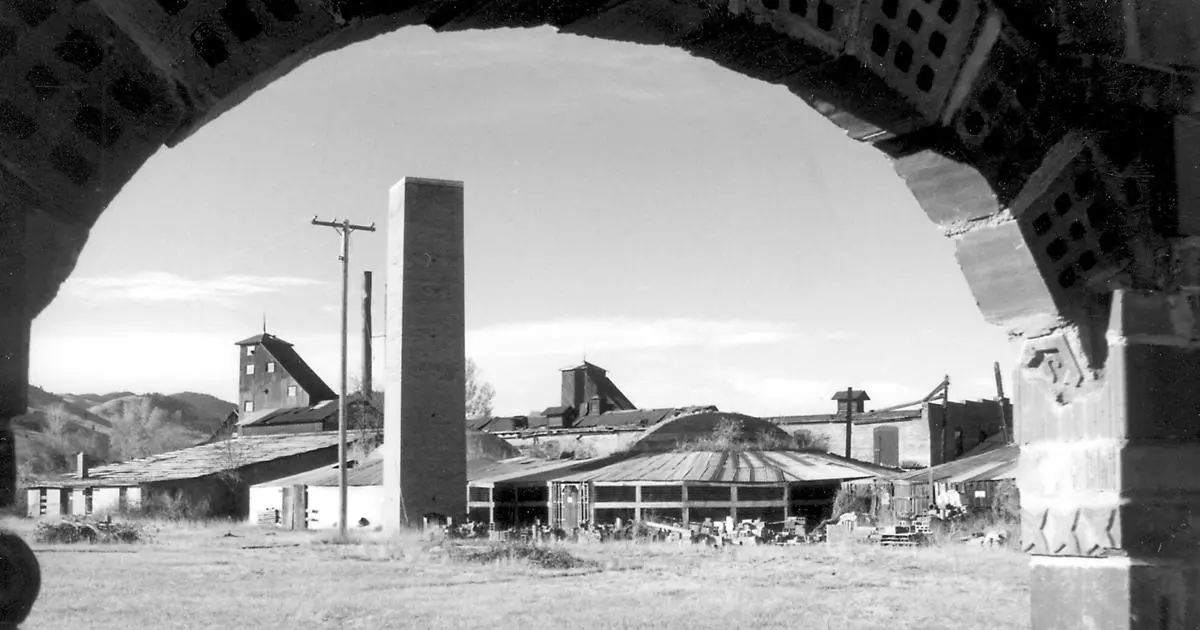
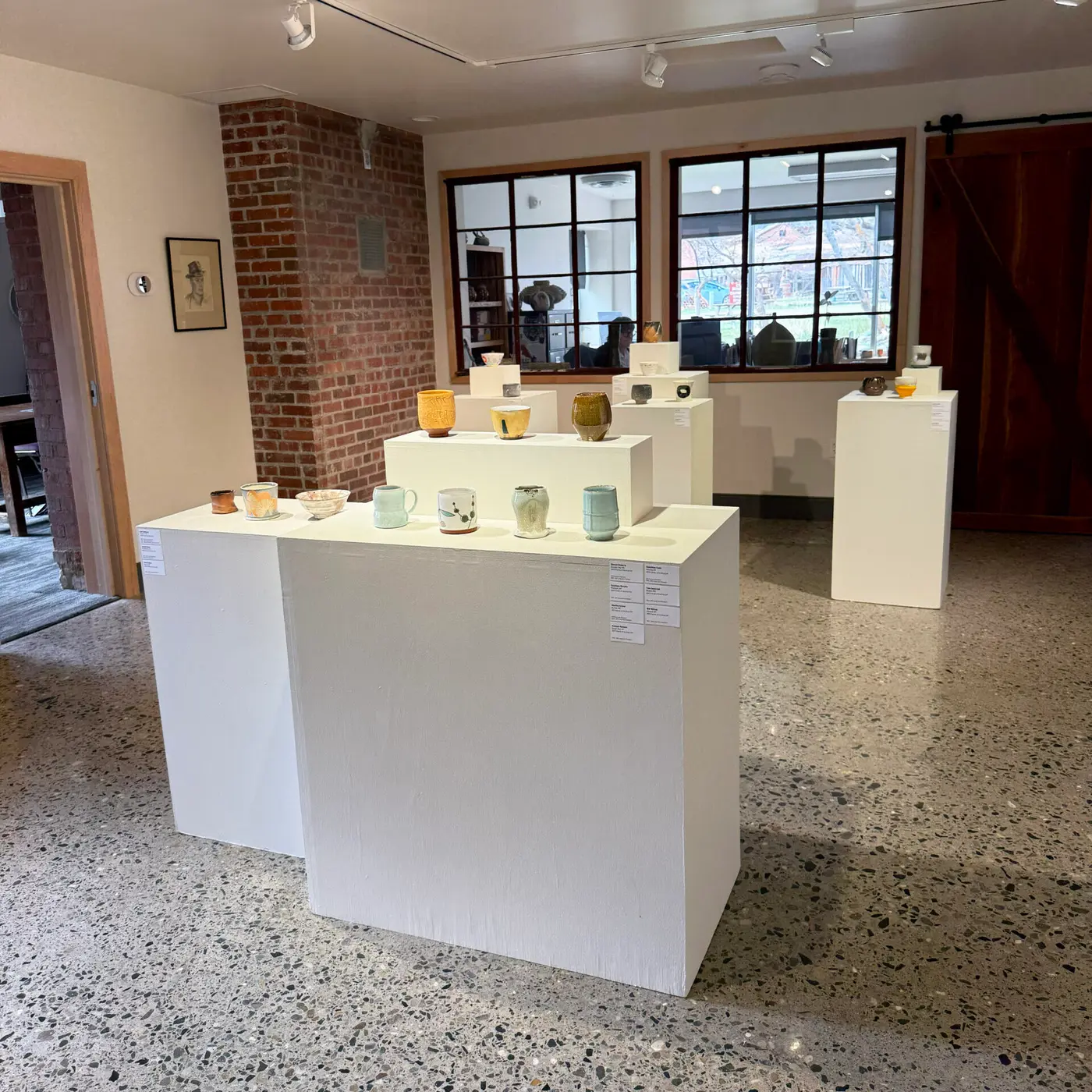
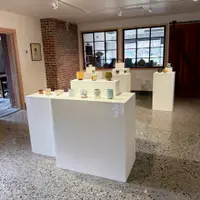
The main entrance to the Archie Bray Foundation for the Ceramic Arts, on Country Club Avenue three miles from downtown Helena, is a gallery whose rotunda was designed to mimic the shape of a beehive kiln. Inside are shelves of work for sale by current and past resident artists, public restrooms, and a stand of self-guided tour maps. Admission is free. Beyond the door lie the 26 acres of the former Western Clay Manufacturing Company. The ground sits against the wooded foothills of the Rockies where, in the words of a Southwest Montana travel guide, “the river bottom transitions into mountain prairie.”
The map from the rotunda
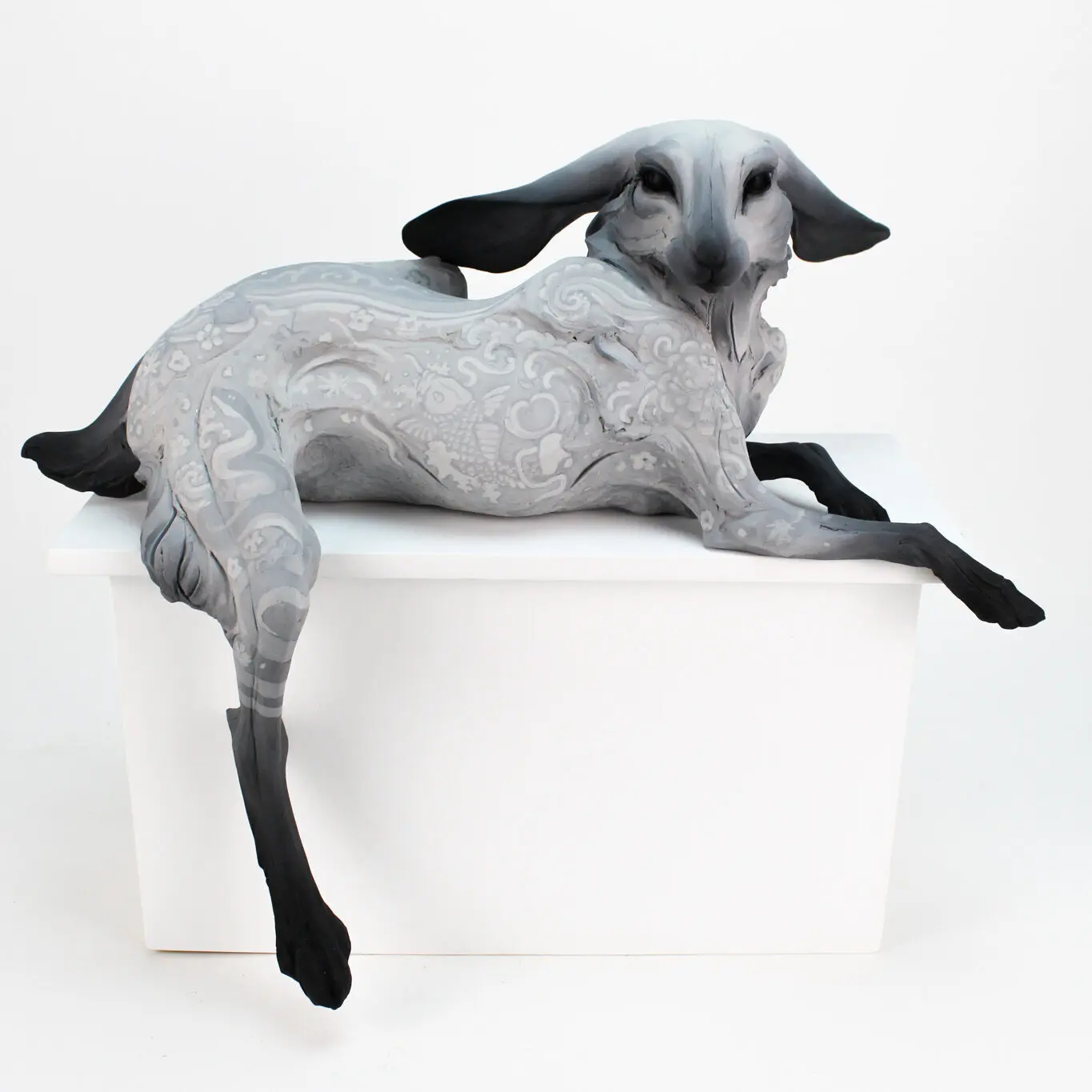
The map numbers seventeen stops. Its sculpture guide warns that it “highlights only a small selection” of what is on the grounds. Old brick kilns, outbuildings, a brick smokestack, and piles of discarded brick stand among works that resident artists have left behind. The Southwest Montana guide lists ceramic spools and tops, faces, beads, teapots, and bowls “sprouting from the most surprising nooks and crannies like so many strange and wonderful mushrooms.” A 2026 Independent Record feature likened a walk through the grounds to “falling down the rabbit hole.”
Some pieces have names and addresses:
- Richard Swanson’s Vertices Vortices, 2001, is 44 pieces installed across the property.
- David Porter’s Rattlestairs and Storytellers stand at the south end of the field by the tile factory.
- Chip Clawson’s Top of the Pile, 2004, sits at the top of the stack east of the factory.
- The gazebo in the picnic area was once the cupola of the early-20th-century Broadwater Hotel & Hot Springs. Inside is a tile mural by former residents Cary Esser and Edith Garcia. Overhead is Garcia’s Soy Yo / It Is Me, about 500 porcelain doilies on the ceiling. Sculptures by Jiman Choi sit on the roof corners.
In a field by the tile factory stands the Potter’s Shrine. Robert Harrison, a Helena artist, built it between 1985 and 1987 from Western Clay brick and tile. Inside is a bust of Archie Bray that Rudy Autio sculpted in 1952, surrounded by works left by former residents.
Bray designed and built Archie’s Garden himself to test new plant varieties. It now holds sculptures by Joel Mesnikoff and Deborah Masuoka. The brick “Chicken Coop” was built to help feed brickyard laborers. Peter Voulkos turned it into a residence in 1951, and several directors have lived there since. Its yard is closed to visitors, and so is the Bray family home, now privately owned.
The beehive kilns once fired industrial and decorative brick, sewer pipe, and tile. Visitors may enter the first kiln through the crooked brick stacks but must keep to the marked paths, and the area closes in winter. The factory buildings are off limits, and the map asks that no brick be carried away.
Studios, clay, and a brickyard bash
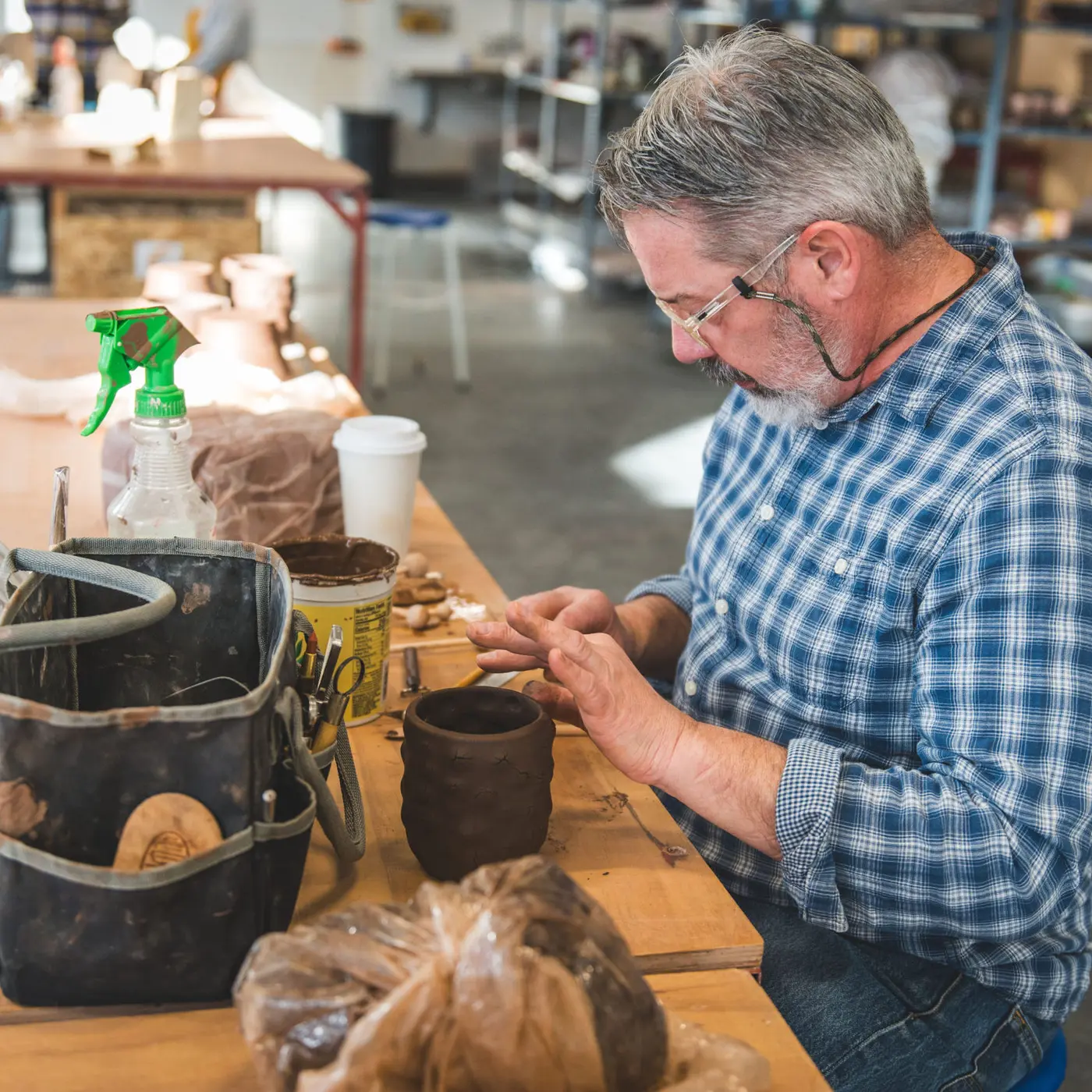
Ten year-round residents work in the David & Ann Shaner Resident Artist Studio Complex, a 12,000-square-foot building completed in 2005. They stay from three months to two years. Ten more artists arrive each summer and work from May to September in a former brick factory warehouse, which has served as studio space since 1986. Each artist leaves a piece for the permanent collection.
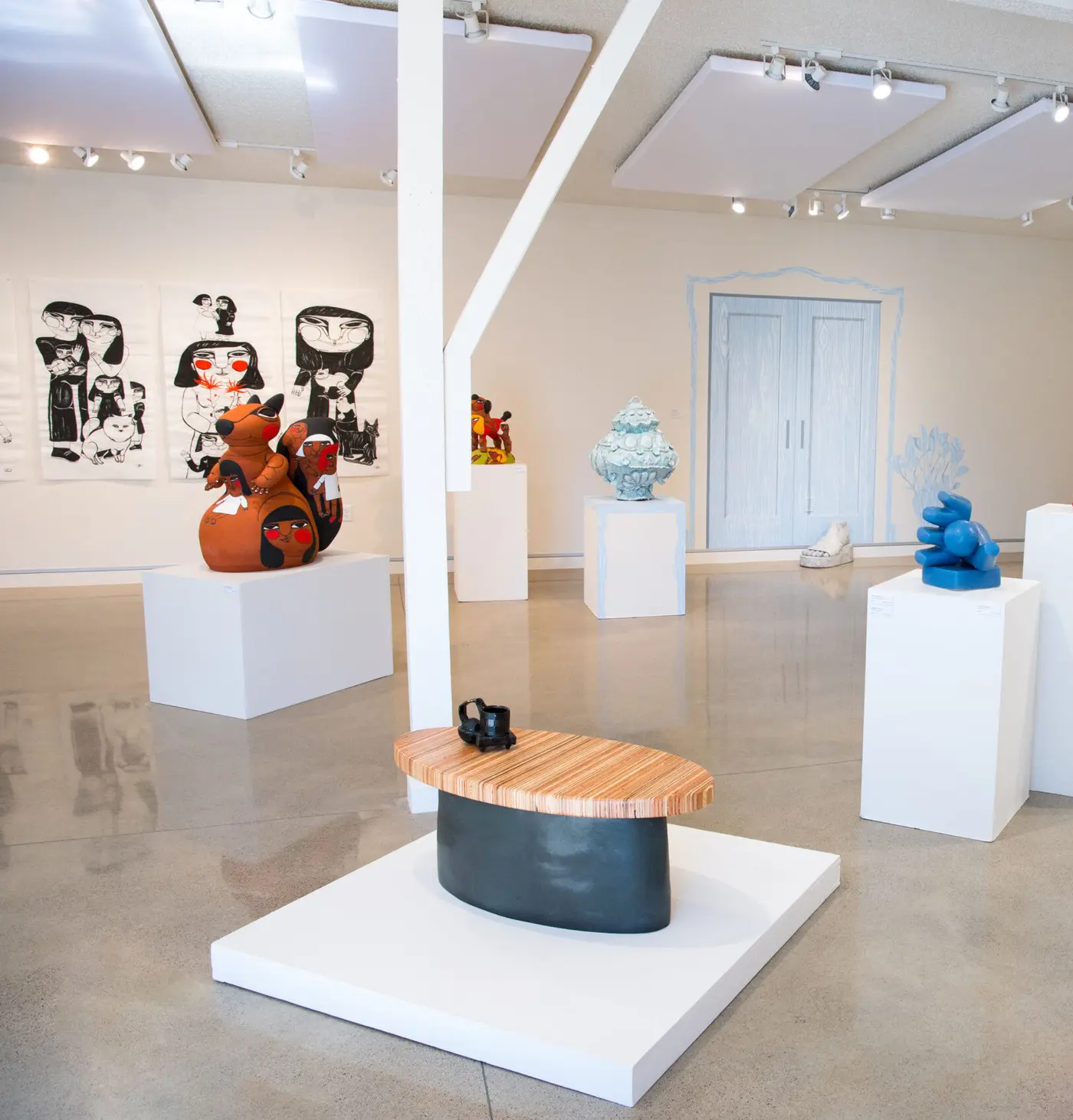
During gallery and studio hours, visitors can watch the residents at work. The Southwest Montana guide adds that they “are often happy to pause and have a chat.” The Warehouse Gallery, once a supply warehouse, hosts the Resident Artist Exhibition in June, July, and August. The North Gallery, first a garage for repairing brickyard vehicles, shows rotating work year-round.
At the west side of the property stands a building put up in 1959 to house an industrial Harrop tunnel kiln. It is now the Bray Clay Business, which sells pre-mixed clays, dry materials, glazes, tools, and ceramic literature to residents, schools, and potters. Its proceeds support the residencies.
The Frances Senska Center for Education and Engagement opened in 2017. Its 7,500 square feet hold classrooms and a research library. The center runs two-hour clay experience classes and the Artist Amplified talks, and the map counts upwards of 2,000 people a year served across eight programs.
The Bray marks 75 years on November 1, 2026, according to the Independent Record. The summer of 2026 opened the celebration with an exhibition at the Holter Museum of Art, “Now, Next, Always: The Bray 2000–2025,” curated by Dr. Jennifer Sorkin. It drew on the permanent collection to show artists the paper described as historically underrepresented in the institution’s first fifty years: people of color, queer artists, and women.
On July 25 came the Brickyard Bash, with local food trucks, live music from the band Big Sky Mudflaps, and a small auction of pieces made by pairs of artists working together. Steven Young Lee, then interim artistic director, told the paper that the event had slipped since the COVID-19 pandemic and was returning bigger than before. Lee first “came out for a summer in 1998 and fell in love with the organization and Montana,” he said. He later directed the residency program. Of clay he said, “when you touch it the mark is immediate.”
Ten million bricks
The clay came first. Helena was a gold camp that grew into Montana’s capital. It burned as many as nine times in its first decade, and its town fathers came to require masonry construction downtown. In 1880 Nicholas Kessler, a brewer who had made bricks part-time since 1866, bought a pair of brickmaking machines. In 1885 he took over Charles C. Thurston’s yard, just off today’s Country Club Road.
The year before, Thurston had hired a skilled brickmaker named Charles H. Bray. Bray was born in Tavistock, Devonshire, in 1864, the year gold was discovered at Helena, and Kessler made him plant manager. In the 1880s Bray built himself a one-story log cabin. According to the Montana National Register Sign Program, that cabin is still enclosed within the family house that later grew around it in frame additions and, in the 1920s, a brick veneer.
Under Bray the works added sewer pipe, tile, decorative brick, and flower pots. Charles Kessler, the brewer’s son, later asserted that “no less than 90 percent” of the brick in Helena’s buildings came from the yard.
Historians Rick Newby and Chere Jiusto give the next step. In 1905 the Kessler works merged with the Switzer Brick and Terra-Cotta Company, whose blue clay came by rail from Blossburg, fifteen miles west. The merger formed the Western Clay Manufacturing Company, and Bray stayed on as general manager. He built the beehive kilns. A 250-horsepower Corliss steam engine ran the plant, which employed upwards of 50 workers. By 1918 it turned out as many as ten million bricks and tiles a year. Bray bought the Switzer interest in 1920 and the Kessler share eight years later.
When Charles died in 1931, his son Archie took over. That same year Archie converted the coal-fired boiler and kilns to natural gas. Archie had wanted to be a physician. One family legend, recorded by Newby and Jiusto, has his father settling the question with a buggy whip, “until it cut the shirt off his back.” Archie trained instead in ceramic engineering at Ohio State.
Music was Archie’s first love. He traveled to New York every winter for opera and theater. For some six years he sponsored concerts in Helena on his own, once playing to thirty-two listeners after a blizzard. His daughter, Betty Bray Galusha, recalled him “hocking the life insurance and mortgaging the house.” In his dusty brickyard clothes, he drove the visiting performers around town.
The Pottery in a Brickyard
After the Second World War, demand for brick began to shrink, and Archie Bray turned to a plan for a ceramic arts center beside the plant. Two friends shared it.
Peter Meloy, a Helena attorney and later district judge, made pots in a backyard workshop with one of the first electric kilns in Montana. He and his brother Hank, a painter who taught at Columbia, had once asked Bray to fire a clay horse in a Western Clay beehive kiln. Branson Stevenson of Great Falls was Montana branch manager for Socony Vacuum Oil and sold Bray cylinder oil. As a potter, Stevenson developed a wax-resist method using Ceremul A, a water-soluble wax his company marketed. Galusha remembered the three as “just plain three close friends. And they were the three trustees of the original Archie Bray Foundation when it opened.”
Frances Senska taught Rudy Autio and Peter Voulkos at Montana State College, and she introduced the two young artists to the founders. In 1951 the founders, Autio, Voulkos, and local supporters built the Pottery, the original studio. Senska helped lay its bricks and made many of the tiles on its facade. The building held every studio, classroom, and kiln, the glaze lab, and the sales gallery under one roof. It now houses the administrative offices.
More than forty invited guests attended a gala opening dinner in the new building on October 20, 1951. Bray’s purpose, as the tour map quotes him, was “for those seriously and sincerely interested in any branches of the ceramic arts, a fine place to work.” Meloy, at ninety, said of his own backyard pottery: “You get notorious when you start a pottery in the middle of the wilderness.”
Autio, Voulkos, and Lillian Boschen were the first resident managers. In 1952 the potters Shoji Hamada and Bernard Leach and the philosopher Soetsu Yanagi came to lead a workshop. The tour map dates the visit to December of that year. According to the Bray’s history, neither Autio nor Voulkos “had seen clay treated so loosely and freely.”
After the kilns went cold
Directors Ken Ferguson, David Shaner, and Dave Cornell kept the foundation solvent through the 1950s, ‘60s, and ‘70s by selling pots, clay, and supplies and by teaching classes.
Next door, Western Clay closed. The Bray’s history and the Historic Montana marker date the closing to 1960; the tour map says production ceased in 1961. Archie Bray Jr. had lived in the family house and managed the yard until the end. During Kurt Weiser’s tenure as resident director, a fundraising campaign bought the brickyard; the map gives the year as 1984. The Independent Record reports that the site was listed on the National Register in 1985.
On December 1, 2017, the National Park Service recognized the Bray itself as nationally significant, one of 78 such properties in Montana. Chere Jiusto, director of the Montana Preservation Alliance, wrote the documentation. Her organization had spent seven years with the Bray stabilizing the beehive kilns.
The Bray’s history page counts more than 600 artists who have come to work there. The tour map puts its alumni at over 750, among them Betty Woodman, Jun Kaneko, Theaster Gates, and Akio Takamori.
The work on the old yard continues. A $13,000 grant from the Foundation for Montana History is paying to restore a 19th-century blacksmith shop on the grounds, stabilizing the building and cataloging its tools so that it can open to the public. “You can’t walk through the brickyard or pottery grounds and not see how many people have worked there and the beauty of the things they’ve created,” Jiusto said.
Notable Events
- 1884Charles Bray came to Helena to work for C. C. Thurston, first owner of the adjacent brickworks. historicmt.org
- 1951More than forty invited guests attended the gala opening dinner in the newly constructed pottery building. montanaclay.org
- 1952Potters Shoji Hamada and Bernard Leach and philosopher Soetsu Yanagi led a workshop that profoundly influenced Rudy Autio and Peter Voulkos. archiebray.org
- 1961The Western Clay Manufacturing Company factory ceased production in 1961. archiebray.org
- 1984The Archie Bray Foundation purchased the former brick factory in 1984. archiebray.org
- 2012The Foundation for Montana History started the grant program in 2012 and has placed over $2.1 million into history and preservation projects. ktvh.com
- 2017The 7,500-square-foot Frances Senska Center for Education and Engagement opened in 2017. archiebray.org
- 2017The National Park Service officially recognized the Foundation as nationally significant. helenair.com
- The Archie Bray Foundation in Helena received a grant from the Foundation for Montana History to restore its 19th-century blacksmith shop. ktvh.com
People
- Archie Bray, Founder; entrepreneur, brickmaker, and arts patron.
- Lillian Boschen, One of the Foundation's first resident managers.
- Peter Voulkos, One of the Foundation's first resident managers.
- Rudy Autio, One of the Foundation's first resident managers.
- Branson Stevenson, Founder and builder of the original Pottery studio.
- Frances Senska, Founding supporter who introduced Autio and Voulkos to the founders, helped lay bricks, and made exterior tiles.
- Peter Meloy, Founder and builder of the original Pottery studio.
- Charles Bray, Brickworks employee, then manager under Nicholas Kessler and later company owner (1884).
Sources
- archiebray.org/about
- montanaclay.org/wp-content/pdf/Beautiful-Sprit-Archie-Bray-Foundation.pdf
- historicmt.org/items/show/823
- archiebray.org/wp-content/uploads/2026/01/The-Bray-Tour-Map-Sculpture-Guide-DIGITAL-1.pdf
- helenair.com/news/local/national-register-recognizes-archie-bray-foundation-as-nationally-significant/article_c26edb26-87ff-5db0-ae5d-97e6a28282f1.html