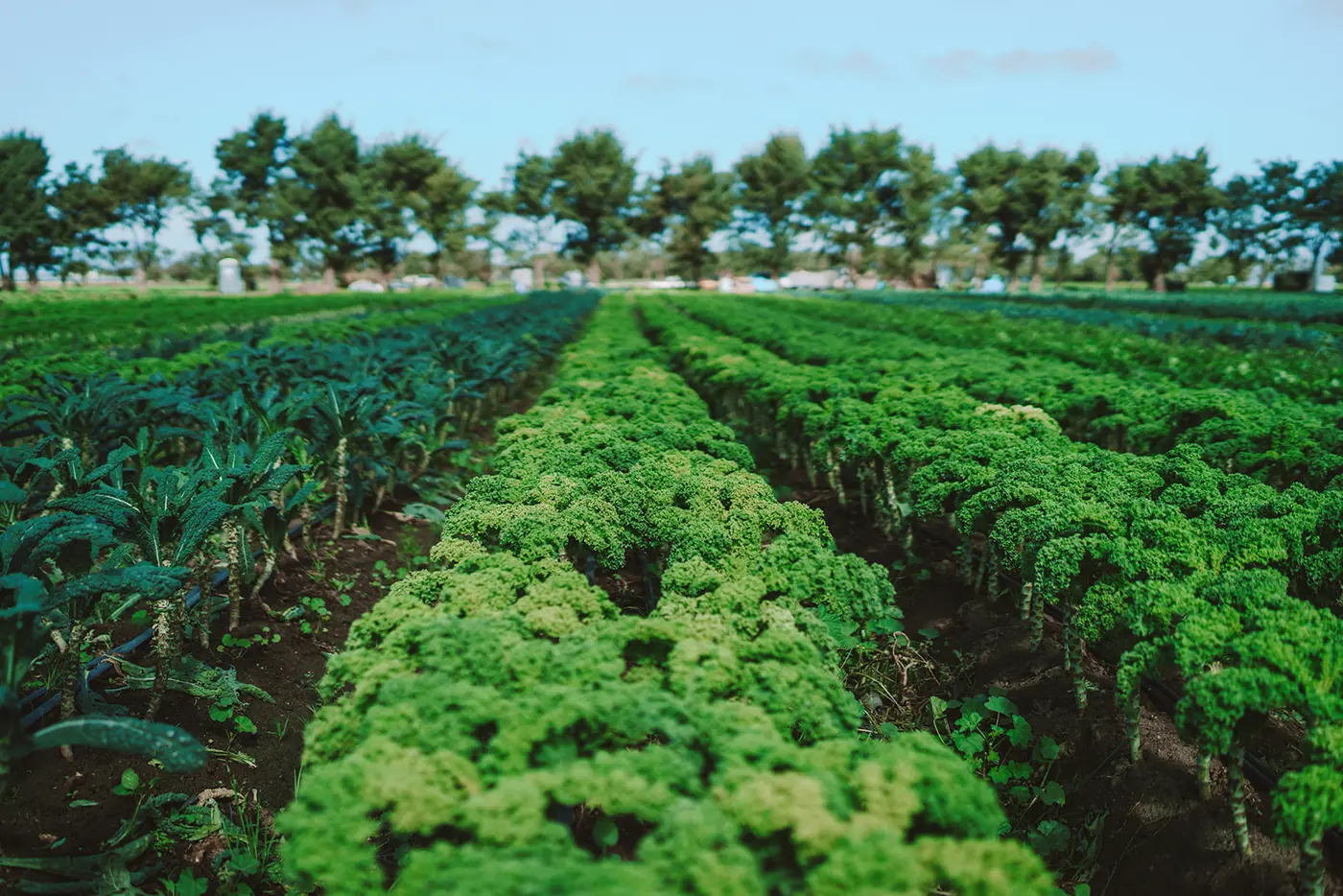
Alexandre Family Farm store
Crescent City, Del Norte County, California. Farm Store.
Details

- Where
- 7955 Bailey Road, Crescent City, CA 95531. Directions
- When
- Open 7 days/week; Monday-Friday 12 - 5pm; Saturday 10 - 5pm; Sunday 12 - 4pm.
- Access
- Guided tours suspended at this time due to avian influenza.
- Phone
- 707-487-1000
- Managed by
- Alexandre Family Farm, LLC.
The Farm Store of Alexandre Family Farm stands at 7955 Bailey Road in Crescent City, Del Norte County, and is open seven days a week. Its page features the farm’s aged extra sharp cheddar. The farm’s label also includes cream-top bottled milk, a 6 percent whole milk, chocolate milk, a seasonal eggnog, heavy cream and half-and-half, sour cream, yogurt and kefir, whole milk powder in one-pound and 55-pound sacks, and eggs from hens kept in mobile coops. Sweatshirts, hats and stickers carry the name. The family says it built the store because “sharing our farm with visitors and supporting the communities that we work with will always be a source of joy for us.”
The guided tours that once went out from the farm are suspended. The farm’s notice gives concern over avian influenza as the reason: “Our priority is to ensure the safety of our animals, employees and customers.” The tours covered three buildings. The maternity barn is where the cows calve. The calf barn is for the care and feeding of calves. The milk barn is for milking and cow handling.
Geese, elk, and eagles on the pasture
The family describes its home ground as lying between the Coastal Redwood Forest, the Pacific Ocean and the Smith River. Each spring the Aleutian Canada geese stop at Crescent City to feed before, in the farm’s words, they “make their way south to winter in the Modesto area.” Tens of thousands of them spend time on the farm and the farms around it each year. By the farm’s figuring, 35 geese eat as much grass as one cow. Working with government and private landowners, the family drew up a plan to set aside land next to the State Park for the geese to feed on. It says the effort made “a significant contribution” toward taking the Aleutian goose off the Federal Endangered Species List.
In 2009 a herd of 52 Roosevelt elk crossed the Smith River onto the property. The farm says the herd has nearly tripled since then. In a 2019 profile the Organic Trade Association counted over 240 elk grazing the pastures. A family of bald eagles nests on the land, and the farm says one generation of chicks has left the nest, a sight shown on many dairy tours. More than 200 bird species have been recorded on the farm, which lies on the Pacific Flyway and is listed as a hotspot on the eBird website. Beehives kept by Diggin Livin of Cave Junction, Oregon, stand on three parts of the farm among the pasture clovers. Tamworth and Berkshire hogs came to the farm as an FFA project of the Alexandres’ daughter Vanessa.
The family works with California’s wildlife agency, California State Parks, the North Coast Regional Land Trust and the Natural Resources Conservation Service. Parts of the property are held under the Wetlands Reserve Program and the Grassland Reserve Program.
A flat barn built in the 1950s
A profile of the farm by the Northeast Organic Dairy Producers Alliance counted 4,500 milking cows, 3,700 heifers and about 2,000 calves born each year, spread over four certified organic dairies. The farm’s own story gives five. The home herd is milked in a flat barn built by Blake Alexandre’s father in the 1950s, “basically a tie-stall barn with an overhead pipeline.” The other three dairies have herringbone parlors, and at the time of that profile the newest was 44 years old. More than 40,000 laying hens range over 300 acres. They graze a pasture before the heifers and dry cows are rotated onto it. The family says it farms 4,300 acres and grows most of its alfalfa hay in Modoc County.
The coast here has a six-month rainy season, with 40 to 90 inches of rain, and a six-month dry season. In the dry months the pastures are irrigated with “nutrient water” filtered from the manure ponds. The milking herds go out to grass around the third week of March. The season ends in November or December, depending on the weather. Cows enter each paddock at the far end through one-way gates off gravel laneways 20 feet wide, then graze back toward the barn by milking time. The farthest walk to pasture is 6,000 feet. Crews hand-hoe thistle, aiming to finish by the Fourth of July. The compost is made from manure solids and bedding, enriched with truckloads of waste from the coastal fisheries and, according to the San Francisco market group Foodwise, wood shavings from a mill in Southern Oregon.
The sources disagree on how far the soil has come. The dairy alliance profile puts organic matter at three or four percent when managed grazing began and at eight, 12 and 15 percent now. The grocer Bristol Farms gives a rise from 2 percent to 15. “Soil is, really, what we ultimately farm,” Blake said.
A prize cow traded for a ring
Blake Alexandre grew up on a small dairy in Ferndale, where he first learned to raise calves under his father, Joseph Alexandre. He was a State FFA Officer in 1980–1981 and studied dairy science at Cal Poly, San Luis Obispo. There he won the National High Individual Dairy Judging Award at the World Dairy Expo. Stephanie Moons grew up on a dairy in Chino. Her mother, Bea Moons, was the first woman to chair the California Milk Advisory Board. The two met at Cal Poly. Blake sold his prize cow to buy her engagement ring. The farm’s account says that four years later they bought their first dairy, in Crescent City. The Organic Trade Association has them dairying in Southern California from 1988 and buying an existing operation on the Northern California coast in 1992. Both are fourth-generation farmers. The dairy alliance traces the family’s dairying back to Blake’s great-grandfather.
The couple converted to organic in the late 1990s. By their account, when they were certified in 2001 they were the ninth certified organic dairy in the state. California Certified Organic Farmers (CCOF) lists the farm’s livestock certification from June 26, 2003. In September 2001 a large fire struck the facilities, and the milking herd has grazed ever since. In 1995 Stephanie started the Bucket Calf program. Local children work and walk with their “own” calf for six weeks, then show it at the county fair. The egg business began as an FFA project of the sons Joseph and Christian. The family later sold those eggs under the name Alexandre Kids.
In 2009 the creamery that had bought the farm’s milk for four generations went bankrupt. “We had to come up with other options. We chose niche markets and unique marketing opportunities,” Blake told the dairy alliance. The farm became the first 100 percent grass-fed producer for Organic Valley, a contract it no longer holds, and then launched its own brand without investors. “Our exit plan was to not exit,” the couple told Bristol Farms. In 2019 the Organic Trade Association named them Organic Farmer of the Year. “As farmers, providing organic food is a very purposeful life,” Stephanie said. In January 2021 the farm became the first Regenerative Organic Certified dairy in the United States, and the first dairy to receive the Savory Institute’s Ecological Outcome Verification. Foodwise lists all five children (Joseph, Christian, Dalton, Vanessa and Savanna) in the business, with 89 full-time employees. The family sells at three San Francisco markets, about 375 miles south.
The 2024 report and its aftermath
In April 2024 the nonprofit Farm Forward released “Dairy Deception: Corruption and Consumer Fraud at Alexandre Family Farm.” The report described the farm as “arguably the leading higher welfare, Organic, and Certified Humane dairy operation” and alleged “systemic deception, cruelty, and animal abuse.” The Atlantic ran a companion piece by Annie Lowrey. On April 12, 2024, the farm told the Lost Coast Outpost that “many of the allegations are either totally false or fabricated half-truths,” and that “hundreds of visitors tour our farm every year.”
A National Organic Program report of investigation, made public through a Freedom of Information Act request, found some allegations substantiated and some not. According to Farm Forward, the farm confirmed to the program that diesel fuel had been used on animals for fly control. It also confirmed that thirty cows died or were euthanized during an equipment breakdown when staff were unavailable. CCOF issued a Combined Notice of Noncompliance and Proposed Suspension. That notice was replaced by a Settlement Agreement providing two years of added oversight starting February 16, 2024, including one unannounced inspection a year. The Cornucopia Institute reports that the farm trained staff and hired an animal welfare consultant, and that an unannounced inspection in June 2024 showed past problems corrected, with a few new concerns noted, among them inappropriate horn trimming. In September 2025 the watchdog OrganicEye filed further complaints. Cornucopia describes them as not yet substantiated.
Two lawsuits followed. Legal Impact for Chickens sued under California’s animal cruelty law, and a Humboldt County Superior Court judge allowed the case to proceed. A federal class action names both the farm and Certified Humane. As of March 2026 the brand had dropped its Certified Humane and Regenerative Organic Certified labels. The cruelty suit was ongoing as of June 2026.
Notable Events
- 1950sThe home farm herd is milked in a flat barn, a tie-stall barn with an overhead pipeline, built by Blake's father. nodpa.com
- 1995Stephanie's Bucket Calf program lets local children work and walk with their own calf for 6 weeks and then show it at the county fair. alexandrefamilyfarm.com
- 2001At the time of their organic certification in 2001, the farm was the 9th certified organic dairy in the state. alexandrefamilyfarm.com
- 2001The family has been grazing its milking herd since September of 2001 following a large facility fire. nodpa.com
- 2009The creamery that purchased the farm's milk for four generations went bankrupt. nodpa.com
- 2019Organic Farmer of the Year Award. ota.com
- 2021Alexandre Family Farm became the first and only Regenerative Organic Certified dairy farm in the United States and the first dairy to obtain Ecological Outcome Verification certification by the Savory Institute; the farm's natural habitat on its 4300 acres is thriving with Coho Salmon, nearly extinct Aleutian Geese, Roosevelt Elk, and Bald Eagles. bristolfarms.com
- 2024Alexandre Family Farm's organic certifier investigated alleged animal welfare issues occurring between 2019 and 2023, finding "systemic failures"; the family received a Combined Notice of Noncompliance and Proposed Suspension from CCOF, replaced by a Settlement Agreement with additional oversight and monitoring for two years. cornucopia.org
- 2024The Lost Coast Outpost published Farm Forward's report "Dairy Deception: Corruption and Consumer Fraud at Alexandre Family Farm," which the report described as "arguably the leading higher welfare, Organic, and Certified Humane dairy operation"; Alexandre Family Farm responded calling "many of the allegations" "totally false or fabricated half-truths.". lostcoastoutpost.com
- 2026As of March, 2026, the Alexandre dairy brand was confirmed to have dropped their Certified Humane and Regenerative Organic Certified (ROC) certifications, with Farm Forward reporting on the brand dropping both third-party labels. cornucopia.org
- The Alexandres converted the dairy to organic, taking their love of farming back to its hundred year-old roots. alexandrefamilyfarm.com
People
- Blake Alexandre, dairy farmer who, with his wife Stephanie, bought their first dairy in Crescent City.
- Stephanie Alexandre, Alexandre Family Farm contact at CCOF; farm's named contact for the directory listing.
- Blake and Stephanie Alexandre, Founders; fourth-generation farmers who purchased the Del Norte farmland and started the dairy (1992 to present).
- Joseph, Christian, Dalton, Vanessa, and Savanna Alexandre, Blake and Stephanie Alexandre's sons and daughters, listed as part of the multi-generation team running Alexandre Family Farm with 89 full-time employees.
- Blake's father, Built the home farm's flat barn (a tie-stall barn with an overhead pipeline) (1950s).
- Blake's great-grandfather, Began the family's dairy farming roots.
Sources
- alexandrefamilyfarm.com/pages/community
- alexandrefamilyfarm.com/pages/farm-tours
- bristolfarms.com/founders/mtf-blake-stephanie-alexandre-alexandre-family-farm
- ccof.org/directory-member/alexandre-family-farm
- foodwise.org/sellers/alexandre-family-farm
- cornucopia.org/alexandre-family-farm-brand-information
- farmforward.com/news/usda-confirms-animal-abuse-and-cruelty-at-alexandre-family-farm-dairy-now-admits-wrongdoing-legal-case-moves-forward
- lostcoastoutpost.com/2024/apr/12/whistleblower-report-finds-systemic-deception-crue
- visitdelnortecounty.com/attractions/alexandre-family-farm
- alexandrefamilyfarm.com/pages/our-story
- nodpa.com/n/5974/Regeneration-Alexandre-Family-Farm-The-Blake-and-Stephanie-Alexandre-Family-Crescent-City-California