Billings
Yellowstone County, Montana. County seat.
Billings, the Yellowstone County seat in Montana, was laid out by the Northern Pacific in 1882 two miles up the river from Coulson, whose landowners asked too much.1
Details
- Founded
- The Northern Pacific Railway laid out Billings in 1882, and the townsite was platted in March of that year.1,2
- Name
- The town is named for Frederick Billings, president of the Northern Pacific Railway.3
- County seat
- Billings became the seat of Yellowstone County when Custer County was divided in 1883.1
- Last checked
- October 6, 2026.
Point at a dot to see the place.Tap a dot to see the place. Road map of Billings.
In Billings
- Big Sky Flea MarketBillings · Flea marketA Billings weekend flea market that listed 15 dealers — antiques, collectibles, furniture, tools, new and used merchandise, fresh produce — before closing permanently.
- Marketplace 3301Billings · Antique storeA family-run antique mall of 44,000 square feet and more than 100 vendors in a 1920s Chevrolet showroom in Billings, with a 1942 pickup parked inside the door.
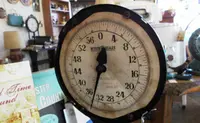
- Montana Vintage ClothingBillings · Vintage clothing storeVintage and retro clothing, shoes, boots, hats, jewelry, and accessories from the late 1800s through the 1990s, with a large assortment of Western wear; gift certificates available.
- Rescued and ReclaimedBillings · Vintage marketVintage market with vendors from Montana, Wyoming, North Dakota, South Dakota, Idaho, and Minnesota offering Vintage, Junk, Repurposed, Rusty, Primitive, Fine Antiques, Jewelry and Clothing, plus five food vendors lined up at the MetraPark Expo Center

- This House of BooksBillingsThis House of Books is a full-service, cooperatively owned, indie bookstore in the heart of downtown Billings carrying a full range of genres for adults and young people as well as gift items.
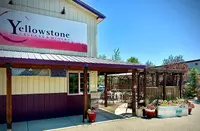
- Yellowstone Cellars & WineryBillings · WineryA family-owned & operated winery. Hand-crafted wines made with WA grapes. Serving flatbreads & charcuterie. Free live music Friday & Saturday night.
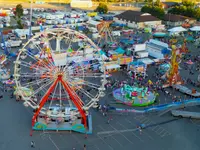
The Calendar
History
Under the Rimrock
Billings lies on the west bank of the Yellowstone River, where buff sandstone cliffs called the Rimrock rise 400 feet above the valley floor.1 The street grid follows the railroad, which cuts the town completely in two, and only a few widely separated crossings connect the halves.1 The north side held the main business section and the better residential districts, while the south side, the older part of town, had the sugar refinery at its southern limit; flour mills, lumberyards, and warehouses stood along the railroad.1
Coulson and the Northern Pacific’s City
After the Custer Battle of June 1876 brought more troops and the Sioux were subdued, the valley was opened to the stockman and land seeker, and small settlements grew up around stage stations and post offices.1 When the Northern Pacific Railway entered the valley in 1882, Coulson, founded in 1877 at the eastern edge of the bowl, expected to be chosen as the site of the railroad’s city.1 The company would not pay what Coulson landowners asked, laid out the new city two miles up the river, and named it for Frederick Billings, its president.1 A marker in town gives his term as president of the Northern Pacific Railway as 1879-1881 and calls him a gold rush lawyer, railroad baron, and conservationist.3 The townsite was platted in March 1882 and had three buildings by May, and by the end of 1883 some 400 canvas tents and crude buildings lined the streets.2,4 It is told that when the town was two or three months old, Seth Bullock came up a miserable trail on a dark, rainy night, asked the distance to Billings, and was told he was in it, and that the store he wanted was on the left-hand side of the street, 26 miles away.1 Within a few months the town had schools, churches, newspapers, and a street railway of two yellow cars drawn by Indian ponies, whose two-bit fare to Coulson also bought two glasses of beer at the Coulson brewery.1 When Custer County, which had been run from Bozeman for want of a county seat, was divided in 1883, Billings became the seat of Yellowstone County.1 Coulson’s burying ground, Boothill, holds H.M. (Muggins) Taylor, the scout who carried news of the Custer fight to Bozeman and who was shot in 1882 in Coulson’s laundry while trying to stop the laundress’ drunken husband from beating her.5
Fires, the Hard Winter, and Sugar Beets
Then the boom collapsed: three large fires burned many of the makeshift wooden buildings, and the winter of 1886-87 crippled the stock business.1 By 1890 the population had fallen from more than 1,500 to 836.1 Frederick’s son Parmly, sent to the new town in 1884, wrote his father that prospects in Billings looked as bright as the bottom of a camp fry pan.3 With his cousin Edward Bailey he ran a ranch and a dry goods store, worked on the Big Ditch irrigation project, and opened the Bailey and Billings Bank, and he died at 25.3 In 1874 Addison Quivey judged the Yellowstone Valley valuable for neither agriculture, grazing, nor minerals, and five years later an irrigation ditch was dug near Coulson.1 Irrigation led to a sugar refinery in 1906, and its first beet workers, who were Japanese, were replaced after one season by Russian-Germans willing to work by the “Dutchman’s lantern,” the early morning moon.1 Mexicans imported in 1918 took their place in the beet fields.1 The state guide called the refinery the first and largest in Montana and one of the largest in the world, employing 700 men in season and making sugar refining Billings’ foremost industry.1
Three Railroads and the South Side
The Chicago, Burlington and Quincy arrived in 1894 and a spur line ran north to the Great Northern, putting Billings at the junction of three major railroad networks.2 Polk’s City Directory of 1914 called Billings the hub of railroads extending in ten directions, with 24 passenger trains a day at its depot, and by 1931 there were 26.2 China Alley stood on the 2600 block of Minnesota Avenue, where Chinese residents owned or worked in laundries, restaurants, dry goods stores, hotels, saloons, and gardens.6 The Lee and Lee Building at 2624 Minnesota Avenue, named for Yee Sam Lee and his brother, still stands; its marker dates it to 1896, and the Old Town district record to about 1895.4,6 The town’s black neighborhood began when Walker Browning took up residence just south of the railroad in 1883.7 Early members of black Billings formed an African Methodist Episcopal Church in 1900 and bought a salt-box church in 1916, then moved the whole building to 402 South 25th Street, where Wayman Chapel still stands, as do Mrs. Browning’s Furnished Rooms at 121 South 26th Street.7
Brick, Sandstone, and Craftsman Houses
The 1882 McAdow building survives from the false-front years, and after frequent fires pushed builders to masonry, the Yukon Bar of about 1893 became one of the first brick buildings in Billings.4 In 1901 Frederick Billings, Jr., gave the city the Parmly Billings Memorial Library in his brother’s honor, a towered Romanesque building of native sandstone.1,4 Cars came to the railroad district with the Sunset Garage in 1917, and the Community Gas and Oil Building went up in 1939 in the Streamline Moderne style.4 The North Elevation, established by Austin and Hattie North, became home to teachers and doctors after St. Vincent’s Hospital, Deaconess Hospital, and Eastern Montana Normal School were built in the 1920s, and over 60 of its more than 100 contributing homes are Craftsman.8 Billings Clinic began in 1918 as a two-doctor partnership on the top floor of the Hart Albin building, and its marker calls it the area’s largest employer.9 The Billings Brewery opened in 1899 and later hung a sign of 920 bulbs that showed beer pouring from a tilted bottle into an empty glass; the brewery closed in 1951, and the building and its sign were torn down in 1959.10
Within 30 Miles
Measured in a straight line from the town, nearest first.
- Laurel 4th of July CelebrationLaurel · CelebrationLaurel, Montana's two-day Independence Day, from a July 3 street dance to fireworks the volunteer fire department has presented for 79 years.
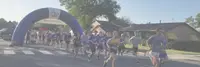
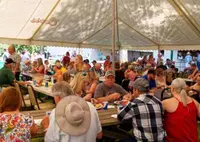
- Huntley Homesteader DaysHuntley · Two-day celebrationThe Huntley Project Lions Club's two-day July celebration in Homesteader Park, Huntley, Montana, where the barbecue still turns on the pits used at the first one in 1964.
- Huntley Project Museum of Irrigated AgricultureOn 10.4 acres of the old Osborn town site with 18 homestead buildings from the early 1900s, plus southern Montana's largest collection of horse drawn machinery, early sugar beet equipment, corn, grain, and hay mowers.
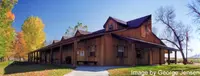
- Chief Plenty Coups State ParkPryor · State parkSituated within the Crow Indian Reservation in south-central Montana, 40 minutes south of Billings, this day-use park preserves the log home, sacred spring, and farmstead of Chief Plenty Coups. This state park is a National Historic Landmark.
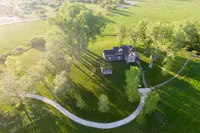
- Broadview DazeBroadview · Community fair and fundraiserA one-day June fair in Broadview, Montana, that raises money for the volunteer fire district, with a parade of tractors, lawn mowers and donkeys and fireworks after dark.
Nearby towns: Red Lodge. All the towns of Montana. More of Montana: Flea Markets, Fairs & Rodeos, and Wineries.
Sources
- Montana: A State Guide Book (1939), p. 123 archive.org/details/montanastateguid00federich/page/123
- National Register nomination, Billings, MT npgallery.nps.gov/GetAsset/516ccfa1-61d4-4aeb-978b-8e9705e24d0d
- Billings: The Father and the Son (historical marker) hmdb.org/m.asp?m=168301
- Billings Old Town Historic District historicmt.org/items/show/19
- Boothill Cemetery (historical marker) hmdb.org/m.asp?m=28939
- Billings’ Chinatown (historical marker) hmdb.org/m.asp?m=168090
- Montana Historical Society mhs.mt.gov/Shpo/AfricanAmericans/Places/PropertyRecords/Billings
- North Elevation Historic District (historical marker) hmdb.org/m.asp?m=166718
- Billings Clinic: Healthcare on the Frontier (historical marker) hmdb.org/m.asp?m=169023
- The Billings Brewery - Opened in 1899 (historical marker) hmdb.org/m.asp?m=166169