Soda Springs
Caribou County, Idaho. County seat.
Soda Springs, seat of Caribou County in the southeast corner of Idaho, began in 1863 as a Morrisite community beside Camp Connor.1,2,3
Details
- Founded
- Soda Springs began in 1863 as a Morrisite community beside Camp Connor, dated May 20, 1863, by the Idaho State Historical Society, while the 1937 guide credits General Conner and the Morrisites with establishing Fort Conner.2,4
- Name
- The town was named for the many springs, charged with carbonic acid gas and mostly cold, that rise in the area.4
- County seat
- Soda Springs has been the seat of Caribou County since the county was created in 1919, and it was earlier the first seat of Oneida County.3
- Last checked
- October 6, 2026.
Point at a dot to see the place.Tap a dot to see the place. Road map of Soda Springs.
In Soda Springs
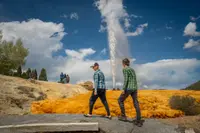
- Captive GeyserSoda Springs · Captive geyserGeyser Park, Soda Springs, Idaho, where a 1937 well drilled for hot water struck a gas chamber and a timer now releases the geyser every hour on the hour.
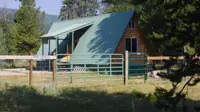
- Diamond Creek Guard StationSoda Springs · Guard stationA Forest Service rental cabin in a 6,900-foot meadow thirty miles east of Soda Springs, Idaho, built in the early 1990s as a snowmobile warming hut.
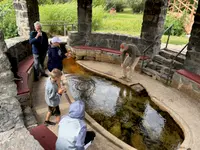
- Hooper Springs ParkSoda Springs · City parkA city park north of Soda Springs, Idaho, where cold, naturally carbonated water rises free inside a lava-rock enclosure built by the town's mayor and council in 1937.
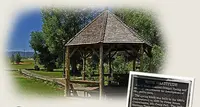
- Octagon Spring ParkSoda Springs · City parkA small city park at Main and Hooper in Soda Springs, Idaho, where an eight-sided roof from the 1890s covers a carbonated spring that anyone may drink from.
History
Beer Springs on the Bear River
Soda Springs stands at the northern bend of the Bear River in Caribou County, Idaho, where free soda water still runs in a city park.5,6,7 Washington Irving’s Adventures of Captain Bonneville carried the springs east, with Bonneville’s men drinking the beer-tasting water with avidity.5,8 In 1836 the emigrant Narcissa Whitman went ten miles off her route to visit the springs, and in 1838 the emigrant Sarah White Smith, encamped there, found the water raised bread as light as any made with yeast.8 The beer-tasting spring and the Steamboat Spring, which made sounds like a high pressure steam engine, now lie drowned in a reservoir behind a dam.4,6
Morrisites at Camp Connor
The Idaho State Historical Society places a Morrisite community next to Camp Connor on May 20, 1863, while the 1937 Federal Writers’ Project guide says General Conner and a little band of Marrisites, dissenters from the Mormon Church, established Fort Conner, the southwest part of the later townsite.2,4 The Enders Hotel nomination calls the founders a splinter group that left the Mormon settlements in Utah and counts the town among the three or four oldest in Idaho, and the 1937 guide called it the third oldest settlement in the State.1,4 In May 1863 General Patrick E. Connor sought a more direct route from Soda Springs to a ferry then being built across the Snake River, and the ferry came to serve a new route to the Montana gold fields.9 The legislature made Soda Springs the seat of the new Oneida County in 1864, then moved the seat to Malad on January 5, 1866, and most county officers refused to follow.2,3 In 1870 a new townsite was platted, and its first house, a one-room log cabin built under the direction of John Walmsley, became known as the Brigham Young Summer Home.10,11 Young planned the wide streets and square blocks, by the account of the Daughters of Utah Pioneers marker, and the cabin stood until 1944, when its roof caved in during an attempt to move it.11 In the summer of 1870 John Keenan, Jesse Fairchilds and other miners from Cariboo found gold on Caribou Mountain, and by the 1880s four stage coaches ran from Soda Springs to Carriboo City three days a week.12 Fairchilds, called Carriboo Jack, met a grizzly bear that took his life and is buried in the Soda Springs Fairview Cemetery.12
Idan-ha Water and the Railroad
Rail service reached the springs in 1882, and W.H. Hooper, a Salt Lake City banker who kept a summer home here, promoted the soda water trade while serving as Utah’s delegate to Congress.7 The Natural Mineral Water Company built the 42-room Idan-ha Hotel beside the Oregon Short Line in 1887, and it later served as a dining station for the Union Pacific.1,13 At the bottling works, bottles were filled from Ninety Percent Spring and charged with carbon dioxide trapped under drums at Mammoth Spring and piped 5 miles over the mountain.13 Shipped by the railway carload, the water sold as Idan-ha took first prize at the Chicago World’s Fair in 1893 and at Paris in 1905.13 Prohibition and artificially carbonated water closed the bottling works, the hotel burned in 1921, and in 1937 the Federal Writers’ Project guide found the plant idle though thousands still came each year to drink the waters.4,13,14
Phosphate and Caribou County
The village of Soda Springs was recognized in 1896, and from 1902 until 1978 it conducted its civic business in a city hall that was moved in 1941 and stands at 49 West Center Street.10 In 1919 the legislature created Caribou County, the last of Idaho’s 44, with Soda Springs as its seat, so the county calls the town both the oldest and youngest county seat in the state.3 The same year the Anaconda Copper Mining Company paid $650,000 for 3,500 acres of phosphate claims in the hills northeast of town.15 The marker says the Conda Mine took the national lead in vanadium production in 1940 for the World War II effort; J.R. Simplot Company took over in 1959, and phosphate mining at Conda ceased in 1984.15 In 1918 the bachelor brothers William and Theadore Enders borrowed $16,207 from Dr. Ellis Kackley, and their Enders Hotel was completed in 1919.1
The Captive Geyser of 1937
In 1937 the city fathers drilled into a mound looking for hot water for a community swimming pool, and on November 30 drillers leaving for dinner found a geyser shooting 100 feet high, by one marker’s account.8 A National Park Service marker tells it differently: local businessmen drilling at Pyramid Spring for a bathhouse and health resort struck a gas chamber at 315 feet on November 28.16 For most of the night steam hung over the town while water ran down Main Street toward the business basements.8 The water cooled and turned hard, unfit for a bathhouse, and within weeks the Secretary of the Interior telegraphed asking the city to turn the geyser off because it was throwing Old Faithful off schedule.16 Today a timer on the valve lets the Captive Geyser erupt every hour on the hour throughout the year.16
Within 30 Miles
Measured in a straight line from the town, nearest first.
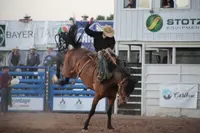
- Caribou County Fair & RodeoGrace · Annual six-day community eventGrace, Idaho, holds Caribou County's six-day August fair and PRCA rodeo, free at the gate, with roots a 1977 valley history traces to a 1928 dairy show.
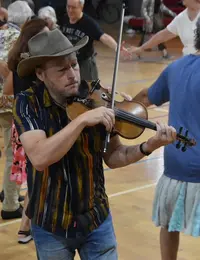
- Lava Meltdown Contra Dance WeekendLava Hot Springs · Contra dance weekendAnnual three-day contra dance weekend at the Lava Seniors and Community Center in Lava Hot Springs, Idaho, held the last weekend of February; music by Drive Train, calling by Christine Merryman.
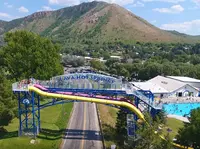
- Lava Hot Springs Hot PoolsLava Hot Springs · Hot poolsWorld Famous Natural Hot Springs with mineral water at 102-112F and a separate Olympic swimming complex. Run by the Lava Hot Springs Foundation in Lava Hot Springs, Idaho.
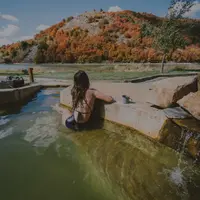
- Maple Grove Hot SpringsThatcherOff-grid retreat center in the Bear River Valley with natural lithium mineral hot springs, soaking pools, riverfront beach, sauna, lodging, and wellness programs.
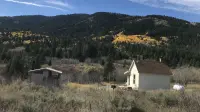
- Pebble Guard StationLava Hot Springs · Rustic one-room cabinA rustic one-room cabin on four fenced acres at the base of Bonneville Peak along Pebble Creek, surrounded by high mountain vistas.
- Bear Lake County FairMontpelier · CarnivalA six-day county fair on U.S. Highway 30 in Montpelier, Idaho, whose association was organized in 1906 and whose 2026 edition closed with a free redneck rodeo.

Nearby towns: Blackfoot. All the towns of Idaho. More of Idaho: Lookouts & Cabins.
Sources
- NFS Foim 10-900 OMB No. 1O244O18 United States Department of the Interior history.idaho.gov/wp-content/uploads/2018/09/Enders_Hotel_93000384.pdf
- 1 IDAHO STATE HISTORICAL SOCIETY REFERENCE SERIES EARLY ONEIDA COUNTY history.idaho.gov/wp-content/uploads/0335_Early-Oneida-County.pdf
- About Caribou County cariboucounty.us/visitors/about_caribou_county.php
- Idaho: A Guide in Word and Picture (1937), p. 222 archive.org/details/idahoguideinword00federich/page/222
- The Early Bear River Fur Trade: Bear Lake and Cache Valley history.idaho.gov/wp-content/uploads/0244.pdf
- Soda Springs (historical marker) hmdb.org/m.asp?m=105967
- Hooper Spring (historical marker) hmdb.org/m.asp?m=106256
- The Springs of Soda Springs (historical marker) hmdb.org/m.asp?m=106214
- Idaho State Historical Society history.idaho.gov/wp-content/uploads/2018/08/0071.pdf
- OMB No. IO24-OOIB history.idaho.gov/wp-content/uploads/2018/09/Soda_Springs_City_Hall_93000385.pdf
- Brigham Young Summer Home (historical marker) hmdb.org/m.asp?m=35466
- Caribou Mountain (historical marker) hmdb.org/m.asp?m=106213
- Travertine Terraces - World Famous Water (historical marker) hmdb.org/m.asp?m=109952
- Octagon Spring Park in the Bear River Heritage Area bearriverheritage.com/item/octagon-spring-park
- Conda Mine - A phosphate fortune unearthed (historical marker) hmdb.org/m.asp?m=106697
- “It Roars Like a Mad Dragon” (historical marker) hmdb.org/m.asp?m=106251