Casper
Natrona County, Wyoming. County seat.
Casper, seat of Natrona County on the North Platte, began in 1888 when the railroad reached the area and became a shipping point for cattle and wool.1,2
Details
- Founded
- Casper began when the tracks of the Fremont, Elkhorn & Missouri Valley Railroad arrived in June 1888.1
- Name
- The town is named for nearby Fort Casper, which the Army named for Lt. Caspar Collins, misspelling his first name.1
- County seat
- Casper became seat of Natrona County, split from Carbon County in 1890, after election officials threw out Bessemer’s fraudulent returns.3
- Last checked
- October 6, 2026.
Point at a dot to see the place.Tap a dot to see the place. Road map of Casper.
In Casper
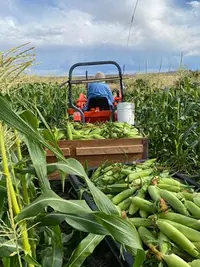
- Alcova Sweet CornCasper · FarmA highway sweet corn stand at mile post 92 on Wyoming Highway 220 between Casper and Alcova, selling corn first planted in 1960 to feed a ranch's hands.
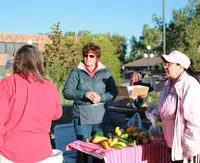
- Natrona County Master Gardeners Farmers MarketCasper · Farmers marketOffers in-season locally produced fresh vegetables and fruits, microgreens, and herbs; fresh flowers; spices and dried herbs; canned goods; locally produced honey; meat products, including beef and pork; free-range chicken eggs; raw milk; and homemade baked goods.
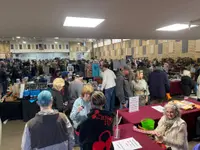
- Super Flea & Collectibles ShowCasper · Super flea market eventA super flea market that fills the Industrial Building at the Central Wyoming Fairgrounds in Casper several weekends a year and sends its profits to museums across Wyoming.
The Calendar

History
Rail’s End at the Old Fort
Casper stands at 5,150 feet on the North Platte River as the seat of Natrona County, and its center has been the corner of Center and Second streets since the fall of 1888.1 The site had been an important river crossing on the early frontier, but the town began only when the tracks of the Fremont, Elkhorn & Missouri Valley Railroad arrived in June 1888.1,2 The first buildings stood near what are now A and McKinley streets, and as soon as the railroad’s land company began to plat lots, people packed up and moved about a mile west.1
The town took its name from nearby Fort Casper, by then a ruin, which the Army had named for Lt. Caspar Collins and misspelled when it renamed Platte Bridge Station.1 Cheyenne and Lakota warriors killed Collins in the Battle of Platte Bridge Station, which one account dates July 25, 1865, and the 1965 state marker in town dates July 26.3,4 Works Project Administration money later helped build a replica of Fort Casper on its original site.3
Incorporation and the Bessemer Vote
On April 9, 1889, John Merritt applied in Rawlins to incorporate Casper, which then lay in Carbon County, and on July 8, 1889, George Mitchell was elected first mayor.5 Natrona County, named for the mineral natron, a carbonate of soda, was organized on April 8, 1890.5 Bessemer, ten miles up the North Platte, polled more votes for county seat, but so many more than the hamlet’s people that officials declared the returns fraudulent and Casper won.3 The town shipped cattle and wool and remained “rail’s end” until 1905, when the line was extended to Lander.2,4 Mathew Campfield, an African-American Union Army veteran who walked on wooden feet after freezing both of his own in Kansas, cut hair and was elected Natrona County coroner in the early 1890s.6
Salt Creek Crude and the Sand Bar
After Cy Iba and Mark Shannon brought in the first producing wells in the Salt Creek Field, 40 miles north, Shannon’s Pennsylvania Oil and Gas Company built a refinery in 1895 by the tracks at Center Street, and crude came in by wagon behind strings of 12 to 18 mules.1 By 1912 Standard Oil Company of Indiana had built a twenty-still refinery, and in 1913 the Chicago, Burlington and Quincy Railroad gave Casper its second rail connection.7 Between 1910 and 1920 the population quadrupled, from 2,639 to 11,447, and in the next decade it reached 16,619.1 Around 1916 the Sand Bar, just west of downtown, filled with saloons, pool halls, cafes and brothels, and when Prohibition came in 1919 its saloons became speakeasies.1 Farm prices fell right after World War I and oil prices after the mid 1920s, so hard times had reached Casper before the crash of 1929.1
The Bomber Base on the Zephyr
Early in 1942 a Chamber of Commerce delegation went to Washington to lobby for an air base, selling the “zephyr wind” that whips around the western end of Casper Mountain.8 Ground was broken in April on a sagebrush-covered terrace nine miles west of town, more than 400 buildings went up in three and a half months, and the base opened on September 1, 1942.1,8 Crews trained there until the base closed on March 7, 1945, an estimated 16,000 by one count and almost 18,000 by the recollection of base secretary Joye Kading.8,9 One hundred forty of its aviators died in 90 crashes between September 1942 and March 1945.8 In October 1943 Cpl. Leon Tebbetts and three other soldiers began 15 murals in the Servicemen’s Club, which now houses the Wyoming Veterans Memorial Museum.8,10 The field became the Natrona County Municipal Airport in 1949, and about one hundred original buildings remain by one count, 90 with all six hangars by another.8,9
Oil Busts and the Old Grid
Casper Junior College opened in September 1945 on the third floor of Natrona County High School, and James Reeb, later murdered in Selma, was among its first students.1,11 The district nomination records that Casper had the highest median family income in the state in 1960, and the 1970s energy boom carried the census count from 39,361 to 51,016 in 1980.1,7 A steep fall in oil prices then sent national oil companies out of their Casper offices, six banks failed by 1988, and the population fell to 46,742 by 1990.1,7 The Texaco refinery shut down in 1982 and the Amoco refinery in 1991, but a 1990s coalbed methane boom revived the drilling-services trade, and the population reached 55,316 by 2010.1,3 The Casper Downtown Historic District holds 102 properties built between about 1896 and 1980 on a grid platted between 1888 and 1916.7,12
Within 30 Miles
Measured in a straight line from the town, nearest first.
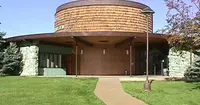
- Casper PlanetariumPlanetariumRegular night-sky programs on the Mediaglobe-II full-dome system, a presentation similar to an IMAX theatre.
- Deer Creek DaysGlenrock · Summer three-day celebrationGlenrock, Wyoming's three-day June celebration, once called Glenrock Days, marked its 50th year in 2026 with Pony Express re-riders leading the parade down Birch Street.
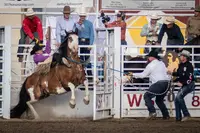
All the towns of Wyoming. More of Wyoming: Fairs & Rodeos.
Sources
- Casper, Wyoming wyohistory.org/encyclopedia/casper-wyoming
- mark shannon wyohistory.org/tags/mark-shannon
- Natrona County, Wyoming wyohistory.org/encyclopedia/natrona-county-wyoming
- City of Casper (historical marker) hmdb.org/m.asp?m=86899
- Casper - Natrona County - State Founding (historical marker) hmdb.org/m.asp?m=164529
- A coroner, a news tycoon, a captivity tale wyohistory.org/newsletter/2016-02/coroner-news-tycoon-captivity-tale-and-great-wyoming-athlete
- National Register nomination, Casper Downtown Historic District npgallery.nps.gov/GetAsset/9abf1bdb-f4bc-454d-9657-c8e7b94e3f29
- Aerials to Zephyrs: A Brief History of the Casper Army Air Base wyohistory.org/encyclopedia/aerials-zephyrs-brief-history-casper-army-air-base
- Casper Army Air Base (wyoshpo.wyo.gov) wyoshpo.wyo.gov/index.php/programs/national-register/wyoming-listings/view-full-list/684-casper-army-air-base
- Casper & Natrona County, Wyoming (U.S. National Park Service) nps.gov/places/casper-wyoming.htm
- James Reeb of Casper, Martyr to Civil Rights wyohistory.org/encyclopedia/james-reeb-casper-martyr-civil-rights
- Casper Downtown Historic District (wyoshpo.wyo.gov) wyoshpo.wyo.gov/index.php/programs/national-register/wyoming-listings/view-full-list/960-casper-downtown-historic-district