Willard National Fish Hatchery
Cook, Skamania County, Washington. National Fish Hatchery.
Details

- Where
- 5501B Cook-Underwood Road, Cook, WA 98605. Directions
- When
- Monday through Friday 8:00 am - 3:30 pm.
- Season
- Late spring through fall (best time); fingerling fish present year round.
- Getting there
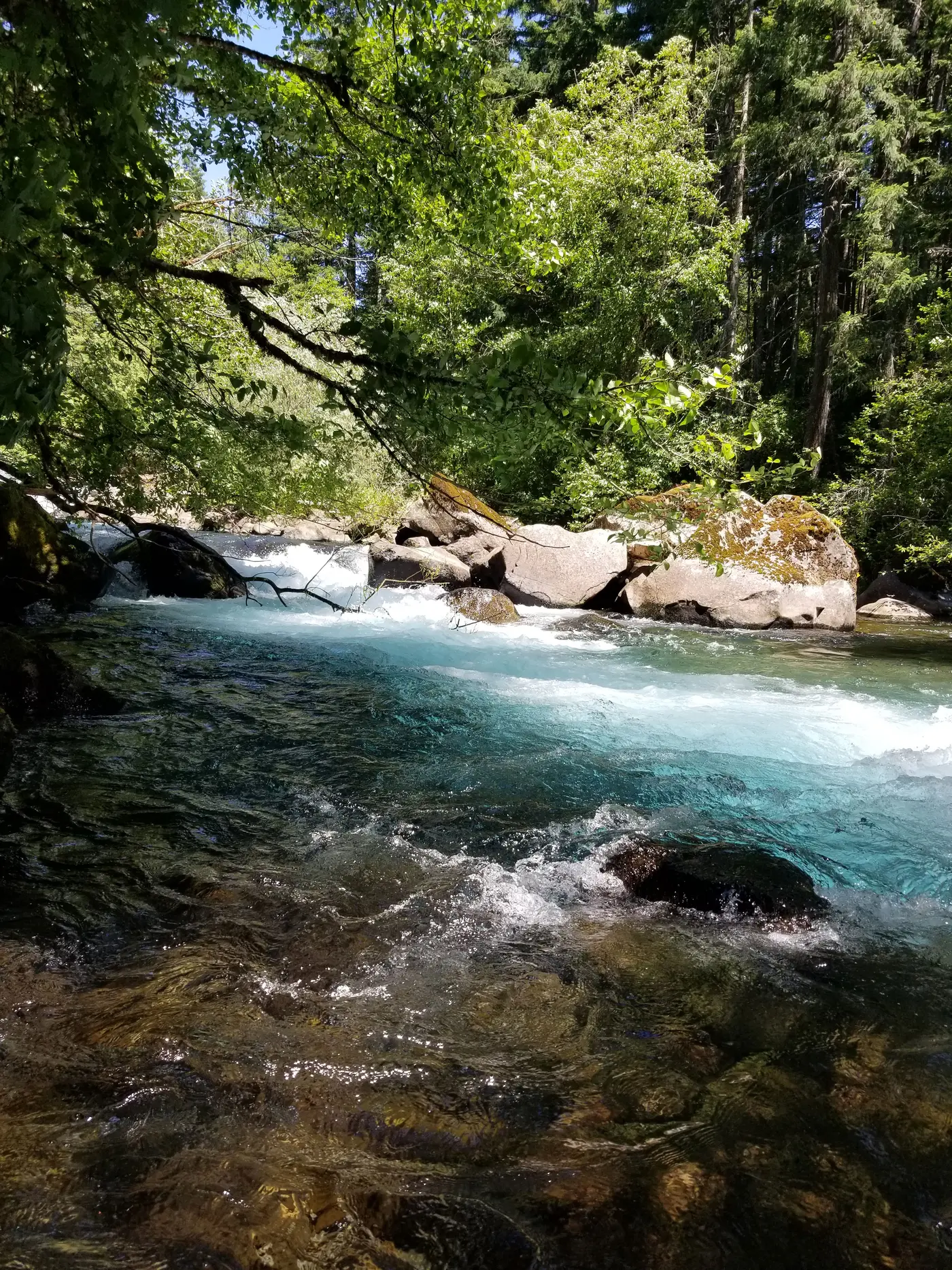
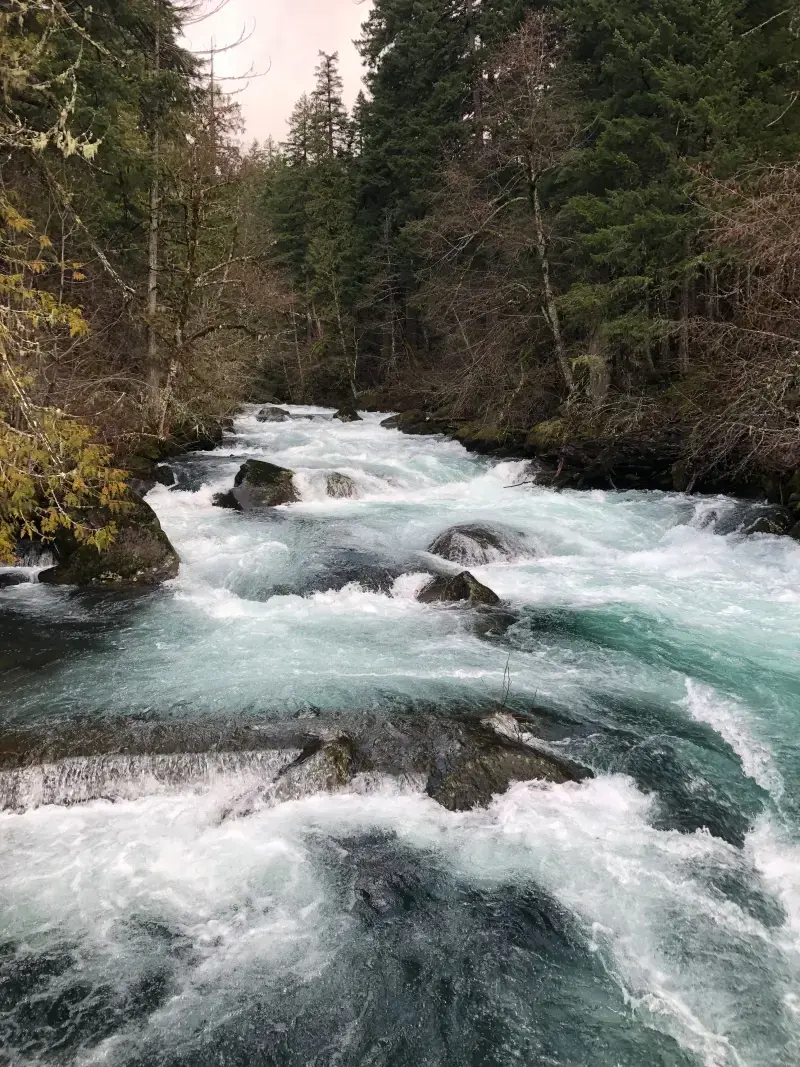
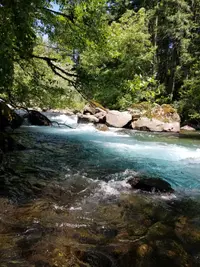
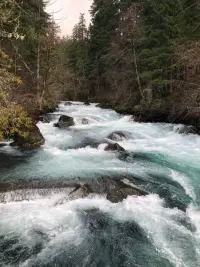
- Willard NFH is located 5 miles up the west end of the Cook-Underwood Road on the Little White Salmon River. Little White Salmon National Fish Hatchery is located 12.5 miles east of Stevenson, Washington, along State Highway 14.
- Access
- Located adjacent to the Gifford Pinchot National Forest, approximately 60 miles east of Portland, Oregon, in Washington State.
- Walk-in or reserve
- Tour groups of all size are welcome; please call the hatchery at (509) 538-2305 for more information.
- Phone
- (509) 538-2305
- Managed by
- U.S. Fish & Wildlife Service.
- Established
- 1953.
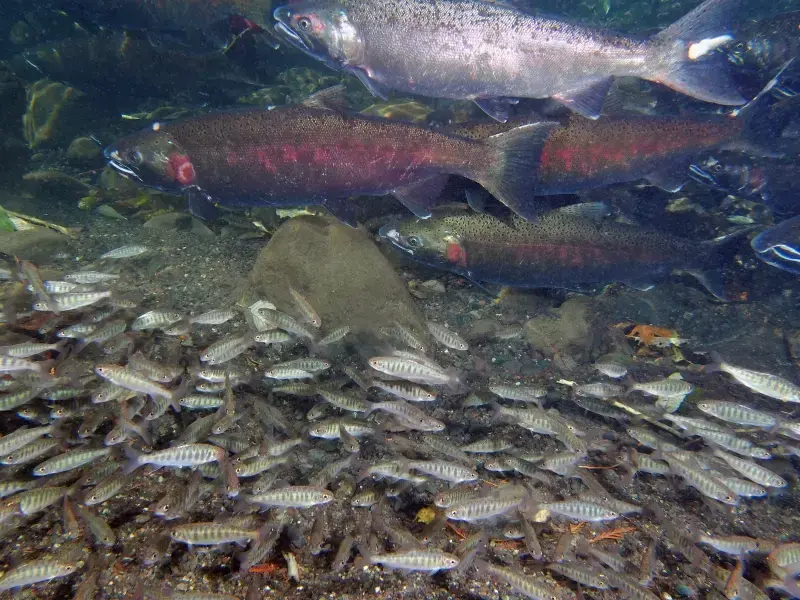
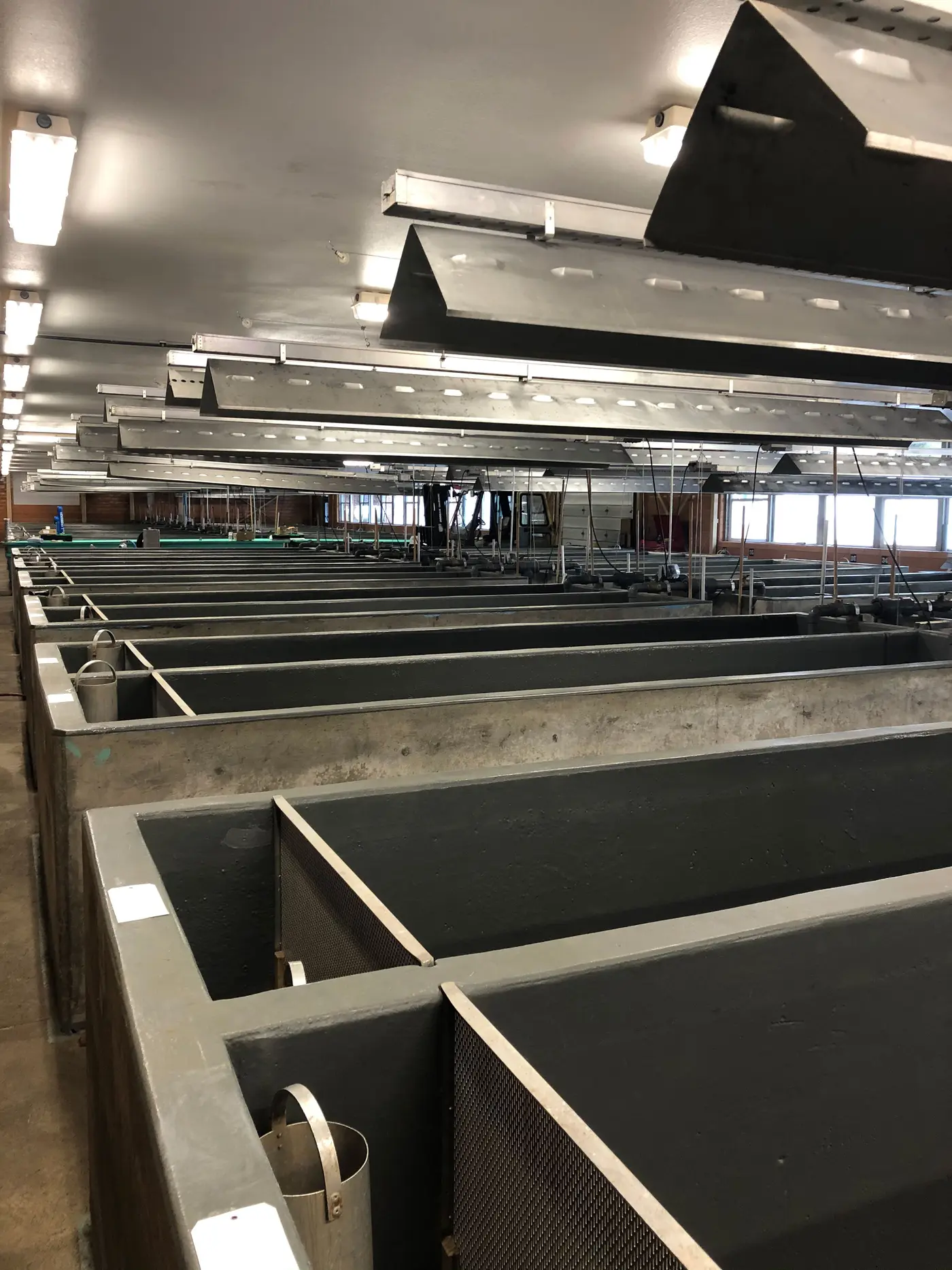
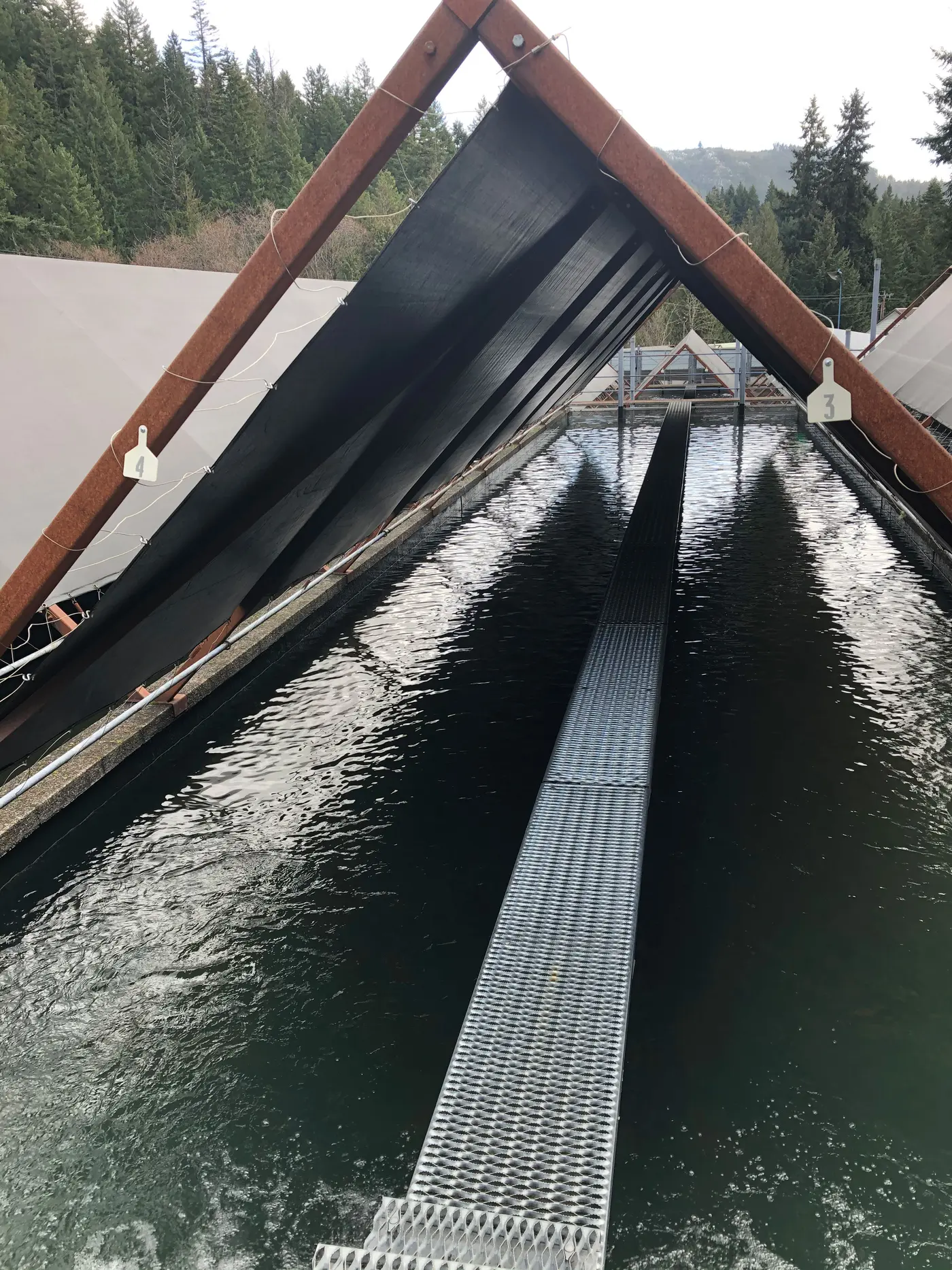
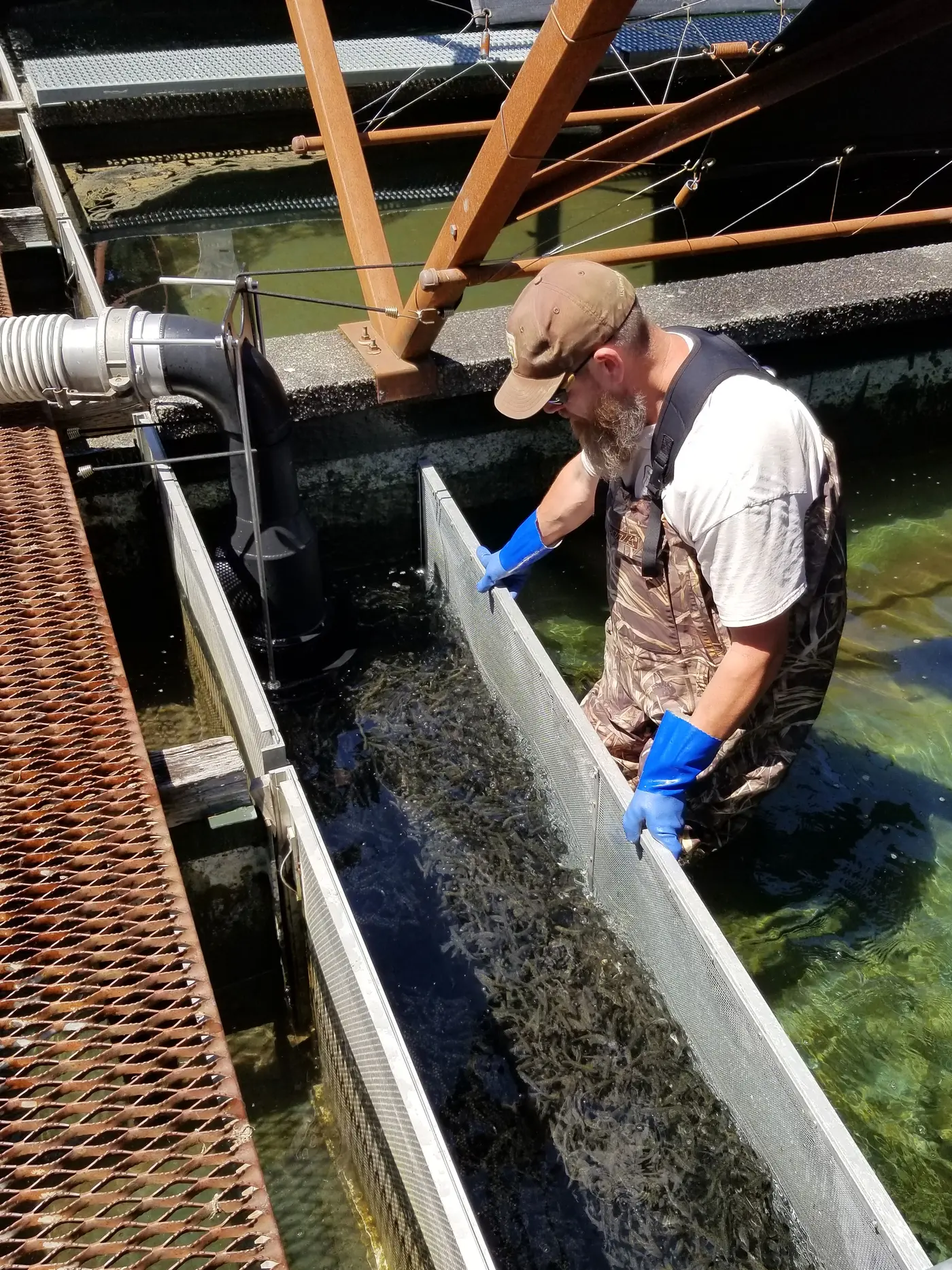
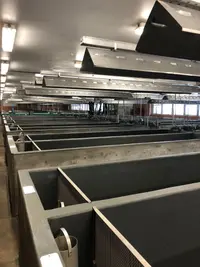
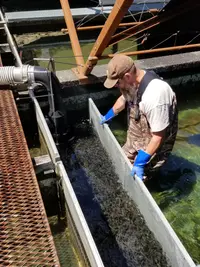
Rearing facility only on the Little White Salmon River, producing two million upriver bright fall Chinook annually and up to 1.2 million coho salmon annually in partnership with the Yakama Nation.
Notable Events
- 1951After the hatchery was completed in 1951, coho salmon returned to Drano Lake and the Little White Salmon River as a result of a successful Willard production program. fws.gov
- 1953The 1953 fish diet was a 50/50 blend of beef and hog liver to start; once the fry were feeding well, the recipe shifted to an official production diet of beef liver, hog liver, salmon eggs, salmon flesh and salt that was labor intensive and inefficient. npshistory.com
- 1960sA series of Oregon Moist Pellet recipes was tested against other foods; version number 4 was the clear winner and was the food of choice into the 1970s. npshistory.com
- 1963In its first year the hatchery released 10,159,057 fall Chinook fingerlings, peaked six years later at 39,602,182 fall Chinook released into the Columbia, and in 1963 coho became the species of focus and fall Chinook took a back seat. npshistory.com
- 1970Water from Carson Depot Springs, a separate facility about 15 miles away near the Columbia River, was used to accelerate coho incubation; eggs were fertilized at Carson Depot and the eyed eggs were trucked to Willard, and the strategy proved successful. npshistory.com
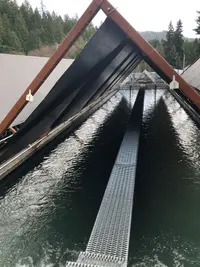
- 1973Siltation from winter flooding increased mortality in the nursery and raceways; in 1973, 81 tons of mud was deposited in the raceways, an ongoing problem that logging and logging roads aggravate. npshistory.com
- 1995Low coho returns to the Little White Salmon River required the hatchery to seek eggs elsewhere, and a batch riddled with bacterial kidney disease was destroyed to keep diseased adults from contaminating healthy ones when they returned from the ocean. npshistory.com
- 1996The Yakama Nation proposed restoring coho to the Mid-Columbia, specifically the Methow River, and Willard NFH was a good fit to help in this effort. npshistory.com
- 1998Willard NFH partnered with Idaho's Nez Perce Tribe to reintroduce coho into Lapwai and Potlatch Creeks. npshistory.com
- 2000The Yakama added the Wenatchee River system to their coho reintroduction plan, the project that solidified a more reliable funding source for the hatchery allowing it to continue operating. npshistory.com
- 2003In December of 2003, faced with imminent closure, hatchery workers destroyed some 2,500,000 coho eggs and sac fry by burying them in the ground. npshistory.com
- 2003In August of 2003 the U.S. Fish & Wildlife Service announced that due to shortfalls in funding for fiscal year 2004, Willard NFH would be closed, and the Service intended to mothball the facility. npshistory.com
- 2003The only coho left at the hatchery in 2003 were fish from the Yakama Nation Mid-Columbia reintroduction project; these fish, and the particular niche they represented to salmon restoration, would save the hatchery. npshistory.com
- 2004Mitchell Act budget reductions led to the proposed closure of Willard National Fish Hatchery in 2004, a year that marked the last release of coho salmon from the facility; a cost share agreement between the Yakama Nation and the Service led to a renewed production program. fws.gov
- 2011Willard raised endangered bull trout; the cold, clean water supply along with the fact that effluence can be sequestered made Willard an ideal bull trout nursery. npshistory.com
- 2028The sunset for the Mid-Columbia coho restoration program is set for 2028; ideally, by that time the runs will be self-sustaining and Willard NFH will conclude this project. npshistory.com