

Wallowa Hatchery
Enterprise, Wallowa County, Oregon. Hatchery; Spring and summer.
Details

- Where
- 82119 Fish Hatchery Lane, Enterprise, OR 82119. Directions
- When
- 7:30 a.m. - 4:30 p.m. daily.
- Getting there
- Turn off Hwy. 82 one mile west of Enterprise onto Fish Hatchery Lane. Proceed 3/4 mile to the hatchery. The hatchery is located 10 miles north from Wallowa State Park.
- Access
- ADA accessible; facilities include camp host, restroom, visitor center, trails, fish feed vending machines.
- Phone
- (541) 426-4467
- Website
- myodfw.com
- Managed by
- Oregon Department of Fish and Wildlife.
- Established
- 1920.
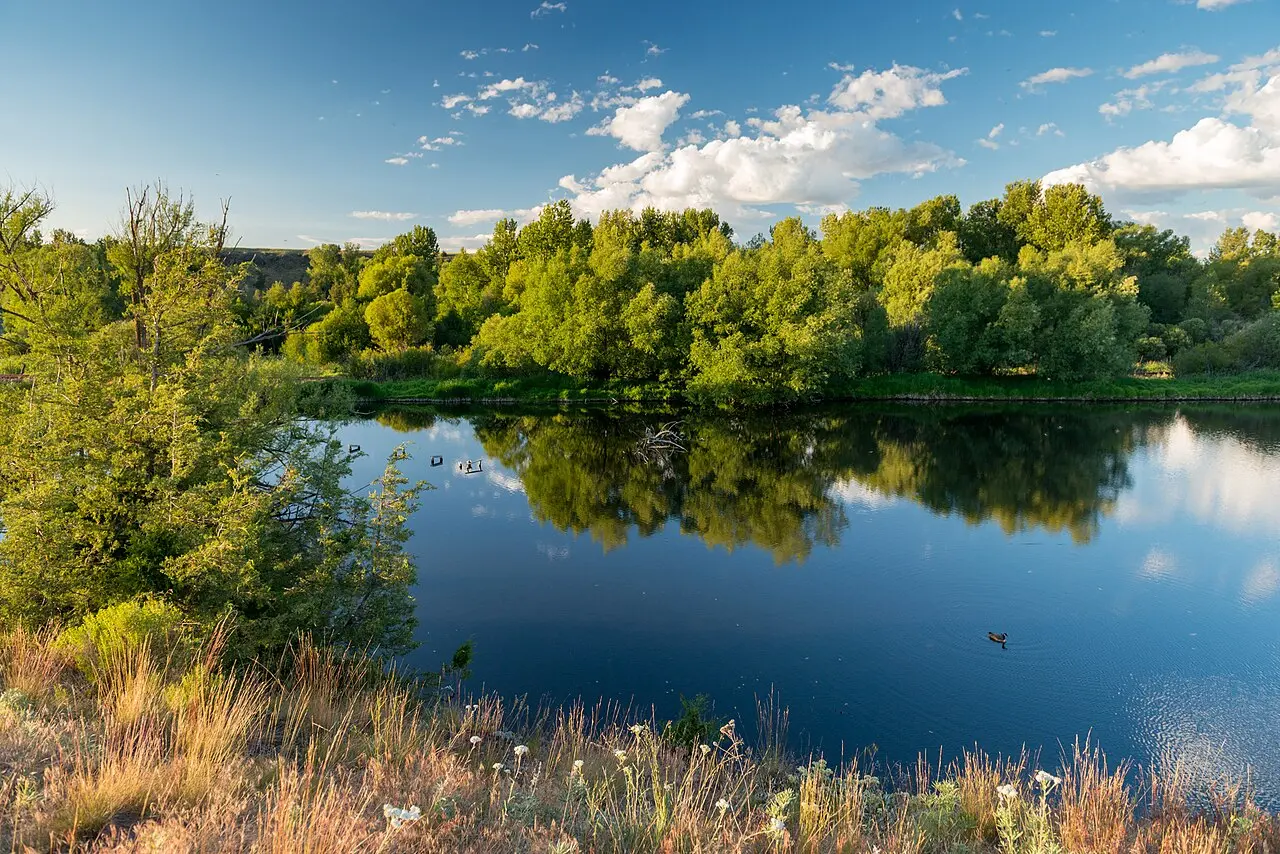
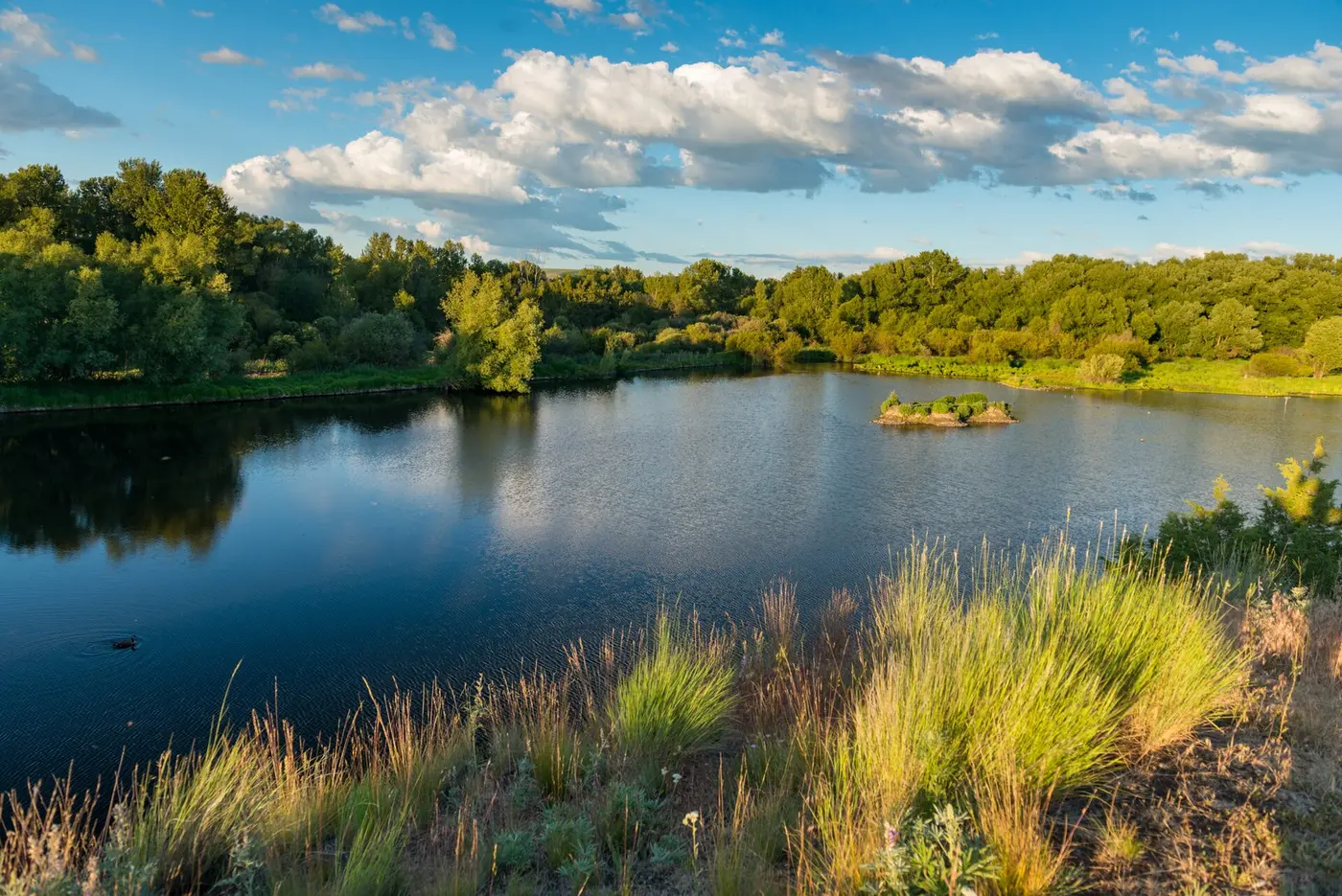
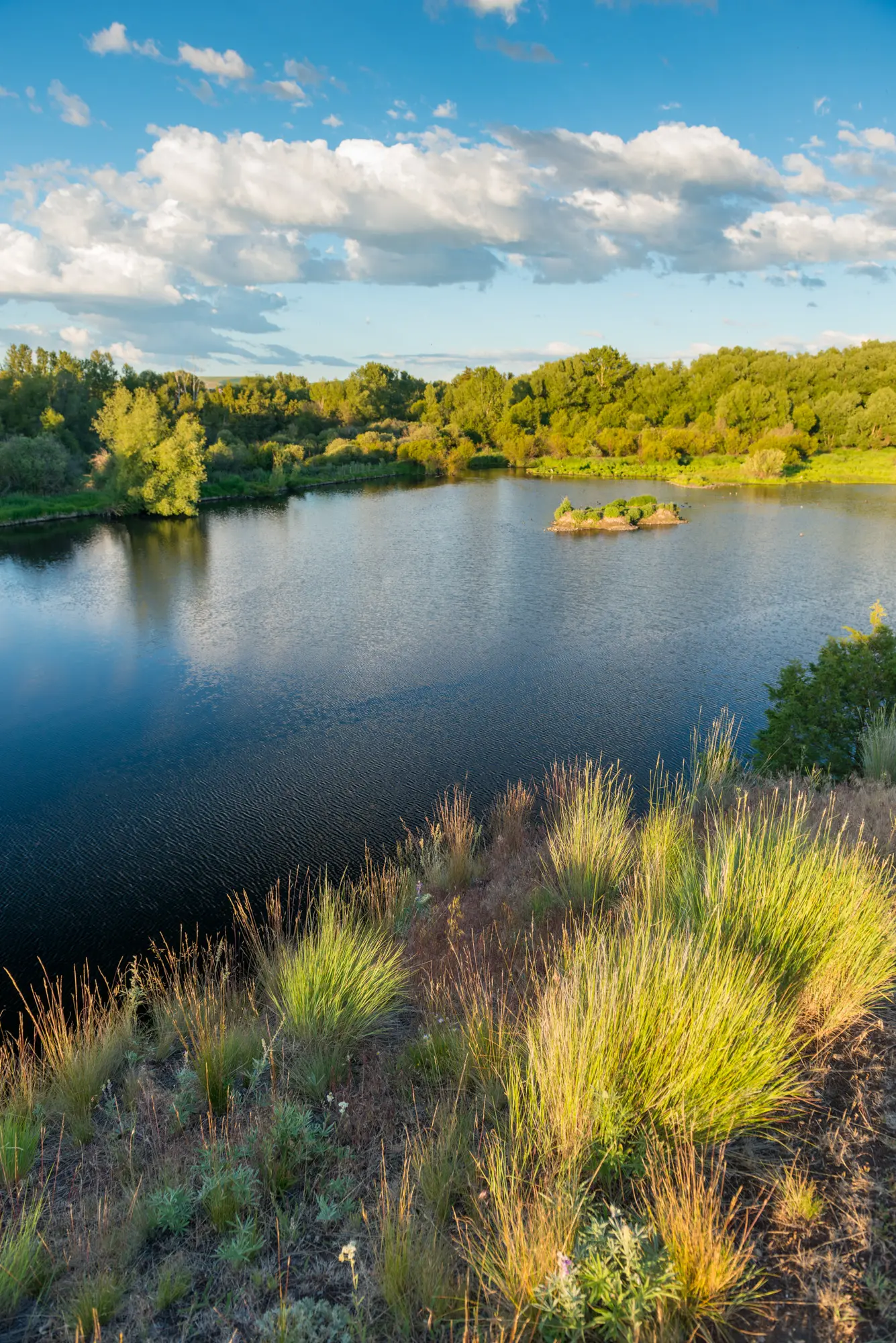
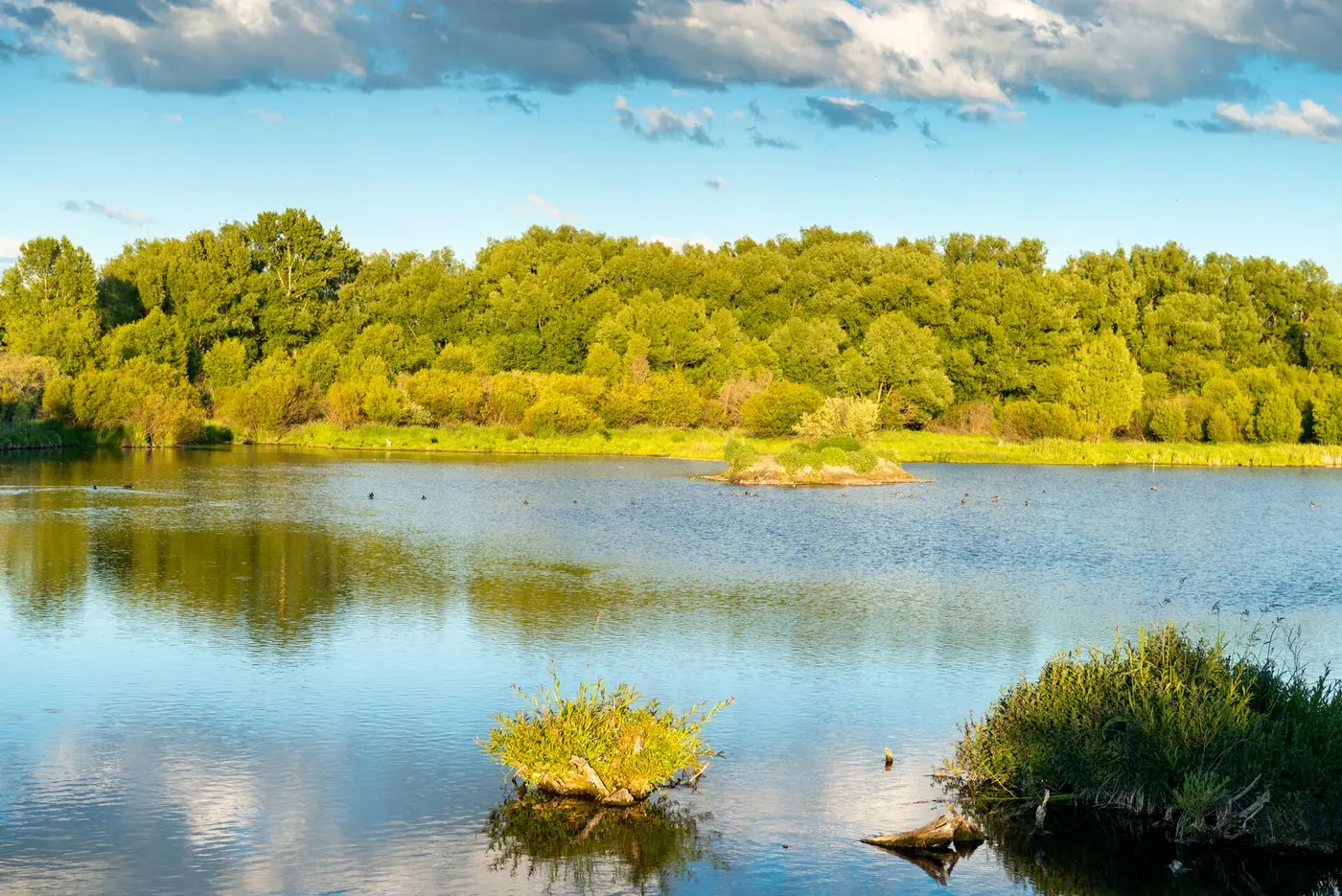
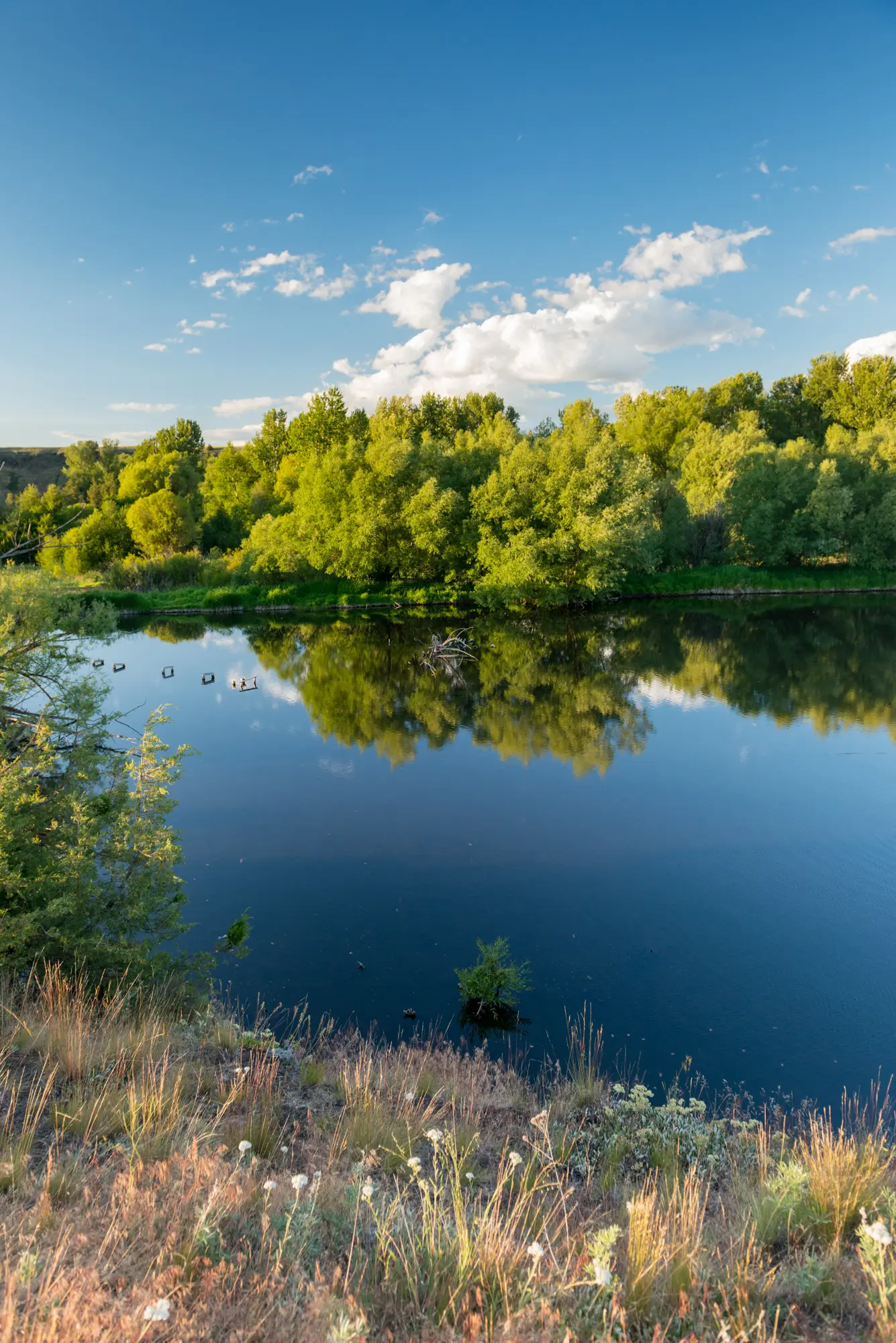
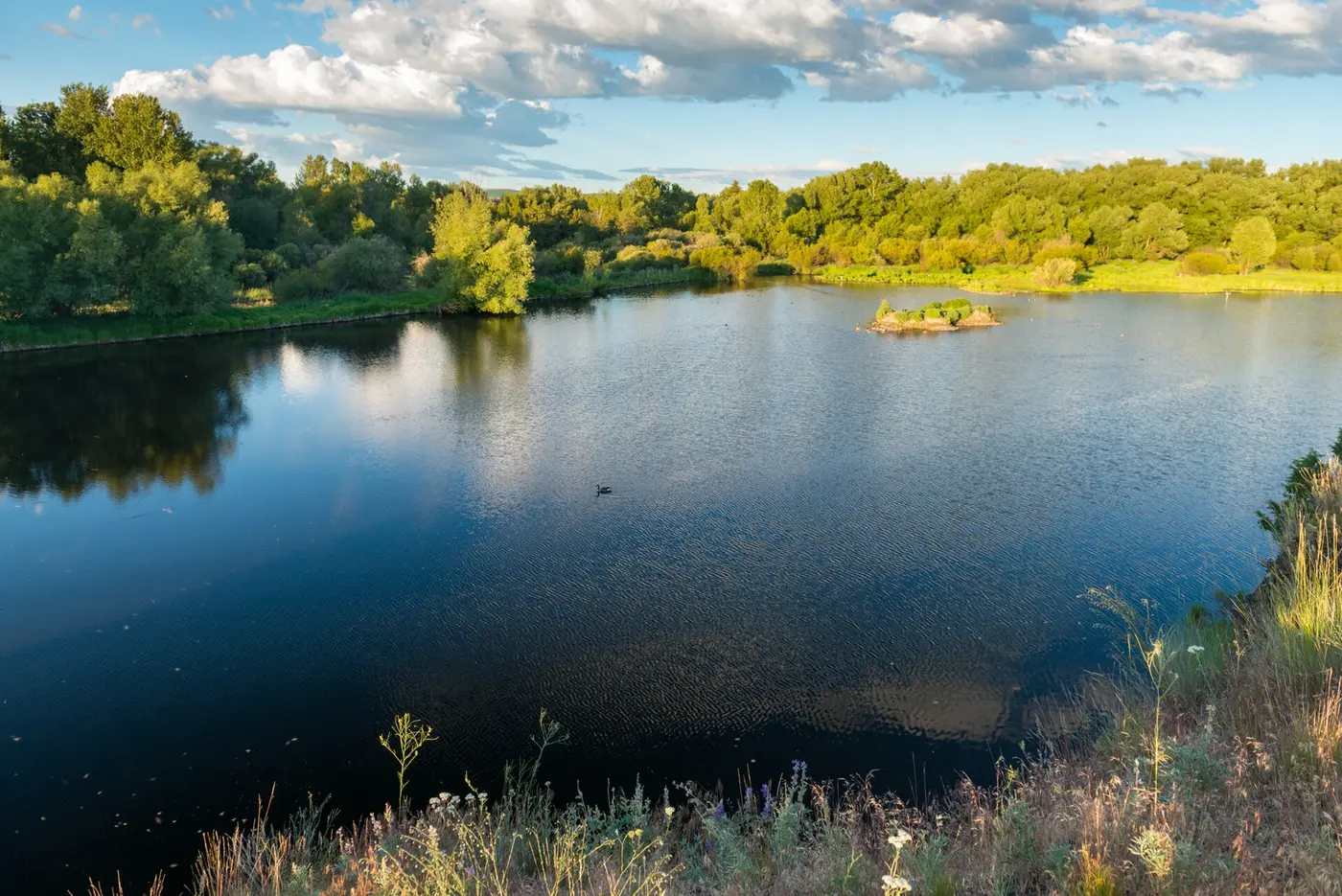
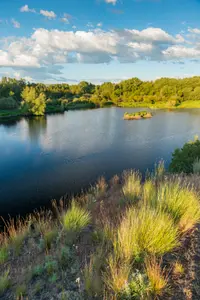
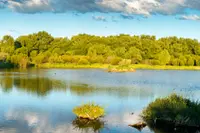
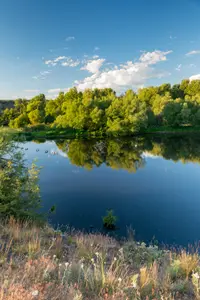
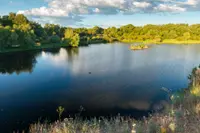
Fish Hatchery Lane leaves Highway 82 a mile west of Enterprise and runs three-quarters of a mile to the Wallowa Hatchery, a plant of the Oregon Department of Fish and Wildlife on Spring Creek, a tributary of the Wallowa River. Spring water runs through the whole operation. A 2010 account in the La Grande Observer put its flow at 100 gallons a minute out of the ground on site, at about 44 to 52 degrees. The hatchery has a visitor center, a restroom, a camp host, and vending machines that sell fish feed, and the grounds are ADA accessible. A quarter-mile trail leads from the hatchery to the old settling pond, which the department has developed into a small wildlife area. In spring the pond draws waterfowl, especially nesting geese. The department names spring and summer as the seasons to come, and lists wading birds, freshwater mammals and hoofed mammals among the wildlife. Wallowa State Park lies 10 miles to the south.
The trap on Spring Creek
The hatchery’s main work is summer steelhead: adult collection, spawning, acclimation and release. The fish come back from the ocean up the Grande Ronde, into the Wallowa River, up Spring Creek and into the hatchery trap. The Observer reported that they travel 800 miles, the farthest of any steelhead in Oregon. In the early spring of 2010, the year of the largest return on record, manager Ron Harrod’s crew kept a weekly circuit over three months. On Monday they worked the trap on Little Sheep Creek in the Imnaha drainage, and on Tuesday they spawned fish there. Wednesday was for trapping and spawning at Enterprise. Thursday took them back to Little Sheep Creek, and Friday to the adult trap at Big Canyon near Minam. Seasonal employees Bud Hook and Pat Horley worked the Spring Creek trap under Harrod’s eye.
The program needs only about 500 adults to spawn. Harrod said that 250 females can produce 1.3 million eggs a year. That spring the hatchery had more than 8,000 surplus adults that could not be released to spawn with wild fish. The anglers’ bag limit went to five, and the hatchery gave much of the harvest to local and regional food banks and held seminars on drying and smoking the catch. “It’s great to learn how to catch these steelhead, but we are also showing people how to utilize this resource,” Harrod said. Hatchery fish carry a clipped adipose fin, and an angler who lands an unclipped steelhead must let it go. Fisheries technician Debbie Eddy of La Grande scanned the carcasses for implanted wire tags. She also took scale samples, which are read under a microscope like the rings of a tree to show a fish’s age and its years in fresh and salt water.
Fertilized eggs rest in trays of 5,000 to 10,000 in a climate-controlled room, with spring water flowing through them. After three to four weeks they reach the “eyed stage,” and for about 48 hours they can be shipped with little risk. They go to Irrigon Hatchery on the Columbia to grow into smolts. According to the program’s 2011 management plan, the smolts come back in February and April and are held three to seven weeks in the Wallowa Acclimation Pond before release into the Wallowa River. In the same plan, 1,200 eyed eggs went to classroom incubators, and the fry were released into Marr Pond and Wallowa Wildlife Pond. “We don’t want to conflict with natural processes. We have a strict management philosophy. That is why we don’t release all of these fish to spawn,” Harrod told the Observer. In 2010 the plant was staffed around the clock. Harrod and assistant manager Chad Aschenbrenner kept alarms in their houses near the hatchery, because stopped water or ice on the ponds could kill the fish.
Two ponds and a park, 1921
The department dates the hatchery to 1920, when it began operating as a resident trout hatchery. The Wallowa County Chieftain of Sept. 22, 1921, reported that the State of Oregon would establish a fish hatchery at once, a mile west of Enterprise. It would start small, with two feeding ponds covering just under 20 acres. The grounds were to be made into a park, with the ponds open for bathing in summer and skating in winter. In November 1923, hatchery representative R.H. Bonney and county game warden George Rogers reported that 657,000 fish had been distributed in the county that year, rainbow and brook trout among them. The Enterprise hatchery expected to hatch 7 million the coming winter.
One building from the early 1920s still stood in 2010. It held early-rearing tanks for captive spring Chinook taken from the Lostine River, the upper Grande Ronde and Catherine Creek, each fish carrying its own transponder tag. Anyone entering stepped through an iodine boot bath, and splash guards ringed the tanks against contamination at feeding time.
A U.S. Fish and Wildlife Service history says operations expanded in 1939, when the Works Progress Administration built the main hatchery in Enterprise. The plant raised sockeye salmon and experimented with bull and brown trout. In December 1945, superintendent Ralph Kay told a meeting of sportsmen in La Grande that the Enterprise hatchery was running at peak load, along with the 13 other hatcheries operating in the state. A state game commissioner from Enterprise said at the same meeting that it would be expanded to turn out 1,500,000 trout instead of 500,000.
Steelhead came later. The Lower Snake River Compensation Plan was authorized in 1976 to replace salmon, steelhead and trout lost to four federal dams on the lower Snake River in Washington. Adults were first collected for the Wallowa steelhead broodstock that year, and the first smolts were released in 1977. Since 1979 the broodstock has come from hatchery adults returning to Wallowa Hatchery and other traps. In 1985 the U.S. Army Corps of Engineers renovated the hatchery for summer steelhead under the program. The Fish and Wildlife Service history adds spring Chinook to that year’s new work. Starting with brood year 2006, smolt production was cut by 40 percent, from 1.35 million at five to the pound to 800,000 at four to the pound. Research had found that the larger smolts returned at a better rate and that fewer of them stayed behind in the river.
Rainbows for Wallowa Lake
The Chieftain reported in 2008 that the hatchery raised trout from the 1940s until around 2000. That year legislators required part of northeastern Oregon’s stocking trout to come from the private Desert Springs Hatchery. For about a decade after, Wallowa County’s rainbows were raised at Irrigon, more than 160 miles away, and trucked over the Blue Mountains several times a year. In December 2008, after a change in state law, a tanker truck delivered thousands of young trout back to Enterprise, bound for nine county lakes and ponds. “Wallowa Lake is going to get the biggest portion,” Harrod said. Wallowa Lake would be stocked up to seven times between May and late August. Kinney Lake and the Wallowa Wildlife, Marr, Victor, Honeymoon, Salt Creek, McGraw and Teepee ponds would get their share from spring into early July. “The main purpose is for recreation,” Harrod said. “We want people to go to these places and catch trout.” He estimated the change would save the department 9,000 miles of driving and 160 hours of labor a year.
By 2010 the hatchery held 60,000 rainbows, 15,000 in each of four ponds, and 45,000 of them went into Wallowa Lake each year. The trout arrived in October at 3 to 4 inches and were released in spring and summer at 9 to 10 inches. Another 3,000 were held two years and let go at 14 to 16 inches as trophy fish.
In June 2011, managers euthanized 42,000 legal-size rainbows after a number of fish died of Infectious Hematopoietic Necrosis Virus. Harrod said the source was most likely adult steelhead in the Wallowa River above the hatchery. The river is one of the plant’s two water sources. Trout production dropped from 50,000 a year to 20,000, raised on the second source, where the virus had not been detected, and the steelhead program was unaffected. Four years later Harrod applied for money to resurface three trout raceways, which the application described as 70 years old. Half the year’s trout were reared in them. “When staff pressure washes the pond bottom the concrete will literally blow apart,” the application said. The project proposed pouring a new four-inch layer of concrete over the old floors.
The ladder below the pond
Spring Creek leaves the hatchery’s abatement pond over a three-pool concrete fish ladder. A March 2026 study for the Lower Snake River Compensation Plan found that the ladder fails passage criteria in nearly every category. Its pool-to-pool drops run 2.0 to 2.3 feet, where the maximum allowed is one foot, and out-migrating smolts fall onto a concrete sill. The study traced the pond through aerial photographs. In 1946 it was a defined settling basin with the natural creek channel visible upstream. By 1954 the pond was spreading and filling with sediment. By 2025 it had become a broad, shallow wetland.
ODFW staff had seen problems with the ladder long before a formal NOAA evaluation in 2016. Talks on replacing it began as early as 2013. In 2025 the Eagle, Idaho, firm RIVHAB was brought in to look again. On Dec. 16, 2025, the Fish and Wildlife Service, ODFW and RIVHAB chose a nature-like fishway. The plan removes the dam and ladder and runs a 515-foot creek channel through the old pond footprint, with seven boulder weirs spaced about 60 feet apart. A new pond of about an acre, 15 feet deep, would take over the settling work, and the rest of the footprint would become riparian ground and wetland. Under the study’s timeline, design comes in 2026 and permits in 2027. The dam boards come out in April 2028, and major construction runs June through September 2028, with wetland planting in the spring of 2029. The new channel is modeled on a reach of Spring Creek 600 feet upstream, and on the creek’s course in the 1946 photograph.
Notable Events
- 1920sThe building used for the early-rearing tanks was constructed in the early 1920s. lagrandeobserver.com
- 1920Wallowa began operation as a resident trout hatchery. myodfw.com
- 1921The State of Oregon will establish a fish hatchery at once a mile west of Enterprise. The beginning will be small, consisting of two feeding ponds with a total area of just under 20 acres. The hatchery grounds will be beautiful and made into a park. The ponds will be available for bathing in the summer and skating in the winter. wallowa.com
- 1923County fish distribution numbered 657,000 in 1923, including rainbow and brook trout planted in local waters; the Enterprise hatchery expected to hatch 7 million fish the coming winter. wallowa.com
- 1939Operations expanded with construction of the main Enterprise hatchery through the Works Progress Administration, raising sockeye and experimenting with bull and brown trout. fws.gov
- 1945The Enterprise hatchery was to be expanded to triple its trout output. oregonnews.uoregon.edu
- 1976Adults were first collected for the program's broodstock. fws.gov
- 1977Spring collections at Little Goose Dam supplied adults for the Wallowa stock. fws.gov
- 1979Natural fish were last incorporated into the broodstock in 1979. fws.gov
- 1979Since 1979, Wallowa stock adults returning to Wallowa Hatchery, BigCanyon and Cottonwood traps have been used as broodstock. fws.gov
- 1980sWallowa Hatchery in Enterprise was one of three hatcheries constructed for the Grande Ronde Basin hatchery program, along with Big Canyon and Irrigon. grmw.org
- 1985The hatchery underwent a major renovation and began raising summer steelhead and spring chinook under the Lower Snake River Compensation Program managed by the U.S. Fish and Wildlife Service. fws.gov
- 2000To reduce wild/hatchery adult interaction, smolts were acclimated and released only at Big Canyon and Wallowa Hatchery facilities in the Wallowa basin starting in 2000. fws.gov
- 2000After raising trout from the 1940s, Wallowa's trout rearing ended around 2000 when legislators required some northeastern Oregon stocking fish to come from the private Desert Springs Hatchery; Wallowa County trout were kept at Irrigon and trucked to release sites. wallowa.com
- 2004Returning adults from the early-brood program were incorporated into hatchery production to modify run timing, reduce straying into other Columbia River tributaries and maintain harvest opportunity. fws.gov
- 2006Starting with BY2006, smolt production was reduced by 40% from the original goal of 1.35 million at 5/lb to 800,000 at 4/lb in response to research findings and NMFS recommendations. fws.gov
- 2008ODFW brought trout back to the Wallowa hatchery. wallowa.com
- 2009The Hatchery Scientific Review Group and Hatchery Review Team extensively assessed the Wallowa Hatchery program. fws.gov
- 2011Following the virus outbreak, annual trout production would be cut from 50,000 to 20,000 using a second water source where IHNV had not been detected; the other 30,000 fish would be raised elsewhere. The adult steelhead program was unaffected. dfw.state.or.us
- 2013Talks began to develop options for replacing the ladder and spillway. fws.gov
- 2015The proposal would restore deteriorated concrete floors in 70 year old trout raceways, pouring a new four inch layer over the floors of three rearing raceways. dfw.state.or.us
- 2016A USFWS-commissioned NOAA compliance evaluation began in mid-2016, with a September field assessment and findings in the December draft report; ODFW staff had identified issues long before the formal evaluation. fws.gov
- 2025RIVHAB was contacted to take a fresh look and ensure other options had not been overlooked. fws.gov
- 2025USFWS, ODFW and RIVHAB selected a nature-like fishway with constructed wetlands and a reduced abatement pond through a collaborative charette. fws.gov
People
- Ron Harrod, Wallowa Fish Hatchery manager overseeing the renewed local trout-rearing program.
- Colleen Fagan, NE Region Hatchery Coordinator listed among the steelhead program's responsible individuals.
- Jeff Yanke, District Fish Biologist listed among the steelhead program's responsible individuals.
- Lance Clarke, Fish Research Project Leader listed among the steelhead program's responsible individuals.
- Scott Patterson, Fish Propagation Program Manager listed among the steelhead program's responsible individuals.
- Bud Hook, Seasonal hatchery employee from Elgin.
- Chad Aschenbrenner, Assistant hatchery manager from Enterprise sharing on-site duties.
- Chuck Stelling, Seasonal hatchery employee from La Grande.
- Debbie Eddy, Fisheries technician gathering information from harvested fish, including electronic wire tags and scale samples.
- Patrick Horley, Seasonal hatchery employee from Maryland.
- Steve Deal, Seasonal hatchery employee from Wallowa.
- Sue Bonneau, Seasonal hatchery employee from Joseph.
- Ralph Kay, Superintendent of the Enterprise hatchery, reporting that it was running at peak load.
- George Rogers, County game warden accompanying R.H. Bonney of the hatchery when its output figures were presented.
- R.H. Bonney, Hatchery representative who supplied figures on the plant's growing output during a visit with the county game warden.
Sources
- myodfw.com/wallowa-hatchery-visitors-guide
- wallowa.com/2008/12/17/raising-trout
- wallowa.com/2023/11/22/out-of-the-past-hatchery-keeping-streams-well-stocked
- oregonnews.uoregon.edu/lccn/2006260039/1945-12-03/ed-1/seq-6/ocr
- lagrandeobserver.com/2010/03/18/hatchery-spawns-productive-fisheries-in-n-e-oregon
- fws.gov/sites/default/files/documents/2026-05/day-1-6-rivhab-justin_combined-fish-ladder-presentation-lsrcp_april-21-2026.pdf
- fws.gov/sites/default/files/documents/Wallowa%20STS.pdf
- dfw.state.or.us/news/2011/june/062411.asp
- dfw.state.or.us/fish/re/projects/cycle_15-3_applications/15-035%20app%20w%20att_Redacted.pdf
- grmw.org/static/documents/ripples/13/Ripples%20Spring07%20LowRes.pdf
- wallowa.com/2021/09/22/out-of-the-past-state-to-establish-fish-hatchery-at-enterprise-site-will-include-a-park
- fws.gov/sites/default/files/documents/Oregon_LSRCP_Review_Summary_FINAL_April2011_508.pdf