Walla Walla Fair & Frontier Days
Walla Walla, Walla Walla County, Washington. County fair.
Details

- Where
- 363 Orchard Street, Walla Walla, WA 99362. Directions
- When
- Last held September 2–6, 2026; next year’s date not yet stated.
- Fees
- Adults (age 13 and above) $12, child (age 6-12) $7, child 5 and under free, senior (age 65 and over) $7, family pass (2 adults & 2 children) $30, season gate pass $40.
- Hours
- Wed-Thu 11:00am to 11:00pm, Fri-Sun 11:00am to midnight.
- Access
- Parking $10 per vehicle, no re-entry, cash only; Valley Transit provides a free shuttle bus from the transit center to the fair.
- Walk-in or reserve
- Purchase online, by phone, or in person at the WW Fairgrounds Ticket Office at 363 Orchard St.
- Phone
- (509) 527-3247
- Website
- wallawallafairgrounds.com
- Managed by
- Walla Walla County.
- Established
- 1866.
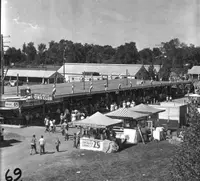
The Walla Walla Fair & Frontier Days opens the Wednesday before Labor Day on the county fairgrounds at 363 Orchard Street and runs five days, from eleven in the morning until eleven at night midweek and until midnight Friday through Sunday. The 2026 fair ran September 2 through 6 and marked 160 years. Cheap Trick played the headline concert on the opening Wednesday at 7:00 p.m. Through the rest of the week, free acts filled the Pepsi Stage and the Many Waters Stage. The carnival sold armbands by the day, with a buy-one deal on Wednesday’s Buddy Day and cheaper armbands and $4 single rides on Thursday’s Family Day. Gate admission is sold at the main booth on Orchard Street and at the Tietan Street entrance. Parking on the grounds costs $10 a car, cash only. Valley Transit runs a free shuttle from the transit center every thirty minutes from 2:15 p.m.
Exhibits fill the Pavilion and the barns. Fruit and vegetable displays have long hung in the Pavilion, and the 4-H barn stands nearby. The 4-H and FFA shows have become, in the fair’s words, “the annual showcase of the region’s younger population.”
Three nights in the arena
The PRCA rodeo runs Friday, Saturday, and Sunday nights. Each night has its own name: Tough Enough to Wear Pink on Friday, the ManUp Crusade on Saturday, and Patriotic Night on Sunday. The preliminaries start at 6:30. Valley children run barrels, ages 7 to 12 on Friday and 13 to 18 on Sunday, and royalty from the four Big 4 rodeos race a barrel challenge on Saturday. Small riders cling to sheep in the Mutton Bustin’. On Friday and Saturday the Walla Walla Wagon Wheelers Drill Team rides. The Pro-Rodeo Grand Entry follows at 7:00. The program then runs through bareback riding, breakaway roping, saddle bronc, tie-down roping, steer wrestling, team roping, barrel racing, and bull riding, each run shown again on an instant-replay video scoreboard. Standing room for those 21 and over is in the Wildhorse Let ‘Em Kick Corral, under the new P1FCU platform.
At the 2025 rodeo Wacey Schalla won the all-around title with $5,789, taken in bareback and bull riding. His bull ride scored 90 points on Bridwell Pro Rodeos’ No. 62. Since 1948 Walla Walla has been one of the Big 4 Rodeo Association. In order of the calendar, the four are the Horse Heaven Round Up, Walla Walla, the Lewiston Roundup, and the Pendleton Round-Up.
The same P1FCU Arena holds the Underriner Honda of Walla Walla Demolition Derby, which ran on the Thursday in 2026. Time trials start at 5:00, heat races at 6:00, and the derby at 7:00, with Powder Puff races in among the heats. Graham Barker, driving No. 44, won the 2025 derby.
Saturday on Main Street
The parade leaves Fifth Avenue at ten on Saturday morning. It heads east on East Alder, turns north on Spokane, and runs west on Main to end at Seventh Avenue, just past the Courthouse. The entries include antique cars, decorated semi-trucks, horses pulling historic stagecoaches, the fair’s own royalty, and Miss Rodeo America. Saturday afternoon, in front of the Pepsi Stage, comes the Diaper Derby, a 30-foot race for crawlers aged six to twelve months, with a prize for the first across. That night at the rodeo the fair introduces its Legends Hall of Fame inductees.
The 2026 Rodeo Legend was the Walla Walla Wagon Wheelers, in their ninetieth year. Forty-four Walla Walla businessmen formed the group in April 1936 to promote the Whitman Centennial. Members sold a commemorative button for $1. Anyone caught without one went before a judge and was fined, usually the price of another button, and some who tried to dodge the fine ended up in a horse trough. In the late 1940s the club went “western.” Its drill team was organized in 1947 and has ridden at the fair rodeo every year since. Its sheriff’s posse, organized in 1950, served as bonded county deputies from 1953 to 1997. The club also took out the first license to sell beer on the fairgrounds. The first beer was poured from a horse trough behind the grandstands. Later the members built a beer hall under the grandstands and staffed it as volunteers until 2015. The drill team’s trophies hang on the beer hall wall.
The 2026 Fair Legend was Orpha Oliver, who died in 2022 at 91. She became a 4-H leader in the 1960s. With her husband, Dan, she helped children with horse, beef, sheep, and pig entries, and for years the couple sold them show lambs. From the 1970s she checked in exhibits at the Pavilion, then became superintendent and later judge of baking and canning. In the Exhibitors’ Office she kept charge of the ribbons. Jill Richardson, an exhibitors’ secretary she trained, recalled, “You did not touch her hundreds of ribbons that were organized in a very specific way. If you did, there was hell to pay!” Orpha kept spares for emergencies, such as a child whose rabbit had eaten its ribbon. Her apple pie was already known from her years at the Walla Walla Livestock Auction lunch counter. It won three Golden Apples for best-in-show pie before she stopped entering “so someone else could have a chance to win.”
A racetrack west of town, 1866
The fair began on a racetrack. In 1866 the Walla Walla Agricultural Society staged an agricultural and industrial exposition to show the valley’s crops and the newest farming methods. The town had been named only in 1859 and incorporated in 1862, and dryland wheat had been planted on the surrounding hills since about 1864. A 2016 resolution of the Washington House says the fair ran October 4, 5, and 6, 1866, on horse-track racing grounds built in 1862, three miles west of the city limits of the day. The Union-Bulletin records a horse race alongside that first fair.
The fair has since gone by many names, moved among many sites, and answered to a succession of civic bodies. Its emphasis shifted among fruits and vegetables, stock and machinery, horse races, car races, and rodeo. Walla Walla County bought the present grounds in 1923. After two years of a pageant called “How the West was Won,” the fair returned to the sponsorship of the Walla Walla County Farm Bureau, and the Chamber of Commerce joined as co-sponsor the following year. For several decades now the county has appointed the fair’s management and board.
The Pavilion and the hall
The Pavilion dates from 1906, built as a fruit exhibit and concert hall. Its architect was Henry Osterman. He was born near Essen, Germany, in 1862, served three years in the German Army, and came to Walla Walla in 1889 with three brothers. The brothers found work as carpenters, and by 1896 all but Henry had gone back to Germany. A 1918 county history credits him with “practically all the important business and office buildings in the city.” His firm, Osterman & Siebert, designed the 1916 County Courthouse where the parade now ends. The state historic preservation office calls the Pavilion one of Osterman’s more unusual designs.
Merchants needed more display room, so an exhibition hall went up in 1907. During World War II it housed German prisoners of war. In 1970 a fire destroyed the roof and cupola of the rotunda. In 2006 the Pavilion had its first major renovation in many years, for its centennial.
Frontier Days and the night rodeo
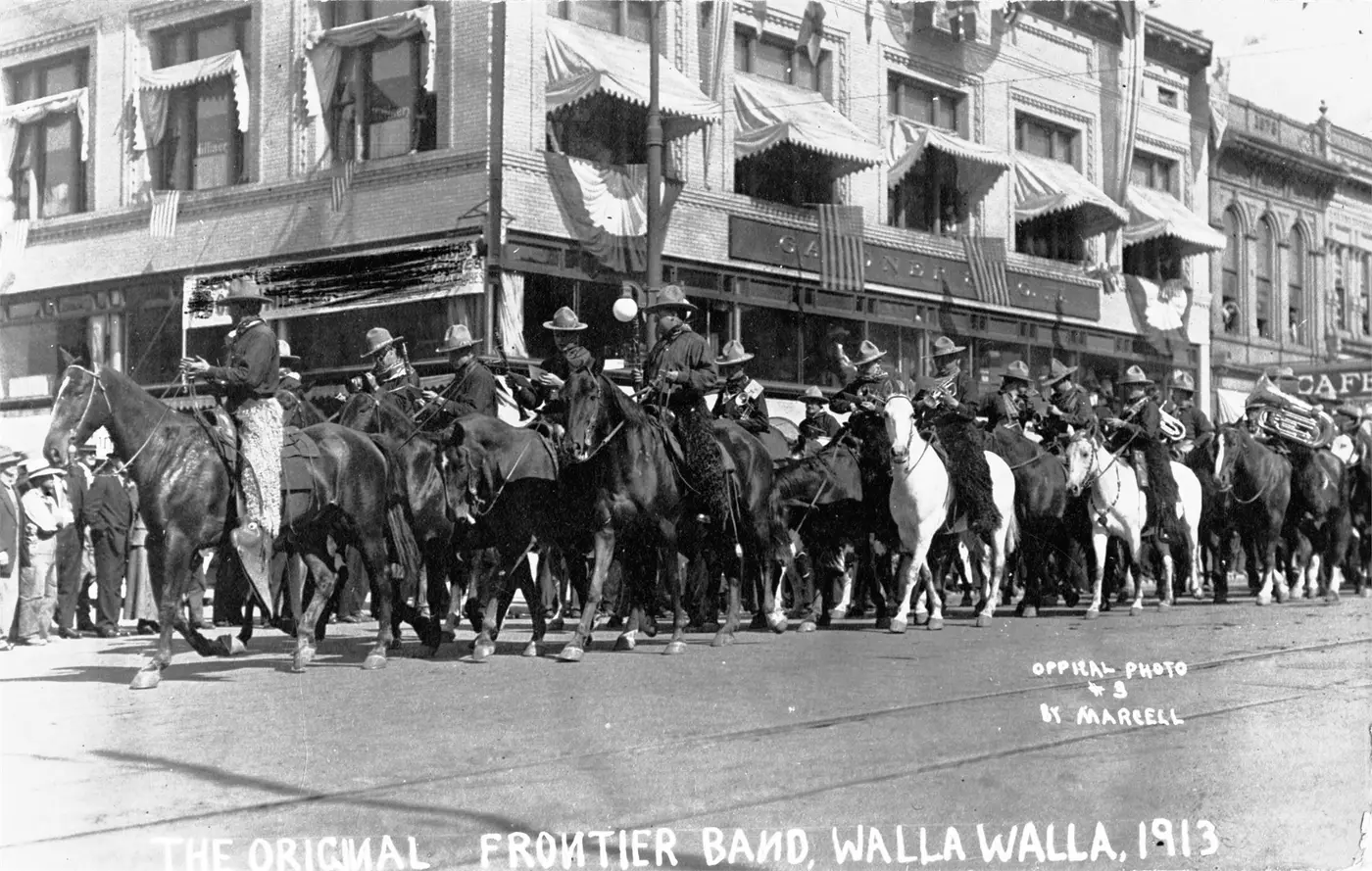
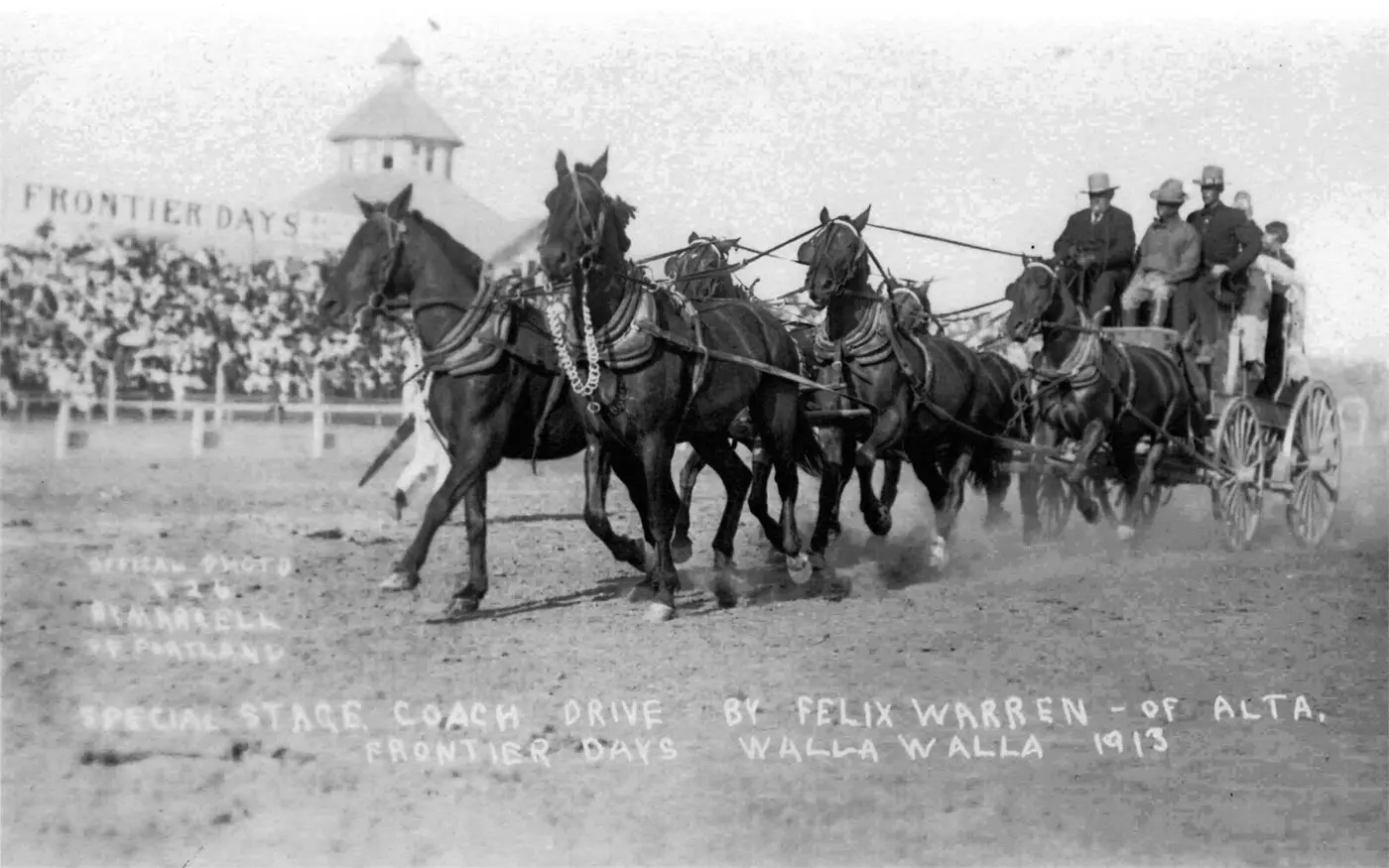
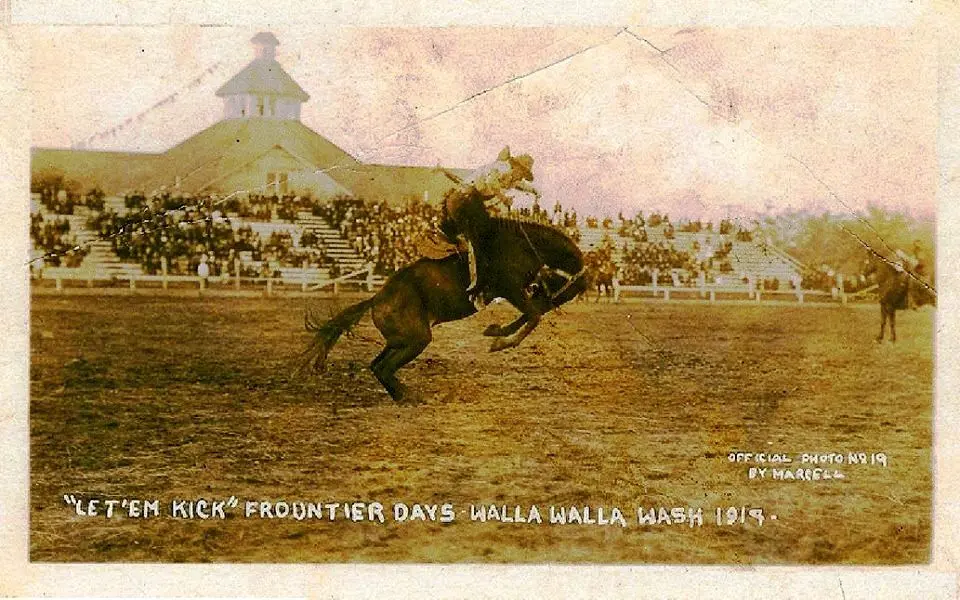
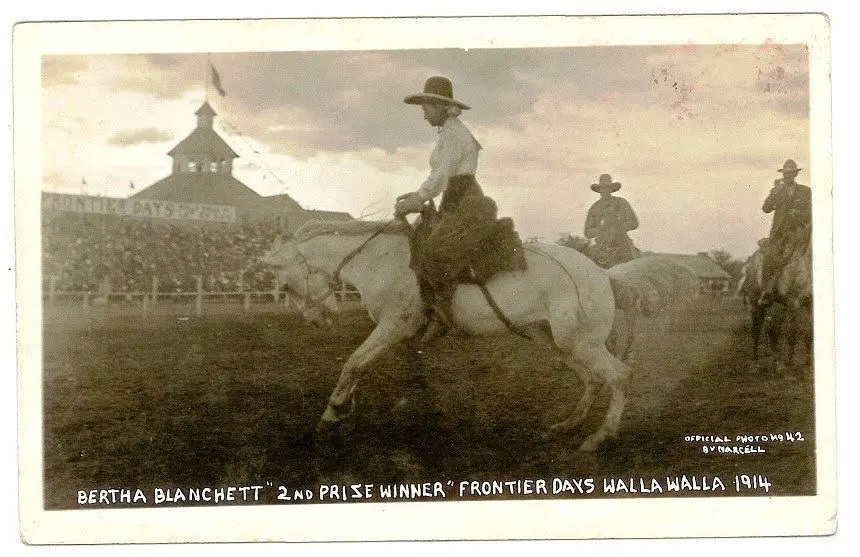
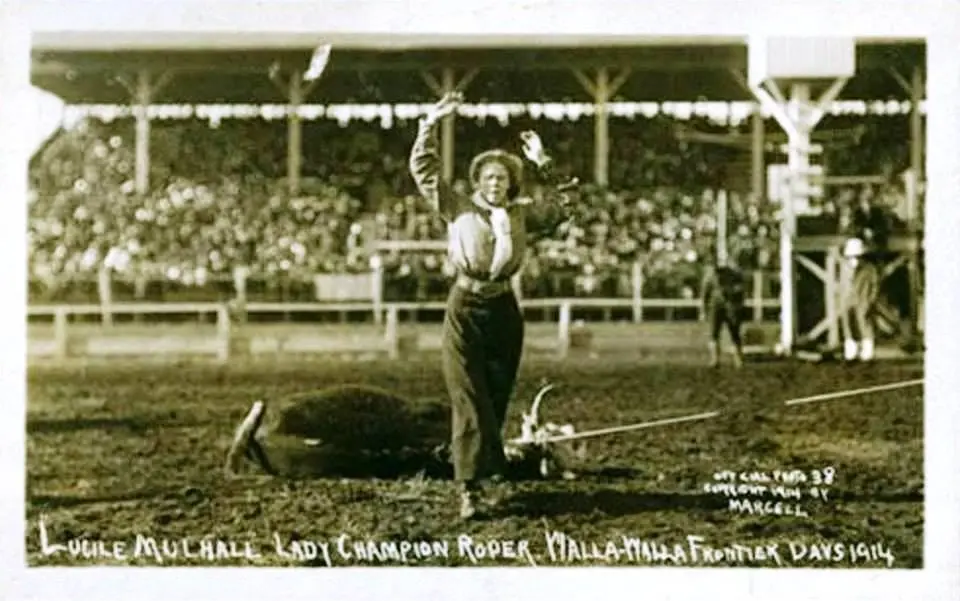
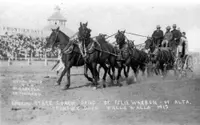
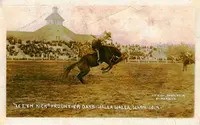
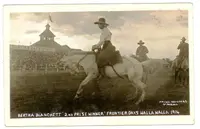
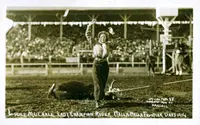
In 1913, the fair’s history says, management “decided to inaugurate a new order of business.” The result was Frontier Days, with bulldogging, relay races, bronc riding, stagecoach races, and cowboys and cowgirls from the valley. The fair keeps photographs from those first seasons: a stagecoach in the rodeo arena and the original Frontier Days band in 1913, and Bertha Blanchett and Lucile Mulhall, “Lady Champion Roper,” in 1914. It also remembers Ruth Parton Webster, called the “Mother of Thoroughbred Racing.” She began racing on the Yakima Reservation at thirteen and won the title of World’s Champion Woman Relay Racer riding six fast Canadian fillies. She retired in 1929.
Fair royalty began in 1935, with young women from across the region competing for the court. The House resolution notes the contest has run every year since except during World War II. In 1938 the fair staged its first completely lighted night rodeo and called it the “Greatest Night Rodeo on Earth.” The parade gained an annual marshal in 1939. Louie Armstrong, the Sons of the Pioneers, the Ink Spots, and the Mills Brothers had played the fair from time to time before 1974, when an annual concert of country headliners was added. In 1957 the Wagon Wheelers proposed the Exposition building, offering to raise the first $20,000 if the county added $40,000. Their own $3,500 was the largest single gift, and they supplied the arena panels and built the announcers’ stand. The Rodeo Legends award began in 2008 and the Fair Legends award in 2023.
For the sesquicentennial in 2016, the fair and Fort Walla Walla Museum produced a pictorial history with more than 400 images. Its chapters run from history and grounds through rodeo, tribes, stagecoach, riding clubs, royalty, and parade. Daryl Hopson was fair manager that year. Miriam Grant gathered a booth of anniversary memorabilia, including a special Pendleton blanket and a wine-barrel clock. On March 4, 2016, the Washington House of Representatives adopted Resolution 4679 honoring the fair as “a place ‘where memories are made to last a lifetime.’”
The royalty contest drew trouble a month after the 2026 fair. On October 1, 2026, the fair announced that the age requirement in the application packet had been changed “inappropriately without Fair management’s knowledge.” The limit should have stayed at under 22 as of the year of service, and the residence requirements had also been altered. As a result, the fair said, Ashley Woiblet was ineligible and would not serve. The fair said it was still working out a resolution “that is fair to Helen and Kallie Jo.”
Notable Events
- 1866Among the significant beginnings of the city's first two decades was the Walla Walla Agricultural Society's first fair in 1866. historylink.org
- 1906The historic pavilion was erected for a fruit exhibit and concert hall. wallawallafairgrounds.com
- 1907More space was needed for merchant displays, and the additional exhibition hall was built; it housed German prisoners of war during World War II. wallawallafairgrounds.com
- 1913The management inaugurated a new order of business and Frontier Days came into existence, with bull dogging, relay races, stagecoach races, cowboys, cowgirls and other local participants. wallawallafairgrounds.com
- 1923Walla Walla County purchased the present fairgrounds; after two years of the pageant How the West was Won, the Fair came back under sponsorship of the Walla Walla County Farm Bureau. wallawallafairgrounds.com
- 1935Fair Royalty was added and young ladies from the region competed; the tradition continues. wallawallafairgrounds.com
- 1938The first completely lighted night rodeo was held and coined the Greatest Night Rodeo on Earth. wallawallafairgrounds.com
- 1939As an acknowledgment of commitment to the Fair, the committee added an annual Parade Marshal to the Frontier Days parade. wallawallafairgrounds.com
- 1957The Walla Walla Wagon Wheelers proposed that they raise the first $20,000 for an Exposition building, with the County adding $40,000. wallawallafairgrounds.com
- 1970A fire destroyed the roof and cupola of the rotunda. wallawallafairgrounds.com
- 1974After entertainers such as Louie Armstrong, the Sons of the Pioneers, Ink Spots and Mills Brothers had performed sporadically, world-class country entertainment was added to the annual fair. wallawallafairgrounds.com
- 2006The pavilion underwent its first major renovation in many years for its centennial celebration. wallawallafairgrounds.com
- 2008The award began to honor the Cowboys and Cowgirls of the valley who competed in the Walla Walla Fair & Frontier Days arena. wallawallafairgrounds.com
- 2016Fort Walla Walla Museum assisted Walla Walla Frontier Days with a book celebrating 150 years of fair history in 2016. fwwm.org
- The exhibition hall housed German prisoners of war during World War II. wallawallafairgrounds.com
People
- Henry Osterman, architect of the 1906 Walla Walla Fair Pavilion (1892 - 1936).
- Daryl Hopson, fair manager.
- Orpha Oliver, 4-H Leader from the 1960s (over 50 years).
Sources
- wallawallafairgrounds.com/p/fair/info--faqs
- wallawallafairgrounds.com/p/about/history
- nbcrightnow.com/news/walla-walla-fair-and-frontier-days-celebrates-160-years/article_9f5da64f-c058-4d51-a33d-52c701e7a06c.html
- cdn.saffire.com/files.ashx?t=fg&rid=WSFA&f=WA_Fair_Dates_with_Contacts.pdf&cb=de1ce54b
- facebook.com/Walla-Walla-Fair-Frontier-Days-106091282744492
- fwwm.org/publications
- union-bulletin.com/local_columnists/etcetera/fair-celebrates-sesquicentennial-with-new-book/article_8757786e-6cb8-11e6-96c1-23f73392508f.html
- historylink.org/file/8486
- dahp.wa.gov/historic-preservation/research-and-technical-preservation-guidance/architect-biographies/bio-for-henry-osterman