Ullr Fest
Breckenridge, Summit County, Colorado. Annual celebration of winter and snow; December.
Details

- Where
- Breckenridge, Summit County, CO. No street address stated. Directions
- When
- December 17–19, 2026; full schedule forthcoming.
- Getting there
- Parade on Main Street from Wellington Road to W. Adams Avenue; ADA viewing near the stage across from Blue River Plaza.
- Fees
- Parade free to attend and participate.
- Hours
- Parade 4:00pm on Main Street.
- Access
- Main Street parking unavailable; Airport Road Parking Lot permanently closed.
- Walk-in or reserve
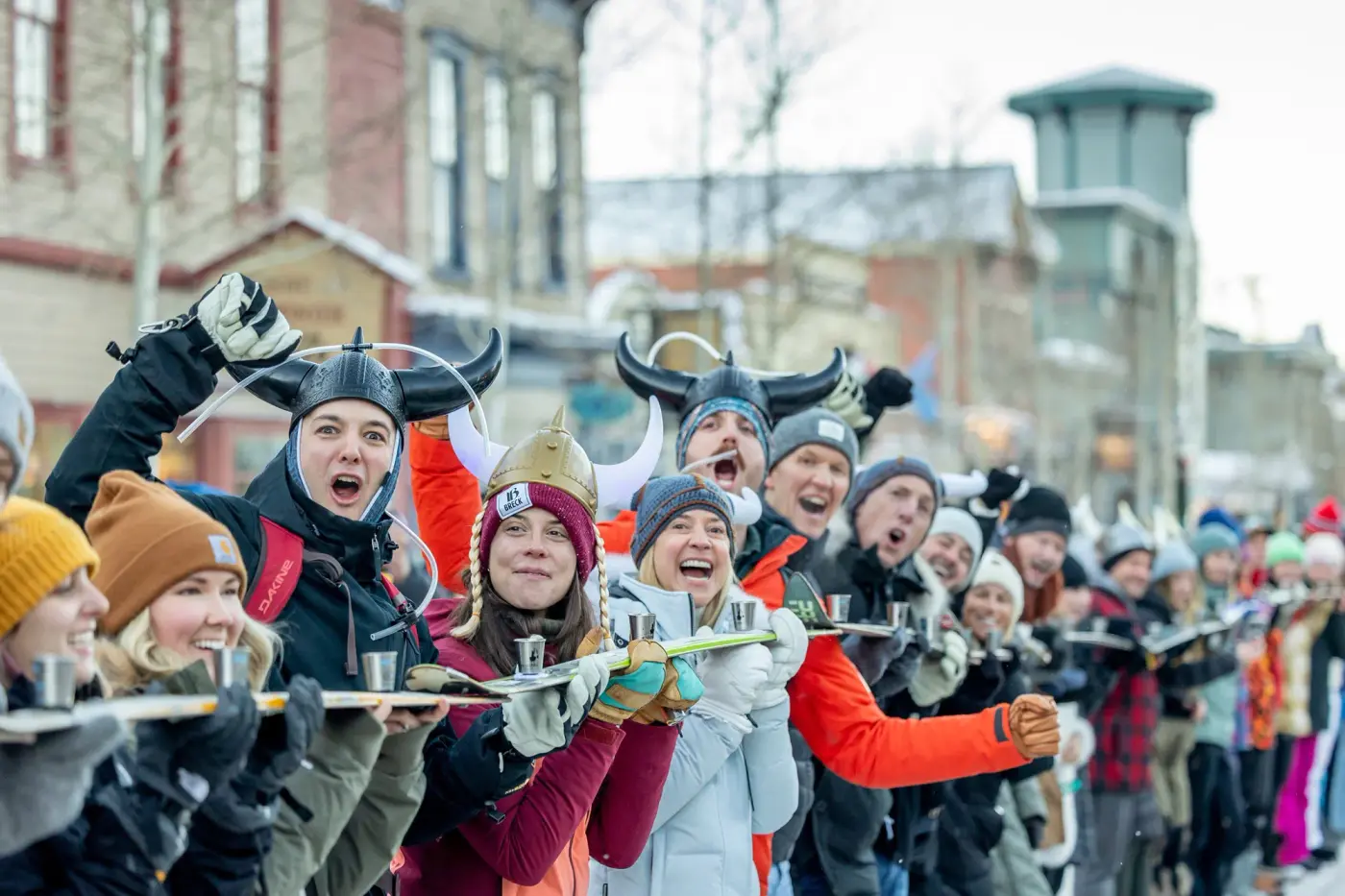
- Certain events such as Shotski require participants to be 21+ with valid ID.
- Phone
- 970.453.2913
- Website
- gobreck.com
- Managed by
- Town of Breckenridge Tourism Office (GoBreck).
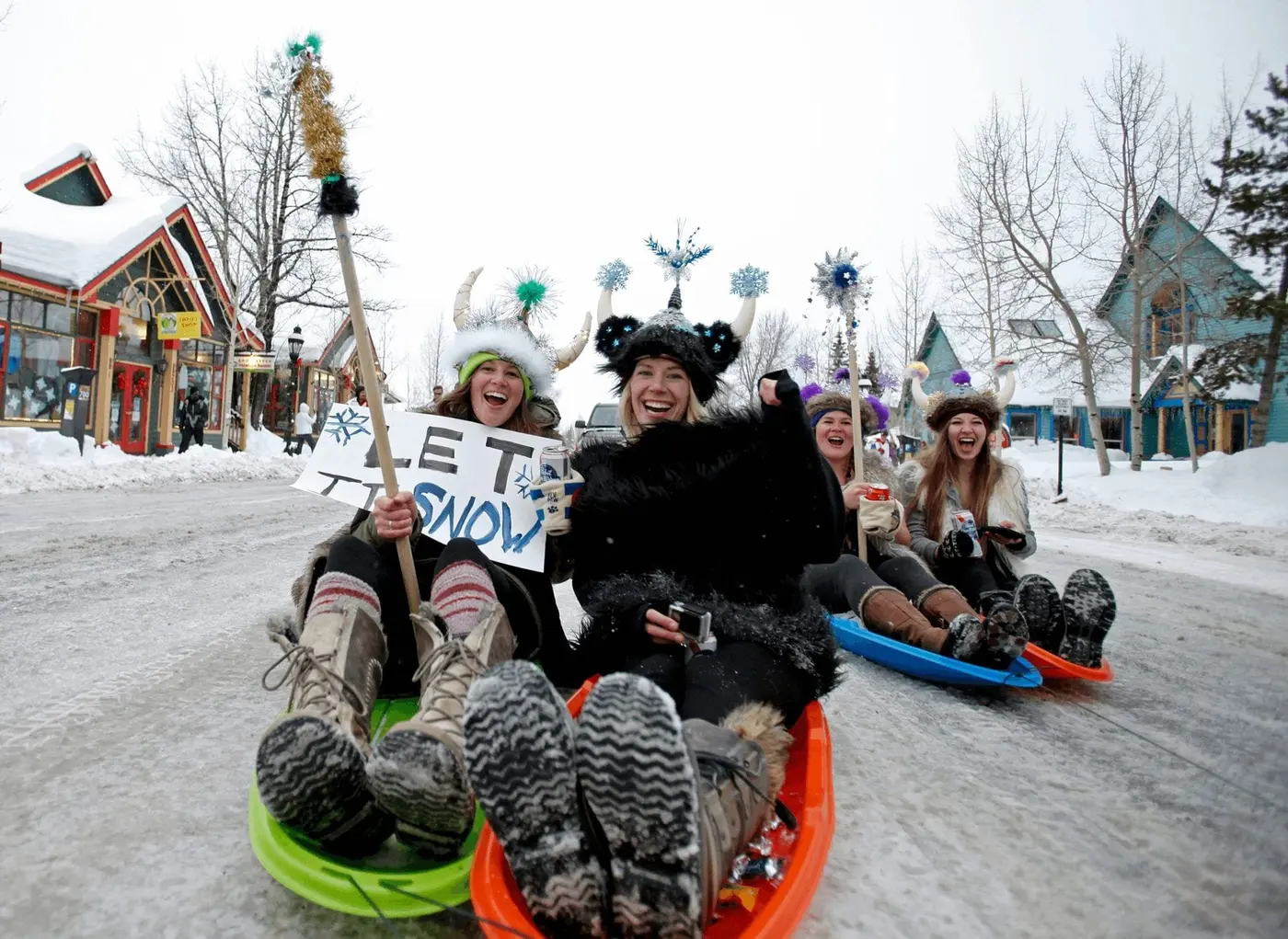
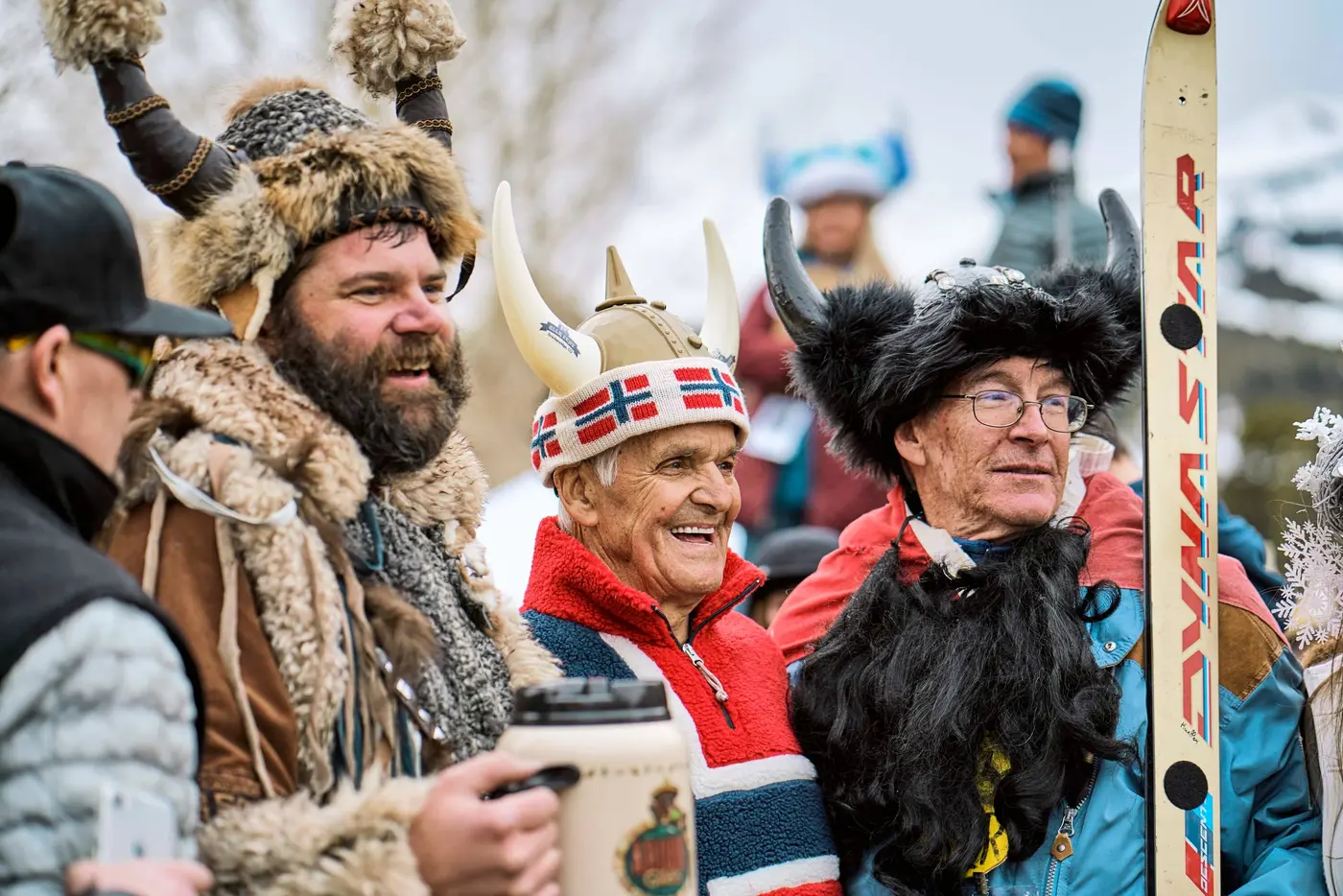
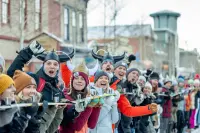
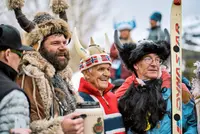
Ullr Fest is Breckenridge’s December festival for Ullr, the Norse god of snow. Locals and visitors gather to honor him in hope of a powder-filled ski season. The Town of Breckenridge Tourism Office runs it and tells people to bring their Viking helmets. The 2026 festival, December 17–19, is billed as the 63rd anniversary. The office says dates and times depend on the weather and may change, and as of early October it had not posted the full 2026 schedule. The program it has published puts most of the festival into one Thursday afternoon on Main Street.
A shotski, a parade, and a fire of Christmas trees
The afternoon of Thursday, December 17, opens at 3:00 p.m. at Blue River Plaza with the crowning of the Ullr King and Queen. The Ullr King and Queen Selection Committee chooses two local residents for their work in the community and their love of snow. Ullr royalty has historically been a couple, but the tourism office now says the two need not be connected. Residents may nominate individual kings and queens or “shake up traditional king/queen gender roles.”
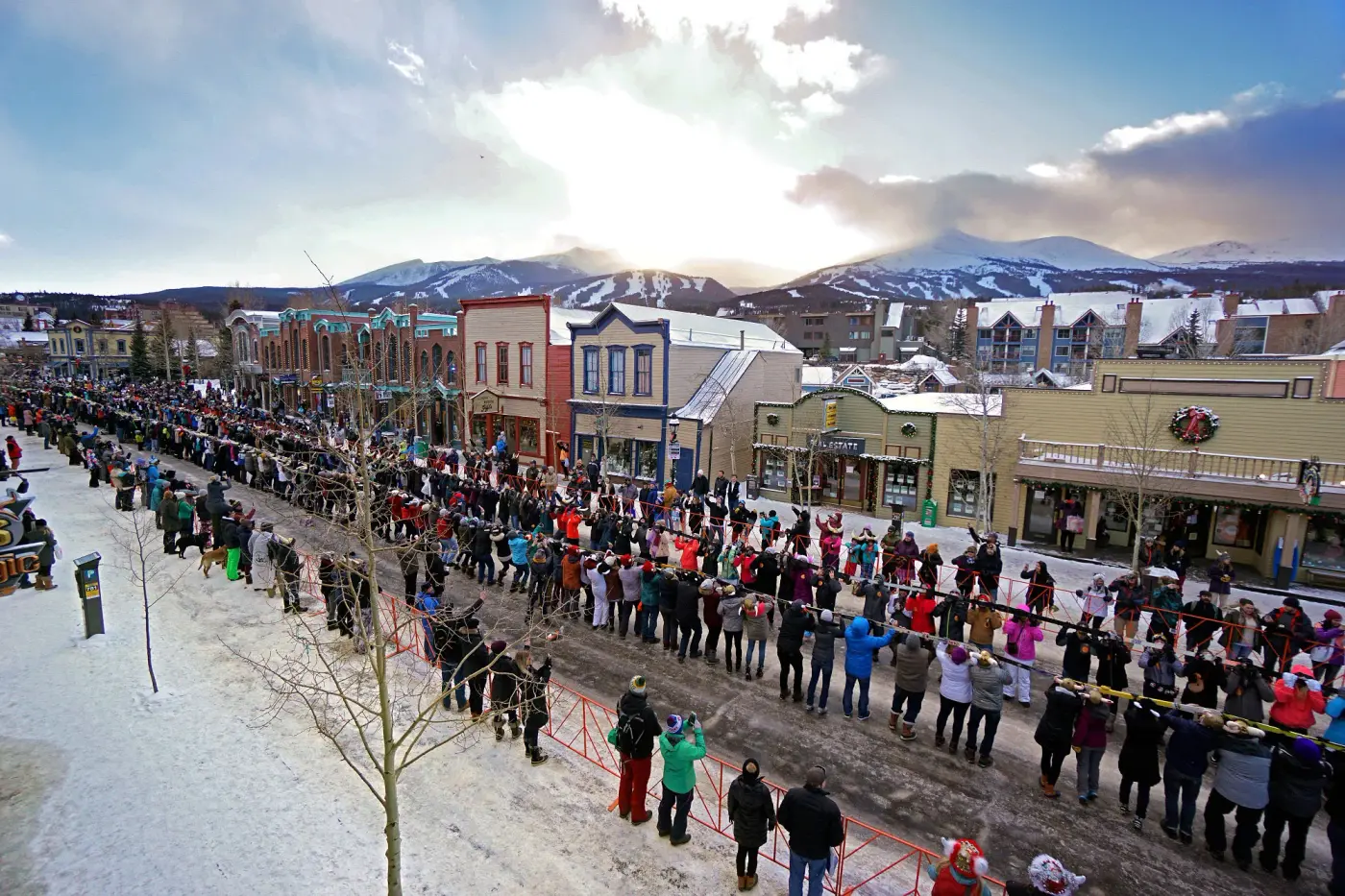
At 3:30 the shot starts on Main Street for the World’s Longest Shotski “unofficial” world record attempt. The Breckenridge Distillery and the Breckenridge Mountain Rotary run it. They are looking for 1,420 people, each 21 or older and paying $20, to beat a record the tourism office credits to Park City, Utah. All proceeds go to the Rotary.
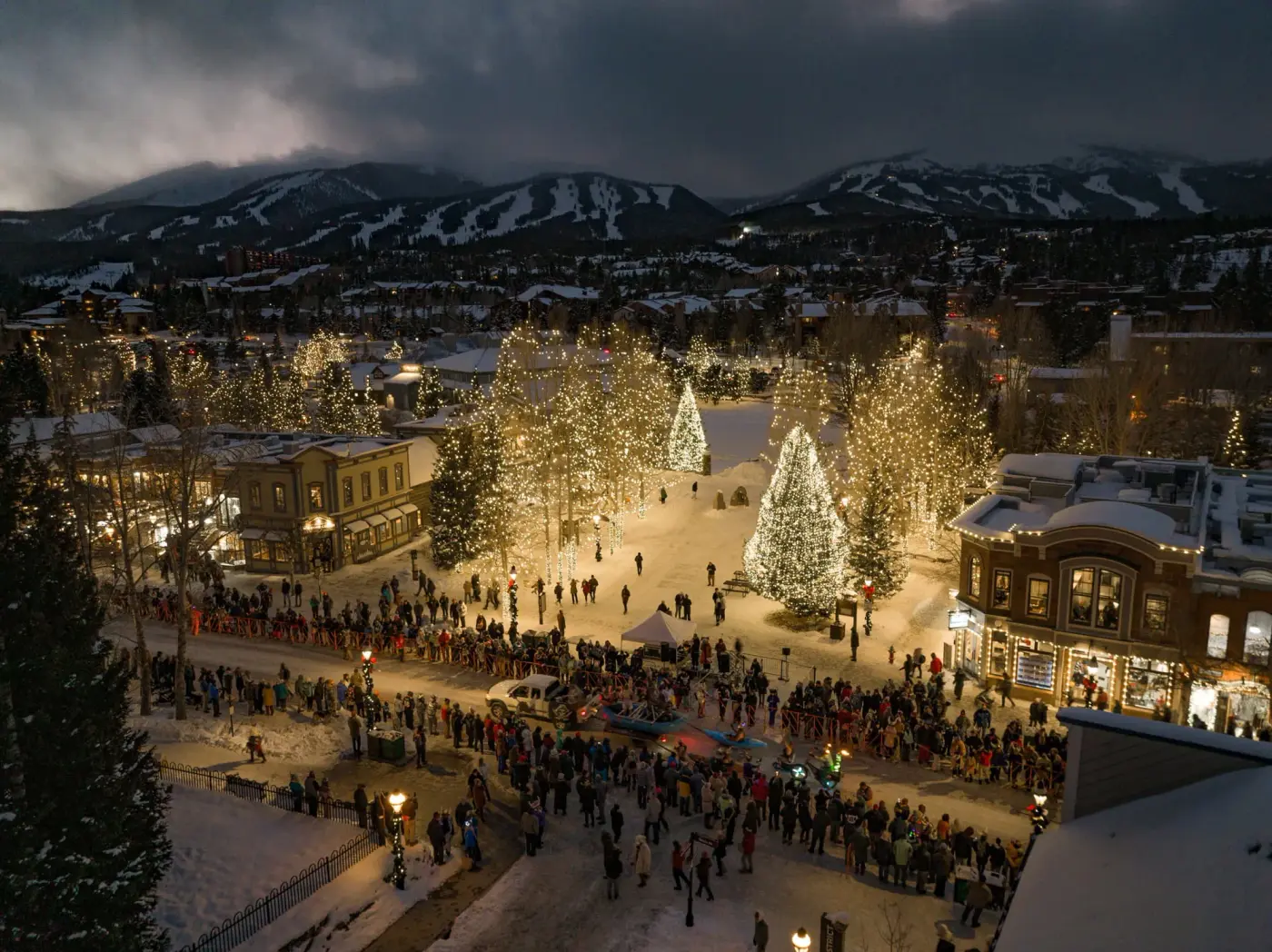
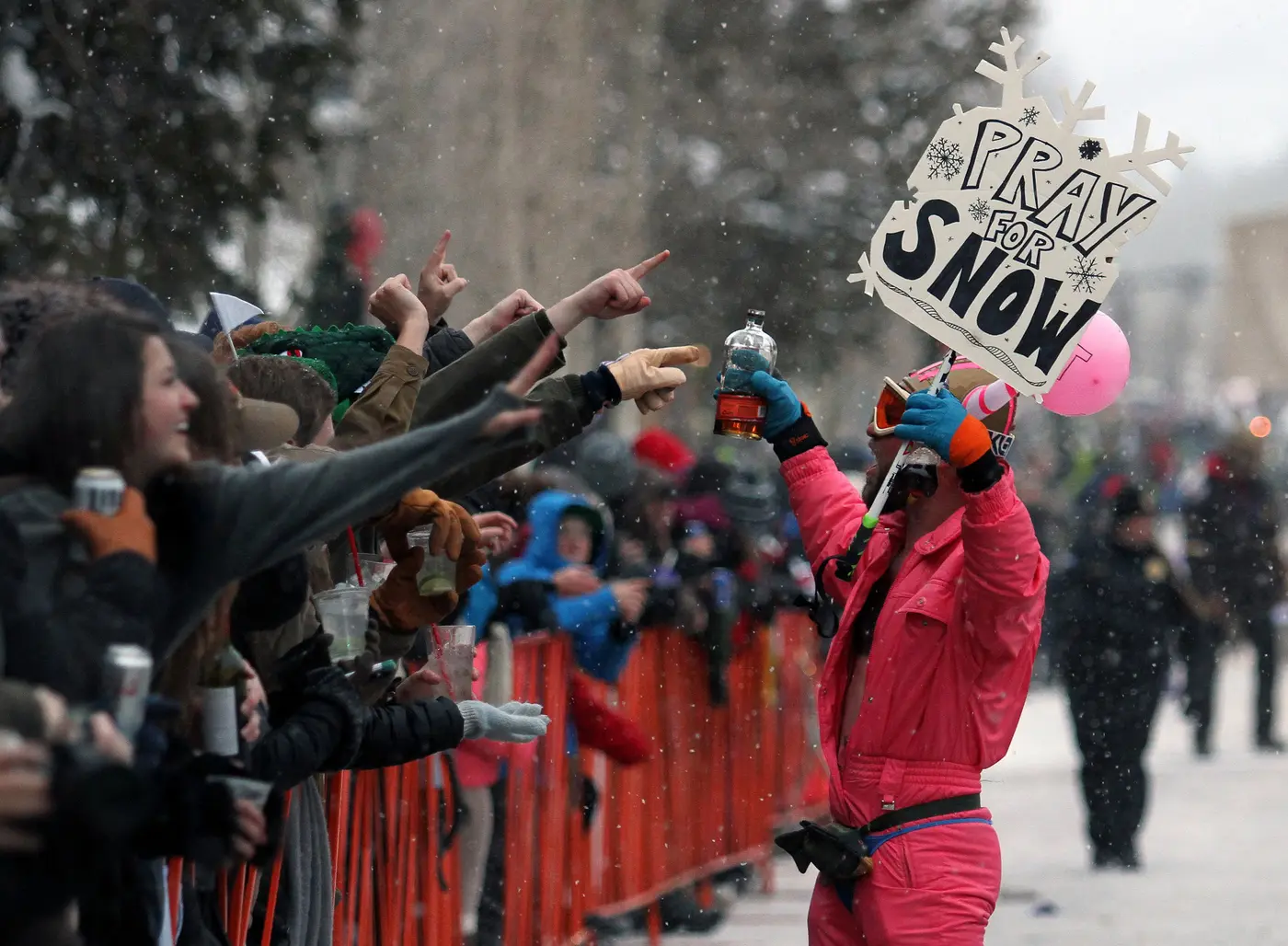
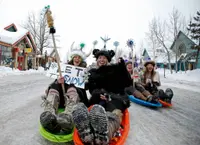
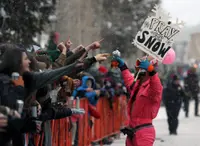
The Ullr Parade follows at 4:00. It runs down Main Street from Wellington Road to West Adams Avenue, where the floats turn and work their way out through the Tiger Dredge parking lot. Local entrants decorate the floats and compete for cash prizes of $2,000, $1,500, and $1,000. The judges score creativity, theme and fun factor, and workmanship. No one may throw anything from a float, so riders walk alongside and hand things out. An uncovered, barricaded viewing area for wheelchair users sits near the stage across from Blue River Plaza.
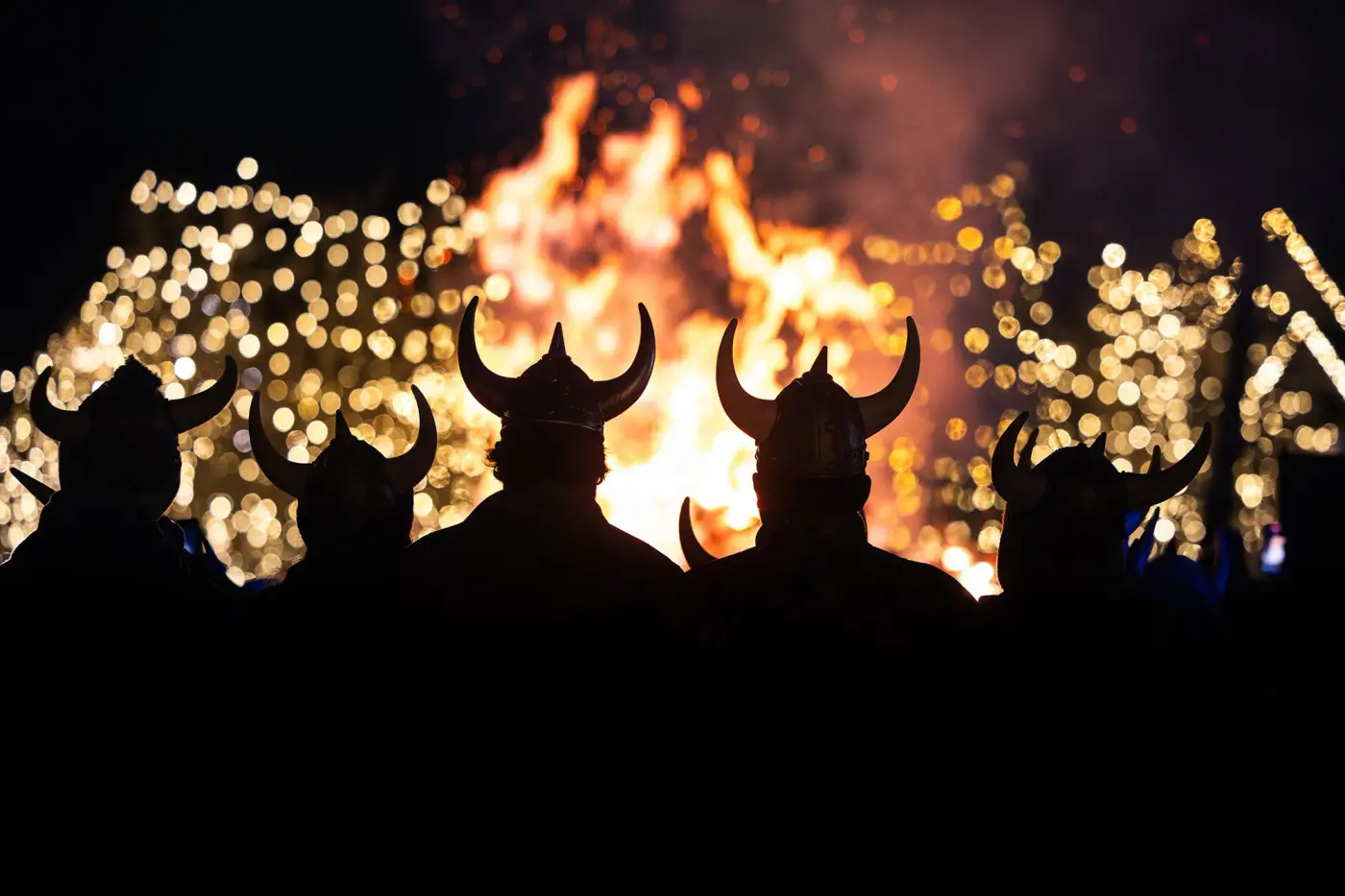
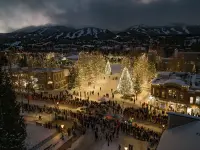
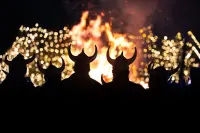
At 5:00 the crowd moves to the East Sawmill Parking Lot for the Ullr Bonfire, which lasts until 7:00. The town burns old Christmas trees from previous years, and people do snow dances to pray for powder. December highs in Breckenridge typically reach the mid-30s, and lows drop into the teens or single digits.
The rest of the festival belongs to the Rockstar Energy Open, a three-day snowboarding contest on a course designed by riders. It comes with live DJs, art installations, and a fan village under the town’s five peaks. On Friday evening the event moves downhill to Blue River Plaza for short films, giveaways, and two live musical performances, all free. On Saturday, Ice Skate with Ullr fills the Stephen C. West Ice Arena, with figure and hockey skates included in admission and skating aids for unsteady skaters.
The town’s history organization, Breckenridge History, keeps its own Ullr calendar. On Wednesday, December 17, 2025, it led its Ullr Eve walking tour through town for the third year running. The 90-minute tour covered “the debauchery that ended the first Ullr Dag festivals, the rebirth of Ullr, tales of bonfire mayhem, naughty floats from past Ullr Fests.”
Norwegians at the ski school
The festival grew out of a failing ski area. It opened for the 1961–62 season as the Peak 8 Ski Area. Lack of snow and an unfamiliar name left that first season with a significant financial loss, and many came to consider it a soft opening. For the second season the owners renamed the area after the town and hired professional publicity staff. Ski area founder Bill Rounds had recruited two Norwegians, Trygve Berge and Sigurd Rockne, from Stein Erickson’s ski school at Aspen Highlands to start the Breckenridge ski school. The owners wanted a big splash, and a winter carnival was the answer.
“It was definitely the Norwegians,” recalled Bob Atchison, the first public relations professional the ski area hired. Berge tells it this way: “I started it! With Sigurd and my sister from Norway, she was here visiting. A Swedish lady named Britta, too.” Britta Wolfram was Atchison’s secretary. Berge credits part of his inspiration to Winterskol, the Aspen carnival begun in 1951. His friend Bente Larsen Godal, another of the Norwegian instructors recruited to Breckenridge, had been crowned Winterskol queen in 1959. Rockne described how the idea spread: “everyone jumped on the idea, added to it and loved the whole idea. David Bruns came up with the Ullr coin idea. Someone came up with the idea of the bonfire to burn up Christmas trees.”
Little is known about the god himself. Professor Jackson Crawford of the University of Colorado notes that Ull appears only briefly in The Poetic Edda. Ullr is the possessive form of the name. Ull is best known across Northern Europe for the places named in his honor. In Voss, Norway, the home town of Rockne and Berge, a well-known farm is called Ullestad, Ullr’s Place. Among skiers who brought European ski culture to the United States in the late 1950s, Ullr talismans were everywhere: zipper pulls, belt buckles, pins, and patches. Trygve and Marilyn Berge sold Ullr zipper pulls at their Norway Haus Ski Shop on Lincoln Avenue.
The tourism office tells a fuller legend. In its version Ullr was so skilled with the bow and so fast on skis that no one could best him, and each winter he covered the earth with snow to protect it from harm. It is said he streaked across the sky on his skis and left the stars as his trails, and that he refused to show the other gods how to ski.
The Kingdom of Breckenridge
While the Norwegians supplied the god, Chamber of Commerce members built the framework, and an older town party gave them the idea. In 1936 the Women’s Club of Breckenridge claimed to have found an 1880 map that left out Breckenridge. They concluded that no treaty or purchase had ever made the land around the town part of the United States. The ladies invited Governor Ed Johnson to raise the flag and formally unite this No Man’s Land with the nation. Colorado State Historian Leroy Hafen showed that the Florida Treaty of 1819 had settled the matter. He was widely ignored, and the town kept partying to No Man’s Land for decades.
The Ullr organizers turned the story around. Breckenridge had never joined the United States, they claimed, and so it remained a sovereign kingdom, entitled to mint its own money, crown its own rulers, and require a visa to enter. To announce the idea, a group of “bearded men,” who said they were followers of Ullr, burst into a Town Council meeting. The local paper quoted their protest under the headline “Council Meeting in Turmoil”: “Breckenridge was a free, sovereign and independent kingdom… Then in 1936 you found this out and messed things up… It was wrong then, and it’s wrong now.”
Followers of Ullr then ski joring behind a truck all the way to the State Capitol in Denver. Exhausted, they invited Governor John Love to become King John I, the first king of the Kingdom of Breckenridge. He accepted. His law firm sent the town council a “legal opinion” that the 1936 reunion was invalid, since there was “no historical precedent for a bunch of women… attempting to do it to the exclusion of men.” The talk of secession drew enough notice that U.S. Attorney General Robert Kennedy inquired about sending help.
The coins drew the most notice. Someone reported Breckenridge to the U.S. Treasury Department, which demanded that the organizers stop minting coins for circulation. “We minted coins which was against the law,” Atchison said. Robert Theobald, attorney for the event, pointed out that many places issued such souvenir coins and “there had been no holler at all.” Treasury admitted the law was rarely enforced but said “Some person is pressing this matter very hard.” Theobald answered: “somebody’s trying to make trouble for us.” The coins were collected and stamped “souvenir.” One Breckenridge History account says they were also stamped “not.” Coins that escaped the stamp are collector’s items today. No one knows who filed the complaint. Local rumor blames a nearby ski resort that happened to plan its grand opening for the same weekend as the first Ullr Dag. If the rumor is true, the complaint backfired and brought Breckenridge more attention.
March 22, 1963
Visitors to the first Ullr Dag (Ull’s Day) bought a visa for twenty-five cents at one of two points of entry, north and south Main Street on Colorado State Highway 9. Park Avenue did not yet exist. Shriner clowns sold the visas and managed the cars, which they parked in a zigzag that blocked traffic completely. One car stood placed like a keystone. “If that one car could move, the whole thing would release,” remembered Debbie Cope Lee and Sheila Cope Sargent, whose father was one of the clowns.
A Minnesota tourist bound for Aspen, Robert Giles, bought one visa coming in. He then realized he was on the wrong route and had to buy a second on the way out. He wrote to the Denver Post that “it was an extremely poor form of advertising…and reflected negatively on the state in general.” The visa requirement lasted as long as Ullr Dag did. Anyone without a visa, or without a costume, went to the “hoosegow,” a loose form of jail in one of the local bars.
Businesses decorated their storefronts, and the first snow-sculpturing contest went up around town. A Viking ship built of snow stood at the door of the Cope family’s drug store, now Skinny Winter gifts. “You had to walk through the ship to get into the store,” the sisters recalled.
The festival opened on the evening of Friday, March 22, 1963, with fireworks from the top of Peak 8 and a torchlight parade down the ski runs. At 7:45 p.m. attention moved to Main Street for the first Ullr Dag parade. Long-timers remember it as a rinky-dink affair with a few floats, and no photographs of it are known. On Saturday, opening ceremonies at the Court House on Lincoln Avenue were followed by silly ski races. At lunch Berge did his forward flip on skis at the Bergenhof. The torchlight parade came down the runs again at dusk, and the night ended with the Royal Ball and the coronation of Governor Love and his wife, Ann, as King and Queen of Breckenridge. On Sunday the Breckenridge Volunteer Fire Department put on dog sled races and ski joring on French Street, events from the town’s first Winter Carnival held the year before.
The tourism office’s account of the first festival differs in places. It describes booths at each end of Main Street selling Ullr coins good for discounts in town shops, and a bonfire after the parade. It also says four jets flew 500 feet above Main Street to start the parade. Breckenridge History places supersonic jets over the parade in 1966.
“Such a wild and hysterical time,” Kay McGinnis recalled for the Breckenridge Oral History Project. “The most wild few days,” said Atchison. “Craziness,” said the Cope sisters. “It was so much fun.”
Napkin holders stomped flat
The festival grew each year. The parade moved to daylight hours. A beard contest arrived in 1964 and Ski-Doo races in 1965. In 1966 the Koshare Indian Dancers performed. Governor Love returned as King John I several times, and Larry Raff played Ullr year after year. By the fifth festival in 1967, the Prime Minister of the Festival, realtor Earl Tatum, told the Chamber: “We probably have the biggest Winter Festival in Colorado.” Frank Brown Jr., editor and publisher of the Summit County Journal, called it a “symbol of identification which made snow here on that weekend different from the snow of any other place.”
The same issue of Brown’s paper carried story after story about the damage. Students from Western State College in Gunnison had caused trouble in 1966 and came back in force. They wrecked the Hoosier Pass Bar, the county’s only 3.2 beer joint. They tore a booth off the wall, smashed four windows, and pulled down half the partition between the restrooms, and “some napkin holders were stomped flat.”
At least sixty people were arrested or cited that weekend, in a town of well under 1,000. Sheriff Chuck Clark said the teens told him they thought “there was no law and no jail during UllrDag.” The papers called them “creepies.” Marching bands had to “wind themselves through the snail of cars” on a parade route that was supposed to be closed. Restaurants shut their doors because so many diners left without paying. The Rocky Mountain News ran “Teenage Vandals Tear Up Breckenridge.” Clark held his ground: “Sure we had some problems, but the amount of drinking percentage-wise in a crowd of that size was normal.” The bad press came on top of earlier reports of frozen water lines, untreated sewage, and a deadly explosion at the UllrHolm building the year before.
A month later Chamber director and District Attorney Jack Healy tabled a motion to sponsor the festival in 1968. In August 1967 the Chamber dropped it. The Summit County Journal ran the headline in 30-point type: ULLR DAG ABANDONED. Breckenridge History holds that the deeper cause was fatigue. The same volunteers had put on the festival every year while others “sat on their duffs,” and the 1967 event lost the Chamber $1,000 despite the crowds. Brown wrote that “the Ullr Dag Festival requires only a eulogy for final proper burial.”
More than a decade passed before the town invited Ullr back. The festival that returned gathered its own customs: the Ullr Ball, the Ullympics, the Ullr Dating Game, and old skis thrown on the bonfire. Its snow sculpting grew into a separate event, the International Snow Sculpture Championships. The pandemic canceled UllrFest 2020. Dick Jagoda, the artist who drew the original Ullr Dag logo, also gave the festival the horned hat, which Breckenridge History says carries forward to today’s Ullr Fest.
Notable Events
- 1963The first Ullr Dag concluded with the official Royal Ball and coronation of Governor John Love and his wife Ann as the King and Queen of Breckenridge. breckhistory.org
- 1963Ullr Dag kicked off on the evening of Friday, March 22, 1963, with fireworks from the top of Peak 8, followed by a torchlight parade down the ski runs. Attention shifted to Main Street at 7:45 p.m. for the first ever Ullr Dag parade. breckhistory.org
- 1963The people of town proclaimed Breckenridge as a sovereign nation and celebrated Ullr Dag as a tongue-in-cheek attempt to secede from the United States and establish the Kingdom of Breckenridge. breckhistory.org
- 1964The 1964 Ullr Dag introduced a beard contest. breckhistory.org
- 1965In 1965, Ski-Doo races were added. breckhistory.org
- 1966In 1966, super-sonic jets swooped over to start the parade and the Koshare Indian Dancers performed. breckhistory.org
- 1967At least sixty people were arrested or cited in Breckenridge that weekend, a significant per capita rate for a community with a population well under 1,000. breckhistory.org
- 1967In August 1967 the Chamber found it had no stomach for the event; the Summit County Journal screamed ULLR DAG ABANDONED in 30-point type. breckhistory.org
- 2020The pandemic canceled UllrFest 2020, but it was not the first hiatus in the festival's history. breckhistory.org
People
- Bob Atchison, the first public relations professional hired by the Breckenridge Ski Area.
- Debbie Cope Lee, daughter of one of the Shriner Clowns who sold visas and managed traffic; recalled the first Ullr Dag.
- Kay McGinnis, long-timer recalling the first Ullr Dag in the Breckenridge Oral History Project.
- Larry Raff, portrayed Ullr consistently throughout the Ullr Dag years.
- Sheila Cope Sargent, daughter of one of the Shriner Clowns; recalled the first Ullr Dag with her sister.
- Bente Larsen Godal, one of the Norwegian ski instructors recruited to the new Breckenridge; crowned Winterskol queen in 1959 (1959).
- Bill Rounds, founder of the Breckenridge Ski Area who recruited the Norwegian founders of Ullr Dag.
- David Bruns, came up with the Ullr coin idea.
- Dick Jagoda, artist behind the original Ullr logo and the horned hat carried forward to today's Ullr Fest.
- John Love, governor invited to become King John I, the first King of the Kingdom of Breckenridge; accepted.
- Sigurd Rockne, long-time resident; one of the founders of Ullr Dag.
- Chuck Clark, county sheriff during the UllrDag era.
- Earl Tatum, Prime Minister of the Festival; realtor (1967).
- Frank Brown Jr., town booster; editor and publisher of the Summit County Journal.
- Jack Healy, Chamber director and District Attorney who tabled the vote to sponsor UllrDag again in 1968.
- Robert Theobald, attorney for the event in the U.S. Treasury coin dispute.
Sources
- gobreck.com/event/ullr-fest
- breckpark.com/skier-parking
- facebook.com/GoBreck
- instagram.com/gobreck
- breckhistory.org/ullr-fest-through-the-ages
- breckhistory.org/breckenridge-co-the-origins-of-ullr
- breckhistory.org/breckenridge-co-the-first-ullr-dag-festival
- breckhistory.org/the-last-of-ullrdag
- summitdaily.com/news/the-kingdom-of-breckenridge-and-its-1st-ullr-dag-festival