Tucson Rodeo (La Fiesta de los Vaqueros)
Tucson, Pima County, Arizona. Professional rodeo.
Details

- Where
- 4823 S. 6th Ave, Tucson, AZ 85714. Directions
- When
- Feb 20-28, 2027, tickets on sale October 1st.
- Fees
- Ticket classes Ultimate VIP, Vaquero Club and six-seat Gold Buckle boxes; no dollar prices posted.
- Hours
- Open: 10:00am - 8:00pm.
- Access
- Service animals only; all non-rodeo animals prohibited from the grounds. Clear bag policy enforced at four public entrances.
- Walk-in or reserve
- Tickets purchased online in advance; all sales final, no refunds or exchanges.
- Phone
- (520) 741-2233
- Established
- 1925.
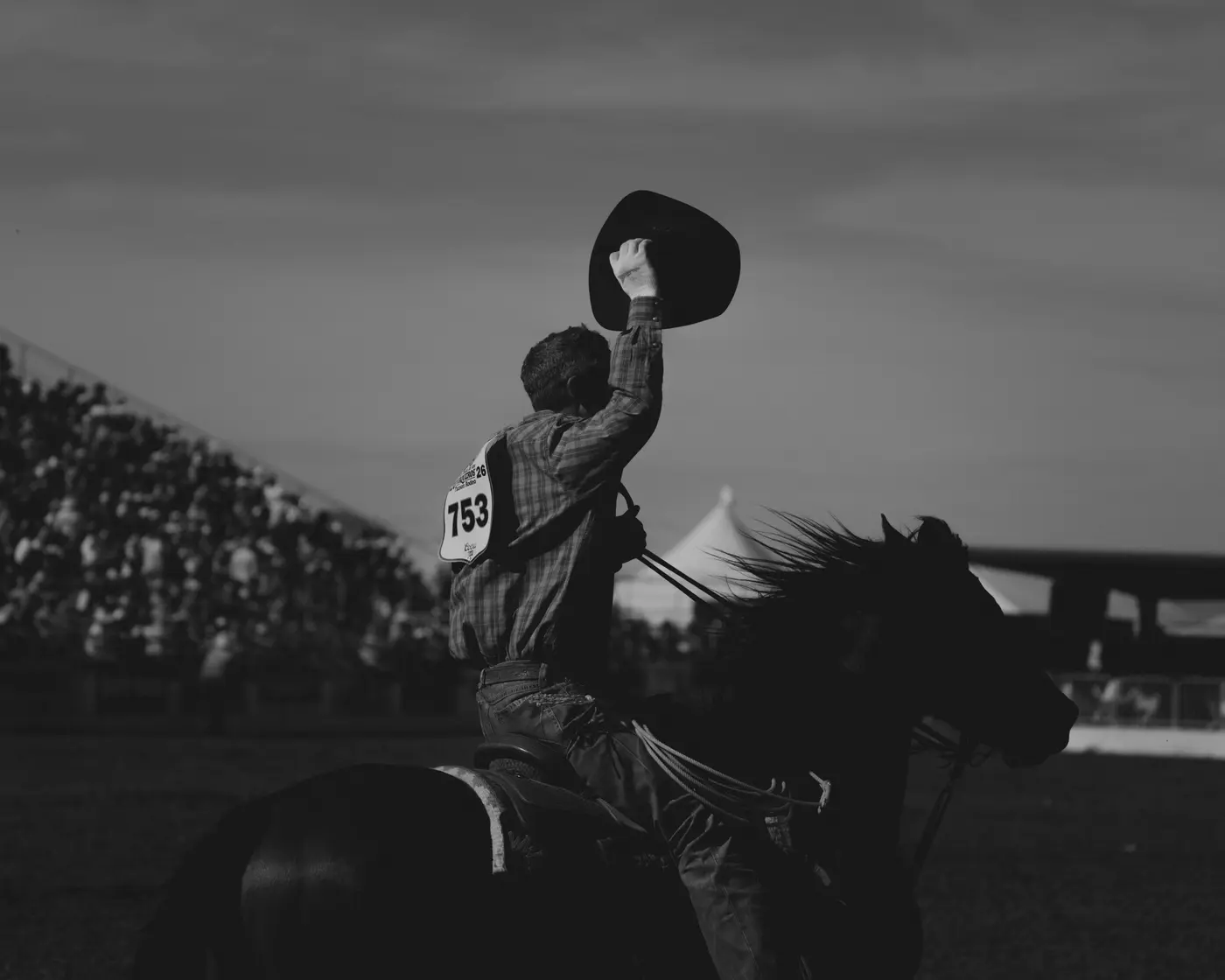
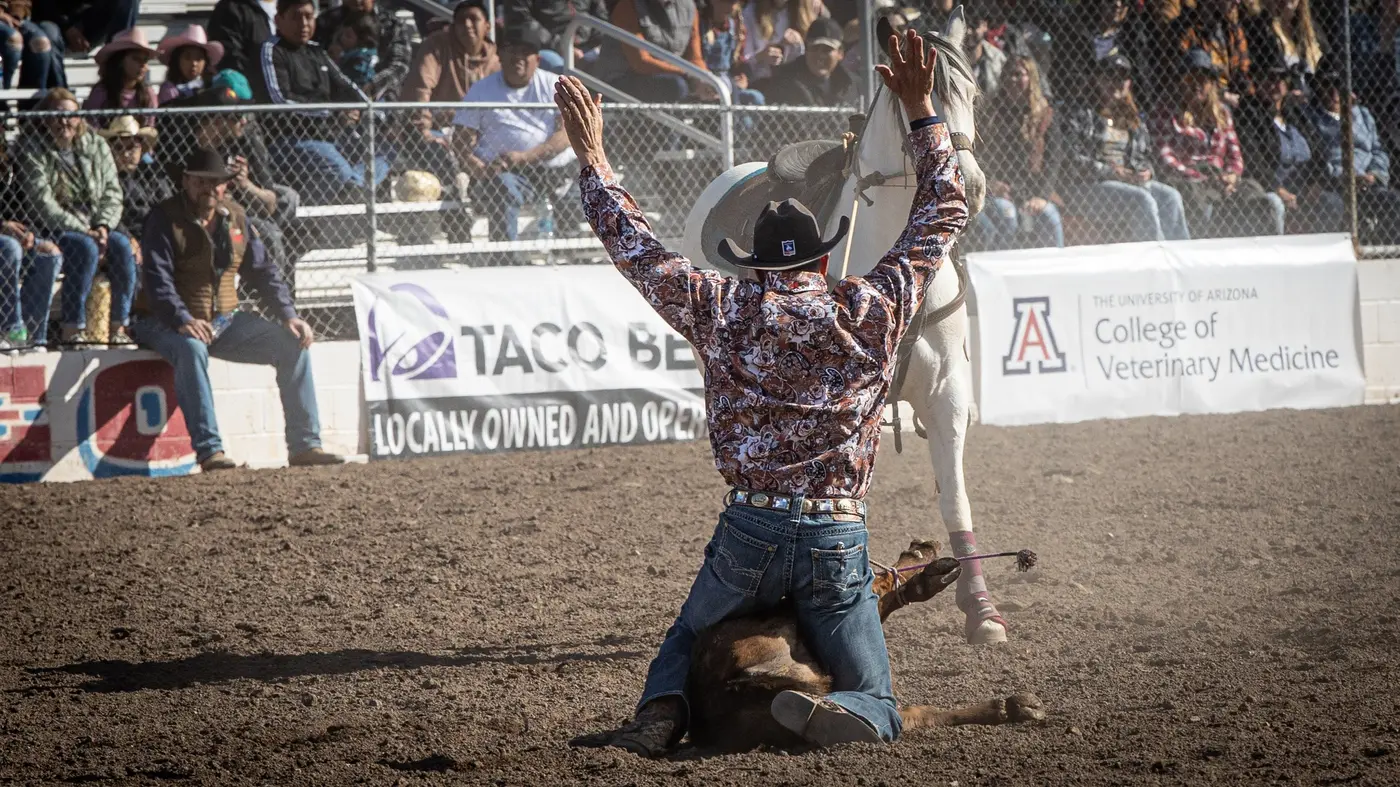
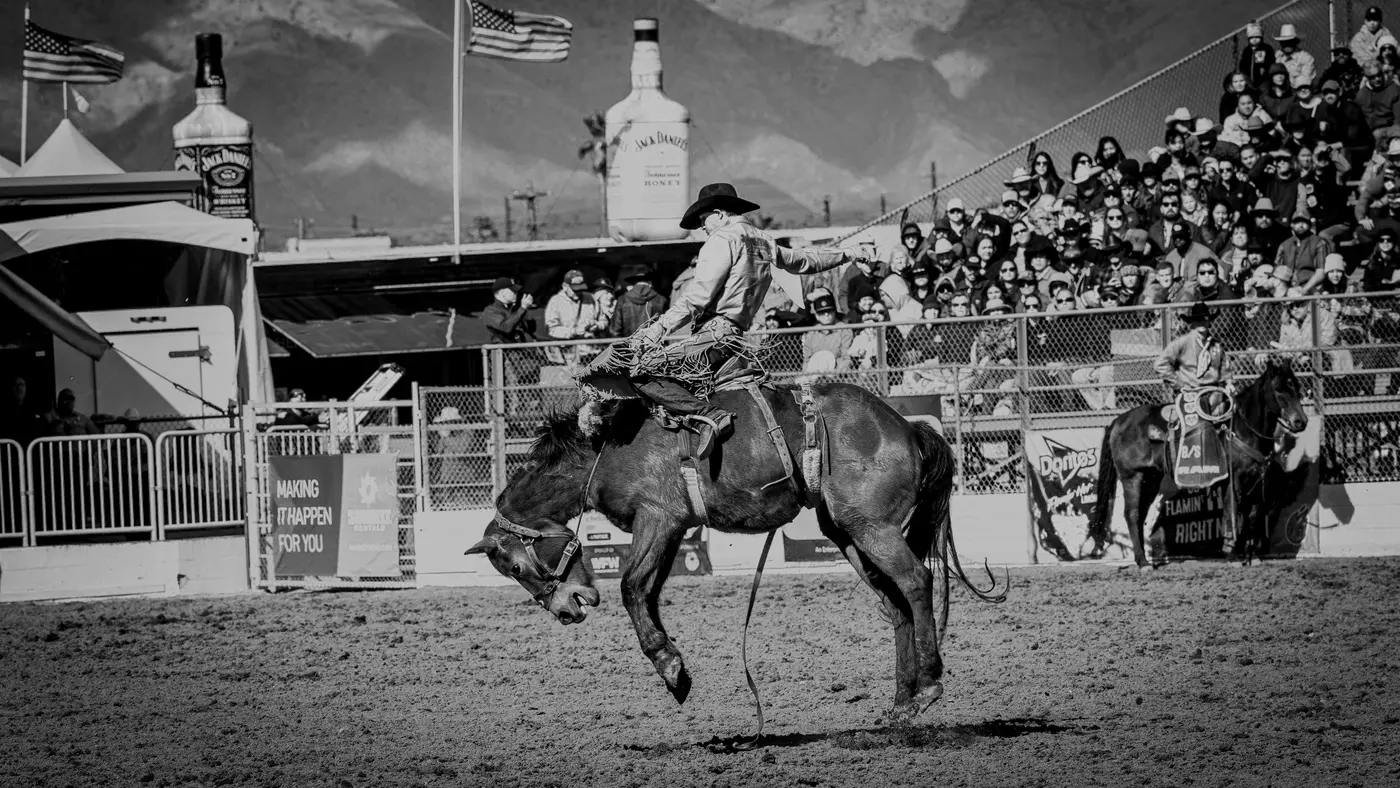
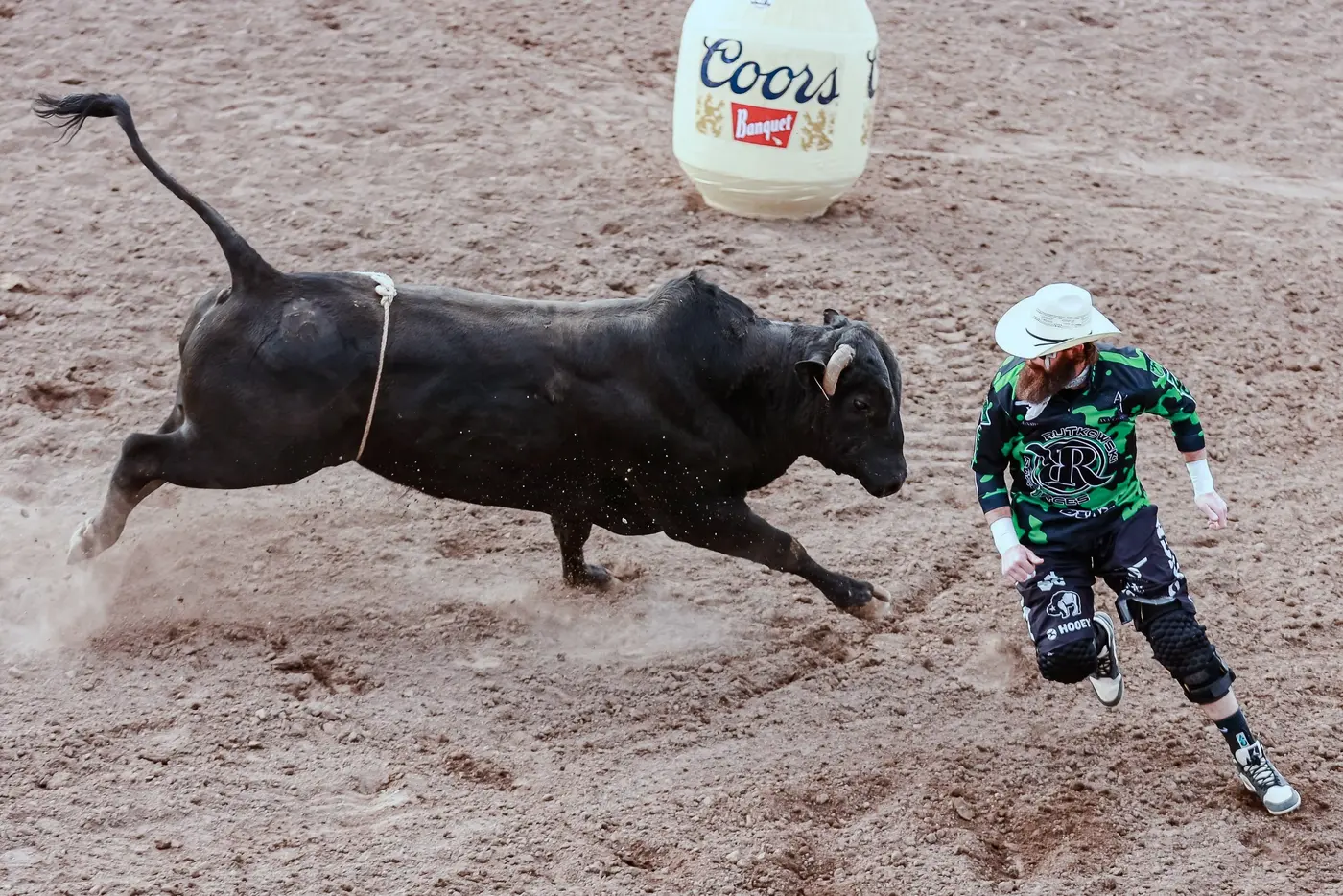
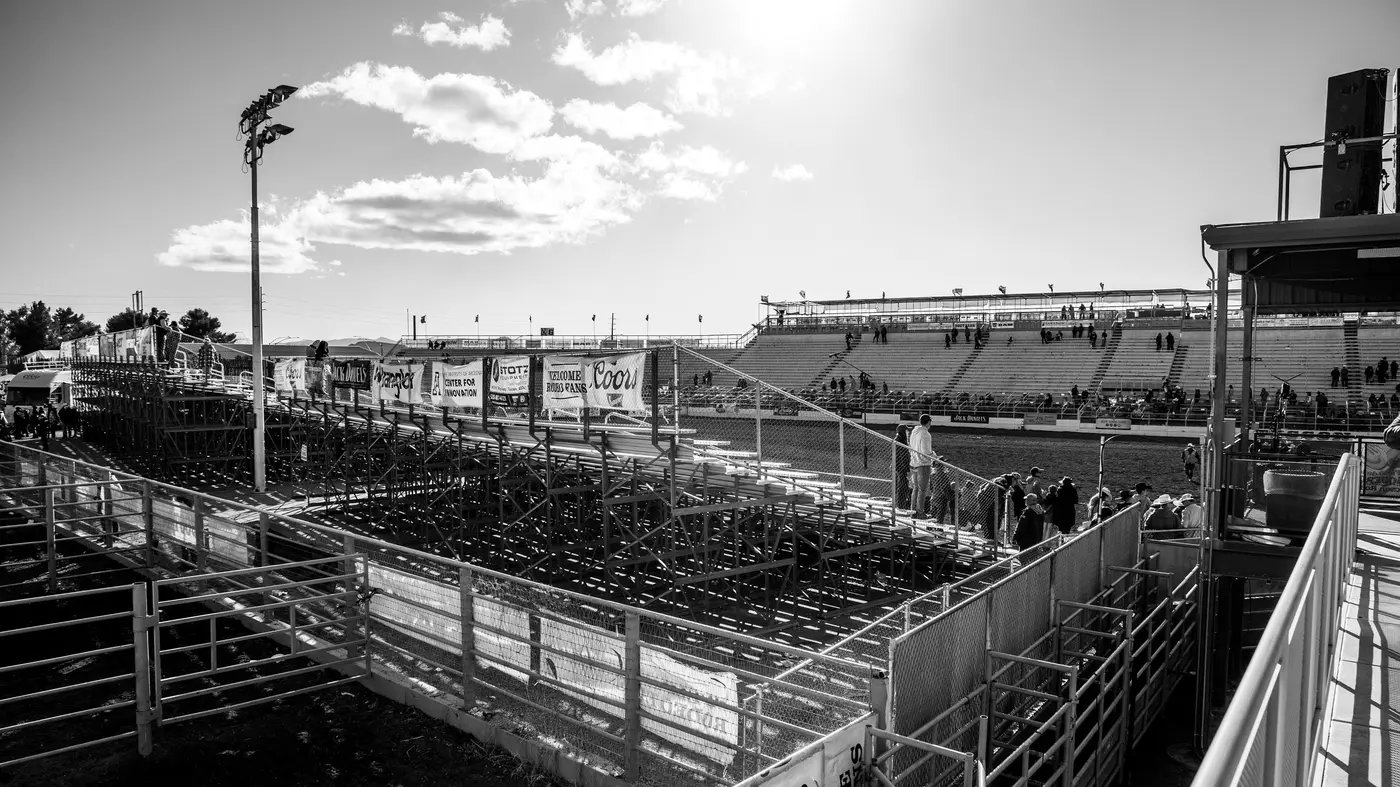
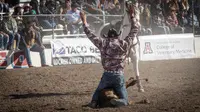
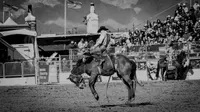
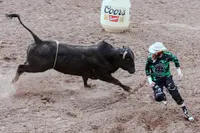
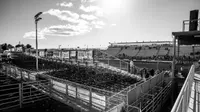
The arena at South Sixth Avenue and Irvington Road seats 11,000. The places above the bucking chutes are sold as Ultimate VIP tickets, limited to the first twenty seats, with a catered meal and a private hosted bar. The rest of the crowd watches from the stands in the last week of February: bareback riding, saddle bronc riding, bull riding, steer wrestling, tie-down roping, team roping and women’s barrel racing, all under Professional Rodeo Cowboys Association rules. The nonprofit Tucson Rodeo Committee plans the event, as it has every February since 1925. Its full name is La Fiesta de los Vaqueros, the Celebration of the Cowboys.
Six days at Sixth and Irvington
The rodeo runs six days of performances, rain or shine, and no ticket is refunded for weather. Before the performances come the slack days, given to overflow entries and qualifier runs. On one of them, Tuesday, February 18, 2025, AZPM News recorded team roping for an audio postcard of the grounds. The Pima County Public Library describes a field of professional cowboys from the United States and Canada. AZPM adds competitors from Australia and Brazil.
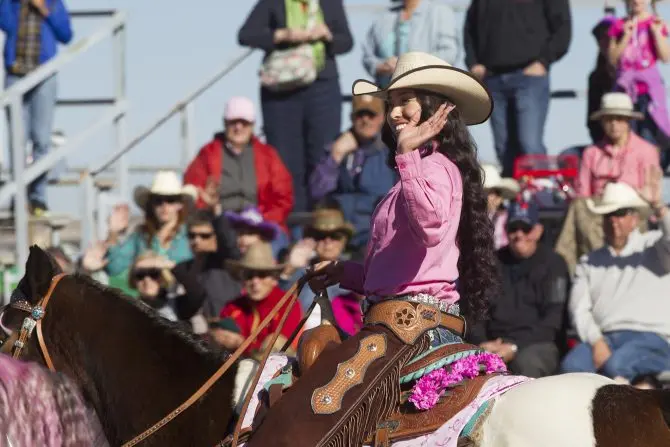
Children compete under the Justin Junior Rodeo banner, and the youngest ride sheep in the mutton bustin’. The working hands get their turn on the rodeo’s own reels. In one of them Tyler Wright, a pickup man, talks about horsemanship, teamwork and preparation. Spectators in the Vaquero Club sit under cover with a buffet lunch, three beverage tokens, and closed-circuit televisions carrying live coverage and replays. The six-seat Gold Buckle boxes are sold for all six performances together and include the Coors Barn Dance, held during rodeo week.
The grounds have their own rules. Cowbells, air horns, artificial noisemakers, balloons and umbrellas are barred. Bags must be clear, and security staff check them at the four public entrances. Apart from the stock, the only animals allowed in are certified service animals. Mark Baird, chairman of the committee, thanked visitors after the 2026 rodeo on behalf of “the hundreds of volunteers and staff that make this event possible.” The 2027 rodeo is set for February 20 through 28. Its organizers call it the rodeo’s 102nd year.
The parade on Drexel Road
On the Thursday of rodeo week the parade goes out. Tucson-area schools close that day and the next, typically a Thursday and Friday in mid-to-late February, according to the library. The Tucson Rodeo Parade Committee calls it the largest non-motorized parade in the United States. The library’s own listing calls it “the world’s longest non-motorized parade.” Nothing in it runs on an engine. Horses, marching bands, horse-drawn carriages and floats make up the line.
The route begins at South Twelfth Avenue and Drexel Road and runs east to Old Nogales Highway. It ends at Irvington Road, near the rodeo grounds, a layout chosen to stay clear of Union Pacific train schedules. For the 2025 parade, Tucson Spotlight counted a route of two and a half miles, 2,300 participants, more than 1,000 horses, 700 horseback riders and 11 bands. Arizona Sonoran News counted more than 130 entries, 500 horses, 85 wagons, 11 marching bands and some 2,300 participants. Its lineup listed Native American tribal leaders, mariachis, rodeo royalty and working cowboys. The League of Mexican American Women, the Tucson Arizona Boys Chorus and the Mormon Battalion had each marched more than 45 consecutive years.
“It’s going to be as colorful as ever,” said Herb Wagner, spokesman for the parade committee, before the 2025 parade. “We’ve got Native American groups, Hispanic heritage groups and military and historical groups coming in, as well as colorful floats sponsored by local southern Arizona businesses.”
Many of the stagecoaches and buggies come out of the Tucson Wagon & History Museum, which keeps a restored collection of horse-drawn vehicles. Among them, by Tucson Spotlight’s account, are a wagon once used as a school bus, a police wagon that carried prisoners, hay wagons, and a wagon used by Governors of Sonora. For one week a year, Wagner has said, “southern Arizona becomes the Old West.” Adelita Grijalva, vice chair of the Pima County Board of Supervisors, wrote in 2025 that Tucson is “probably the only city in the country that offers a Rodeo break for students so that younger generations can continue to be a part of Tucson’s history.”
The parade once opened the rodeo. As the event grew, a week of competition was added ahead of it. Tucson Spotlight reports that what began as a three-day event now runs over two weeks.
A polo player’s rodeo, 1925
Rodeo in Tucson is older than the Fiesta. “The local ranch hands would have their own little rodeos, what they called jackpot rodeos,” Wagner told Tucson Spotlight. “Everybody throws in $2 and the winner takes it all.”
Into that country came Frederick Leighton Kramer. The parade committee calls him a Philadelphia businessman; Tucson Spotlight calls him a polo player from the east coast. AZPM says he had come west for the dry climate and wanted to bring his friends and tourists to the Wild West and raise money for his polo club. Arizona Highways credits the founding to Kramer and the Arizona Polo Association. When he proposed a formal rodeo, many local businessmen thought him crazy, by Wagner’s account, since cowboys were already roping on weekends. “But he got the local businesses to put up prizes and cash money to entice those cowboys to come and compete in rodeo events and the idea took off,” Wagner said. “Of course the businesses that sponsored prizes wanted that parade to go in front of their business, so what we had was a serpentine route through downtown, starting over at the base of a mountain and going across the river and into downtown and winding through everybody’s business.”
The town got ready in its own way. Arizona State Prohibition Director Frank Pool led a cleanup before the first rodeo, capturing 25 stills and destroying 3,000 gallons of moonshine. The parade led spectators to Kramer Field, the first rodeo grounds, now the Catalina Vista neighborhood near the present University Medical Center.
The purse for February 1925 came to $6,650, paid out in steer wrestling, steer tying, calf roping and saddle bronc riding. Prizes came in kind as well. The Arizona Ice & Cold Storage Co. put up a 750-pound block of ice, and other winners took a “Big Cactus” ham or a 100-pound sack of potatoes. One bronc rider’s prize was a $250 saddle, embossed in silver and made by the Ronstadt family’s company. It sat in the window of the Myers & Bloom Co. on Congress Street, across from the rodeo’s headquarters. The special events included a wild horse race, and Jack Brown bulldogged a steer from a Packard automobile.
Fox Hastings came from Fort Worth, Texas, with her husband, Mike; both wrestled steers. She was touted at the time as the only woman in bulldogging, and Tucson Spotlight records that she wore a football helmet to do it. Chief Hawk came from tribal land in New Mexico to ride broncs. “Old-timers that know the chief and have seen him work state that he is without fear,” the Arizona Daily Star reported. The first poster for the rodeo parade was made by Lone Wolf, grandson of a Blackfeet chieftain, who rode horseback in that first parade. Kramer, for his part, said Tucson’s parade was as notable as Mardi Gras or the Pasadena Flower Show.
From Kramer Field to the centennial
The crowds outgrew Kramer Field. In 1932 the rodeo moved to South Sixth Avenue and Irvington Road, to a site that first seated 3,000. Hollywood later used the event as a backdrop for films. The early parades had included cars and trucks. Tucson Spotlight dates the decision to bar them to 1942, and the parade committee says no motor vehicles have run in it since the 1940s.
In 1993 the rodeo expanded to six performance days. Western entertainers including Montie Montana and Rex Allen have appeared over the years. The parade left downtown for safety reasons and moved to the streets near the grounds. Its most recent rerouting came in 2024, after Union Pacific objected to the procession crossing the tracks and stopping commerce. The 2021 rodeo and parade were cancelled because of the COVID-19 pandemic.
The centennial came in February 2025. Sam Merriman, then chairman of the rodeo, said the year’s theme honored the cultures that shaped the region. On January 27 the parade committee named eleven grand marshals, all direct descendants of Kramer, and on February 20 they led the 100th parade east along Drexel Road. One of them was his great-granddaughter Mary Ray. “It’s a privilege to celebrate his legacy,” she said, “especially since he played such a significant role in creating the Celebration of the Cowboys.”
Notable Events
- 1925The first Tucson Rodeo featured steer wrestling, steer tying, calf roping, and saddle bronc riding; special events included a wild horse race and Jack Brown bulldogging a steer from a Packard automobile, and Prohibition Director Frank Pool led a pre-rodeo cleanup. tucsonrodeo.com
- 1925The event marked Tucson's frontier spirit and was conceived to showcase its Wild West allure to winter visitors. tucsonrodeo.com
- 1925Launched in February 1925, the Tucson Rodeo Parade is the largest non-motorized parade in the United States and a celebrated highlight of Tucson's La Fiesta De Los Vaqueros. tucsonrodeoparade.org
- 1932Due to rapid growth, the event moved to South 6th Avenue and Irvington Road in 1932, with seating for 3,000; today the arena accommodates 11,000 spectators. tucsonrodeo.com
- 1939A few years after La Fiesta de los Vaqueros began, Old Tucson was created in 1939 as a movie set for iconic western films and television shows including "Arizona," "Little House on the Prairie" and "El Dorado.". tucsonspotlight.org
- 1940sCars and modern trucks were barred, leaving horses, marching bands, and horse-drawn carriages. tucsonrodeoparade.org
- 1942In 1942 the committee decided to make it non-motorized, meaning that all the floats in next week's parade will be horse-drawn. tucsonspotlight.org
- 1993The rodeo expanded to six performance days in 1993 and has featured renowned entertainers like Montie Montana and Rex Allen. tucsonrodeo.com
- 2021The 2021 rodeo and parade were cancelled due to the COVID-19 pandemic. library.pima.gov
- 2025Organizers named 11 grand marshals, all direct descendants of founder Kramer. wildcat.arizona.edu
- Tucson celebrated 100 years of La Fiesta de los Vaqueros; competitors from around the world — including Australia, Canada, and Brazil — come to compete for a prize money. news.azpm.org
- Tucson geared up to celebrate its 100th anniversary of the rodeo and rodeo parade, with festivities kicking off Saturday. tucsonspotlight.org
People
- Chief Hawk, Bronc riding competitor at the first rodeo, came from tribal land in New Mexico (1925).
- Fox Hastings, Steer wrestling (bulldogging) competitor at the first rodeo, touted as the only female competitor in the sport (1925).
- Mike Hastings, Steer-wrestling competitor (1925).
- Sam Merriman, Chairman of the Tucson Rodeo; said the centennial theme honors the cultures that shaped the region.
- Frank Pool, Arizona State Prohibition Director; led a pre-rodeo cleanup before the first rodeo (1925).
- Jack Brown, First-rodeo performer who bulldogged a steer from a Packard automobile (1925).
- Leighton Kramer, Founder; conceptualized the inaugural event to showcase Tucson's Wild West allure (1925).
- Montie Montana, Featured Western entertainer.
- Rex Allen, Featured Western entertainer.
- Herb Wagner, Board secretary and chairman of the Entries and Lineups Committee (2025).
- Lone Wolf, Grandson of a Blackfeet chieftain; created the first poster for the rodeo parade.
- Debby Butterbaugh, Great-granddaughter of rodeo founder Kramer (2025).
- Derrick Stephens, Maverick manager who helped host the centennial fundraiser (2025).
- Mary Ray, Centennial grand marshal and great-granddaughter of rodeo founder Kramer (2025).
Sources
- tucsonrodeo.com
- facebook.com/tucsonrodeo
- tucsonrodeo.com/history
- arizonahighways.com/classroom/tucson-rodeo
- tucsonrodeoparade.org/the-rodeo-parade-history
- azhsarchives.contentdm.oclc.org/digital/collection/p15812coll12
- wildcat.arizona.edu/159225/arts-and-life/a-century-in-the-saddle-tucsons-rodeo-parade-turns-100