Thunder Road Farm
Arlee, Missoula County, Montana. Farm.
Details

- Where
- 1231 Thunder Road, Arlee, MT 59821. Directions
- When
- U-Pick CLOSED Wednesday 8/26 and Sunday 9/6.
- Season
- Raspberry u-pick July through October, or until the first frost.
- Getting there
- From US-93: turn East onto Mountain Home Ln, North onto Gray Wolf Dr, East onto Thunder Rd (driveway); at fork turn Right toward signs for parking and the berry patch.
- Fees
- Whole beef 385-490 lbs at $9.25/lb.
- Hours
- U-pick open tonight (9/23) and Sunday morning (9/27).
- Access
- Raspberry patch has areas of uneven ground and is in full sun; porta-potty and handwashing station on-site during picking season.
- Walk-in or reserve
- Quote request via contact form; tailored pricing based on event size, use, and seasonality; 30% discount for 501(c)3 non-profits.
- Phone
- (406) 471-6462
- Website
- thunderroad.farm
- Managed by
- Gillian Thornton and Bryce Andrews.
- Established
- From 1920 operated as a dairy and beef cattle ranch; the broader property has been in continuous agricultural operation for over a century.
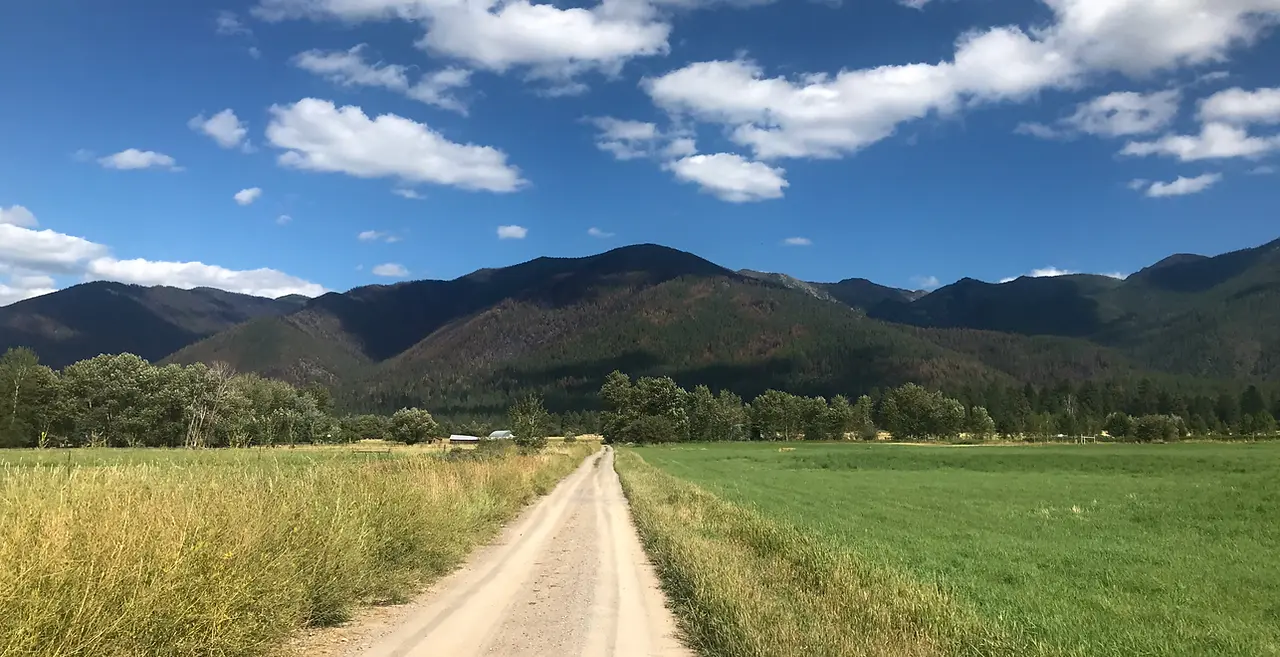
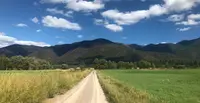
The berry patch at Thunder Road Farm sits at the end of a ranch driveway east of US-93 near Arlee. The way in runs east on Mountain Home Lane, north on Gray Wolf Drive, then east onto Thunder Road, which is the farm’s own drive. At the fork, bear right toward the signs for parking, then follow a path to the gate. If no one is at the patch, the farm’s directions explain, the family may be off at another chore. Instructions are chalked on a board at the gate.
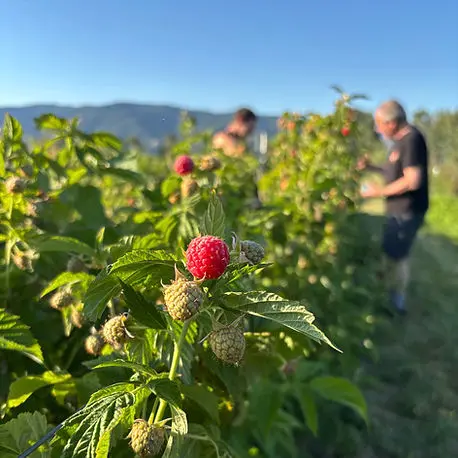
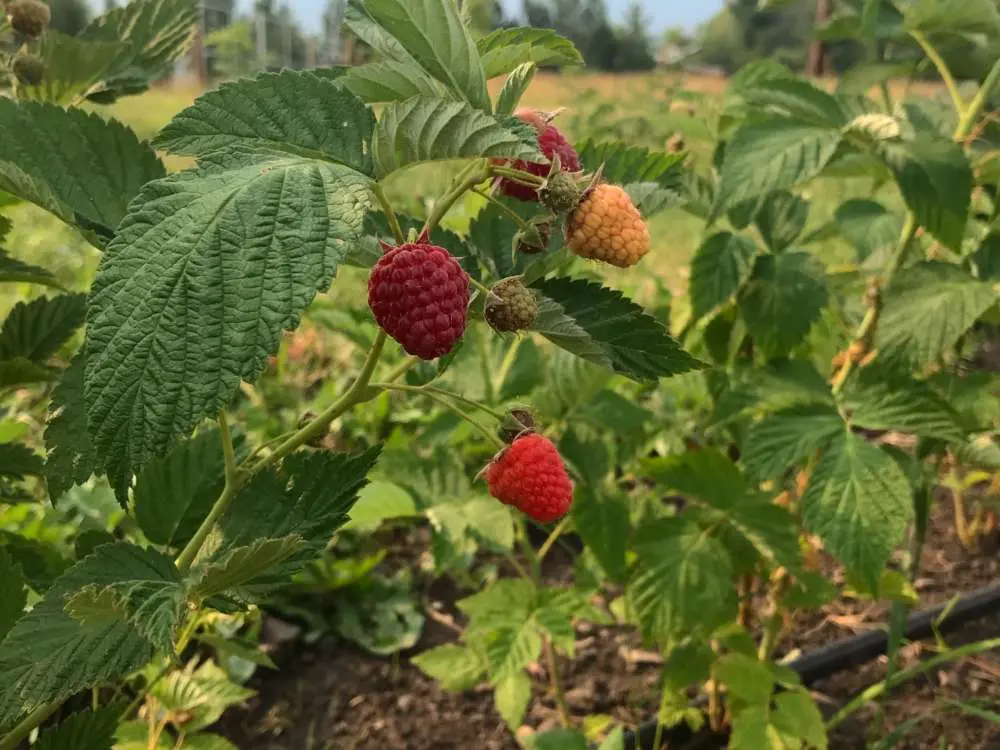
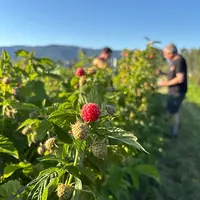
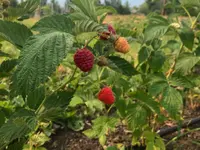
The patch covers two acres. The farm’s website counts over 20 varieties of red raspberries, yellow raspberries, black raspberries or black caps, and blackberries. Abundant Montana’s 2024 listing gives 18. Picking runs from July into October, or until the first frost, on Sunday mornings from 8 to noon and Wednesday evenings from 5:30 to 7:30. Berries are charged by the container, not by weight, so pickers fill the farm’s own half-pints and flats and may tip the fruit into their own vessels once it is rung up. The ground is uneven and the rows stand in full sun. Some varieties carry small thorns, and the farm suggests long sleeves. On self-serve days no attendant is on hand. Pickers take containers from the barn porch and pay by exact cash or Venmo, as the chalkboard directs.
The farm’s posts through the 2026 season kept a running account of the rows. In late July the advice was to “burrow into the leafy canes a bit” for big berries hiding in the shade, and to visit the purple raspberries “for a lovely mild, soft and beautifully tinted raspberry.” In early August the Edens, “a great, large, pink berry,” were going strong. The summer varieties tapered off in mid-August and the patch closed for about two weeks. It reopened on August 23 with big reds, yellows, and blush-colored Double Golds, and “the occasional blackberry, but good luck getting any of THOSE before the resident 4 year old finds them!” The farm finds late-season varieties generally sweeter, larger, and more flavorful. After September rain the canes sagged, and pickers were told to lift the greenery to find the fruit beneath. On October 3, 2026, the notice read: “Every night that it stays on the warmer side means the berries will keep ripening.” Red, golden, and blush berries were still on the canes.
Cows that lost a calf
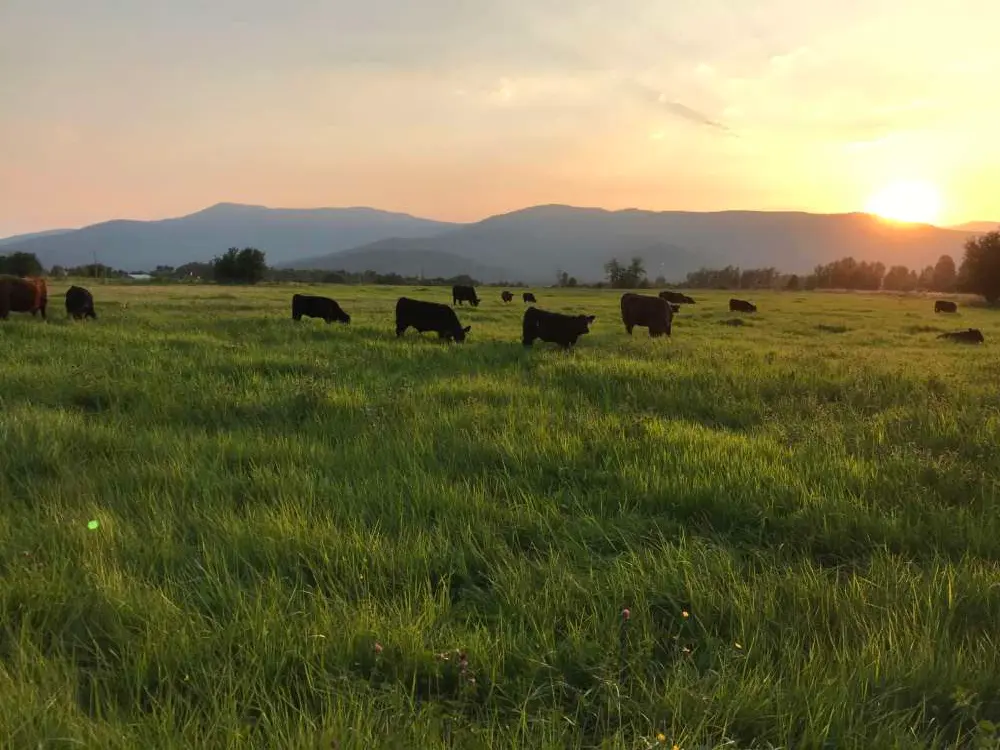
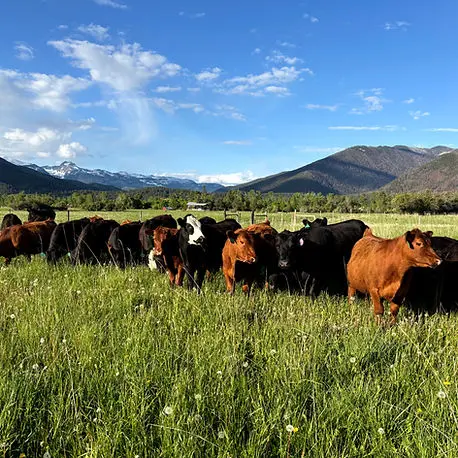
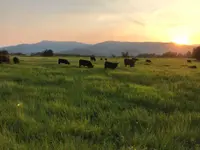
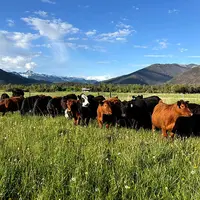
Cattle graze the pastures around the patch. As Montana Public Radio reported in 2023, Gillian Thornton Andrews and her husband, Bryce Andrews, finish cows raised by other ranchers rather than add more livestock to the landscape. KPAX reported that they buy cows that have lost a calf within a 200-mile radius. The herd eats grasses and forbs and never grain. “We use a lot of temporary fence. We try to keep our cattle moving,” Bryce Andrews told KPAX. “By doing that, we try to mimic the way that wild animals like bison use the land.”
On a sub-zero February morning in 2023, MTPR’s reporter found Thornton Andrews forking out a grass bale to six cows, then breaking ice that had formed overnight in a small plastic trough, with snow-covered peaks behind her. “I like this white-faced cow,” she said as she worked. “All our cows before were either brown or black.” That year the couple planned to finish about 20 cows.
The beef is sold by the whole, half, quarter, or eighth, and as cuts at the Clark Fork River Market in Missoula on Saturdays, May through October. Two sausages use pasture-raised Mangaliza pork from Abraxas Farm. Vital Grind is unseasoned: 80 percent grass-finished beef, 15 percent pork fat, and 5 percent pork organ meat. The Breakfast Sausage carries light maple and sage. Thornton Andrews told MTPR she gives what she can to food hubs in Arlee, Missoula, and Ronan.
The barn above the raspberries
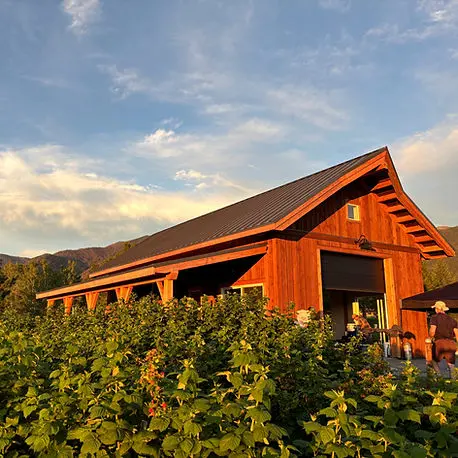
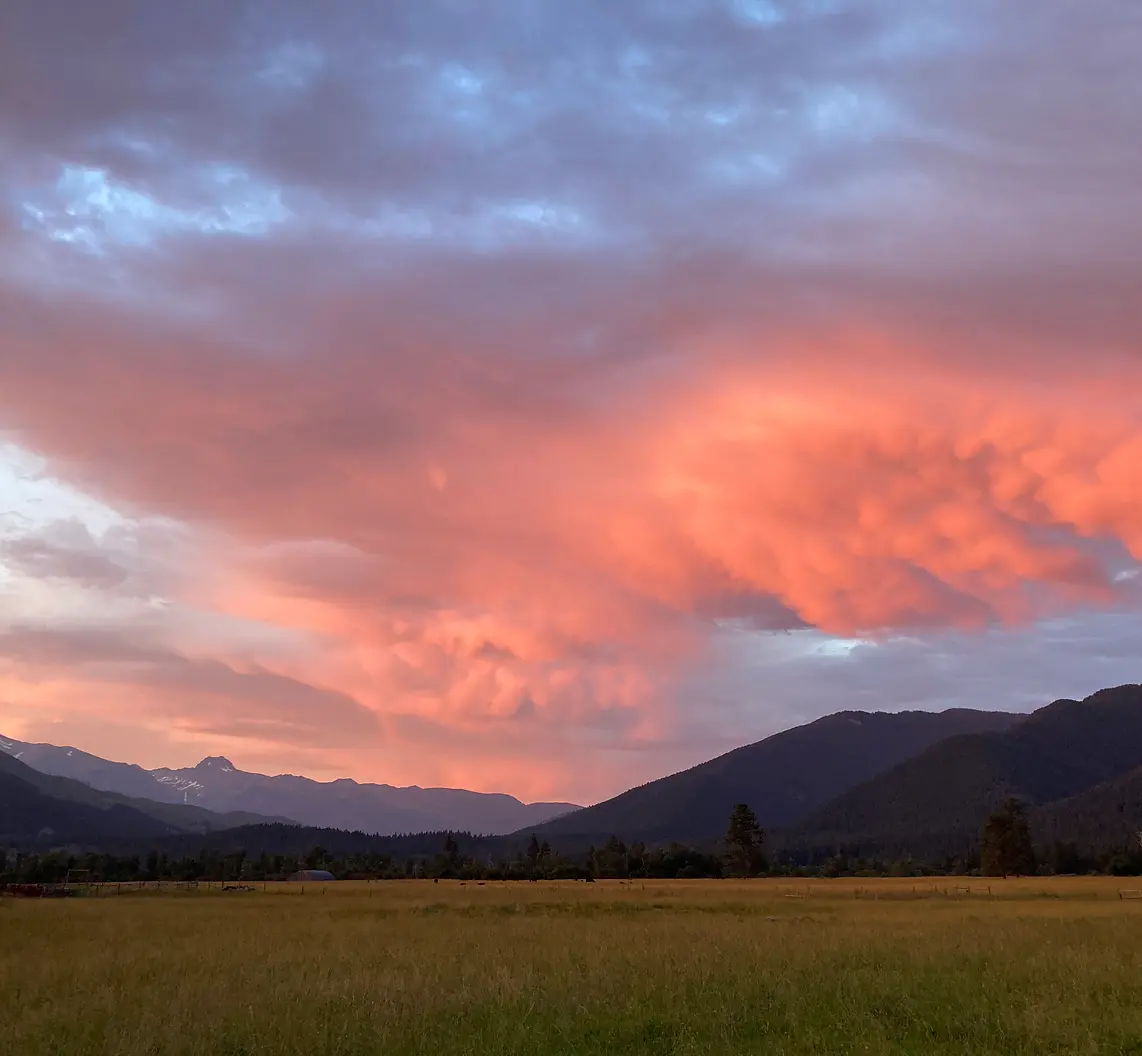
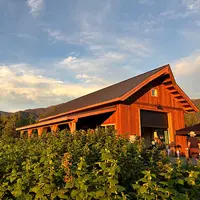
The Barn at Thunder Road Farm overlooks the patch. It is timber-framed with hand-crafted wooden joinery, has 1,152 square feet inside, and opens onto a covered porch. A University of Montana story of July 2026 says it was finished the summer before, and that it let the couple take up farm dinners, music, and private gatherings. The farm lists the barn’s view as the Jocko Valley, the Pistol Creek Hills, and the Mission Mountains. Its rental page places the barn at the base of the Rattlesnake Mountains, looking toward Gray Wolf Peak.
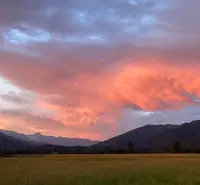
The first concert in the field beside the barn came on August 1, 2026. Martha Scanlan played, and the farm wrote afterward that her music suited “the mildly smoky sunset.” On September 12, 2026, Chef Jason Cook of My Neighbor’s Farm cooked Cider & Smoke, a dinner in seven courses paired with Western Cider. Its menu “traces the line between forest, field, orchard and ember,” with wood-coal cooking running through each course. The farm also holds an annual Farm Party dinner in July.
The gatherings began before the barn was built. On July 30, 2023, the farm held a Raspberry Jam Farm Party. Guests picked a half pint of raspberries, ate a Thunder Road Farm burger or veggie burger, and heard John Floridis and Jennifer Slayden, with guest musician Amelia Thornton Sears. “The Raspberry Jam was a u-picking event that used to happen annually on a different farm in the Jocko Valley,” Thornton Andrews told the Lake County Leader. “We are so excited to revive this fun, family-friendly tradition.” She later put the balance this way to the University of Montana: “We don’t want to just have fancy farm dinners. Although we do occasionally want to do that, too.”
Allotment, a dairy, and an easement
The farm lies on the Flathead Indian Reservation, in the ancestral territory of the Salish, Kootenai, and Pend d’Oreille Tribes. In the farm’s own account, the land passed from communal indigenous ownership into private hands after the Dawes Act of 1887. From 1920 on, a succession of families ran it as a dairy and beef cattle ranch, and it has been farmed without a break for over a century.
The owners before the present family placed a conservation easement on the land with Five Valleys Land Trust. That lowered its value enough for the Andrews family to buy it. Under the easement the property cannot be subdivided, and any new building outside certain building envelopes must serve agriculture. “We were really lucky,” Bryce Andrews told the University of Montana. “Five Valleys connected us with an amazing couple who wanted to see the land remain intact and were excited about our farming vision.” The Missoulian gave the property as 150 acres in 2021.
The family moved there in 2018, by the farm’s account and the university’s. MTPR wrote in March 2023 that the couple had started Thunder Road Farm about three years earlier. They rebuilt the corrals first. “It was terrible,” Thornton Andrews said of the old system. “Whoever had built it before had done it very piecemeal.” They added stock tanks, adjusted fencing, and learned flood irrigation. They also began planting native trees and shrubs in pastures cleared long ago. Grizzly bears, black bears, mountain lions, and wolves move through the country around them. “We’ve seen all of them,” she said.
Black ice on Interstate 90
As the couple tell it, they met on a snowy winter night on Interstate 90. Thornton Andrews lost control on black ice and spun into the median. Andrews stopped to help, and the two talked while they waited for a tow truck. “It just changed the trajectory,” she said.
She grew up in Kalispell without an agricultural background. She taught at the Clark Fork School, the Montana Natural History Center, and the University of Montana before turning to farming full-time. He was raised in Seattle and came to Montana after college to work on ranches. He later took a master’s degree in environmental writing at UM and wrote Badluck Way (2014), Down from the Mountain (2019), and Holding Fire (2023). They live on the farm with their two daughters and a cow-dog the farm’s Instagram names as Wren.
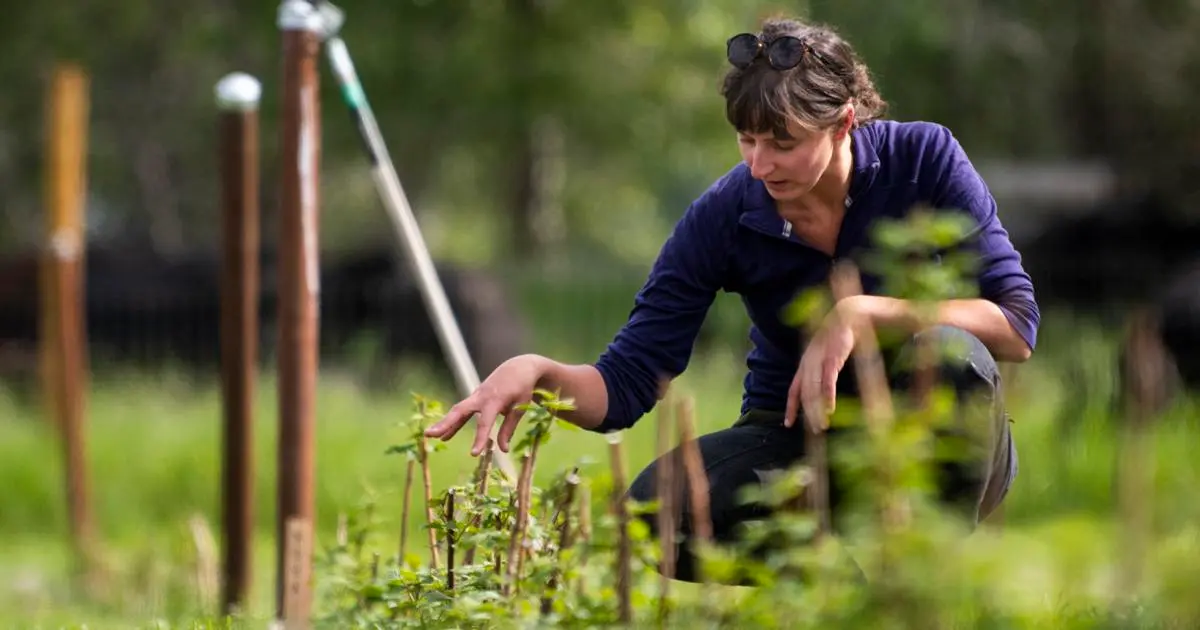
The raspberries went in during 2021. That June the Missoulian reported that Gillian Thornton, as the paper then named her, and Andrews had received a roughly $5,000 Field Tested Mini-Grant from the Community Food and Agriculture Coalition in Missoula. The money bought 975 plants, including 18 varieties of raspberries and a few blackberries, and she hoped to open a u-pick the following year. The university’s account credits a Farm Connect Montana grant and counts 1,000 canes. It describes the planting as a field trial meant to show which varieties grow best in the valley, with the results shared among farmers. “The grant is to share information between farmers, which is super cool,” Thornton Andrews said. The canes are now fully mature.
“I’ve never seen an unhappy person in this raspberry patch,” Bryce Andrews said.
Notable Events
- 1887Following the Dawes Act, the farm passed from communal indigenous ownership into private hands. thunderroad.farm
- 1920From 1920 on, families operated the land as a dairy and beef cattle ranch. thunderroad.farm
- 2018The family moved there and spent the early years learning the property's seasonal function, infrastructure needs and how to balance agriculture with wildlife habitat. grizalum.org
- 2018The family moved to the property and began shifting toward regenerative grazing practices and ecological restoration. thunderroad.farm
- 2021The planting began with 1,000 canes in 2021; the plants are now fully mature. grizalum.org
- 2021A roughly $5,000 Field Tested Mini-Grant from the Community Food and Agriculture Coalition bought 975 plants, including 18 varieties of raspberries and a few blackberries. missoulian.com
- The barn was finished last summer, allowing expansion into agritourism and farm-based dinners, music and private gatherings. grizalum.org
- The farm announced plans to revive a family-friendly annual u-picking tradition that previously took place at a different Jocko Valley farm. leaderadvertiser.com
- The couple started Thunder Road Farm together about three years ago. mtpr.org
People
- Bryce Andrews, Writer and conservationist who lives on the farm with Gillian, their two daughters and cow-dog (since 2018).
- Gillian Thornton-Andrews, Owner of the farm outside Arlee with Bryce Andrews (2018).
- Amelia Thornton Sears, Announced guest musician for the farm's Raspberry Jam Farm Party.
- Gillian Thornton Andrews, Arlee farmer who works with her husband Bryce to finish raising cows on grass grown on their property.
- Jennifer Slayden, Announced live musician for the farm's Raspberry Jam Farm Party.
- John Floridis, Announced live musician for the farm's Raspberry Jam Farm Party.
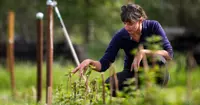
- Thea, Daughter of Gillian Thornton Andrews, shown harvesting fruit at the farm near Arlee.
- Gillian Thornton, Educator-turned-farmer, passionate about place-based learning and bringing students outdoors.
- Bryce, Husband of Gillian Thornton Andrews; works with her to finish raising cows on their property's grass.
Sources
- thunderroad.farm/raspberries
- thunderroad.farm
- abundantmontana.com/amt-lister/thunder-road-farm
- thunderroad.farm/about-us
- grizalum.org/communications/news-and-stories/thunder-road-preview.php
- missoulian.com/news/local/article_9a0e0fef-2c63-5e11-b2d9-73e3db31788f.html
- kpax.com/news/montana-ag-network/thunder-road-farm-western-montana-couple-takes-sustainable-approach-to-cattle-ranching